Leo

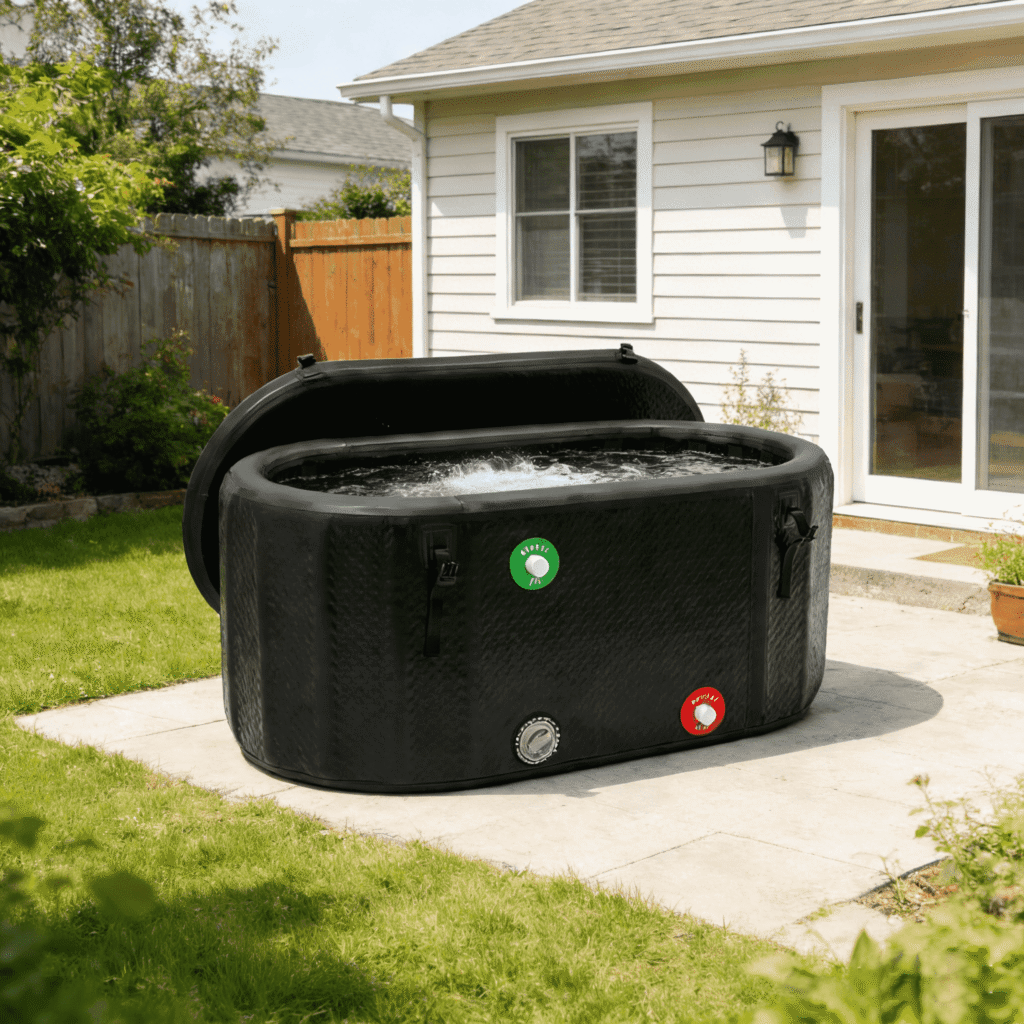
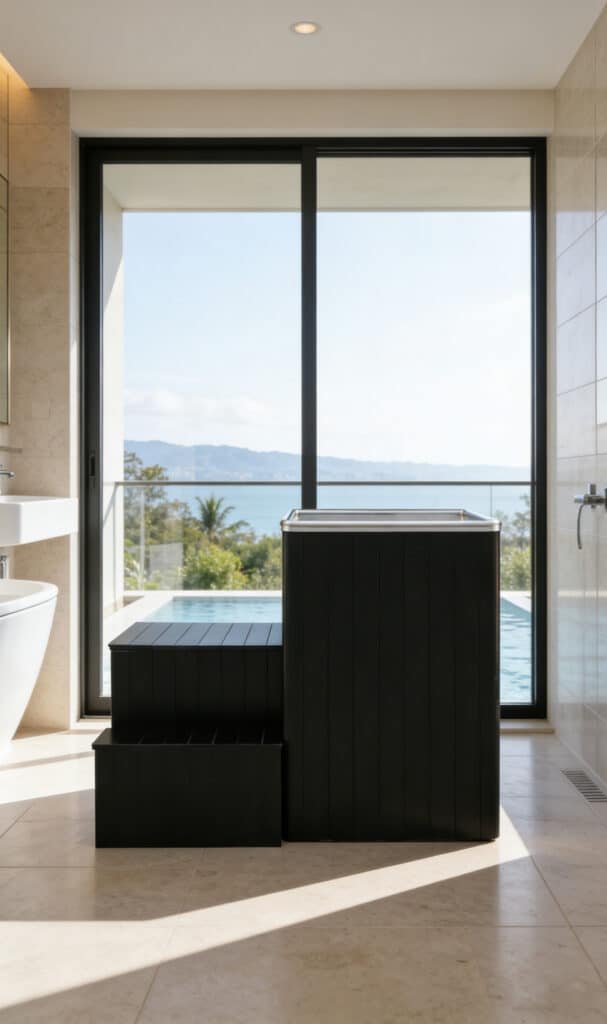
Compact inflatable ice bath tub for home wellness featuring a secure locking lid

Inflatable Cold Plunge with Chiller: What Nobody Tells You Before You Buy

Here is how it usually goes. Someone decides to set up an inflatable cold plunge with chiller at home or in their gym. They buy the tub, they buy the chiller, they get everything delivered. Then they spend an afternoon trying to make the fittings connect — only to find that the tub’s inlet ports and the chiller’s hose connections are different sizes. Hardware store trip. Adapters. Finally it works. Then they run the chiller for the first time and check the temperature four hours later. The water is at 18°C. They wanted 8°C. The chiller is running, the water is circulating, but the temperature is not moving the way they expected. They start wondering if the chiller is broken, or if the tub is the problem, or if they just wasted a significant amount of money. Neither is broken. The setup is simply undersized for the environment — and nobody told them this would happen before they bought anything. This guide is the information that should have come first. We manufacture both the inflatable ice bath tubs and the chillers at OMNI Ice, and we have shipped systems to gym chains, sports teams, and individual buyers across more than 60 countries. We know exactly where these setups go wrong and how to get them right. First: Can an Inflatable Tub Actually Hold Cold Water? The honest answer is yes — but only if the tub is built for it. There is a significant difference between a consumer inflatable and a commercial-grade one, and confusing the two is where most disappointment comes from. A cheap inflatable cold plunge tub uses single-layer PVC. The walls are thin, they flex under your hand, and they provide essentially zero thermal insulation. Cold water poured in will warm up within an hour. Pairing a chiller with one of these is not a setup — it is a losing battle against physics. A commercial-grade inflatable is a different thing entirely. OMNI Ice’s WT-02 uses five-layer construction: an inner PVC waterproof canvas, a drop-stitch structural core, a thermal insulation layer, a temperature lock layer, and an outer UV-resistant coating. Inflated to 8 to 11 PSI, the walls are rigid enough to sit on the rim. One buyer described it as feeling like an inflatable paddleboard — that is the structural quality we are talking about. The drop-stitch core is what separates this from a camping air mattress. It is the same technology used in rigid inflatable boats — thousands of internal threads hold the walls parallel under pressure, preventing the barrel shape from deforming. When you push against the wall of a properly inflated commercial inflatable, it does not give. That rigidity matters for cold therapy because a deforming tub changes volume as you get in and out, which affects temperature consistency. So yes, the right inflatable can hold cold water. The question is whether the chiller can keep it cold — and that depends on HP selection more than anything else. The HP Question: Why Most People Get This Wrong Every chiller has an HP rating. Most buyers look at that number, look at the tub volume, find a product listing that says the chiller handles that volume, and assume they are done. The problem is that HP ratings are measured under standard lab conditions — typically 20°C ambient temperature, with a well-insulated vessel. An inflatable tub without the insulation of a rigid foam-cored cold plunge tub changes the equation. Here is the real-world data from OMNI Ice factory testing. Using our 1HP OMNI Ice chiller in a 20°C ambient environment, starting with approximately 300 litres of water at 25°C: we reach 3°C in approximately 3.5 hours. That is with a commercial-grade 5-layer inflatable. The same test with a single-layer consumer inflatable takes significantly longer — the heat coming through the thin walls means the chiller is fighting a continuous losing battle rather than cooling efficiently. And outdoors in summer? The calculation changes entirely. In 30°C+ ambient conditions, even a well-insulated inflatable loses heat fast enough that a 1HP chiller will hold a target temperature of around 10°C but struggle to push below that consistently. That is still useful for cold therapy — research published on PubMed cold water immersion shows significant benefits at temperatures up to 15°C — but if you want reliable sub-10°C performance outdoors in warm weather, you need more HP. Setup Volume Ambient Temp Recommended HP Time to 3°C from 25°C Indoor, commercial-grade inflatable, temperate ~300L 20°C 1HP ~3.5 hours Indoor, commercial-grade inflatable, temperate ~300L 20°C 1.5HP ~2.5 hours Outdoor, warm climate ~300L 28–35°C 1HP ~4–5 hours (target ~10°C) Outdoor, warm climate ~300L 28–35°C 1.5HP ~3.5–4 hours to 3°C The rule of thumb: for an inflatable cold plunge with chiller, size up by at least 0.5HP compared to what a rigid insulated tub of the same volume would need. If you are outdoors in summer, size up again. The cost difference between HP levels is small compared to the frustration of a chiller that runs continuously and never reaches your target temperature. For a full breakdown of how HP scales across all setup types, see our cold plunge chiller HP guide. From real buyer feedback: A 6’2″, 195-pound user chose the larger XL barrel over a standard oval tub because he wanted deeper water immersion and less chiller load. He noted the barrel tub stayed colder with less stress on the chiller — depth reduces surface area relative to volume, which directly reduces heat gain. Barrel-style inflatables perform better thermally than flat oval ones for this reason. The Fitting Problem — And How to Avoid It The single most common complaint in buyer reviews of inflatable cold plunge setups is not about temperature or durability. It is about chiller compatibility. “Awesome cold plunge, easy to set up, but the chiller inlet and outlet had no way to connect without extra trips to the hardware store.” This happens when the tub and chiller are bought from different manufacturers without checking fitting specifications. The industry standard is 3/4 inch hose fittings —

Inflatable Cold Plunge with Chiller: What Nobody Tells You Before You Buy Read More »

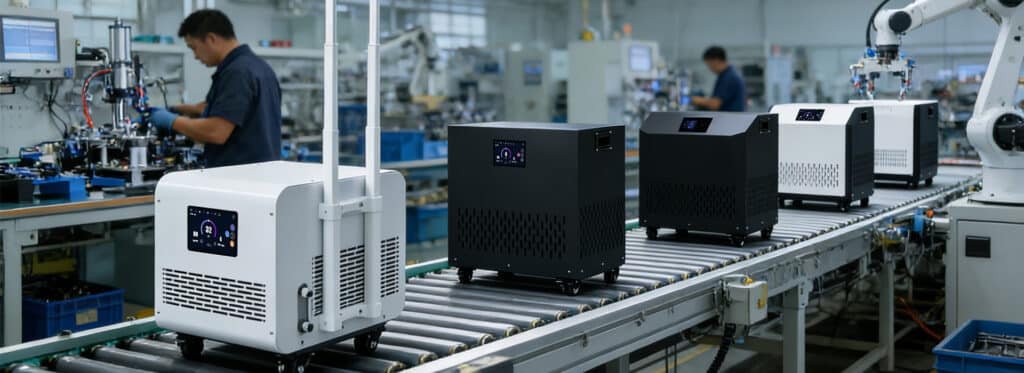
High-volume cold plunge chiller manufacturer production line

Cold Plunge Chiller for Hot Tub: What You Need to Know Before Buying

Converting a hot tub into a cold plunge using a cold plunge chiller for hot tub setups is one of the most ambitious — and most misunderstood — cold therapy projects a home user can attempt. The idea makes sense on paper: you already own a hot tub, it holds water, and chillers cool water. What most guides skip is exactly how different a hot tub is from a standard cold plunge vessel — and why getting the chiller selection wrong here is a far more expensive mistake than it would be with a smaller tub. This guide covers what you actually need to know before buying: why the HP requirements are higher than most people expect, how to manage the hot tub’s built-in heater so it does not fight your chiller, how to connect everything correctly, and when a dedicated cold plunge setup makes more sense than adapting your existing hot tub. As a cold plunge chiller manufacturer supplying facilities across more than 80 countries, we see this specific setup question regularly — and the mistakes that come from getting it wrong. Why Hot Tubs Are the Most Demanding Cold Plunge Application A standard residential hot tub holds between 1,000 and 2,000 litres. A typical cold plunge tub holds 200 to 400 litres. You are asking a chiller to cool two to five times the water volume of a standard cold plunge setup — and that is before accounting for the additional thermal load that makes hot tubs uniquely challenging. Hot tubs are engineered to retain heat. The insulation — typically 100mm or more of foam — is designed to keep water warm with minimal energy input. That same insulation slows the cooling process when you run a chiller. The large surface area means ongoing heat exchange even with a cover in place. And the jets and circulation system introduce complexity that a standard cold plunge tub simply does not have. The result is that a hot tub cold plunge setup requires meaningfully more chiller power than the water volume alone would suggest — and even with the right HP, cooling times are significantly longer than a dedicated cold plunge tub. Volume and HP Requirements at a Glance Vessel Typical Volume Insulation Minimum HP Standard cold plunge tub 200–400L Good 0.5–1HP Uninsulated bathtub 150–300L None 1HP Residential hot tub 1,000–2,000L Heat-retaining 1.5–2HP minimum Commercial spa / hot tub 2,000L+ Varies 2HP+ What HP Cold Plunge Chiller for Hot Tub Do You Actually Need? According to ASHRAE cooling capacity standards, effective cooling capacity must account for the ongoing thermal load from the environment — not just the volume of water being cooled. For a hot tub, that thermal load is significant. For a standard residential hot tub in a temperate climate: Under 1,200 litres: 1.5HP minimum, 2HP recommended for faster cooldown 1,200–1,600 litres: 2HP minimum Above 1,600 litres: 2HP or more, or consider a dedicated commercial cold plunge system If your hot tub is outdoors in a climate above 28°C in summer, add 0.5HP to each figure. The chiller is fighting ambient heat on top of the water volume, and an undersized unit will run continuously without reaching target temperature. For a detailed breakdown of how HP requirements scale with volume and ambient conditions, see our cold plunge chiller HP guide. The most expensive mistake in hot tub cold plunge setups: buying a 1HP chiller for a 1,500-litre hot tub. It will run continuously, never reach cold plunge temperatures, and burn out within a year under that sustained load. If you are unsure, always go one HP level higher than your calculation suggests. The Hot Tub Heater Conflict This is the issue most guides skip entirely. Your hot tub has a built-in heating system with its own thermostat, typically set to maintain 37 to 40°C. When you run a chiller and the water temperature drops, the hot tub’s thermostat detects the drop and turns on the heater to compensate. You now have a chiller removing heat and a heater adding it back at the same time. This dramatically slows your cooling speed, wastes electricity, and puts unnecessary strain on both systems. Three ways to manage this: Turn off the hot tub heater manually before running the chiller. Most hot tubs allow you to switch the heater to standby or set the thermostat to its minimum. This is the simplest and most practical solution. Set the thermostat to its lowest possible setting. Some models cannot be fully disabled but can be set to 15 to 20°C — still warmer than cold plunge temperatures, but significantly reducing the conflict. Disconnect the heater circuit. This requires electrical work and likely voids your warranty. Only worth considering if you are permanently converting the hot tub to cold use. The first option handles the problem for most setups. Turn the heater to standby before each cold plunge session and restore the setting when you are done. How to Connect a Cold Plunge Chiller to a Hot Tub Hot tubs have more complex plumbing than a standard cold plunge vessel — jets, pumps, a heater manifold, and filtration all share the same water circuit. Connecting a chiller requires care to avoid disrupting the existing system. Option 1: External Bypass Connection (Recommended) Connect the chiller as an external loop — water drawn from the hot tub via a dedicated outlet, passed through the chiller, and returned via a separate inlet. This keeps the chiller circuit isolated from the hot tub’s jet and heater plumbing. Most hot tubs have drain valves or service ports that can be adapted for this purpose by a qualified plumber or hot tub technician. Option 2: Over-the-Edge Hose Connection (Temporary) A submersible pump in the hot tub with hoses running over the edge to the chiller and back provides a functional temporary setup — the same approach used in cold plunge chiller for bathtub setups. For standard bathtubs, see our dedicated chiller for bathtub setup guide. Less clean, but fully reversible and useful for testing the concept before committing to a permanent installation. With a hot tub,

Cold Plunge Chiller for Hot Tub: What You Need to Know Before Buying Read More »

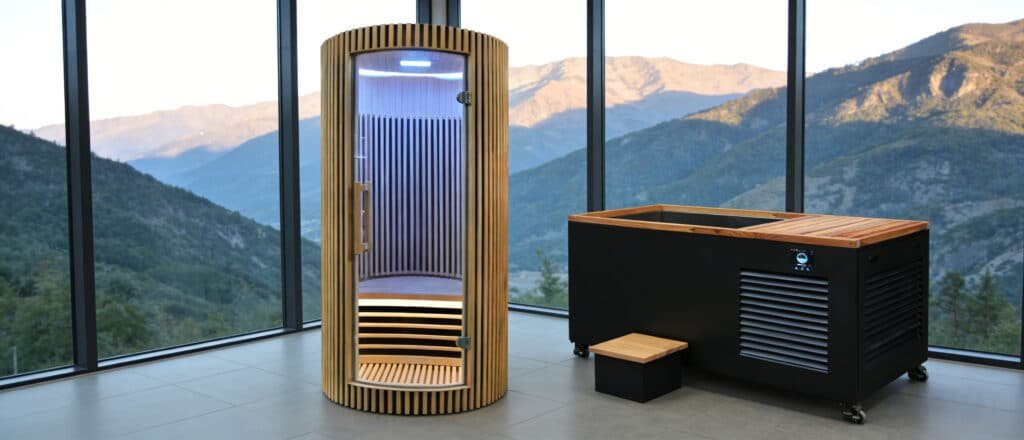
Commercial sauna cold plunge combo system in a professional gym — stainless steel cold plunge tub paired with infrared sauna room for elite facility recovery

Cold Plunge Tub Materials Compared: Stainless Steel, Wood, Acrylic & Inflatable — Which One Is Right for You?

The material your cold plunge tub is made from affects almost everything that matters in daily use — how long it lasts, how easy it is to keep clean, how well it holds temperature, and how much maintenance it demands over time. Most buying guides focus on price and dimensions. This one focuses on what the material actually means for you after the first six months of use, when the novelty has worn off and the real-world performance becomes clear. As a cold plunge tub manufacturer producing every major material type across our lineup, we have direct data on how each one performs under real-world conditions — home use, commercial gyms, outdoor installations, and everything in between. This guide gives you an honest comparison rather than a sales pitch for whichever option carries the highest margin. Why Cold Plunge Tub Material Matters More Than Most Buyers Expect When you first buy a cold plunge tub, the material feels like an aesthetic decision. Stainless steel looks professional. Wood looks premium. Acrylic looks clean. Inflatable looks affordable. But after six months of daily use, the aesthetic fades into the background and what you actually care about is: does the surface harbour bacteria? Is it getting harder to clean? Are there any rust spots, cracks, or delamination starting to show? The answers to those questions are almost entirely determined by the material your tub is made from — and specifically by how that material interacts with cold water, ozone or chemical sanitisers, temperature cycling, and the UV exposure it gets if it lives outdoors. Cold water is actually more demanding on materials than warm water in several ways. It contracts the material differently, it creates condensation on outer surfaces, and it carries dissolved oxygen more efficiently than warm water — which accelerates oxidation in metals that are not properly graded. This is why the grade of stainless steel matters, not just whether something is “stainless.” Stainless Steel Cold Plunge Tubs: The Commercial Standard  Stainless Steel Best for: Commercial facilities, serious home users, outdoor installations Stainless steel is the material of choice for professional cold plunge installations worldwide, and for good reason. When properly graded and fabricated, it is virtually indestructible in cold water environments, completely non-porous, and easy to sanitise to clinical standards. It is the only material that genuinely improves with use rather than degrading — a well-maintained stainless steel tub used daily for ten years looks essentially identical to one that is new. The critical variable is the steel grade. There is a significant difference between 304-grade and 305-grade stainless in terms of corrosion resistance under sustained cold water exposure, and between both of those and lesser grades used in cheaper products. According to ASTM stainless steel standards, 304-grade stainless provides excellent corrosion resistance in most environments, while higher-grade alloys are warranted for aggressive chemical exposure or marine environments. For cold plunge use with standard sanitisation, 304 or 305-grade is the correct specification. The other factor is weld quality. A stainless steel tub with poorly finished welds will develop rust at the weld points — not because the steel itself is failing, but because the heat-affected zone around a bad weld changes the steel’s properties. Properly TIG-welded and passivated seams are as corrosion-resistant as the surrounding steel. Cheaper fabrication shortcuts this process and you see the results within a year.For a deep dive into stainless steel specifically, see: Stainless Steel Cold Plunge Tub: The Real Buyer’s Guide Advantages Virtually unlimited lifespan with basic maintenance Non-porous — no bacterial growth in the material itself Compatible with ozone, UV, and all sanitisers Handles outdoor conditions year-round Easy to clean — no special products needed Best resale value of any material Disadvantages Higher upfront cost than acrylic or inflatable Heavier — installation requires planning Conducts cold to touch — can feel harsh on entry Grade matters — cheap “stainless” is not the same Our WT-09 stainless steel tub is a 500-litre oval tub in 305-grade stainless with a red cedar exterior wrap — the cedar softens the industrial look and adds a meaningful insulation layer. At 500 litres it is appropriate for two users or for single-user commercial environments where a larger water volume is preferred for thermal stability. For facilities needing a statement piece that also performs at commercial standards, this is the specification. View WT-09 stainless steel cold plunge tub → Wood Cold Plunge Tubs: The Premium Aesthetic with Practical Trade-offs Wood / Hybrid Best for: Home wellness setups, boutique spas, aesthetic-driven environments Wood has been used for cold immersion vessels for centuries — Nordic cultures have used wooden cold plunge barrels alongside saunas for as long as both have existed. The appeal is obvious: wood is naturally beautiful, it feels warm to the touch even when the water inside is cold, and a well-made wooden cold plunge barrel looks like a piece of furniture rather than a piece of equipment. The practical reality of wood is more nuanced. Solid wood cold plunge tubs — particularly those made from thermally modified pine, spruce, or cedar — can last many years when properly maintained. The key phrase is “properly maintained.” Wood requires consistent water management (it must stay wet or it dries and cracks), regular checking of the barrel hoops and staves for gaps, and careful management of sanitiser chemistry — some chemicals that work well in stainless or acrylic tubs can accelerate wood degradation. The more practical approach for most buyers is a hybrid construction: a stainless steel inner tub that handles the water contact directly, wrapped in a wood exterior for aesthetics and insulation. This gives you the look and feel of a wooden tub with the maintenance profile of stainless steel — the wood exterior never contacts water, so it does not face the same demands. Advantages Most aesthetically appealing — premium look Natural insulation properties in the exterior shell Warm to the touch even with cold water inside Hybrid builds combine aesthetics with SS durability Ideal for sauna and contrast therapy environments Disadvantages Solid wood

Cold Plunge Tub Materials Compared: Stainless Steel, Wood, Acrylic & Inflatable — Which One Is Right for You? Read More »

Cold Plunge Chiller HP Guide: 0.5HP vs 1HP vs 1.5HP — Which One Do You Actually Need?

HP is the number everyone looks at first when choosing a cold plunge chiller, and it is also the number most people misunderstand. The assumption is simple: higher HP means colder water. But that is not how refrigeration works, and buying based on that assumption leads either to overspending on more power than you need, or — more commonly — buying something underpowered that runs flat out and still cannot hold your target temperature. This guide explains what HP actually controls, how to calculate what your specific setup requires, and which 1HP cold plunge chiller is right for different use cases. As a cold plunge chiller manufacturer supplying facilities across more than 80 countries, we see both ends of this problem regularly — the gym that bought a 0.5HP unit for a 400-litre commercial tub, and the home user who bought a 1.5HP unit for a 150-litre bathtub. Neither was happy with the outcome. What HP Actually Controls — And What It Does Not Let us start with the core misconception: HP does not determine how cold the water gets. Any chiller — 0.5HP or 1.5HP — can cool water to 3°C given enough time and the right conditions. What HP determines is two things. First, cooling speed. A higher HP chiller cools the same volume of water faster. A 1HP unit cooling 200 litres from 20°C to 10°C might take 2 hours. A 0.5HP unit doing the same job might take 4 to 5 hours. If you want your tub ready quickly after filling or after a session, HP matters. Second, the ability to maintain temperature under load. This is the more important factor. Once the water reaches your target temperature, the chiller switches to maintenance mode — cycling on and off to compensate for heat gain from the ambient environment. If the heat gain is greater than the chiller’s capacity, it runs continuously without ever quite reaching the target. This is where undersized units fail. According to ASHRAE refrigeration capacity standards, cooling capacity is measured in kilowatts (kW) under defined ambient and load conditions. The HP rating is a proxy for this capacity — but real-world performance varies significantly depending on ambient temperature, insulation quality, and duty cycle. Understanding this distinction is the key to choosing the right unit. Heat gain comes from three sources: the ambient air temperature around the tub, the insulation quality of the tub walls, and the surface area of the water exposed to air. A well-insulated indoor tub in a cool room has minimal heat gain. An uninsulated outdoor tub in a hot climate has enormous heat gain. The same chiller behaves completely differently in these two scenarios. The Four Factors That Determine Your HP Requirement 1. Tub Volume Volume is the starting point. More water requires more energy to cool and more energy to maintain at temperature. As a baseline rule: 0.5HP handles up to approximately 200 litres in ideal conditions, 1HP handles 200 to 400 litres comfortably, and 1.5HP is appropriate for 400 litres and above or any setup with significant heat gain. 2. Tub Insulation A purpose-built cold plunge tub with 40 to 60mm of closed-cell foam insulation loses heat slowly. The chiller cycles comfortably. An uninsulated vessel — a stock tank, a standard bathtub, a thin-walled container — loses heat continuously and dramatically. As we covered in our guide on using a bathtub as a cold plunge, an uninsulated bathtub can require the same HP as a properly insulated tub twice its volume. For the complete step-by-step setup guide, see our chiller for bathtub guide. This single factor changes the HP calculation more than anything else. 3. Ambient Temperature Chiller HP ratings are measured under standard test conditions — typically around 20°C ambient. If your chiller operates in a hot garage, an outdoor space in summer, or any environment regularly above 25°C, its effective capacity drops. In a 35°C ambient environment, a 0.5HP chiller performs closer to what a 0.3HP unit would deliver under standard conditions. For hot climates or outdoor installations, always add 0.5HP to your baseline calculation. 4. Usage Frequency For single-user home use with one or two sessions per day, any correctly sized chiller manages fine. For commercial settings with multiple users throughout the day — each session adding body heat to the water — the chiller needs additional headroom. A gym running 10 or more sessions per day needs a unit with genuine commercial capacity, not a home-grade unit running at its limit. The HP Selection Chart Setup Volume Insulation Ambient Temp Recommended HP OMNI Ice Model Home use, indoor, insulated tub Under 200L Good Under 25°C 0.5HP CHU-05-RV Home use, bathtub or lightly insulated vessel 150–250L Poor Under 25°C 0.8HP CH-08-RV Home/boutique gym, insulated tub, temperate climate 200–350L Good Under 30°C 1HP CHM-10-RV / CHU-10-RV Outdoor, hot climate, or semi-commercial use 250–400L Good 25–35°C 1–1.5HP CHU-10-RV / CHU-15-RV Commercial facility, high-traffic daily use 300L+ Good Any 1.5HP+ CHU-15-RV Breaking Down Each HP Level — And Which OMNI Ice Model Fits 0.5HP: The Entry Point for Home Use Entry Level CHU-05-RV — 0.5HP Cold Plunge Chiller 0.5HP    1.48kW cooling    0°C capable    WiFi + App    0~40°C range  The CHU-05-RV is the right choice for a single-user home setup with a well-insulated tub under 200 litres in a temperature-controlled indoor environment. Despite being the smallest unit in the lineup, it reaches 0°C — something many competitor 0.5HP units cannot do. WiFi app control means you can pre-cool the tub before your session without being in the room. Where it falls short: outdoor use in warm climates, bathtubs without insulation, or any setup where the chiller will run more than a few hours per day. Push it beyond its comfort zone and it will run continuously without reaching target temperature. View CHU-05-RV specifications → 0.8HP: The Overlooked Middle Ground Mid Range   CH-08-RV — 0.8HP Cold Plunge Chiller 0.8HP    2.04kWcooling  3~35°Crange    Physical button control The CH-08-RV sits between the 0.5HP and 1HP options and is often overlooked, but it fills

Cold Plunge Chiller HP Guide: 0.5HP vs 1HP vs 1.5HP — Which One Do You Actually Need? Read More »

Can You Use Your Bathtub as a Cold Plunge? The Honest Answer

You already have a bathtub. Cold plunge tubs cost money. So the question makes complete sense: can you just attach a cold plunge chiller to your bathtub and call it done? The short answer is yes — technically, it works. But there is a longer answer that most equipment sellers will not give you, because part of it involves telling you that a bathtub is genuinely not the ideal vessel for cold immersion therapy, and understanding why actually helps you make a smarter decision about what to buy and how to set it up. This is that longer answer. “We sell chillers. It is obviously in our interest to tell you a chiller works with everything. But if you set up a bathtub cold plunge without understanding its real limitations, you will be disappointed with the results — and that is worse for everyone.” First: What a Cold Plunge Chiller for a Bathtub Actually Does A chiller is a refrigeration unit. It pulls water from your tub, runs it through a heat exchanger that strips out the thermal energy, and returns the cold water back to the tub. Paired with a circulation pump and a filter, it maintains a set temperature continuously — no ice, no refilling, no guesswork. The concept is simple. The challenge with a bathtub is not the chiller itself — it is everything surrounding the chiller. The vessel it is connected to matters enormously, and a standard bathtub has several characteristics that make a chiller’s job significantly harder than it needs to be. The Four Real Problems with a Bathtub Cold Plunge Nobody talks about these honestly enough. They are not deal-breakers for everyone, but you need to know about them before spending money. 1. No Insulation Layer — The Chiller Works Twice as Hard Purpose-built cold plunge tubs have 40 to 80mm of closed-cell foam insulation built into their walls. That insulation is not a luxury feature — it is what allows a 1HP chiller to maintain 10°C in a 300-litre tub without running flat out all day. A standard acrylic or fibreglass bathtub has walls that are 4 to 6mm thick. Cast iron bathtubs are thicker, but cast iron conducts heat so efficiently that they are actually worse. There is no insulation. Heat moves freely in both directions between the cold water inside and the room temperature air outside. In practice, this means your chiller runs far more frequently than it would with a proper cold plunge tub. It is compensating for constant heat gain rather than simply maintaining temperature. A chiller that would cycle on and off comfortably in an insulated tub will run near-continuously in a bathtub — and compressors that never get to rest wear out faster. This is the main reason why, for a bathtub setup specifically, 1HP is the minimum you should consider — not 0.5HP, regardless of what the volume calculation suggests. The uninsulated walls change everything. A 0.5HP unit in a standard bathroom bathtub in a room above 20°C will struggle to maintain anything below 15°C on a warm day. We have seen it burn out within a year under those conditions.For a complete setup guide on using a chiller for bathtub, including connection steps and what to expect, see our full guide. 2. The Shape Is Wrong for Full Immersion This one surprises people. A standard bathtub is designed for lying down in shallow water. The depth from base to overflow is typically 35 to 45cm. When you lie down, water covers your body horizontally — but your shoulders, neck, and upper chest are either barely submerged or above the waterline entirely. Effective cold immersion therapy requires the water to cover your body up to at least the neck. The research on cold water immersion — including the studies cited in sports medicine journals — is based on full-body submersion, not partial coverage. For a full breakdown of how to choose the right chiller HP for your specific setup, see our cold plunge chiller HP guide. Half-body cold exposure in a bathtub produces some benefit, but it is not the same physiological stimulus as proper immersion. A dedicated cold plunge tub is typically designed for upright seated or upright standing immersion, with a depth of 80 to 100cm. You sit or stand in it with water up to your shoulders. That is full immersion. A bathtub, regardless of how cold the water gets, cannot replicate this unless you have an unusually deep model. 3. No Built-In Water Ports Purpose-built cold plunge tubs have dedicated inlet and outlet ports for the chiller connection. Bathtubs have a drain at the bottom and an overflow near the top — neither is designed for continuous recirculation. To connect a chiller to a bathtub, you either run hoses over the rim (which works but looks messy and creates trip hazards) or you modify the existing drain fitting (which requires plumbing work and is not reversible without replacing the fitting). Neither option is as clean or reliable as a tub built for the purpose. 4. Water Volume Is Inconsistent A bathtub with the drain open loses water immediately. You are entirely dependent on keeping the plug in, and most bathtub plugs are not perfectly watertight under continuous circulation pressure. Small leaks that you would not notice during a normal bath become significant over 24 hours of continuous chiller operation. Managing water level in a bathtub cold plunge is an ongoing minor irritation that simply does not exist with a purpose-built tub. So When Does a Bathtub Cold Plunge Actually Work? With all of that said — it is not impossible, and for some people it genuinely makes sense. Here is when a bathtub setup is a reasonable choice. You are testing cold therapy before committing to a dedicated setup. If you have never done regular cold immersion and want to experience it before spending more money, connecting a chiller to your bathtub for a few months is a legitimate approach. You will get a sense of whether

Can You Use Your Bathtub as a Cold Plunge? The Honest Answer Read More »

DIY Cold Plunge Chiller Setup: The Complete Build Guide (Tub, Chiller, Pump & Filter)

Building a DIY cold plunge chiller setup has never been more accessible — but most guides skip the part that matters most: choosing the right components for your specific tub size and climate. Get this wrong and you end up with a chiller that runs for six hours to drop the water five degrees. Get it right and you have a system that holds 39°F (4°C) around the clock, costs a fraction of a pre-built unit, and lasts for years. This guide covers every component you need, how to size your cold plunge chiller correctly, how to connect everything, and the most common mistakes that turn a DIY build into an expensive headache. Whether you are working with an inflatable tub, a stock tank, or a custom vessel, the same principles apply. Why Build a DIY Cold Tub Cold Plunge Chiller System? The pre-built cold plunge market has exploded in the last three years. Brands like Plunge, Ice Barrel, and dozens of others now sell complete systems — but the price tags reflect it. A branded cold plunge with a built-in chiller routinely costs between $3,500 and $8,000. For a gym owner or serious home user who understands the components, that number is hard to justify. A well-built DIY cold tub cold plunge chiller system using commercial-grade parts typically costs between $900 and $2,200 depending on tub size and chiller HP. The performance is identical. In many cases, because you are selecting components independently, the build quality is actually higher than mass-market consumer units. The other advantage is repairability. When a branded system fails outside its warranty window, you are often looking at proprietary parts and expensive service calls. A DIY build uses standard components — chillers, pumps, filters — that can each be serviced or replaced independently without touching the rest of the system. DIY vs Pre-Built: Cost Breakdown Component DIY Cost (est.) Pre-Built Equivalent Cold plunge tub (100 gal acrylic) $300–$600 $3,500–$8,000Complete system 1HP water chiller $400–$900 Circulation pump $60–$120 Filter system $80–$180 Hoses, fittings, insulation $60–$120 DIY Total $900–$1,920 The math is straightforward. Even at the high end of the DIY range, you are saving $1,500 to $6,000 compared to a premium branded system. That gap widens further when you factor in that commercial-grade DIY components often outlast consumer-grade all-in-one units. What You Need: The Complete DIY Cold Plunge Chiller Kit List A complete cold plunge chiller kit has five core components. Every single one matters. Skipping or underspecifying any one of them creates problems that are frustrating to diagnose after the fact. 1. The Cold Plunge Tub Your tub determines everything downstream — chiller HP, pump flow rate, and filter sizing. The three most common materials for DIY builds are acrylic, stainless steel, and inflatable vinyl. Acrylic tubs offer excellent insulation and a clean aesthetic. They are the most popular choice for home gyms and indoor setups. A quality acrylic cold plunge tub in the 80–120 gallon range is the ideal starting point for most single-user systems. Stainless steel is the commercial standard. A stainless steel cold plunge tub handles daily multi-user traffic, is easy to sanitize, and does not degrade over time. The trade-off is lower insulation — your chiller will work harder in warm climates. Inflatable tubs work well for users who need portability or are testing the concept before committing. A good inflatable ice bath tub with thick walls can hold temperature reasonably well when paired with the right chiller. Just be aware that thin-walled inflatables will require a more powerful unit to compensate for heat transfer. For most DIY builds, a 80–130 gallon tub is the sweet spot. Large enough for full immersion, small enough for a 1HP chiller to manage efficiently. 2. The Water Chiller This is the heart of the system. The chiller pulls heat out of the water and exhausts it into the air, maintaining your target temperature continuously. Choosing the wrong chiller HP is the single most common and most expensive mistake in DIY builds. We cover HP selection in detail in the sizing section below. For commercial-grade reliability in a DIY context, factory-direct chillers offer the best value. You get the same industrial compressor and refrigeration components used in professional facilities, without the brand premium. The cold plunge chiller lineup from OMNI Ice, for example, covers 0.5HP through 2HP with CE and ETL certification — the same compliance standards required in commercial facilities. 3. The Circulation Pump The pump moves water from the tub through the chiller and back. Most chillers do not include a pump — you select one separately based on your plumbing distance and tub volume. A standard 80–130 gallon build needs a pump with 800–1,200 GPH flow rate. Higher is not always better; excessive flow can cause turbulence that reduces the chiller’s efficiency. Pump placement matters. An external inline pump gives you better flow control and is easier to service than a submersible. For troubleshooting common pump issues after your build is running, see our cold plunge pump troubleshooting guide. 4. The Filter System Cold water — especially below 10°C — does not sanitize itself. Without filtration, a cold plunge develops biofilm, algae, and bacterial growth within days. A proper cold plunge chiller filter setup removes particulates and, when combined with an ozone or UV sanitation stage, eliminates pathogens entirely. The minimum viable filter for a single-user home build is a 10–20 micron cartridge filter with a bypass valve. For multi-user setups, a dual-stage system with a pre-filter and a fine cartridge stage is standard. For detailed filtration configurations and maintenance schedules, read our complete chiller filter setup guide. The CDC water sanitation guidelines recommend filtration and disinfection for any shared therapeutic water system. For personal use, filtration alone is adequate if you change the water every 5–7 days. 5. Hoses, Fittings & Insulation Use food-grade reinforced PVC hose — at least 3/4 inch internal diameter for most builds. Fittings should be barbed and clamped, not threaded, to prevent leaks at temperature extremes. Insulate any hose runs longer than 2 feet with pipe foam — heat gain through uninsulated hoses in a warm room will add meaningfully

DIY Cold Plunge Chiller Setup: The Complete Build Guide (Tub, Chiller, Pump & Filter) Read More »

Modern cold plunge tub used for gym recovery training under article section about benefits of cold water therapy

Smart Ice Bath Chiller Systems: How Automation Is Reshaping Commercial Recovery Facilities

The Rise of Intelligent Cooling in Recovery Facilities Over the past few years, smart ice bath chiller systems have redefined the way ice bath recovery is integrated into gyms, rehabilitation centers, and luxury spas worldwide. This new generation of automated cooling brings consistency, cost efficiency, and ease of operation—solving the long-standing challenge of traditional, labor-intensive ice management. The emergence of the OMNI Ice smart ice bath chiller system is transforming that reality. These systems combine precise temperature control, ozone sanitation, and automation—making them essential infrastructure rather than optional accessories. For commercial operators, automation is no longer a luxury; it’s the only way to maintain consistent performance and hygiene across multiple users daily. According to Harvard Health Publishing, consistent cold exposure can improve circulation, recovery, and overall body resilience. Why Automation Matters for Commercial Recovery Traditional setups that rely on manual ice additions and frequent water changes consume enormous time and resources.Smart automation solves this by enabling: Automatic filtration and ozone disinfection, eliminating daily manual cleaning. Precise digital temperature control, maintaining 0 °C stability without intervention. Energy-efficient operation, reducing electricity use by up to 40 %. Data tracking, allowing managers to monitor performance and maintenance schedules. For businesses running several recovery pools or ice baths, automation cuts labor costs and water waste dramatically. According to Energy.gov, smart thermal systems can reduce utility consumption by nearly half when properly configured. Inside the Smart Ice Bath Chiller System — Core Technologies At the heart of this innovation is the smart control chiller system engineered by OMNI Ice, designed specifically for commercial environments that demand reliability and sanitation. Key components include: Wi-Fi & App Control Users can adjust temperatures, activate filtration, or check fault diagnostics remotely. Multi-user management makes it ideal for gyms and spas. Advanced Ozone Sterilization Ozone disinfection ensures pathogen-free water, minimizing chemical usage and water replacement frequency. 316 Stainless-Steel Heat Exchanger Engineered for durability, it resists corrosion in high-moisture environments and maintains efficient heat transfer for years of operation. These technologies collectively define the next generation of commercial ice bath chillers, blending precision engineering with effortless management. Industry Applications — Automation Across Recovery Sectors Automation isn’t limited to elite athletic centers anymore. It’s reshaping how various industries deliver recovery experiences. Gyms & Fitness Studios – Allow multiple sessions per day without downtime. Rehabilitation Clinics – Maintain safe, consistent temperatures for injury therapy. Luxury Hotels & SPAs – Add premium wellness features that attract clientele. Sports Teams & Training Centers – Ensure 24/7 readiness for athletes post-training. For all these environments, OMNI Ice provides both the hardware and the OEM expertise to deliver scalable, hygienic solutions.Learn more about our ice bath tub supplier for gyms and hotels capabilities. Energy Efficiency and ROI — Smart Systems That Pay for Themselves For commercial owners, performance metrics matter. A smart ice bath chiller system pays for itself through efficiency and reliability. Parameter Traditional Ice Setup Smart Ice Bath Chiller Daily Labor Time ~2 hours < 30 minutes Water Change Frequency Every 2 days Weekly Energy Use High, inconsistent 35 % lower Avg. ROI Period — 6–9 months OMNI’s flagship model, the Smart 1.5 HP Ice Bath Chiller, demonstrates this advantage clearly. It combines 0 °C ice-making capacity with automatic sanitation and app-based control, allowing businesses to cut costs while elevating user experience. From Equipment to Ecosystem — The OMNI Advantage The transition from traditional hardware to a smart recovery ecosystem defines the next phase of wellness technology.OMNI Ice integrates manufacturing precision, OEM customization, and intelligent control to serve clients globally. Key OEM advantages: Full customization for tank size, cooling power, and control modules. Certified components and factory-level QA. After-sales support for international distributors. For investors, spa developers, or gym chain operators, partnering with OMNI Ice means investing in long-term operational efficiency and premium customer experience. 👉 Interested in building your next OEM project? Contact us today to discuss your custom system. Conclusion — Automation Is the Future of Recovery The ice bath revolution has entered a new era. From smart sensors to self-cleaning systems, the future of recovery is automated, sustainable, and data-driven.Businesses that adopt these solutions early are already seeing measurable gains in energy efficiency, client satisfaction, and brand value. In 2025 and beyond, the smart ice bath chiller system isn’t just equipment — it’s the foundation of modern recovery infrastructure.

Smart Ice Bath Chiller Systems: How Automation Is Reshaping Commercial Recovery Facilities Read More »

OMNI Ice commercial ice bath chiller standing in a modern gym recovery area, showcasing its smart control panel and stainless-steel body for professional cooling efficiency.

Commercial Ice Bath System — Redefining Efficiency and ROI in the Global Cold Therapy Market

In today’s wellness and performance industry, recovery is no longer a luxury — it’s a business model. Across the world, from boutique gyms to global hotel chains, cold therapy has evolved from an improvised ritual of ice and tubs into a scalable wellness infrastructure.At the heart of this transformation lies one technology: the commercial ice bath system. A decade ago, trainers dumped bags of ice into plastic tubs. Now, operators install automated chillers, ozone sterilization loops, and WiFi monitoring dashboards. What was once manual has become smart; what was once a cost has become an investment. The Rise of Smart Recovery Infrastructure The global wellness market surpassed US$5.6 trillion in 2024 and continues to expand by over 8% annually (source: Global Wellness Institute). Within this growth, cold therapy — particularly ice bath recovery — has become one of the most rapidly scaling sub-sectors. What changed?Consumers now expect recovery solutions that are safe, repeatable, and data-driven. Businesses realized that selling recovery experiences, not just sessions, demands consistency. That consistency is only possible with engineered systems — not ice bags. According to Harvard Health, cold immersion helps reduce inflammation, supports mental clarity, and enhances circulation. But to deliver those benefits commercially, stability and hygiene are non-negotiable — and that’s exactly what a commercial ice bath system provides. From Ice Bags to Engineered Cooling: The Evolution of Efficiency Let’s talk economics.A single gym operating two manual ice tubs typically spends: US$400–600/month on ice 2–3 hours/day of labor (filling, draining, cleaning) Frequent water changes, wasting thousands of liters per month This setup is unsustainable. By contrast, a smart commercial ice bath system: Maintains 0 °C automatically Recycles and disinfects water via ozone Runs on energy-efficient compressors Operates autonomously for weeks with minimal maintenance The result?Operational costs drop by over 70%, and ROI is achieved within 6–8 months — all while providing clients a superior, consistent experience. If you want to explore how such systems work technically, visit the cold plunge chiller manufacturer page. The Technology Core — Precision, Purity, and Performance A true commercial ice bath system is an integration of three technologies: Cooling Precision — Industrial-grade compressors and 316 stainless steel plate heat exchangers sustain 0 °C even under heavy usage. Water Purity — Ozone or UV sterilization ensures long-term water hygiene without chemical additives. Smart Control — WiFi or app-based dashboards enable remote monitoring of temperature, cycle time, and system alerts. Energy.gov notes that modern cooling systems using R410A or R32 refrigerants achieve 20–30% greater efficiency than older designs — a crucial factor for commercial operations balancing energy bills with sustainability goals. You can see an example of this technology applied in the 1.5 HP ice-making chiller, which offers smart control and energy optimization built for gyms and spas. Sustainability: Saving Water, Power, and Reputation Cold therapy businesses increasingly face questions of sustainability.In regions like the Middle East or Australia, water scarcity and electricity costs make traditional ice baths impractical. The commercial ice bath system solves both: Water Recycling: Closed-loop filtration and sterilization mean one fill can last for weeks. Energy Reduction: Variable-speed compressors reduce load when idle. Longer Equipment Lifespan: Corrosion-resistant materials cut replacement frequency. These systems don’t just conserve resources — they build reputation.Eco-efficiency has become a commercial advantage. Clients today choose recovery centers that align with responsible practices, and systems built on sustainable engineering strengthen brand credibility. The Market Landscape — Why Commercial Systems Are Replacing DIY Setups Globally, operators are recognizing that “DIY” setups limit scalability.Once a gym crosses 150 members or a spa adds multiple treatment rooms, manual cooling collapses under demand.This realization triggered a new category in 2023–2025: Commercial Ice Bath Infrastructure — modular, serviceable, and upgradeable units. In Asia, manufacturers have emerged as leaders in this space, combining OEM capability with industrial engineering.ColdTubChiller.com represents this new generation — a factory that merges commercial-grade cooling expertise with export-standard design. Unlike imported retail chillers, these units are designed for continuous operation, 24 hours a day, 7 days a week — perfect for fitness centers, recovery clinics, and hotels. Regional Advantage — Asia as the Manufacturing Powerhouse Asia’s manufacturing ecosystem now defines global recovery technology.Factories in China and Southeast Asia produce over 65% of the world’s commercial chiller exports. Their advantage lies not in cheap labor, but in integrated production: sheet-metal fabrication, compressor assembly, and digital control boards all under one roof. This enables rapid innovation — from stainless steel tubs to hybrid plunge systems.At ColdTubChiller.com’s factory, every model undergoes multi-environment testing — simulating both tropical humidity and European winter conditions to ensure global reliability. For B2B buyers, this manufacturing maturity means faster lead times, consistent quality, and scalable OEM partnerships.No wonder global distributors are moving production contracts from the U.S. and Europe to Asia for cold-therapy equipment. The Business Math — Calculating ROI of a Commercial Ice Bath System A smart recovery business treats cooling as a capital investment, not an expense.Let’s break down a simple scenario: Parameter Traditional Ice Setup Commercial Ice Bath System Monthly Ice/Water Cost $600 $50 Labor 2 h/day 15 min/day Downtime Between Sessions 1–2 hours < 10 minutes Annual Maintenance $1 000 $300 ROI Period — 6 months Beyond cost, the system improves client satisfaction: no water fluctuation, no hygiene complaints, no operational delay.In an industry built on experience and trust, those variables are priceless. OEM, Customization, and Brand Growth Commercial buyers increasingly request private-label systems — branded for gyms, recovery studios, or wellness chains.Leading OEM suppliers now offer: Custom chassis colors and branding Variable horsepower options (0.8 HP – 2 HP) Integration with smart-building systems Remote diagnostic support For brands targeting international distribution, working with an OEM partner such as OMNI Ice Products ensures both quality control and design flexibility. These collaborations also allow localized compliance — from CE certification in Europe to ETL and RoHS standards — ensuring seamless global trade. Looking Forward — The Future of Cold Therapy Technology The commercial ice bath system is entering its second wave of innovation.Next-generation models are moving beyond cooling into complete

Commercial Ice Bath System — Redefining Efficiency and ROI in the Global Cold Therapy Market Read More »

Ice bath chiller ROI system featuring 316 stainless steel heat exchanger and ozone disinfection technology for efficient power and water savings in gyms and spas

Ice Bath Chiller ROI for Gyms & SPAs: How Smart Cooling Pays for Itself

From Ice Bags to Smart Cooling: A Shift in Mindset For most gyms and spas, calculating the ice bath chiller ROI has become the new standard for smart recovery systems. What started as a simple idea — fill a tub, add ice, and let clients cool down — now turns into a serious operational cost. Daily ice deliveries, manual cleaning, and water changes quickly make the old way unsustainable. That’s where understanding the ice bath chiller ROI becomes essential. A modern chiller system eliminates ice waste, reduces labor, and saves water — turning cold recovery from a recurring expense into a long-term investment. In short, an ice bath chiller isn’t a gadget; it’s an infrastructure upgrade that pays for itself while keeping your business efficient and professional. The Hidden Costs of Traditional Ice Baths What looks “cheap” at first glance often becomes expensive once you factor in all the moving parts.Here’s what the average 500L manual ice bath costs to run: Cost Item Ice-Based Cooling Chiller System Ice purchase $25–$40/day — Labor (fill, drain, clean) $10/day — Water refill 400–600 L/day <100 L/week Cooling time 45–60 min 10–15 min Temperature consistency Unstable ±0.3 °C For facilities with two or more tubs, that means over $1,000/month on consumables alone — and that’s before adding downtime and client scheduling gaps. How a Chiller Changes the Economics A properly sized 1HP–1.5HP ice bath chiller creates a closed-loop cooling system: Water continuously circulates through a stainless-steel plate heat exchanger. An ozone module sterilizes bacteria and algae. The temperature is maintained automatically via smart WiFi control. Instead of discarding the entire volume of water every day, you simply filter and reuse it for up to two weeks — clean, cold, and odor-free.In regions where water is expensive — Australia, the Middle East, California — this single change can save hundreds of liters per day. So ROI isn’t just about electricity; it’s about reclaiming wasted resources. Calculating the Ice Bath Chiller ROI Let’s take a real gym scenario: Setup: 2 tubs × 500 L Old method: Ice + manual refill New method: 1.5HP smart ice bath chiller Initial investment: $2,000 Expense Type Old Ice Method Chiller System Ice $30/day $0 Water $2/day $0.20/day Labor $10/day $0 Power $0 $4/day Total Daily Cost $42 $4.20 Monthly Savings: ≈ $1,134Payback Period: $2,000 ÷ $1,134 ≈ 1.7 months In other words — the system pays for itself in less than 60 days, then continues saving every month thereafter. Operational Stability: The Hidden ROI Multiplier Downtime is invisible on the balance sheet — until it affects your clients.When a manual bath warms up or turns murky, you lose time draining, cleaning, and refilling. That’s hours per week of non-billable time. Smart chillers maintain a stable temperature around 0 °C, automatically defrost, and notify staff of maintenance needs.That means no interruptions, no waiting, and no wasted sessions.Every minute your recovery zone stays operational adds to your bottom line. Ice Bath Chiller Efficiency: Power & Water Performance You Can Measure Every kilowatt and every liter of water counts when you manage a professional facility.That’s why the most advanced ice bath chillers are no longer just about “getting cold faster” — they’re about how efficiently that cold is created, circulated, and preserved. At OMNI Therapy’s factory, every unit is engineered with a 316 stainless-steel plate heat exchanger, which offers superior thermal conductivity and corrosion resistance compared to standard copper coils. This ensures not only faster temperature drops but also a longer operational lifespan — critical for gyms running back-to-back recovery sessions. The digital inverter compressor adjusts its power output automatically according to load demand, cutting unnecessary consumption by up to 30%. According to Energy.gov’s Commercial Equipment Standards, variable-speed control systems like these can significantly reduce peak energy draw and improve overall system efficiency. But electricity is only half of the equation.In traditional ice baths, water is drained daily to avoid contamination. Modern chillers, however, integrate ozone disinfection and multi-stage filtration, allowing the same 400–600L of water to stay clean and safe for up to two weeks.That’s hundreds of liters saved — especially relevant in markets where water is expensive or restricted, such as the Middle East and Australia. By combining smart power modulation and water reuse, a commercial chiller system achieves true efficiency in both cost and sustainability — not only cutting bills but also reducing the environmental footprint of every recovery session. Long-Term Value: Beyond the Payback Period Once the payback period ends, the savings keep compounding: Lower monthly utility bills Fewer replacements of filters and fittings Minimal technician intervention Longer equipment life due to stable workloads Meanwhile, your customers feel the difference — consistent temperature, better hygiene, and faster turnover.That reliability becomes part of your brand promise. To calculate your ice bath chiller ROI, you must consider both electricity and water reuse savings.Facilities using OEM systems report a faster ROI from ice bath chillers than any other cooling setup. Why ROI Goes Hand in Hand with Brand Image In wellness businesses, perception matters. When clients see a professional-grade system with digital control and industrial build, it signals quality and care.That image directly feeds customer retention and referrals — the “soft ROI” often bigger than the financial one. As a manufacturer and OEM partner, OMNI Therapy supports global buyers with customizable voltage, branding, and capacity options, ensuring every chiller fits the operational profile of the end facility. Conclusion: Efficiency That Pays for Itself Switching from ice bags to a smart ice bath chiller is not a luxury — it’s a business decision.It reduces energy and water waste, cuts labor and downtime, and pays back its cost in weeks, not years. For facilities focused on consistent recovery service, predictable operations, and long-term savings, a chiller is simply the smarter investment. 🔗 Learn more at Ice Bath Chiller Manufactureror explore the full range of Cold Plunge Chiller Systems.

Ice Bath Chiller ROI for Gyms & SPAs: How Smart Cooling Pays for Itself Read More »

0°C cold plunge chiller internal structure showing compressor and stainless plate heat exchanger for ice bath cooling

Why 0°C Cold Plunge Chillers Outperform Regular Cooling Systems

Introduction: The Science Behind True Ice-Cold Recovery For athletes, wellness enthusiasts, and spa owners, the effectiveness of cold plunge therapy depends on one thing — consistent and precise cooling.While most regular water chillers or ice baths can only reach around 4–6°C, a 0°C cold plunge chiller is designed to deliver real ice-level recovery.This difference isn’t just about temperature — it’s about performance, hygiene, and control. At OMNI Therapy, we’ve developed a new generation of cold plunge chillers that push the boundaries of cooling technology, combining 0°C performance, WiFi smart control, and ozone disinfection — making them far superior to traditional systems. ❄️ 1. What Makes a 0°C Cold Plunge Chiller Different? Most regular chillers rely on basic refrigeration cycles that cannot maintain sub-4°C temperatures for long periods.A 0°C ice-making cold plunge chiller, on the other hand, uses an industrial-grade compressor, 316 stainless steel plate heat exchanger, and smart PID control to precisely regulate water flow and temperature. Here’s what sets them apart: True Ice Formation Capability – The system can generate fine ice crystals, sustaining 0°C water for extended sessions. High-Capacity Cooling – Uses R410A or R32 refrigerant with powerful 1HP or 1.5HP compression. Corrosion-Resistant Design – All water-contact parts are made from 316 stainless steel or titanium, ideal for long-term spa or gym environments. Smart Digital Interface – Real-time WiFi control allows users to monitor and adjust temperature remotely. 🧩 Internal link suggestion:Learn more about our full range of systems here → Cold Plunge Chiller Manufacturer | OEM Ice Cooling Systems ⚙️ 2. Performance Advantages Over Regular Cooling Systems Let’s break down why a 0°C cold plunge chiller isn’t just “colder,” but fundamentally more efficient and reliable. ✅ A. Faster Cooling Speed A standard water chiller typically takes 2–3 hours to cool 500L of water from 25°C to 5°C.By contrast, a 1.5HP 0°C cold plunge chiller can achieve the same drop in under 60 minutes — and even form ice at the base of the tub. ⚡ Efficiency Gain: up to 3x faster cooling speed thanks to advanced heat exchange technology. ✅ B. Consistent Temperature Control Traditional ice baths rely on melting ice bags, which fluctuate between 0°C and 10°C.This inconsistency affects the shock-response of the body and reduces recovery benefits.Smart chillers, on the other hand, maintain exact temperature points with ±0.1°C precision. That means your users always get scientifically optimized recovery — not luck-based temperature swings. ✅ C. Energy and Cost Efficiency Many assume that 0°C cooling requires more energy. In fact, the opposite is true.The PID inverter control and optimized compressor cycles used in OMNI’s systems reduce power waste by 20–30%. For home users, this translates to lower monthly bills; for commercial gyms, it means stable operation even during peak hours. 💡 Learn more: How Much Electricity Does a Cold Plunge Chiller Use at Home? ✅ D. Hygiene and Water Safety Ice baths without filtration or ozone disinfection quickly accumulate bacteria, skin debris, and odors.A cold plunge chiller with filter and ozone keeps the water clean and re-usable for weeks, saving both time and water costs. This is especially important in regions where water resources are expensive or limited — such as the Middle East and Australia. 🌿 Internal link: Cold Plunge Chiller and Filter – 1HP Ice Making to 0°C with WiFi and Ozone 🧠 3. Why 0°C Cooling Matters for Recovery Cold exposure therapy triggers vasoconstriction, reduces inflammation, and speeds up muscle recovery.But to maximize these benefits, temperature precision matters. Clinical research (Harvard Health, Mayo Clinic) shows that 0–2°C exposure yields 25–40% higher norepinephrine release — the hormone responsible for recovery and stress adaptation. In short: 10°C water refreshes. 4°C water recovers. 0°C water heals and transforms. So if you’re using ice bags or portable cooling units, you’re not truly reaching “cold therapy” levels. 📚 External reference: Harvard Health – The Science of Cold Exposure 🏭 4. Designed for OEM and Commercial Applications For spa owners, gyms, and recovery centers, reliability and scalability are key.Our OEM 0°C cold plunge chillers are built for continuous operation — 24 hours a day, 7 days a week. Key features for B2B buyers: Custom Horsepower Options (0.8HP / 1HP / 1.5HP / 2HP) Branded Control Panel with OEM Logo Optional Dual Filtration + Ozone + UV Global Voltage Compatibility (110V / 220V) Factory QC Certification and Warranty 🔗 Explore customization options: OEM Cold Plunge Chiller Manufacturer – Asia Top Factory for Global Buyers 🧩 5. How 0°C Chillers Pair with Ice Bath Tubs A chiller alone isn’t enough — pairing it with a well-insulated ice bath tub ensures long-term thermal stability. Metal tubs (like WT-09) retain cold longer and resist corrosion. Barrel-style tubs combine aesthetic design with easy integration. Together, a 1.5HP chiller + barrel tub combo forms a professional-grade cold therapy setup used in top spas and performance centers. 🛁 Recommended pairing: 2-Person Barrel Cold Plunge Tub ⚙️ 6. Smart Control and Connectivity Today’s users want simplicity.Our 0°C chillers come with WiFi connectivity, allowing full control from your smartphone.Adjust temperature, set schedules, monitor filter status, and receive maintenance alerts remotely. This feature also helps extend product lifespan — since the smart controller ensures the compressor never runs inefficiently or overheats. 🌿 7. Maintenance and Longevity Even the most advanced chillers need simple, regular maintenance to keep them running like new.Basic monthly tasks include: Cleaning or replacing filters Flushing the heat exchanger Checking the ozone module Verifying WiFi connectivity 🧰 See our full guide: Cold Plunge Chiller Troubleshooting & Maintenance When maintained properly, OMNI’s chillers last 5–8 years even under heavy daily use. 🌍 8. Why Choose OMNI Therapy’s 0°C Cold Plunge Systems Whether you’re a professional athlete, wellness center, or OEM buyer, OMNI’s chillers deliver unmatched value: Feature Regular Chiller OMNI 0°C Ice-Making Chiller Cooling Range 5–10°C 0°C Ice Formation Disinfection None Ozone + Replaceable Filter Control Manual Knob Smart WiFi Touch Panel Lifespan 2–3 Years 6–8 Years Application Basic Cooling Home, Spa, Gym, OEM In short: If it doesn’t reach 0°C, it’s not a true cold

Why 0°C Cold Plunge Chillers Outperform Regular Cooling Systems Read More »

Request A Quote

We look forward to receiving your request information and we will be in touch with you within 48 hours!