Skip to content

Recovery equipment manufacturing for global B2B buyers

OEM & Private Label · OMNI Ice

OEM Cold Plunge
& Recovery Solutions

Build cold plunge chillers, tubs, sauna rooms and integrated recovery products around your brand, target market and commercial use case.
Brand ownersDistributorsCommercial projects
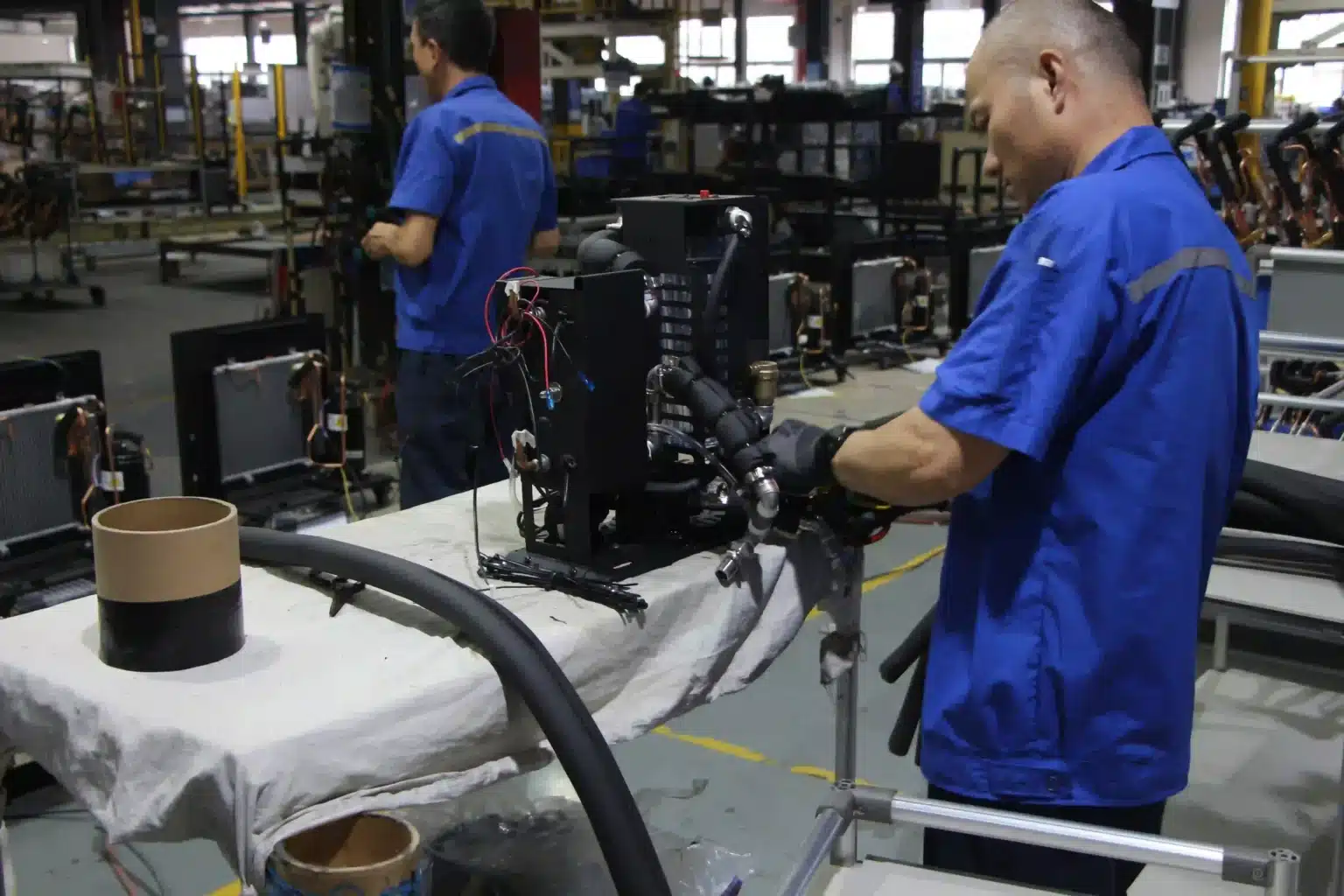
OEM cold plunge chiller solutions and recovery equipment assembly context at the OMNI Ice factory
From the first model review
to production and project handover.

Start with your business

Where are you starting?

OEM cold plunge chiller solutions can extend into tubs, sauna rooms and bundled recovery systems when the selected models, branding, documentation and project requirements are controlled together. Choose a starting point; we will use it to shape your enquiry.

01You have a product direction

Brand an existing model

Start with an existing chiller, tub, sauna or bundled recovery system, then review logo, finish, labels, packaging and documentation scope.

02You need equipment that fits together

Match a complete system

Bring your tub, sauna-room or facility plan, water volume and operating use case. Review the chiller, tub, room, water loop and interfaces together.

03Your idea goes beyond a standard option

Review a new requirement

Define the change, evaluate feasibility and agree on sample, validation and approval steps.

A project can combine more than one route. Review private-label launch checks Review OEM manufacturing stages

Six connected capabilities

Make the right details
work for your brand.

Start from a named chiller, tub, sauna or bundled system. Together, define what stays standard, what can be configured and what needs development review.
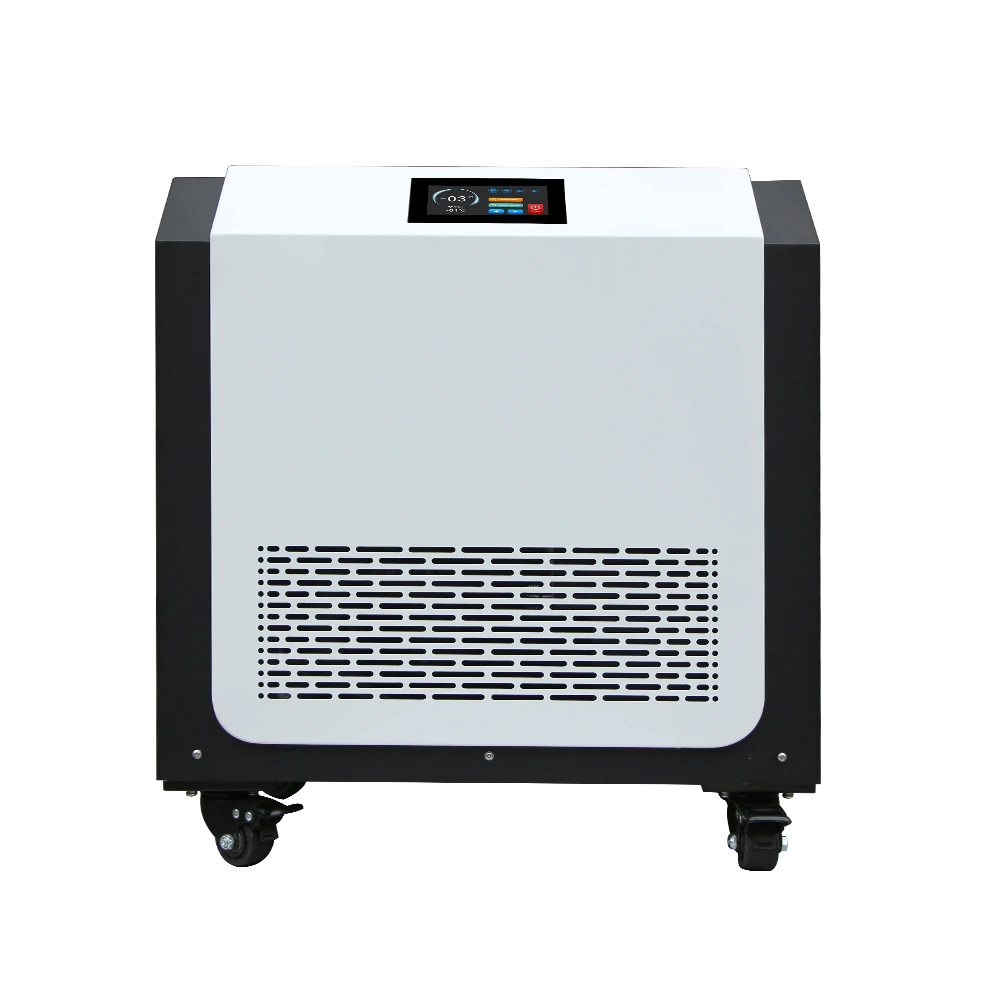
Front view of a silver and black cold plunge chiller with controller and ventilation grille
Your base model comes first.Product image · OMNI catalog
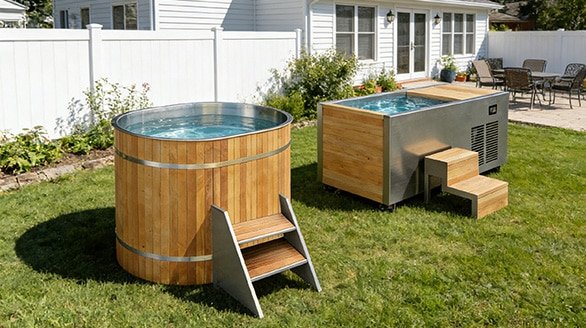
Concept image of wood-wrapped cold plunge tubs with matching exterior equipment enclosures
Wood-wrapped format concept
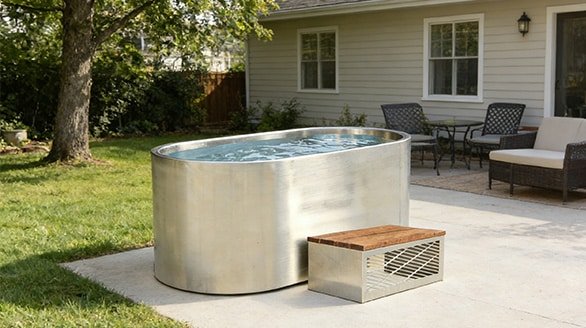
Concept image of a stainless-finish plunge tub and separate chiller enclosure outdoors
Stainless-finish format concept

Finish concepts illustrate a direction. Materials, dimensions and the final appearance are confirmed with the selected model.

01

Configuration review

Match cooling duty, water volume, electrical supply and installation conditions to an offered model.

02

Private-label scope

Review logo placement, finish, labels, manuals and packaging around the selected product.

03

Model-specific controls

Confirm the controller, supported functions, connectivity and language for your chosen version.

04

Water-loop options

Match pumps, filtration, treatment components, ports and service access to the operating plan.

05

Sample & change control

Keep the sample, artwork and production specification aligned through recorded approvals.

06

Destination documentation

Review available documents for the exact model, electrical variant and destination market.
Illustrative smartphone screen showing Wi-Fi and Bluetooth settings

Controls that fit the model

Discuss supported functions, interface language and connectivity before finalizing the product brief.

Connectivity illustration · available functions vary by model
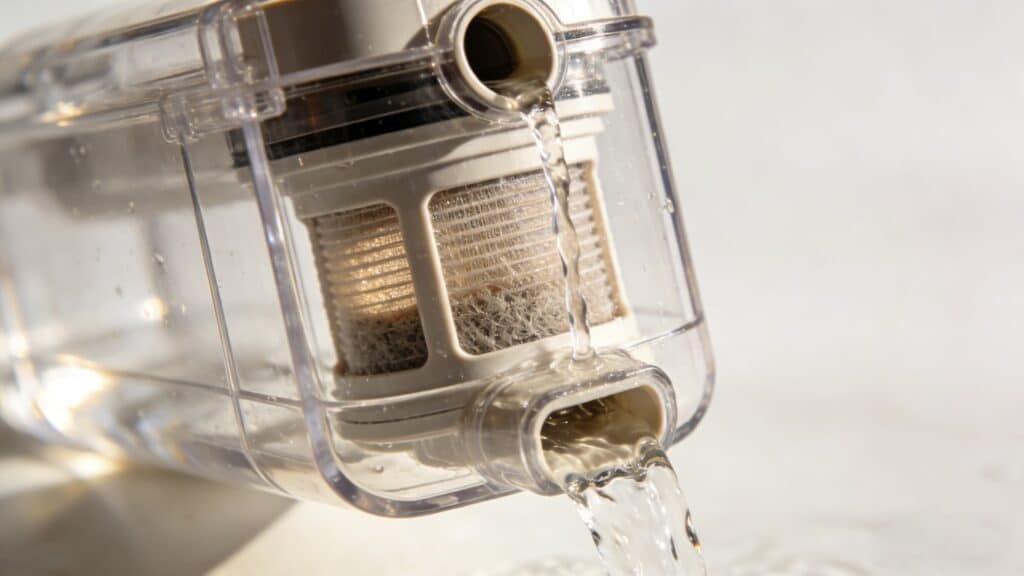
Close-up concept image of a transparent water filtration housing

A considered water loop

Review filtration, flow, treatment components and maintenance access as one system.

Filtration concept · confirm the included components

Choose the product behind your brand

One product. Or a connected line.

Explore the current equipment families, then bring the right model and variant into your OEM review.

Black cold plunge chiller with front ventilation grille and top controller

Chiller platform

Cold plunge chillers

Build around a defined cooling duty, electrical version, control interface and water-loop connection.

Explore chiller configurations
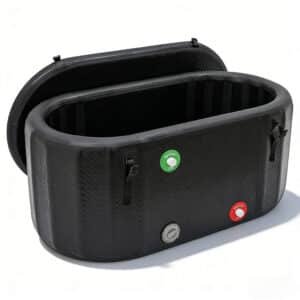
Black oval inflatable cold plunge tub with visible front connections

Tub platform

Cold plunge tubs

Compare tub formats, materials, capacity, insulation, connection positions and shipping needs.

Explore tub manufacturing
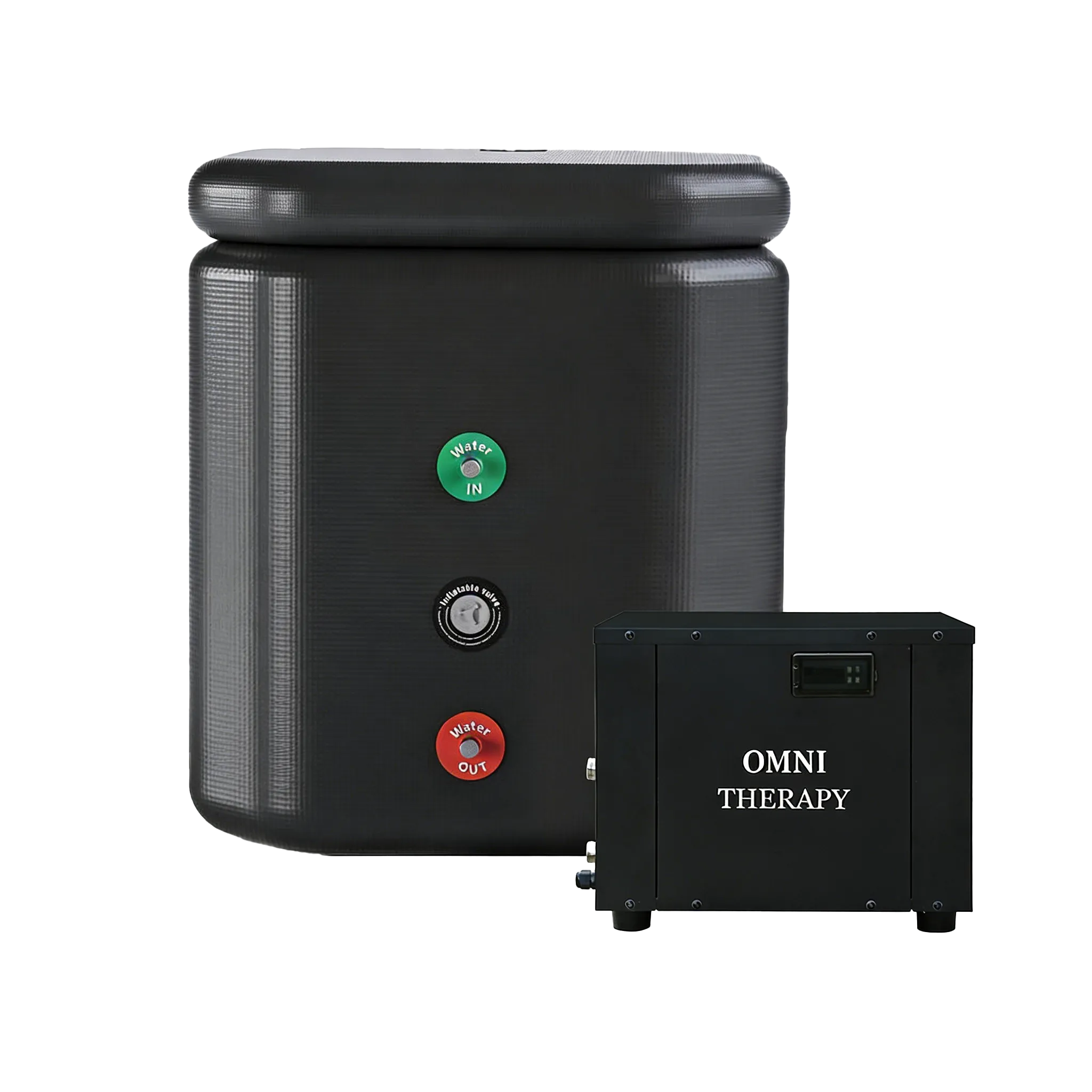
Catalog product image of a black cylindrical plunge tub paired with an external chiller

System review

Tub + chiller configurations

Bring the tub and chiller together with pumps, filters, hoses and the accessories your project needs.

Prepare a system brief

Behind the product

Look closer before
you commit.

See the production context. Then connect your order to a clear sample, inspection and release record.

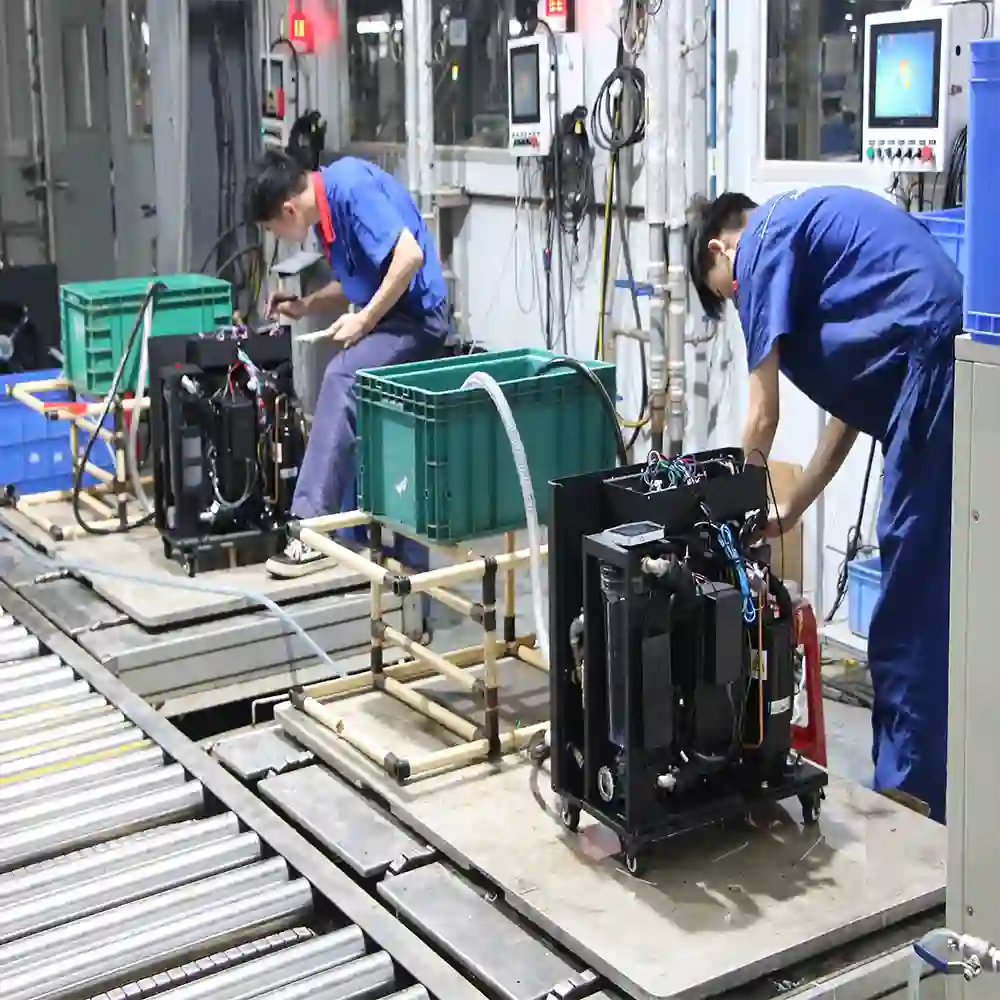
Workers assembling chiller components at workstations on a factory floor
Assembly floorFactory photograph from the existing OMNI media library.
Technicians working with open chiller units on a factory roller conveyor
Unit reviewDefine the checks and records for your own order.

Before production, agree on the model, included components, artwork and acceptance criteria. Before release, review observations, deviations, accessories and packing.

Meet OMNI Ice

A clear route forward

From your first brief
to a defined handover.

Each stage gives your team something concrete to review and approve before the next step.

Design illustration of a person reviewing a tub model on a computer screen
Design illustration · sample and development scope are agreed per project.
  1. 01

    Share your project

    Tell us the destination, product direction, intended use and estimated quantity.

  2. 02

    Confirm the configuration

    Review the proposed model, interfaces, options, documents and commercial scope.

  3. 03

    Approve the sample & brand

    Record the agreed functions, artwork, finish, labels and any sample-to-production differences.

  4. 04

    Produce & inspect

    Use the approved specification and inspection criteria to review the order and close deviations.

  5. 05

    Prepare the handover

    Confirm documents, accessories, packing, delivery responsibilities and the service route.

Keep the important details together

One brief. Fewer loose ends.

Use these four conversations to cover the nine essentials: identity, duty, water loop, electrical fit, branding, documents, inspection, packing and service.

Project areaWhat you shareWhat we confirm together
Product & performanceModel or product direction; water volume; temperature duty; installation conditions; voltage and frequency.Exact model and revision, included components, performance assumptions and electrical variant.
Brand & system fitArtwork, finish, label languages; tub ports, pumps, filters, hoses and service requirements.Branding sample, compatible interfaces, option list and any development or buyer-supplied items.
Documents & acceptanceDestination market, requested documents, sample expectations and inspection priorities.Model-and-market document matrix, inspection scope, pass criteria, deviations and release owner.
Packing & commercial handoverEstimated quantity, destination, delivery basis, target date and service expectations.Packout, dimensions, weight, shipping marks, cost inclusions, lead-time basis, warranty and parts responsibilities.

Compare quotations on the same configuration and delivery basis, including sample or development charges, payment stages, spare parts and exclusions.

Plan the full cost

Before your quotation

OEM project questions.

Find the practical answers for your brand, configuration and order. Open the planning details when you need them.

Prepare your project brief →
What information is required before an OEM quotation?

Provide the application, water and temperature duty, ambient conditions, users, water loop, verified electrical supply, destination, quantity, branding, document requirements and target date. Ask for one exact model and list of inclusions and exclusions.

Does OEM mean every part can be customized?

No. Each request should be classified as standard, configurable, newly engineered or buyer-supplied. Feasibility, minimum quantity, validation, cost and lead time depend on the exact change.

Can one certification cover every chiller variant?

Do not assume so. Verify the named manufacturer, model or series, electrical variant, standard, issuing body, destination relevance and current document status for the configuration being purchased.

Should a buyer approve a sample before production?

A sample or first-article approval can reduce ambiguity when the approved configuration, differences, labels, appearance, functions and test criteria are recorded. The contract should state what the sample approval controls.

What should happen before shipment?

Verify identity, visible build, nameplate and electrical variant, water-loop interfaces, representative running observations, controls, accessories, documents, packaging, deviations and release authorization against the agreed inspection scope.

What is included in OEM cold plunge chiller solutions?

OEM cold plunge chiller solutions are project configurations, not one universal product. A useful proposal connects the buyer’s target market, water volume, temperature duty, electrical supply, tub and water-loop interfaces, controls, branding, documents, inspection plan, packing and after-sales responsibilities to one exact offered model and variant.

For OEM cold plunge chiller solutions, model availability, technical data, document scope, customization, quantity, price and lead time are confirmed for the selected configuration and destination market.

Keep one controlled project record for OEM cold plunge chiller solutions from RFQ through approval, inspection and release. Compare competing proposals against that same record so every changed assumption, component and responsibility remains visible.

What are OEM cold plunge chiller solutions?

OEM cold plunge chiller solutions are manufacturer-supported equipment configurations prepared for a buyer’s brand, market and operating requirements. Depending on the verified project scope, the configuration may include a chiller, tub, pump, filter, water-treatment components, hoses, fittings, controller, enclosure, labels, packaging and documents. “OEM” does not mean every component or certification is automatically customizable or available.

A buyer should receive a configuration record that identifies what is standard, optional, newly engineered, buyer-supplied or excluded. That record becomes the reference for quotation, sample approval, production, inspection, packing and support.

Which nine checks belong in an OEM approval?

9 critical checks before approving OEM cold plunge chiller solutions

CheckBuyer evidenceFailure prevented
1. Product identityExact model, revision, electrical variant and included component listQuoting one version and shipping another
2. Thermal dutyWater volume, start and target temperature, pull-down time, ambient range, users and flowUnsupported horsepower selection
3. Water loopPump, filter, treatment route, ports, hoses, fittings, lift and service accessIncompatible interfaces or restricted flow
4. Electrical fitDestination voltage, frequency, plug or hardwire scope, nameplate and installation responsibilityWrong electrical variant
5. BrandingApproved artwork, colour reference, label languages, placement and sampleUncontrolled visual differences
6. DocumentsNamed document matrix with model, market, issuing body, version and statusUsing unrelated reports or logos
7. InspectionSampling rule, witness points, pass criteria, deviations and release authorityMarketing photos replacing acceptance evidence
8. Packing and deliveryPackout, dimensions, gross weight, shipping marks, delivery basis and destinationLanded-cost and handling surprises
9. Service boundaryDiagnostic route, parts, warranty terms, response channel and buyer/installer/operator duties“Support” without an executable process

Use the same nine checks for every OEM cold plunge chiller solutions proposal. If a supplier changes an assumption, model or included component, the change should be visible in the comparison instead of hidden in a lower price.

What technical information should I prepare?

Technical input sheet for an OEM project

Begin with the operating case. A model recommendation without water, temperature, time, ambient and flow conditions cannot be compared reliably. Send the following inputs before requesting an exact configuration:

  • Operating water volume and tub type, including port sizes and locations.
  • Starting water temperature, target temperature and required pull-down time.
  • Indoor or outdoor use, ambient range, sun exposure and equipment-room constraints.
  • Expected users per hour and per day, peak blocks and recovery window.
  • Pump, filter, sanitation route, hose inside diameter, route length, lift and fittings.
  • Verified destination voltage and frequency, plus plug or hardwire expectations.
  • Noise, footprint, ventilation, drainage, access and service-clearance limits.
  • Required controls, connectivity and language, subject to exact model support.
  • Destination country, quantity, branding scope, required documents and target date.

The OEM cold plunge chiller RFQ template turns these inputs into a supplier-ready request. The water-chiller sizing guide explains the thermal-duty boundary. Neither page substitutes for a model-specific engineering and site review.

Which changes are standard, optional or newly engineered?

Standard, configurable and newly engineered are different

OEM cold plunge chiller solutions should classify every request in one of four groups. A standard item is already defined for the named model. A configurable item uses an existing approved option. A newly engineered change requires technical review, validation and change control. A buyer-supplied item remains the buyer’s responsibility unless the contract says otherwise.

RequestQuestions before approval
Logo, label and colourArtwork format, colour reference, placement, durability, language and sample approval
Controller or connectivityExact model support, functions, app ownership, data handling, language and update responsibility
Electrical variantVoltage, frequency, components, nameplate, plug/hardwire route and document scope
Water-loop changeFlow, pressure, port direction, material compatibility, service and validation
PackagingUnit protection, accessories, marks, manuals, pallet or crate, dimensions and handling

Use the private label versus OEM guide to decide whether the project needs branding on an existing configuration or a deeper product change. Calling every colour or logo change “custom engineering” makes scope control harder.

How do I check model and market documentation?

Build a model-and-market document matrix

A certificate logo in a presentation is not evidence for every unit. For OEM cold plunge chiller solutions, request the document name, report or certificate number, issuing organization, applicant or manufacturer, exact model or series, electrical variant, referenced standard, destination relevance, issue/expiry status and permission to use any mark.

The ISO 9000 family concerns quality-management systems. ISO 9001 certification of an organization is not automatically a product safety certification. Intertek explains that an ETL Listed Mark applies to a product independently tested and certified to applicable safety standards; buyers should verify the exact manufacturer and model in the relevant directory rather than infer coverage from an image.

For the European market, use the European Commission’s CE marking guidance to identify applicable legislation and responsibilities. A CE graphic by itself does not establish that a particular chiller/tub configuration, document set and importer obligation are complete. Ask a qualified compliance professional to review the destination and final configuration.

Document status vocabulary

  • Available and verified: the buyer has reviewed the exact document and scope.
  • Available on request: the supplier identifies the document but still needs to provide it for review.
  • Planned: testing or documentation is not complete; owner, scope and timing are stated.
  • Not applicable: a qualified review has established why it does not apply.
  • Buyer responsibility: the buyer or importer owns a named action in the destination market.
What should the sample and inspection record include?

Sample, batch and factory-acceptance evidence

Quality control for OEM cold plunge chiller solutions begins before mass production. Freeze the approved configuration, artwork, labels, packaging, critical components and test criteria. A sample is useful only when differences between the sample and production order are documented.

The factory acceptance test guide explains how to define witness points and conditional test records. The pre-shipment inspection checklist covers identity, appearance, nameplate, water-loop observations, controller functions, documents, accessories, packing and deviation closure. These are buyer/supplier project records unless an independent qualified party is contracted to perform a third-party scope.

Minimum traceable release record

Purchase order and approved configuration → inspected unit or sample identity → test conditions and observations → deviations and disposition → accessories/documents/packing → named release authority.

What commercial and delivery details should be agreed?

Commercial handoff and landed scope

A useful quotation for OEM cold plunge chiller solutions separates equipment price from the complete commercial boundary. Record the currency, quantity tier, sample terms, tooling or development charges, packing, delivery basis, freight responsibility, payment stages, lead-time basis, validity, spare parts, documents, warranty terms and exclusions.

For a fair bid review, compare OEM cold plunge chiller solutions on the same operating duty, included equipment, document scope, packing basis and delivery responsibility. A lower headline price is not a like-for-like result when those boundaries differ.

Do not compare two prices until the included configuration and delivery basis match. One offer may include pump, filter, hoses and export packing while another covers only the chiller. The cold plunge sourcing checklist provides the supplier-verification route, while the chiller total-cost worksheet covers landed, installation, operating and service costs.

OEM project brief checklist

Buyer / brand: Destination market: Application and users: Water volume, start and target temperature: Required pull-down and recovery time: Ambient and installation conditions: Pump, filter, treatment, hoses and ports: Verified voltage / frequency: Requested branding and controls: Required document matrix: Sample and inspection plan: Quantity, packing and delivery basis: Spare parts, warranty and support route: Target date and approval owner:
How should I compare OEM suppliers?

How should buyers compare OEM suppliers?

Compare OEM cold plunge chiller solutions by exact configuration, test conditions, document scope, change control, inspection evidence, packing and service responsibility—not by factory claims or logo images alone. A qualified supplier response should state assumptions and exclusions, then connect the quoted model to the buyer’s market and operating case.

Let's build the right starting point

Tell us about
your OEM project.

Have a model in mind, a brand ready to launch or a new requirement to explore? Share what you know. We can start the review from there.
  1. 01Describe your market and product direction.
  2. 02Review the configuration and options together.
  3. 03Agree on the next sample or quotation step.
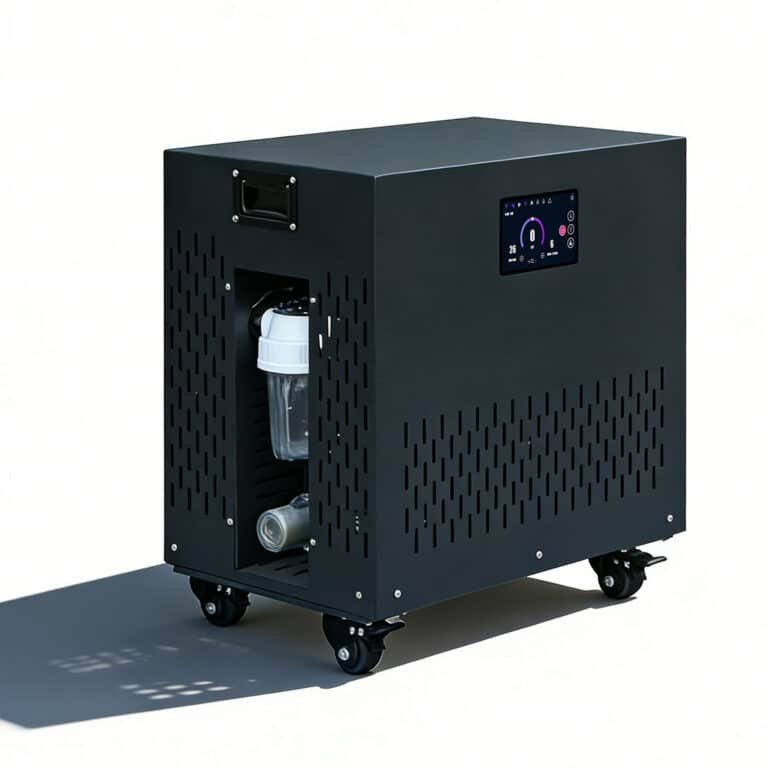
Black CHU-15 cold plunge chiller with touchscreen, filter housing and caster wheels

From a recognizable finish to a practical equipment configuration, start with the details that matter to your brand.

Your project starts here.

Share the known details. Technical drawings can follow as the scope takes shape.

An estimated quantity helps us review the project. Applicable minimums and sample terms are confirmed with the proposed scope.