A cold plunge chiller factory acceptance test is a buyer-defined, factory-stage witness and evidence process used to confirm that an identified unit or sample performs the agreed checks before shipment release. The FAT should connect the purchase order, approved configuration, test method, instruments, observations, deviations and sign-off. It does not replace product certification, a laboratory test, destination-country compliance review or the final packing inspection.
This guide gives importers, distributors, OEM brands and commercial-project buyers a copyable FAT structure. Acceptance limits must come from the approved project documents and exact model; OMNI Ice does not claim that every order uses every item below. For the later outgoing-product and packing gate, use the separate cold plunge chiller pre-shipment inspection checklist.
What is a cold plunge chiller factory acceptance test?
A cold plunge chiller factory acceptance test, commonly shortened to FAT, is performed at the supplier’s facility before the accepted equipment leaves the factory. Its purpose is to answer a narrow question: does the identified unit or approved sample meet the agreed project checks under the stated test conditions?
A usable FAT record identifies:
- buyer, supplier, project and purchase-order reference;
- model, revision, serial or equipment code and electrical configuration;
- approved specification, drawing, sample or change record;
- test setup, water volume, ambient conditions and connected components;
- instrument identification and calibration status where measurement matters;
- acceptance criterion for each witnessed item;
- observed result, photo/video/file reference and operator or witness;
- deviation, containment, correction, retest and final disposition.
ISO explains that an ISO 9001 quality management system includes documented information, monitoring, measurement and performance evaluation. The ISO guidance on documented information also lists test and inspection plans and records as examples organizations may use. That context supports disciplined records; it does not mean ISO 9001 mandates this exact FAT checklist or certifies an individual chiller. See ISO 9001 explained and ISO’s documented-information guidance.
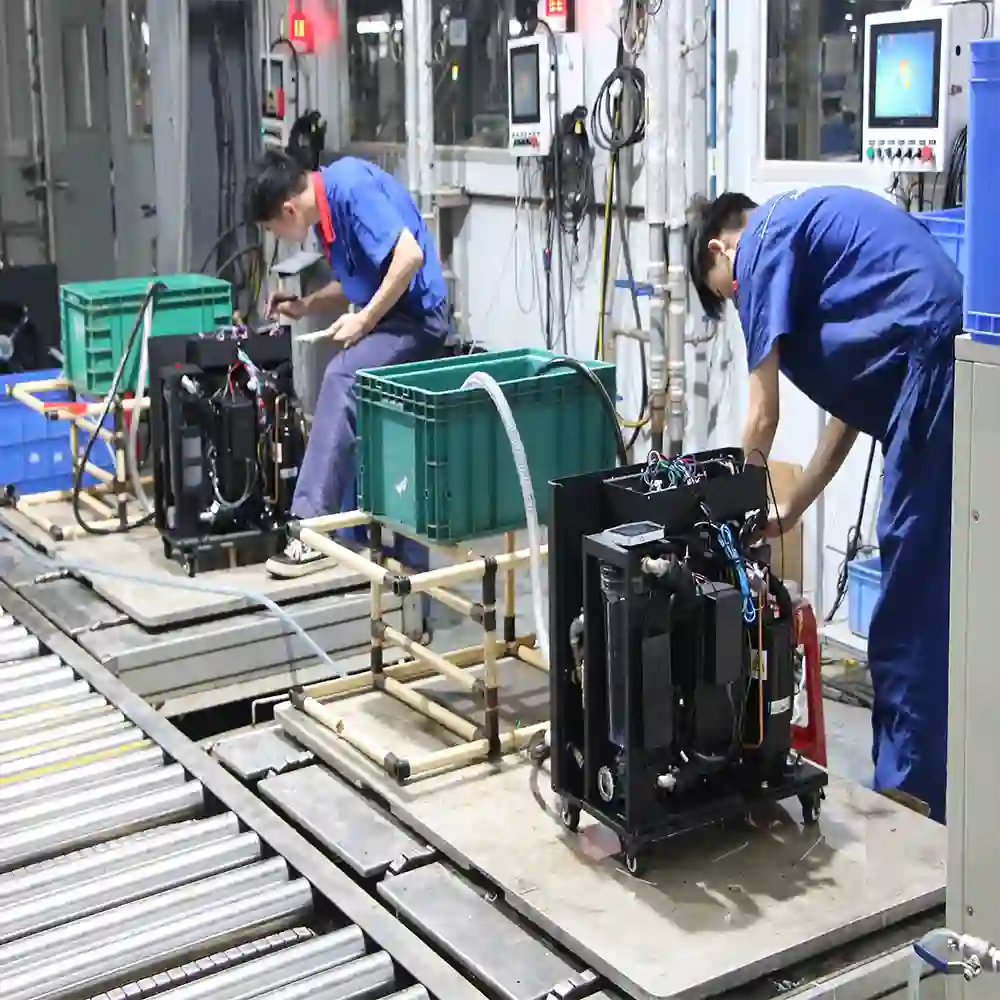
Cold plunge chiller FAT versus PSI, commissioning and certification
A cold plunge chiller factory acceptance test is often confused with other release activities. Treat them as connected but separate controls.
| Control | Primary question | Typical timing | What it does not prove |
|---|---|---|---|
| Factory acceptance test | Does the identified unit/sample meet agreed witnessed functions and evidence requirements? | Before shipment, at the factory | Universal performance, certification or destination installation approval |
| Pre-shipment inspection | Do outgoing units, quantity, appearance, documents, accessories, packing and marks match the approved order? | After production and before release/loading | A full engineering validation of every design function |
| Site acceptance / commissioning | Does the installed system operate with the actual site, tub, utilities and plumbing? | After destination installation | What happened under factory test conditions |
| Certification or laboratory assessment | Does the covered product/configuration satisfy the stated standard or conformity route? | According to the applicable program | That every shipment matches the order or site conditions |
Do not write “FAT passed” when only finished-product photos were reviewed. Do not write “certified” because a cold plunge chiller factory acceptance test was witnessed. Each conclusion needs its own evidence and scope.
Freeze the project inputs before the FAT
The cold plunge chiller factory acceptance test should not begin from a generic catalogue page. The buyer and supplier need a controlled reference set. At minimum, freeze the following before the test date:
- purchase order and latest approved specification;
- model, revision and destination electrical configuration;
- approved sample or written sample-deviation list;
- tub or test reservoir, water volume and plumbing diagram;
- pump, filter, hose, fitting and sanitation scope;
- controller functions and settings included in the order;
- labels, manual, packaging and accessory list;
- applicable project documents and buyer-requested evidence;
- test method, acceptance criteria, duration and retest rule;
- number of units or samples covered and selection method;
- participants, remote-witness platform and time zone if applicable;
- authority to pass, hold or accept a deviation.
If these inputs are missing, record the cold plunge chiller factory acceptance test as not ready rather than inventing limits on the factory floor. The OEM cold plunge chiller RFQ template helps buyers define the technical and commercial fields earlier in the project. For configuration sizing, use the chiller selection guide and the water-volume sizing checklist.
12 critical cold plunge chiller factory acceptance test checks
1. Identity and traceability
Photograph the whole unit and its identification plate. Record model, revision, serial or equipment code, quantity represented, order reference and test date. The cold plunge chiller factory acceptance test result belongs only to those identified units or the defined sample population.
2. Approved configuration
Compare the physical build with the latest approved configuration: housing, finish, controller, pump and filter arrangement, ports, hose/fitting sizes, accessories and OEM elements. Mark every approved change by revision. A verbal instruction that is absent from the controlled project record should be resolved before acceptance.
3. Nameplate and electrical fields
Check the ordered voltage, frequency, phase where relevant, rated input fields, plug or terminal arrangement and required labels against the destination configuration. Use the 110V versus 220V importer checklist to prevent a market mismatch. Electrical safety tests, values and personnel must follow the applicable standard, equipment and approved procedure; this article does not supply universal limits.
4. Visual workmanship and service access
Inspect panels, edges, fasteners, finish, connector alignment, hose routing, control mounting and access to service items. Record defects with a close-up and a wider image that identifies the unit. Cosmetic acceptance must use agreed samples or criteria rather than “looks good.”
5. Water-loop configuration and flow direction
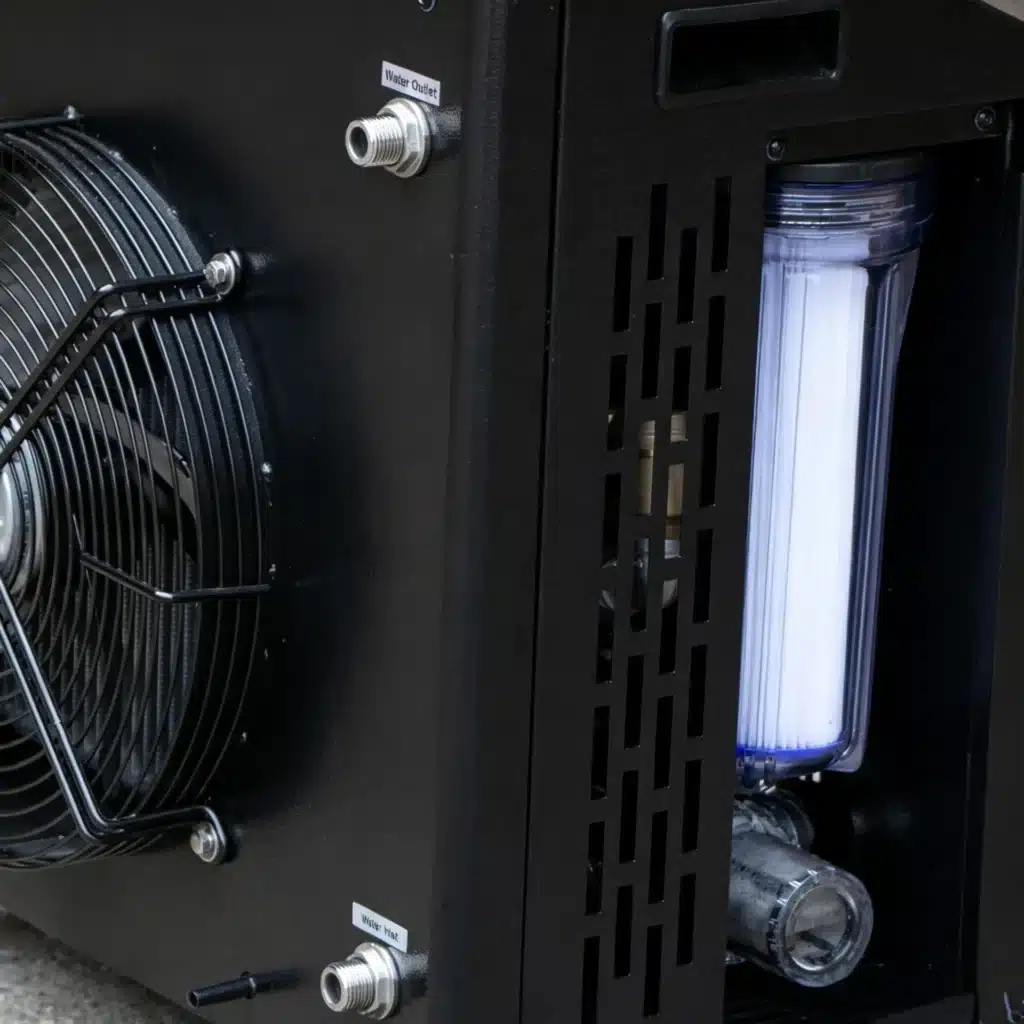
Trace tub outlet, suction path, pump, filter, chiller inlet and return path against the approved diagram. Confirm valves are in the test position, connections are seated and the test reservoir contains the defined volume. A cold plunge chiller factory acceptance test should record the actual connected components, because a different pump or restricted hose can change observations.
6. Visible leak check
Inspect every accessible fitting, housing, drain, seam and connection during the agreed operating period and after shutdown if the procedure requires it. Record duration and evidence. “No leak” without a time, condition and identified unit is weaker than a timestamped observation tied to the FAT record.
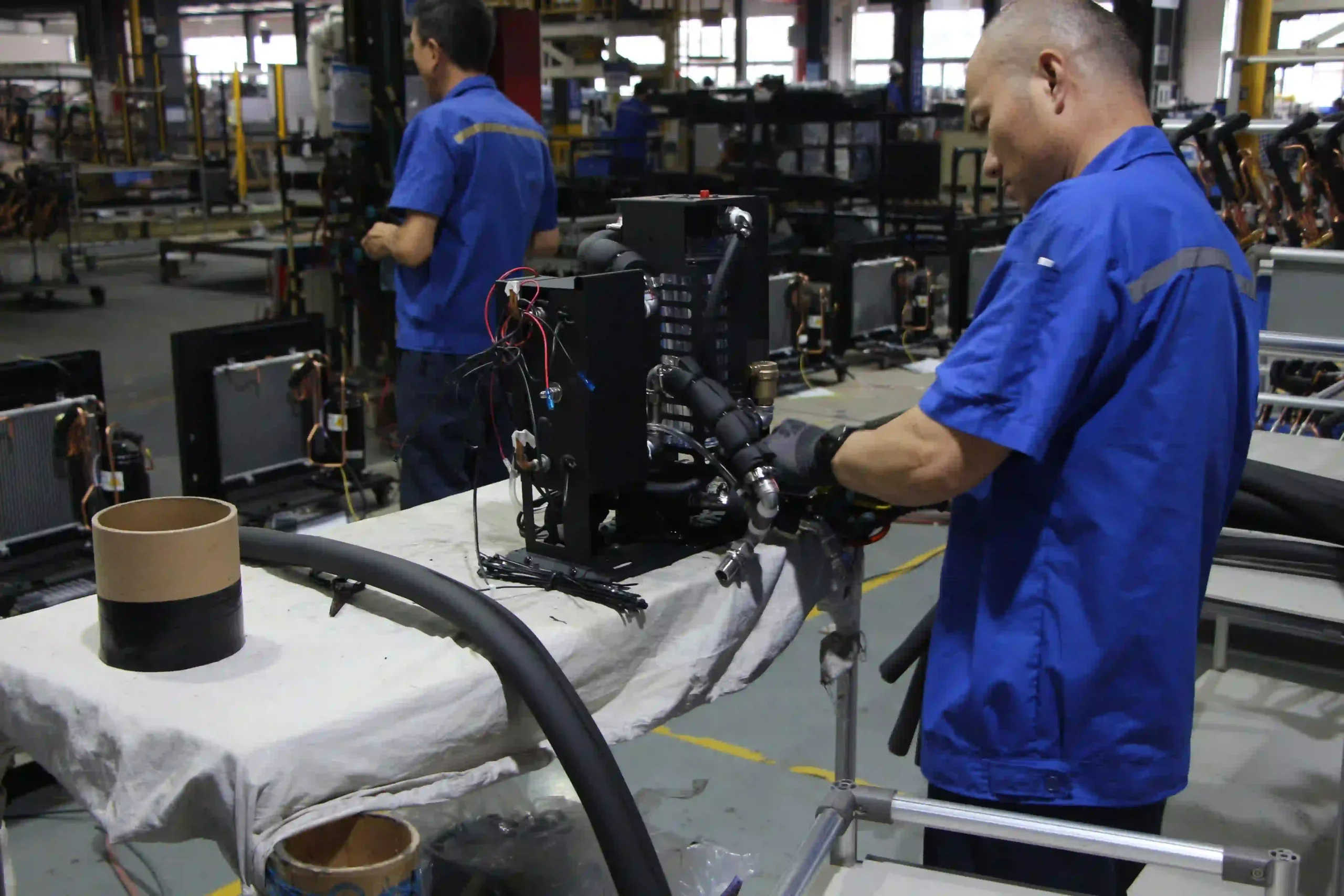
7. Startup, circulation and protection behavior
Follow the exact manual and test procedure. Record startup sequence, controller state, visible return flow and any alarm or protection event. Do not bypass a flow switch, electrical protection or controller interlock to force a pass. If the pump does not establish flow, use the pump-not-drawing-water diagnostic guide only within its safety boundary, then hold the FAT if the issue remains.
8. Controller and user-interface functions
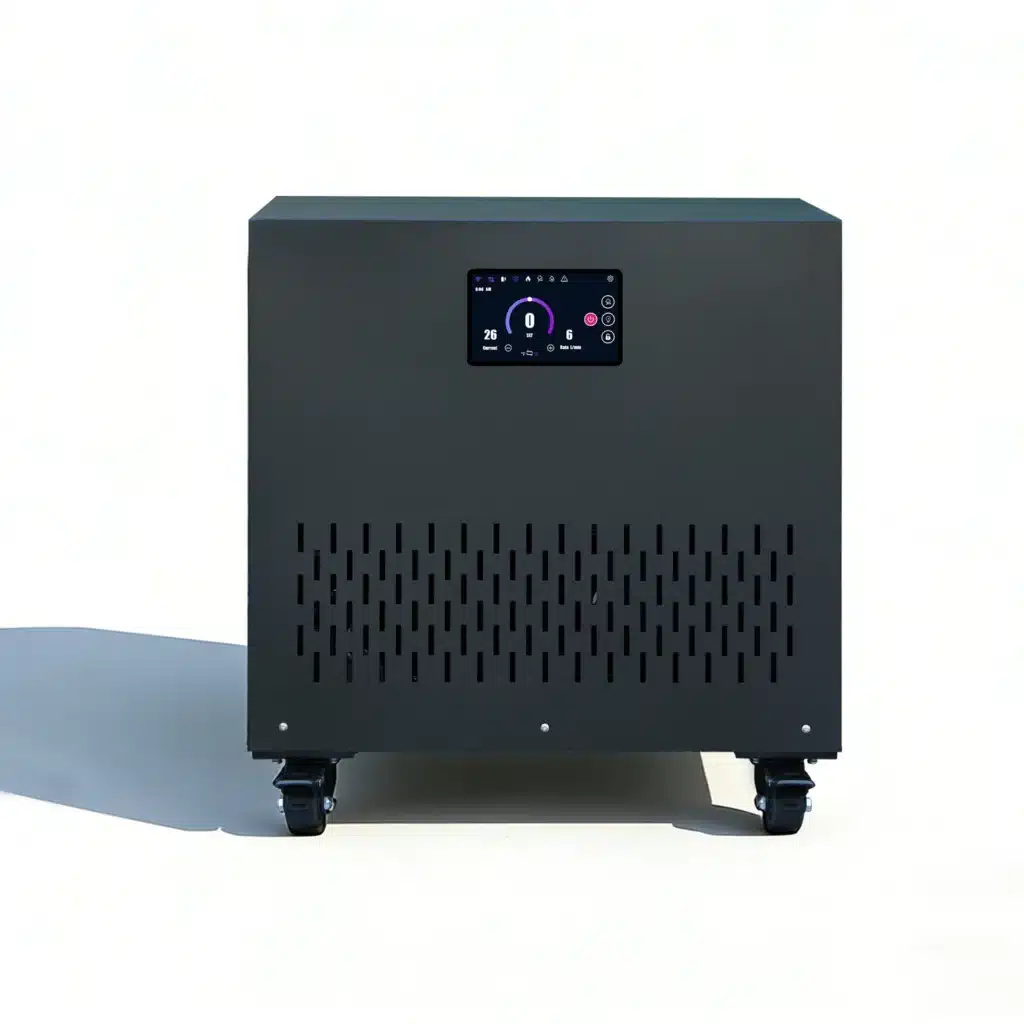
Verify only the functions included in the approved configuration: power, setpoint entry, displayed water temperature, operating mode, timer, lock, app or remote control if ordered, and alarm display. Record software or controller revision where it affects the project. A screenshot should show the identified unit and test step, not just an isolated display.
9. Temperature-sensor comparison
If the FAT includes temperature accuracy, define the reference instrument, its location, stabilization method, allowed difference and reading time before testing. The cold plunge chiller test instrument calibration guide explains how to connect that reference to its range, status, uncertainty and raw readings. Keep the controller display and independent reading in the same evidence frame where practical. Do not publish a tolerance that has not been approved for the exact project.
10. Agreed thermal run
A cold plunge chiller factory acceptance test may include a cooldown or temperature-maintenance run. Record water volume, starting temperature, target, ambient temperature, tub and cover, connected water loop, electrical configuration, timestamps and any user load simulation. Report the observed curve; do not convert one factory run into a universal cooling-time promise.
11. Noise, vibration and physical observations
If noise is a contractual acceptance item, specify instrument, distance, position, background condition, operating mode and limit. If it is not, record only qualitative abnormal sounds or vibration that need investigation. A phone recording can document a symptom but is not a calibrated sound-level result.
12. Accessories, documents and release handoff
Check the ordered accessory list, manual revision, labels, spare parts, filter elements, hoses, fittings, remote controls and project documents. Link open deviations to the shipment-release record. The cold plunge chiller factory acceptance test closes its technical witness scope; the pre-shipment inspection still confirms outgoing quantity, appearance and packing. Use the cold plunge chiller quality documents guide to place the FAT record, PSI report, compliance index, manuals, packing evidence and deviations in one controlled release file.

Cold plunge chiller FAT witness sequence and evidence pack
Run the cold plunge chiller factory acceptance test in a fixed order so evidence remains understandable after the call or factory visit:
- Opening: identify participants, project, unit, documents and authority.
- Pre-test condition: show the unpowered unit, water loop, instruments, reservoir and starting readings.
- Configuration walkaround: show labels, connections, included components and service access.
- Safety boundary: confirm the approved procedure and stop conditions; do not improvise energized work.
- Functional steps: execute each numbered FAT item and record pass, fail, not tested or not applicable.
- Measured run: capture timestamps, readings and conditions at the agreed intervals.
- Post-run inspection: check accessible water connections and any required shutdown behavior.
- Document review: confirm accessories, manuals, labels, evidence files and open deviations.
- Disposition: sign pass, conditional acceptance, hold or reject according to the contract.
Name files so a later reviewer can find them without guessing. A practical structure is PO-model-serial-teststep-date-file. The evidence pack may include the signed protocol, photo index, video index, measurement log, instrument list, configuration record, deviation log, correction evidence and retest record.
For remote witness, ask the factory to show a continuous path from the unit identifier to the water loop and controller before close-ups. This reduces the risk of mixing evidence from different units. Keep original files as well as compressed copies used for messaging.
Units, sampling and traceability
A cold plunge chiller factory acceptance test can cover a prototype, approval sample, first production unit, defined sample or every unit. The correct scope depends on contract, product risk, production stage and buyer requirements. Do not state that one successful sample proves every production unit passed.
The FAT plan should state:
- population or lot reference;
- number of units tested and who selected them;
- serial/equipment codes of tested units;
- which checks apply to every unit and which apply to a sample;
- what happens when a sampled unit fails;
- whether corrected units require full or partial retest;
- how FAT evidence connects to the later packing list.
If third-party inspection or a formal sampling standard is required, name it in the contract and inspection instruction. This guide does not assign an acceptance quality limit or sample size because those decisions must be agreed for the order.
Pass, hold, deviation and retest rules
Every cold plunge chiller factory acceptance test line needs one disposition:
- Pass: the recorded result meets the approved criterion.
- Fail: the recorded result does not meet the criterion.
- Hold: evidence, method, equipment or authority is insufficient to decide.
- Not tested: the planned check was not executed; state why and who must resolve it.
- Not applicable: the approved configuration does not contain that function; explain the basis.
- Accepted deviation: the authorized buyer accepts a documented difference under stated conditions.
Silence is not acceptance. A supplier’s correction should identify root issue where appropriate, affected units, containment, action and retest evidence. The buyer’s waiver should name the deviation and scope; it should not erase the original result.
Shipment authorization also needs a named decision owner. The International Chamber of Commerce explains that Incoterms rules define certain delivery obligations, risks and costs but do not cover every contract issue. FAT acceptance, title, payment triggers, warranty and remedies should therefore be written into the commercial agreement rather than assumed from the delivery term. See the ICC Incoterms 2020 Q&A.
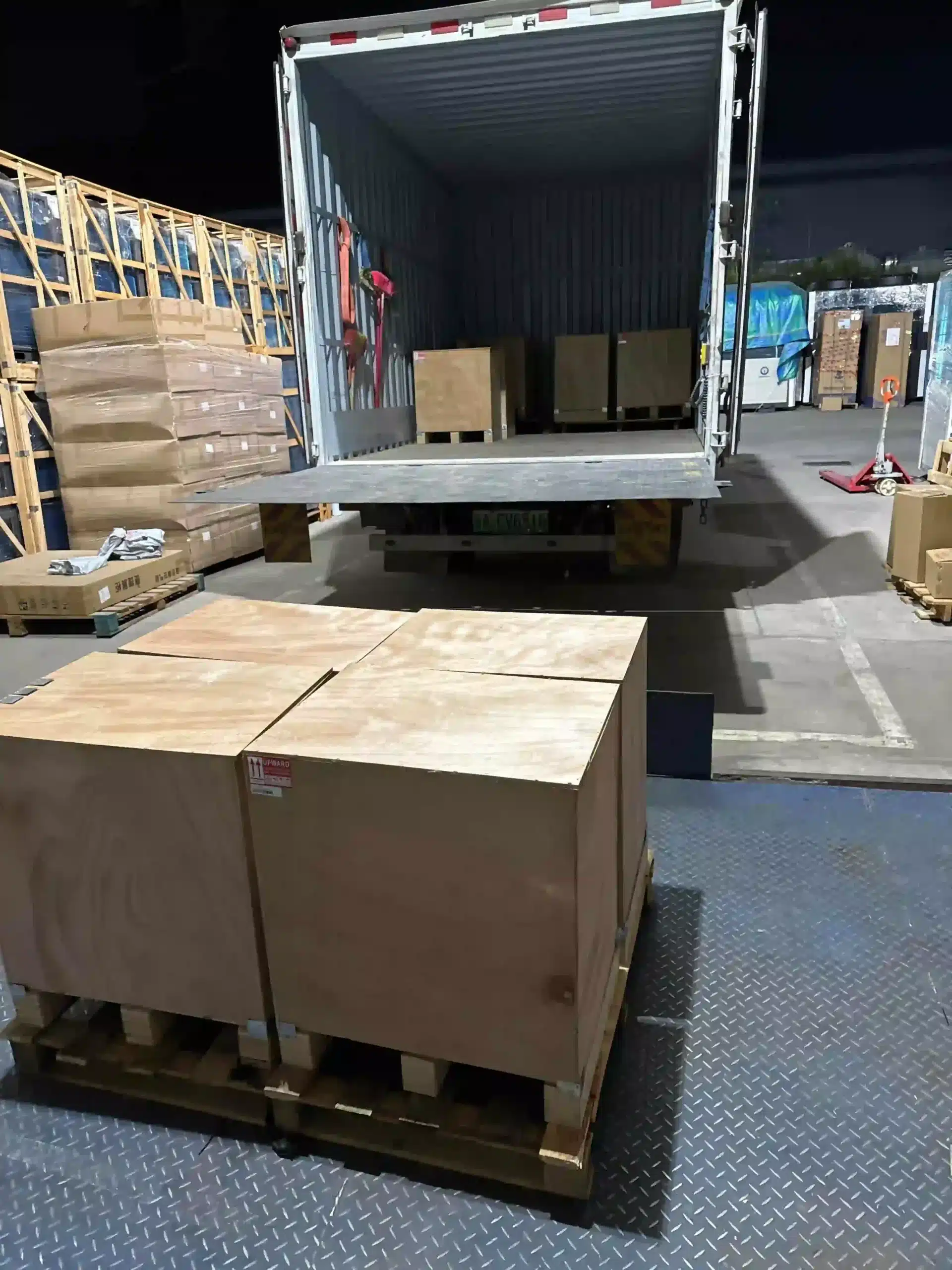
Copyable cold plunge chiller factory acceptance test record
COLD PLUNGE CHILLER FACTORY ACCEPTANCE TEST (FAT)
PROJECT / BUYER:

SUPPLIER / FACTORY:

PURCHASE ORDER:

MODEL / REVISION:

SERIAL OR EQUIPMENT CODE(S):

DESTINATION MARKET:

VOLTAGE / FREQUENCY / CONNECTION:

APPROVED SPECIFICATION / DRAWING / SAMPLE REVISION:

TEST DATE, LOCATION AND PARTICIPANTS:

UNIT OR SAMPLING SCOPE:
TEST SETUP

Reservoir/tub and water volume:

Starting water temperature:

Target and agreed duration:

Ambient temperature and conditions:

Pump/filter/hoses/fittings used:

Electrical supply:

Reference instruments and status:
CHECKS — record criterion, observation, evidence file and disposition

01 Identity and traceability:

02 Approved physical configuration:

03 Nameplate and electrical fields:

04 Workmanship and service access:

05 Water-loop configuration / flow direction:

06 Visible leak check and duration:

07 Startup / circulation / protection behavior:

08 Controller and ordered functions:

09 Temperature-sensor comparison, if specified:

10 Agreed cooldown or maintenance run:

11 Noise/vibration check, if specified:

12 Accessories, documents and release handoff:
DEVIATIONS / CONTAINMENT / CORRECTION:

RETEST REQUIRED AND SCOPE:

OPEN ITEMS, OWNER AND DUE DATE:
FINAL DISPOSITION: PASS / CONDITIONAL ACCEPTANCE / HOLD / REJECT

SUPPLIER REPRESENTATIVE / DATE:

BUYER OR AUTHORIZED WITNESS / DATE:

SHIPMENT RELEASE AUTHORITY / DATE:
Copy the form into the project’s controlled document system and replace every blank with the approved requirement. For a complete sourcing route, connect the FAT record to the cold plunge chiller supplier due-diligence guide, the RFQ and the pre-shipment inspection record.
Frequently asked questions about a cold plunge chiller FAT
Is a cold plunge chiller factory acceptance test mandatory?
Not universally. A FAT is a buyer/supplier contractual or project control unless an applicable requirement says otherwise. Define scope, acceptance criteria, witnesses, evidence and shipment consequences in writing before testing.
Does a passed FAT mean the chiller is certified?
No. A passed FAT means the identified unit or sample met the agreed FAT checks under stated conditions. Certification or conformity assessment has its own scope, standards, covered configuration and evidence.
Can the FAT be witnessed by video call?
Yes if the buyer accepts remote witness and the plan defines camera coverage, continuous unit identification, data capture, original files, communication platform, time zone and what requires an independent witness or later check.
How long should a chiller FAT run?
There is no universal duration. The approved protocol should state the function, water volume, starting and target temperatures, ambient conditions, stabilization method, observation interval and acceptance criterion for the exact project.
What happens if the FAT finds a deviation?
Record the deviation, affected unit and evidence; assign containment, correction, owner and due date; define retest scope; then obtain an authorized pass, hold, rejection or written deviation acceptance before shipment release.
To plan a project-specific cold plunge chiller factory acceptance test, send OMNI Ice the selected model or duty, destination electrical configuration, water-loop scope, approved documents, required witness steps, acceptance criteria and shipment timeline through the official project contact page. OMNI Ice will confirm what can be supported for the exact project rather than treating this general checklist as a blanket promise.