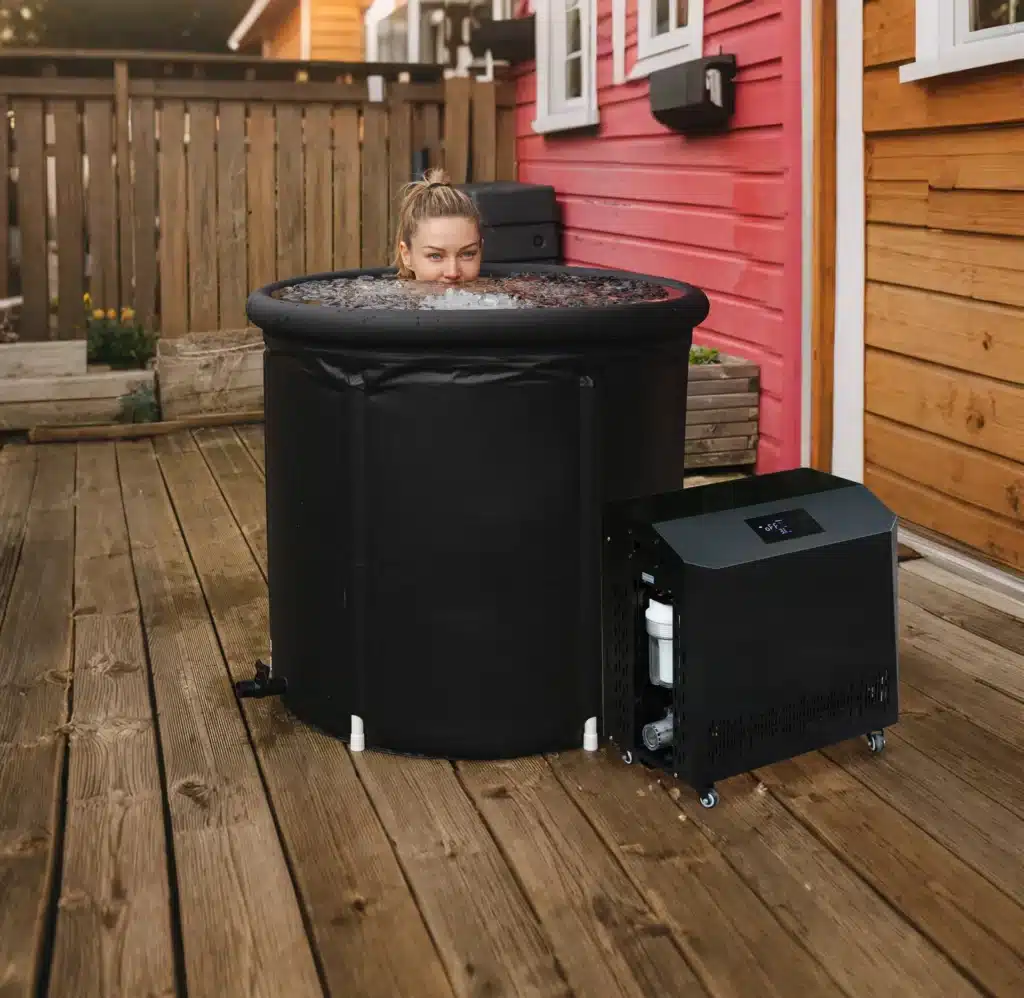
In high-traffic commercial recovery facilities, boutique wellness studios, and private residential estates, an ice bath chilling machine is expected to operate silently and reliably every single day. Bathers expect crisp, 39°F water on demand, free from cloudy sediment, organic odors, or microbial biofilm. However, chilling machines combine high-pressure R290 refrigeration circuits, submerged titanium heat exchangers, brushless DC circulating pumps, and delicate mechanical seals. When maintenance routines are neglected or treated as casual afterthoughts, equipment breakdowns follow rapidly: water filters clog, circulation velocity drops, coaxial evaporator barrels freeze into solid blocks of ice, and pumps run dry. Establishing long-term operational uptime requires following a rigorous cold plunge chiller maintenance checklist.
In factory technical records and warranty postmortems, over 80% of premature field failures stem from preventable maintenance oversights rather than defective compressor hardware. Operating a commercial cold plunge system requires distinguishing between daily facility sanitization checks, weekly mechanical inspections, seasonal consumable replacements, and off-season winterization protocols. Furthermore, international buyers and facility operators importing containerized equipment must know exactly which consumable spare parts (5-inch pleated filter cartridges, replacement O-rings, and mechanical pump seals) must be stocked on-site to avoid weeks of downtime waiting for international air shipments. Here is the operational maintenance and engineering guide facility directors, maintenance technicians, and plunge owners need to preserve equipment health, protect bather safety, and maximize machine service life.
The Operational Cadence: Daily, Weekly, and Monthly Maintenance Schedules
When executing a professional cold plunge chiller maintenance checklist, a successful preventative maintenance program relies on structured inspection cadences. Rather than waiting for a digital controller to lock out on an error code or noticing lukewarm water after a rush of athletes, facility maintenance teams follow a tiered checklist:
| Maintenance Frequency | Critical Inspection Checkpoints | Mechanical Target Baseline | Failure Risk if Neglected |
|---|---|---|---|
| Daily Routine (Pre-Opening) | Check water level, inspect hairnet pre-filter, verify return water flow, log setpoint temperature. | Waterline covers upper return inlet; water clear; flow steady with zero air bubbles. | Low water level starves pump; air cavitation destroys DC pump impeller in under 90 seconds. |
| Weekly Inspection | Inspect 5-inch sediment filter cartridge, wipe basin waterline, check condenser coil for dust, inspect quick-connect O-rings. | Pleated filter clean; condenser fins unobstructed; zero weeping at hose fittings. | Clogged filter drops circulation below 15 GPM, causing evaporator freeze-up and high head pressure. |
| Monthly & Quarterly Deep Service | Full basin water dump, replace 20-micron filter cartridge, vacuum condenser fins, test Class-A GFCI breaker trip, inspect ozone check valve. | Fresh water chemistry balanced; GFCI trips and resets instantly; ozone micro-bubbles visible. | Biofilm colonization along pipe walls; electrical leakage hazard; failed ozone check valve allows water into generator. |
In high-throughput athletic facilities hosting back-to-back training sessions, an hourly recovery rate and consistent preventative servicing are essential. For commercial facilities installing heavy-duty equipment cabinets, review our operational analysis on a commercial cold plunge chiller.
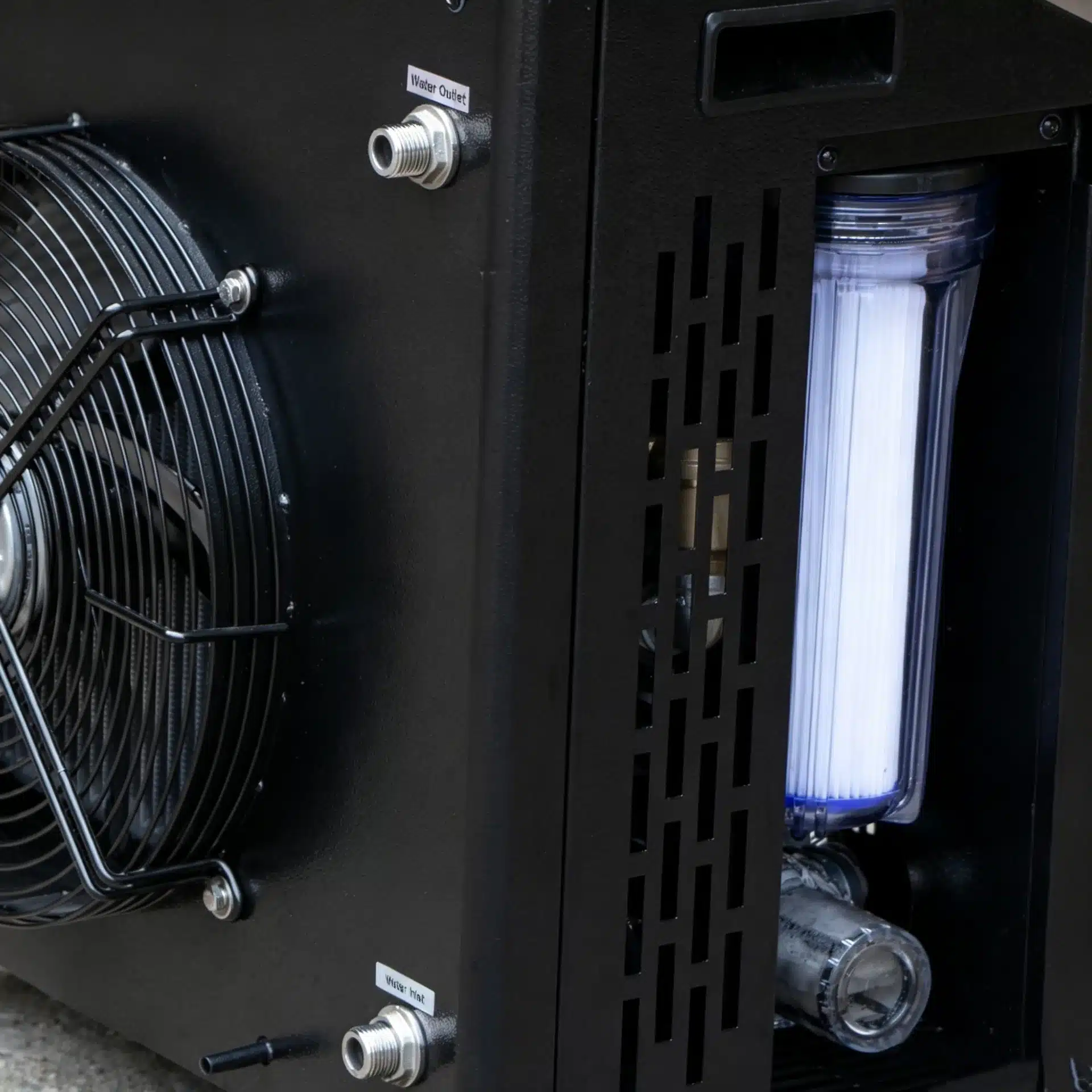
Factory filtration assembly showing the external 5-inch canister housing, quick-connect hose fittings, and isolation valves engineered for rapid cartridge maintenance.
Filter Cartridge Replacement: 5-Inch Canister Service Procedures
The primary mechanical defense protecting a cold plunge chiller’s titanium heat exchanger is its sediment filtration canister. In our factory manufacturing records, OMNI CHU-series commercial chillers feature an external 5-inch filter housing supplied with a dedicated filter wrench and high-density pleated sediment cartridges. In contrast, CHM-series models house internal filtration behind removable cabinet panels.
When executing a cold plunge chiller maintenance checklist, service technicians follow a strict four-step filter swap protocol:
- Isolate Water Flow & Depressurize: Power off the chiller and close the true-union ball valves on both the water inlet and outlet lines. Press the red pressure relief button located on top of the filter housing cap (or loosen the top bleed screw) to relieve internal hydraulic pressure. Attempting to unscrew a pressurized canister will bind the threads or crack the plastic housing ring.
- Canister Removal & Cleaning: Engage the dedicated factory filter wrench around the canister body ribs and turn counterclockwise. Discard the spent sediment cartridge. Wash the interior of the clear filter bowl with clean tap water and a soft microfiber cloth; never use petroleum-based solvents or harsh abrasives that cloud plastic vision bowls.
- Inspect & Lubricate the O-Ring: Remove the black nitrile rubber O-ring seated in the top canister groove. Inspect for micro-cracks, flat spots, or dirt particles. Apply a thin film of food-grade silicone grease (never petroleum jelly) to keep the rubber pliable and ensure a watertight seal under pump pressure.
- Reassembly & Air Bleeding: Drop a fresh 20-micron pleated cartridge onto the internal locating guide spindle. Thread the canister housing clockwise onto the cap by hand until snug, then use the wrench for an additional 1/8th turn—do not overtighten. Open the water isolation valves, depress the air bleed button until clean water escapes with zero air bubbles, and restore electrical power.
For installations pairing chillers with exterior timber basins, review timber care protocols in our guide on cedar cold plunge tub maintenance, or examine structural liner durability in our engineering report on metal tubs for ice baths.

Standard factory accessory kit including spare 5-inch sediment filter cartridges, specialized filter wrench, quick-connect fittings, and stainless hose clamps.
Circulation Pump Care & Air-Lock Prevention: Protecting the 88W DC Motor
In manufacturer engineering data, OMNI 1.0 HP and 1.5 HP chillers integrate an 88-watt brushless DC water circulation pump. Brushless DC pumps provide continuous hydraulic circulation with exceptionally low electrical draw and minimal acoustic motor hum. However, like all centrifugal pumps, they are water-lubricated and water-cooled.
Preventing pump failure requires managing airlocks and debris ingress:
- Never Run the Pump Dry: Operating the pump for even 60 to 90 seconds without water creates intense friction heat across the carbon-ceramic mechanical face seals. The seal faces overheat, warp, and crack, resulting in permanent water leaks into the motor windings. Always verify that water floods the pump intake before powering on the unit.
- Clearing Trapped Air-Locks: When refilling a plunge tub after cleaning, air can become trapped in the high arch of external water hoses. If the pump spins against an air bubble, it loses prime and flow velocity drops to zero. To purge an airlock: loosen the quick-connect union on the chiller outlet port while the pump runs briefly until a solid stream of water expels trapped air, then re-seat and latch the fitting.
- Hairnet Pre-Filter Maintenance: In factory accessory sets, a fine stainless steel mesh strainer or suction hairnet mounts on the tub suction drain. Inspect and clear this screen daily to prevent human hair, workout chalk residue, or loose lint from wrapping around the internal pump impeller blades.
For complete piping diameter rules and elevation tolerances, review our contractor installation guide on cold plunge chiller installation requirements.
Condenser Coil Cleaning: Airflow Clearance & Dust Removal
As detailed across our cold plunge chiller maintenance checklist, refrigeration equipment does not destroy heat; it mechanically extracts heat from the water loop and transfers it into ambient air through an aluminum-finned condenser coil. In commercial gyms, ambient air contains high concentrations of fine airborne dust, clothing fibers, and chalk dust. In outdoor installations, pollen, dried leaves, and road dust coat the coil face.
When dust mats across the aluminum fins, static air resistance spikes, reducing airflow volume across the condenser. The compressor must work against significantly higher head pressures, drawing higher running amperage and taking up to 40% longer to pull water down to 39°F:
- Monthly Vacuuming: Use a shop vacuum with a soft bristle brush attachment to clean dust and lint from the exterior intake louvers. Brush gently in the direction of the aluminum fins to avoid bending delicate metal edges.
- Low-Pressure Water Rinse (Outdoor Units): For outdoor chillers, disconnect electrical power and use a gentle garden hose stream to flush accumulated pollen and dirt from the inside out through the louver slots. Never use a high-pressure commercial pressure washer, which instantly folds aluminum coil fins flat and permanently blocks airflow.
- Perimeter Clearance Audit: Verify that no gym equipment bags, towel hampers, or outdoor patio furniture have been pushed within 18 inches of the intake side or 30 inches of the fan exhaust grille. For exterior airflow parameters, review our report on an outdoor chiller unit for cold plunge setups.
For full thermodynamic calculations and compressor pull-down test standards, consult our technical breakdown on a cold plunge chiller cooling performance test.
Consumable Spare Parts Stocking: What Commercial Facilities Must Keep On-Site
In international commercial equipment procurement, shipping a single replacement filter cartridge or replacement sensor probe across borders via emergency courier costs hundreds of dollars in freight and takes days to clear customs. Commercial facilities hosting paying members cannot afford a week of downtime for a $15 consumable part.
Facility directors should stock this critical spare parts kit in their maintenance room:
| Consumable Component | Recommended Stock Quantity | Expected Service Lifespan | Operational Function |
|---|---|---|---|
| 5-Inch 20-Micron Pleated Filter Elements | 6 to 12 cartridges per machine | 3 to 6 weeks per cartridge | Traps bather hair, skin cells, and workout chalk before reaching titanium heat exchanger. |
| Nitrile Rubber Canister O-Rings | 2 to 4 replacement rings | 6 to 12 months | Prevents high-pressure water weeping around filter housing threads. |
| Ozone Check Valves (Kynar / PVDF) | 2 replacement valves | 12 months | One-way check valve prevents plunge water from back-siphoning into electronic ozone module. |
| Reinforced 1-Inch Quick-Connect Fittings | 1 complete spare set | 24 months | Ensures instant replacement if a locking cam lever or barb fitting is dropped or damaged. |
| Food-Grade Silicone Lubricant (100% Pure) | 1 tube (2 oz) | As needed (monthly application) | Keeps O-rings supple and prevents thread galling on plastic filter bowls. |
For private-label brands and wellness franchises planning containerload equipment orders, review custom branding and parts allocation in our guide on cold plunge OEM customization options.
Winter Decommissioning & Freeze Protection Protocols
In temperate climates, cold plunge chillers operate outdoors year-round. But in northern regions where winter temperatures drop below 32°F (0°C), standing water inside external hoses or the titanium evaporator barrel presents catastrophic freeze hazards. Water expands by 9% as it solidifies into ice; ice expansion inside a titanium barrel splits internal tubing, discharging refrigerant and permanently destroying the refrigeration circuit.
When decommissioning an outdoor plunge for freezing winter conditions, technicians execute a four-step winterization sequence:
- Disconnect Electrical Power: Unplug the main GFCI power cord and disconnect the Wi-Fi remote scheduling automation so an automated timer cannot accidentally trigger the compressor without water.
- Open Drain Ports & Disconnect Quick-Connects: Disconnect both the water inlet and outlet quick-connect hoses from the chiller. Open the bottom chassis drain port to allow gravity water drainage from the internal piping manifold.
- Compressed Air Evacuation (Under 15 PSI): Gravity drainage alone will not empty the coiled spiral loops inside a titanium coaxial heat exchanger. Connect an oil-free air compressor regulator to the water inlet fitting. Blow clean air through the heat exchanger at low pressure (strictly under 15 PSI / 1.0 bar) until only dry air mists from the outlet fitting. Never use high-pressure industrial shop air (80+ PSI), which ruptures internal check valves and flow sensors.
- Indoor Dry Storage: Move the 50 kg chiller inside a climate-controlled equipment room or garage. If the machine must remain outside, install a breathable, water-shedding protective cover. To understand airflow rules for covered equipment, see our operational guide on cold plunge chiller covers. For full winter storage procedures, consult our dedicated manual on cold plunge chiller winter storage and drainage.
For reverse-cycle heat pump machines capable of automated heating to prevent freezing, review our dual-mode analysis on a water chiller heater.
Factory-Direct Commercial Chilling Systems from OMNI Ice
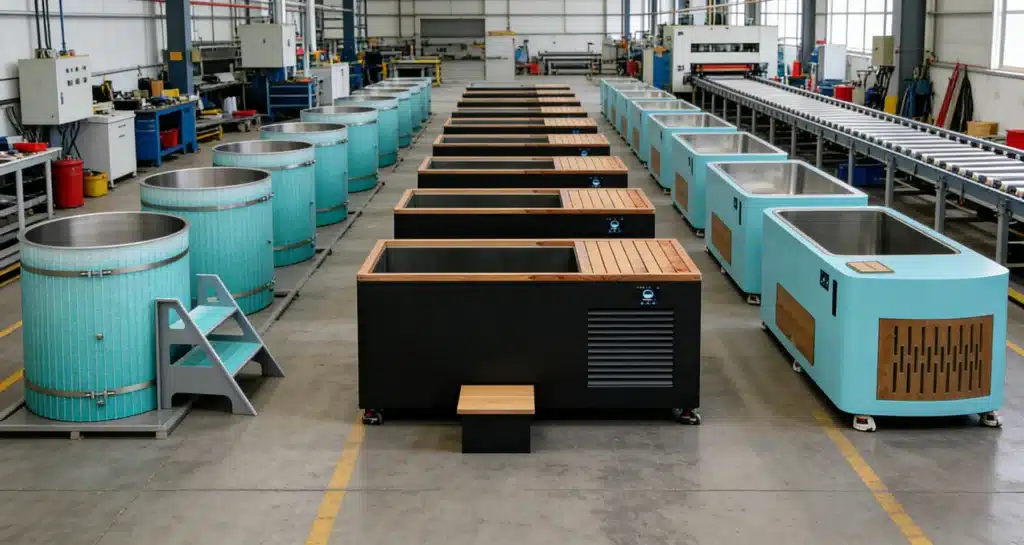
At OMNI Ice, our engineering team manufactures high-capacity commercial and residential cold plunge chillers, insulated stainless plunge tubs, and modular saunas for athletic training centers, luxury spas, and residential wellness spaces worldwide. We eliminate distributor markups and supply turnkey equipment backed by comprehensive technical documentation:
Featured Commercial Chilling & Plunge Hardware
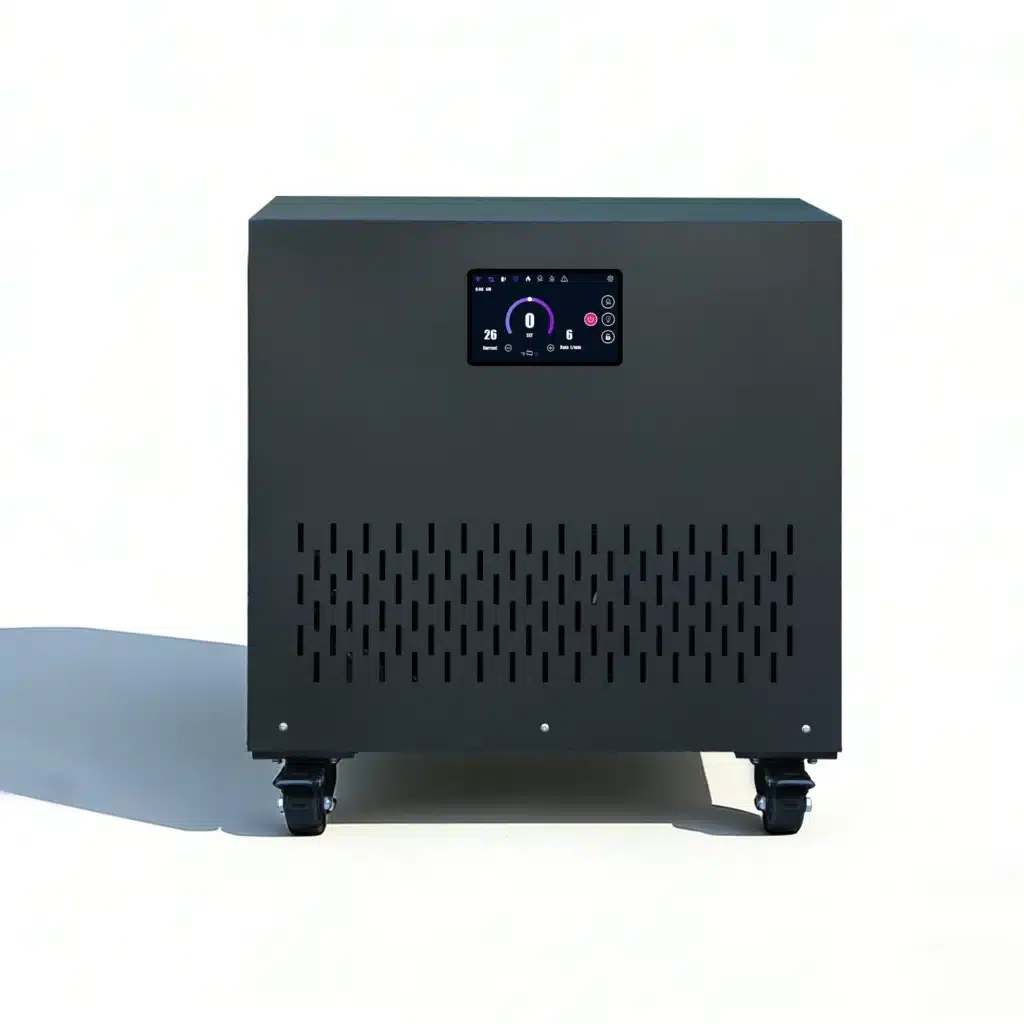
- OMNI CHU & CHM Commercial Cold Plunge Chillers (1.0HP & 1.5HP): High-capacity commercial recovery machinery engineered with pure titanium coaxial barrels, 88W DC circulation pumps, integrated ozone, and R290 refrigerant.
- ProValue CH-08 0.8HP Ice Bath Chiller: Compact exterior-rated cooling unit engineered for private recovery suites and residential patios.
- WT-11 Large Ice Bath Tub (304 Stainless Direct-Cool System): An industrial-grade commercial plunge basin engineered with direct refrigeration cooling walls, eliminating exterior hose clutter entirely.
If your project requires private-label equipment manufacturing, full containerload wholesale distribution, or custom engineering submittals, explore our complete OEM cold plunge equipment solutions or connect directly with our engineering team through our commercial equipment RFQ desk.
The Facility Director Maintenance Sign-Off Checklist
Before handing over daily cold plunge operations to staff, verify that these five operational maintenance systems are established:
- Filter Swap Tools on Pad: Ensure the factory 5-inch filter wrench, silicone O-ring grease, and spare 20-micron cartridges are stored in the equipment room.
- Isolation Valves Operable: Test that true-union ball valves close smoothly without water weeping.
- Class-A GFCI Monthly Test Logged: Confirm staff test and record GFCI breaker trip operations monthly.
- Coil Clearance Clear: Inspect that condenser intake louvers (18″ clearance) and exhaust fans (30″ clearance) remain free of storage bins and laundry bags.
- Air-Bleed Protocol Posted: Post written instructions reminding staff to bleed air from filter canisters before restarting circulation pumps after water drains.
When backed by structured daily inspections, timely cartridge rotations, and disciplined winterization protocols, a commercial cold plunge chiller operates with flawless mechanical precision—delivering crystalline, 39°F water recovery through thousands of demanding athletic sessions.