Cold plunge chiller winter storage begins with one decision: will the exact unit remain in approved winter service, be drained in place, or be moved into storage? Do not wait for the first freeze and then improvise with a hose, compressed air or an unverified tilt. The shutdown method must match the model, water loop, site and manufacturer instructions.
This guide helps facilities, distributors and installers create a controlled cold plunge chiller winter storage record. It uses OMNI’s generic instruction evidence where applicable, keeps its model limitation visible, and separates shutdown from the spring restart. The common failure is to switch off the cabinet while leaving trapped water, unidentified hoses and no restart baseline.
Choose the cold plunge chiller winter storage state
There are three legitimate project states, but none can be selected from climate alone. The exact model’s ratings, installed location, water-loop design, operator coverage and model-specific manual decide the route.
| Winter state | Required evidence | Hold when |
|---|---|---|
| Remain in service | Model-rated environment, freeze-protection method, continuous utilities, alarms and response owner | The product rating or emergency response is unknown |
| Drained in place | Approved isolation and drain procedure, verified empty points, dry protection and locked status | Trapped water or drain sequence cannot be confirmed |
| Move to storage | Approved handling orientation, route, storage environment, accessory ledger and restart owner | The unit may be tilted, exposed or energized contrary to instructions |
A cold plunge chiller winter storage decision should name the owner who authorizes shutdown and the person who may restart the equipment. A sticky note saying “winterized” does not show what was drained, disconnected or inspected.
The general chiller maintenance guide owns routine preventive care. This page owns the seasonal state change, evidence package and controlled return to service.
Create the shutdown record before disconnecting anything
Start cold plunge chiller winter storage with photographs and identifiers: model, serial or equipment code, electrical variant, controller, hoses, filter, valves, fittings, drain points and installed orientation. Record the final operating condition and any unresolved leak, alarm, noise or performance issue. Storage should not hide an active fault.
Then identify the water boundary. Mark the tub, supply and return hoses, filter housing, pump or self-priming section, low points and every component that can retain water. Label loose hoses and seals so they return to the same approved position. If the system has site-supplied plumbing, assign that section to the responsible installer rather than assuming the appliance manual covers it.
For service-panel movement and access, use the chiller service-access plan. Winter shutdown may require access that normal daily operation does not, but it does not authorize opening sealed electrical or refrigerant sections.
Drain the water path without inventing a method
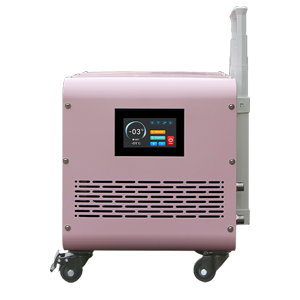
OMNI’s unmapped Ice Bath Chiller Operation Instruction states that if ambient temperature reaches 0°C, the pipes should be disconnected, the drainer opened and the unit fully drained to prevent freezing damage. It also says to drain internal water after use, especially in winter. Because the manual has no model or revision, those instructions are a starting boundary—not permission to apply one drain sequence to every CH, CHM or CHU unit.
The same manual creates an important conflict for cold plunge chiller winter storage: it says to keep the unit upright and not invert it, but another page mentions tilting to drain residual inlet water. It gives no safe angle, direction, support point or applicable model. Do not turn that conflict into a public how-to step. Obtain the exact model’s drain procedure or authorized service instruction.
Freezing water can damage enclosed systems because water expands as it freezes. The U.S. National Weather Service’s cold-weather guidance uses the same principle when warning about frozen pipes. That source supports the physical risk; it does not define how to drain a cold-plunge chiller.
A defensible cold plunge chiller winter storage record identifies each drained point, the method used, who performed it, the evidence captured and any section that remains uncertain. If complete drainage cannot be proven, move the equipment out of the freezing exposure or escalate to qualified service.
Store the unit, hoses and filter as one controlled set
The generic OMNI instruction prints a water-free storage environment of -20°C to 55°C and relative humidity of 20% to 85%. It also requires the unit to remain upright, dry and away from damaging exposure. Because the manual is not mapped to a model, do not use those figures to override the current nameplate, product datasheet or destination instructions.
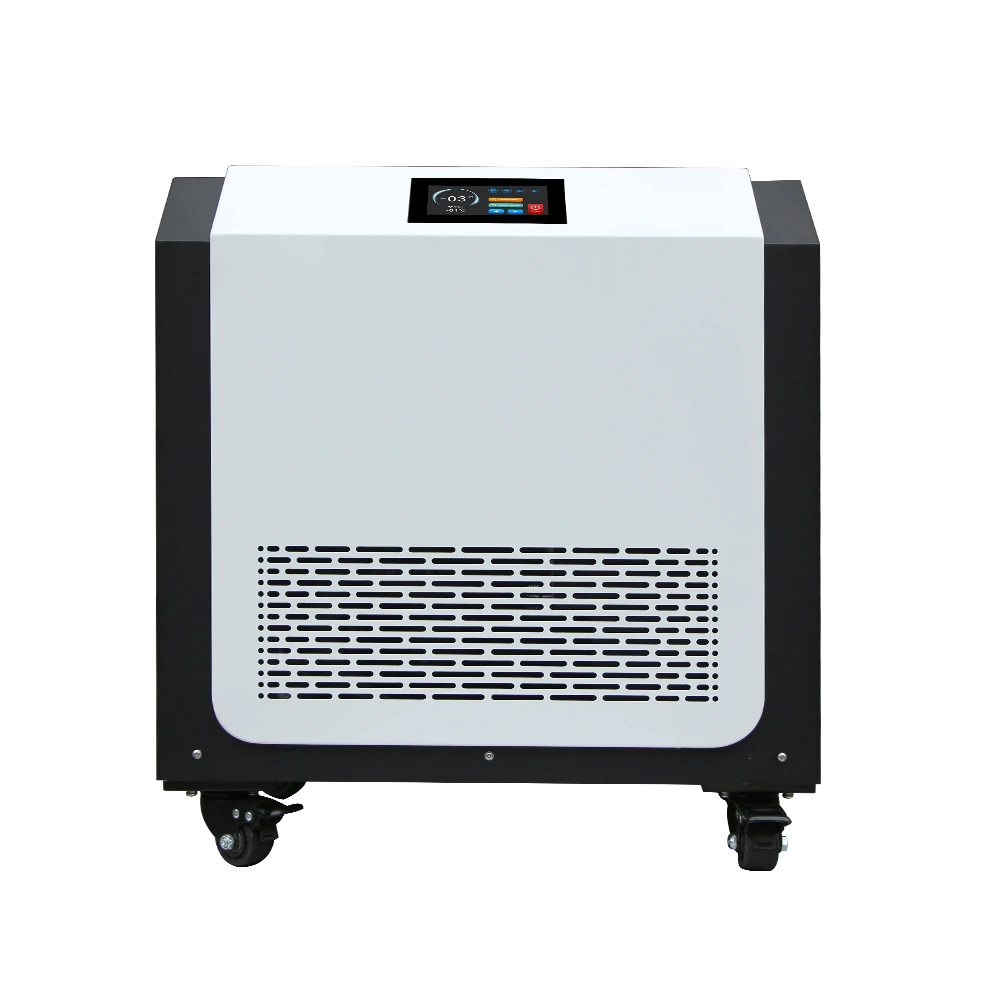
For cold plunge chiller winter storage, keep the cabinet on a stable surface with vents unobstructed. Protect openings from debris without sealing moisture inside. Do not store heavy objects on hoses or the power cable. Keep filters, seals, adapters and tools in a labelled container with the equipment ID and shutdown record.
| Stored item | Record | Restart risk if missing |
|---|---|---|
| Chiller cabinet | Identity, upright position, dry condition, vent protection and location | Wrong unit, hidden water or transport damage |
| Hoses and fittings | Source/return labels, condition, seals and capped storage | Reversed flow, leakage or missing adapter |
| Filter components | Element status, housing condition, wrench and replacement plan | Restricted flow or an incomplete water loop |
| Documents | Manual revision, shutdown photos, exceptions and restart owner | Guesswork at recommissioning |
Control movement and the spring restart
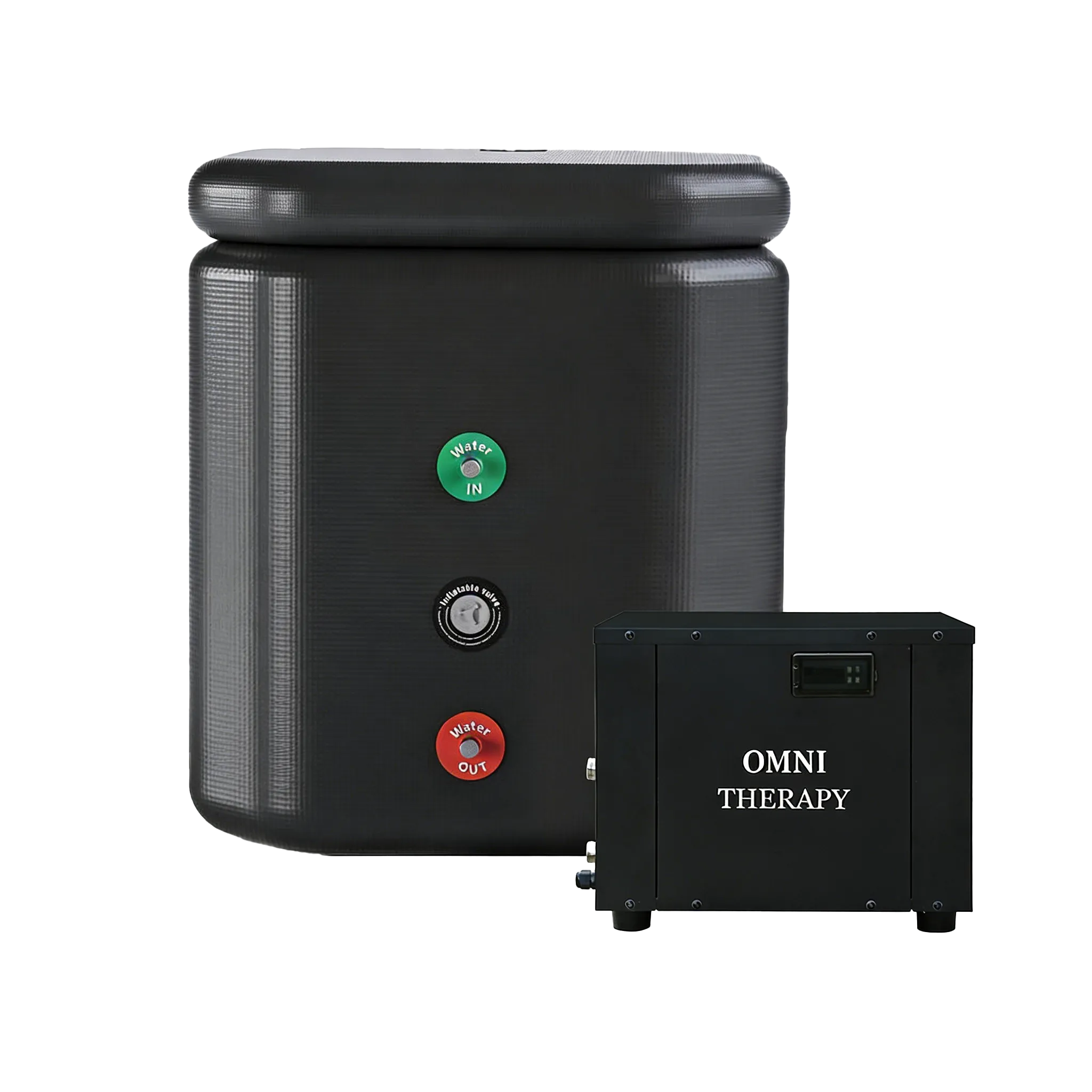
If the chiller is moved, the generic instruction says to keep it upright during and after transport and wait 24 hours before use so the refrigeration gas can settle. Apply that only where the exact model instructions agree. Record the movement date, orientation, destination and earliest permitted restart time.
The restart is not simply “plug it back in.” A cold plunge chiller winter storage release should pass an identity gate, condition gate, water-loop gate and functional gate. Verify the correct hoses, filter and seals; inspect for visible damage or moisture; reconnect according to the approved diagram; fill the tub above the required inlet level; confirm valves and connections; then perform the model-specific first-start and leak/flow checks.
Use the commissioning checklist when the equipment returns to service. If a stored unit has visible damage, leakage, unusual smell, noise or an unfamiliar error, stop and use qualified service rather than changing protected controller parameters.
For units returned from another warehouse or site, the receiving inspection record helps preserve package and identity evidence before restart.
Use four hold points instead of one “winterized” label
A cold plunge chiller winter storage file should pass four hold points. The first confirms the winter state and model-specific instructions. The second confirms shutdown and drainage evidence. The third confirms the storage location, orientation and accessory ledger. The fourth controls restart and closes every recorded exception.
| Hold point | Evidence | Do not release when |
|---|---|---|
| Winter-state approval | Model identity, climate exposure, selected state and responsible owner | The unit’s winter rating or response plan is unknown |
| Shutdown closeout | Power isolation, disconnected interfaces, drained-point record and unresolved faults | A water path or active fault remains undocumented |
| Storage acceptance | Location, upright condition, dry cabinet, accessory inventory and movement record | The unit is exposed, unlabelled or stored in an unapproved orientation |
| Restart release | Inspection, settling time, correct reconnection, circulation and commissioning record | Leakage, abnormal operation or an open deviation remains |
These gates make cold plunge chiller winter storage auditable across shifts and sites. They also show where work stopped. A unit can be electrically isolated but not yet drained, or drained but not yet accepted into storage. The status should name that boundary instead of implying the entire process is complete.
Example: a hypothetical multi-site gym closure
Consider a hypothetical gym operator with three different chiller models. One unit remains inside a heated building, one is drained and stored in place, and one is moved to a warehouse. The operator uses the same record headings for all three units but attaches a different model procedure to each. This is safer than creating one “company winterization SOP” that assumes identical ports, drains and transport limits.
The heated-building unit still needs a documented power, alarm and emergency response plan. The drained-in-place unit needs evidence for every low point and protection against accidental reconnection. The moved unit needs orientation and transport records plus the earliest approved restart time. Cold plunge chiller winter storage is therefore a state-control problem as much as a drainage task.
Separate storage exceptions from maintenance work
Use the winter file to record exceptions, but do not let it become an unauthorized repair instruction. A damaged hose, corroded connector, wet electrical area, unusual refrigerant smell, repeated alarm or visibly damaged cabinet should be assigned to qualified service. The storage team can photograph, label and isolate the issue; it should not diagnose sealed systems or reset protected parameters.
If a filter element is removed, record whether it will be cleaned, replaced or discarded, and prevent an empty housing from being mistaken for a complete restart-ready assembly. If hoses are capped, identify whether the caps are for clean storage only or part of the supplied system. Small unrecorded substitutions are a common reason a spring restart no longer matches the approved layout.
A disciplined cold plunge chiller winter storage process keeps the maintenance owner, storage owner and restart owner separate. One person may perform more than one role, but the record must show which decision each person accepted.
Define cold plunge chiller winter storage exit criteria
Cold plunge chiller winter storage is not complete merely because the cabinet is dry and labelled. The storage state remains active until the equipment is either formally decommissioned or released through the approved restart sequence. Put that status in the asset register so another operator cannot energize the unit from memory.
The cold plunge chiller winter storage exit criteria should identify the current model manual, responsible technician, required upright settling period, complete water-loop assembly, clean filter status, available electrical supply, leak/flow check and commissioning evidence. If any stored part was replaced or the installation moved, reopen the configuration review. A complete cold plunge chiller winter storage record ends with a dated release decision and the name of the person who accepted it.
Use a copyable winter storage and restart file
A complete cold plunge chiller winter storage file should contain:
- model, revision, serial/equipment ID and location;
- shutdown date, weather/freeze exposure and selected winter state;
- power-isolation owner and water-boundary drawing;
- model-specific drain procedure reference and drained-point evidence;
- cabinet, hose, filter, fitting and seal condition;
- storage position, environment and movement record;
- open faults, exceptions and service actions;
- restart owner, earliest restart time and commissioning record.
For OEM, distributor or multi-site fleets, keep the same form while allowing model-specific procedures to differ. A common record format improves traceability; it does not make different drain paths interchangeable.
Buyers can review current cold plunge chiller configurations and send the model, destination climate, installation type, shutdown period and required documents through the OMNI project contact. The goal is a model-specific plan, not a generic promise that one winterization method fits every unit.
Questions operators ask
Can a cold plunge chiller stay outdoors through freezing weather?
Only when the exact model documentation and site plan explicitly allow that use and provide a verified freeze-protection method. If freezing exposure is possible and the approved method is unknown, isolate the unit and obtain model-specific shutdown and drainage instructions.
Should a cold plunge chiller be tilted to remove residual water?
Do not invent a tilt direction or angle. OMNI’s generic manual says to keep the unit upright but also mentions tilting to drain residual water, without defining a safe method. Use the exact model’s approved drain procedure or authorized service instructions.
What should be checked before restarting after winter storage?
Verify identity and condition, upright settling time after movement, dry electrical areas, correct hoses and filter, open valves, water level, leak-free circulation, normal flow and the approved temperature setting before returning the system to service.