Cold plunge tub filled weight is not the catalogue shipping weight and not the water volume alone. A defensible site calculation adds the exact installed-empty equipment mass, actual water mass, maximum simultaneous users and every accessory carried by the same structure. The result must then be handed to the qualified professional responsible for the floor, slab or deck.
This guide gives commercial buyers a repeatable cold plunge tub filled weight record without pretending that an average kilograms-per-square-metre value proves structural safety. It separates known values from estimates and shows why support points, integrated chillers, steps and configuration changes matter.
Calculate cold plunge tub filled weight from five inputs
Use one transparent cold plunge tub filled weight planning equation:
Operating mass = installed-empty tub/system mass + water mass + maximum user mass + supported accessories + any supported external equipment.
Water mass can be estimated from verified water volume and density. The NIST Chemistry WebBook provides water thermophysical data and shows that density varies with temperature. For early planning near ordinary cold-plunge conditions, buyers often use approximately 1 kg per litre; label that as an approximation and replace it with the project’s measured fill and engineering basis.
| Input | Preferred evidence | Do not substitute |
|---|---|---|
| Installed-empty mass | Current datasheet, nameplate/BOM or verified weighing for the ordered configuration | Shipping gross weight |
| Water mass | Measured normal operating fill × accepted density assumption | External geometric volume or maximum overflow volume |
| Users | Approved simultaneous occupancy and design user mass basis | A catalogue photo or marketing label |
| Accessories | Steps, cover, benches, handrails and items supported by the same floor area | Items listed only in another model’s packing list |
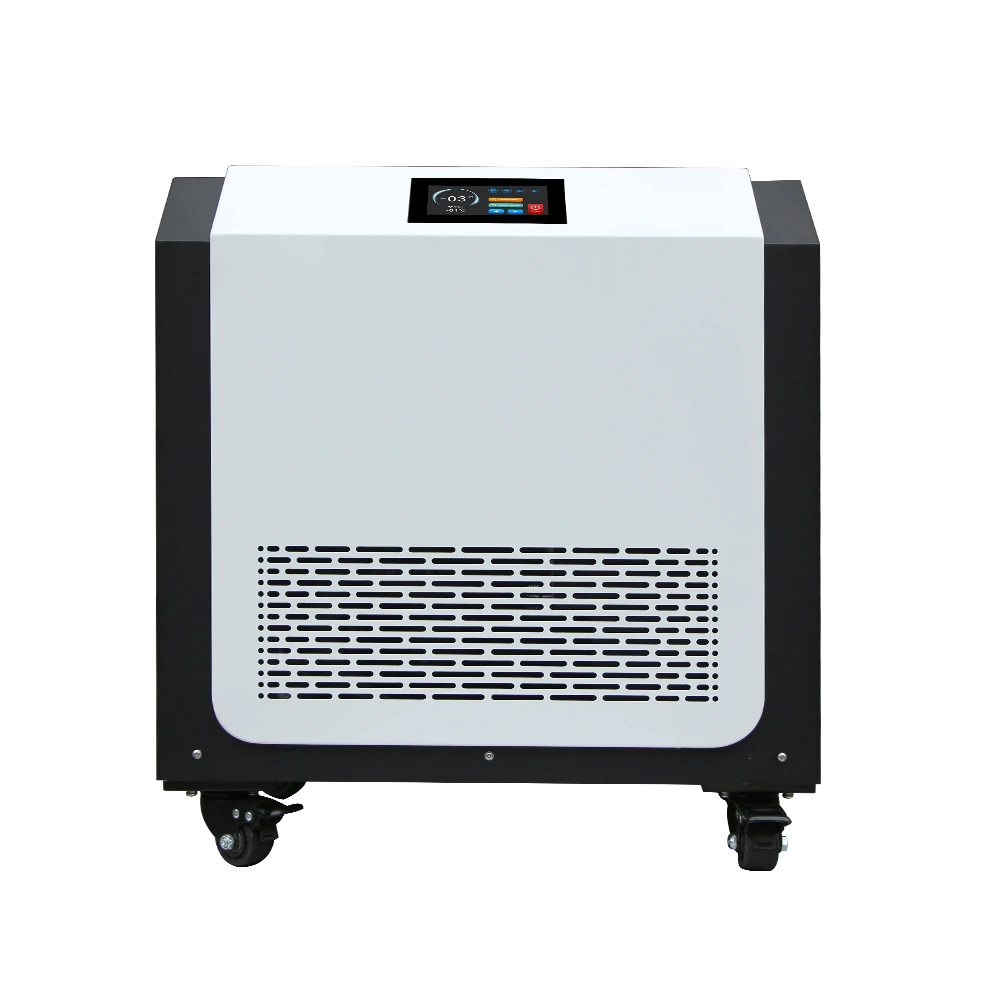
| External equipment | Chiller/pump/filter mass and its actual support location | Adding remote equipment to the tub footprint when it sits elsewhere |
Separate measured facts, catalogue facts and planning assumptions
A cold plunge tub filled weight sheet should mark every value as measured, supplier-confirmed, catalogue-stated or assumed. Mixing those evidence levels creates a calculation that looks precise but cannot be audited.
For example, OMNI’s tub catalogue sometimes gives capacity but no installed-empty mass. Other pages give gross shipping weight, which includes packaging and cannot be used as net tub mass. Some product pages may use current web values that differ from the catalogue version. Freeze the ordered model and evidence date before final calculations.
The delivery access guide owns packed dimensions and shipping route. Shipping evidence is useful for logistics, but package mass and package footprint do not prove the installed operating load.
Use catalogue examples without inventing missing mass
OMNI’s Cold Water Bathtub Product Catalog provides useful examples for a cold plunge tub filled weight handoff:
| Model evidence | Supported planning calculation | Still required |
|---|---|---|
| WT-01, PDF p.4: 340 L capacity; 4 kg net | Approximate tub plus water before user: 4 + 340 = 344 kg | Actual operating fill, user and accessories |
| WT-16, PDF p.23: 450 L capacity | Water contribution is approximately 450 kg | Installed-empty mass and support details |
| WT-17, PDF p.24: 600 L capacity | Water contribution is approximately 600 kg | Installed-empty mass, user basis and configuration |
| WT-19, PDF p.26: 450 L capacity | Water contribution is approximately 450 kg | Installed-empty mass and exact included equipment |
The WT-01 arithmetic is an illustrative planning calculation, not a structural approval. The catalogue capacity may not equal the normal operating fill, and the user’s mass and accessories are not included. For WT-16, WT-17 and WT-19, the catalogue does not supply an installed-empty mass in the reusable facts file, so the total must remain open.
This is the central discipline: a cold plunge tub filled weight total should never hide an unknown behind a zero. Write “supplier to confirm” or “measured on site” and hold final approval.
Do not confuse total mass, average load and support-point load
Cold plunge tub filled weight answers “how much is supported.” It does not fully answer “how the floor receives it.” A wide base can distribute load differently from four feet, casters, rails or a narrow plinth. Steps and an integrated chiller may create separate support zones.
An average planning value can be calculated as:
Average supported mass per area = operating mass ÷ verified support footprint.
That average is only a communication aid. It does not capture point loads, local bearing, joist direction, slab/deck condition, dynamic entry, uneven support or other building loads. The indoor installation guide places filled load inside the wider room-approval process; a qualified site professional must decide what evidence and safety factors apply.
Worked example: keep unknowns visible
Assume a buyer is reviewing WT-17 because the catalogue prints a 600 L capacity. The only supported first step is the water contribution: approximately 600 kg under the preliminary 1 kg/L assumption. The catalogue facts used here do not provide an installed-empty operating mass, approved user mass or exact support footprint. A valid cold plunge tub filled weight sheet therefore looks like this:
| Component | Planning value | Evidence status |
|---|---|---|
| Installed-empty tub/system | Open | Supplier to confirm for ordered configuration |
| Water | Approx. 600 kg at the printed 600 L capacity | Catalogue-based planning ceiling; replace with measured operating fill |
| Users | Open | Project team to define approved occupancy and mass basis |
| Steps, cover, rails, accessories | Open | Confirm which items share the support structure |
| Total | Not yet approved | Cannot be closed while inputs remain open |
This is more useful than publishing a false total. The cold plunge tub filled weight record shows the known water contribution and the missing decisions. Purchasing can obtain the missing equipment mass, operations can define users and the site professional can request the support details needed for review.
Use normal fill, maximum fill and abnormal water as separate cases
A commercial facility may need more than one cold plunge tub filled weight case. The normal operating case uses the approved fill line and occupancy. A maximum-control case may use the highest permitted water level and maximum users. A drainage or overflow review may consider temporary retained water elsewhere, but it should not be silently added to the normal vessel total.
Do not estimate normal fill from a rectangular bounding box when the tub has curved walls, seats, sloped floors or displaced equipment. The preferred method is a verified product value or measured fill during commissioning. Record the measurement method, water level and temperature so the calculation can be repeated after a model or operating change.
Map every support point before calculating an average
The support drawing is a separate deliverable from the product footprint. For cold plunge tub filled weight, mark each foot, caster, rail, plinth, equipment cabinet and attached step that transfers load into the floor. Give dimensions and spacing rather than a shaded rectangle covering the whole visual outline.
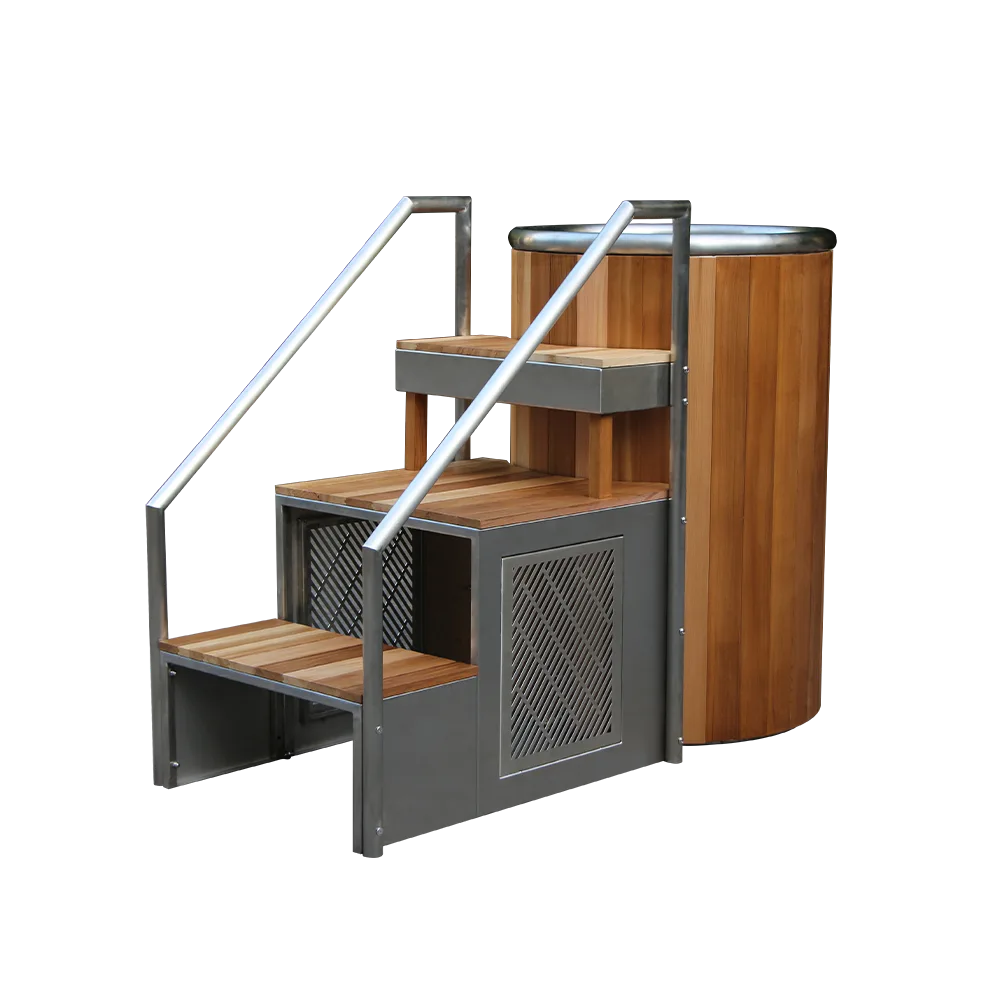
A long tub may sit on two narrow rails. A round barrel may have a continuous base, discrete feet or an equipment platform. An integrated step can share the tub frame or stand independently. These differences affect local bearing and structural review even when the total operating mass is unchanged.
| Support evidence | Record | Why the reviewer needs it |
|---|---|---|
| Base type | Continuous base, rails, feet, casters or plinth | Defines how load enters the surface |
| Contact dimensions | Width, length and area of each contact | Supports local bearing and distribution review |
| Spacing | Centre-to-centre positions and orientation | Allows comparison with joists, beams or slab layout |
| Levelling/isolators | Pads, shims, mounts or adjustable feet | May change effective contact and height |
| Separate equipment | Chiller, filter and steps with their own support locations | Prevents loads being assigned to the wrong footprint |
Do not treat mobility as a lower structural load
Casters or wheels make an empty product movable; they do not reduce cold plunge tub filled weight. A filled vessel should not be moved unless the exact product instructions and site procedure permit it. Wheel contact can also concentrate load compared with a wider stationary base.
If a project intends to move the system between rooms, treat each location as a separate site approval. Record the empty move state, drain requirement, route, threshold and final support condition. The filled operating calculation applies where the unit is used, not while it is being delivered.
Build a structural handoff, not a sales estimate
A commercial cold plunge tub filled weight handoff should keep every assumption visible and should include:
- model, revision and configuration;
- installed-empty mass source and date;
- normal operating water volume and how it was measured;
- maximum simultaneous users and design-mass basis;
- steps, cover, rails, benches and integrated equipment;
- external chiller/filter support location;
- base, feet, casters, rails or plinth contact dimensions;
- plan and section showing support points;
- floor/slab/deck construction information supplied by the site;
- qualified reviewer, assumptions, decision and open actions.
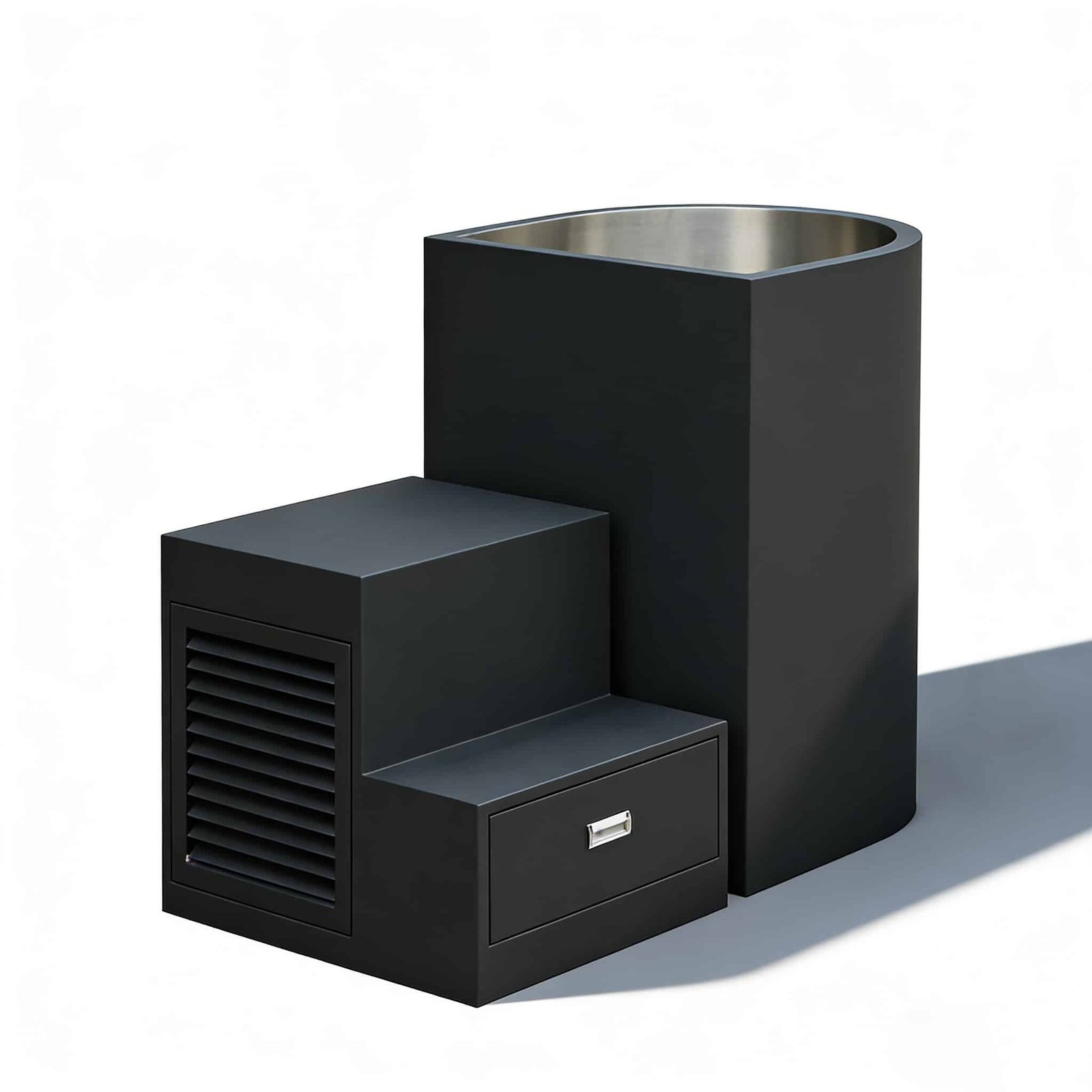
The cold plunge selection guide helps freeze the product family before this calculation. For an integrated commercial model, the WT-11 product page shows how the tub and equipment can form one assembly, but current project mass and support details still require confirmation.
Attach a calculation revision and approval status. “For quotation,” “for room planning” and “approved for construction” are different states. A cold plunge tub filled weight worksheet should not reach the construction team with catalogue assumptions presented as final engineering inputs.
Recalculate when the configuration or site changes
Cold plunge tub filled weight approval is tied to a configuration and location. Reopen the cold plunge tub filled weight review if the tub, chiller, water level, user count, steps, surround, equipment enclosure, support feet, deck, slab or room changes.
For cold plunge tub filled weight, do not reuse a shipping gross weight after private-label packaging is removed, and do not assume a catalogue capacity equals the operating fill after a seat, displacement element or reduced fill line is introduced. Record the final water level during commissioning and keep the calculation with the site acceptance file.
Buyers preparing a cold plunge tub filled weight review can compare form factors such as the WT-15 rectangular tub, then send the exact model, water level, occupancy, support plan and project questions through the OMNI project contact. OMNI can provide product-side information; structural acceptance remains with the qualified site professional.
Questions buyers ask
How much does a cold plunge tub weigh when filled?
It depends on the verified empty equipment mass, actual water volume, users and every accessory supported by the same floor area. For preliminary planning, one litre of water is often approximated as one kilogram, but the final project should use its measured fill and engineering assumptions.
Can shipping gross weight be used as the empty tub weight?
No. Gross weight includes packaging and may include accessories, while installed empty mass may exclude them or include different components. Use a current net or installed-empty value for the exact ordered configuration.
Does dividing total weight by the tub footprint prove the floor is safe?
No. It gives only an average. A structural review may also need support points, casters or feet, local bearing, joist direction, slab or deck construction, user movement and other loads. A qualified project professional must approve the actual site.