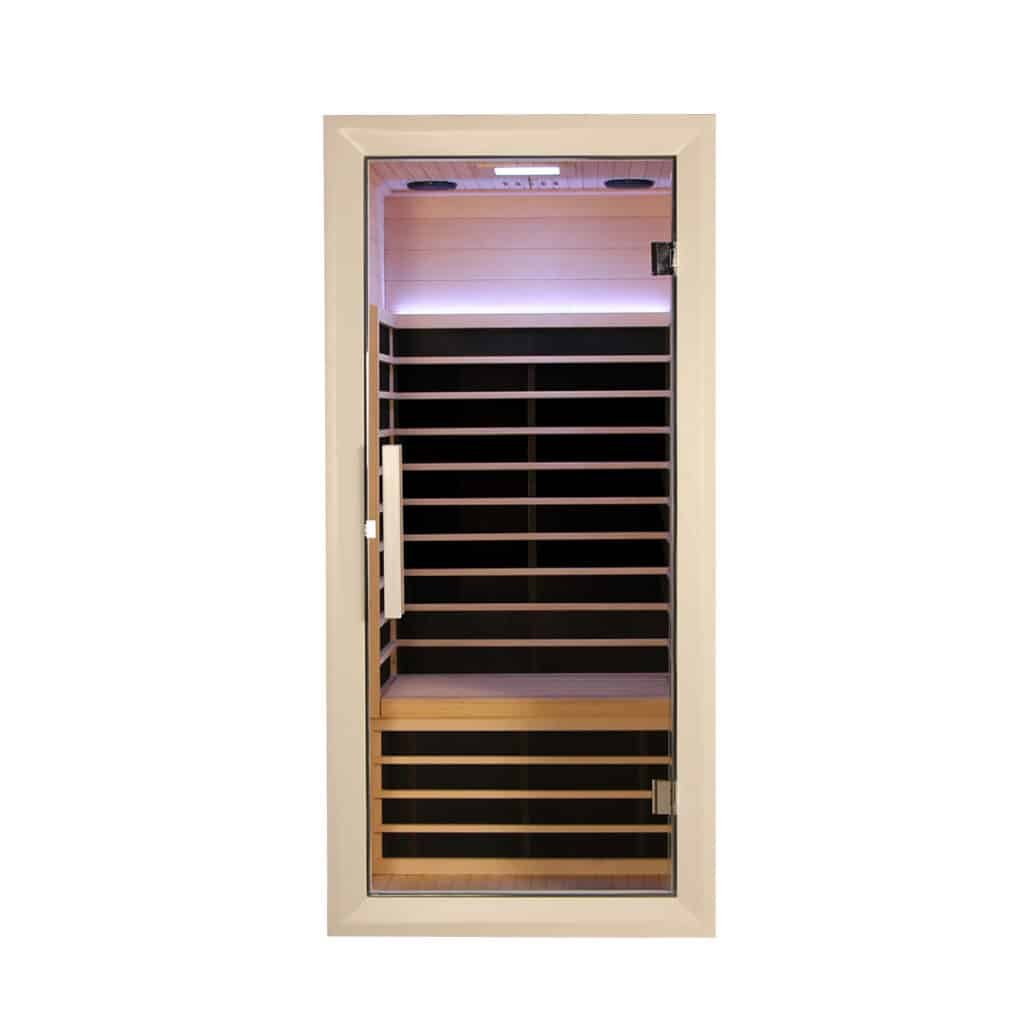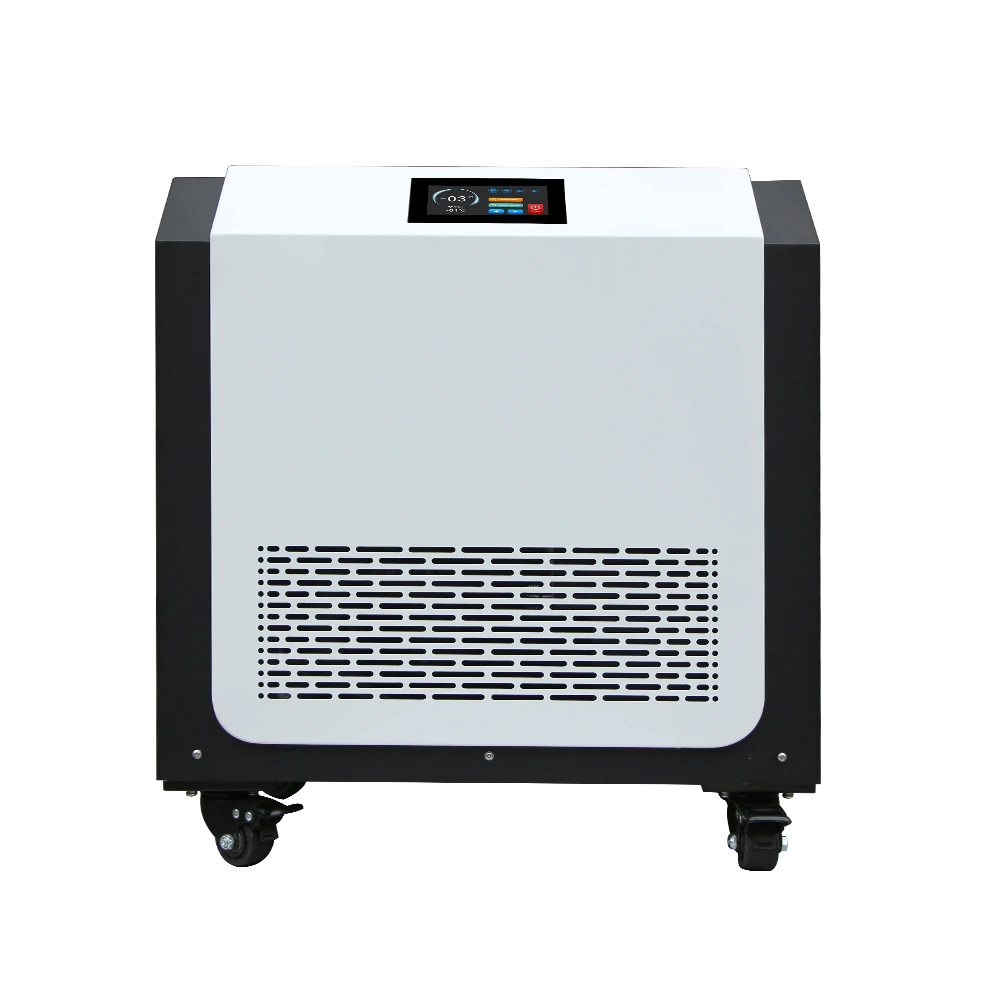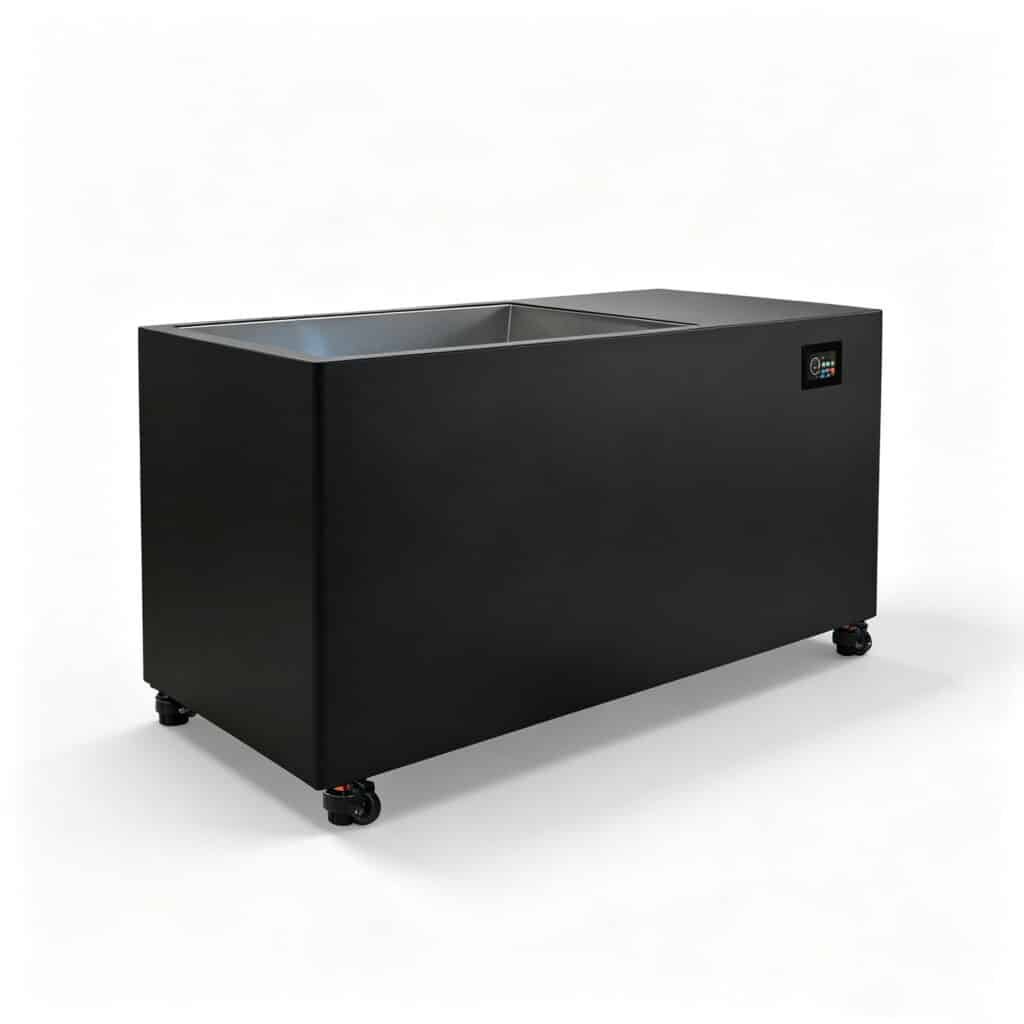
Cold plunge tub delivery access should be approved from the shipping package and the complete handling route, not from the tub’s product width. A tub can pass a doorway and still fail at the loading dock, lift door, corridor turn, stair landing or final-room threshold. Commercial buyers should freeze the route before the purchase order and confirm it again before shipment.
The unreliable method is to compare one catalogue dimension with one door measurement. The useful method records the crate, cart, padding, permitted orientation, clear openings, turn space, lift car, thresholds and handling responsibility. This guide gives hotels, gyms, spas, distributors and project buyers a repeatable cold plunge tub delivery access file without pretending that one clearance number fits every model or building.
Start cold plunge tub delivery access with the packed unit
A cold plunge tub delivery access file may contain three dimensions: internal tank dimensions, external product dimensions and package dimensions. They answer different questions. Internal dimensions help assess user space. External dimensions describe the installed object. Package dimensions determine the largest protected handling envelope before uncrating.
That distinction separates this page from the cold plunge tub fit guide. User fit is about the chamber, posture and entry arrangement. Cold plunge tub delivery access is about getting the ordered configuration into the approved location without damaging the product or building.
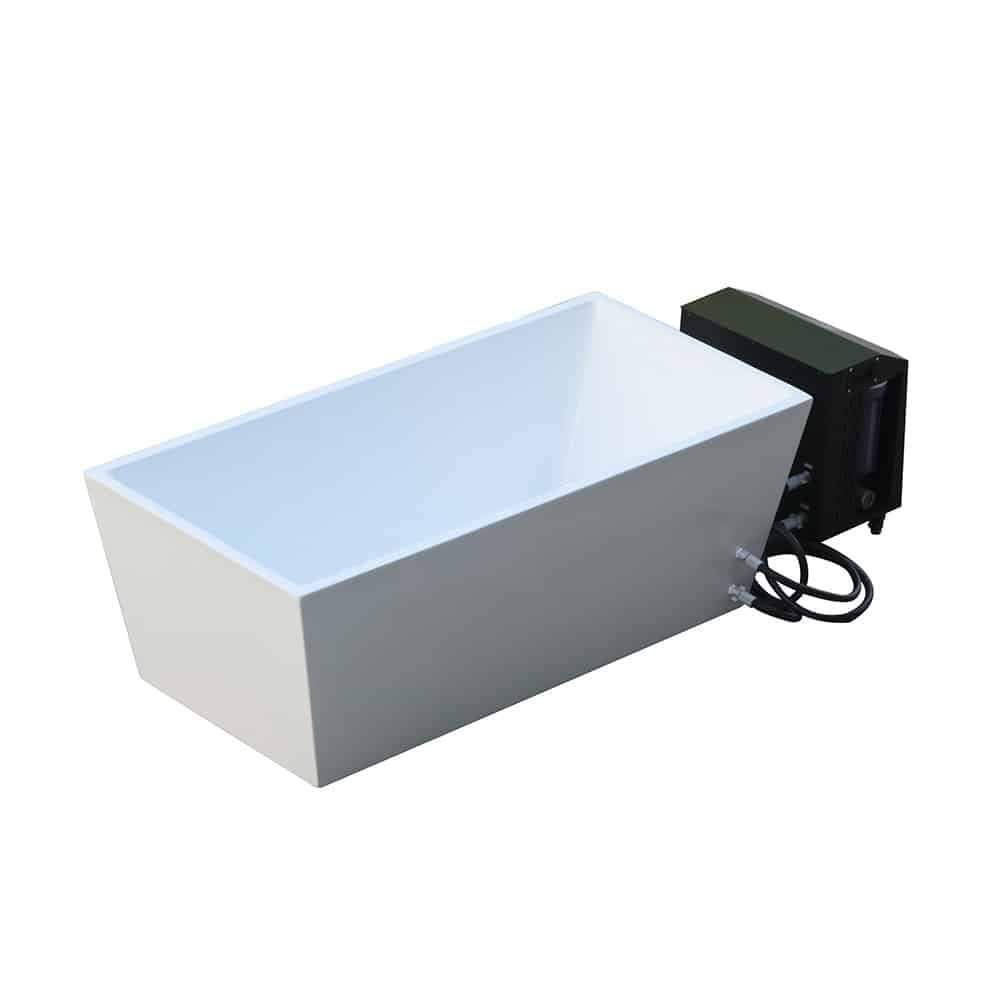
OMNI’s Cold Water Bathtub Product Catalog shows why product size is not enough. WT-03 is listed at 1700 × 800 × 600, while its wooden-frame package is listed at 1800 × 900 × 690 and 82 kg gross. WT-09 is listed at 1220 × 800 × 990, while its package is 1310 × 970 × 1390 and 138 kg gross. These are catalogue records, not a promise for every production order; confirm the final packing drawing and gross weight before dispatch.
Measure the route as connected segments
A cold plunge tub delivery access record should begin at the truck or loading point and end at the exact installation position. Treat each doorway, lift, corridor, turn, ramp, threshold and stair landing as a separate gate. The route only passes when every gate works with the same package orientation and handling equipment.
| Route gate | Measure and photograph | Approval question |
|---|---|---|
| Unloading point | Dock height, kerb, ramp, overhead limit, vehicle access and weather protection | Can the package leave the vehicle using the planned equipment? |
| Doors and gates | True clear width and height with handles, closers, hinges and removable leaves identified | Does the full handling envelope pass without scraping or forced tilt? |
| Corridors and turns | Clear width, corner geometry, wall projections, ceiling drops and approach distance | Can the package rotate while remaining in an approved orientation? |
| Lift or elevator | Door opening, car width/depth/height, capacity, threshold and waiting-area turn space | Do package, cart and handlers fit within the allowed load? |
| Final room | Entry opening, floor protection, final turn, installation footprint and unpacking area | Can the product reach its position and still leave service access? |
Use one simple cold plunge tub delivery access rule: available clear envelope must exceed the actual handling envelope at every segment. The handling envelope includes the crate, pallet or frame, cart, lifting attachments, padding, protruding hardware and the space required by the agreed orientation. Do not add an invented universal allowance; ask the mover what their method needs.
For the room-side utilities, drainage, airflow and maintenance layout, continue with the indoor installation guide. Delivery approval gets the product into the room. Installation approval proves the room can support and operate it.
Check corners, lifts and permitted orientation
A cold plunge tub delivery access doorway check is one-dimensional. A turn is not. A long crate may clear the door width but strike the opposite wall before its rear corner enters. An upright barrel may fit the lift door but exceed the car height on its cart. A handrail or step package may need a different route from the main tub.
For a difficult cold plunge tub delivery access route, place the package outline on a scaled floor plan or make a full-size floor template from taped paper or cardboard. Move the rectangle through each turn using the same orientation permitted by the supplier. Mark the cart wheels and handler space separately. If the route only works after tilting, obtain written confirmation that the packed product may be tilted and identify the allowed direction.
The route review should compare width, length and height in the actual delivery configuration and should test turns before arrival. A showroom photograph cannot supply those dimensions. Use the final crate drawing, package list and mover method, then keep the approved route with the purchase file.
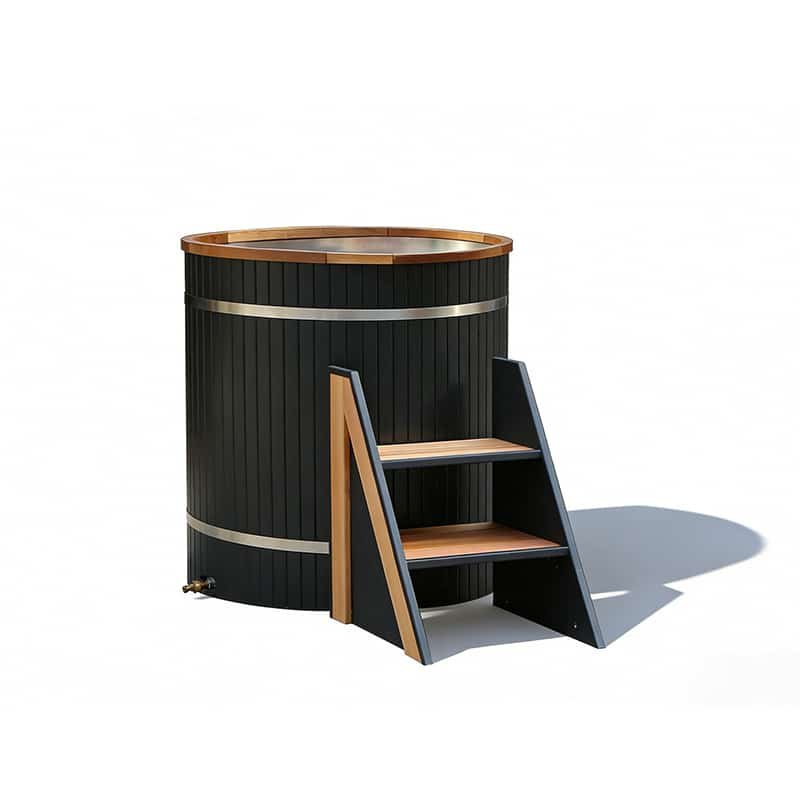
Use OMNI model examples without guessing
The catalogue provides several useful cold plunge tub delivery access examples. A controlled cold plunge tub delivery access comparison shows how package shape and shipment count change the route even when two installed tubs look similar.
| Catalogue model | Product or external size | Package evidence | Buyer consequence |
|---|---|---|---|
| WT-03, PDF p.6 | 1700 × 800 × 600 | 1800 × 900 × 690 wood frame; 82 kg gross | Use the larger frame, not the 800 mm product width, for route approval |
| WT-09, PDF p.13 | 1220 × 800 × 990 | 1310 × 970 × 1390 wood box; 138 kg gross | Check crate height and lift geometry, not just the oval tub footprint |
| WT-08, PDF p.14 | 783 × 783 × 1176 | Tub, step and handrail listed as separate packages | Approve three package routes and staging space |
| WT-13-1/-2, PDF pp.19–20 | 1360 × 660 × 730 | 1460 × 760 × 1030 wood box; 168 kg gross | Do not treat the 660 mm external width as the delivery width |
For cold plunge tub delivery access, gross weight is a shipping figure, not the installed empty weight or filled floor load. Package dimensions can also change with revised protection, accessories or private-label requirements. Put the final package drawing, weight, lifting points, permitted orientation and package count into the purchase file.
Buyers comparing product families can start with the cold plunge selection guide. The WT-03 acrylic tub and WT-09 metal tub show different shapes, but the quote-specific package remains the delivery source of truth.
Assign handling responsibility before the truck arrives
Heavy or awkward products require more than willing staff. A cold plunge tub delivery access plan should name the handling method and responsible mover. The CDC/NIOSH manual material handling guidance recommends designing handling tasks around the load, workplace and equipment rather than relying on worker strength. For a cold-plunge project, the buyer should follow the supplier’s lifting and orientation instructions.
| Responsibility | Supplier | Buyer/site team |
|---|---|---|
| Package facts | Final dimensions, weights, package count, lifting points and orientation limits | Confirm documents match the purchase order |
| Route facts | State handling constraints and uncrating limits | Measure the complete route and provide photos/drawings |
| Handling method | Provide product-specific warnings | Select mover, cart/lift equipment, protection and staffing |
| Damage boundary | Define shipping and packaging responsibilities | Record delivery condition, route damage and acceptance authority |
Do not assume uncrating solves every cold plunge tub delivery access problem. Early uncrating can reduce width, but it may expose finishes, remove designed lifting points or shift damage responsibility. If uncrating is required at the dock, write the sequence, tools, protection and acceptance owner into the delivery plan.
Freeze access before shipment
A practical cold plunge tub delivery access sign-off contains the model and revision, final package list, largest package dimensions, gross weights, approved orientation, route drawing, minimum clear openings, lift details, turn checks, mover method, uncrating point, floor protection and final acceptance owner. Attach dated route photos and the current packing drawing.
Set two cold plunge tub delivery access hold points. Before the purchase order, confirm that the shortlisted model has a feasible route. Before shipment, confirm that the production package still matches the approved envelope. If packaging, accessories, steps, handrails or crate protection change, repeat the affected gates rather than assuming the old route still works.
For a cold plunge tub delivery access project review, send OMNI the destination, model shortlist, route dimensions, access photos, lift and stair information, installation location and packaging requirements through the OMNI project contact. The result should be a route-specific confirmation list, not a promise that every tub fits every building.
Questions buyers ask
Will a cold plunge tub fit through a doorway if the product width is smaller?
Not necessarily. The packed width, crate height, handling cart, protective padding, permitted orientation, door hardware and the turn before and after the opening can all increase the required space. Approve the route using the actual shipping package and handling method.
Should the tub be uncrated before it enters the building?
Only when the supplier, mover and site team approve that method. Early uncrating may reduce the handling envelope, but it can also remove protection, change lifting points and shift responsibility for damage. Record where uncrating is allowed and who accepts the risk.
What delivery information should a commercial buyer send with an RFQ?
Send the unloading location, route photos, minimum clear width and height, lift door and car dimensions, corner and landing measurements, thresholds, stairs, final-room access, floor protection rules and any delivery-hour or loading-dock restrictions.