Choosing a cold plunge tub size for tall people starts with usable internal space, not overall length. You need to know how much usable space remains inside, how you will sit, and whether getting in and out works for you. A long, shallow tub and a shorter, deeper barrel ask your body to fit in different ways.
Start by choosing a posture: seated upright with bent knees, seated with more legroom, or a more reclined position. Then compare the internal measurements and operating water level for that posture. Neither a litre figure nor the word “XL” answers those questions on its own. For a gym, hotel or reseller choosing for other people, document the intended user range and request a model-specific fit review before approving a sample.
Cold plunge tub size for tall people starts inside the shell
An outside dimension helps you plan where the tub will go. It does not tell you how much space your legs or shoulders have. Walls, insulation, the shape of the bathing chamber and any integrated equipment area can make those two measurements quite different.
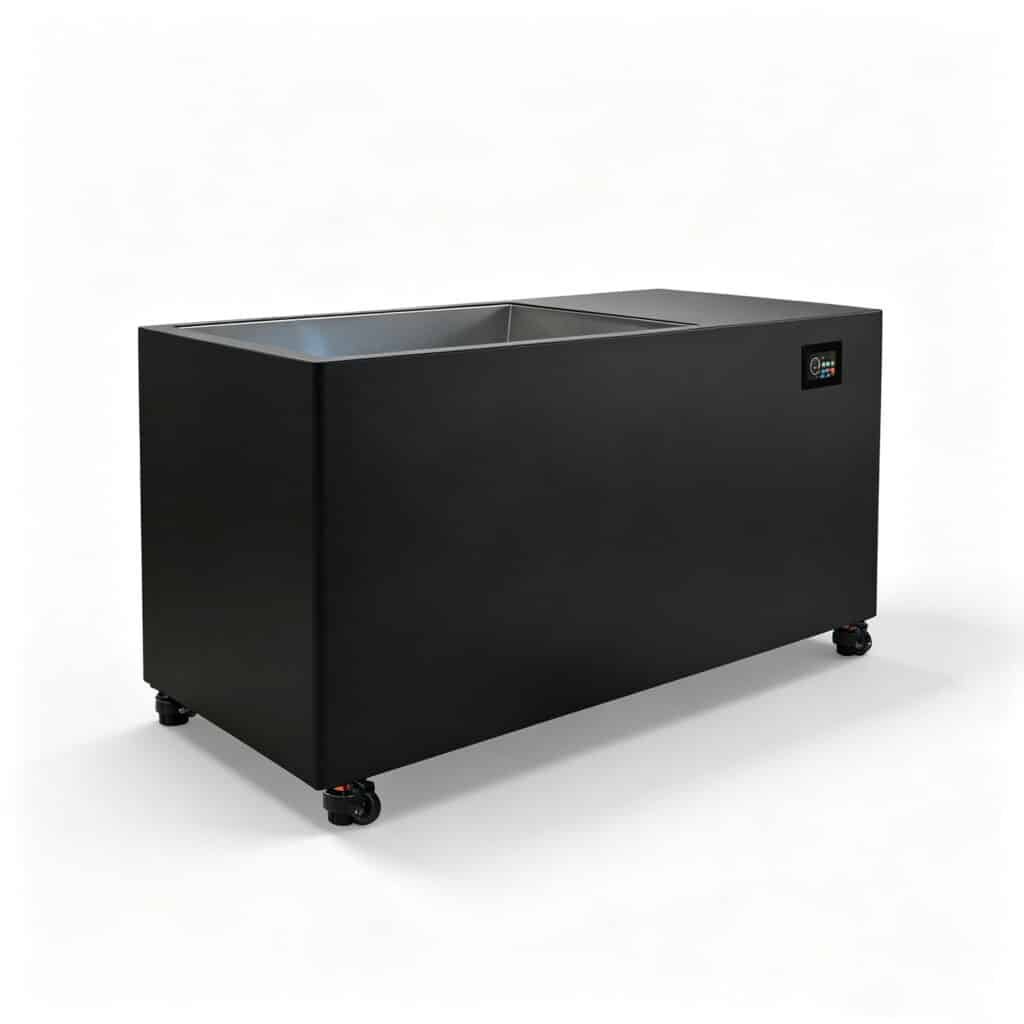
For a concrete example, the current WT-13 product sheet lists external dimensions of 1360 × 660 × 730 mm and internal dimensions of 1300 × 600 × 680 mm. It specifies one adult. Those numbers describe that model; they are not a height recommendation or evidence that a particular person will fit comfortably.
Ask which part of the chamber each measurement describes. A maximum width at the rim may not be the width at your hips. A sloped backrest or rounded end can reduce usable floor length without changing the overall dimension shown in a catalogue.
| Measurement to request | What it helps you decide |
|---|---|
| Usable internal length at your sitting position | Whether your chosen leg position is realistic |
| Internal width at the hips and shoulders | Whether the chamber shape suits your build, not just your height |
| Seat height, if there is a seat | Where your body sits relative to the floor and fill line |
| Internal depth and normal operating fill line | How water depth relates to your posture |
| Entry height and opening | Whether access works with the intended steps or hand support |
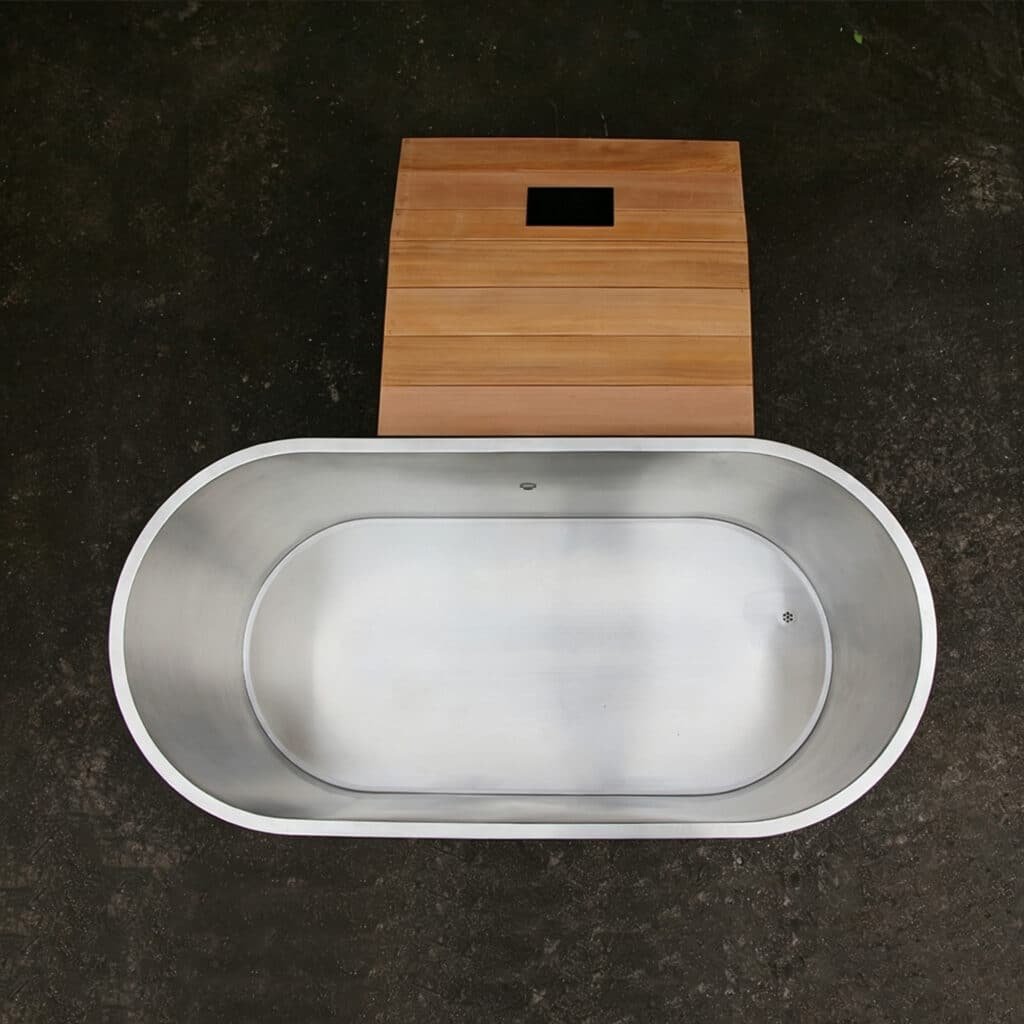
The WT-13 dimensions also show why the two measurements should not be interchanged. The published outside length is 1,360 mm and the inside length is 1,300 mm: a difference of 60 mm. The corresponding widths differ by 60 mm. Those are simple differences between listed dimensions, not proof of wall thickness, insulation thickness or usable space at every level of the chamber. Ask for the drawing section that matches your sitting position.
These are fit questions. Weight limits and the support required under the tub are separate specifications that still need to be confirmed.
Match cold plunge tub size to the exact version
OMNI's Cold Water Bathtub Product Catalog lists WT-13-1 on PDF page 19 and WT-13-2 on page 20. Both pages give an external size of 1360 × 660 × 730 mm and a tank size of 1300 × 600 × 680 mm. This is useful confirmation of the dimensions, but the shared cold plunge tub size does not make the two supply packages interchangeable.
The WT-13-1 accessory list names one cover, one step and one chiller. The WT-13-2 list names one cover and one step, without a chiller entry. That omission is not proof that a chiller cannot be supplied; the quotation should identify the actual configuration. A buyer approving a sample should keep the full version number with the drawing and agreed accessory list.
Both catalogue pages show 168 kg as gross weight. Gross shipping weight is not the empty equipment weight, the allowed user weight or the installed load when water and a user are added. Do not use it as any of those figures. The catalogue pages also do not state an approved user height or rated occupancy; the one-adult statement above comes from the current WT-13 product page, not from those catalogue tables.
For a tall-user fit decision, this leaves a clear sequence: confirm the version, compare its internal drawing with the preferred posture, then confirm the supplied access equipment and operating instructions. A change of cover or step can matter to the access arrangement even when the tank dimensions have not changed.
A tall user does not always need the longest tub
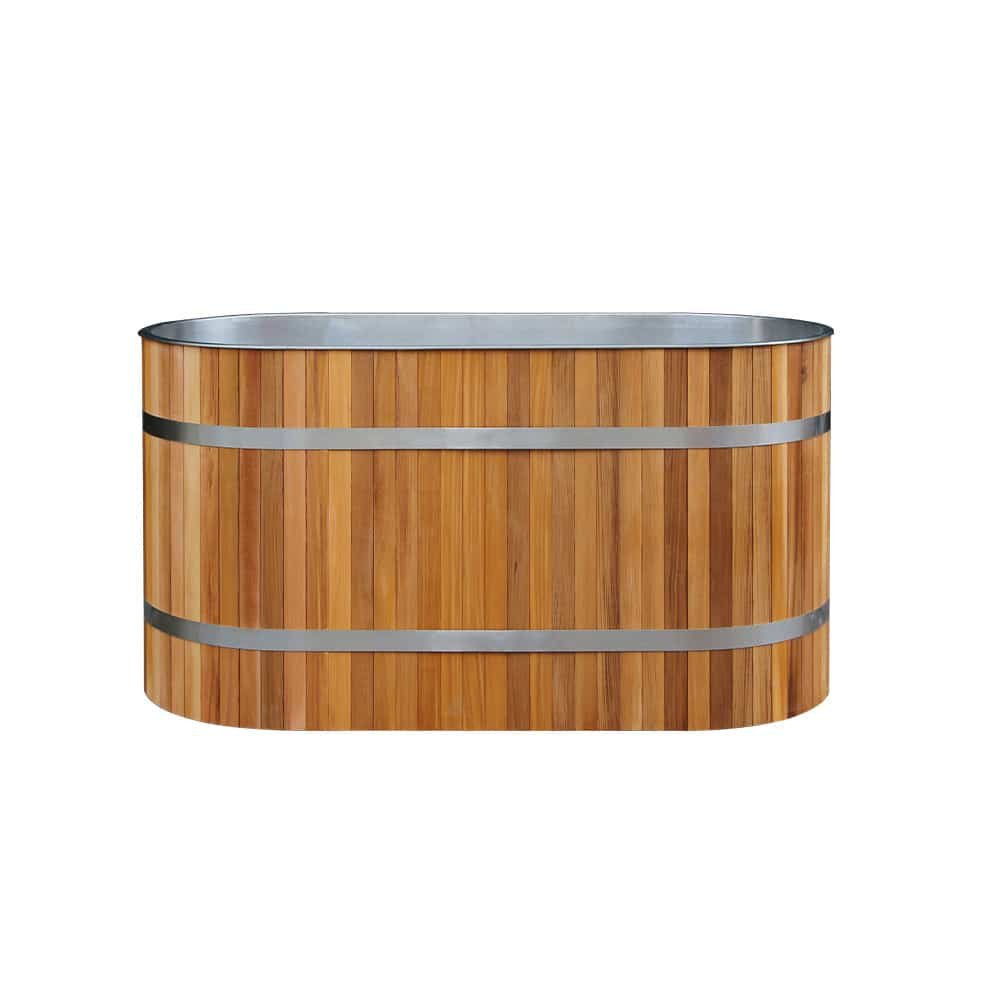
Shape changes posture, so it belongs in any comparison of cold plunge tub size. A deeper upright format can suit someone who prefers sitting with bent knees. An elongated chamber may suit someone who wants more room in front of the seat. Neither format is automatically more comfortable for every tall person.
Manufacturer height guidance can help you shortlist, but keep it tied to the exact model. For example, Ice Barrel’s model guidance describes the 500 as accommodating most people up to 6 feet 9 inches for that model. That is a manufacturer’s recommendation for those products, not a rule that can be transferred to a similarly sized tub from another supplier.
If your height is near a stated limit, ask how that limit was established and what sitting position it assumes. Height alone does not describe leg length, shoulder width, mobility or preferred posture.
Turn your preferred posture into useful measurements
Before choosing a cold plunge tub size, give the supplier more than “Will this fit someone my height?”
First, describe the posture you want. You can measure that posture on a stable seat or another suitable dry surface; do not climb into an unsupported or uninstalled tub for a test. Note the space your knees and feet occupy, where you want your back supported, and anything that makes stepping over a high side difficult.
Then ask the supplier to mark the proposed position on a dimensioned drawing. A side view is useful for the seat and water level. A top view is useful for legroom and the shape around the hips. A photograph without a scale is a poor substitute for either drawing.
Keep a compact fit record
| Record | What to write down | What the supplier should return |
|---|---|---|
| User profile | Approximate height range and relevant seated body-space measurements | Confirmation of the proposed model, without an unsupported height guarantee |
| Sitting position | Upright, bent-knee or more extended; preferred back support | A top and side view showing the intended position |
| Water level | The intended bathing position, not a requested maximum fill | The normal fill line and instructions that apply to that model |
| Entry and exit | Any difficulty stepping over the rim; the available approach space | The approved access arrangement and included or optional supports |
| Sample result | Exact sample/model, drawing revision and observed fit limits | Any agreed configuration changes before a repeat order |
If two proposed models both appear large enough, ask the supplier to return the same fit record for each. One may provide more knee room but a higher rim; another may offer a different back position but less shoulder space. These are comparison questions, not findings from an OMNI user test. The useful result is a documented shortlist, rather than a claim that one body shape fits every tall adult.
For a gym or hotel, do not replace the user range with the height of the person placing the order. The purchaser's own comfortable position may not represent the next guest. Where access requirements cannot be met by the proposed arrangement, discuss a different model or an appropriate access solution before ordering; a larger water capacity does not resolve an entry problem.
For a distributor, keep this record with the sample approval rather than reducing it to a marketing label such as “tall-friendly.” The record explains what was checked and which users or postures still need a separate review. It does not replace the manufacturer's access, occupancy or installation instructions.
If a sample or showroom demonstration is available, check the actual model in its approved setup. A video can clarify posture, but it should identify the demonstrator’s height and the exact tub; a close camera angle can make a compact chamber look larger than it is.
Do not confuse maximum capacity with usable bathing space
Litres alone are an incomplete description of cold plunge tub size. They cannot tell you where the water will sit once a person enters. The person displaces water, and a built-in seat or shaped chamber changes how the available volume is distributed.
Ask whether a quoted capacity is maximum vessel capacity, recommended fill volume or a measurement taken under another condition. Also ask where the normal fill line is and what the manufacturer specifies for entry and overflow. Do not fill above the instructions to compensate for a poor fit.
For a gym or hotel, check more than the height of one buyer. Your intended user range may include people with very different builds and access needs. Describe that range to the supplier and confirm the rated occupancy for the particular tub. A physically large tub is not automatically approved for two simultaneous users.
Check the exit, not just the seated position
Legroom and entry are separate checks when you compare cold plunge tub size. Look at the height of the side, the location of any seat, the opening, and the space around the intended entry point. Confirm which steps or hand supports are included, which are optional, and how they are meant to be installed.
Keep enough room for the approved access arrangement and cover handling. Do not treat a chiller cabinet, loose stool or decorative surround as a step unless it is specifically designed and rated for that job.
The route into the building is another check. Internal fit, delivery access and installation suitability are three different decisions. If the tub will go inside, the indoor installation guide covers the room-side questions without turning this fit guide into a building-design checklist.

Send a fit brief before choosing a model
A cold plunge tub size enquiry can be short and specific:
- Intended users and approximate height range.
- Preferred sitting position: upright, bent-knee or more extended.
- Any relevant body-space measurements or access limitations.
- One user at a time, or a separately specified multi-user requirement.
- Maximum installation footprint and delivery-route restrictions.
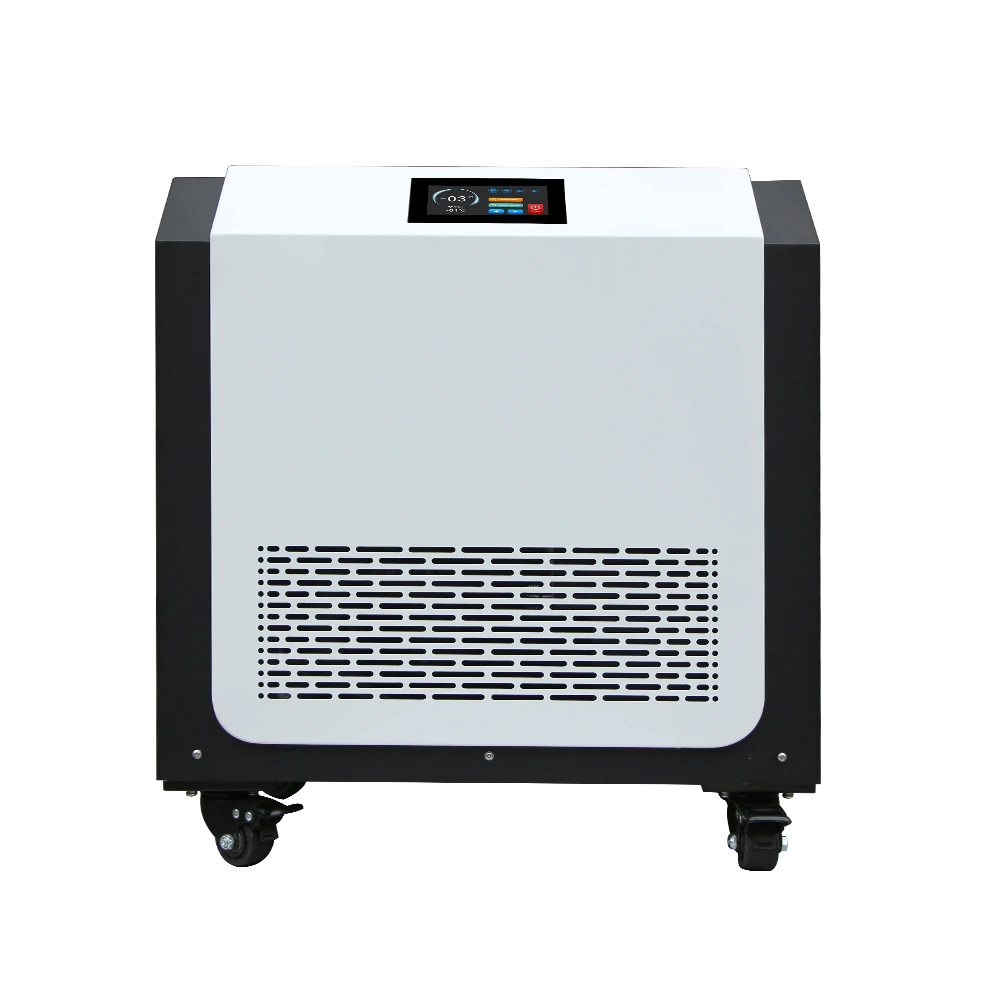
- Whether the project needs a separate chiller or an integrated arrangement.
Ask for the matching internal drawing, normal fill line, rated occupancy, weight limits and access arrangement. For a wholesale or OEM order, put the agreed drawing revision into the sample approval record so the later production unit can be checked against the same specification.
You can compare OMNI’s cold plunge tub range using that brief.
If you already have a preferred posture and a site footprint, send OMNI your fit brief with those details so the response can address the proposed chamber and access arrangement.
The aim is not to find the largest number on a product card. It is to select a chamber, posture and entry arrangement that work together for the intended user.
Questions buyers ask
What size cold plunge tub does a tall person need?
There is no single cold plunge tub size that fits every tall person. Compare the usable internal shape, seat position, operating fill line and entry arrangement for your preferred posture. Use manufacturer height guidance only for the exact model it describes.
Is a barrel or a longer tub better for tall users?
A barrel and an elongated tub can support different sitting positions. Shortlist by posture and internal drawings rather than assuming one shape is better for every tall person.
Can the listed water capacity prove that I will fit?
No. Capacity does not describe the room available for your legs or shoulders. Confirm the internal dimensions, how capacity was measured and the normal fill line separately.