Commercial buyers should not choose infrared vs traditional sauna by asking which one is universally “better.” The safer decision is to match the heat source to the site, guest expectation, electrical plan, room format and service responsibility. A compact indoor recovery room, a resort courtyard and an OEM retail line can all need different answers.
Use this guide to separate the decision. Infrared sauna cabins generally use far-infrared panels, lower published operating temperature ranges and compact indoor formats. Traditional sauna rooms in OMNI’s current sauna catalogue are listed with a “Stove” heating label and higher published temperature ranges for several larger indoor and outdoor models. Those brochure facts help shortlist models, but they do not replace a final quote, wiring plan, certification scope or local installation approval. In other words, an infrared vs traditional sauna shortlist is useful only when the buyer can trace every claim back to a model and a project condition.
Start with the buyer promise, not the heater name
The phrase infrared vs traditional sauna sounds like a simple product comparison. For a commercial buyer, it is really an operating decision. What experience will the guest expect? How much room is available? Who will service the cabin? Can the site handle the electrical load? Will the unit sit indoors, outdoors or beside a cold plunge area?
OMNI’s sauna range already separates several owner paths. Buyers who know they need far-infrared cabin sourcing can start from the infrared sauna manufacturer page. Buyers planning a stove-heated room can use the traditional sauna manufacturer page. This article sits between those owners: it helps a buyer decide which path is appropriate before sending a serious RFQ.
A common mistake is to compare only maximum temperature. A hotter room is not automatically a better commercial product. Higher heat may match a classic sauna expectation, but it can also change ventilation, supervision, electrical planning and user instructions. A lower-temperature infrared cabin may be easier to position in some indoor wellness rooms, but it still needs the right layout, panel placement, access, materials and after-sales support. This is why an infrared vs traditional sauna decision should begin with the commercial promise and end with a documented model choice.
Compare infrared vs traditional sauna by evidence fields
Use a short decision record before approving a sample. The record should show why a model was selected, what facts came from the catalogue, and what still requires a project-specific quote or installer review. In practice, the infrared vs traditional sauna record should be short enough for a buyer, installer and sales team to use the same version.
| Decision field | Infrared sauna evidence to request | Traditional sauna evidence to request |
|---|---|---|
| Guest experience | Panel layout, seating position, published temperature range and expected session style | Heater type, room volume, ventilation plan and classic hot-room expectation |
| Site format | Indoor cabin dimensions, glass door swing, access and service clearances | Indoor or outdoor room dimensions, roof/porch details and heater guard layout |
| Electrical planning | Exact model power and voltage option; final circuit checked by installer | Exact heater power and voltage option; final circuit checked by installer |
| Commercial duty | Cleaning access, control panel location, panel protection and spare-part path | Heater guard, wood surfaces, ventilation, stone/heater maintenance and spare-part path |
| Procurement proof | Model drawing, version code, photos, packaging, warranty scope and sample approval sheet | Model drawing, version code, heater specification, photos, packaging and sample approval sheet |
Three fields are especially important for hotels and gyms. First, do not use one marketing phrase to cover every version. Second, keep the model name and brochure page with every specification. Third, turn unconfirmed points into RFQ fields rather than public claims. If a catalogue says “110V/60Hz or 220V/50Hz,” that is a brochure option statement for listed models, not proof that every configuration is plug-and-play in every country.
For a reseller or private-label buyer, the infrared vs traditional sauna choice also affects the sales script. A compact infrared cabin can be explained around private-room placement, panel layout and a controlled lower-temperature experience. A stove-heated outdoor sauna room is easier to present as a classic sauna environment, but it may require stronger site planning, delivery access and installer coordination. The procurement file should show which promise the buyer is actually selling. If the sales promise changes later, the infrared vs traditional sauna decision should be reopened instead of patched with a new brochure line.
Use model facts without mixing product families
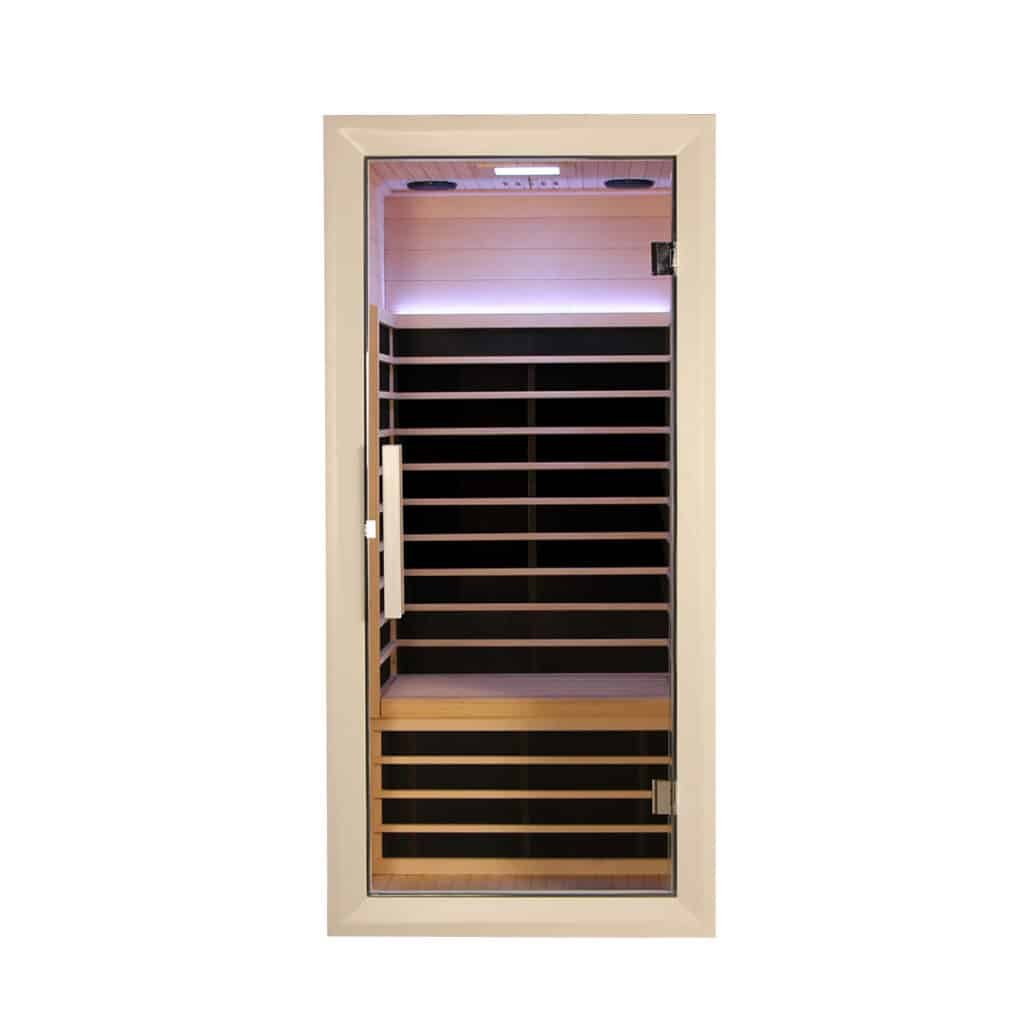
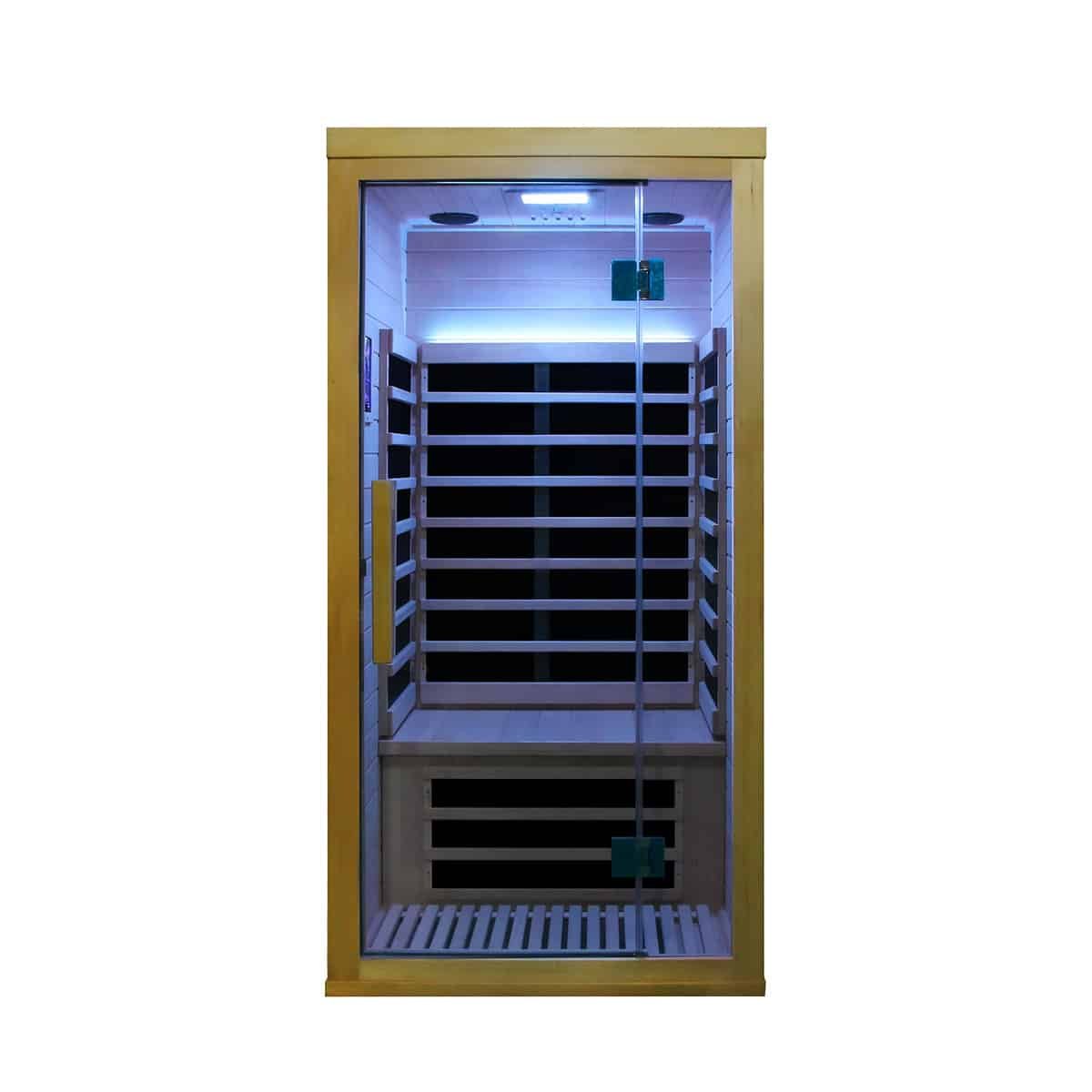
OMNI’s 2026 sauna catalogue gives useful first-party evidence, but it must be read by model. Aura-1 is listed as a Hemlock far-infrared model with a size of 900 × 900 × 1950, 1600 W power, 110V/60Hz or 220V/50Hz options, touch panel control and a room-temperature-to-65°C range. That supports a compact infrared buyer discussion. It does not define the power or room layout for every sauna product.
By contrast, Elio-6 is listed with “Stove” heating, a size of 2000 × 1700 × 2000, 3300 W power and a room-temperature-to-85°C range. Several outdoor Sol models also use the “Stove” heating label. For example, Sol-C-Large is listed at 3300 × 2400 × 2000 with 11000 W power, while Sol-F is listed at 2000 × 1800 × 2000 with 7200 W power. Those figures are useful for procurement comparison, but they should not be copied into a universal “traditional sauna” promise.
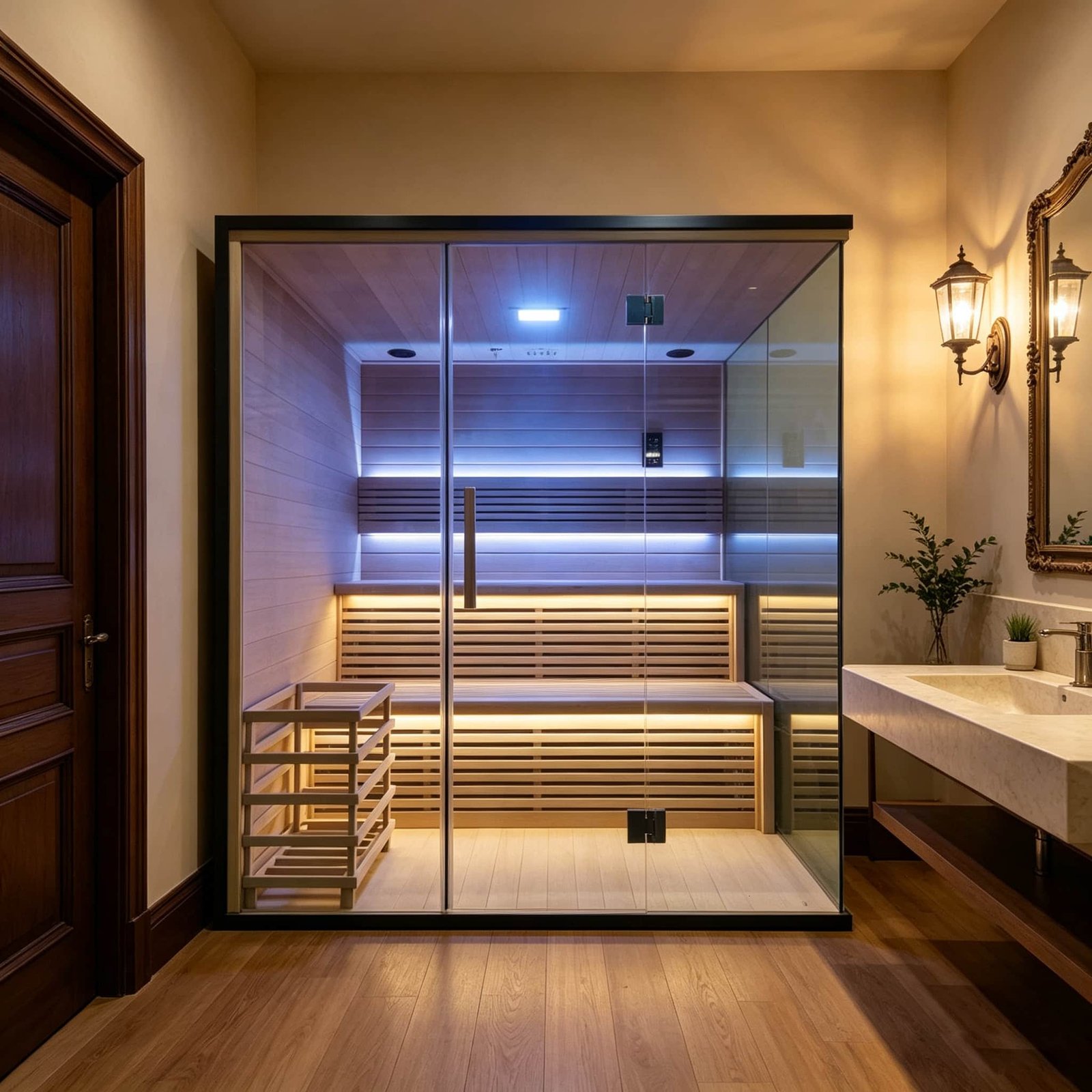
There are also catalogue cautions. Some model captions and drawings use different measurement bases, and some labels such as “New model” or “Hot sale” are not stable SKU names. A buyer should not publish or approve a final sales sheet until the supplier confirms the exact model code, drawing revision, heater package and electrical version.
A good infrared vs traditional sauna comparison therefore keeps model facts in separate columns. Do not borrow Aura-1’s far-infrared panel facts for Elio-6. Do not borrow Sol-C-Large’s outdoor room assumptions for a compact indoor cabin. Do not convert catalogue power values into final electrical instructions. Each line needs the source page, version and decision it supports.
Plan electrical and heat responsibility before sample approval
The commercial risk is not only choosing the wrong sauna type. It is approving a sample before electrical, heat and user-instruction responsibilities are written down. Heat equipment can create burn, fire and heat-stress risk when it is incorrectly selected, installed or used. Health Canada explains that very hot environments can contribute to heat illness, which is enough reason for a commercial buyer to document user guidance, staff responsibility and installer sign-off before approving a sauna package.
This does not mean a buyer should avoid saunas. It means the purchasing file should separate four layers: catalogue fact, quote-specific configuration, installation responsibility and user guidance. A gym owner should know who signs off the circuit and clearances. A distributor should know which spare parts and labels belong to the ordered version. A hotel buyer should know whether the operating instructions match the intended guest profile and supervision model.
If the infrared vs traditional sauna decision is still open, ask suppliers to quote two controlled options against the same project brief. Keep the same venue, country, capacity target, space limit and documentation request. Then compare the differences in heat source, room size, power, maintenance and guest promise. This prevents a buyer from comparing a compact private cabin against a much larger outdoor room as if they were equal substitutes. A controlled infrared vs traditional sauna comparison is slower than asking for a generic quote, but it produces a safer approval record.
For an OEM or wholesale order, add a responsibility matrix before production:
| Responsibility | Supplier confirms | Buyer confirms |
|---|---|---|
| Model identity | SKU, drawing revision, heating type, materials and accessories | Approved sample and target market |
| Electrical version | Power, voltage option and heater/control package supplied | Local code review, circuit design and installer approval |
| Heat boundary | Published temperature range and operating instructions for that version | Guest policy, signage, staff training and supervision level |
| After-sales | Spare parts path, warranty scope and documentation package | Service workflow, cleaning plan and issue escalation contact |
Do not let the phrase “infrared vs traditional sauna” hide these responsibilities. The heater label is only one input in a commercial purchase. A serious infrared vs traditional sauna approval file should show who owns every open item before the sample moves into repeat production.
Choose the right next page for the buyer journey
If the project is still comparing room type, start with the wider sauna manufacturer page and prepare the decision record above. If the buyer already knows the room will be used in a public or multi-user setting, the commercial sauna manufacturer page is the better next step.
If the project is more specific, route it to a model family. Aura-style infrared cabins belong with infrared sourcing. Elio, Sol and outdoor stove-heated rooms need a traditional or commercial sauna discussion. For large outdoor projects, a buyer can review an example such as Sol-C Large Outdoor Sauna Room while keeping final power and installation requirements tied to the quote.
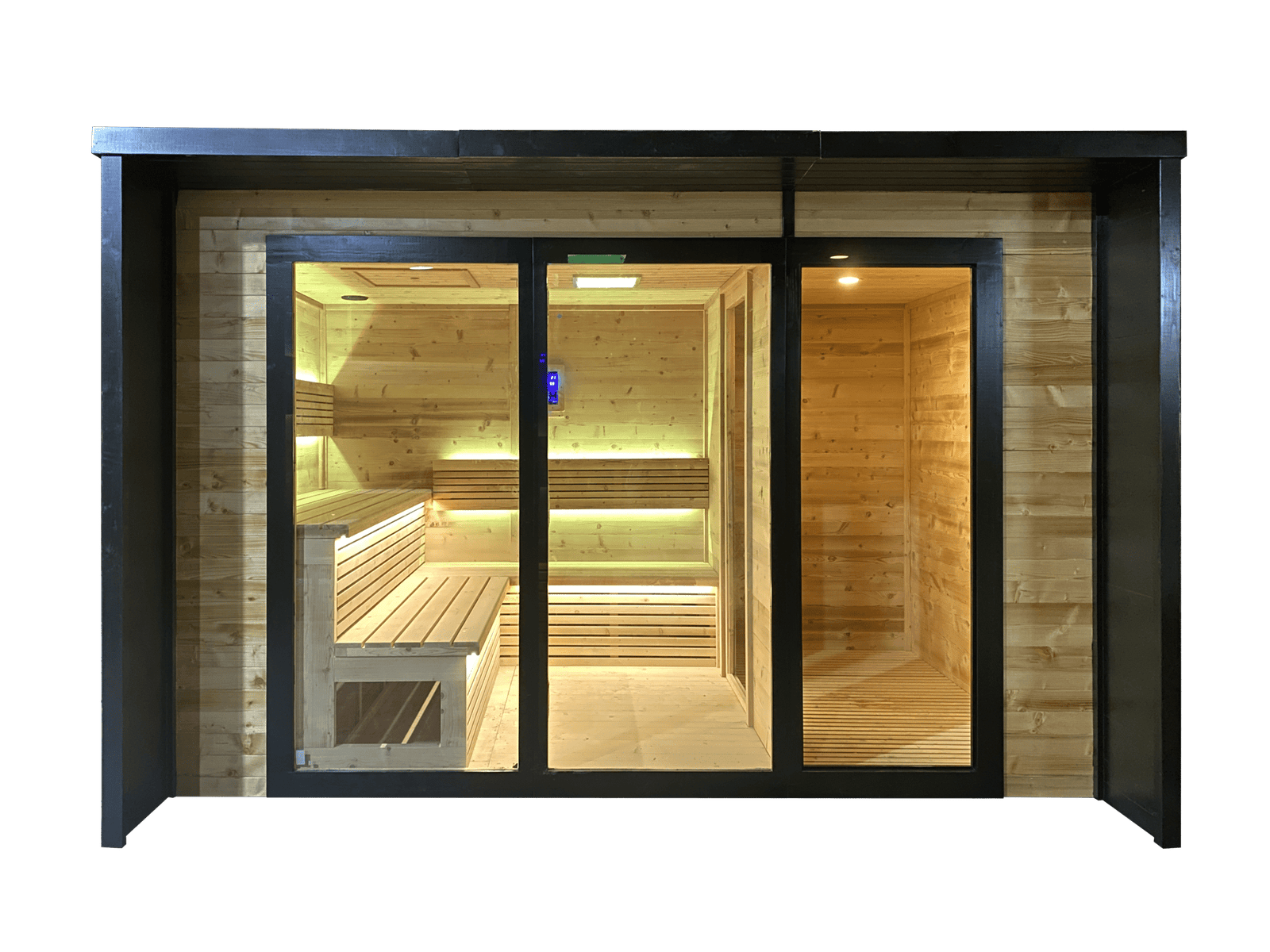
A useful RFQ should include the intended venue, country, indoor or outdoor location, target capacity, heating preference if known, voltage expectation, available footprint, service access, documentation requirements and any private-label packaging request. That information is more useful than asking a supplier to quote “the best sauna” with no site context.
For OEM buyers, add packaging, label language, manual language and spare-part supply to the same comparison. The infrared vs traditional sauna decision is not finished when the heater style is selected; it is finished when the agreed model, accessories, documents and service path can be repeated for the next order.
External source checks used for this guide: Health Canada heat guidance was used only to support the safety-boundary point that heat equipment needs clear user and installation responsibility. It is not used as a medical-performance claim for OMNI products. The commercial purpose of this infrared vs traditional sauna guide is procurement clarity, not a health outcome promise.
Questions buyers ask
Is infrared or traditional sauna better for a commercial wellness project?
Neither is automatically better. Infrared cabins often fit compact indoor wellness rooms and lower-temperature sessions, while traditional stove rooms suit buyers who want a hotter classic sauna experience, larger rooms or outdoor formats. The better choice depends on the site, buyer promise, electrical plan, guest expectation and maintenance responsibility.
Can a sauna brochure power rating replace an electrical design?
No. A brochure power value helps the buyer shortlist models, but the final circuit, protection, cable, local code and installer sign-off must be confirmed for the exact sauna version and destination market.
Should hotels choose one sauna type for every property?
Usually no. A hotel group can standardize the decision process while still choosing different sauna types by room size, guest profile, climate, installation location and service team capability.