A cold plunge chiller receiving inspection should decide whether an identified delivery can be accepted, conditionally accepted or isolated before the evidence is lost. The decision must connect the purchase order and shipping record to package condition, unit identity, included items, visible damage, storage controls and every exception. Signing a carrier receipt or seeing an intact crate is not proof that the delivered equipment matches the order.
This article is for importers, distributors, OEM brand owners, warehouses and commercial-project teams receiving cold-plunge equipment. It provides ten arrival checks, an evidence sequence, a disposition matrix and a copyable record. It does not replace the pre-shipment inspection, carrier contract, insurance terms, customs process, model-specific transport instructions or destination-site commissioning.
What a cold plunge chiller receiving inspection must decide
The receiving team owns a narrow but important question: did the identified shipment arrive in a condition that allows controlled handover to storage, inspection, installation or claim handling? It does not re-run the factory acceptance test and it should not energize an unknown or visibly damaged unit merely to see whether it works.
Three records must meet at the receiving bay:
- commercial identity: purchase order, model, quantity, destination, agreed accessories and responsibility terms;
- shipping identity: bill, packing list, package count, shipping marks, seals or carrier references where applicable;
- physical identity: the packages and units actually present, including model/nameplate, serial or batch references and visible configuration.
The pre-shipment cold plunge chiller inspection checklist covers the outgoing release check before loading. The packaging-validation guide asks whether an approved packout can withstand an agreed distribution route. A cold plunge chiller receiving inspection covers the destination evidence after the real shipment arrives.
Ten checks in a cold plunge chiller receiving inspection
| Check | Required receiving evidence | Weak evidence to reject |
|---|---|---|
| 1. Delivery identity | Purchase order, carrier reference, destination, package count and receiver | “A chiller arrived” |
| 2. Handover condition | Vehicle/package position, wetness, crushing, puncture, tilt, broken restraint or handling concern before movement | Photos taken after the package was moved |
| 3. Shipping marks | Package numbers, model/order marks, orientation/handling labels and seal reference where applicable | One distant pallet photo |
| 4. Package integrity | Base, crate/carton, fasteners, straps, wrap, cushioning, caps and evidence of opening or impact | “Looks fine” |
| 5. Quantity | Received packages and units reconciled to bill and packing list, including split or partial deliveries | Carrier package count only |
| 6. Unit identity | Model, electrical/controller variant, serial/batch and visible configuration after controlled unpacking | Cabinet colour or sales name |
| 7. Contents | Hoses, fittings, filters, covers, manuals, tools, spare items and loose cartons checked against the agreed list | Accessories assumed to be inside |
| 8. Product condition | Cabinet, panels, feet/casters, ports, controls, cables, filters/pumps and exposed interfaces inspected without unsafe disassembly | Only the front panel photographed |
| 9. Exception control | Damage/missing-item record, affected package/unit, containment, notice route and responsible party | Verbal message with no item identity |
| 10. Disposition and handover | Accept, conditional accept or hold; storage location; next inspection/commissioning lead; signatures and time | Moved to storage with no status |
A cold plunge chiller receiving inspection is complete enough when a person who was not present can identify what arrived, what was observed before and after unpacking, what remains unresolved and who owns the next action.
Capture receiving evidence before the scene changes
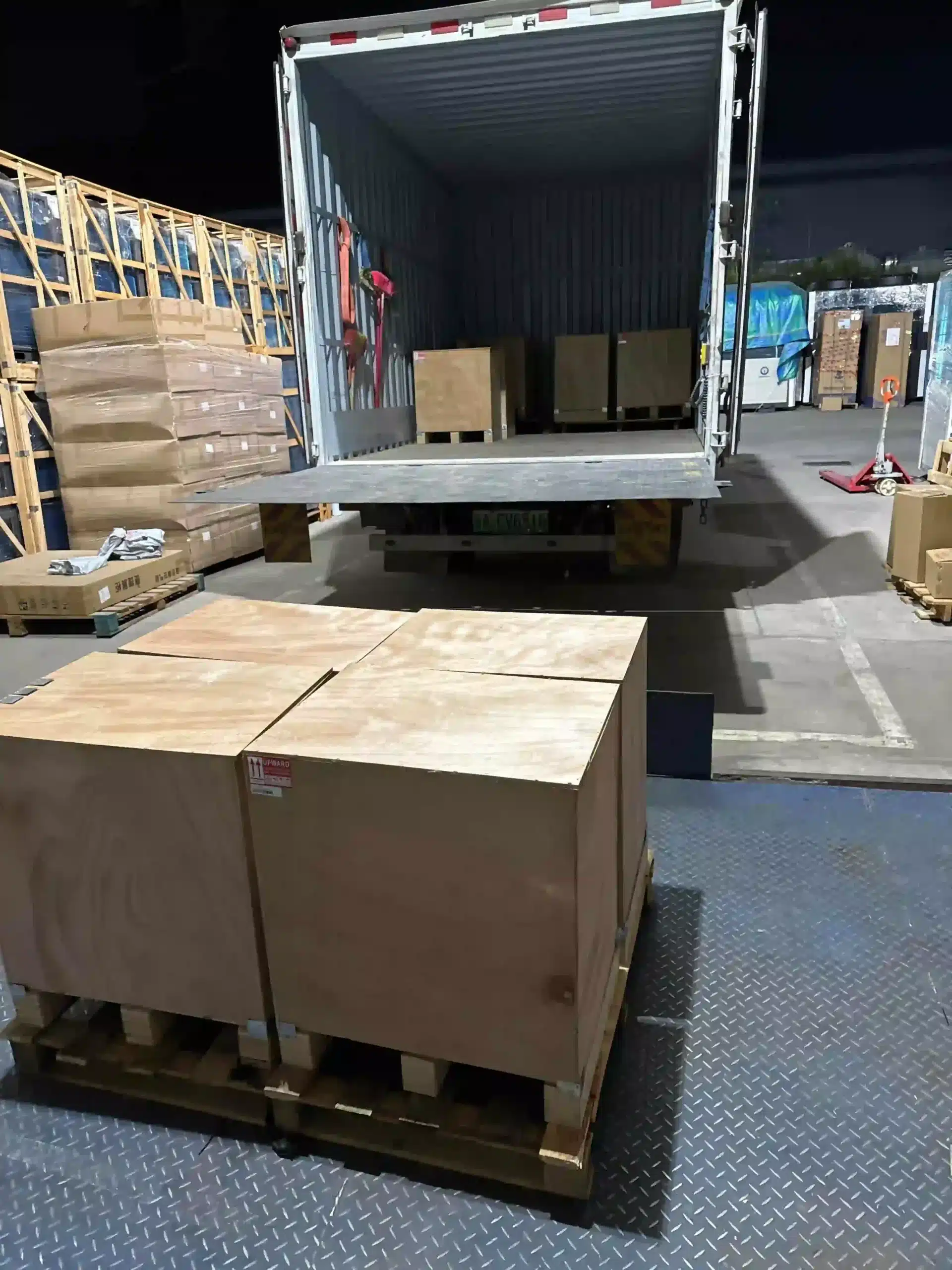
The order of evidence matters because unloading, moving, unwrapping and cleaning can erase the condition that existed at handover. Use a five-stage sequence:
| Stage | Record now | Do not wait until |
|---|---|---|
| Before unloading | Vehicle position, package count, visible lean/crush/wetness, restraints and handling limits | The carrier has departed |
| At handover | Carrier reference, time, receiver, exceptions noted on available handover documents and notice route | The delivery is entered as clean |
| Before unpacking | All sides, top/base, labels, seals, straps, fasteners, punctures and moisture paths | Wrap, panels or pallet parts are discarded |
| During unpacking | Layer sequence, displaced cushioning, loose items, contact marks and unit/package relationship | The unit is separated from its package |
| After unpacking | Unit identity, included items, visible condition, hold labels, storage status and next responsible team | Installation or commissioning begins |
Use wide photographs to establish location and package identity, then close views with a ruler or reference where scale matters. Keep the original files and timestamps. Renaming a photograph “damaged chiller” does not create traceability; link it to the package number, unit identity, purchase order and observation.
Do not impose one universal reporting deadline. Carrier, insurer, trade term and contract requirements differ. The U.S. International Trade Administration’s Incoterms overview explains that the chosen rule defines delivery, cost and risk responsibilities but does not replace a sales contract. ICC publishes the official Incoterms rules information. Buyers should identify the applicable rule, named place and contractual notice process before the shipment arrives.
Reconcile the delivered unit to the approved order
Start with quantity and identity, not cosmetic inspection. A cabinet can look correct while the electrical version, controller, pump/filter arrangement, ports, accessories or documentation differ. Record the model exactly as marked, serial or batch reference where provided, nameplate electrical data and any visible option or private-label configuration.
Compare this physical identity with the purchase order, approved sample/configuration and packing list. Use the batch-traceability checks when the buyer must connect a delivered population to production and test records. Use the quality-document register to confirm that referenced files cover the same model, variant and revision rather than a similar family.
For partial deliveries, record which package numbers and units arrived now and which remain open. Do not close an order from the total number of crates if one crate contains accessories, one contains a tub and another contains the chiller. The cold plunge chiller receiving inspection should reconcile sellable or installable scope, not only freight pieces.

Inspect package condition before controlled unpacking
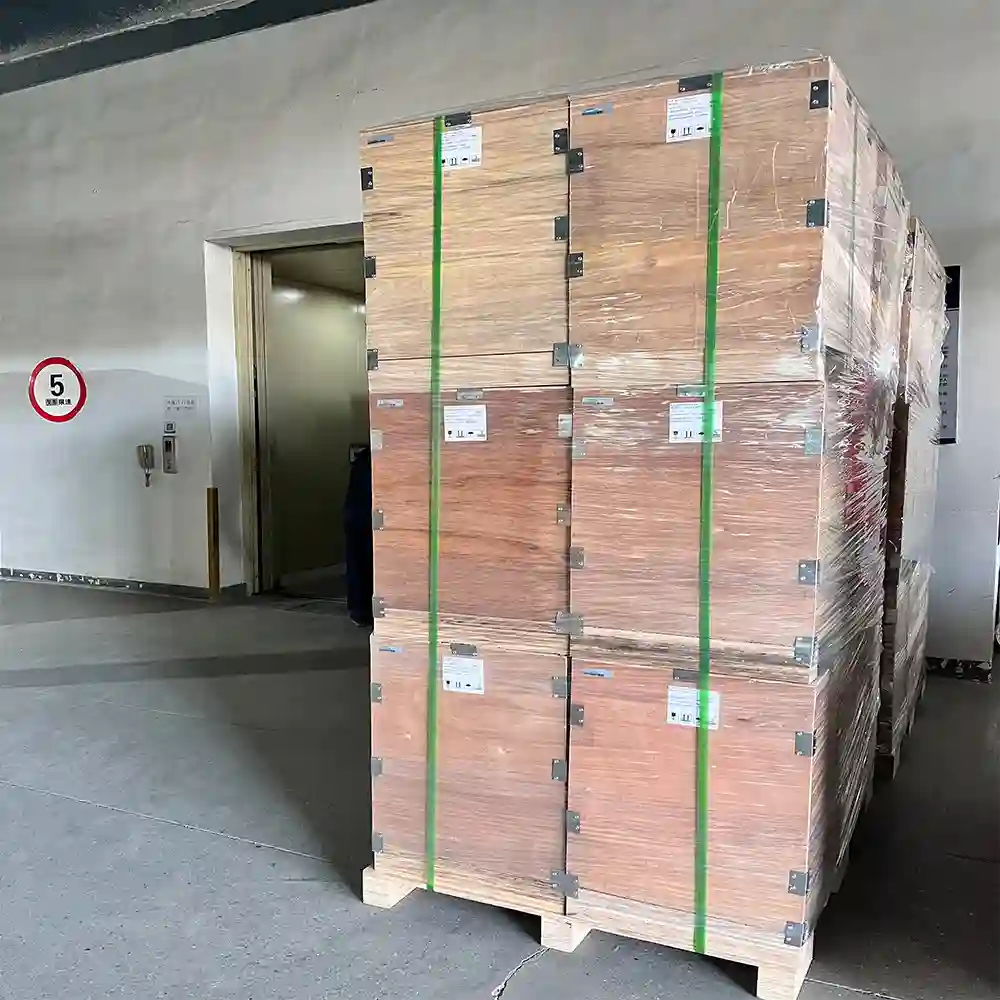
Walk around every package where access is safe. Check the base and pallet, crate/carton faces, corners, fasteners, straps, wrap, labels and any exposed fittings. Look for impact, leaning, crushed zones, broken or missing fasteners, torn wrap, water paths, staining, corrosion, shifted weight or contact between the product and package.
Package damage and product damage are related but not identical. A damaged outer panel may have protected the unit; an apparently clean crate can still contain a shifted component. Record both layers separately. Keep removed blocking, cushioning or damaged panels until the disposition reviewer confirms whether they are needed for investigation, claim or repacking.
If the model has transport locks, orientation requirements, drained-water instructions or restart conditions, use the exact supplied instructions. Do not invent a universal standing time or energize the unit to accelerate the receiving check. A cold plunge chiller receiving inspection ends at controlled handover; operating acceptance belongs to the specified commissioning or test method.
Verify accessories, loose cartons and documents
Use the approved packing list as a controlled checklist. Count and identify hoses, quick connectors, adapters, filters, covers, cables, manuals, labels, tools, drainage parts, spare consumables and any separately packed pump or accessory. Record where each item was found and whether packaging or identification is adequate for the next handover.
Do not infer scope from marketing photographs. A hose or filter shown in a product image may be optional, model-specific or packed elsewhere. Conversely, an unlisted loose part should not be installed simply because it fits visually. Mark the item, photograph it with the package identity and request clarification.
For documents, record title, revision/date, language and the model or order to which the file applies. A generic manual or certificate filename is not enough. The receiving record should identify missing or mismatched files without claiming that receiving staff completed destination-country compliance review.
Build evidence that supports a real exception decision
Describe observations, not causes you have not proved. Write “lower-left crate panel split; internal cushion visible; package 3 of 5” rather than “forklift damaged the chiller.” For the product, write the precise location, dimensions where useful, movement, deformation, leakage evidence or missing item. Keep suspected cause separate from confirmed condition.
Each exception should include:
- order, delivery and package identity;
- unit model/serial or best available link to the package;
- time and stage at which the condition was first observed;
- wide and close photographs, plus video only where movement or leakage needs it;
- affected scope and whether other packages need the same check;
- immediate containment, such as stop movement, isolate from weather or label hold;
- notice recipients, contractual/carrier route and requested decision;
- preserved packaging and next inspection authority.
If the condition is a product nonconformance rather than a freight-only issue, open a cold plunge chiller nonconformance report. Receiving evidence should feed that record; it should not disappear into a chat thread.
Choose accept, conditional accept or hold
| Disposition | Use when | Required controls |
|---|---|---|
| Accept | Identity, quantity, package/product condition and included scope meet the receiving criteria with no unresolved exception | Receiving sign-off, storage location and handover to the next team |
| Conditional accept | A bounded issue does not prevent controlled storage or next inspection, but correction/evidence remains open | Written condition, affected items, deadline, responsibility, segregation and release authority |
| Hold / isolate | Identity is uncertain; damage may affect safety/function; package was wet/opened; items are missing; or responsibility evidence must be preserved | Physical/status label, no energization or installation, protected storage, notice and authorized disposition |
Acceptance of freight paperwork and technical acceptance of the equipment are separate decisions. If local practice requires signing a delivery receipt before full unpacking, record the visible exceptions and the limits of that receipt as allowed by the applicable process. Do not convert an administrative signature into “equipment passed.”
A conditional acceptance must name the person who can close the condition. “Supplier to check” is incomplete. State whether closure requires missing accessories, better identity evidence, inspection by qualified service, repair approval, replacement, concession or commissioning result.
Use the same status language on the physical unit, warehouse system and exception record. A cold plunge chiller receiving inspection loses control when the paper says “hold,” the warehouse says “received,” and the project schedule assumes “ready to install.” One agreed status, linked to the package and unit identity, prevents an unresolved delivery from moving forward by accident.
For multi-unit deliveries, apply the cold plunge chiller receiving inspection decision to a defined population. One damaged crate may require only one hold, or it may justify checking packages that shared the same stack, handling event or moisture exposure. Record the reason for expanding or limiting the affected scope instead of copying one result across the full shipment.
Control storage and handover after receiving
Mark every unit or package with its receiving status. Separate accepted, conditional and held equipment so that a warehouse move does not erase the decision. Record location, orientation, weather protection, access restrictions and any supplier instruction for storage or transport state.
Preserve ports, caps, cables, filters and loose accessories from contamination or loss. If packaging must be reopened for inspection, define how it will be closed or replaced. Do not store a wet package against the equipment or discard its marks before identity is transferred to the unit record.
Keep the receiving status visible through internal moves. A unit transferred from the dock to a project room should carry the same order, package and exception references; otherwise the installer may see an apparently clean cabinet with no knowledge of the crushed base, missing carton or conditional acceptance recorded earlier. If the package and unit receive different warehouse labels, cross-reference both identifiers in the receiving record.
Close the cold plunge chiller receiving inspection only when every condition is either resolved or transferred to a named downstream record. An open carrier notice, missing manual, damaged fitting or identity question should remain visible in the commissioning package; changing the storage location must not reset the evidence trail.
The handover should state who owns installation, electrical checks, water-loop connection, commissioning and final acceptance. Link the model, receiving record and open exceptions to that work order. This prevents a commissioning team from treating an unidentified dent, missing fitting or wrong voltage as a new site problem.
Keep receiving inspection separate from commissioning
A cold plunge chiller receiving inspection can verify visible identity, condition and completeness. It cannot prove installed water flow, leak-free field connections, controller operation under the real system, cooling duty, room heat rejection or site electrical suitability.
Use the cold plunge chiller commissioning checklist after the unit is installed with the actual tub, water loop, controls and utilities. Keep any transport or receiving hold open until the responsible reviewer confirms whether commissioning may proceed.
Where receiving reveals a configuration mismatch, route it back through the order and approval records instead of adapting the site around the wrong unit. The purpose of receiving is to protect the next decision, not to make every delivery appear usable.
Copyable cold plunge chiller receiving inspection record
- Delivery: date/time, site, carrier/reference, receiver, purchase order and Incoterms rule/named place if applicable.
- Shipment: expected and received package count, package numbers, seals/marks and partial-delivery status.
- Before movement: vehicle/package position, visible condition, restraints, wetness and photographs.
- Package inspection: base, panels, corners, fasteners, straps, wrap, labels, opening/impact evidence and preserved materials.
- Unit identity: model, serial/batch, electrical/controller variant, private-label configuration and package link.
- Contents: unit quantity, accessory list, manuals/documents, loose cartons and missing/unidentified items.
- Product condition: cabinet, controls, feet/casters, ports, cables, pump/filter interfaces and visible exceptions.
- Exception: exact observation, affected scope, evidence files, containment, notice route and requested decision.
- Disposition: accept, conditional accept or hold; conditions; storage location; responsible reviewer and due date.
- Next handover: installation/commissioning lead, linked records and final receiving signatures.
Add the required receiving evidence and responsibility fields to the OEM cold plunge chiller RFQ. For project review, send receiving inspection details. The response should identify the evidence and responsible reviewer, not merely ask whether the crate looks damaged.
For repeat orders, retain the completed cold plunge chiller receiving inspection records as trend evidence. Compare recurring label errors, loose accessories, moisture paths, handling damage and closure time by model, route and packout revision. A pattern can trigger packaging or supplier corrective action, but the individual receiving record must remain factual and shipment-specific.
Questions buyers ask about receiving inspection
When should a cold plunge chiller receiving inspection start?
Start before unloading or moving the packages. Record package count, visible condition, position, wetness, restraints and shipping marks while the handover scene still exists.
Does an intact wooden crate prove the chiller is undamaged?
No. Record package condition, then perform controlled unpacking and inspect the identified unit and included contents. An intact outer package can still contain movement, missing items or configuration errors.
Should the receiving team power on the chiller?
Not as a universal receiving step. Follow the exact model’s transport, storage, electrical and commissioning instructions. Visible damage, uncertain identity or an unresolved hold should stop energization.
What is the difference between receiving inspection and pre-shipment inspection?
Pre-shipment inspection checks the approved order before release from the supplier. Receiving inspection records the real delivery condition, identity, completeness and exceptions after transport at the destination.
What should happen when damage or missing items are found?
Identify the affected package and unit, preserve evidence and packaging, isolate the item when needed, notify the contractual or carrier route promptly and record the authorized disposition before installation.