Cold plunge chiller packaging validation should prove that an identified chiller, its accessories and its documented packout can survive the agreed distribution hazards without unacceptable product or package damage. A wooden crate photograph, a shipping label or one undamaged delivery is not validation unless the packed configuration, route, test sequence, acceptance criteria and post-test inspection are recorded.
This article is for importers, distributors and OEM brand owners approving packaging before repeat shipment. It provides eight release decisions, a route-to-test matrix, a pre/post inspection record and revalidation triggers. It does not prescribe one universal carton, crate, drop height, vibration profile or test standard; the actual product, packed mass, distribution system, destination rules and contracted test method remain controlling.
What cold plunge chiller packaging validation must decide
The decision is not “does the crate look strong?” It is: does this exact packaged configuration protect the identified product through the distribution route and handling assumptions stated in the validation plan? The answer must include both packaging performance and product condition.
Packaging can remain visually intact while an internal component, caster, fitting, panel, controller mount or refrigeration assembly shifts. Conversely, a scuffed outer surface may be acceptable when the agreed protective function and product condition remain within criteria. Define pass/fail before the test rather than deciding from photographs afterward.
The International Safe Transit Association publishes package test procedures for different distribution situations. ISTA procedures are not automatic requirements for every OMNI shipment. They demonstrate the core method: select a procedure that matches the distribution environment, define the test item and evaluate performance against known acceptance criteria.
The pre-shipment inspection checklist owns the outgoing release of actual units and packout. Cold plunge chiller packaging validation happens earlier or after a material change: it establishes whether the packaging design and process are defensible. PSI then checks whether the released shipment follows that approved baseline.
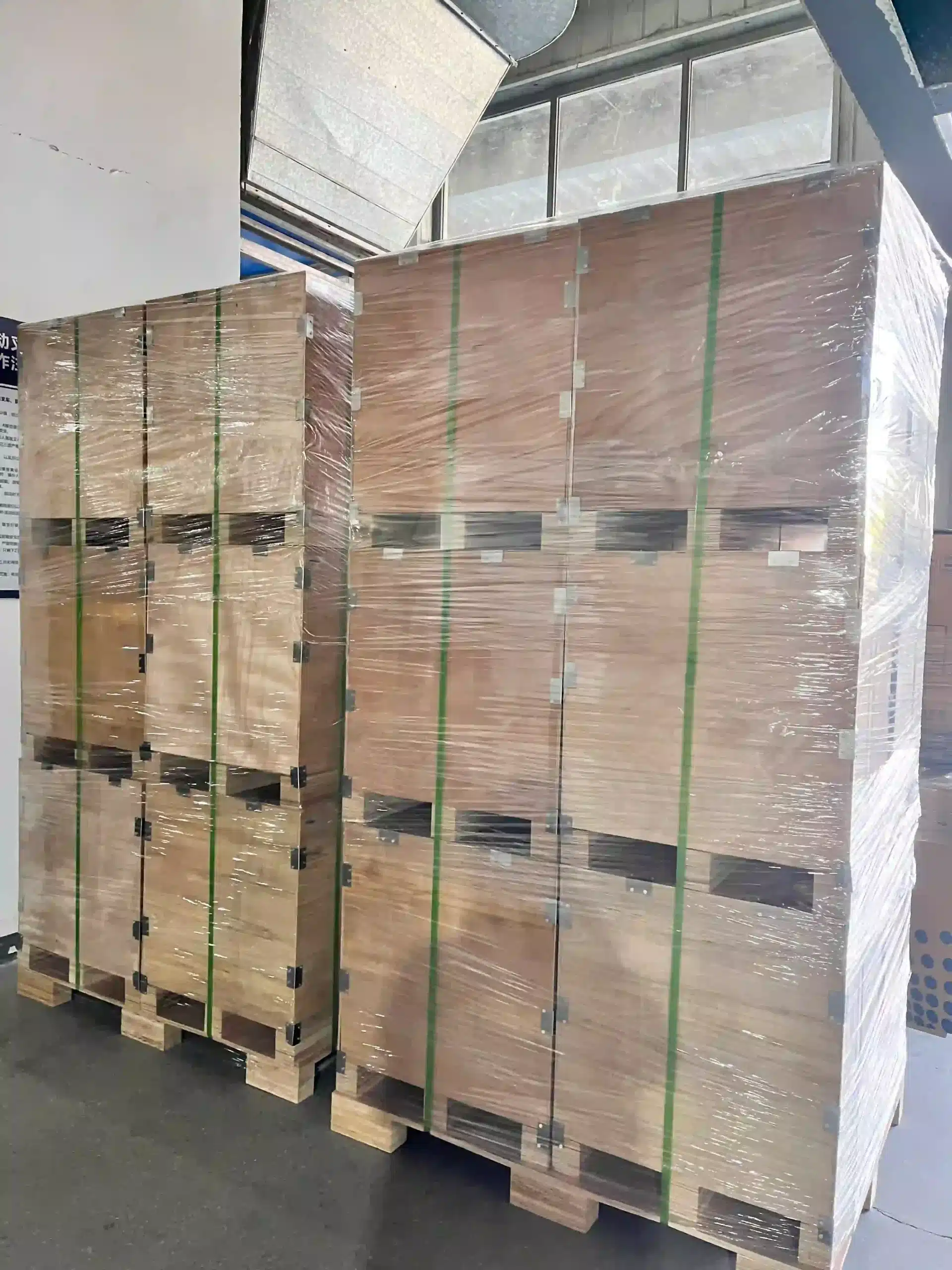
Eight decisions in cold plunge chiller packaging validation
| Decision | Required record | Weak evidence to reject |
|---|---|---|
| 1. Test article identity | Chiller model/revision/serial or sample, accessories, fluids removed or retained, protective shipping state | “One chiller tested” |
| 2. Packout baseline | Packaging drawing/BOM, pallet/crate/carton, cushions, bags, restraints, fasteners, accessory positions and closure method | Photos with no dimensions or revision |
| 3. Packed properties | Gross mass, dimensions, centre-of-gravity or handling concerns where relevant, orientation and stack limits | Product net weight only |
| 4. Distribution route | Factory handling, warehouse, truck, air/sea, container, transfer points, delivery equipment and final-mile assumptions | “Export shipping” |
| 5. Hazard/test sequence | Conditioning, handling, shock/drop, vibration, compression and other agreed simulations in defined order | One dramatic drop with no route basis |
| 6. Acceptance criteria | Product function/appearance, alignment, leaks, mounts, connections, accessories, package integrity and permitted damage | “No obvious damage” |
| 7. Evidence and disposition | Test setup, equipment, timestamps, observations, pre/post inspections, failures, repairs, retest and approval | A short video without item identity |
| 8. Change/revalidation rule | Changes to product, packed mass, restraints, materials, supplier, route or handling that require review | Approved forever after one test |
Cold plunge chiller packaging validation is complete enough for release when another reviewer can rebuild the packout, understand the route, reproduce the test decision and identify what would invalidate it. A longer report is not stronger if the test article or acceptance criteria remain vague.
Freeze the product and packout used in the test
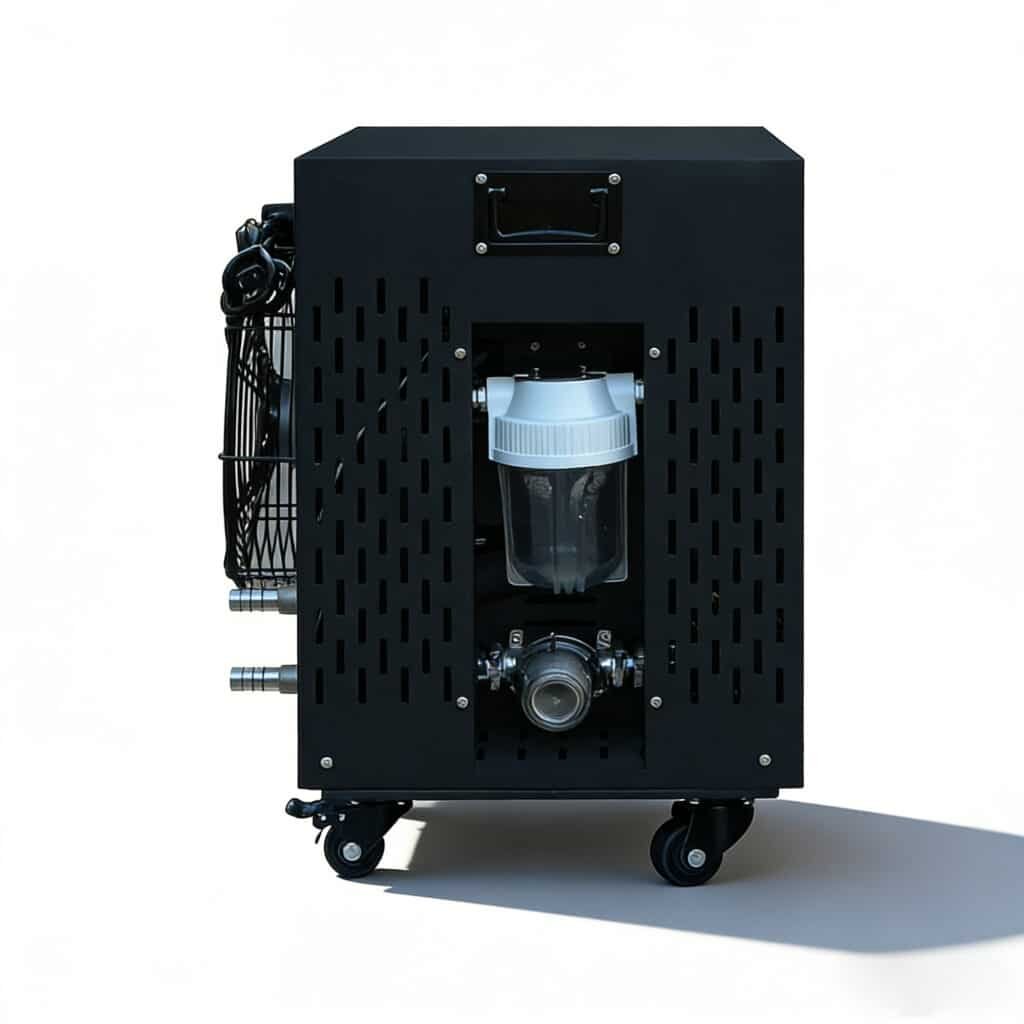
Start with the chiller identity. Record the model, electrical or controller variant where relevant, cabinet revision, fitted components, casters/feet, protruding ports, hoses/accessories and any shipping locks or temporary transport parts. State whether water has been drained, ports capped and filters or loose accessories removed and packed separately.
The package drawing or BOM should identify the pallet or base, panels, blocking/bracing, cushions, bags or film, corner protection, desiccant or moisture barrier where specified, fasteners, straps, accessory compartments, labels and closure sequence. Photographs are useful when tied to this controlled record. They do not replace dimensions, materials or positioning instructions.
Record gross packed mass and external dimensions. A production change that adds a pump, filter, accessory carton or heavier panel can change the load on the pallet, restraints and handling equipment even when the crate outside looks the same. Cold plunge chiller packaging validation must follow the actual shipping configuration.
Use the golden-sample approval baseline to connect visible finish, configuration and controlled files. Packaging approval should state whether the validation sample matches the production reference and list every planned difference.
Translate the real distribution route into hazards
Map the shipment from the packing station to final unloading. Include internal forklift or pallet-jack moves, warehouse stacking, truck or container transport, terminals, transfers, air or sea legs, delivery tail-lift or dock, stairs/thresholds if applicable and storage exposure. Do not assume every carrier or country creates the same handling sequence.
| Route evidence | Possible hazard to evaluate | Buyer record |
|---|---|---|
| Repeated manual or mechanical transfers | Edge/corner shock, fork entry, tip or orientation error | Handling points, labels, base access and agreed shock/handling simulation |
| Truck, air or sea movement | Random/repetitive vibration, restraint loosening, rubbing and component movement | Transport modes, duration basis and selected vibration method |
| Warehouse or container stacking | Top load, creep, panel bowing or pallet deformation | Stack pattern, duration/load basis and compression decision |
| Humidity, rain exposure or temperature transition | Moisture entry, corrosion, carton weakening, condensation or label failure | Conditioning/environment assumptions and barrier inspection |
| Final-mile delivery and unpacking | Restricted equipment, dragging, tilting, unsafe opening or hidden damage | Unloading/unpacking instructions and receiving evidence |
ASTM International describes ASTM D4169 as a uniform basis for evaluating shipping units against hazards encountered in distribution systems. The standard’s exact schedules and assurance levels require the actual standard and qualified test planning; this article does not reproduce them. The useful principle is to connect route hazards to a documented sequence rather than selecting tests because they are familiar.
For solid-wood crates or pallets entering the United States, USDA APHIS explains wood packaging material requirements based on ISPM 15 treatment and marking. That is a destination-specific plant-health boundary, not package-performance validation. A compliant mark does not prove the crate protects the chiller, and a strong crate does not waive destination wood-packaging rules.
Build one controlled test sequence
Test order matters because damage can accumulate. Conditioning may affect cartons or wood moisture; vibration can loosen restraints; compression can alter panels; handling can expose a weakened corner. State the sequence, orientation, dwell or cycle basis, test equipment, setup and any inspections between stages.
Do not invent a universal drop height or vibration duration. Select the method from the documented route, package type, packed mass and agreed standard or protocol. Record deviations from the selected method. If the laboratory or supplier changes the sequence, the report should explain why the result remains comparable.
Cold plunge chiller packaging validation should include restraint and orientation checks before the first stage. Photograph the test article, serial/model, closures, straps, pallet, indicators where used, accessories and any vulnerable points. After each stage, note package changes without repairing or tightening anything unless the protocol authorizes it and the intervention is recorded.
Some projects need a controlled handling trial in addition to laboratory simulation: forklift entry, pallet-jack access, container loading, door clearance, unloading or crate opening. Treat the trial as a defined check with people, equipment, route and acceptance criteria—not as a staged marketing video.
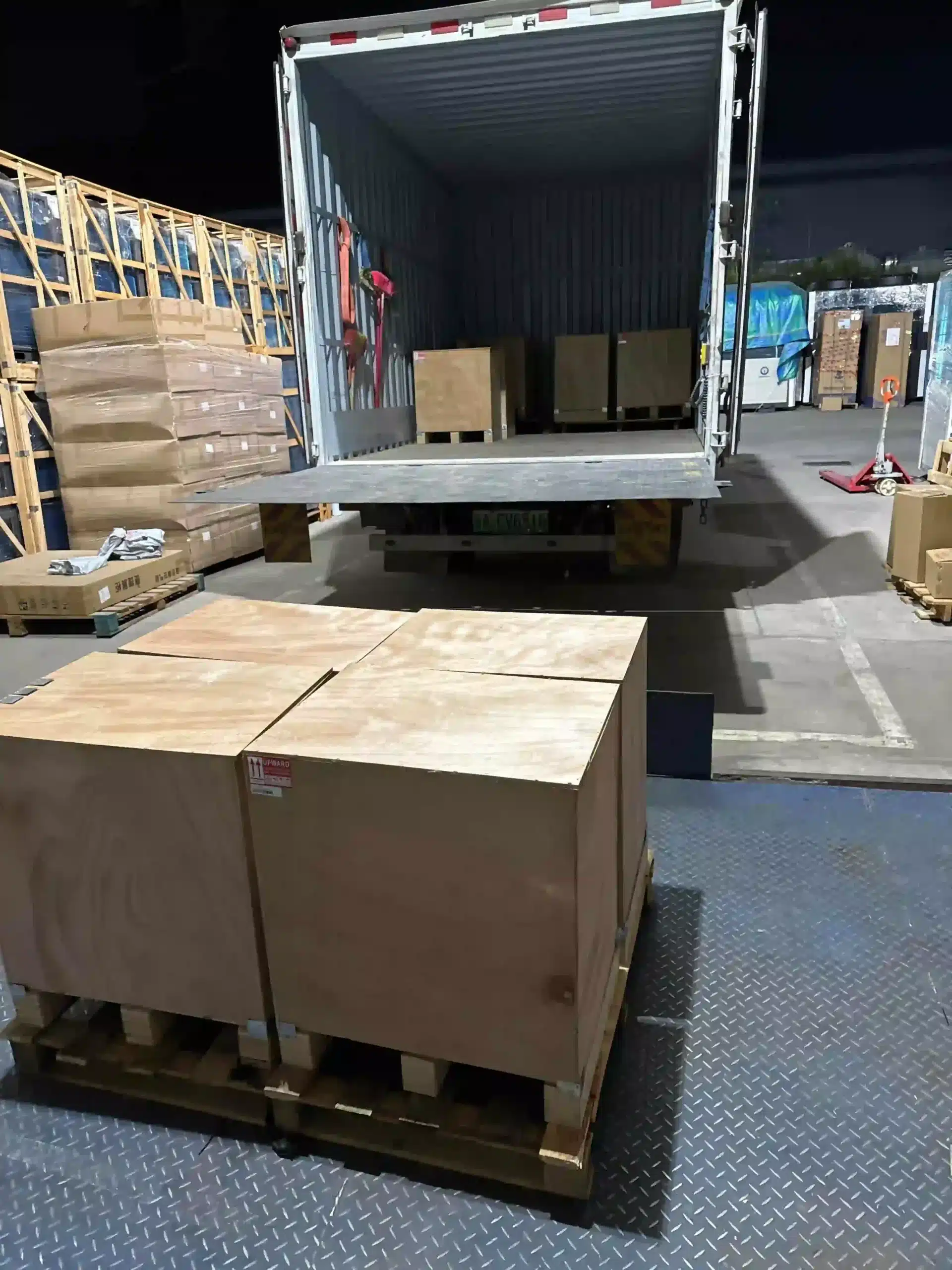
Inspect the chiller, accessories and package after testing
Define product acceptance before testing. Depending on the agreed scope, inspect cabinet alignment and finish, handles, casters/feet, ports and caps, fasteners, controller/display mount, filter/pump assemblies, internal mounts visible through approved access, hoses/accessories, labels and documentation. Run only the safe functional or leak checks included in the approved post-test plan.
Package acceptance can include pallet/base condition, panel and fastener integrity, strap position/tension evidence, cushion movement or crushing, moisture barrier, punctures, abrasion, accessory migration, closure condition and marks. Cosmetic package damage may be acceptable or unacceptable according to the contract; decide that before the result is known.
Use a pre/post comparison rather than memory. Photograph the same views, measure the same reference points where applicable and record every intervention. If a fitting cap loosens, a caster contacts a panel or an accessory box moves, identify the mechanism and affected scope. Do not close the issue merely because the chiller still starts.
When acceptance fails, use the nonconformance record to preserve requirement, affected scope, containment, disposition and retest evidence. Repeated or systemic packaging failures may require the corrective-action route rather than another unrecorded packout adjustment.
Compare the same product checkpoints before and after testing
A cold plunge chiller packaging validation report should compare identical views and references before and after the sequence. Otherwise, a shifted bracket, loosened caster, rubbed hose or changed panel gap can be missed because the reviewer has no baseline.
| Checkpoint | Pre-test record | Post-test decision |
|---|---|---|
| Cabinet and finish | Same-side photographs, panel gaps, corners, handles and known marks | New dent, abrasion, opening or alignment change versus permitted cosmetic criteria |
| Base, feet and casters | Fastener/position reference, clearance to blocking and contact surfaces | Movement, flat spotting, impact mark, loose fastener or unacceptable load path |
| Water interfaces | Ports, caps, valves, filters, hoses/accessories and protective spacing | Contact, looseness, crack, deformation, missing cap or evidence requiring leak verification |
| Controls and internal mounts | Display/controller position and approved visible mounting references | Shift, cracked mount, connector movement or another condition requiring qualified inspection |
| Accessories and documents | Position, restraint, separation, contents list and packaging method | Migration, rubbing, crushing, moisture damage, missing item or label/manual damage |
Record package checkpoints in the same way: pallet/base geometry, panel condition, fasteners, closures, cushions, straps, moisture barriers and labels. Cold plunge chiller packaging validation should show whether the package absorbed the hazard as intended or transferred it into the product.
Do not dismantle electrical or refrigeration assemblies merely to search for damage. Define which internal checks are visually accessible and which require qualified service, a controlled functional check or a separate engineering review. Cold plunge chiller packaging validation evidence should preserve the boundary between a packaging inspection and unauthorized product repair.
If an indicator, fastener witness mark or dimensional reference is used, identify it before testing and state the acceptance limit. A new reference created after the test cannot prove whether movement occurred. This comparison record also makes a later packaging revision reviewable: the buyer can see exactly which contact or movement the new restraint is intended to prevent.
Keep packaging evidence linked to the order and release file
The validation report should identify the test article, packout revision, laboratory or test location, equipment/method references, sequence, conditions, raw observations, images, failures, repairs, retest and approval. Keep the signed decision with the cold plunge chiller quality-document register.
Cold plunge chiller packaging validation records should also identify every inspection interruption. Opening the crate, tightening a strap, replacing a cushion or moving an accessory between test stages changes the evidence; if the protocol permits it, record who acted, when, why and which subsequent result remains valid.
Production packaging records answer a different question: did this shipment use the approved packout? Record unit/package identity, accessories and manuals, closure, marks, dimensions/weight where required, deviations and release. The validation file establishes the baseline; the packout and PSI records prove execution.
Use batch traceability when packaging materials, crate revisions or accessories vary by lot or date. A field damage report is far more useful when the buyer can identify the product configuration, packout revision and shipping event.
Set revalidation triggers before production
Do not treat one result as permanent approval for every future shipment. Review or revalidate after changes that can alter hazard exposure or package response:
- product dimensions, packed mass, centre of gravity, cabinet, feet/casters, protrusions or internal mounting;
- pallet, crate/carton, cushion, film/bag, fastener, strap, accessory position or supplier;
- quantity per pallet or stack pattern;
- shipping orientation, route, carrier/transport mode, containerization, storage or final-mile handling;
- acceptance criteria, destination wood-packaging requirements or observed field damage pattern.
Cold plunge chiller packaging validation does not always require repeating every test after a minor change. It does require a recorded impact decision stating why the existing evidence remains valid, which tests are repeated and what first production shipment receives additional inspection.
Route permanent changes through the change-control record. The packaging drawing/BOM, validation report, first affected lot and outgoing inspection should use the same revision identity.
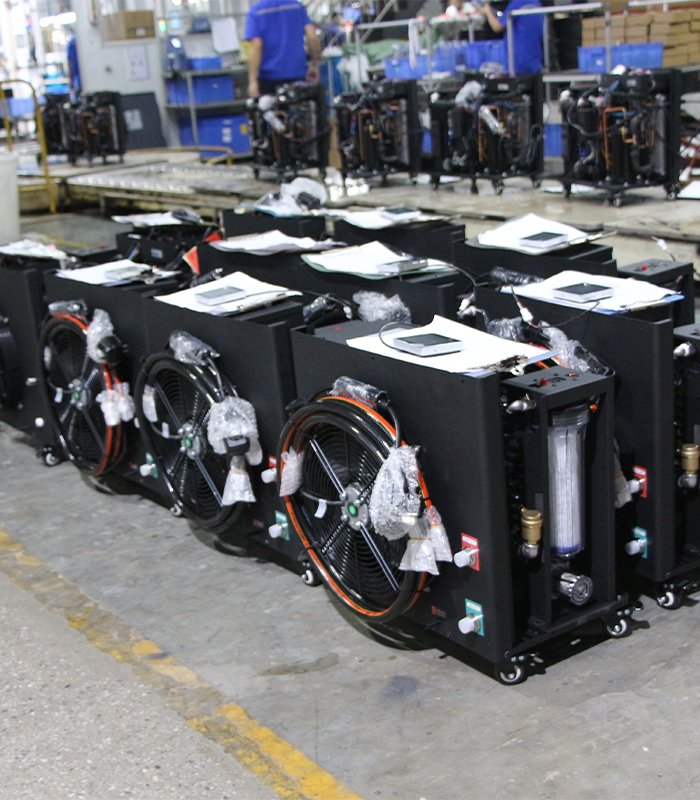
Illustrative failure: the crate passes, the chiller does not
Illustrative scenario, not an OMNI customer case: a crated chiller completes an agreed vibration and handling sequence. The crate panels, straps and pallet appear intact. During post-test inspection, however, one caster has repeatedly contacted a wood block, a controller bracket shifted slightly and an accessory carton rubbed against a painted panel.
The package-only inspection would pass. The product-and-package criteria place the result on hold. The team records the contact marks, packout revision and sequence, adjusts the restraint and accessory position through change control, then repeats the affected validation stages and the full post-test inspection.
The revised cold plunge chiller packaging validation record does not claim the crate is universally transport-proof. It states which product, packout, route assumptions, test sequence and acceptance criteria passed. PSI then checks that production shipments use that released configuration.
Copyable cold plunge chiller packaging validation record
- Project/test identity: buyer, supplier, order/program, report number, date, location and approvers.
- Product: model/revision/serial or sample, electrical/controller variant, shipping state and accessories.
- Packout: drawing/BOM revision, pallet/crate/carton, materials, restraints, closure and accessory positions.
- Packed properties: gross mass, dimensions, orientation, handling/stack limits and vulnerable points.
- Distribution route: factory handling, storage, transfers, transport modes, container/final-mile and environment.
- Test sequence: selected standard/protocol, conditioning, handling, vibration, compression/shock and deviations.
- Acceptance: package criteria, product criteria, functional/leak checks where authorized and permitted damage.
- Evidence: setup, equipment, raw observations, pre/post photos, failures, interventions, retest and disposition.
- Change rule: product, material, supplier, mass, route and handling changes requiring impact review or revalidation.
Add this record to the OEM cold plunge chiller RFQ and outgoing evidence schedule. To review a project, send OMNI the exact chiller configuration, destination, transport route, packout requirement and acceptance evidence expected. The useful result is a reproducible baseline, not simply a photograph of a closed crate.
Questions buyers ask about packaging validation
Is a wooden crate enough for cold plunge chiller packaging validation?
No. The buyer needs the identified product and packout, route hazards, controlled test sequence, package and product acceptance criteria, post-test inspection and change rules. A crate can look strong without controlling internal movement.
Is packaging validation the same as pre-shipment inspection?
No. Validation establishes whether a packaging design can protect the defined configuration under agreed hazards. Pre-shipment inspection verifies that the actual outgoing units and packout match the approved order and release baseline.
Which packaging test standard should a buyer require?
Select the procedure with a qualified packaging or test professional based on product, packed mass, package type, distribution route, handling and destination requirements. This article does not prescribe one universal ISTA or ASTM method.
Should the chiller be function-tested after package testing?
Use the safe post-test inspection and functional scope approved for the product and contract. At minimum, inspect identity, alignment, mounts, interfaces, accessories and evidence of leakage or movement; do not improvise electrical or refrigeration work.
When should cold plunge chiller packaging validation be repeated?
Review or revalidate when the product, packed mass, dimensions, restraints, packaging materials or supplier, stack pattern, route, transport mode, handling method, destination requirements or field-damage pattern changes.