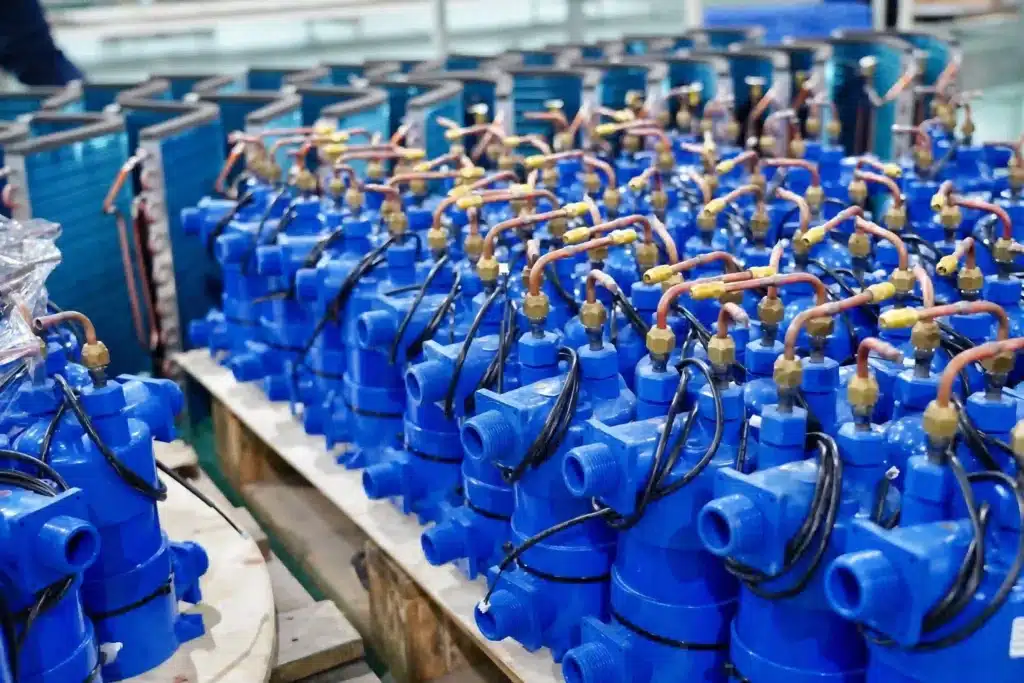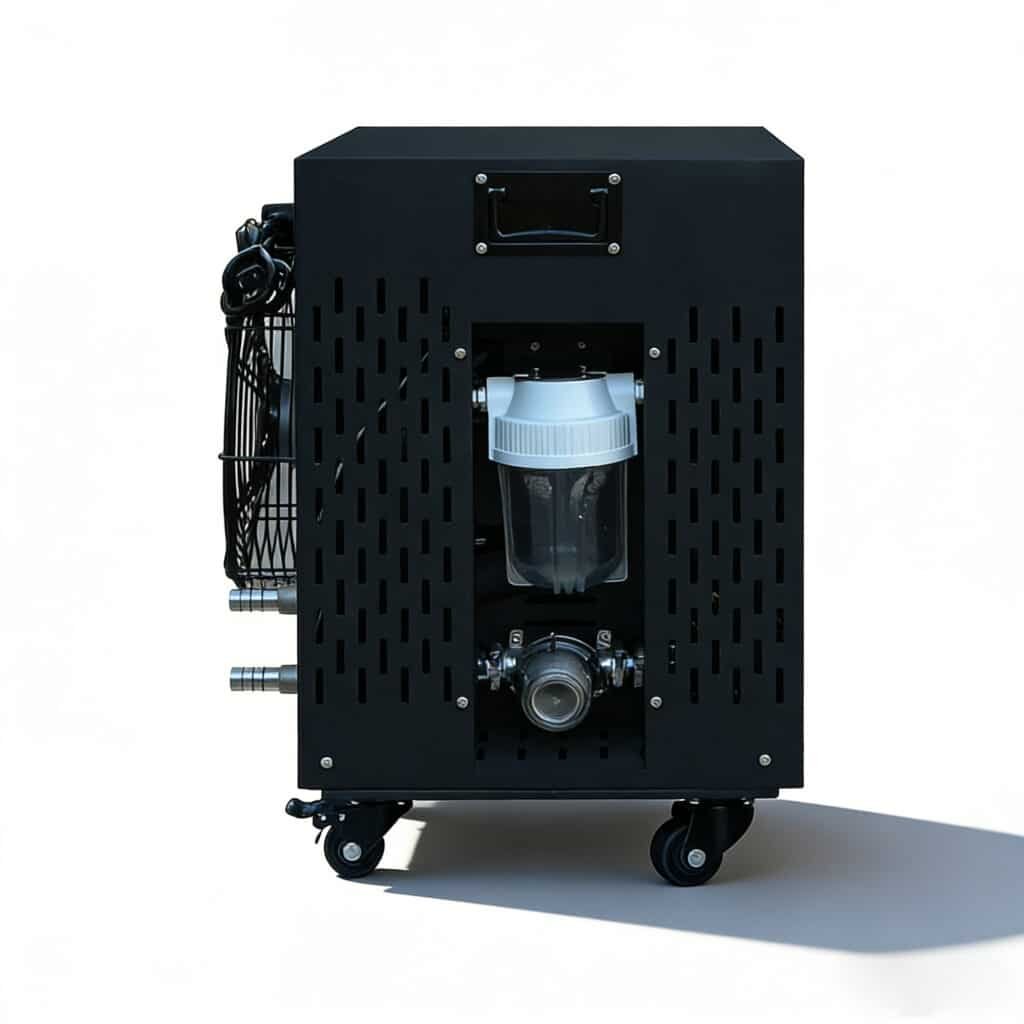
A cold plunge chiller spare parts kit should be built from failure impact, allowed downtime, exact model and revision, field-replacement authority, storage condition and replenishment time. A box of expensive “common parts” is not useful when staff cannot identify the failed component, the part does not match the installed variant, or the replacement still needs unavailable tools and commissioning evidence.
This article is for importers, distributors, OEM brand owners and commercial operators planning after-sales support. It provides nine stocking decisions, a part-criticality matrix, a reorder calculation and a copyable RFQ record. It does not publish a universal OMNI parts list, claim local stock in every market or authorize electrical/refrigeration repairs; the exact model, service instructions, competence and warranty boundary remain controlling.
What a cold plunge chiller spare parts kit must decide
The decision is not “which parts fail most often?” It is: which verified parts and resources shorten a defined recovery path enough to justify stocking them at this location? Cost, failure consequence, replacement time, diagnosis confidence and technician availability all matter.
Separate four categories before building the list:
- Consumables: items replaced by schedule or condition, such as approved filter elements or seals where applicable.
- Service spares: identifiable parts that qualified staff can replace under the exact instructions.
- Major assemblies: pumps, controllers, heat-exchange or refrigeration assemblies that may need specialized diagnosis, handling or commissioning.
- Tools and evidence: caps, fittings, approved tools, instructions, configuration files and test records needed to make a spare usable.
The cold plunge chiller redundancy plan owns the facility recovery architecture. The cold plunge chiller spare parts kit is one resource inside that plan; it cannot fix shared power, drainage, room or water-quality failures.

Nine decisions in a cold plunge chiller spare parts kit
| Decision | Required record | Weak answer to reject |
|---|---|---|
| 1. Protected service | Installed units, critical functions, acceptable outage and degraded mode | “Avoid downtime” |
| 2. Installed-base identity | Model, serial range, electrical/controller variant, BOM/revision and location | “Fits 1 HP chillers” |
| 3. Failure impact | What stops, safety/operating consequence and recovery path for each part | Stock the most expensive components |
| 4. Replacement authority | Operator, trained maintainer, qualified electrical/refrigeration service or factory-only boundary | Anyone can swap it |
| 5. Part identity | Part number, revision, approved alternatives, included seals/connectors and document reference | Photo or generic description |
| 6. Quantity and replenishment | Installed population, consumption/failure evidence, supplier lead time, order trigger and safety stock | One of everything |
| 7. Storage and shelf condition | Temperature/humidity/light/cleanliness, packaging, expiry or periodic condition check | Stored indefinitely |
| 8. Replacement and verification | Isolation, tools, instructions, post-replacement leak/flow/control/operating checks | Install and restart |
| 9. Traceability and review | Receipt, lot/revision, issue-to-unit record, remaining quantity, replenishment and change review | Unlabelled parts shelf |
A cold plunge chiller spare parts kit is ready when another person can identify why each item is stocked, which units it fits, who may replace it and what evidence returns the system to service.
Rank parts by recovery impact, not price
Use a part-criticality matrix. High purchase price does not automatically mean high stocking priority. A low-cost seal, cap, filter element, connector or sensor can stop recovery when it is unique, difficult to source quickly or required to complete a leak-free restart.
| Question | Higher stocking priority | Lower stocking priority |
|---|---|---|
| Failure effect | Stops critical service or prevents safe shutdown/restart | Cosmetic or non-critical function with accepted workaround |
| Replacement lead time | Long, uncertain or international replenishment | Locally available approved item |
| Diagnosis confidence | Failure can be identified from approved evidence | Part would be swapped only as a guess |
| Replacement authority | Competent local person and instructions are available | Factory or specialist work still required |
| Storage stability | Can be stored and inspected without degradation | Expires, corrodes, loses charge/configuration or needs special handling |
| Interchangeability | Exact model/revision or approved alternative is confirmed | Visual similarity or unapproved substitute only |
The U.S. Department of Energy’s operations and maintenance best-practices guide addresses federal facilities broadly, not cold-plunge equipment. Its useful principle is that effective O&M combines planning, maintenance strategy, documentation and performance rather than reacting after failure.
A DOE Office of Inspector General audit on critical spare parts management concerns DOE facilities, not commercial chillers. It still illustrates why identifying critical spares, maintaining accurate inventory and aligning stock with operational risk are management controls rather than a one-time purchase exercise.
A stocked part is not permission to replace it
For each item, mark the service boundary:
- operator-accessible consumable: only where the exact manual allows routine replacement;
- trained maintenance item: requires isolation, tools and documented competence;
- qualified electrical/refrigeration item: internal electrical, live testing, sealed-refrigerant work or protection changes stay with qualified service;
- factory/authorized assembly: replacement may require calibration, software, pressure testing or evidence unavailable on site.
Cold plunge chiller spare parts kit decisions should include the person, instruction and post-replacement check—not only the part. Stocking a controller or compressor does not shorten downtime when nobody can diagnose the fault, configure the replacement or lawfully perform the work.
Use the pump troubleshooting evidence route and the wider maintenance baseline to separate accessible observations from qualified repair. Do not replace parts repeatedly until the symptom disappears.
Lock every spare to the installed model and revision
Record the exact part number and the equipment model, serial or production range, electrical version, controller/firmware where relevant and approved drawing/BOM revision. A visually identical pump, controller, fitting or sensor can have different electrical, hydraulic, software or mounting requirements.
List approved alternatives explicitly. “Equivalent” requires the responsible technical review, not seller similarity. When a substitute affects performance, compliance evidence, controls, water materials, labels or instructions, route it through the change-control decision.
Keep kits separated or clearly mapped when a distributor supports several models. The cold plunge chiller spare parts kit should also state whether seals, O-rings, caps, clamps, adapters, configuration files or mounting hardware are included with the main part.
Split the kit across local, regional and supplier stock
A cold plunge chiller spare parts kit does not need every approved item at every facility. Use the recovery target and service route to place stock at the right level.
| Stocking level | Suitable items | Required evidence |
|---|---|---|
| On-site kit | Approved consumables, seals, caps, connectors and externally replaceable items needed inside the site recovery target | Exact part mapping, trained person, storage and return-to-service steps |
| Regional distributor stock | Lower-frequency pumps, controllers, panels or assemblies serving several matching units | Inventory visibility, dispatch time, packaging, customs/domestic transport and qualified installation route |
| Supplier or factory stock | Major assemblies, specialist parts or low-frequency variants requiring technical confirmation | Availability status, preparation/lead-time trigger, model verification and service responsibility |
| Whole-unit contingency | A complete compatible chiller where component repair cannot meet the outage target | Storage condition, movement/connectivity, utilities and recommissioning proof |
Do not count supplier stock as available merely because the part appears in a catalogue. Confirm whether it is finished stock, production-to-order, held for warranty only or subject to minimum order, export, dangerous-goods or configuration checks. Record the date and quotation basis.
Regional pooling can reduce duplicated inventory, but the transfer time must include order approval, picking, packaging, transport, customs where relevant and site access. A cold plunge chiller spare parts kit at regional level succeeds only when the dispatch and replacement chain still meets the protected recovery time.
For multi-customer programs, define reservation rules. One rare failure can consume the only regional spare while several sites remain exposed. Record minimum remaining stock, emergency allocation authority and the replenishment order opened after issue.
Set quantity and reorder rules from evidence
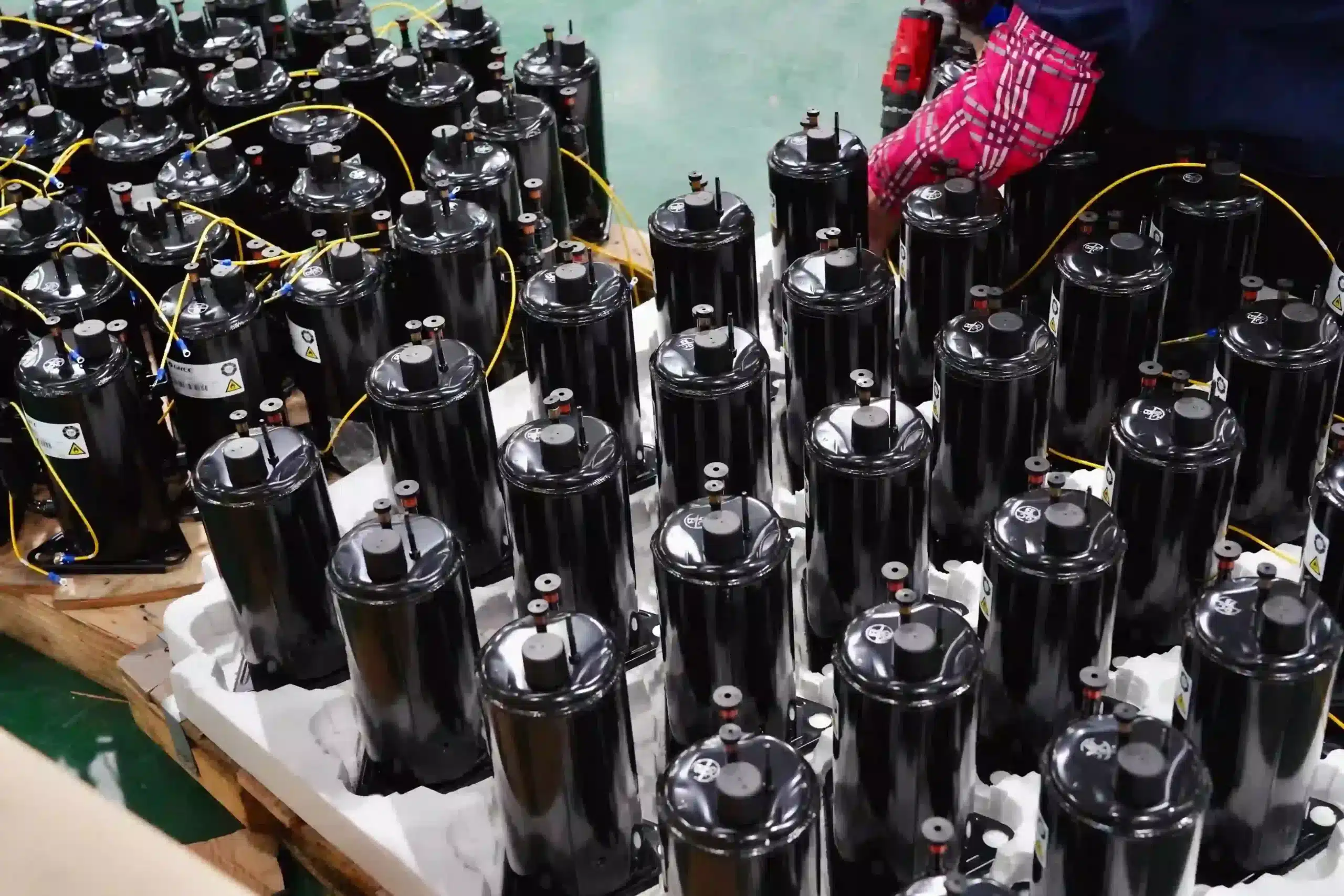
For consumables or repeatable service parts, use a transparent replenishment method:
Reorder point = expected use during replenishment time + justified safety stock
The inputs must be recorded. Expected use can come from installed population, approved maintenance intervals, real issue history or another defensible basis. Replenishment time should include supplier preparation, shipment, customs or internal transfer where relevant. Safety stock should reflect uncertainty and service consequence, not an unexplained round number.
Illustrative calculation, not an OMNI recommendation: a distributor supports 20 identical units. The approved filter interval and actual issue records suggest eight elements may be consumed during a three-month replenishment period. The buyer adds four as safety stock because the units support paid facilities. The reorder point is 12. If model changes, consumption pattern or lead time changes, recalculate.
For low-frequency major components, a formula based on average use may be misleading. Compare the cost of stock with failure consequence, lead time, diagnosis certainty, obsolescence and the option of a whole-unit quick swap. The redundancy architecture guide helps connect parts stock to the accepted recovery time.
NIST defines a recovery time objective in continuity planning. That definition is not a cold-plunge requirement, but it provides a useful boundary: stock a part only when its presence helps the real diagnosis, replacement and verification path meet the facility’s recovery target.
Protect the spare before it is needed
Record storage limits from the part and equipment supplier: temperature, humidity, light/UV, dust, corrosion, orientation, battery or electronic storage, sealed packaging and shelf-life or inspection interval where applicable. Do not assume an unused part remains serviceable forever.
Use clear labels: part number/revision, compatible models, receipt date, lot/serial where relevant, storage condition, expiry/review date and status such as available, quarantined, issued or awaiting inspection. Keep seals and small components in identified packaging rather than loose in the bottom of a box.
Inspect the kit at a defined interval. Check quantity, packaging damage, corrosion, contamination, deformation, missing caps, expired consumables, controller/software obsolescence and whether the installed equipment has changed. A cold plunge chiller spare parts kit can become incompatible while it sits untouched.
Control substitutions, firmware and discontinued parts
A supplier can discontinue a controller, pump, sensor, filter housing, connector or other component while the installed chillers remain in service. Record the last verified availability date and whether an approved successor exists. Do not relabel a newer part as equivalent from appearance alone.
For every proposed successor, compare mechanical fit, electrical data, water-side limits and materials, controller/firmware compatibility, mounting, labels, instructions, compliance evidence and post-replacement test. If the change affects the approved configuration, route it through formal change control before updating the cold plunge chiller spare parts kit.
Software-dependent spares need more than hardware. Keep the approved configuration or parameter file, version, access authority and restoration method where applicable. A controller on the shelf may be unusable if the required software, account, cable or configuration evidence is missing.
When an old part has no approved replacement, decide whether to increase last-time stock, qualify a new assembly, hold a whole-unit spare, shorten the expected support period or revise the commercial promise. Keep that decision visible in quotations and after-sales files; hidden obsolescence turns a nominal warranty into an uncertain recovery path.
Define the evidence that returns the system to service
A replacement record should identify the symptom and diagnosis evidence, failed and replacement part identity, unit serial/model, responsible person, isolation and work instruction, changes made, leak/flow/control checks, operating observation and final disposition.
Do not treat “machine starts” as complete verification. The applicable check may need water-loop integrity, permitted flow, controller state, alarms, temperature observations or qualified electrical/refrigeration evidence. Use the commissioning gates when replacement materially changes the installed baseline.
Link warranty work to the warranty evidence package. Record who owns freight, failed-part return, advance replacement, labour, taxes/duties and replenishment of the site kit. A replacement shipped under warranty still needs model identity and return-to-service evidence.
Illustrative kit: small parts shorten recovery more than one major assembly
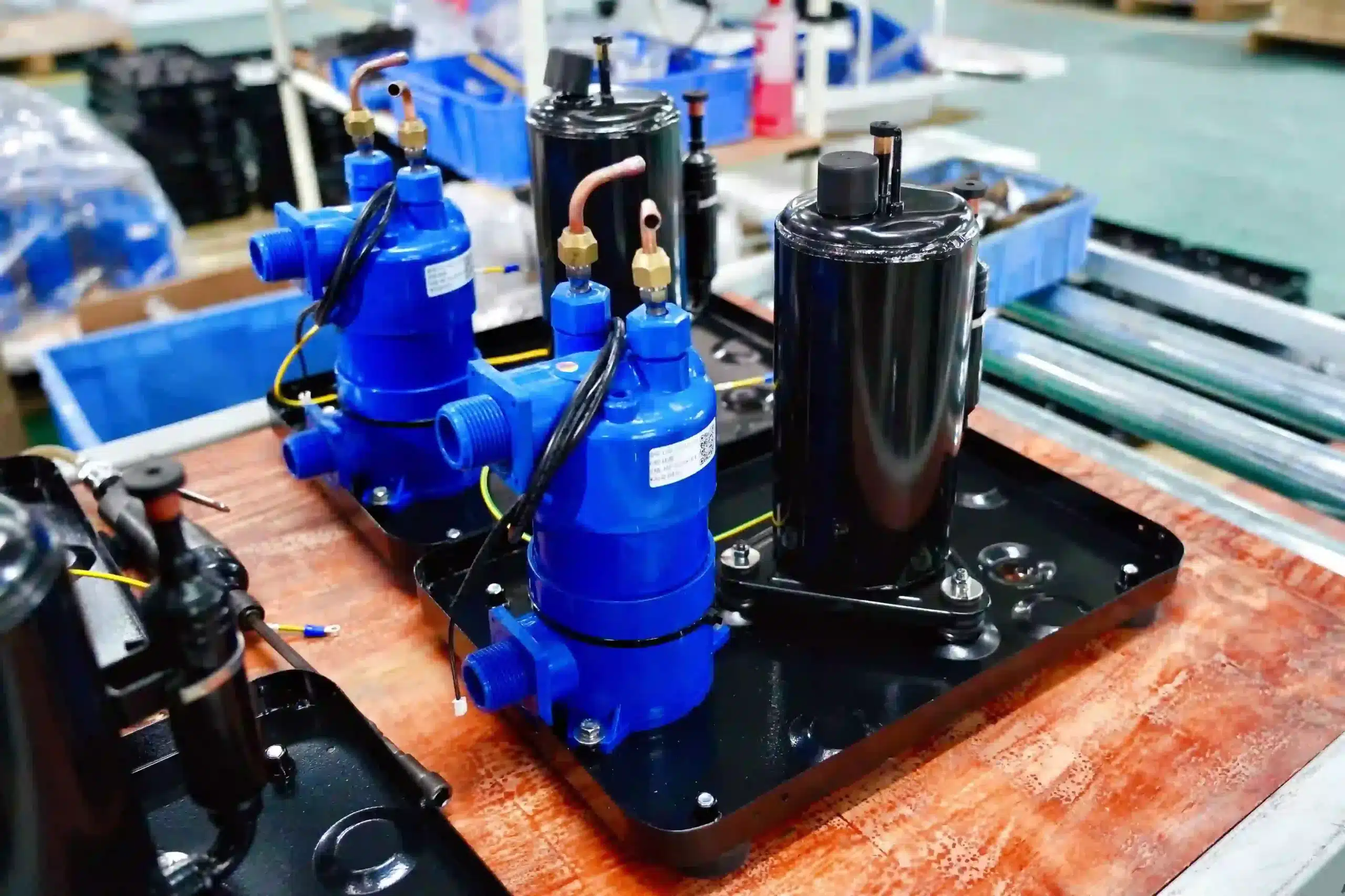
Illustrative scenario, not an OMNI customer case: a distributor supports several matching chiller units and considers stocking one compressor. Review shows compressor diagnosis and replacement require specialist refrigeration service with a response time longer than the facility’s quick-swap unit change.
The field history instead shows recurring downtime caused by damaged quick connectors, missing caps, filter elements, seals and one model-specific pump connector. Trained staff can replace only the approved external items. The distributor stocks those items with exact part mapping, holds a complete spare chiller for major failures and leaves compressor work to qualified service.
The cold plunge chiller spare parts kit is smaller and cheaper than “one of every component,” yet it supports the verified recovery paths. The scenario does not claim these failure patterns apply to OMNI projects or every model.
Copyable cold plunge chiller spare parts kit record
- Installed base: site/customer, model, serial range, electrical/controller variant and quantity.
- Recovery requirement: protected function, allowed outage, degraded mode and service route.
- Part: name, part number/revision, approved alternative and included seals/hardware/files.
- Compatibility: supported models/serials/BOM revision and exclusions.
- Criticality: failure effect, diagnosis evidence, replacement lead time and stocking reason.
- Authority: operator, trained maintainer, qualified electrical/refrigeration service or factory-only.
- Quantity: on-hand target, reorder point, safety-stock basis, replenishment lead time and supplier.
- Storage: condition, packaging, receipt/lot, expiry or inspection date and status.
- Replacement proof: instruction, tools, isolation, post-work checks, failed-part return and record.
- Review: issue history, remaining quantity, model/change impact and next review date.
Add this record to the OEM cold plunge chiller RFQ. To review an after-sales package, send OMNI the exact model list, installed quantities, destination, recovery target, local service capability and requested parts evidence. A useful response should identify compatibility and responsibility, not merely offer a generic accessory box.
Questions buyers ask about spare-parts kits
What belongs in a cold plunge chiller spare parts kit?
Stock only identified parts that fit the installed model/revision and support a documented recovery path. Include required seals, fittings, instructions and verification evidence, not just major components.
Should every buyer stock a compressor?
No. Compare failure impact, diagnosis certainty, specialist authority, replacement and commissioning time, storage risk, cost and the alternative of a whole-unit swap or supplier-held stock.
How many replacement filters should be stocked?
Use installed quantity, approved maintenance interval or real issue history, replenishment time and justified safety stock. There is no universal quantity for every facility or filter.
Can facility staff replace any stocked part?
No. The exact manual, competence, isolation method, electrical/refrigeration boundary and warranty terms control who may perform the work. Stocking a part does not authorize replacement.
When should the spare-parts kit be reviewed?
Review it after model/BOM/controller changes, new failure evidence, quantity or service-target changes, supplier/lead-time changes, expiry or storage concerns, and every issue or replenishment event.