An effective OEM cold plunge chiller RFQ template should make the supplier quote one defined project—not guess from a request such as “send your best 1 HP price.” Give the buyer context, destination market, water duty, electrical supply, system interfaces, requested options, branding, documents, sample plan, quantity and shipping basis. Then require the supplier to identify the offered configuration, assumptions, exclusions and evidence that apply to it.
Use this OEM cold plunge chiller RFQ template when a wellness brand, importer or distributor is requesting a chiller, tub or matched cold-plunge system. Unknown fields can remain marked supplier to advise, but they should not disappear: an explicit gap is safer than an apparently complete quotation built on an unstated assumption.
OEM cold plunge chiller RFQ template: the nine information blocks
| RFQ block | Buyer should provide | Supplier should return |
|---|---|---|
| 1. Buyer and project | Company, buyer type, application, destination and contact | Named project reference and responsible contact |
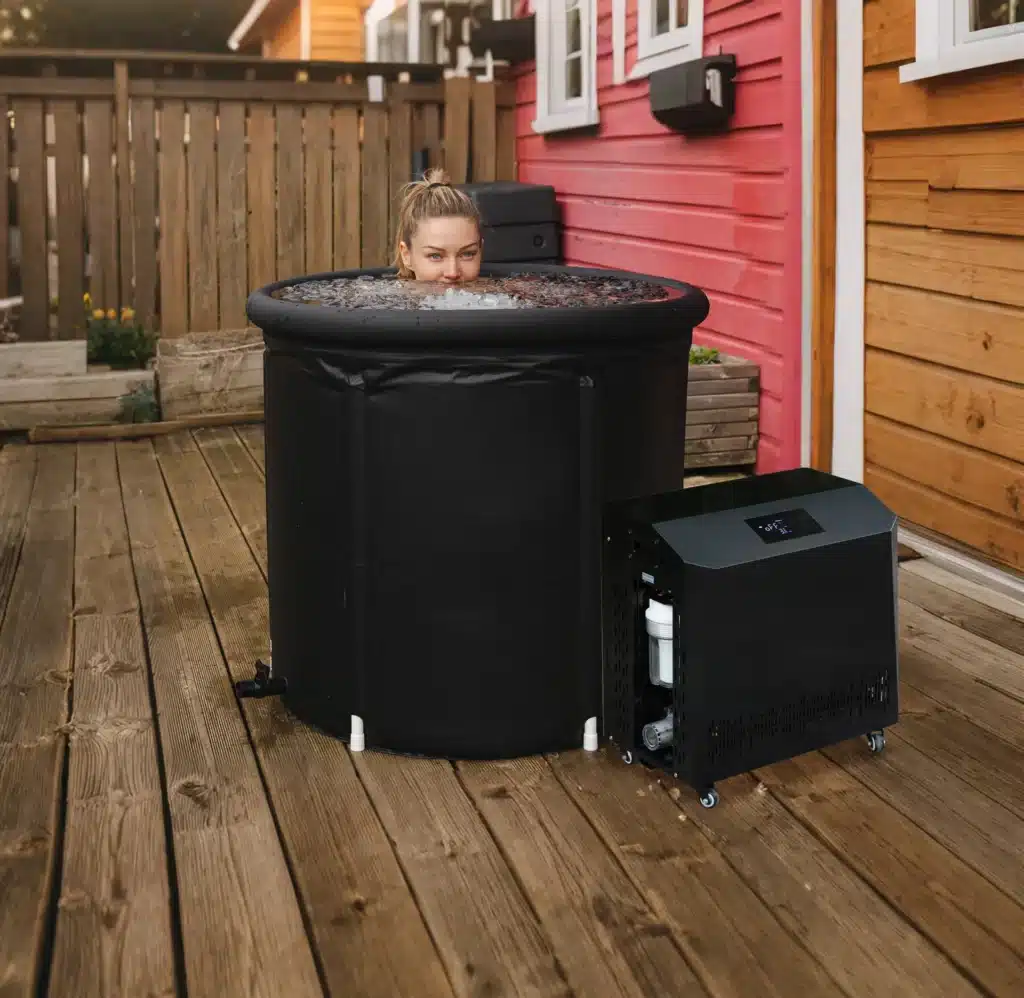
| 2. Product scope | Chiller only, tub only or matched system; preferred base model if known | Exact offered model/configuration and included components |
| 3. Operating duty | Water volume, starting/target temperature, ambient conditions, schedule and user load | Model recommendation plus stated performance assumptions and limits |
| 4. Electrical and site | Verified voltage/frequency, indoor/outdoor context, space and connection information | Exact electrical variant, nameplate data and installation-document scope |
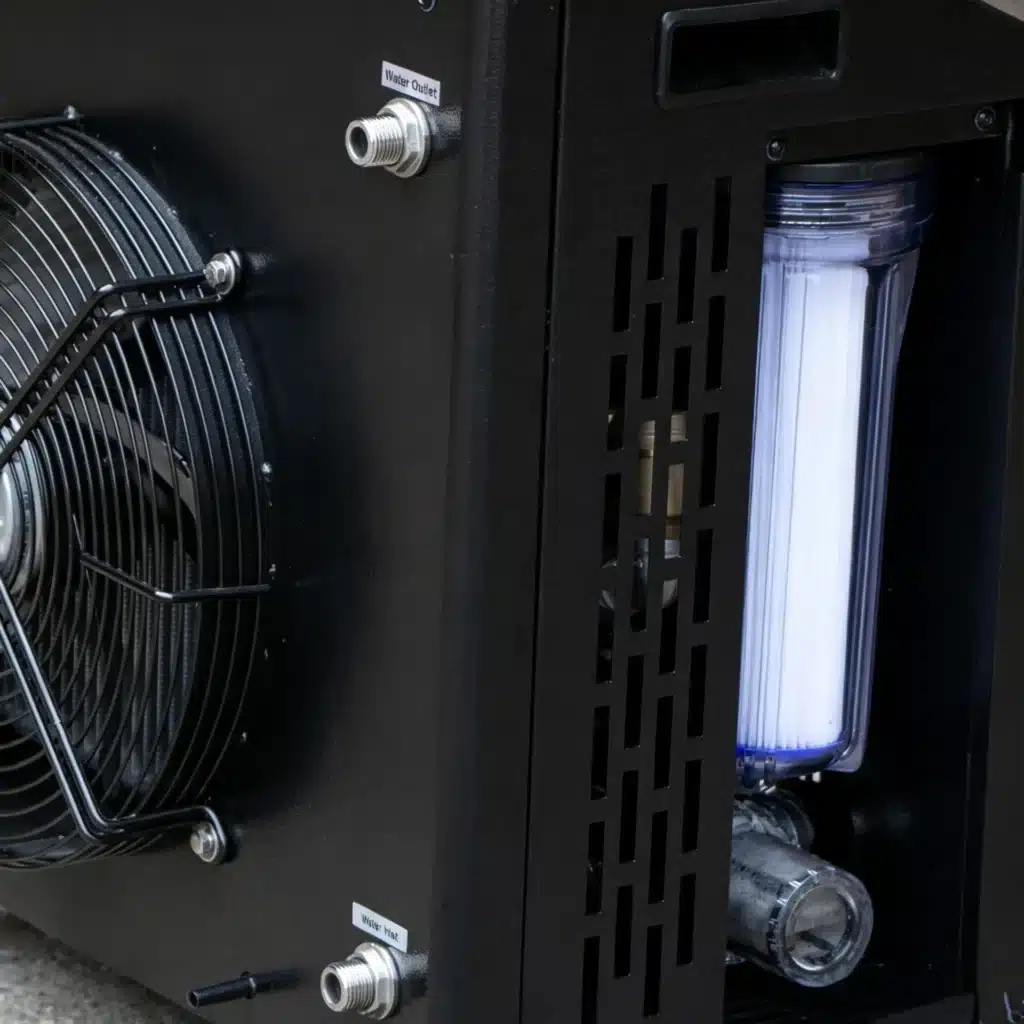
| 5. Features and interfaces | Pump, filtration, sanitation, heating, controls, hoses, ports and accessories | Standard versus optional items, interface requirements and exclusions |
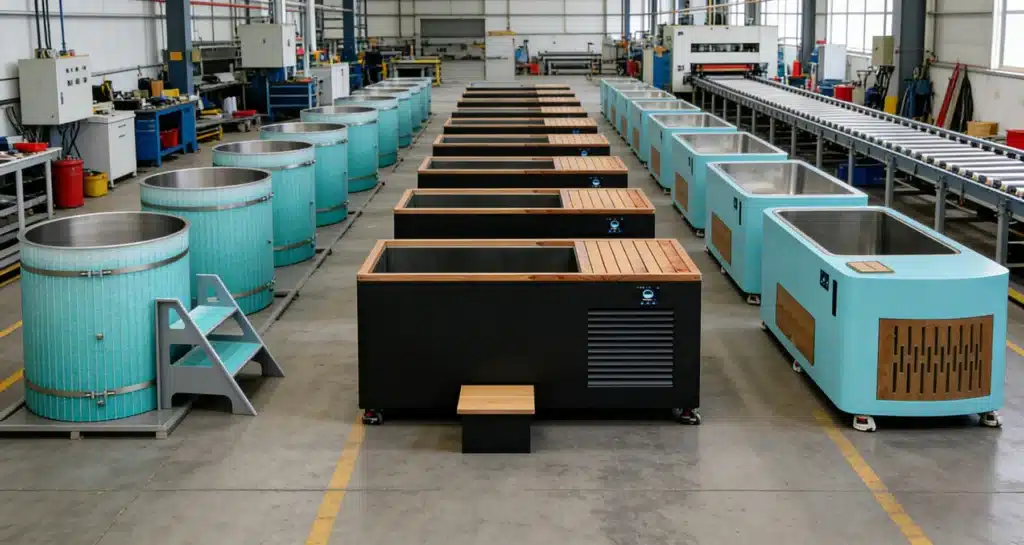
| 6. OEM and branding | Logo, colour, housing, control-panel, label and manual requirements | Feasible change list, artwork rules, sample method and change impacts |
| 7. Documents and market | Destination requirements and files the buyer needs reviewed | Document list tied to the exact model, version and issuing party |
| 8. Sample and approval | Sample quantity, test conditions, acceptance record and approvers | Sample configuration, differences from production and change-control route |
| 9. Commercial and logistics | Quantity tiers, timing, destination, Incoterms® request and packing needs | Price basis, MOQ, validity, lead-time basis, packing data and shipment assumptions |
The nine blocks make the OEM cold plunge chiller RFQ template usable as a quotation checklist, a gap log and a handoff into the purchase specification.
How to use the OEM cold plunge chiller RFQ template
Start by classifying the purchase as chiller only, tub only or a matched system. For a chiller-only request, describe the existing tub, water volume, fittings, hose route, circulation and filtration. For a complete system, identify which party must supply the tub, chiller, pump, filter, sanitation components, hoses, fittings, cover, steps and other accessories. If the base model is unknown, ask the supplier to recommend one and show the assumptions behind the recommendation.
Use the OEM cold plunge chiller solutions page to understand the project route, the OEM chiller supplier guide to evaluate the vendor, and the private-label cold plunge guide when the request is mainly branding around an existing product. Buyers planning factory-direct procurement can also use the China sourcing verification guide. Those pages explain routes and evaluation; the form below performs the different task of assembling one quote-ready requirement set.
Copy-and-paste OEM cold plunge chiller RFQ template
Copy this block into an email or procurement document. Replace each bracketed item; use “unknown—supplier to advise” where a decision is genuinely open.
OEM COLD PLUNGE CHILLER RFQ TEMPLATEnnSUBJECT: RFQ — OEM Cold Plunge Chiller / System for [Market + Project]

A. BUYER AND PROJECT
Company / brand:
Website (if available):
Contact name, role and business email:
Buyer type: [brand / importer / distributor / gym / hotel / spa / other]
Destination country and final delivery city/port:
Application and end-user setting:
Target sample date / target launch or installation window:

B. QUOTATION SCOPE
Product scope: [chiller only / tub only / matched system]
Preferred product family or base model (if known):
New project or replacement for an existing system:
Components that must be included:
Components already selected or supplied by another party:
Required quantity: [sample / first order / forecast or quantity tiers]

C. OPERATING DUTY
Usable water volume per tub:
Number of tubs per chiller:
Starting water temperature:
Target operating temperature or range:
Required pull-down time (if applicable):
Typical and maximum ambient temperature:
Indoor / outdoor / sheltered outdoor:
Operating hours per day:
Expected users per hour and per day:
Back-to-back use or recovery-time requirement:
Tub insulation and cover information:

D. ELECTRICAL AND SITE INFORMATION
Destination supply verified by buyer: [voltage + frequency]
Requested plug/cable (if already defined):
Available circuit/protection information: [confirm locally]
Maximum equipment footprint or access constraints:
Distance and elevation between tub and chiller:
Water, drain and hose-routing context:
Ventilation and service-access context:
Site photos / layout / connection drawing attached: [yes / no]

E. WATER LOOP, FEATURES AND ACCESSORIES
Pump: [supplier to include / buyer supplied / unknown]
Required delivered flow or turnover criterion (if defined):
Filtration requirement:
Sanitation or water-care components to be reviewed:
Cooling only or heating + cooling:
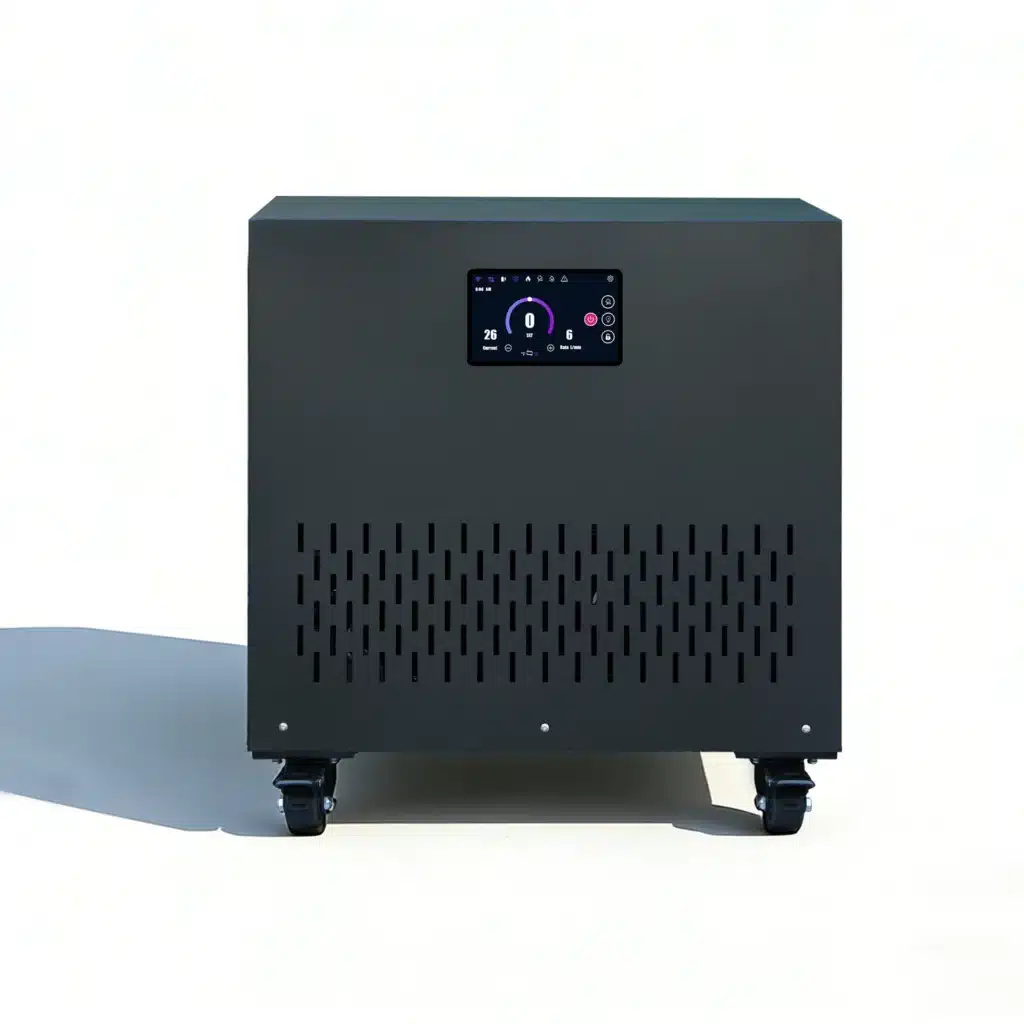
Controller / Wi-Fi / app / remote-control requirement:
Hose diameter, fittings and quick-connect requirements:
Tub material, size, ports, drain, cover and steps (if included):
Other accessories or spare parts requested:

F. OEM, BRANDING AND PACKAGING
Customization route: [standard / private label / OEM / ODM review]
Logo location and application method requested:
Housing colour, finish or material request:
Control-panel or interface branding request:
Rating label and warning-label language:
User-manual language and brand treatment:
Retail carton / export crate / pallet requirement:
Artwork, barcode, carton marks or accessory-labelling needs:
Files attached: [logo / colour reference / artwork / drawing / other]

G. DOCUMENTS AND DESTINATION-MARKET REVIEW
Destination market(s):
Applicable regulations or standards identified by buyer/compliance adviser:
Documents requested for the exact offered configuration:
Datasheet / dimensional drawing / connection diagram requested:
Manual / label artwork / packing list requested:
Test report or certificate files requested:
Document language and revision-control requirement:
Please identify document owner/issuer, model coverage and current revision.

H. SAMPLE, TEST AND APPROVAL
Sample quantity and configuration:
Buyer test conditions and acceptance criteria:
Measurements, photos and records required:
Approvers for product, branding, documents and packaging:
Changes that require a revised sample or written re-approval:
Please list every expected difference between sample and mass production.

I. COMMERCIAL AND LOGISTICS
Requested quotation currency:
Requested price tiers:
Requested Incoterms® rule + named place/port + version:
Final delivery location:
Packing dimensions, gross/net weight and units per carton/crate requested:
Spare-parts and after-sales information requested:
Warranty/service route requested:
Quotation-validity period requested:
Lead-time basis requested: [after deposit / artwork / sample / document approval]

SUPPLIER RESPONSE REQUIRED
1. Exact offered model and configuration code/revision.
2. Standard inclusions, optional items and exclusions.
3. Assumptions used for model selection and performance discussion.
4. Electrical variant and nameplate fields for the quoted configuration.
5. Feasible OEM changes and their effect on sample, documents and packaging.
6. Available documents tied to the exact model/configuration and revision.
7. Sample plan and all sample-to-production differences.
8. MOQ, price tiers, quotation validity and lead-time basis.
9. Packing method, dimensions/weights and shipping assumptions.
10. Open questions, exceptions and items requiring buyer approval.
How the OEM cold plunge chiller RFQ template prevents generic replies
A usable quotation identifies what is being offered and what remains open. Ask for an exact model or configuration code, revision/date, included components, options, exclusions and assumptions. If a supplier recommends a model, the response should connect that recommendation to the stated water volume, temperature requirement, ambient conditions, operating schedule and system layout. A horsepower label or product-family name alone is not a complete selection record.
| Weak response | Quote-ready response |
|---|---|
| “1 HP model, 220V” | Exact model suffix; rated voltage/frequency; listed input; included pump/filter/control items; applicable datasheet revision |
| “OEM logo available” | Logo location and method; artwork format; sample/approval step; effect on label, manual and packaging |
| “Certificates available” | Document name, issuer, model/configuration coverage, revision/date and file availability for buyer review |
| “Lead time 30 days” | Lead-time basis and start event, including sample, artwork, document, deposit or configuration approvals that must occur first |
| “FOB price” | Chosen Incoterms® rule, named port/place, version, currency, quantity tier, packing basis and quotation validity |
Technical fields every OEM cold plunge chiller RFQ template needs
Water duty and operating conditions
Water volume is only the starting input. Record starting and target temperatures, acceptable pull-down time, ambient range, insulation, cover use, hours per day and expected users. A sample result or model recommendation should remain tied to stated conditions. If a field is unknown, request the assumptions the supplier proposes to use and mark them for approval before the quotation becomes a purchase specification.
Electrical configuration and destination market
Provide the verified destination voltage and frequency, then ask the supplier to identify the exact offered variant, nameplate data, plug/cable and available installation documents. Use the 110V vs 220V cold plunge chiller buyer guide for the model-level comparison. Do not infer local circuit, grounding, protective-device or wet-location requirements from the equipment voltage. Those items need confirmation by qualified professionals and the applicable authority for the actual site.
Water-loop interfaces and responsibility
Identify who supplies the pump, filtration, sanitation equipment, hoses, fittings and controls. State hose distance, elevation and known restrictions. Ask for connection sizes, flow requirements and the model-specific diagram before approving the system. When tub and chiller come from different suppliers, the RFQ should name the party responsible for matching interfaces and documenting the final configuration.
Control OEM changes, documents and packaging in the RFQ template
“Custom logo and packaging” is too broad for approval. List each requested change separately: casing colour, logo method and location, controller graphics, rating label, warning labels, manual language, accessory labels, carton artwork, barcode, crate, pallet and shipping marks. Require the supplier to say whether each item is standard, optional, infeasible or dependent on another decision.
Documents also need model and revision control. Request the current datasheet, dimensional or connection drawing, manual, label artwork, packing list and any test report or certificate the buyer’s destination-market review identifies. Do not accept a generic statement that a document exists. The response should identify the document, issuer, covered model/configuration and revision. Product standards and conformity routes vary by country; the U.S. International Trade Administration’s product-standards resources illustrate why the destination market must be identified before the buyer decides what evidence is required. Use the cold plunge chiller quality documents guide to turn those requested files into a controlled register with model coverage, revision, status and release fields.
Make the commercial and logistics basis explicit
Ask for price tiers that match the sample, first production order and realistic forecast rather than requesting one unsupported “best price.” Keep MOQ, price and lead time tied to the quoted configuration and customization scope. For lead time, state the event that starts the clock—such as receipt of deposit, approval of artwork, confirmation of the configuration or another written milestone—instead of treating one number as universal.
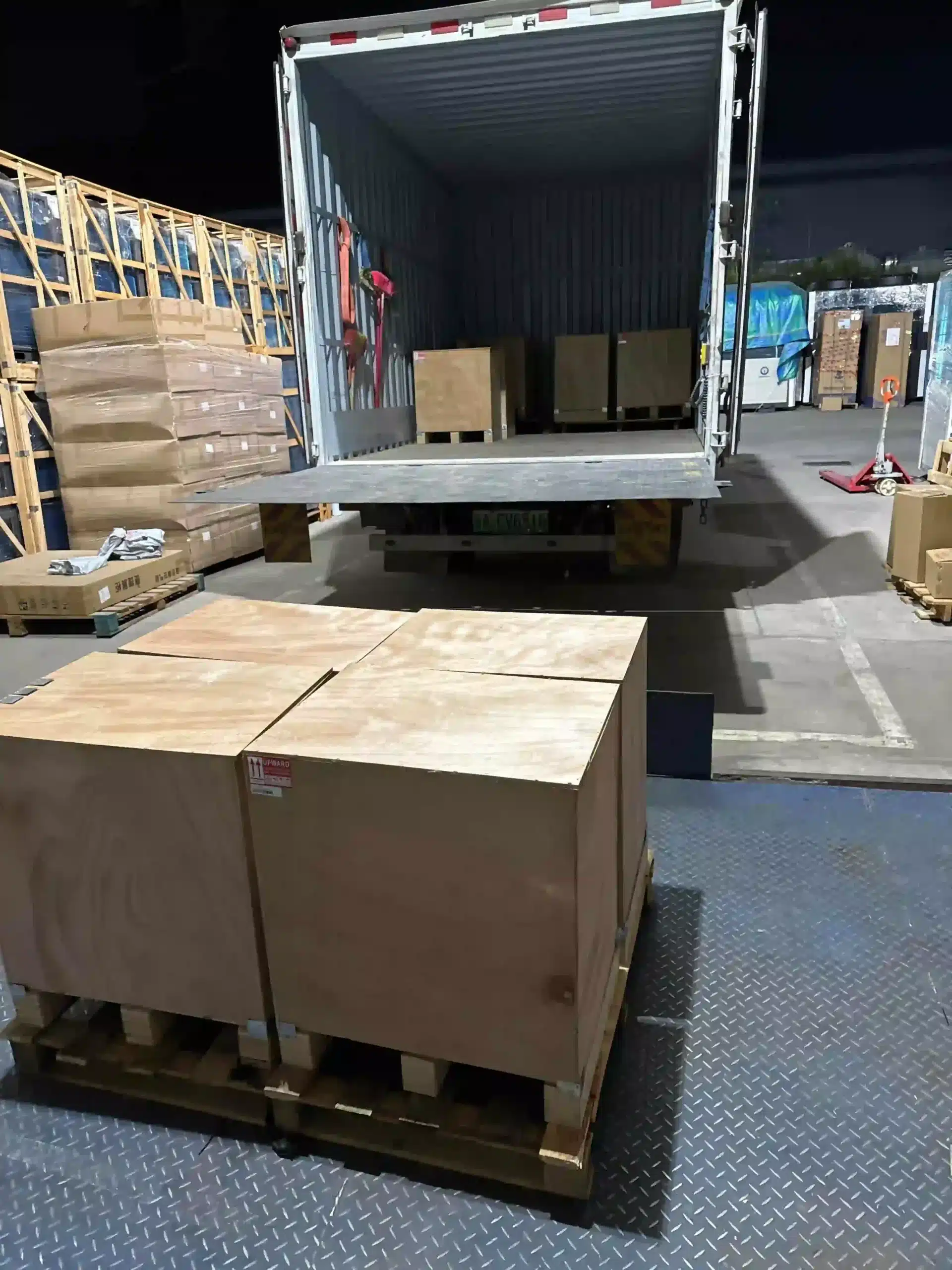
For shipping, name the requested trade term, place or port and version. The International Chamber of Commerce explains that the Incoterms® rules allocate delivery tasks, costs and risks; the named place and selected rule matter. A phrase such as “FOB price” without the named port, quotation basis, packing assumptions and version leaves avoidable ambiguity.
Use the OEM cold plunge chiller RFQ template to lock sample scope
A sample is evidence for the tested configuration and conditions, not automatic approval for every later batch. Record the model/configuration code, serial or equipment identifier, nameplate, components, software or controller version where relevant, labels, manual, accessories and packing. Define the test conditions and acceptance record. Then require written disclosure of every expected sample-to-production difference.
If a component, pump, controller, plug/cable, refrigerant, label, manual, artwork or packing method changes, the buyer should decide whether a document review, updated sample or another approval is needed. Put that change-control rule in the RFQ, carry it into the purchase specification, and verify the shipment with the cold plunge chiller inspection checklist.
When the refrigerant is still open, use the R32 vs R290 buyer guide to add charge, safety class, destination-market evidence and local service responsibility to the quoted configuration.
nnnnFor repeat production or a buyer-witnessed functional gate, the RFQ should also define the cold plunge chiller factory acceptance test, including test conditions, records, acceptance authority and deviation handling. FAT documents agreed functional checks before release; the pre-shipment inspection separately confirms the outgoing order, documents and packing.
Scope and responsibility boundaries
OMNI Ice is a recovery-equipment brand operated by Shenzhen Helsitec Technology Co., Ltd. OMNI Therapy® is a registered trademark used on selected products and legacy materials.
This OEM cold plunge chiller RFQ template is a requirements framework, not a promise of fixed MOQ, price, lead time, certification coverage or universal technical performance. Confirm those items for the exact project, model, configuration, destination and quotation date.
Send OMNI Ice a configuration and documentation brief
Complete the OEM cold plunge chiller RFQ template with your destination market, water duty, electrical information, intended application, product scope, options, branding, document requests, sample plan and estimated quantity. Then send RFQ details. OMNI Ice can respond with the feasible product route and the information available for that specific inquiry; open facts should remain marked for confirmation rather than becoming assumptions.
Frequently asked questions
What should an OEM cold plunge chiller RFQ include?
Include buyer and destination details, product scope, water and temperature duty, ambient and usage conditions, verified voltage/frequency, water-loop interfaces, requested features, OEM changes, documents, sample acceptance, quantity tiers, packing and shipping basis. Require the supplier to identify the exact offered configuration, assumptions and exclusions.
Do I need to choose an exact chiller model before sending the RFQ?
No. If the model is unknown, provide the operating duty and site information, then ask the supplier to recommend a model and explain the assumptions. The returned quotation should still identify one exact model or configuration rather than only a horsepower category.
Should one RFQ cover both the cold plunge tub and chiller?
It can, when the buyer wants a matched system. List every included component and interface, and identify responsibility for the pump, filtration, sanitation, hoses, fittings, controls and integration. If different suppliers provide the tub and chiller, document who confirms compatibility.
Which documents should a buyer request from an OEM chiller supplier?
Request only the documents relevant to the exact product and destination review, such as the current datasheet, dimensional or connection drawing, manual, label artwork, packing list and identified test or certificate files. Ask for the issuer, covered model/configuration and revision instead of accepting a generic “certificates available” statement.
Can the supplier quote MOQ and lead time before all OEM details are approved?
The supplier may provide a preliminary basis, but MOQ, price and lead time should remain tied to the quoted configuration and customization scope. Ask which approvals or payments start the lead-time period and require an updated quotation if branding, components, documents or packaging change.