In the rapidly maturing cold therapy and athletic wellness sector, equipment brands and fitness franchises are moving away from reselling generic white-box gear. Importers, wellness studio chains, and high-end recovery brands want proprietary product lines that carry their exact aesthetic language, custom dimensions, branded user interfaces, and specialized plumbing layouts. However, negotiating private-label contracts with international manufacturers often involves serious friction: buyers assume anything can be altered on a spreadsheet, while factories push back on unviable structural changes. Navigating a successful manufacturing partnership requires mastering exact cold plunge oem customization options.
In industrial fabrication, customization is not a uniform menu; it falls into distinct engineering tiers ranging from rapid cosmetic branding to complex hydraulic and tooling overhauls. In our factory manufacturing records, changes like laser-etched stainless logos, custom powder-coat RAL colors, and red cedar exterior finishes can be executed quickly within existing tooling. In contrast, altering internal 304/316L stainless sheet draw depths, moving welded 1-inch NPT bulkheads, or switching chiller electrical supply from 220V/50Hz to 110V/60Hz demands engineering CAD submittals, tooling adjustments, and safety recertifications. Here is the operational procurement guide private-label founders, facility directors, and OEM buyers need to audit customization scopes, calculate sample lead times, verify tooling costs, and avoid expensive production delays.
Categorizing Customization: Direct Factory Scope vs. Separate Engineering Review
When auditing cold plunge oem customization options, the first step in planning a private-label product line is separating what a factory can configure immediately from what requires specialized engineering retooling:
- Tier 1: Standard Brand Styling (Immediate Production): Exterior aesthetic branding that utilizes existing metal and timber tooling. This includes fiber-laser engraving custom brand logos into stainless steel tub rims, custom acrylic shell pigment blending (such as high-gloss alpine white or slate black), custom powder-coated chassis RAL colors, and digital boot-screen software branding on chiller touchscreens.
- Tier 2: Dimensional & Cabinet Customization (Minor Tooling): Modifying external cabinetry footprints without altering core hydraulic flow physics. Examples include extending an exterior Canadian red cedar apron to enclose adjacent steps, adding integrated drink holders, or building matching equipment enclosures for standalone chillers.
- Tier 3: Hydraulic & Structural Engineering (Rigorous Engineering Review): Fundamental technical changes that require structural CAD modeling, hydraulic pressure drop simulations, and electrical testing. Moving primary water suction ports, altering titanium coaxial heat exchanger barrel geometry, adding secondary booster pumps, or changing compressor voltage options must be formally evaluated by factory engineers.
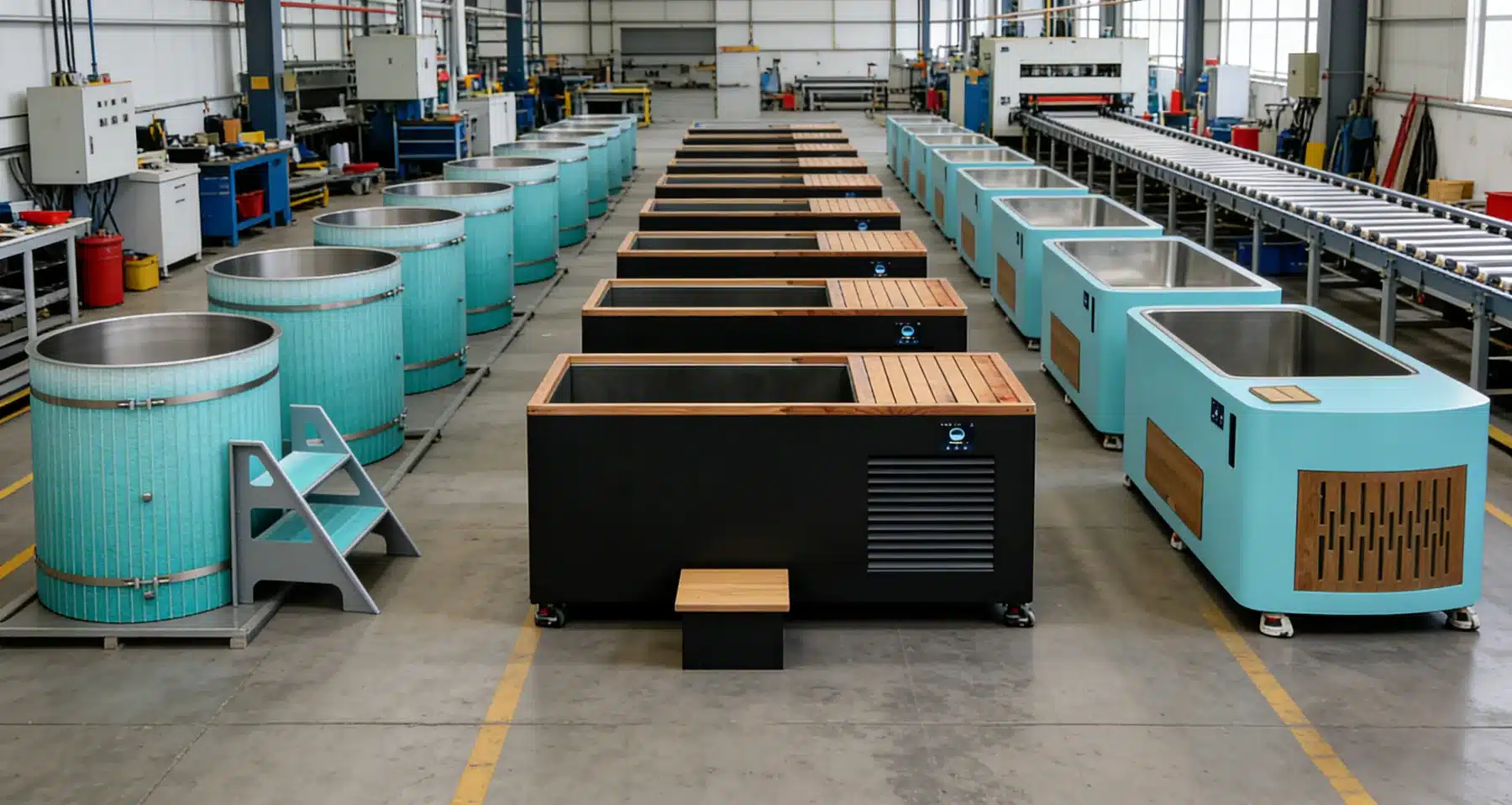
Factory production line staging showing custom cast acrylic shell finishes, structural subframes, and tailored exterior cabinet paneling.
Vessel Shell Customization: 304/316L Stainless Steel vs. Sanitary Acrylic
When evaluating cold plunge oem customization options for private-label plunge vessels, brand buyers evaluate two primary basin materials: heavy-gauge welded stainless steel or thermoformed cast acrylic. Each material presents distinct tooling economics and minimum order quantities (MOQs):
| Customization Parameter | Welded 304/316L Stainless Steel Tubs | Thermoformed Cast Acrylic Tubs | OEM Buyer Decision Rule |
|---|---|---|---|
| Custom Dimension Flexibility | High: CNC laser cutting and press brakes adjust length, width, and depth without mold costs. | Low: Requires CNC aluminum tooling molds ($8,000–$15,000 tooling fee). | Choose stainless for custom dimensions or low-volume boutique runs; choose acrylic for high-volume sculpted shell production. |
| Surface Branding & Logos | Precision fiber laser etching, mechanical stamping, or CNC brushed logos. | In-mold acrylic badging, metallic vinyl under clearcoat, or raised resin doming. | Laser etching on stainless steel offers superior permanent wear resistance against chlorine and bather contact. |
| Plumbing Bulkhead Relocation | Easily modified in CAD: factory TIG-welds 1″ NPT fittings at custom coordinates. | Fixed drill points on reinforced flat landings; cannot drill on curved transitions. | Stainless permits custom commercial plumbing geometry for tight mechanical rooms. |
| Minimum Order Quantities (MOQ) | Low MOQ: 5 to 10 units for custom dimensions. | High MOQ: 30 to 50 units to amortize vacuum mold fabrication. | Startup brands benefit from stainless steel agility before committing to custom acrylic molds. |
To inspect material durability boundaries across different tub liner metals, consult our engineering report on metal tubs for ice baths, or check our tub material comparisons in the cold plunge tub material guide.
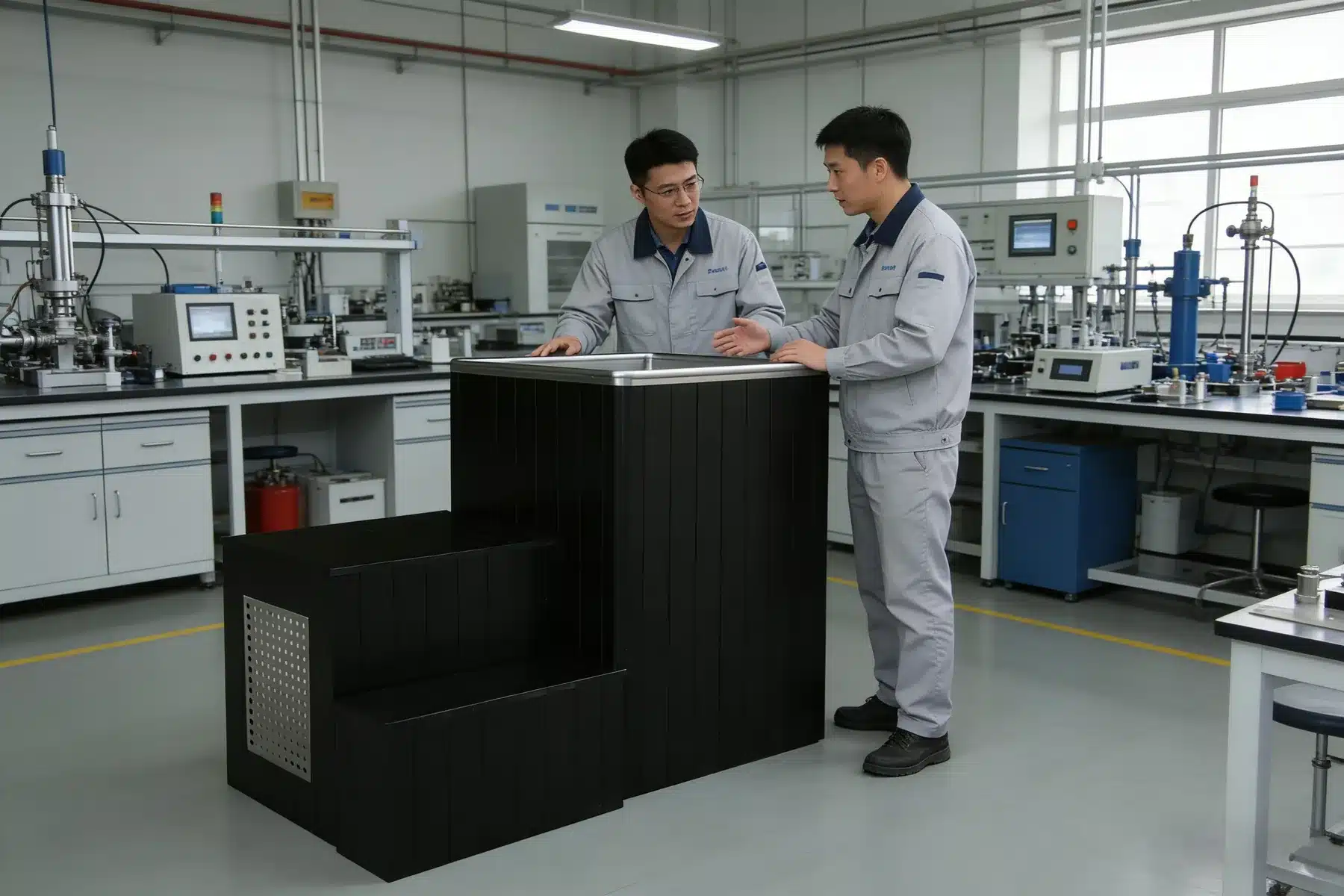
Engineering review of custom thermoformed acrylic plunge hulls, verifying structural fiberglass backing and stainless steel support leveling.
Chiller Customization: Electrical Voltages, Refrigerants, and Software Telemetry
In private-label chilling machinery, branding the exterior metal chassis is straightforward. The deeper technical challenge lies in matching internal electrical components and software to your destination market’s regulations:
- Destination Voltage Options (110V/60Hz vs. 220–240V/50Hz): Chillers utilize dedicated compressor motors, condenser fan motors, and circulation pump drivers wound for specific grid voltages. While universal 100V–240V power supplies run the digital touchscreen, the compressor cannot simply switch voltages via a toggle switch. Private-label buyers must specify target geographic markets so the factory installs certified 110V/60Hz rotary compressors (for North America) or 220V–240V/50Hz compressors (for Europe, Australia, and Asia).
- Refrigerant Customization (R290 vs. R32 vs. R410A): Depending on import environmental regulations, chillers can be configured with eco-friendly R290 (propane, GWP=3) or R32. Factory charging must comply with maximum hermetic charge volume limits (typically 300g to 320g for commercial units).
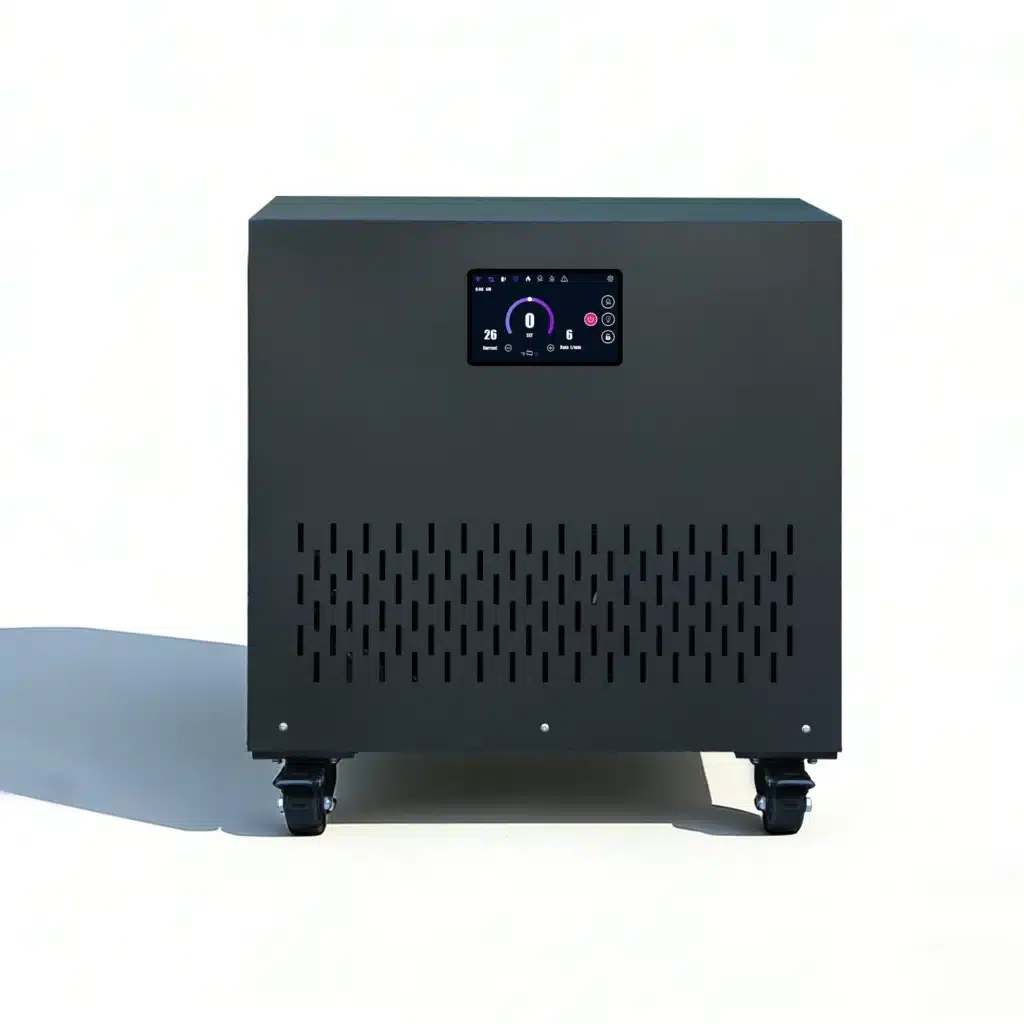
- Branded Mobile App & Firmware Telemetry: OMNI chillers incorporate Wi-Fi and Bluetooth microcontrollers. OEM clients can deploy white-label mobile applications (iOS and Android) featuring custom brand logos, branded UI color schemes, and automated scheduling algorithms.
For complete electrical drop and perimeter clearance planning, review our technical blueprint on cold plunge chiller installation requirements, or analyze pull-down calculations in our guide on a cold plunge chiller cooling performance test.
Sample Evaluation & Rapid Prototyping Workflow
A reputable OEM manufacturer does not rush straight into full 40-foot container production without a disciplined sample validation workflow. Quality factories follow a five-stage prototyping protocol:
- Stage 1: 3D CAD Modeling & DFM Review (5 to 7 Days): The buyer submits branding artwork, preferred dimensions, and plumbing requirements. Factory mechanical engineers prepare full 3D SolidWorks assembly drawings and conduct a Design for Manufacturing (DFM) audit to identify structural pinch points or airflow restrictions.
- Stage 2: Golden Sample Fabrication (15 to 25 Days): The factory fabricates a single production-representative prototype, executing CNC laser cutting, press-brake bending, TIG welding, closed-cell PU insulation foaming, and powder coating.
- Stage 3: Factory Performance & Hydrostatic Testing: The prototype undergoes 72 hours of continuous testing: 24-hour hydrostatic water leak testing under pressure, continuous electrical pull-down tests from 65°F to 39°F, and electrical hipot/grounding safety audits.
- Stage 4: Buyer Evaluation & Revision Loop: The sample is crated in export plywood and air-freighted or ocean-shipped to the buyer for tactile fit-and-finish sign-off, software app pairing verification, and local electrical inspection.
- Stage 5: Production Tooling Freeze & Bulk Run: Upon signed golden sample sign-off, CAD drawings and bill of materials (BOM) are locked, initiating batch raw material procurement for container production.
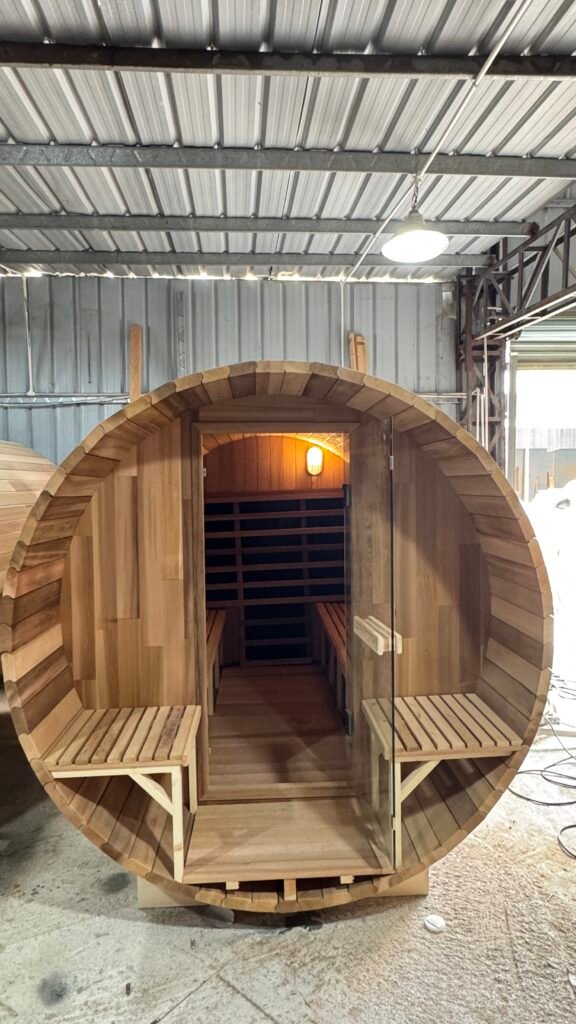
For commercial facilities planning combined contrast wellness suites pairing custom plunge tubs with pre-cut hot rooms, review our coordinated layout guide on a sauna and cold plunge for gym installation, or check our circular timber analysis on an outdoor barrel sauna kit.
Hydraulic Plumbing Customization: Ports, Manifolds & Filtration
Beyond vessel shells and chiller metal enclosures, private-label wellness brands frequently request customized hydraulic water loops to differentiate their user experience. In factory engineering, plumbing customizations must balance user convenience with pump suction head limits.
OEM buyers evaluate three primary hydraulic customization modules:
- Bulkhead Port Positioning & Diameter: Standard builds utilize 1-inch NPT stainless bulkheads. Brands designing bespoke wooden decks or integrated steps can request custom port locations (such as bottom-center gravity sumps or concealed rear-entry manifolds) to hide exterior hoses completely. All port relocations are modeled in 3D CAD to verify that fluid velocity remains below 6 feet per second to prevent flow noise.
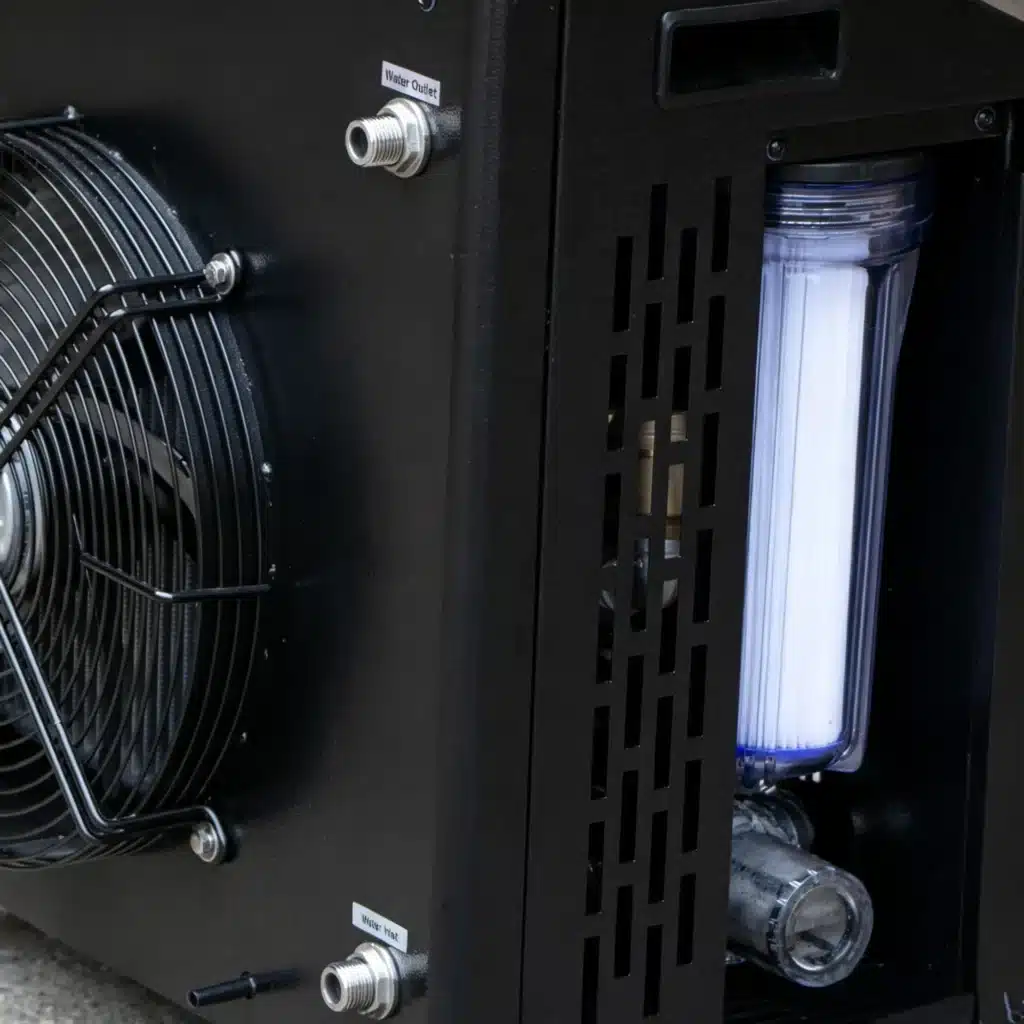
- Filtration Integration (External vs. Internal): While compact home units benefit from internal 5-inch filter housings (like the OMNI CHM series) for a clean exterior silhouette, commercial operators prefer external filter canisters (like the CHU series) equipped with clear filter bowls and pressure gauges so gym staff can visually inspect cartridge loading in five seconds without opening access panels.
- Advanced Sanitation Modules: OEM clients can specify multi-stage sanitation packages combining high-output corona discharge ozone generators (injecting 50–100 mg/hr of dissolved O3 through dedicated Mazzei venturis) with inline 254nm germicidal UV-C reaction chambers. This dual-action protocol destroys pathogens on contact without generating harsh chloramine odors in boutique recovery suites.
Quality Control & Factory Acceptance Testing (FAT) for OEM Batches
When importing full 20-foot or 40-foot high-cube containers of high-value recovery equipment, post-delivery warranty claims can quickly wipe out profit margins. Professional OEM manufacturing contracts incorporate rigorous factory acceptance testing before export crating.
Every batch unit undergoes standardized production inspection gates:
- Hydrostatic Pressure & Leak Audit: Fully assembled vessels and plumbing manifolds are filled with water and held under positive static pressure for 24 hours to verify zero weeping across TIG weld seams, bulkhead gaskets, or threaded unions.
- Refrigerant Sniffer Helium Testing: Sealed copper and titanium refrigeration circuits are charged with trace gas and scanned with electronic sniffer probes calibrated to detect micro-leaks smaller than 0.5 grams per year, preventing loss of refrigerant during ocean freight transit.
- Electrical Hipot & Ground Continuity Verification: Every unit is tested with high-potential (hipot) dielectric analyzers and ground-bond testers to ensure zero electrical leakage current can contact bather water, verifying compliance with international CE and ETL electrical safety standards.
Packaging & Dropship Fulfillment Customization
For e-commerce wellness brands and franchise operators, logistics packaging is just as critical as the hardware itself. Premium private-label manufacturing encompasses tailored logistics engineering:
- Custom Branded Honeycomb & Plywood Crating: Standard neutral brown boxes can be upgraded to heavy-duty custom-printed honeycomb cartons or branded export plywood crates featuring your company logo, handling iconography, and direct customer unboxing instructions.
- Drop-Test Certified Interior Foam: To eliminate costly freight transit damage on heavy 50 kg chillers and 70 kg tubs, interior packaging utilizes precision CNC-molded EPE high-density foam inserts engineered to pass ISTA 3A transit drop testing.
- Custom Accessories & Manual Packs: Printed user manuals, quick-start setup cards, custom-branded filter wrenches, and personalized water testing kits are pre-packaged into custom accessory kits bearing your brand identity.
For public safety standards and commercial spa compliance, ensure customized equipment complies with federal Pool Safely anti-entrapment guidelines and official CDC Healthy Swimming commercial sanitation rules.
Factory-Direct Private Label Manufacturing from OMNI Ice
At OMNI Ice, our manufacturing infrastructure is built specifically to support high-growth private-label brands, commercial fitness chains, and international wellness distributors. Operating CNC laser cutters, robotic press brakes, automated foam injection, and certified refrigeration testing chambers, we turn custom product visions into scalable commercial reality:
Customizable Core Hardware Platforms
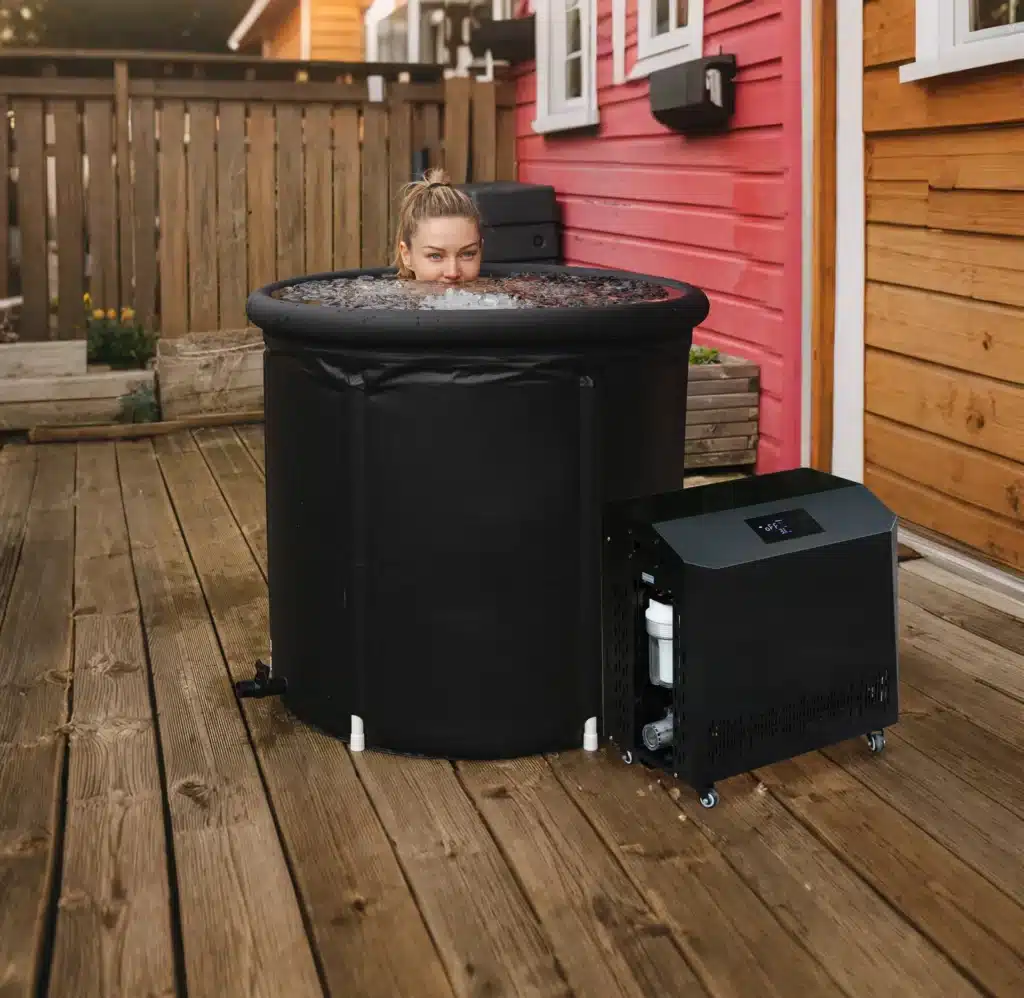
- OMNI CHU & CHM Chilling Platforms (0.8HP to 2.0HP): High-efficiency commercial chillers customizable with private-label powder-coat colors, laser-etched brand panels, custom Wi-Fi apps, and regional voltage specifications.
- WT-13 Integrated Cedar Cold Plunge Tub: Turnkey hybrid dual-occupancy vessel customizable with red cedar or thermo-wood exterior cladding, internal 1.0 HP chiller integration, and bespoke step geometries.
- WT-11 Direct-Cool Stainless Steel Commercial Plunge: Industrial direct-refrigerant plunge tub customizable in length and depth for athletic training centers and varsity gym franchises.
To request 3D CAD files, schedule sample prototype production, or negotiate full containerload wholesale terms, explore our complete OEM cold plunge equipment solutions or connect directly with our engineering department through our commercial equipment RFQ desk.
The OEM Buyer Procurement Checklist
Before locking in your private-label manufacturing agreement, verify these six technical checkpoints with your factory team:
- Customization Tier Clarified: Define which components are standard branding (low MOQ) versus structural retooling (tooling fee and higher MOQ).
- Destination Voltage Certified: Confirm that compressors, pumps, and electronics are wound for your target market’s specific voltage and frequency (110V/60Hz vs. 220V/50Hz).
- Golden Sample Evaluation Agreed: Require a formal golden sample sign-off protocol before releasing full container production.
- CAD & Tooling Ownership: Clarify ownership terms for custom tooling molds, extrusion dies, and proprietary CAD drawings.
- Packaging Transit Testing: Confirm that export crating passes drop-testing standards to minimize shipping freight claims.
- Quality Warranty & Spare Parts Support: Establish a dedicated spare parts support ratio (including replacement filter cartridges, seals, and PCB controllers) packed with bulk shipments.
When approached with disciplined engineering audits, clear CAD submittals, and a realistic understanding of factory tooling boundaries, private-label OEM manufacturing allows your brand to bring world-class, proprietary cold recovery hardware to market with exceptional profitability and long-term brand equity.