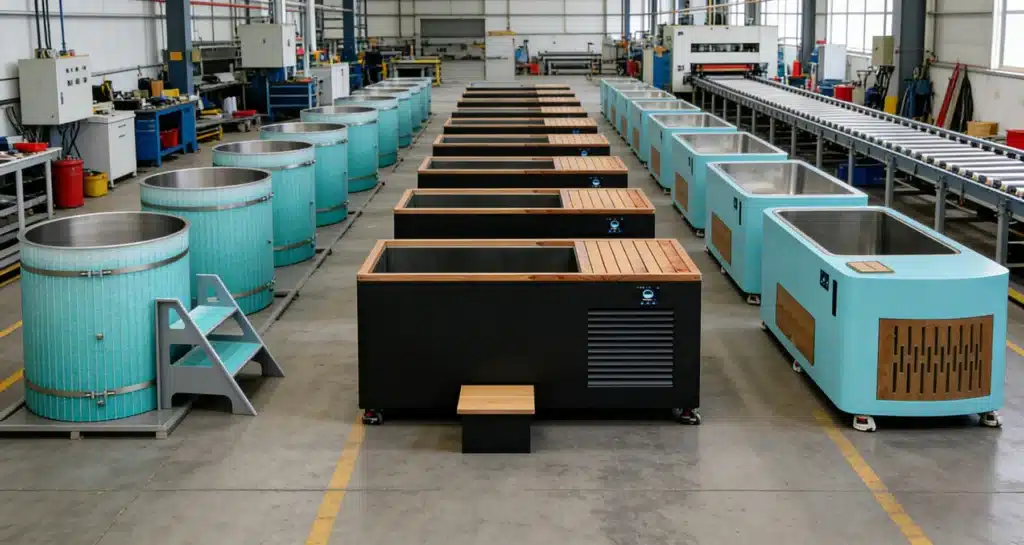
The best cold plunge tub material is the one whose documented construction, environment limits, cleaning compatibility, repair path and manufacturing evidence match the project. Stainless steel, acrylic, wood-clad and inflatable vessels solve different problems. Buyers should compare the water-retaining layer, structure, insulation, finish, seams, fittings and service plan—not choose from appearance or a single material name.
This cold plunge tub material guide owns the cross-material comparison. The stainless steel collection, acrylic collection, wooden cold plunge collection and inflatable tub collection retain their category and product-selection intents. This page does not claim that one material is universally safer, more hygienic or more durable. For layered barrel projects, use the hybrid barrel material checks to separate vessel construction from chiller and water-loop decisions. For dedicated metallurgy, welding standards, and insulation specs on stainless steel vessels, review our metal tub for ice bath commercial engineering guide.
Cold plunge tub material: the short answer
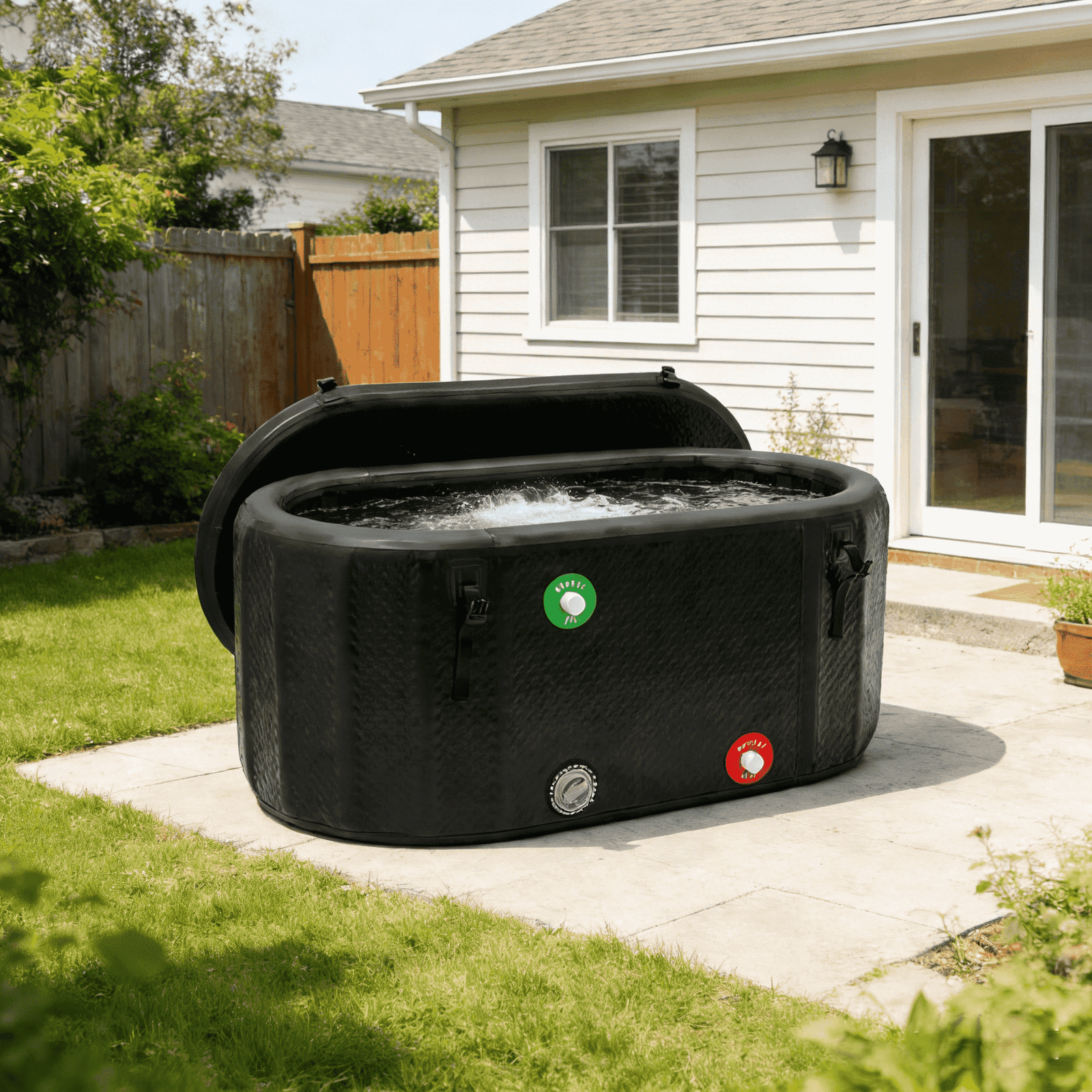
Do not compare “stainless steel versus wood versus acrylic versus inflatable” as if each label described a complete vessel. A wood-looking tub may use a stainless or polymer liner. An acrylic shell may sit on a separate frame with foam insulation. A stainless vessel may include welds, coatings, fasteners and dissimilar-metal fittings. An inflatable tub may combine outer fabric, polymer coating, drop-stitch structure, bonded seams and rigid ports.
Use this cold plunge tub material decision rule:
Select the documented construction that can be installed, cleaned, inspected, repaired and supported in the intended environment and operating routine.
Then confirm actual dimensions, filled load, water-loop interfaces, destination requirements and acceptance tests. The material choice is one part of the system.
A defensible cold plunge tub material review therefore records both the named material and the complete assembly around it. A second cold plunge tub material option should be compared against the same evidence fields, not against a different set of marketing claims.
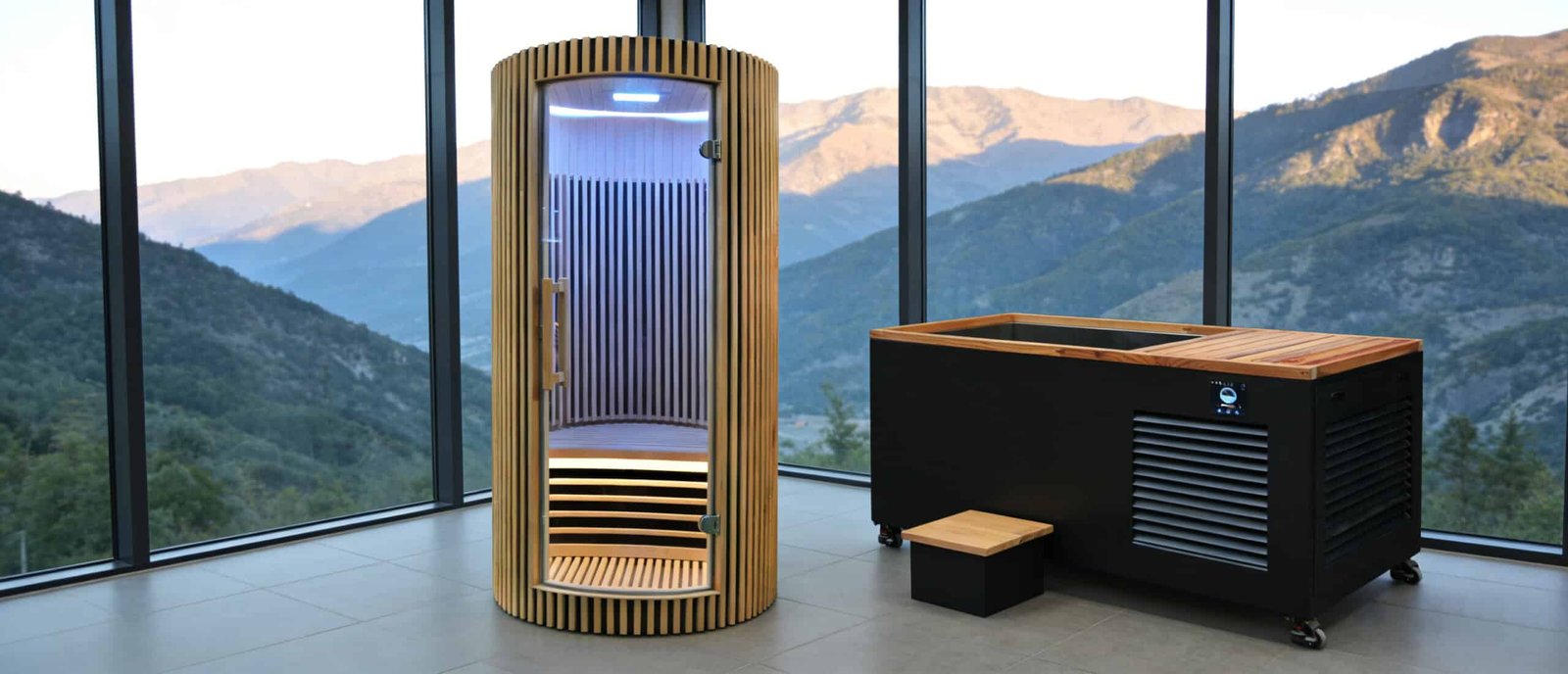
Compare every cold plunge tub material layer
A useful specification separates at least six layers or functions:
- Water-contact surface: the material directly exposed to water and cleaning products.
- Water-retaining structure: the shell, liner, welds or seams that contain the water.
- Load-bearing structure: frame, base, reinforcement and support points.
- Thermal layer: insulation, air gaps and cover that influence heat gain and condensation.
- Exterior finish: wood, WPC, paint, coating, fabric or trim that controls appearance and weather exposure.
- Interfaces: drain, suction, return, overflow, fasteners and equipment connections.
Keep this layer schedule with the approved drawing. It turns a broad cold plunge tub material label into a construction record that purchasing, inspection and service teams can check.
A cold plunge tub material decision fails when the buyer asks only “Is it 304 stainless?” or “Is it cedar?” Those questions do not identify thickness, forming, welding, surface condition, joint design, backing structure, finish, moisture management or the source of the grade statement.
ASTM A240/A240M covers specified chromium and chromium-nickel stainless plate, sheet and strip for general applications. Its scope is useful when defining source material, but it does not certify a completed cold plunge tub, its welds or its corrosion performance in every water chemistry. Ask for the exact grade claim, applicable material specification and traceability for the quoted configuration. See the ASTM A240/A240M scope.
Cold plunge tub material comparison matrix
| Material family | Evidence to request | Project questions | Do not assume |
|---|---|---|---|
| Stainless steel | Grade basis, thickness, weld/finish process, fittings, inspection and care instructions | Water chemistry, chlorides, dissimilar metals, outdoor exposure and repair access | That the word stainless means corrosion-proof |
| Acrylic or formed polymer | Material designation, sheet/shell construction, reinforcement, support, temperature and chemical limits | Impact, UV/weather exposure, cleaning products, drain/port reinforcement and repair method | That all acrylic shells have the same formulation or support |
| Wood or wood-clad | Species/material identity, water-retaining layer, moisture detail, finish, fasteners and care plan | Wet/dry cycling, drainage, ventilation, refinishing and access behind the cladding | That the visible wood is the liner or remains dimensionally unchanged |
| Inflatable/drop-stitch | Layer schedule, seam/valve method, pressure range, port reinforcement, repair kit and environmental limits | Puncture risk, surface preparation, storage, sun, temperature, connection loads and leak test | That “military grade” is a measurable product specification |
Cold plunge tub material inspection checklist
Use this checklist before approving a sample, bulk order or private-label change. It is not a pass/fail certificate; it is the record that tells the buyer which evidence is still missing.
| Inspection point | What to check | Evidence to keep | Hold production if… |
|---|---|---|---|
| Layer schedule | Water-contact surface, shell or liner, frame, insulation, exterior finish and interfaces are named separately. | Approved drawing, material schedule and revision number. | The supplier gives only a marketing material label. |
| Joints and ports | Welds, bonded seams, valves, drains, suction and return ports can be inspected and serviced. | Joint detail, port specification, leak-test record and repair route. | The port reinforcement or seam method changes without approval. |
| Surface condition | Visible finish, scratches, sharp edges, coating defects, cladding gaps and cleaning access match the approved sample. | Sample photos, acceptance limit, inspection photos and deviation record. | The appearance or touch surface differs from the approved sample. |
| Environment fit | Outdoor exposure, sun, salt air, wet-room cleaning, storage and condensation risks are within stated limits. | Use environment, care limits, cover/shelter rule and maintenance plan. | The intended site exceeds the documented limits. |
| Change control | Any substitute material, finish, adhesive, fitting, insulation or supplier is reviewed before production. | Written approval, updated schedule and repeated inspection or test where needed. | A substitution is described as equivalent without evidence. |
Route the material decision by use case
A cross-material guide should not replace the material collection owners. Use this routing table to decide where the buyer goes next after the assembly-level comparison.
| Use case | Material route to consider | Decision evidence | Next owner |
|---|---|---|---|
| High-use gym or athletic facility | Stainless or another rigid assembly with serviceable ports, visible inspection access and a documented cleaning routine. | User load, cleaning owner, water-loop duty, fitting access and surface acceptance. | Stainless steel tub collection |
| Design-led home, suite or boutique room | Acrylic or formed-polymer shell when controlled shape, finish and interior feel drive the project. | Finish sample, shell support, insulation, drain detail and allowed cleaning products. | Acrylic tub collection |
| Hotel, spa, terrace or sauna-adjacent space | Wood-clad or hybrid assemblies when the visible finish matters, but the liner and moisture path must be verified separately. | Liner identity, cladding ventilation, refinishing plan, drain access and weather limits. | Wooden cold plunge collection |
| Mobile, seasonal or pop-up program | Inflatable or drop-stitch assembly when packed size and repeat handling are more important than permanent installation. | Pressure range, seam method, port reinforcement, repair kit, floor preparation and storage routine. | Inflatable tub collection |
| Private-label or product-line launch | Multiple material routes can coexist if each SKU has its own approved sample, material schedule and packaging record. | SKU map, finish sample, documentation scope, lot traceability and change-control rule. | Wholesale tub sourcing guide |
| Layered barrel with chiller | Hybrid assemblies need separate approval for vessel layers, exterior finish, equipment bay and water-loop interfaces. | Liner, cladding, insulation, chiller scope, service access and acceptance test. | Hybrid barrel material checks |
Cold plunge tub material approval checks
1. Identify the water-contact surface
For every cold plunge tub material option, state what the water actually touches. Record coatings, sealants, liners, welds, adhesives, ports and repairs as well as the headline shell material. Ask whether any surface changes between standard and OEM versions.
2. Identify the load path
Request empty weight, usable water volume, support points and frame/base construction. The vessel, water, users and equipment all contribute to installed load. A qualified project professional must assess the actual structure and location.
3. Verify material claims and traceability
Decide what evidence is proportionate: supplier declaration, purchase record, certificate, test report or controlled incoming inspection. A laboratory result for one sample does not automatically cover every later order. Tie cold plunge tub material evidence to the model, revision and lot or batch when required.
4. Review seams, welds and bonded joints
Many leaks begin at interfaces rather than broad flat surfaces. Ask for joint drawings, process controls, visual acceptance criteria, leak-test method and repair instructions. For an OEM color or port change, decide whether the cold plunge tub material joint process or acceptance plan also changes.
5. Match cleaning chemistry
Obtain permitted and prohibited products, concentration ranges, contact times, rinse requirements and surface-inspection steps from the manufacturer and applicable chemical labels. Do not copy a universal chemical recipe. CDC describes the Model Aquatic Health Code as guidance for public aquatic facilities; determine the rules for the actual venue. See the CDC MAHC current-edition page.
6. Match the installation environment
State indoor/outdoor location, sun, temperature range, rain/splash, wind, salt air, cleaning environment and storage conditions. Ask the supplier to identify environmental limits and required cover or shelter. Use the outdoor cold plunge setup guide for the separate siting decision.
7. Manage moisture and condensation
Cold surfaces can create condensation. Ask how insulation, vapor control, drainage and ventilation protect the structure and exterior. For a wood-clad cold plunge tub material, inspect whether trapped moisture can be seen and dried. The U.S. Forest Products Laboratory’s Wood Handbook explains moisture relationships and dimensional change in wood.
8. Verify ports and fitting reinforcement
Record port locations, thread/connection specification, backing or reinforcement, permitted hose loads and service method. A compatible cold plunge tub material can still fail as a system when rigid piping or unsupported hoses load a thin or flexible wall.
9. Evaluate insulation and cover as separate evidence
The water-contact material alone does not determine heat gain. Request insulation type/location, cover construction and any performance test conditions. Compare the complete vessel in the cold plunge chiller efficiency framework.
10. Define inspection and repair
Ask how scratches, dents, cracks, coating damage, seam leaks, loose cladding and punctures are inspected and repaired. Identify which cold plunge tub material repairs are field-serviceable, which require factory work and which affect warranty or hygiene acceptance.
11. Confirm user and wet-area safety interfaces
Review edges, entry surfaces, steps, handholds, covers, drains and equipment placement. Material selection does not replace wet-area electrical planning. CPSC warns that wet skin and wet surfaces can increase electrical-shock risk around pools and spas. See the CPSC electrical-safety guidance and use qualified local installers.
12. Freeze the approved construction
Put the cold plunge tub material schedule, finish sample, dimensions, ports, accessories, drawings, branding and acceptance tests under revision control. If the supplier proposes a substitute, require written approval before production. Use the pre-shipment inspection checklist to verify outgoing identity and condition.
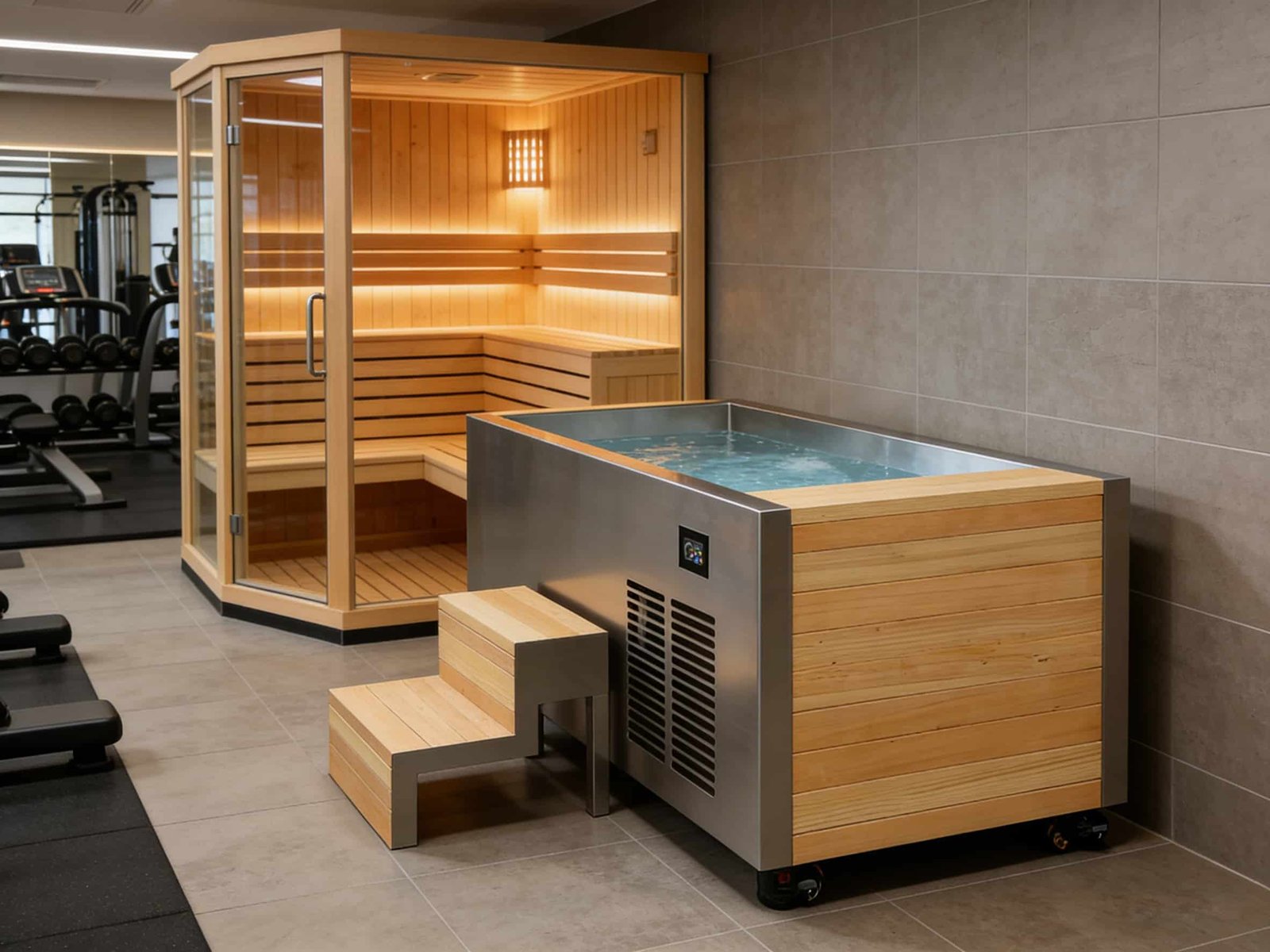
Evidence to request for each cold plunge tub material
Stainless steel evidence
Request the quoted grade basis, product specification where applicable, thickness, forming/welding process summary, surface finish, passivation or post-weld treatment statement if specified, fitting materials, inspection criteria and care instructions. Ask about the intended water chemistry and external environment. Do not write “never rusts.”
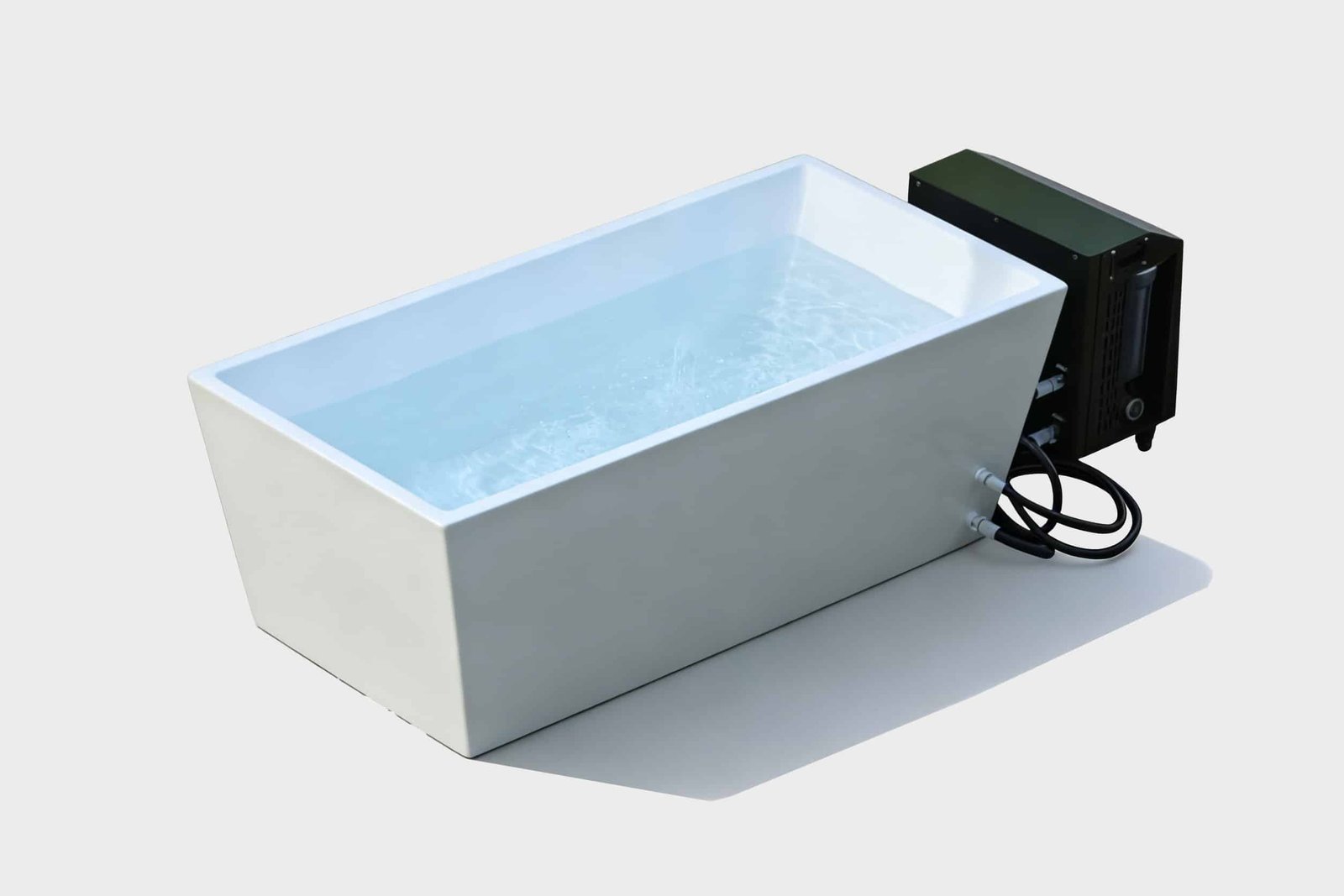
Acrylic and formed-polymer evidence
Request material/sheet designation, shell thickness or controlled construction, forming method, reinforcement, support frame, temperature limits, outdoor/UV suitability, cleaning compatibility, port reinforcement and repair process. A buyer may also specify a sample inspection for color, surface finish, distortion and stress-related defects.
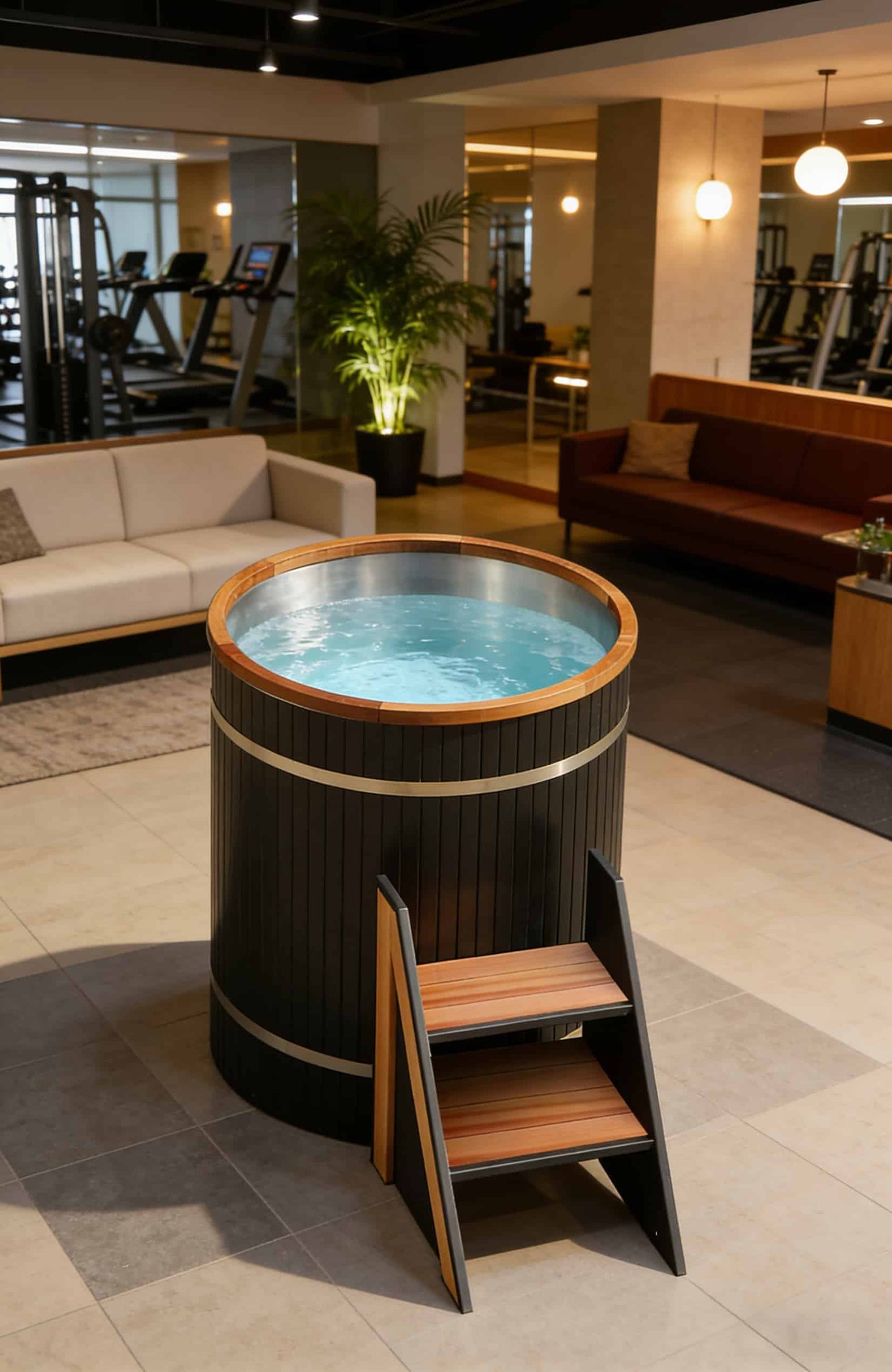
Wood and wood-clad evidence
Request species or wood-product identity, moisture condition and finish at production, water-retaining structure, fasteners, adhesives/coatings where relevant, drainage/ventilation detail, installation environment, cleaning limits and refinishing plan. If a liner sits inside the wood, specify how it can be inspected and serviced.
Inflatable and drop-stitch evidence
Request the complete layer description, seam and valve construction, operating-pressure range, inflation method, temperature/environment limits, floor preparation, port reinforcement, permitted connected-hose loads, storage instructions, leak test and repair kit. Treat marketing grade names as claims requiring a measurable specification.
Copyable cold plunge tub material RFQ
COLD PLUNGE TUB MATERIAL RFQ
BUYER / BRAND / DESTINATION:

PROJECT TYPE / QUANTITY:

INDOOR OR OUTDOOR ENVIRONMENT:

VESSEL SHAPE / DIMENSIONS / USABLE VOLUME:

INTENDED OCCUPANCY / FILLED LOAD DATA:

WATER-CONTACT MATERIAL:

WATER-RETAINING STRUCTURE:

FRAME / BASE / SUPPORT CONSTRUCTION:

INSULATION / VAPOR / CONDENSATION DETAIL:

EXTERIOR MATERIAL AND FINISH:

SEAMS / WELDS / ADHESIVES / COATINGS:

PORT / DRAIN / OVERFLOW MATERIALS AND REINFORCEMENT:

MATERIAL STANDARD OR GRADE EVIDENCE REQUIRED:

CLEANING / WATER-CHEMISTRY LIMITS:

SUN / WEATHER / TEMPERATURE LIMITS:

INSPECTION / LEAK TEST / REPAIR METHOD:

APPROVED SAMPLE / COLOR / TEXTURE:

SUBSTITUTION AND CHANGE-CONTROL RULE:

PACKAGING AND SURFACE PROTECTION:

ASSUMPTIONS / EXCLUSIONS / OPEN POINTS:
Attach the completed schedule to the OEM RFQ template. For wholesale programs, use the wholesale cold plunge tub sourcing guide to connect material approval to samples, branding, packaging and production controls.
Frequently asked questions about cold plunge tub material
What is the best cold plunge tub material?
There is no universal best. Select the documented construction that matches the project’s environment, load, cleaning chemistry, water loop, appearance, repair path and operating plan. Compare complete assemblies rather than material names.
Is stainless steel automatically better than acrylic?
No. Stainless and acrylic systems have different construction and service variables. Compare grade/material evidence, thickness, seams or forming, support, fittings, environment limits, cleaning compatibility and repair access for the exact products.
Is a wooden cold plunge made entirely from wood?
Not always. Wood may be the water-retaining barrel, structural layer or exterior cladding over another liner. Ask for a section drawing and material schedule that identifies each layer and moisture-management detail.
Can an inflatable tub be connected to a chiller?
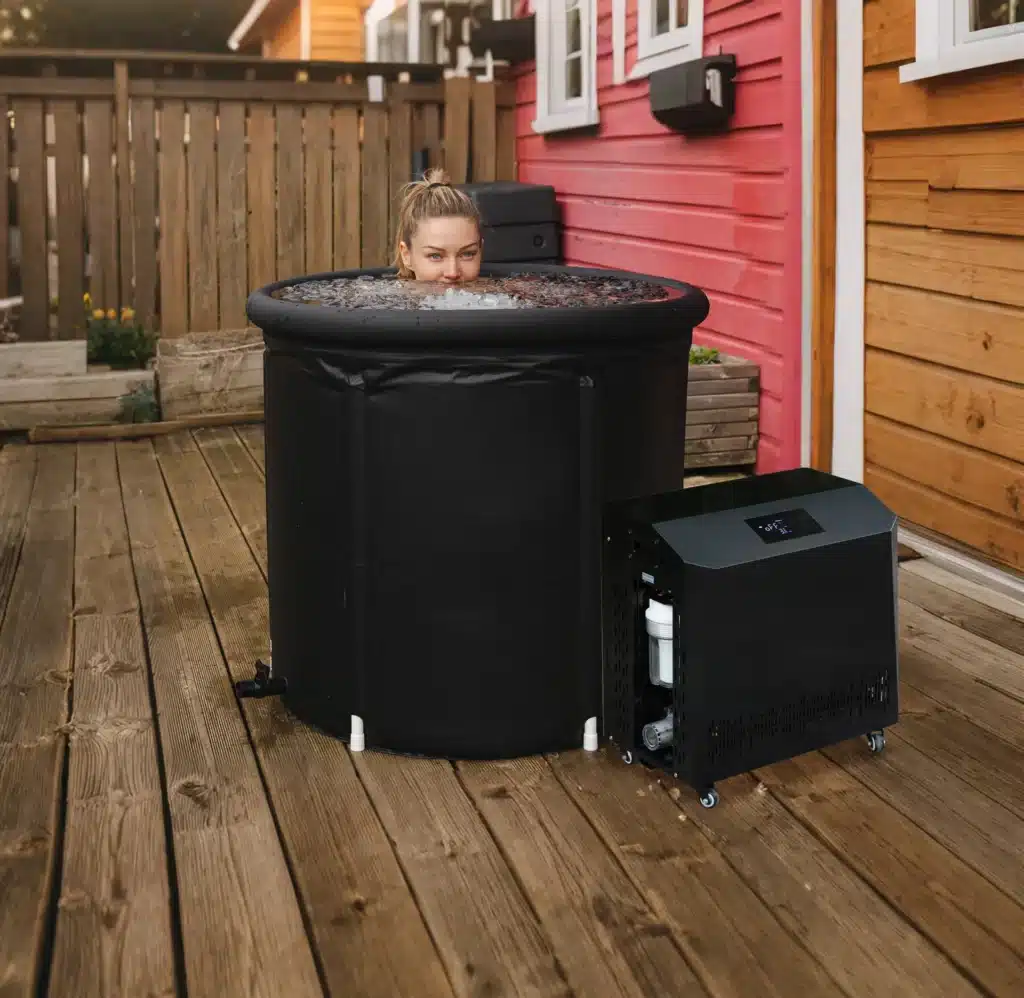
It can be considered when the tub and equipment documentation support the intended ports, flow, hose loads, water volume, pressure, environment and operating plan. Do not cut or improvise connections without manufacturer approval.
What material evidence should an OEM buyer request?
Request a controlled material schedule, relevant grade or specification evidence, construction details, approved sample, cleaning and environment limits, inspection/leak-test method, substitution rule and traceability appropriate to the order.
To compare cold plunge tub material options for an OEM or distribution project, send OMNI Ice the destination, environment, quantity, vessel dimensions, intended occupancy, water loop, finish, cleaning plan, evidence level and packaging requirements through the official project contact page. The response should identify the proposed construction and every item that still requires confirmation.