Skip to content

Recovery equipment manufacturing for global B2B buyers

Hybrid Cold Plunge Barrel with Chiller: 12 Critical Checks

A buyer guide to defining hybrid materials, equipment architecture, water-loop interfaces, duty, service access and acceptance evidence.

A hybrid cold plunge barrel with chiller should be specified as a complete system, not purchased from the word “hybrid.” The term can describe mixed tub materials, an external chiller connected to a barrel, an integrated equipment bay, or a hot-and-cold configuration. Before comparing suppliers, define the vessel structure, water-loop architecture, cooling and heating duty, electrical variant, treatment scope, service access and test evidence.

This article owns the architecture and interface decision for a hybrid cold plunge barrel with chiller. It does not replace the model-specific WT-05 product page, the broad cold plunge tub material guide, or a quotation. “Hybrid” is not a regulated performance grade. A buyer should require the supplier to state exactly what is combined and what remains optional.

Hybrid cold plunge barrel with chiller: the short answer

A suitable hybrid cold plunge barrel with chiller is one whose combined structure and connected equipment match the actual project. The vessel must support the intended water volume and occupancy. The water loop must provide compatible ports, serviceable hoses, adequate flow and accessible treatment components. The chiller must be proposed for the defined temperature duty and ambient condition. Electrical equipment must be suitable for its location and destination supply. Every included item should appear in the quotation, drawing, manual and test record.

The main purchase risk is not whether a system looks premium. It is whether the buyer and supplier use the same definition of “hybrid.” A cedar exterior over a stainless liner, a WPC surround, a separate chiller connected by hoses and an integrated hot/cold machine are different configurations. Their installation, packaging, service and evidence requirements are not interchangeable.

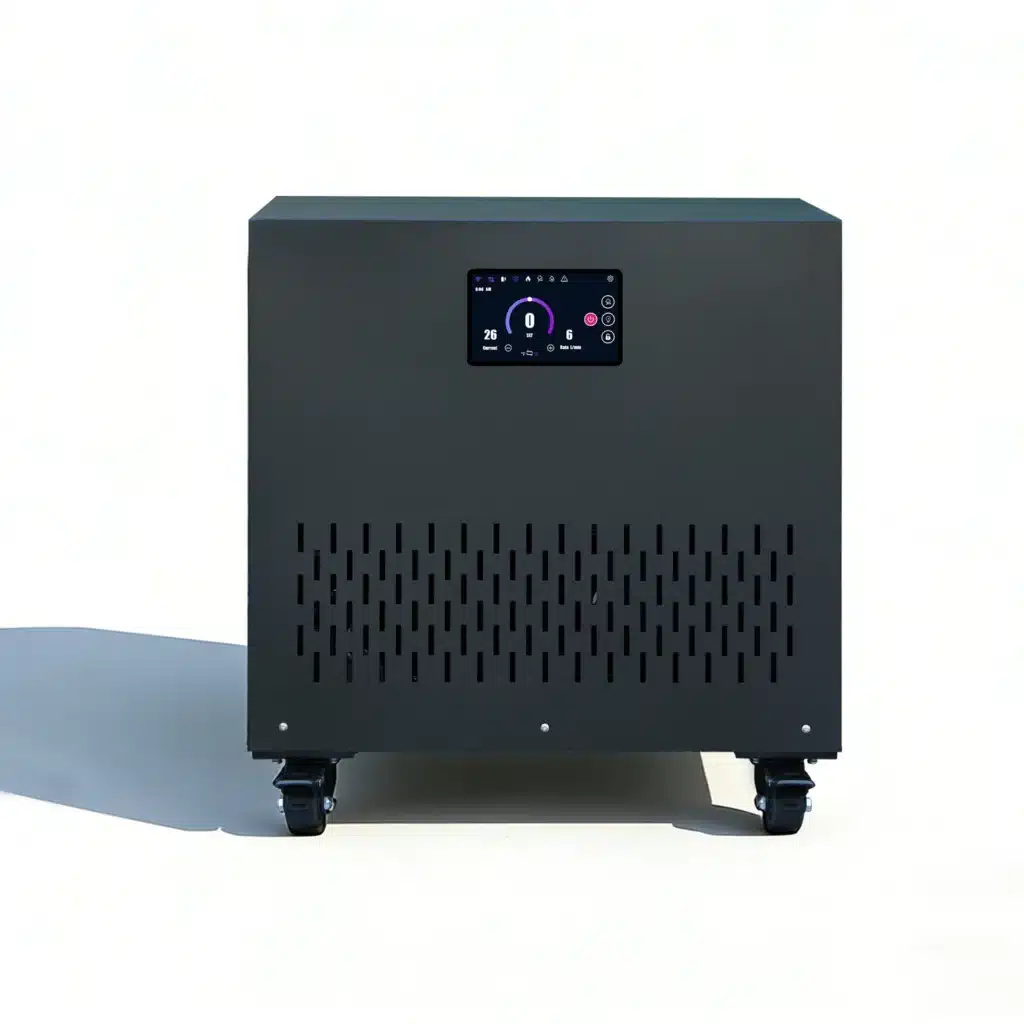
Hybrid cold plunge barrel with chiller architecture planning illustration
Concept image retained from the site media library. It illustrates a possible arrangement and is not evidence of an included production configuration.

What does hybrid mean for a cold plunge barrel?

Ask the seller to select one or more of these definitions in writing:

  1. Hybrid materials: a structural or aesthetic combination such as stainless steel, wood, WPC, insulation and trim.
  2. Hybrid equipment layout: a barrel connected to a separate serviceable chiller, pump and treatment loop.
  3. Hybrid integrated system: a vessel and equipment module supplied as one coordinated package.
  4. Hybrid thermal function: equipment designed to cool and heat within a stated operating envelope.

A product may fit more than one definition, but a photograph cannot establish that. Record liner material and grade claim, outer finish, insulation, frame, fasteners, drain, ports, pump, filter, sanitation devices, chiller, heater, controller and accessories. The ASTM A240/A240M scope covers specified stainless steel plate, sheet and strip for general applications, but citing the standard does not prove the grade or fabrication of a finished tub. Request the relevant material declaration and order evidence. See the ASTM A240/A240M scope.

Wood also moves with moisture conditions. The U.S. Forest Products Laboratory’s Wood Handbook discusses moisture relationships and dimensional change. For a hybrid cold plunge barrel with chiller, ask how the wood or wood-look layer is finished, ventilated, fastened and separated from persistent moisture. Do not assume the outer wrap is the water-retaining structure.

Integrated versus modular hybrid cold plunge barrel with chiller

Decision Integrated package Modular barrel plus external chiller
Project definition One coordinated configuration and interface set Buyer must confirm compatibility among components
Installation Can reduce field plumbing, subject to the manual and site work Offers placement flexibility but needs a controlled loop plan
Service access Equipment bay access must be demonstrated Individual components may be easier to isolate or replace
Shipping Potentially larger/heavier coordinated package Multiple cartons and more receiving interfaces
Acceptance Test the supplied assembly and all ordered functions Test the exact connected loop, not isolated components only

Neither layout is automatically superior. Choose according to installation space, freight route, maintenance access, replacement strategy, branding and who owns system integration. The chiller for cold plunge buyer guide organizes the cooling-unit decision after the architecture is defined.

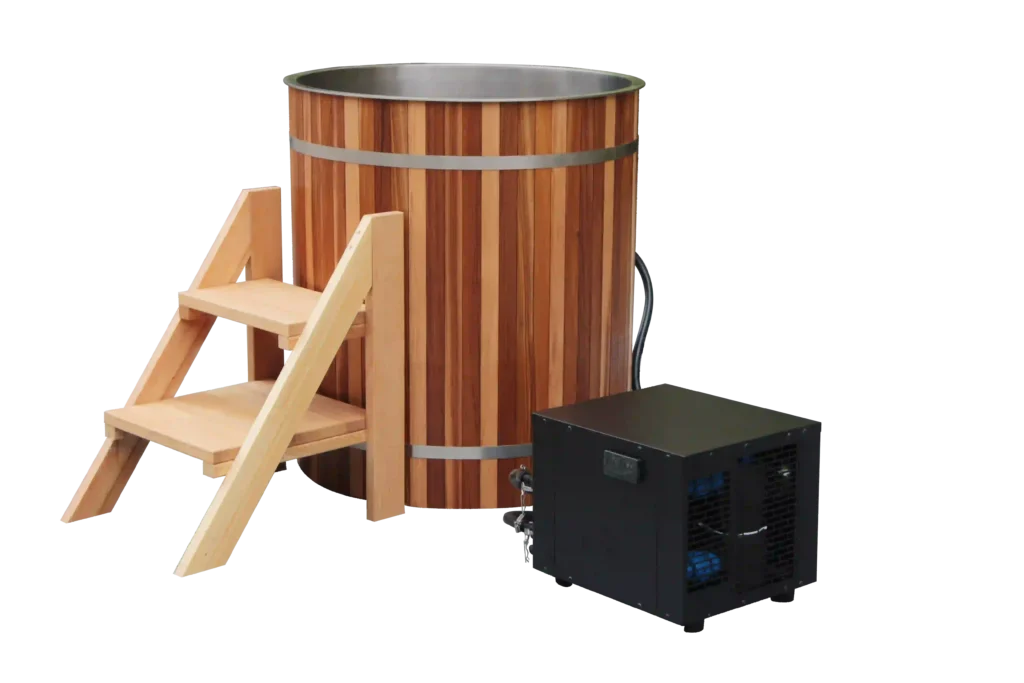
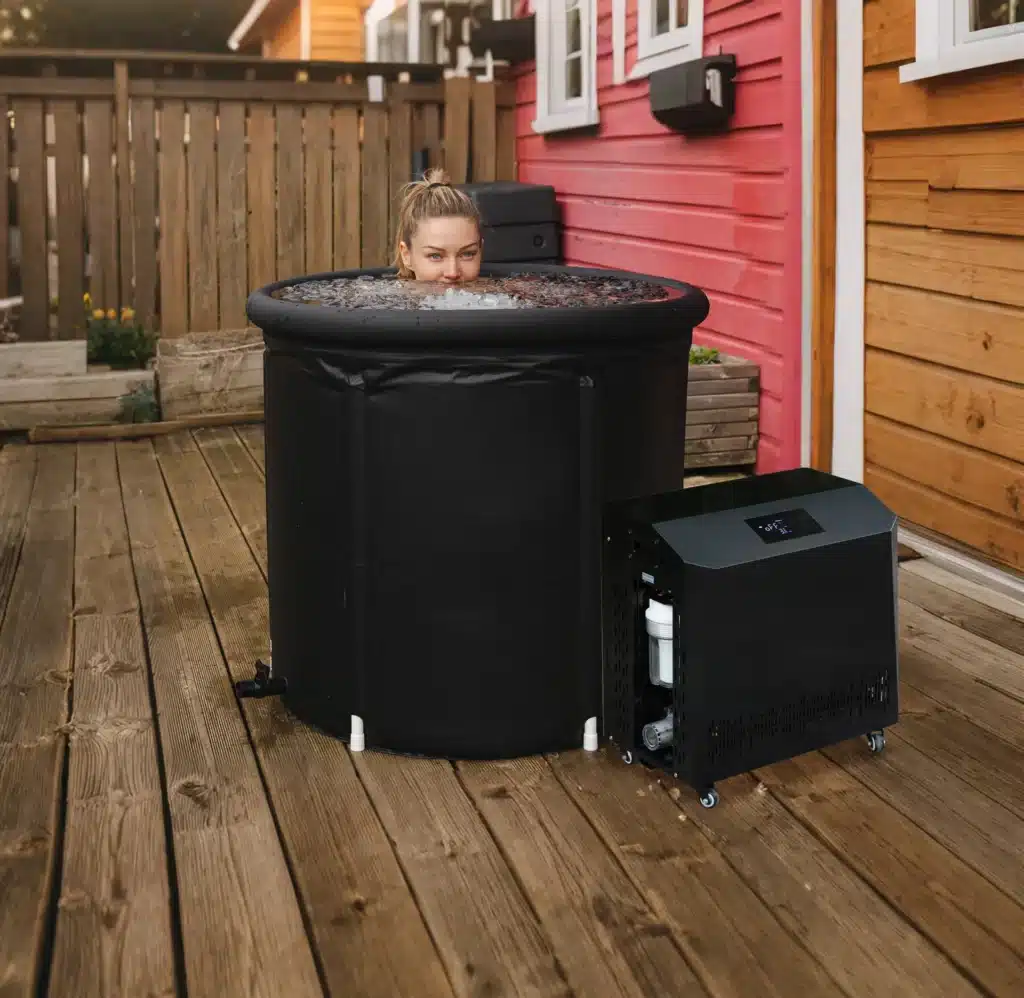
Hybrid cold plunge barrel with chiller connected through a visible water loop
Site-owned product photograph showing a barrel and external equipment. Confirm the exact model, ports, accessories and supplied configuration in the quotation.

12 critical hybrid cold plunge barrel with chiller checks

1. Intended users and operating pattern

For a hybrid cold plunge barrel with chiller, state whether the system is for one household, a hotel, studio, gym or other facility. Record expected sessions, recovery interval, supervision and cleaning plan. Commercial duty affects access, records, service and water-treatment decisions; it should not be inferred from appearance.

2. Vessel dimensions, entry and usable water volume

Request external dimensions, internal dimensions, usable filled volume, empty and filled weight, entry height, step/handhold needs and installation clearance for the hybrid cold plunge barrel with chiller. Confirm floor loading and access with the responsible project professional. Do not use a catalogue maximum volume as the default sizing input.

3. Liner, shell and outer-wrap construction

Separate the hybrid cold plunge barrel with chiller water-retaining liner from decorative cladding and structure. Ask for material designation, thickness where relevant, finish, seams, drain, insulation, frame and fasteners. The material comparison owner explains how to compare evidence across stainless steel, acrylic, wood and inflatable formats.

4. Water-loop diagram and flow direction

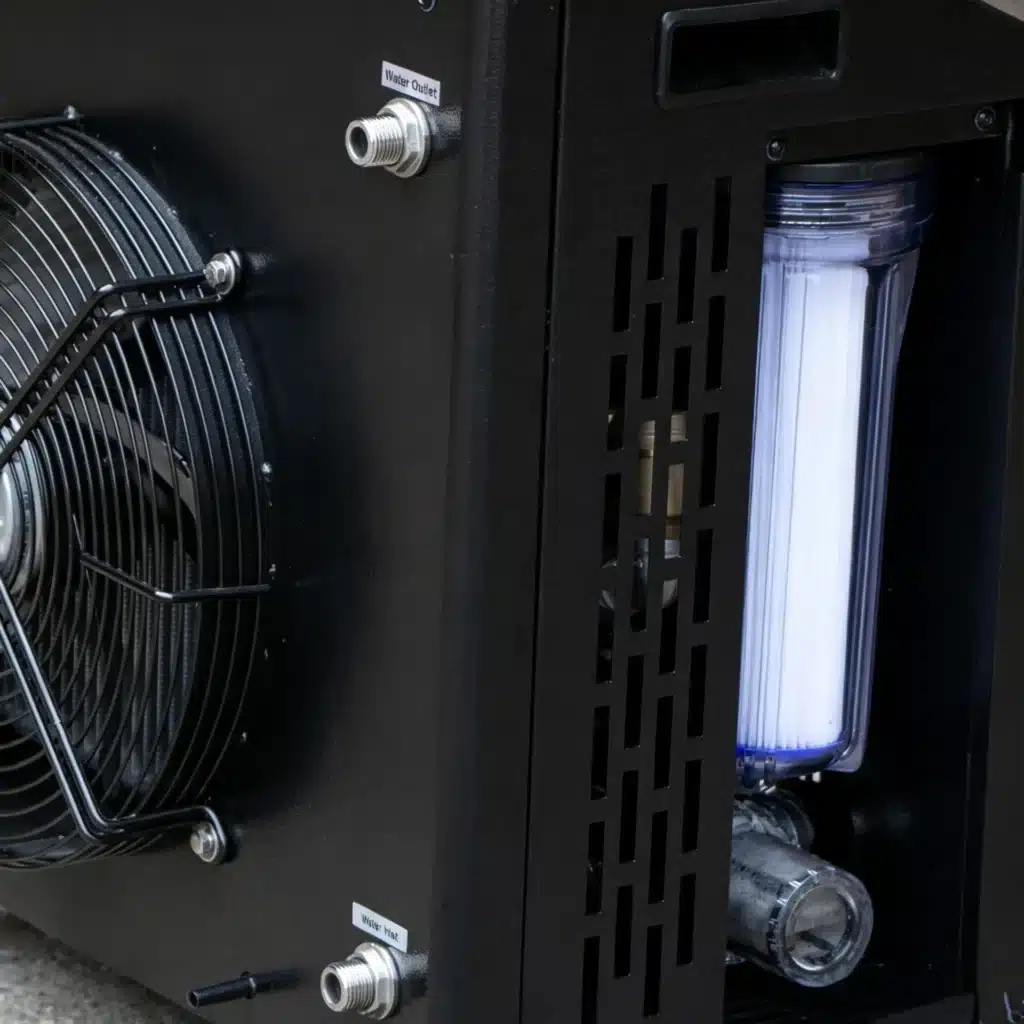
Require a diagram that names tub outlet, pump, strainer, filter, treatment device, chiller inlet and return. Record port thread/size, hose inside diameter, valves and drain points. A hybrid cold plunge barrel with chiller is not ready for approval when the buyer must invent adapters during installation.

5. Pump, filter and sanitation boundary

List what is built into the hybrid cold plunge barrel with chiller, supplied loose, optional or buyer-supplied. A filter removes selected physical debris; it does not by itself establish safe water. CDC states that its Model Aquatic Health Code is guidance for public pools, hot tubs and similar venues. Determine the applicable local rules and operating plan for the destination rather than copying a universal chemical schedule. See the current CDC MAHC page and the cold plunge filtration guide.

6. Cooling duty and comparable conditions

Give the hybrid cold plunge barrel with chiller supplier water volume, starting and target temperatures, ambient range, indoor/outdoor location, sun exposure, cover practice, use events and required recovery time. Ask for a proposed model and test basis. The horsepower and sizing guide explains why a nominal HP label is not enough.

7. Heating function, if ordered

If “hybrid” includes heating, record the requested range, control mode, electrical load, safeguards and test method separately from cooling. Do not assume every chiller version heats. Do not infer a therapy protocol from equipment capability.

8. Destination electrical configuration

Confirm voltage, frequency, phase where relevant, plug or terminal arrangement, rated input, circuit requirements, protective devices and local installation responsibilities. CPSC warns that wet skin and wet surfaces can increase electrical risk around pools and spas. Use a qualified installer and applicable local requirements; do not rely on an extension-cord workaround. Review the CPSC pool and spa electrical-safety guidance.

9. Equipment placement and heat rejection

Request required airflow clearances, environmental limits, drainage, weather protection, noise-test basis and service access around the hybrid cold plunge barrel with chiller. OSHA 1910.303 states that equipment must be suitable for the installation and that equipment relying on air circulation must not have its cooling airflow prevented. Commercial projects must apply the rules governing their actual location. See OSHA 1910.303.

10. Condensation, drainage and surrounding finishes

Identify where condensation and drained water go, whether cladding can dry, how the floor is protected and how leaks become visible. Hidden moisture around an attractive wood wrap can turn a service issue into building damage. Ask for cleaning access around every wet interface.

11. Service access and replaceable parts

Ask how to reach filters, strainers, pump, controller, drain, fittings and refrigeration equipment. Request routine-maintenance tasks, spare filters, consumables, special tools and the warranty/service boundary. A compact integrated appearance is not useful if normal service requires damaging the surround.

12. Configuration, packaging and test traceability

Freeze the bill of materials, approved finish, branding artwork, accessories, manual, labels and packaging. Tie factory evidence to the exact order and revision. Use the cold plunge FAT checklist for functional evidence and the pre-shipment inspection checklist for outgoing identity, condition, documents and packing.

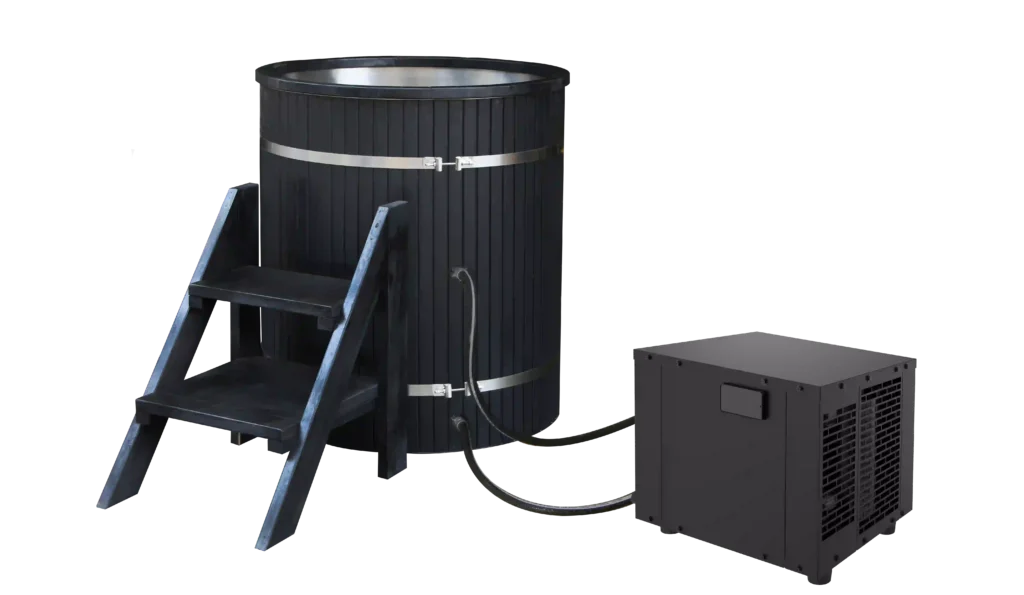
Real hybrid cold plunge barrel with chiller configuration for interface review
Real site-owned image. Treat it as configuration context, then verify the exact ordered vessel, chiller and water-loop interfaces.

Hybrid cold plunge barrel with chiller evidence and acceptance plan

Build one controlled hybrid cold plunge barrel with chiller evidence pack before deposit or production approval:

  • model, revision and complete configuration statement;
  • external/internal dimensions, usable volume and weights;
  • material schedule separating liner, structure, insulation and cladding;
  • water-loop and electrical diagrams;
  • component list with included, optional and buyer-supplied items;
  • destination electrical/nameplate sample;
  • cooling and heating test conditions, if applicable;
  • water-loop leak and circulation record;
  • controller-function record;
  • cleaning, maintenance and service-access instructions;
  • branding/finish approval and sample-deviation list;
  • packaging drawings, carton/crate list and shipping marks.

For energy planning, record measured input and operating time instead of accepting a fixed monthly-cost statement. Use the cold plunge chiller electricity worksheet. For outdoor projects, use the separate outdoor siting guide.

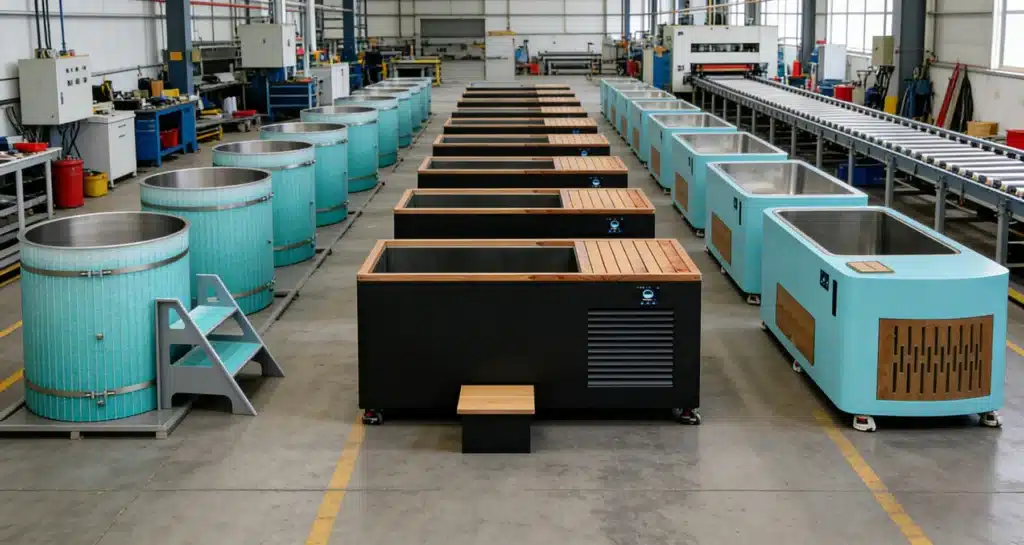
Hybrid cold plunge barrel with chiller buyer concept for layout comparison
Concept image from the existing media library. Use approved drawings and sample evidence—not a lifestyle rendering—to release production.

Copyable hybrid cold plunge barrel with chiller RFQ fields

HYBRID COLD PLUNGE BARREL WITH CHILLER RFQ

BUYER / BRAND / DESTINATION:
PROJECT TYPE / EXPECTED QUANTITY:
DEFINE “HYBRID” FOR THIS PROJECT:
VESSEL SHAPE / INTERNAL & EXTERNAL DIMENSIONS:
USABLE WATER VOLUME / INTENDED OCCUPANCY:
LINER / STRUCTURE / INSULATION / OUTER FINISH:
ENTRY, STEP, HANDHOLD AND ACCESS REQUIREMENTS:
INDOOR OR OUTDOOR / AMBIENT RANGE / SUN EXPOSURE:
STARTING / TARGET / MAINTENANCE TEMPERATURES:
USE EVENTS / REQUIRED RECOVERY INTERVAL:
PUMP / FILTER / SANITATION SCOPE:
PORTS / HOSES / FITTINGS / VALVES / DRAIN:
COOLING ONLY OR COOLING + HEATING:
VOLTAGE / FREQUENCY / CONNECTION:
CONTROLLER / APP / REMOTE FUNCTIONS:
BRANDING / COLOUR / PACKAGING:
REQUIRED DOCUMENTS / MARKET REVIEW:
FACTORY TEST / INSPECTION / ACCEPTANCE EVIDENCE:
SPARES / WARRANTY / SERVICE BOUNDARY:
ASSUMPTIONS, EXCLUSIONS AND OPEN POINTS:

Send the completed fields through the OEM RFQ template. Require the supplier to answer every field or mark it not applicable. This turns a vague “hybrid barrel” request into a comparable project record.

Frequently asked questions about a hybrid cold plunge barrel with chiller

What is a hybrid cold plunge barrel with chiller?

It is a supplier-defined combination that may involve mixed vessel materials, a barrel connected to external equipment, an integrated package or both cooling and heating. Ask the supplier to define the exact structure, components and functions in writing.

Is an integrated hybrid barrel better than an external-chiller system?

Not automatically. Integrated systems can simplify coordination, while modular systems may offer placement and service flexibility. Compare installation, airflow, access, shipping, spare parts and who owns interface compatibility.

Does a wood exterior mean the barrel holds water in wood?

Not necessarily. Wood may be structural, decorative or an outer wrap around another liner. Request a section drawing and material schedule that identifies the water-retaining surface, insulation, frame, cladding and fasteners.

Can one hybrid system both chill and heat?

Only if the exact ordered equipment is designed and documented for both functions. Confirm range, controls, electrical load, safeguards and test evidence. Do not infer heating from the word hybrid.

What should be tested before a hybrid barrel ships?

Test and record order identity, water-loop configuration, circulation, visible leaks, controller and ordered functions, defined thermal run, accessories, documents and packing. Tie every result to the model and revision being shipped.

To review a hybrid cold plunge barrel with chiller project, send OMNI Ice the definition of hybrid, vessel and water-loop requirements, temperature duty, destination electrical supply, environment, quantity, branding and evidence requirements through the official project contact page. OMNI Ice will confirm the available configuration and open points for the specific quotation.