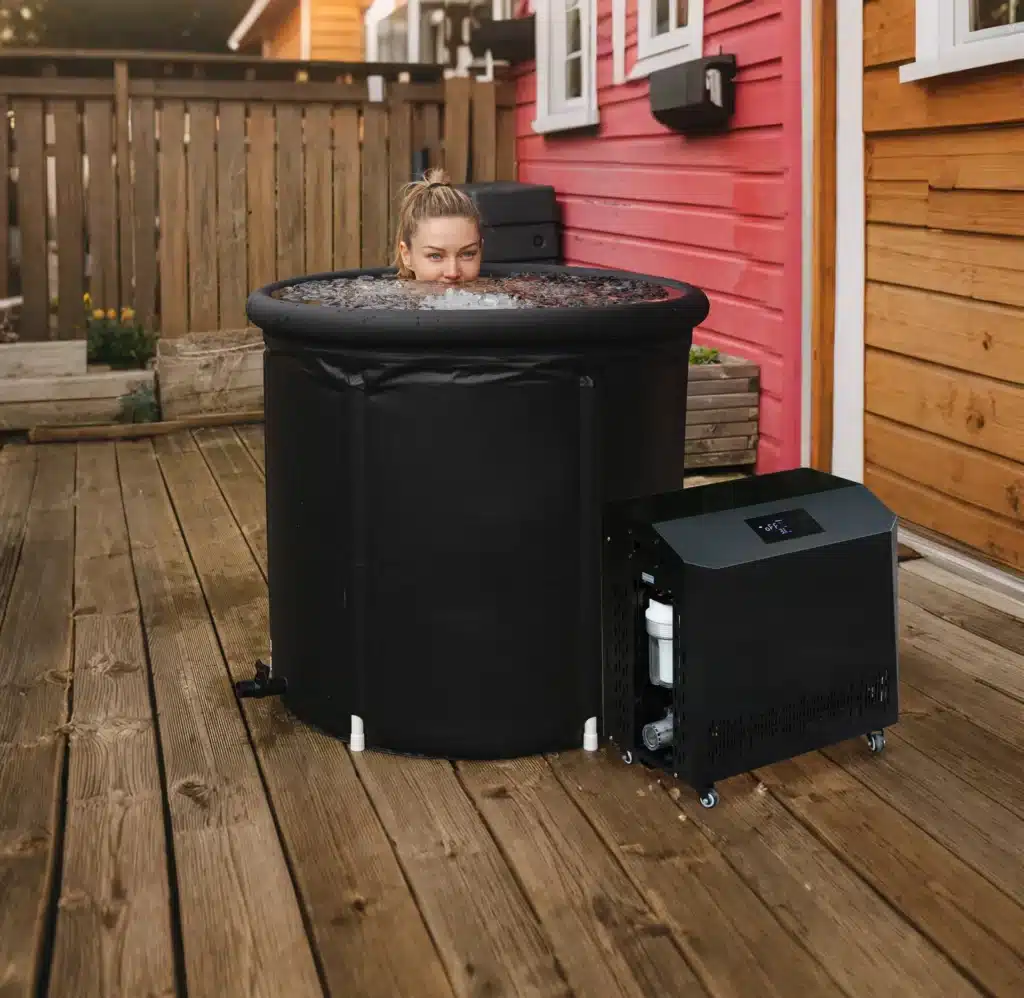
In the commercial cold plunge and athletic recovery market, marketing claims frequently cross into pure fantasy. Equipment distributors routinely advertise that their compact chillers can cool water down to 37°F in under thirty minutes, while conveniently omitting the test conditions: Was the tub filled with 40 gallons of tap water or a 150-gallon commercial basin? Was ambient room air conditioned to 68°F or baking on an 85°F outdoor patio? And was the water volume insulated with rigid closed-cell polyurethane or sitting in an uninsulated single-wall metal tank? For commercial gym directors, sports physical therapists, and wellness spa operators, evaluating chilling machinery requires understanding a verified cold plunge chiller cooling performance test.
In thermodynamics, cooling is not a subjective sensation; it is a measurable rate of thermal energy extraction governed by British Thermal Units (BTU) and kilowatt capacity. In our manufacturing engineering records, commercial-grade chillers (such as the OMNI CHU-15-RW 1.5 HP platform) deliver a certified cooling capacity of 3.75 kW (roughly 12,800 BTU/hr) with a catalogue Coefficient of Performance (COP) of 3.29 when operating in standard ambient conditions. If a buyer compares chillers solely by advertised lowest temperature setpoints without verifying standardized test conditions, they risk installing an underpowered machine that stalls out under heavy multi-bather turnover. Here is the operational testing methodology facility directors, contractors, and buyers need to audit pull-down curves, verify ambient baselines, measure flow rates, and confirm true commercial thermal recovery.
Standardizing Test Conditions: Why Setpoint Promises Are Meaningless
The first rule of auditing a cold plunge chiller cooling performance test is establishing repeatable physical baselines. Claiming a chiller cools water to 39°F means nothing without documenting starting temperature, water volume, and ambient room air:
- Starting Water Volume & Mass: A 100-gallon plunge tub contains roughly 834 pounds of water, whereas a commercial 150-gallon dual-bather basin holds over 1,250 pounds of water. Pulling 1,250 pounds of water down by 25°F requires 31,250 BTUs of net heat extraction—demanding 50% more compressor run time than a compact solo tub.
- Ambient Environmental Temperature Envelope: In factory technical records, standard cooling operation envelopes are calibrated between 15°C and 43°C (59°F to 109°F). Testing a chiller in a climate-controlled 68°F testing lab yields dramatically faster pull-down curves than operating on an outdoor summer patio at 90°F, where high condensing pressures reduce net refrigerant capacity.
- Tub Insulation & R-Value Boundaries: An uninsulated metal stock tank absorbs massive parasitic heat from surrounding room air, continuously fighting the chilling loop. Standardized factory performance testing requires testing on vessels insulated with direct-spray closed-cell polyurethane foam (R-12 to R-16 rating) covered with a thermal lid.
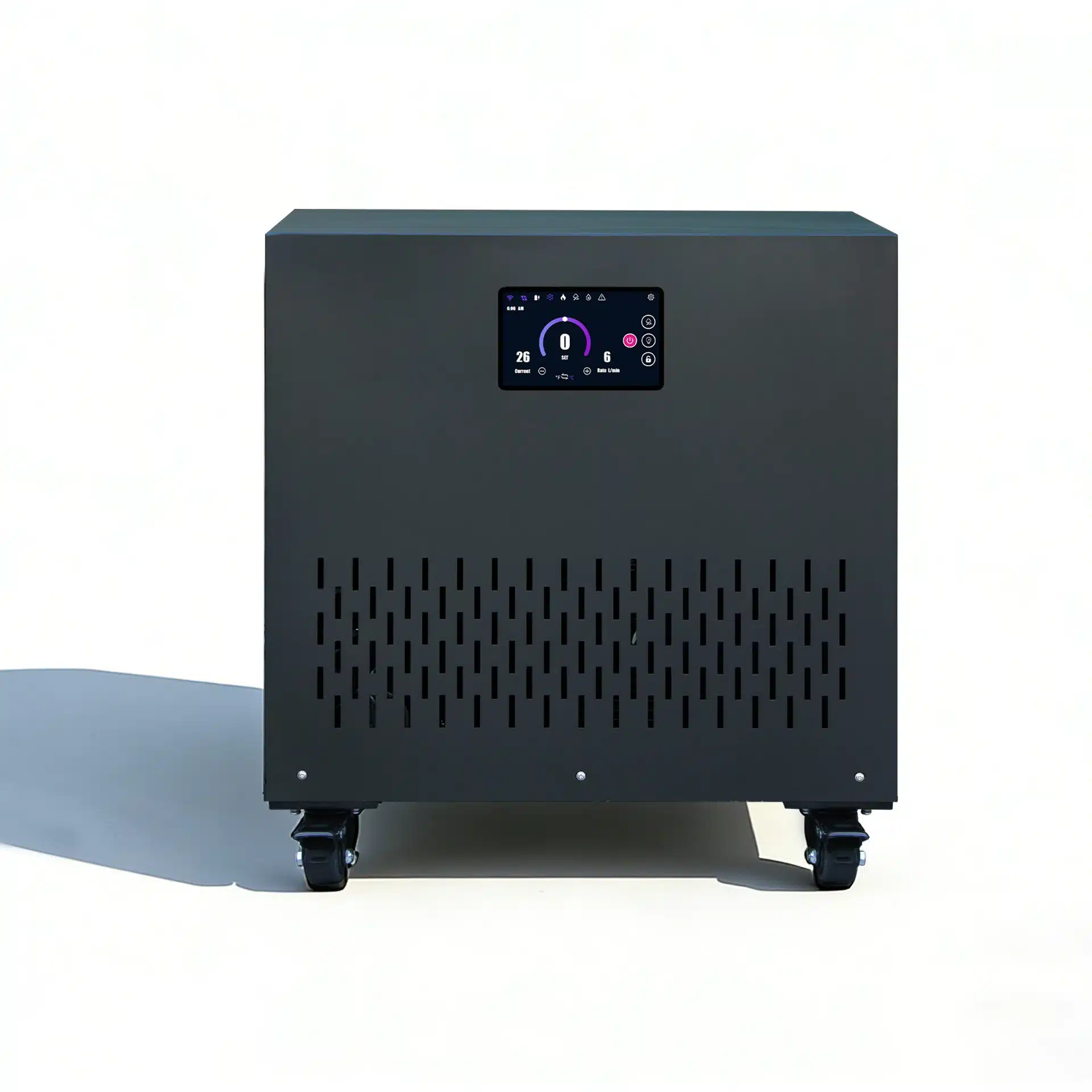
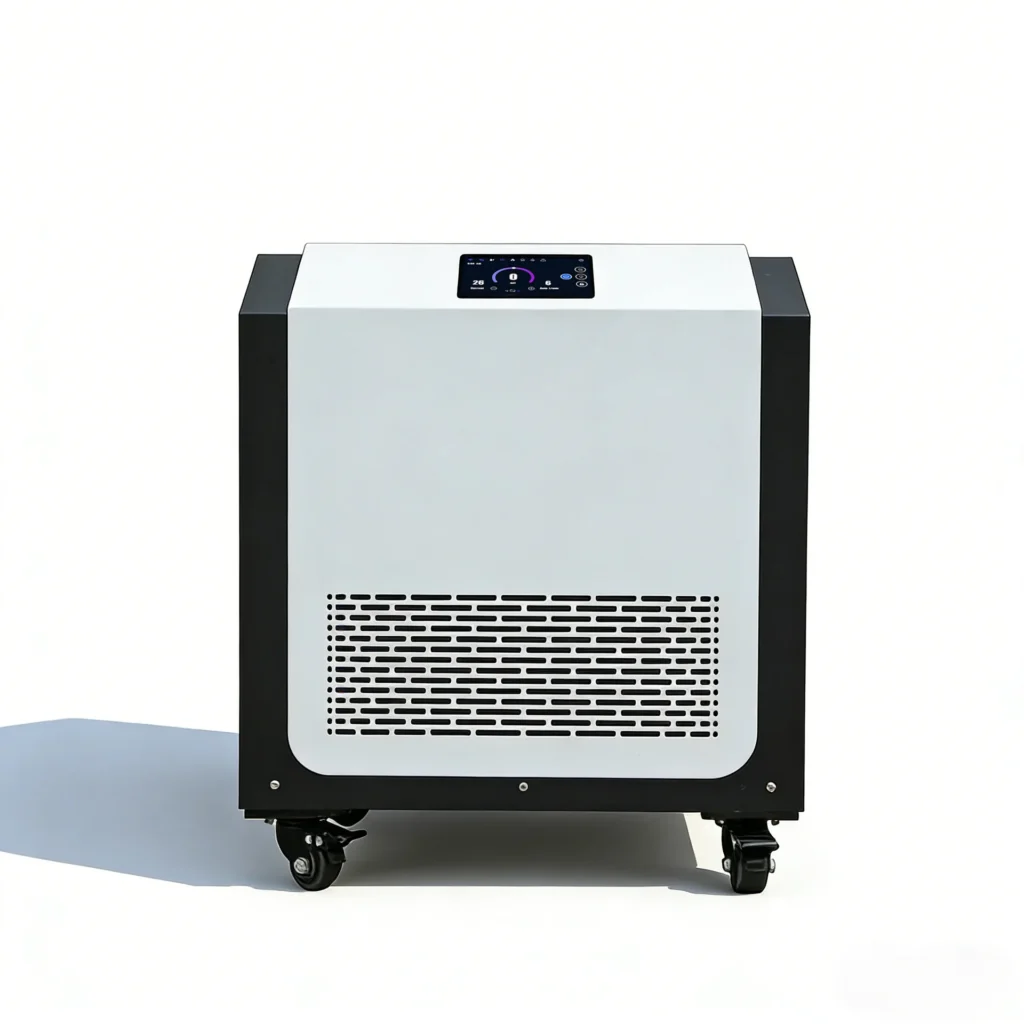
A heavy-duty 1.5HP commercial cold plunge chiller undergoing factory performance calibration, delivering 3.75 kW of verified cooling capacity across titanium heat exchangers.
The Pull-Down Formula: Converting Horsepower into Real-World Hours
Contractors and engineers do not guess how long water will take to chill; they calculate thermal pull-down using fundamental thermal transfer physics. The formula to calculate required heat extraction is:
Required BTUs = Water Volume (Gallons) × 8.34 lbs/Gal × Temperature Drop (°F)
Consider an actual facility deployment: cooling a 120-gallon commercial plunge tub from 65°F tap water down to 39°F (a 26°F drop). The total heat that must be extracted from the water mass is:
120 Gal × 8.34 lbs/Gal × 26°F = 26,020 BTUs
Now examine how different commercial horsepower ratings translate into actual pull-down hours under consistent 75°F ambient test conditions:
| Chiller Model & Horsepower | Cooling Capacity (kW / BTU) | Input Power (kW) | Pull-Down Time (65°F to 39°F, 120 Gal) | Hourly Recovery Rate |
|---|---|---|---|---|
| CHU-05-RV (0.5 HP) | 1.40 kW (~ 4,800 BTU/hr) | 0.55 kW | 5.5 to 6.2 hours | 4.5°F to 5.0°F per hour |
| CHU-10-RV / CHM-10 (1.0 HP) | 2.60 kW (~ 8,900 BTU/hr) | 0.85 kW | 3.0 to 3.4 hours | 8.0°F to 9.5°F per hour |
| CHU-15-RW (1.5 HP Heavy Duty) | 3.75 kW (~ 12,800 BTU/hr) | 1.18 kW | 2.0 to 2.3 hours | 12.5°F to 14.0°F per hour |
In high-throughput athletic facilities hosting back-to-back training sessions, an hourly recovery rate of 12.5°F+ is essential to prevent cumulative thermal creep. For engineering guidelines on continuous duty cycling under commercial bather traffic, review our operational analysis on a commercial cold plunge chiller.
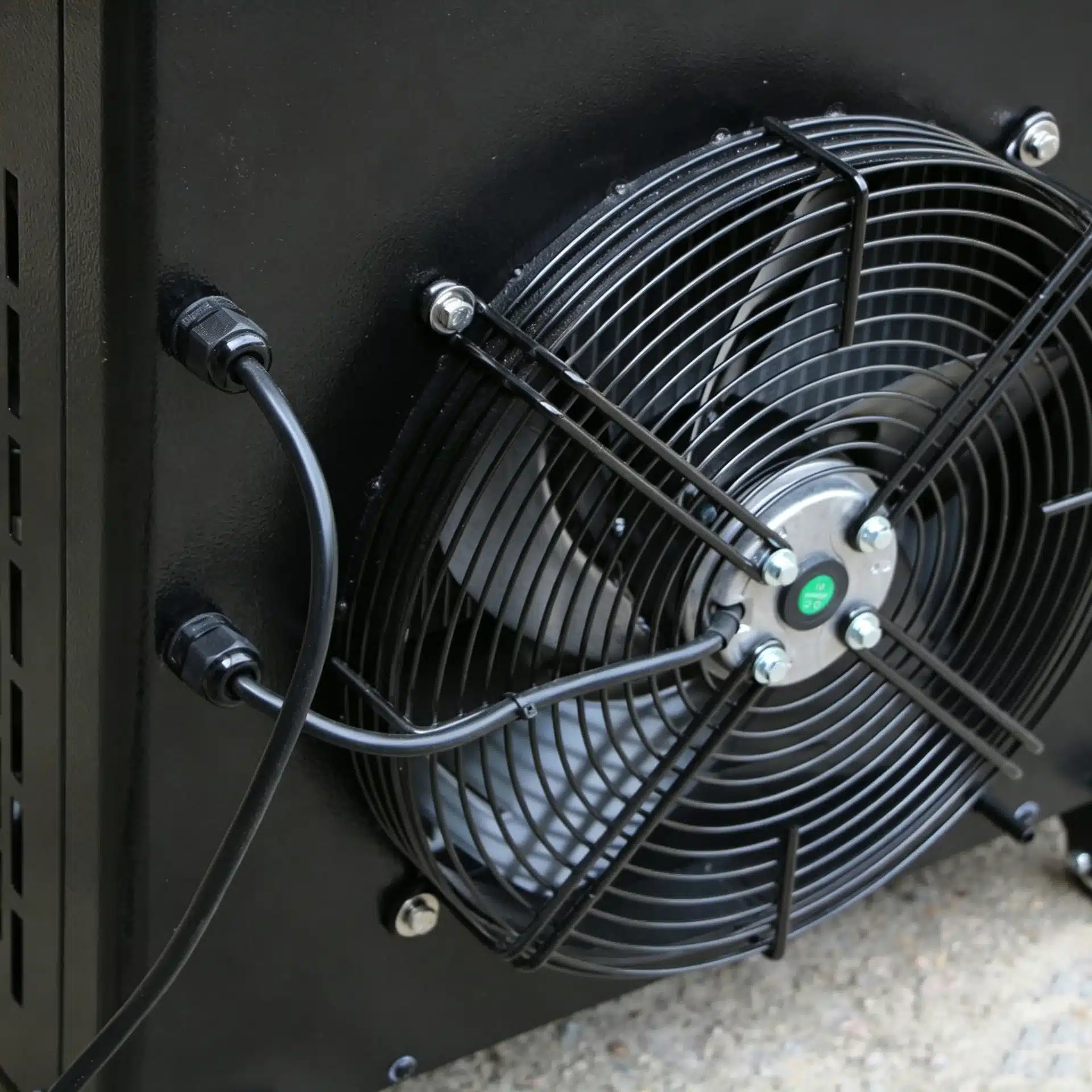
Directional exhaust louvers engineered with high free-air area to maintain low static backpressure during maximum-capacity cooling runs.
Hydraulic Flow Velocity & Titanium Coaxial Heat Exchange
A high-capacity rotary compressor cannot cool water effectively if the circulation pump moves fluid too slowly or too erratically across the heat exchanger. In our manufacturing data, the OMNI CHU-15 series incorporates an integrated 88W brushless DC motor pump engineered to maintain robust flow rates through pure Grade 1 titanium coaxial coiled tubing.
When conducting a physical cold plunge chiller cooling performance test, technicians monitor two critical hydraulic variables:
- Flow Rate & Boundary Layer Turbulence: Water flowing across the fluted inner titanium wall must maintain turbulent flow (Reynolds number > 4,000) to strip away boundary layers of warmer fluid. If flow drops below 15 GPM due to clogged 5-inch filter cartridges or kinked hoses, water velocity stalls, leading to localized ice formation inside the barrel and tripping low-pressure safety switches.
- Temperature Delta (ΔT Across Evaporator): In an optimal chilling loop, the temperature differential between the water entering the chiller and the water returning to the tub should read between 2.0°F and 3.5°F (1.1°C to 2.0°C). A healthy, narrow ΔT combined with high flow volume ensures rapid, uniform water mixing throughout the plunge basin.
- Pure Titanium Corrosion Resistance: Unlike copper or stainless steel heat exchangers that pit when exposed to chlorine, ozone, or salt additives, titanium coaxial tubing forms an impenetrable TiO2 oxide film, ensuring thermal conductivity remains uncompromised over years of commercial use. For vessel metallurgy guidelines, consult our report on metal tubs for ice baths.
Electrical Power Draw & Coefficient of Performance (COP) Realities
In manufacturer engineering data, model CHU-15-RW lists a catalogue COP of 3.29, with a cooling input power of 1.18 kW (compressor input at 0.871 kW) running on 220–240V / 50Hz electrical service. However, buyers must understand that COP is not a static number—it varies dynamically depending on ambient air temperature and water setpoint.
A rigorous cold plunge chiller cooling performance test records real-time electrical telemetry:
- COP Compression Physics: In mild 68°F ambient air chilling 55°F water, COP operates at peak efficiency (3.2 to 3.5), delivering roughly 3.3 watts of cooling for every 1 watt of electrical consumption. As the water approaches 39°F in a warm 90°F room, condensing pressure climbs and evaporating pressure drops, reducing operational COP to 2.3–2.6.
- Continuous Running Amperage: On 220V–240V supply, a 1.5 HP unit pulls roughly 5.2 to 6.2 operating amps (or 10.5 to 12.0 amps on 110V/60Hz configurations). Installers must verify that branch circuits comply with the National Electrical Code 80% continuous-duty rule. For complete wiring and breaker specifications, review our guide on cold plunge chiller installation requirements.
- Refrigerant R290 Thermodynamic Advantages: Modern commercial platforms utilize eco-friendly R290 (propane) refrigerant with a factory charge of 300g to 320g. R290 features superior latent heat of vaporization compared to legacy R410A, delivering higher volumetric cooling capacity while maintaining zero ozone depletion potential (ODP) and ultra-low Global Warming Potential (GWP = 3).
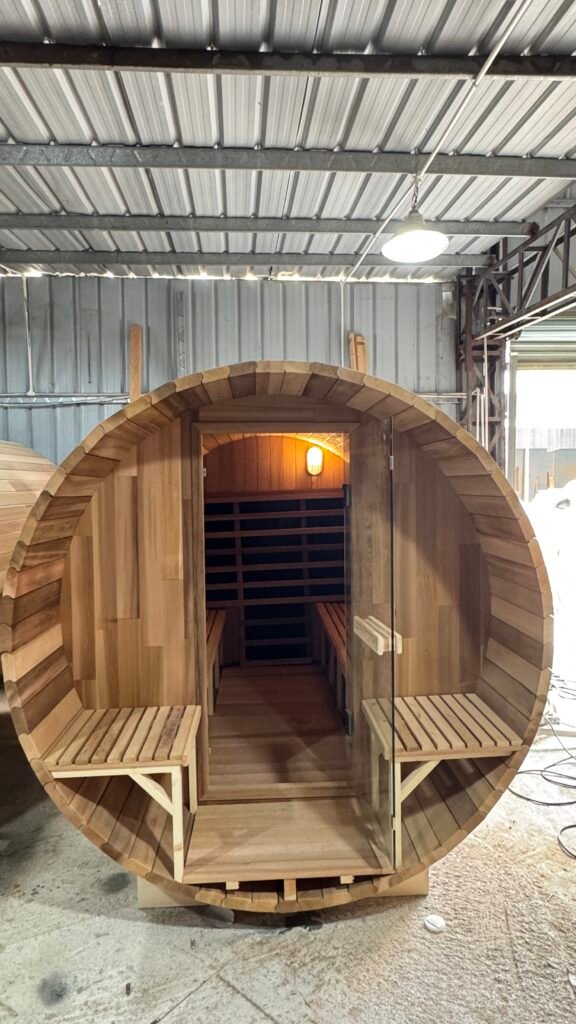
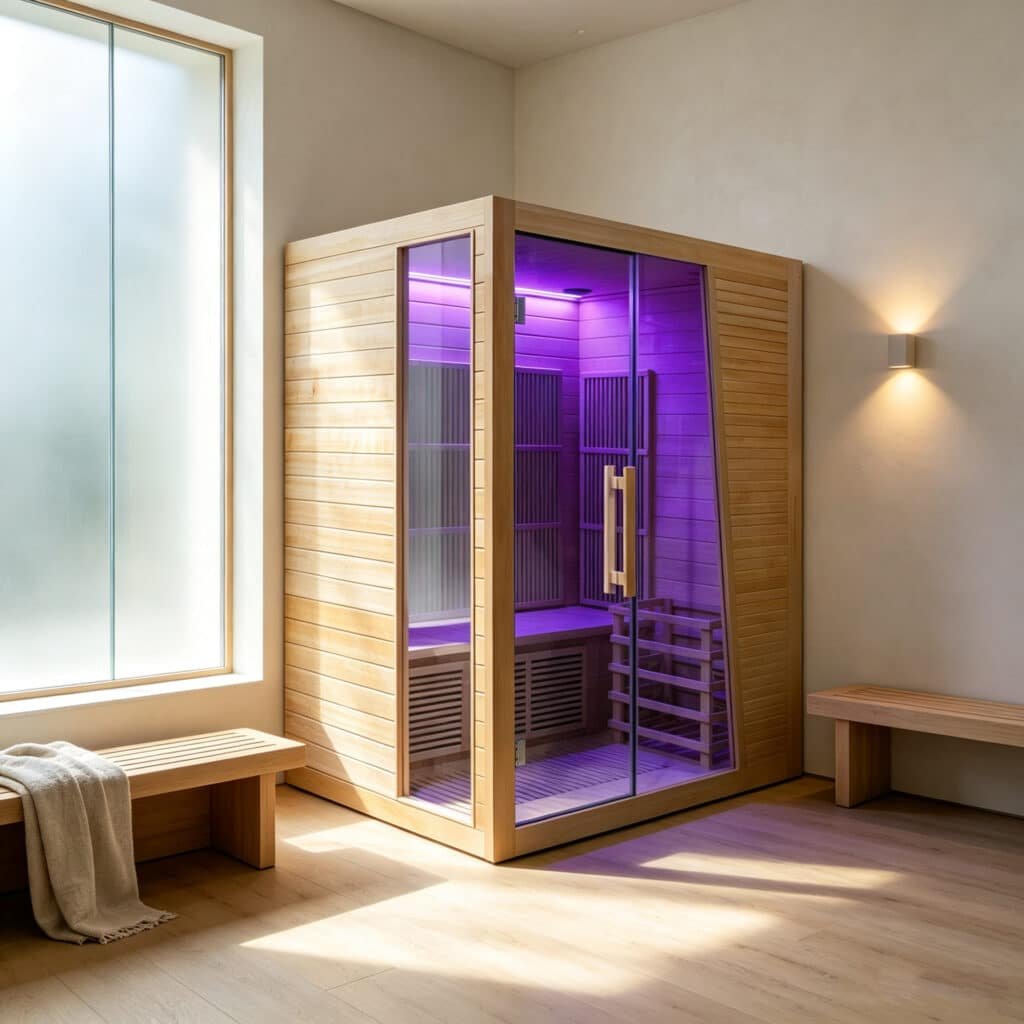
For commercial facilities planning combined contrast wellness suites, coordinate electrical loads using our planning blueprint on a sauna and cold plunge for gym installation.
Ambient Derating: High Summer Heat vs. Cold Winter Baselines
In factory technical documentation, air-cooled refrigeration capacity is directly tied to the temperature of the air passing across the condenser coil. When conducting a cold plunge chiller cooling performance test, testing must account for seasonal ambient extremes.
Refrigeration engineers track two operational derating curves:
- High Ambient Condenser Derating (>95°F / 35°C): When outdoor ambient air climbs past 95°F on summer patios, condensing pressure spikes from 310 PSI up to 390 PSI. The compressor draws higher running amperage while net BTU cooling output drops by 18% to 22%. Chillers placed in direct unshaded sunlight take nearly 50% longer to complete pull-down cycles.
- Sub-Freezing Winter Heat Transfer (<32°F / 0°C): In cold outdoor climates, low ambient air increases condensing efficiency, but introduces freezing hazards inside titanium water coils if circulation pumps stop. Commercial machines require automated anti-freeze circulation algorithms that cycle the 88W DC pump whenever water drops below 36°F (2°C).
Sensor Calibration & Flow Switch Protection: Preventing Evaporator Freeze-Ups
The most dangerous mechanical event during high-power chilling is an evaporator freeze-up. If water stops moving while the 1.5 HP compressor pumps cold refrigerant, standing water inside the titanium barrel freezes solid within 180 seconds, expanding and crushing the internal tubing.
Certified commercial chillers incorporate triple mechanical protection during performance validation:
- Electronic Paddle Flow Switches: An inline magnetic or mechanical paddle flow switch monitors circulation velocity continuously. If water flow drops below 10 GPM due to a clogged filter or pinched hose, the flow switch opens immediately, cutting compressor contactor power in under two seconds.
- Dual NTC Temperature Probes: Calibrated digital NTC thermistors measure both entering water temperature (EWT) and leaving water temperature (LWT). If the temperature differential (ΔT) exceeds 6°F (indicating sluggish water movement), the microcontroller throttles the electronic expansion valve to prevent frost formation.
- High/Low Pressure Transducers: Dedicated pressure transducers monitor suction and discharge line pressures in real time, alerting facility managers via digital error codes (such as E01 for high head pressure or E03 for low suction pressure) before physical damage occurs.
Bather Turnover Load Testing: Simulating Peak Commercial Rush Hours
Static pull-down tests only measure how fast a machine cools empty water. The true test of commercial durability is dynamic bather heat load recovery. A single bather immersed in cold water for three minutes dumps approximately 1,200 to 1,500 BTU of human body heat into the tub.
When simulating a commercial fitness class rush (10 bathers cycling through consecutively):
- Cumulative Thermal Injection: Ten consecutive bathers introduce over 13,000 BTU of heat directly into a 120-gallon water basin within forty minutes.
- Undersized Unit Thermal Creep (0.5 HP): A 0.5 HP residential chiller extracts only 4,800 BTU/hr. Under consecutive bather traffic, water temperature drifts from 39°F up to 49°F, leaving the fifth and sixth athletes plunging in lukewarm water.
- Commercial 1.5 HP Stability: A 1.5 HP commercial unit (12,800 BTU/hr capacity) extracts heat as fast as bathers inject it. Water temperature fluctuates by less than 1.5°F, locking the setpoint firmly between 38°F and 40°F throughout peak class rushes. For self-contained commercial designs with zero exterior hoses, see our analysis on an all in one ice bath for gym use.
For commercial water sanitation and health department bacteriological compliance, ensure systems adhere to established CDC Healthy Swimming operating practices and federal Pool Safely suction guidelines.
Factory-Direct Commercial Chilling Platforms from OMNI Ice
At OMNI Ice, our engineering team manufactures high-capacity commercial and residential cold plunge chillers, insulated stainless plunge tubs, and modular saunas for athletic training centers, luxury spas, and residential wellness spaces worldwide. We eliminate distributor markups and supply turnkey equipment backed by comprehensive technical documentation:
Featured Commercial Chilling & Plunge Hardware
- OMNI CHU & CHM Commercial Cold Plunge Chillers (1.0HP & 1.5HP): High-capacity commercial recovery machinery engineered with pure titanium coaxial barrels, 88W DC circulation pumps, integrated ozone, and R290 refrigerant.
- ProValue CH-08 0.8HP Ice Bath Chiller: Compact exterior-rated cooling unit engineered for private recovery suites and residential patios.
- WT-11 Large Ice Bath Tub (304 Stainless Direct-Cool System): An industrial-grade commercial plunge basin engineered with direct refrigeration cooling walls, eliminating exterior hose clutter entirely.
If your project requires private-label equipment manufacturing, full containerload wholesale distribution, or custom engineering submittals, explore our complete OEM cold plunge equipment solutions or connect directly with our engineering team through our commercial equipment RFQ desk.
The Buyer Verification Checklist for Chiller Performance
Before issuing a commercial purchase order based on performance claims, verify these six technical test parameters with your equipment manufacturer:
- Certified Cooling Capacity (kW / BTU): Demand certified laboratory thermal capacity ratings under standard 15°C–43°C ambient temperature envelopes rather than marketing setpoints.
- Titanium Heat Exchanger Coaxial Coil: Confirm the water-contact heat exchanger is 100% pure titanium to resist chemical corrosion and maintain high heat transfer efficiency.
- Continuous Flow Rate Verification: Verify that the integrated or external circulation pump maintains at least 18 to 25 GPM under full filter restriction.
- Dynamic Bather Load Rating: Ensure compressor horsepower matches your facility’s peak-hour bather volume to prevent water temperature drift.
- Dedicated Power Circuit: Verify that the machine operates on an isolated 20A GFCI circuit complying with NEC continuous-duty standards.
- Telemetry & Digital Diagnostics: Confirm the controller features real-time temperature probes, flow sensors, and remote app monitoring to track performance.
When evaluated with standardized test baselines, verifiable BTU capacity, and proper hydraulic flow velocity, a commercial cold plunge chiller delivers relentless, dependable cooling—holding water ice-cold through thousands of demanding athletic recovery sessions.