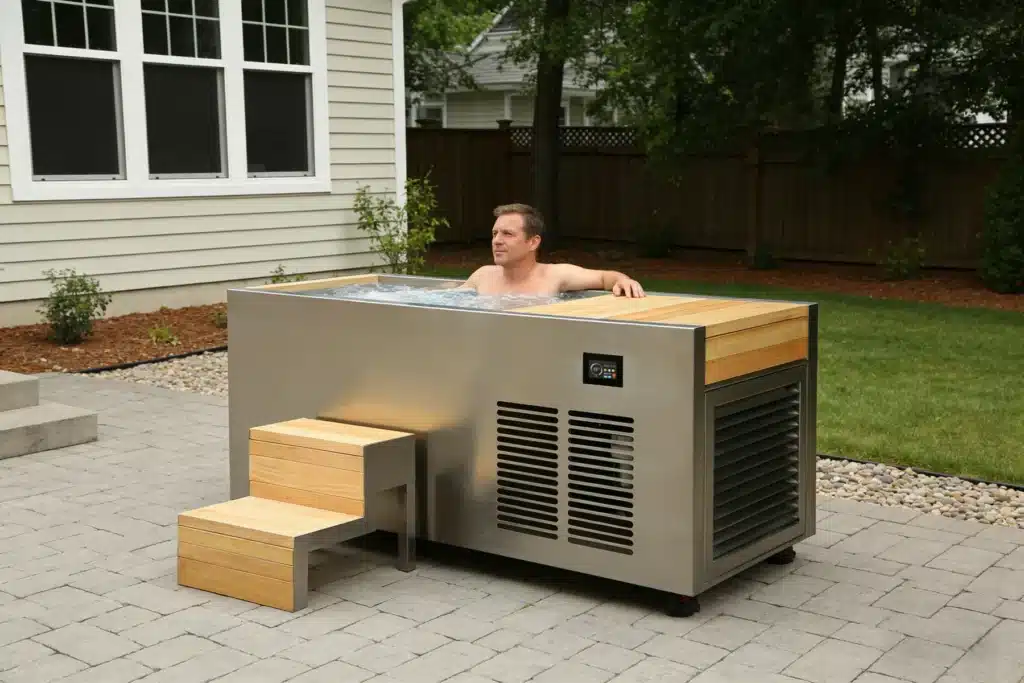
In modern athletic performance centers, boutique fitness clubs, and martial arts academies, recovery zones are no longer treated as casual afterthoughts. Studio owners have realized that offering cold recovery therapy drives membership retention, commands premium subscription tier add-ons, and differentiates their facility from standard commercial chain gyms. However, bringing ice water therapy into a high-traffic fitness business presents immediate operational hurdles. When shopping for equipment, facility directors quickly recognize that consumer-grade DIY plunge tanks—where a separate chiller sits on the floor connected by loose flexible hoses—are an operational nightmare in a commercial environment. The growing commercial standard is specifying an all in one ice bath for gym use.
In a public fitness facility where dozens of athletes walk through barefoot between training sessions, exposed floor hoses and unshielded water pumps introduce severe trip liabilities, code violations, and constant maintenance headaches. An integrated commercial setup conceals the refrigeration unit, high-flow water circulation pump, 20-micron filtration canister, and automated ozone sanitation inside a heavy-duty insulated cabinet. But deploying an all-in-one system in a commercial gym is not simply a matter of plugging it into the wall. You must account for bather turnover thermal loads, cabinet heat rejection airflows, electrical circuit sizing, and public health sanitation standards. Here is the operational and engineering blueprint commercial facility operators need before signing an equipment purchase order.
The Commercial Mandate: Why Gyms Require Integrated Enclosures
Direct Engineering Specification: A dedicated all in one ice bath for gym use eliminates exterior plumbing trip hazards by enclosing the chiller, pump, and sanitation modules inside a reinforced cabinet. For commercial facilities hosting 20 to 50 daily plunges, the system requires a minimum 1.0 HP to 1.5 HP compressor, dedicated 20A electrical service, dual-suction VGB anti-entrapment drains, and multi-stage water turnover capable of restoring 39°F water temperatures within 15 minutes between consecutive bathers.
The difference between a residential setup and a commercial fitness deployment comes down to risk management, aesthetics, and mechanical duty cycles. While an individual homeowner might tolerate a separate chiller sitting on a garage floor next to an open barrel, commercial fitness operators face three non-negotiable operational realities:
- Trip Hazard & General Liability Protection: In a busy studio where members move between kettlebells, turf sprints, and recovery rooms, exposed water hoses and power cords running across wet floor tiles are an unacceptable insurance hazard. An integrated cabinet routes all hydraulic plumbing internally, leaving only a single heavy-duty power whip exiting the rear baseboard.
- Tamper-Proof Mechanical Protection: Curious gym members or tired athletes will inadvertently lean on, step over, or kick exposed plumbing valves and delicate digital sensor probes. Enclosing all moving machinery behind keyed or tool-accessible access panels prevents unauthorized temperature tampering or valve manipulation.
- Acoustic and Visual Standards: High-end wellness clubs charge $150 to $300 per month for memberships. A bare industrial refrigeration unit rumbling on the floor looks like an unfinished construction site. A furniture-grade stainless steel or timber-clad cabinet transforms industrial equipment into a clean, architectural recovery station that enhances facility branding.
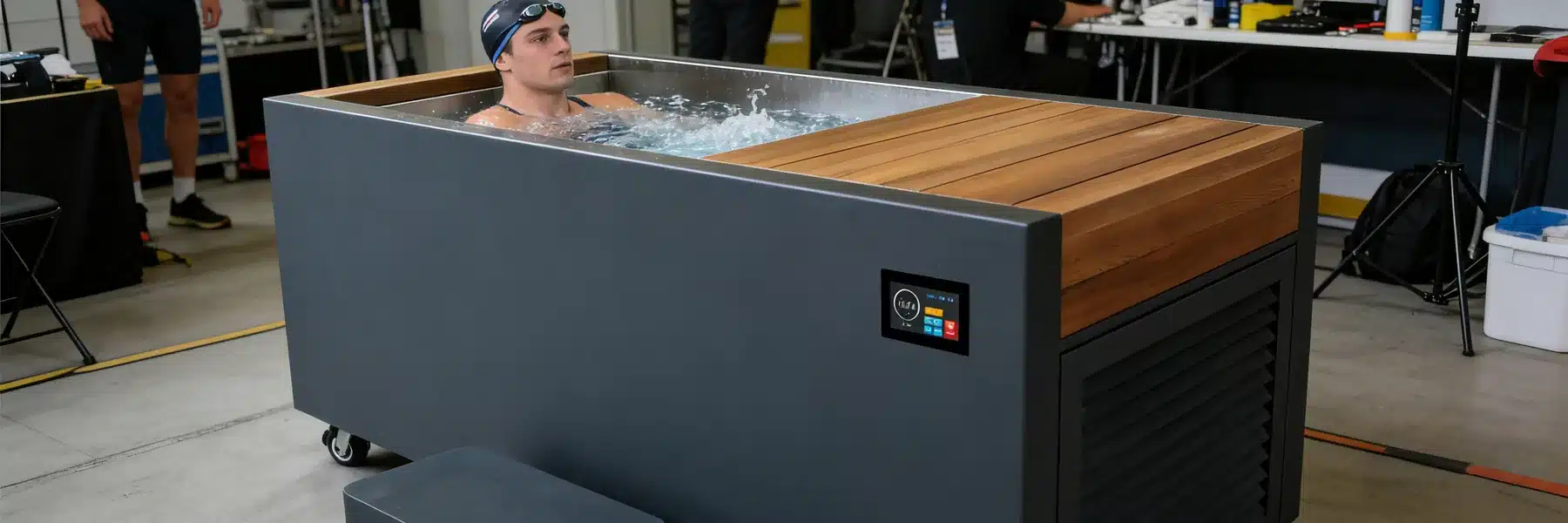
A commercial all-in-one ice bath installed in an athletic facility, featuring fully enclosed internal refrigeration and sanitary stainless steel construction.
Cabinet Aerodynamics: Preventing Internal Thermal Recirculation
The primary engineering challenge of packaging an air-cooled refrigeration compressor inside a closed tub cabinet is heat rejection. A 1.0 HP chiller running at full load pulls roughly 800 to 1,000 watts of electrical power and dumps roughly 9,000 to 11,000 BTU/hr of rejected thermal energy into the surrounding air.
If an integrated enclosure is poorly designed, hot air discharged from the condenser fan bounces off the inside of the cabinet panels and loops directly back into the condenser coil intake. In less than five minutes, the internal cabinet air temperature spikes past 130°F, triggering high-pressure safety cutoffs and shutting down cooling operations. Commercial-grade all in one ice bath for gym use units solve this through three airflow design rules:
- Physical Intake & Exhaust Baffling: The condenser intake side must be sealed from the exhaust side using internal sheet-metal bulkheads and closed-cell acoustic foam gaskets. Cool ambient room air enters through dedicated intake grilles on one flank, passes through the condenser fins, and is forced directly out through exterior exhaust louvers with zero internal recirculation.
- High Free-Area Louver Sizing: Stamped cabinet louvers must provide at least 65% open free-air surface area. Restrictive decorative mesh creates static backpressure, causing the axial condenser fan to cavitate and reducing heat exchange velocity.
- Vibration Dampening & Acoustic Insulation: To prevent compressor resonance from vibrating through large cabinet panels into the gym floor, the internal refrigeration chassis rests on heavy-duty elastomeric isolation mounts, keeping ambient operation below 58 decibels.
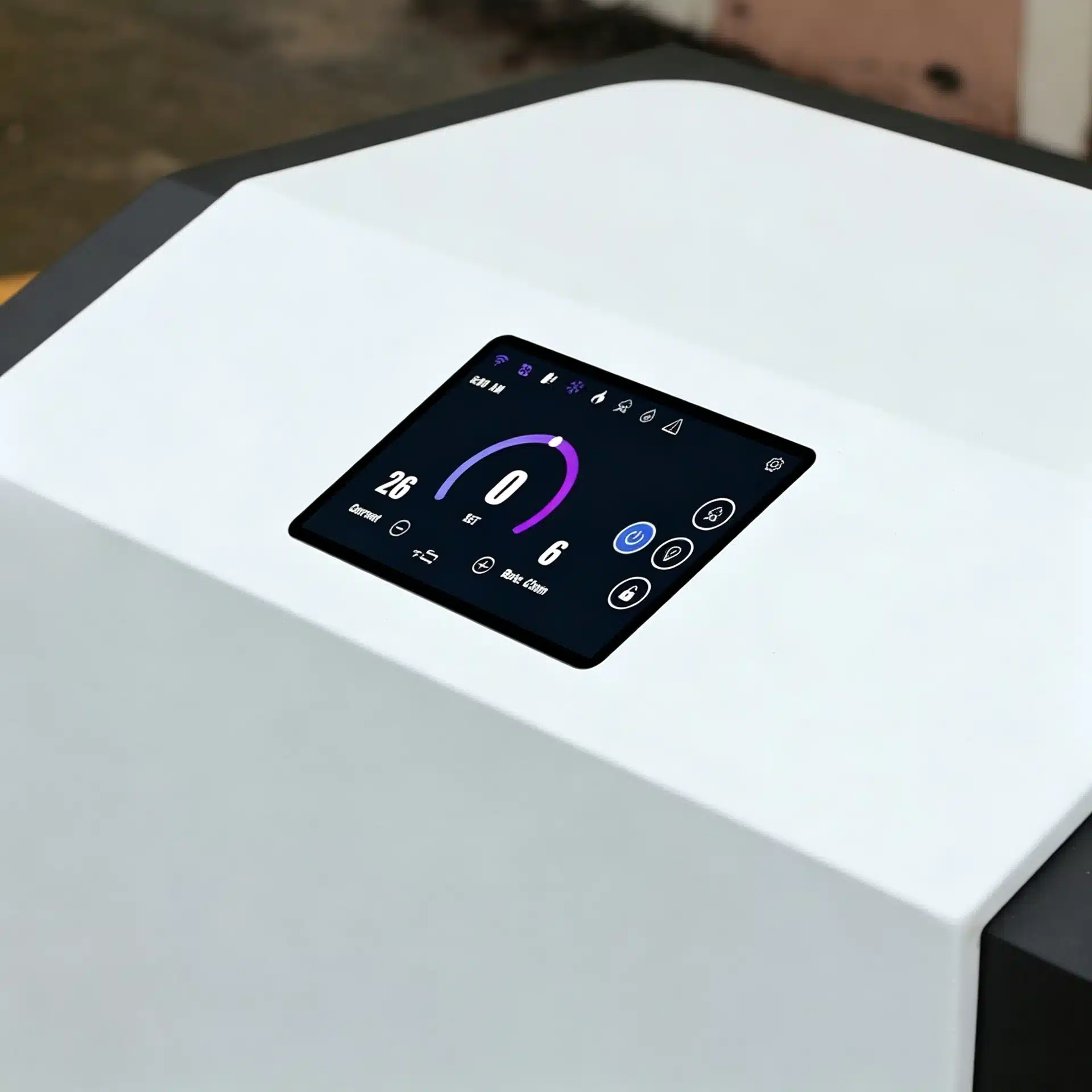
Factory integrated digital touchscreen interfaces allow gym staff to lock setpoints, monitor water flow rates, and automate daily filtration cycles.
Bather Turnover Thermal Loads: Why 1.0 HP is the Commercial Minimum
Residential cold plunge buyers often ask if a small 0.5 HP chiller is sufficient. For a single individual plunging once per morning at home, a half-horsepower unit works fine. In a commercial gym running evening recovery sessions, a 0.5 HP unit is completely inadequate.
Consider the thermal physics of human bather load. A 190-pound athlete stepping out of an intense training session enters the water with a high surface skin temperature of roughly 98.6°F (37°C). During a three-minute immersion, that athlete’s body dumps approximately 1,200 to 1,500 BTU of thermal energy directly into the cold water loop. If a gym has three members plunging back-to-back within twenty minutes, they inject over 4,000 BTU into a 100-gallon basin.
In a 100-gallon tub (roughly 834 pounds of water), injecting 4,000 BTU of body heat raises water temperature by nearly 5°F. If the tub started at 39°F, the third member is plunging in 44°F water, and the fourth member gets 48°F water. Members expecting an icy, muscle-numbing plunge will quickly complain that the water feels lukewarm. Commercial facilities require rapid thermal pull-down capacity:
| Facility Size & Daily Traffic | Peak Hour Bather Load | Recommended Compressor Power | Thermal Pull-Down Recovery Time | Water Stability at 39°F (4°C) |
|---|---|---|---|---|
| Personal Training Studio (5–12 plunges/day) | 1–2 bathers per hour | 0.8 HP to 1.0 HP Commercial | 20–25 minutes per session | Stable: Water recovers before next client arrives. |
| CrossFit Box / Athletic Center (20–40 plunges/day) | 4–6 bathers per hour | 1.0 HP to 1.5 HP Heavy Duty | 12–15 minutes per session | High Stability: Continuous duty cycling holds <41°F under peak load. |
| Commercial Wellness Club (50+ plunges/day) | 8–12 bathers per hour | 1.5 HP to 2.0 HP Direct-Cool | 8–10 minutes per session | Maximum Stability: Dual-stage titanium heat exchange prevents drift. |
To inspect equipment engineered specifically for commercial fitness deployment, review our dedicated application guide on commercial cold plunge systems for gyms, or analyze structural vessel options in our comparison of commercial cold plunge tubs.
Multi-User Water Sanitation: Automated Ozone & Dual-Suction VGB Safety
When multiple sweaty athletes use the same cold plunge tub each day, water hygiene is a primary liability. In public health inspections, commercial cold plunges are classified as semi-public therapeutic spas. If water becomes cloudy, develops a biofilm slick, or fails microbiological bacteria tests, local health departments will shut the recovery zone down immediately.
Commercial all-in-one systems integrate a continuous multi-barrier sanitation circuit directly inside the cabinet housing:
- High-Capacity 20-Micron Pleated Filtration: Rather than tiny residential hot tub filters, commercial units employ 50-square-foot pleated sediment cartridges capable of trapping dead skin cells, workout chalk, body oils, and fine debris before water enters the chiller. The filter canister must be plumbed on the positive pressure side of the pump with accessible isolation valves for rapid cartridge swaps.
- Corona Discharge Ozone & Germicidal UV-C: Automated corona discharge ozone generators inject dissolved O3 microbubbles through a dedicated Mazzei venturi injector, oxidizing organic contaminants on contact. Coupled with a 254nm UV-C sterilization chamber, this dual-action protocol destroys bacteria and pathogens without requiring heavy chlorine dosing that creates strong chemical odors in an indoor gym.
- Dual-Suction VGB Anti-Entrapment Compliance: Under the federal Virginia Graeme Baker Pool & Spa Safety Act (governed by the CPSC Pool Safely standard), commercial suction lines must never rely on a single drain grate. Commercial all-in-one tubs feature two separate lower suction grates plumbed in parallel at least three feet apart. If a bather covers one grate, suction immediately diverts to the second port, preventing vacuum body entrapment.
For complete commercial disinfection and public sanitation compliance rules, reference the official CDC Healthy Swimming operating guidelines.
Facility Infrastructure: Floor Load, Electrical Circuits & Floor Drainage
Before freight carriers deliver a crated 600-pound integrated cold plunge to your facility curb, your facility team must prepare the physical site:
1. Structural Subfloor Load Verification
A filled 120-gallon integrated commercial plunge carries roughly 1,000 pounds of water, 450 pounds of equipment cabinet, and up to 250 pounds of bather weight—totaling roughly 1,700 pounds across a 15-square-foot footprint. This produces a distributed load of 110 to 120 pounds per square foot (PSF). While ground-level concrete slab floors handle this effortlessly, mezzanine floors or framed wood subfloors require structural engineering sign-off. For exact joist calculation methods, see our guide on cold plunge tub filled weight.
2. Dedicated Electrical Circuitry
Commercial 1.0 HP and 1.5 HP chillers draw between 11 and 16 amps at full compressor startup. They must be powered by a dedicated 120V / 20A or 240V / 15A branch circuit protected by an industrial Class A GFCI breaker. Sharing this electrical line with commercial treadmills, sound systems, or laundry equipment will cause nuisance breaker tripping during compressor startup.
3. Surrounding Spill Drainage
Even with careful bathers, athletes exiting an ice bath will splash 1 to 2 liters of water onto surrounding flooring per session. The equipment area must feature non-slip commercial rubber drainage tiles, epoxy-coated concrete, and a nearby floor drain connected to municipal sewer lines. For commercial facilities installing stainless steel basins, compare material durability in our engineering report on metal tubs for ice baths.
Commercial ROI: How Fitness Studios Monetize Cold Recovery
From a commercial financial perspective, an integrated cold plunge system is one of the highest revenue-generating square-footage investments a gym operator can make. In typical boutique studios, operators employ two proven monetization models:
- The Recovery Tier Membership Add-On: Gyms create a “Tier 2 Recovery” membership upgrade priced at an additional $35 to $55 per month above base dues. If just 35 active members subscribe, the plunge generates roughly $1,400 in incremental monthly recurring revenue (MRR). Over twelve months, this produces $16,800 in high-margin revenue, paying off hardware capital costs within four to six months.
- A La Carte Session Bookings: For non-members or basic tier members, studios sell 15-minute contrast therapy appointments (paired with a dedicated sauna and cold plunge for gym contrast setup) at $20 to $30 per session, filling idle midday hours between peak morning and evening class rushes.
Factory-Direct Commercial All-in-One Systems from OMNI Ice
As a source manufacturing facility, OMNI Ice builds turnkey, plug-and-play commercial integrated cold plunge systems designed specifically for athletic clubs, physical therapy practices, and high-end fitness studios. We eliminate third-party reseller markups, provide full CAD architectural submittal drawings, and offer complete container wholesale shipping worldwide:
Featured Commercial All-in-One Equipment Lines
- WT-13 Cedar Cold Plunge Tub with Built-In 1.0 HP Chiller: A luxury dual-occupancy integrated recovery tub featuring clear Canadian red cedar exterior paneling, a 304 stainless steel interior liner, enclosed 1.0 HP high-flow refrigeration, multi-stage filtration, and digital temperature automation.
- WT-11 Large Ice Bath Tub (304 Stainless Direct-Cool System): An industrial-grade commercial plunge basin engineered with direct-refrigerant cooling walls, delivering sub-37°F ice-making capabilities without exterior water chiller hoses.
If your project involves outfitting a single recovery studio or planning a multi-location franchise rollout, review our complete OEM cold plunge equipment solutions or connect directly with our engineering department through our commercial equipment RFQ desk for wholesale pricing, custom logo branding, and technical submittals.
The Commercial Buyer Pre-Purchase Checklist
Before finalizing your commercial equipment procurement, confirm these critical engineering checkpoints with your equipment manufacturer:
- Internal Compressor Sizing: Verify that the enclosed chiller is rated at minimum 1.0 HP (for up to 30 daily users) or 1.5 HP (for 40+ daily users) with a commercial rotary or scroll compressor.
- Airflow Separation Verified: Confirm that cabinet intake and exhaust airstreams are physically baffled to prevent hot air recirculation inside the equipment bay.
- VGB Compliance Documentation: Ensure suction fittings incorporate dual-drain anti-entrapment geometry meeting commercial public safety requirements.
- Dedicated Power Drop Installed: Coordinate with your electrical contractor to pull a dedicated 20A GFCI circuit directly to the equipment location prior to freight delivery.
- Service Access Clearances: Verify that the filter cartridge and electrical controls can be accessed through removable cabinet doors without disconnecting water plumbing.
Investing in a factory-engineered, commercial-grade all-in-one ice bath gives your fitness facility a professional recovery amenity that protects members, withstands relentless daily turnover, and drives profitable long-term business growth.