If you have ever scrolled through outdoor wellness forums, you have seen the dream: a compact, personal cedar or hemlock box tucked neatly into a garage alcove, spare room, or back patio, heated with real igneous rocks that sizzle when you ladle water over them. The demand for a 1 person traditional sauna has skyrocketed among cold plunge owners and athletes who want authentic Finnish thermal conditioning—190°F dry air, eucalyptus-scented steam, and intense vascular dilation—without dedicating 50 square feet of floor space or spending $10,000 on a four-person commercial cabin.
Building a full-temperature rock sauna into an ultra-compact footprint (typically 36 to 42 inches wide by 36 to 48 inches deep) is entirely possible. But it presents physical and thermodynamic realities that infrared cabins never deal with. While a radiant carbon-panel booth gently warms surfaces at 135°F using a modest 1,500-watt wall plug, a traditional electric rock heater must heat air convection currents past boiling point inside a small box where your bare knees sit just twelve inches from a glowing 400-degree stainless steel stove. Here is how the physics of a single-person traditional hot room actually work, what electrical and venting work you need before uncrating, and where buyers run into expensive trouble.
The Electrical Threshold: Why 120 Volts Barely Cuts It
The single most common mistake buyers make when shopping for a 1 person traditional sauna is assuming they can plug the stove into a standard 15-amp bedroom outlet. It is a natural assumption because small infrared units do exactly that. But traditional rock heaters operate on pure resistive convection, and heating 80 to 110 cubic feet of cold air up to 185°F requires substantial raw electrical wattage.
In residential sauna engineering, the standard sizing baseline is 1 kilowatt (kW) of heater capacity per 45 to 50 cubic feet of interior space, plus an extra 20% to 30% margin if the cabin includes a full glass door or uninsulated exterior walls. Even in a compact single-person interior measuring 3 feet wide, 3.5 feet deep, and 6.5 feet tall (roughly 68 cubic feet), you need at least a 2.5 kW to 3.0 kW heating element:
- The 120V / 15A Myth: A standard 15-amp, 120-volt circuit maxes out at 1,440 continuous watts under the National Electrical Code 80% rule. If a manufacturer sells you a 1.5 kW 120V traditional rock heater, expect warm-up times of 65 to 80 minutes on a cold day, and a maximum achievable room temperature that stalls out around 155°F to 160°F. That is lukewarm for Finnish purists who want genuine 185°F+ heat.
- The 120V / 20A Dedicated Line: A 2.0 kW stove on a dedicated 20-amp, 120-volt circuit (using 12-gauge copper wire) is the absolute minimum viable entry point for a solo hot room. It will get the space to 175°F in roughly 45 minutes, provided the ceiling and walls are properly insulated.
- The 240V / 20A Gold Standard: If you want true 195°F heat with a 30-minute preheat cycle, you must pull a dedicated 240-volt double-pole breaker (using 10/2 with ground) to feed a 3.0 kW or 3.5 kW stove. The heater draws only 12.5 to 14.5 amps on 240V, meaning element wiring runs cooler, contactors last longer, and the 25 to 35 pounds of vulcanite or peridotite rocks reach searing steam-generating temperature quickly.
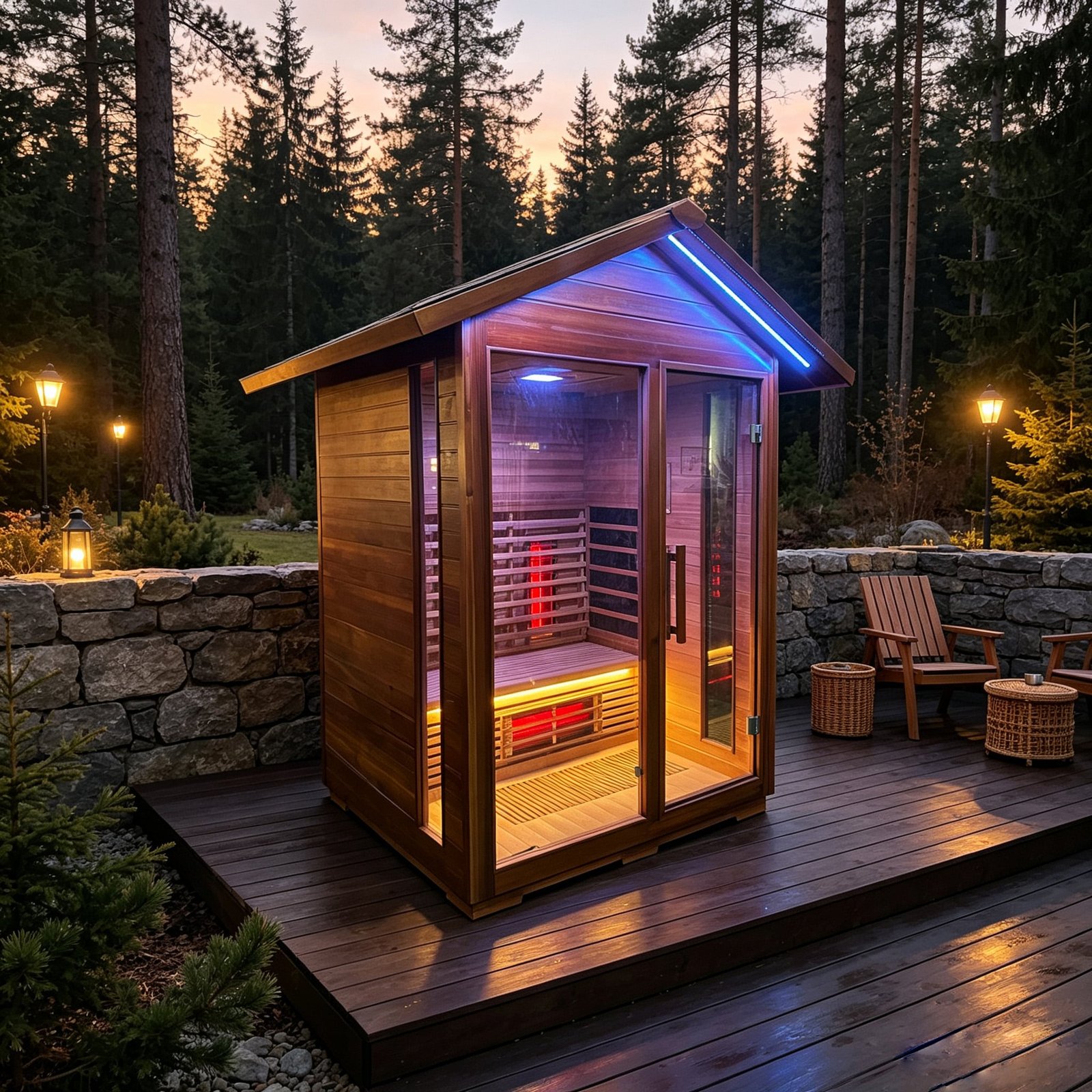
A dedicated compact traditional hot room requires clean perimeter clearance, structured electrical service, and a non-combustible floor base.
The 1 Person Traditional Sauna Clearance Equation: The Knee-Scorch Problem
In a spacious commercial four-person sauna, the heater sits comfortably tucked into a far corner behind a sturdy wooden guardrail, three feet away from anyone’s shins. In a compact solo hot room, spatial geometry becomes an engineering challenge. When the entire room is only 38 inches deep, you are sitting on an upper bench that is 20 inches deep, leaving barely 18 inches of floor space between the bench edge and the front wall where the heater mounts.
Every UL-listed electric sauna heater specifies strict minimum clearance to combustibles:
- Side Clearance: 2 to 4 inches from wood wall paneling (or zero clearance if protected with a rear metal heat shield).
- Bench & Guardrail Clearance: Typically 3 to 5 inches between the top rock tray and the wooden safety fence.
- Ceiling Clearance: At least 42 to 44 inches from the top of the stones to the ceiling tongue-and-groove boards to prevent charring the wood.
If you build or buy a pre-cut kit with poor ergonomics, your shins will sit four inches from the rock guard. When the stove is running at full power, the radiant heat off the steel outer jacket can cause thermal discomfort on your legs before your core temperature even begins to rise. Quality single-person traditional models solve this by mounting the heater low on the front side wall with an integrated triple-wall convection shield, or using a tower heater positioned in a recessed floor pocket with a 360-degree cedar guardring.
Löyly in a Small Volume: How Steam Acts in a 90-Cubic-Foot Box
The defining ritual of traditional sauna bathing is löyly—the burst of humid, searing vapor released when you ladle cold water onto 500°F sauna rocks. In a large public sauna, throwing a ladle of water creates a gentle wave of heat that rolls slowly across the ceiling and settles over the top benches.
In a small solo hot room, volume physics change dramatically. A single standard 0.2-liter ladle of water instantly expands into roughly 300 liters of hot water vapor. In a 90-cubic-foot cabin, that single scoop creates an immediate, intense thermal spike. The relative humidity jumps from 10% to 45% in five seconds, condensing hot moisture directly onto your skin and producing an intense, breathless heat wave. For experienced bathers, this high-contrast punch is exhilarating; for beginners, two heavy ladles in a small space can feel overwhelming.
Because of this fast vapor expansion, structural moisture management is non-negotiable:
- Subfloor Protection: Water ladled onto rocks will inevitably splash past the stones and hit the floor. Placing a traditional unit directly over carpet or raw plywood is a recipe for rotting floorboards and mold. The cabin must sit on waterproof ceramic tile, sealed concrete, or a commercial vinyl floor tray covered with removable cedar duckboards.
- Vapor Barrier Integrity: The wall and ceiling framing behind the cedar or hemlock boards must be lined with heavy aluminum foil vapor barrier (non-perforated) with all seams taped using high-temperature aluminum foil tape. In a compact room with high steam concentration, any moisture penetrating behind the wood will hit cold outer drywall and condense inside wall studs.
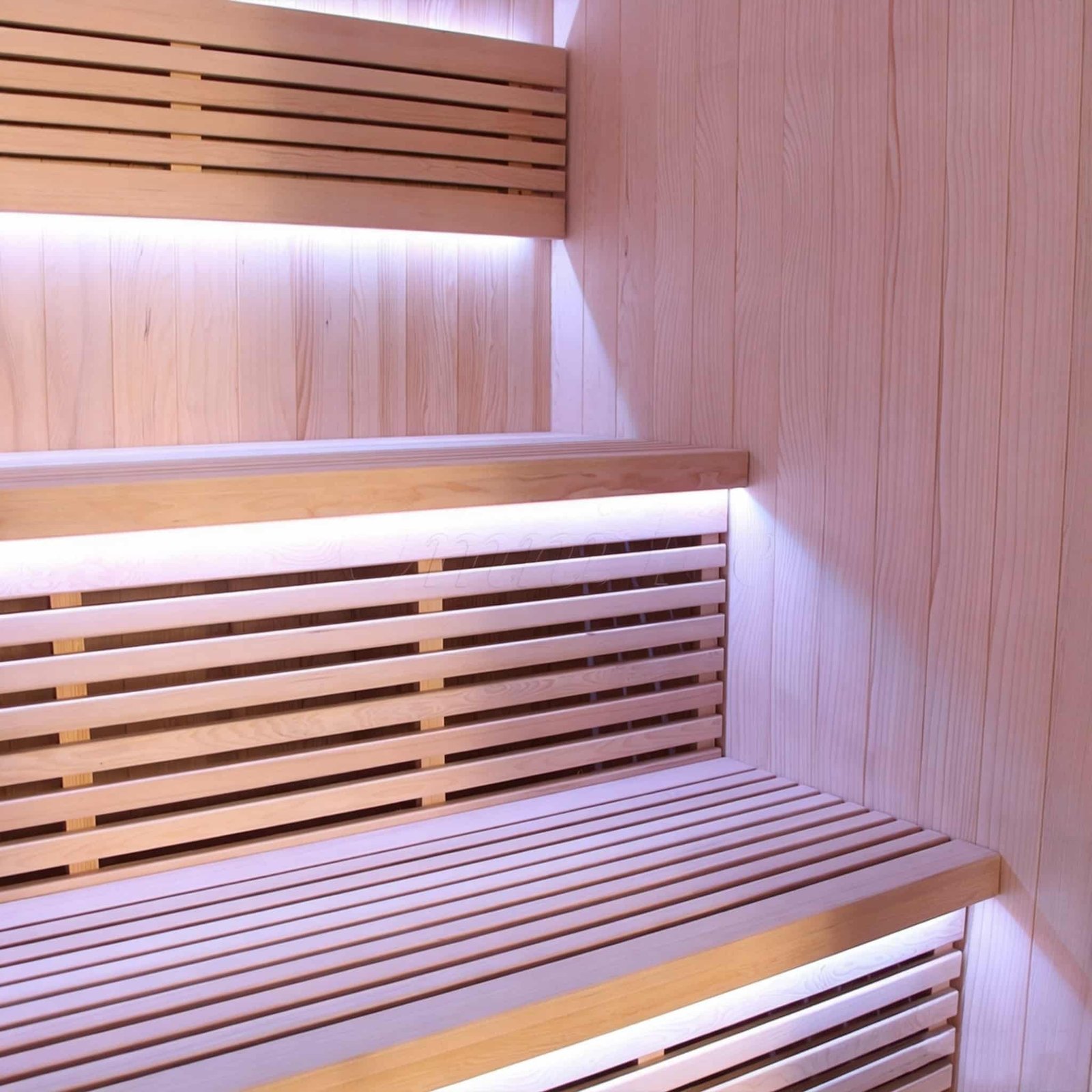
Heavy stone capacity and a protective timber guard fence ensure stable thermal mass and safe clearances in compact traditional sauna cabins.
The Airflow Mandate: Passive Convection in a Closed Box
A human resting inside a 190°F room consumes oxygen rapidly while exhaling carbon dioxide and heavy moisture. In a spacious six-person hot room, the ambient air volume provides ample fresh air cushion. But in a 70-cubic-foot solo cabin, a bather can raise room CO2 levels past 1,500 PPM in just twelve minutes if fresh air exchange is choked off, leading to headaches, grogginess, and that suffocating, “stuffy” feeling that many people mistake for heat intolerance.
Proper airflow in a traditional hot room does not rely on open doors; it requires a engineered two-vent passive convection circuit:
| Vent Element | Physical Position | Aerodynamic Function | Common Installer Blunder |
|---|---|---|---|
| Fresh Air Intake | Directly beneath or behind the heater, 2–4 inches off the floor | Draws cool, oxygen-rich air upward through the hot rock bed | Placing the vent across the room, which creates cold floor drafts without feeding the heater convective draft. |
| Main Exhaust Vent | Under the upper bench on the opposite wall, 18–24 inches off the floor | Pulls stale, cooler, CO2-laden air down from the seating zone | Putting the exhaust vent in the ceiling, which dumps all your 190°F rising heat directly outside before you can use it. |
| Drying / Ceiling Slide Vent | High on the opposite wall near the ceiling (with slide shutter) | Opened only after the session to purge residual humidity and dry the wood | Leaving this vent open during preheat, doubling warm-up energy consumption. |
When balanced correctly, this natural convection loop pulls cool air under the stove, heats it through the glowing stones, pushes it across the ceiling above your head, and draws it down across your body before discharging out under the bench. To understand how this compares to commercial spa requirements, review our detailed guide on commercial sauna ventilation.
Wood Selection in Close Quarters: Hemlock vs. Cedar
In a large sauna, you rarely brush against the timber walls while shifting positions. In a tight 3×3-foot space, your arms, shoulders, and back are in constant near-contact with the interior timber. That makes wood selection significantly more impactful than just visual aesthetics.
Two wood species dominate quality traditional builds:
- Canadian Hemlock (Clear Grain): Hemlock is an outstanding choice for compact residential interiors. It is naturally non-resinous (it contains no pitch pockets that can boil and weep hot sap onto your skin at 190°F), hypoallergenic, and virtually odorless when heated. In a tight space, strong aromatic scents can become overpowering over a 30-minute session; hemlock provides a neutral, clean breathing environment.
- Western Red Cedar: Cedar is celebrated for its natural rot resistance, antimicrobial tannins, and iconic aroma. It handles high-steam löyly conditions exceptionally well and weathers moisture cycling without warping. However, make sure you choose clear vertical grain cedar; flat-sawn cedar can develop small splinters, and knots can retain heat much faster than clear wood, creating hot spots on the bench surface.
If you are planning to install a cabin inside a high-density residence or multi-family building, read our pre-purchase inspection checklist on sauna for apartment to verify floor load tolerances and building permissions before freight delivery.
Traditional vs. Infrared in a Solo Footprint: A Contractor’s Reality Check
Before pulling the trigger on a rock stove for a single bather, take a candid look at the operating trade-offs compared to far-infrared alternatives. For a deeper technical breakdown of the underlying thermal physics, see our infrared vs traditional sauna commercial buyers guide.
- Choose a 1-Person Traditional Sauna if: You want authentic 185°F–200°F heat, love the sensory blast of steam on hot stones, use contrast therapy paired with an ice bath, and have the electrical capacity to dedicate a 240V or 20A circuit along with a waterproof floor base.
- Choose a 1-Person Infrared Cabin if: You need an appliance you can plug into a standard 15-amp bedroom outlet, want zero steam or humidity in the surrounding room, prefer mild 130°F radiant warmth for gentle recovery, or cannot run dedicated heavy-gauge electrical lines in a rental property.
The Final Inspection Checklist Before Ordering
Before signing off on a single-person traditional hot room package, review these five field benchmarks:
- Dedicated Power Verified: Confirm with a licensed electrician that your breaker panel has space for a dedicated 240V / 15A or 20A circuit, or at minimum an isolated 120V / 20A run.
- Waterproof Subfloor in Place: Ensure the unit sits on tile, concrete, or a heavy-duty containment mat—never on bare carpet or raw subflooring.
- Ceiling Clearance Confirmed: Allow at least 4 to 6 inches between the exterior sauna roof and the ceiling to assemble structural latches and roof wiring harnesses.
- Proper Rock Mass: Choose a stove holding at least 25 to 35 pounds of dense peridotite or olivine stones; undersized 15-pound stone trays cool down instantly on the first ladle of water.
- Door Swing Clearance: Verify that the 24- to 28-inch glass door can swing fully outward into the surrounding room without hitting walls, vanities, or gym racks.
When planned with proper electrical service, smart convective ventilation, and robust waterproof flooring, a dedicated single-person traditional hot room delivers the exact authentic Finnish sweat experience of a luxury spa right in the corner of your own home.