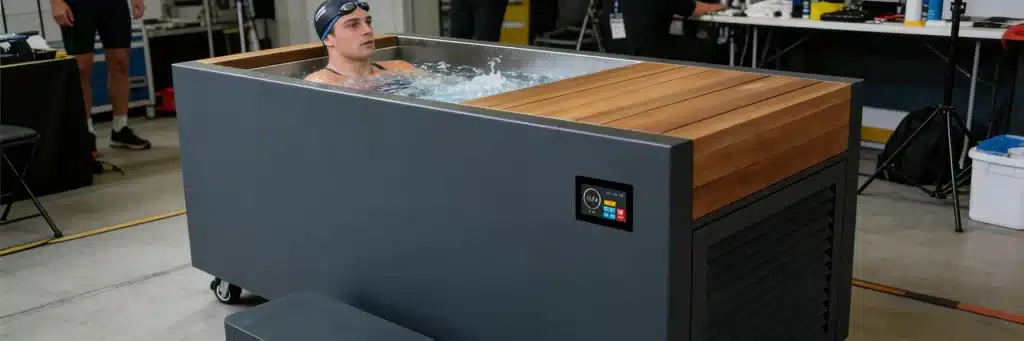
If you walk through a high-traffic athletic recovery facility, boutique wellness club, or luxury residential spa, the equipment trends are immediately obvious: the era of flimsy vinyl inflatables and converted livestock stock tanks is closing fast. Commercial operators and discerning homeowners are gravitating toward industrial-grade stainless steel assemblies. Specifying a metal tub for ice bath installations offers unmatched visual sophistication, superior structural rigidity, and non-porous hygiene that plastic composites struggle to match over a five-year operating lifecycle.
However, treating stainless steel as an indestructible, maintenance-free miracle material is one of the most expensive assumptions a facility buyer or contractor can make. Metal behaves according to strict metallurgical, chemical, and thermodynamic laws. If you install an uninsulated steel basin directly on a finished timber deck, the exterior will sweat gallons of condensate daily. If your water chemistry protocol uses cheap trichlor chlorine pucks designed for outdoor swimming pools, you will accelerate localized pitting corrosion across 304-grade steel liners. Here is the engineering reality behind selecting, insulating, plumbing, and maintaining a commercial metal ice bath system that delivers extended commercial service life without pinhole leaks or structural deflection.
Metallurgy & Alloy Chemistry: 304 vs. 316L Stainless Steel
Direct Engineering Specification: For municipal tap water with moderate filtration, 304-grade stainless steel (18% Cr, 8% Ni) provides adequate corrosion resistance at lower fabrication costs. For high-throughput commercial spas utilizing ozone, UV-C sanitation, mild salt systems, or coastal outdoor installations, 316L stainless steel (with 2.0%–3.0% molybdenum and low carbon) is strongly recommended to prevent crevice pitting and chloride-induced stress corrosion cracking.
The term “stainless steel” covers a wide spectrum of iron alloys. In cold plunge manufacturing, the choice comes down to two austenitic stainless grades: AISI 304 and AISI 316L. The fundamental difference lies in their chemical resistance to halide ions—specifically dissolved chlorides found in tap water, sanitizers, and human perspiration.
Stainless steel resists rust because the chromium content reacts with atmospheric oxygen to form an invisible, microscopically thin, self-healing passive surface layer of chromium oxide (Cr2O3). When dissolved chlorine or chloride ions encounter this passive film, they attempt to displace oxygen and initiate localized electrochemical pitting. According to the British Stainless Steel Association technical guidance, the metallurgical benchmark used to quantify pitting resistance is the Pitting Resistance Equivalent Number (PREN):
PREN = %Cr + 3.3(%Mo) + 16(%N)
- AISI 304 (PREN 18.0 – 20.0): Contains 18% chromium and 8% nickel. It performs reliably in standard residential water loops where free chlorine is strictly maintained below 1.5 PPM and total dissolved solids (TDS) remain under 1,000 PPM. However, in heated hybrid tubs or poorly managed water with higher chloride concentrations, 304 can suffer micro-pitting along microscopic tool marks or weld margins.
- AISI 316L (PREN 23.0 – 25.0): Adds 2.0% to 3.0% molybdenum and caps carbon content at 0.03% (the “L” designates low carbon). The molybdenum atoms dramatically stabilize the passive chromium oxide film against chloride attack. If your protocol uses saltwater therapy, automated ozone injection, or heavy bather loads in a commercial setting, 316L is the baseline alloy required to avoid catastrophic microscopic pinhole leaks.
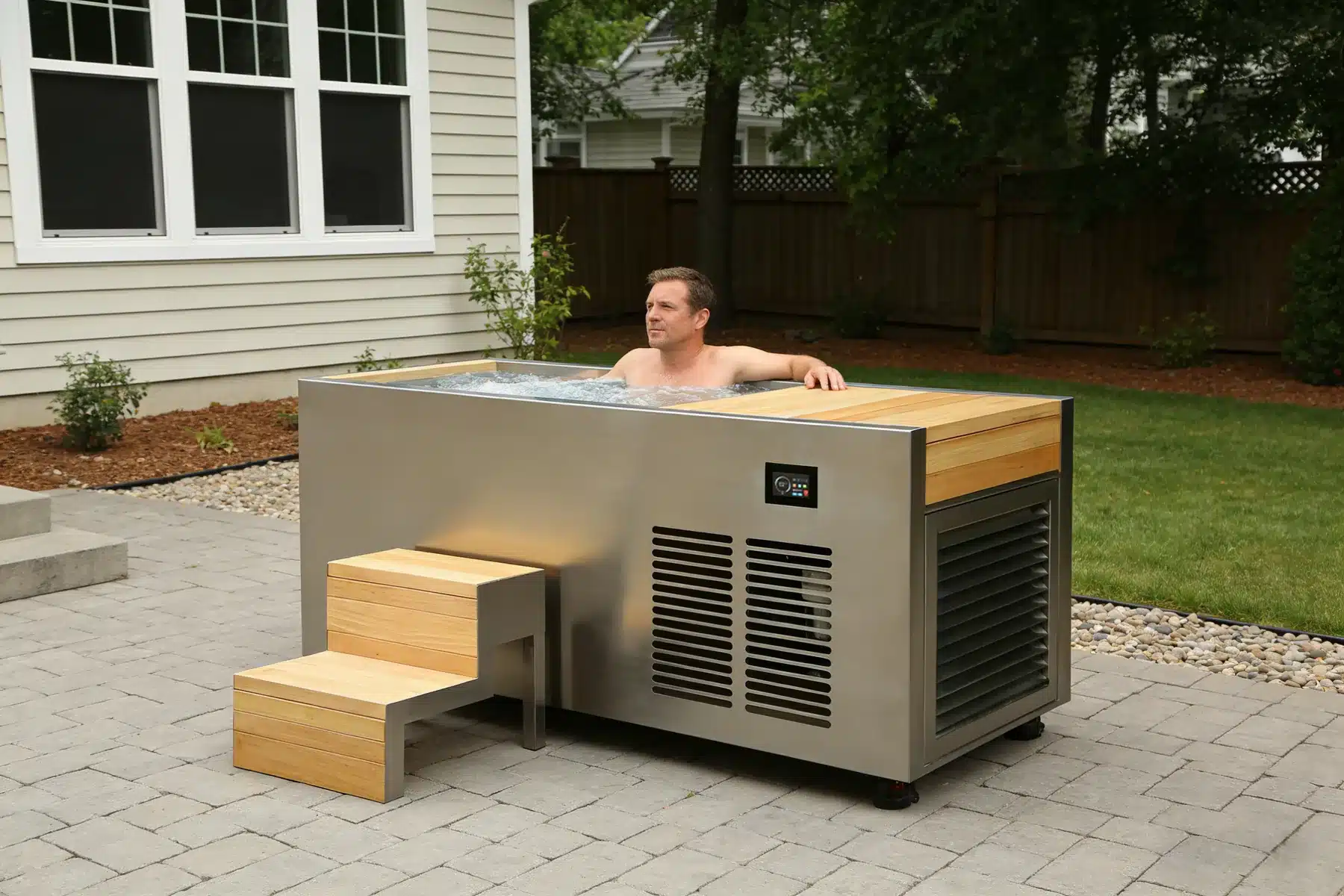
A dual-layer metal tub for ice bath installations featuring marine-grade timber outer cladding over an insulated stainless steel water liner.
Structural Sheet Gauge, Welding Methods, and Passivation Standards
A filled 130-gallon cold plunge tub carries roughly 1,080 pounds of water plus a 220-pound bather—totaling over 1,300 pounds of dynamic hydraulic mass. When selecting a metal tub for ice bath setups, sheet metal thickness and seam welding directly dictate structural deflection and weld seam survival.
1. Sheet Metal Gauge & Wall Deflection
Low-cost imported metal tubs frequently cut manufacturing costs by utilizing 18-gauge (1.2 mm) or even 20-gauge (0.9 mm) stainless steel sheet. Under continuous static water head pressure, thin sheet metal bows outward across wide flat panels. When a bather steps into the tub, the cyclic flex creates mechanical fatigue along the corner seams, ultimately cracking the weld within 12 to 18 months. Commercial-grade builds require at least 14-gauge (2.0 mm) or 16-gauge (1.5 mm) cold-rolled sheet, reinforced with welded structural box-section subframes underneath the base plate to ensure zero floor deflection.
2. TIG Welding with Full Argon Backing Shield
All internal basin seams must be joined via Tungsten Inert Gas (TIG) welding using matching ER316L filler rod. Crucially, the exterior reverse side of the weld seam must be protected with a continuous 100% argon back-purge during welding. If molten stainless steel contacts ambient air on the reverse side without inert gas shielding, atmospheric oxygen and nitrogen burn the alloying elements, creating porous, brittle black scale known as “sugaring.” Sugared weld roots cannot be passivated and will corrode from the outside in once insulation is applied.
3. Post-Weld Chemical Passivation (ASTM A967 Standard)
Welding generates intense local heat (over 2,000°F), which drives chromium out of solution and creates heat tint (weld discoloration). This leaves an iron-rich, chromium-depleted boundary layer directly adjacent to the weld bead. Professional factory fabrication includes two post-weld chemical treatments:
- Pickling: An acid bath or pickling paste dissolves high-temperature oxide scale and strips away the chromium-depleted metal layer.
- Passivation (ASTM A967): Immersion in a citric acid or nitric acid bath strips free iron molecules from the surface, forcing remaining chromium atoms to rapidly oxidize into a dense, uniform, corrosion-resistant Cr2O3 passive shield.
Thermal Physics: Condensation Prevention & Closed-Cell PU Insulation
Stainless steel possesses a thermal conductivity of approximately 16 W/m·K—over 80 times higher than sanitary acrylic (0.19 W/m·K) and 120 times higher than cedar timber (0.13 W/m·K). That means an uninsulated stainless steel tub acts like a massive cooling radiator, pulling heat from surrounding ambient air into your 38°F plunge water while continuously chilling its exterior skin below the ambient dew point.
In humid indoor commercial environments or warm summer outdoor settings, uninsulated metal tubs will sweat profusely. Condensation runs down the exterior metal walls, pooling on structural subfloors, rotting framing, and breeding mold inside cabinet cavities. To eliminate thermal bridging, factory fabrication must incorporate high-density polyurethane insulation:
| Insulation Architecture | Material Specification | Thermal Performance | Anti-Condensation Reliability |
|---|---|---|---|
| Bare Single-Wall (Stock Tank Style) | None (1.5mm bare steel) | R-value: < 0.1 (Severe heat gain) | Fails: 100% surface condensation in humid air; pools water underneath. |
| Loose Polyethylene Foam Blanket | 15mm low-density EPE foam wrap | R-value: ~ 2.5 (Moderate reduction) | Poor: Air gaps between foam and metal allow moisture to accumulate behind wrapper. |
| Direct-Spray High-Density Closed-Cell PU | 40 kg/m³ closed-cell PU foam (35–50mm) | R-value: 12.0 – 16.0 (Superior retention) | Flawless: Direct mechanical bond to metal substrate; zero air gap, zero condensation. |
By applying a 40 mm jacket of rigid closed-cell polyurethane directly to the sandblasted exterior of the stainless steel tub liner before mounting cabinet panels, thermal energy transfer is reduced by over 92%. A 1 HP cold plunge chiller connected to a properly insulated metal plunge will cycle off for 45 to 60 minutes between chilling runs, slashing monthly compressor power consumption while keeping exterior cabinet walls bone dry.
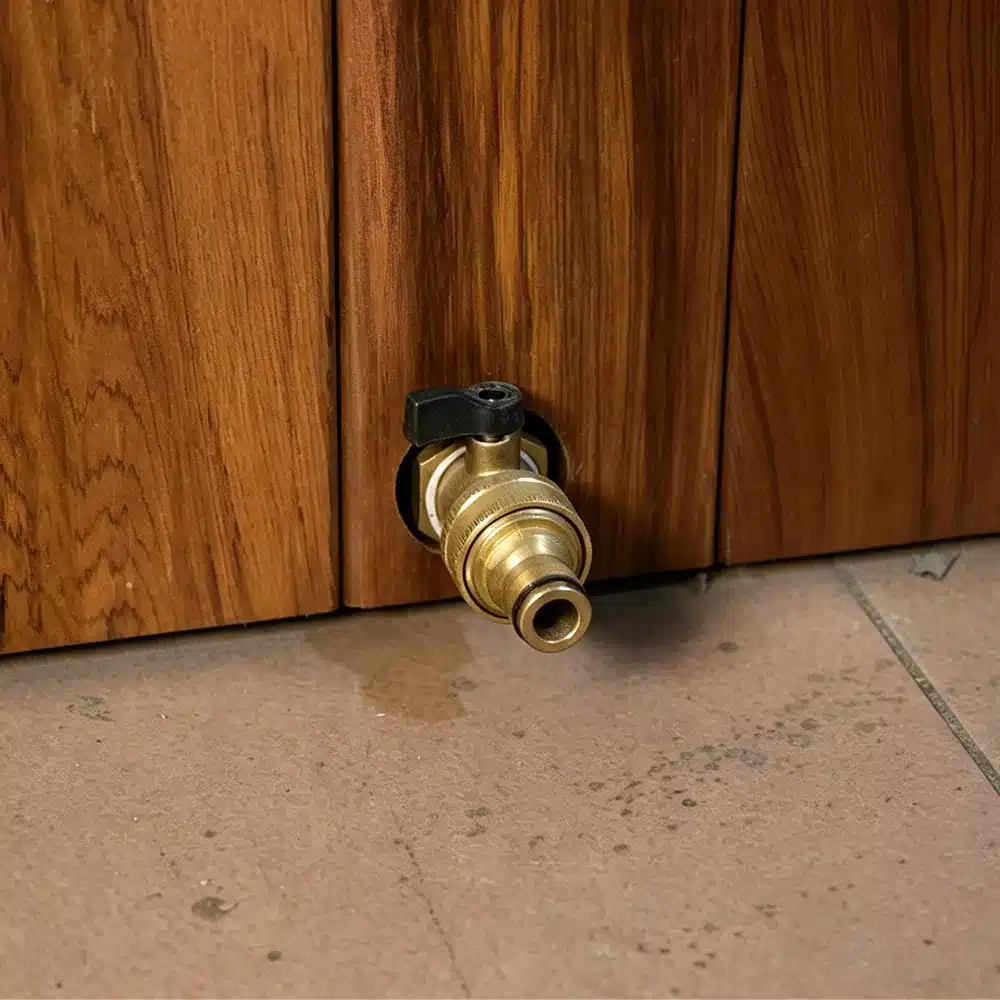
Factory TIG-welded 316 stainless steel bulkhead ports with sanitary threaded connections eliminate rubber gasket failure points.
Commercial Plumbing Engineering: Port Sizing, Flow Rates, and VGB Safety
Connecting a commercial cold plunge chiller to a heavy stainless steel basin requires specialized hydraulic planning. Drilling holes into a finished stainless steel tub in the field with a hole saw is difficult, damages heat-treated passivation, and introduces risk of leaks around rubber slip gaskets. Professional tubs feature factory-welded stainless bulkheads designed for high hydraulic throughput:
1. Port Sizing & Hydraulic Friction Loss
Residential DIY setups often bottleneck circulation through restrictive 1/2-inch or 3/4-inch garden hose fittings. A commercial 1 HP to 1.5 HP chiller pump requires an uninterrupted water flow rate of 18 to 32 gallons per minute (GPM) to maintain proper refrigerant evaporation velocity across the coaxial heat exchanger. To minimize dynamic friction head loss, tub inlet and suction ports must utilize 1-inch or 1.5-inch NPT male/female threaded stainless bulkheads, terminating in commercial sanitary camlock or union disconnects.
2. Dual-Suction VGB Anti-Entrapment Geometry
In public recovery studios, municipal health codes and the Virginia Graeme Baker (VGB) Pool and Spa Safety Act (outlined in federal Pool Safely compliance standards) require strict anti-entrapment compliance. If a single suction drain port pulls water at 25 GPM, a bather’s leg, back, or long hair can seal against the suction grate, creating strong vacuum entrapment. Commercial stainless plunge tubs incorporate dual hydraulic suction ports placed at least 3 feet apart on the lower tub wall, plumbed into a balanced hydraulic tee. If one suction port is blocked, water draws unhindered through the second port, instantly relieving vacuum pressure.
3. Low-Point Gravity Drainage & Sump Design
Complete water draining during sanitation purges is essential. Flat-bottom metal tubs without a sloped base retain half an inch of stale water, requiring staff to sponge out the basin manually. Industrial plunge tubs incorporate a cross-break slope (typically 1/4 inch per foot) pointing toward a dedicated recessed 1.5-inch stainless bottom drain equipped with a full-port stainless ball valve.
Sanitizer Protocols: Ozone, Hydrogen Peroxide, Chlorine, and Salt Boundaries
The single greatest operational hazard for a stainless steel cold plunge tub is incorrect water treatment chemistry. Stainless steel is not immune to chemical attack; it is specifically vulnerable to halide ions and low pH levels.
- The Trichlor Puck Trap (Strictly Prohibited): Never place standard pool chlorine tablets (trichloro-s-triazinetrione) inside a floating dispenser in a metal cold plunge tub. Trichlor pucks have an extremely acidic pH (roughly 2.8 to 3.0). As a floater sits stationary against the stainless tub wall, dense acidic chlorine concentrates locally, dissolving the chromium oxide layer and eating deep rust craters into 304 steel within weeks.
- Controlled Liquid Sodium Hypochlorite: If using chlorine, dose with diluted liquid sodium hypochlorite (plain unscented household bleach) or liquid pool shock. Maintain free chlorine strictly between 1.0 and 2.0 PPM, with pH maintained between 7.2 and 7.6.
- Ozone & Hydroxyl Radical Systems (Contractor Preferred): Corona discharge ozone injectors and UV-C germicidal chambers are the gold standard for stainless plunge systems. Dissolved ozone oxidizes bather oils and bacteria instantly without leaving corrosive salt residues. Maintain ozone residual below 0.05 mg/L to avoid off-gas degradation of rubber cover seals.
- Epsom Salt & Magnesium Sulfate Limits: High concentrations of magnesium sulfate or sea salt accelerate galvanic corrosion between stainless steel liners, brass temperature probes, and copper chiller fittings. If offering contrast saltwater therapy, specify 316L alloy throughout, install a dedicated sacrificial zinc anode inside the water loop, and bond the metal tub chassis to the electrical grounding conductor.
Comparing Cold Plunge Tub Materials for Commercial Lifecycle ROI
When engineering a multi-station recovery facility or evaluating commercial capital investments, review how stainless steel compares against composite acrylic and rotationally molded plastics across a five-year deployment horizon:
| Evaluation Metric | 304/316L Stainless Steel | Sanitary Cast Acrylic | Rotomolded Polyethylene (LLDPE) |
|---|---|---|---|
| Structural Durability | Outstanding: Zero flex, withstands 1,500+ lb dynamic loads indefinitely. | Very Good: Rigid fiberglass backing, but susceptible to impact cracking if dropped. | Moderate: Flexible walls bow under full water weight; scratches easily. |
| Surface Hygiene & Porosity | Completely Non-Porous: Resists biofilm adhesion; sanitized easily with wipes. | Non-Porous: Smooth glossy gelcoat resists algae and stains. | Micro-Porous: Textured plastic harbors biofilm; requires aggressive scrubbing. |
| Field Repairability | Surface scratches buff out with Scotch-Brite pads; deep gouges require re-passivation. | Excellent: Acrylic scratches can be wet-sanded and polished to high gloss on-site. | Very Difficult: Polyethylene gouges cannot be polished; heat welding leaves visible scars. |
| Chemical Tolerance | High for ozone/UV; sensitive to low pH (<7.0) and high chlorine (>3.0 PPM). | High: Tolerates pool chlorine, bromine, and salt without corrosion risk. | Immune to chemical corrosion; withstands high chlorine and salt. |
| Commercial Aesthetics & Prestige | Premium Luxury: Architectural look matching modern health clubs and spas. | Sleek & Contemporary: Traditional hot tub glossy look. | Utilitarian: Resembles industrial water storage or agricultural gear. |
To dive deeper into matching shell construction and external cabinetry to daily bather volumes, explore our technical comparison on cold plunge tub materials, or calculate structural joist load limits using our guide on cold plunge tub filled weight.
Factory-Direct Commercial Metal Plunge Tubs from OMNI Ice
At OMNI Ice, we engineer commercial-grade stainless steel plunge assemblies backed by precision CNC sheet laser cutting, precision argon TIG welding, and full-immersion chemical passivation. If your project requires a standalone stainless tank for custom architectural millwork or an integrated hybrid plunge cabinet clad in Canadian red cedar, our manufacturing lineup provides turnkey commercial hardware:
Featured Metal Plunge Tub Models
- WT-09 Metal Tub for Ice Baths (500L Plunge): Heavy-gauge 304 stainless steel basin wrapped in kiln-dried Canadian red cedar, featuring 40mm direct-spray polyurethane insulation, dual 1-inch NPT stainless ports, and integrated drain valve.
- WT-15 Rectangular Stainless Steel Commercial Plunge: Industrial full-metal welded tub engineered for varsity athletic centers, CrossFit boxes, and commercial recovery spas requiring continuous heavy bather traffic (for integrated gym comparisons, review our all in one ice bath for gym use guide).
- WT-04 Round Cedar & Stainless Cold Plunge Barrel: Space-efficient upright circular plunge barrel featuring a 304 stainless steel inner tank with ergonomic interior benching and marine-grade brass hardware.
For full facility plumbing plans, chiller pairing specifications, or custom OEM container wholesale pricing, view our complete OEM cold plunge equipment solutions or reach out directly to our engineering team through our direct commercial RFQ desk.
The Buyer Verification Checklist for Metal Cold Plunge Tubs
Before issuing a purchase order for a stainless steel plunge vessel, confirm these six technical specifications with your equipment supplier:
- Alloy Certification: Demand mill test certificates (MTC) verifying AISI 304 or 316L chemical composition (verifying chromium, nickel, and molybdenum content).
- Insulation Integrity: Confirm that closed-cell polyurethane foam is machine-sprayed directly onto the bare metal shell (minimum 35mm thickness, 40 kg/m³ density) with zero loose air pockets.
- Bulkhead Construction: Verify that water ports are factory TIG-welded stainless fittings with sanitary NPT or tri-clamp connections rather than drilled plastic thru-hull fittings.
- Hydraulic Safety: Require dual suction ports meeting VGB anti-entrapment spacing standards for commercial public installations.
- Passivation Documentation: Confirm that all weld seams have been chemically pickled and passivated according to ASTM A967 standards to prevent premature seam pitting.
- Structural Subframe: Ensure the tub floor sits on a welded structural frame that transfers dynamic water and bather mass evenly across your foundation.
When properly specified with certified metallurgy, continuous closed-cell foam insulation, and balanced hydraulic plumbing, an industrial metal plunge tub becomes the crown jewel of your recovery facility—delivering long-term structural reliability, effortless daily sanitization, and true ice-cold performance on every plunge.