When a morning class of twenty athletes steps off the training floor, a commercial recovery lounge does not have ninety minutes to wait while an undersized cooling unit struggles to pull 150 gallons of water back down from 58°F to 39°F. In high-turnover sports facilities and public wellness clubs, bather heat load is relentless: each person dumps roughly 1,200 to 1,500 BTU of body heat directly into the water within three minutes. Facility operators who attempt to cut startup costs by installing consumer-grade residential chillers face immediate complaints of lukewarm water, frozen evaporator coils, and burnt-out compressor contactors. Specifying an authentic commercial cold plunge chiller requires matching compressor horsepower, titanium heat exchanger surface area, and plant room air changes to peak-hour bather volume.
However, sizing and installing a high-capacity commercial cooling system requires navigating strict mechanical, hydraulic, and electrical realities. A commercial machine is not merely a residential unit with a larger metal sticker; it features continuous-duty rotary or scroll compressors, oversized titanium coaxial heat exchangers, multi-stage water filtration, and automated ozone sanitation. If you select the wrong horsepower or neglect airflow heat rejection clearances in an enclosed plant room, head pressure spikes will trip safety switches during peak midday rushes. Here is the operational engineering blueprint facility managers, contractors, and spa directors need to evaluate compressor pull-down speed, continuous electrical duty cycles, water sanitation throughput, and commercial ROI.
Commercial Duty Cycles: Why Residential Chillers Fail in Gyms
A true commercial cold plunge chiller requires a continuous-duty scroll or industrial rotary compressor rated for 1.0 HP to 2.0 HP, a pure titanium coaxial evaporator impervious to chloride corrosion, and high-volume hydraulic flow rates of 18 to 32 GPM. This ensures water temperatures hold rock-solid between 37°F and 39°F under rapid 10-to-15-minute consecutive bather turnover.
The fundamental dividing line between residential and commercial refrigeration is duty cycle percentage. A residential plunge chiller is engineered for an intermittent duty cycle: it runs for 60 to 90 minutes to cool water down initially, and then cycles on for only 15 minutes every two hours to maintain setpoint while one person plunges once per day. In contrast, a commercial cold plunge chiller operates under continuous high-load thermal stress:
- Continuous Compressor Cycling: In a commercial health club where bathers cycle through every ten minutes, the compressor runs at 80% to 95% continuous duty during operating hours. Residential-grade reciprocating compressors overheat under continuous load, breaking down internal synthetic lubrication oil and causing premature piston seizure.
- High-Volume Heat Exchanger Design: Commercial machines utilize oversized titanium coaxial coiled-tube heat exchangers. The large surface area allows rapid thermal conduction without creating severe hydraulic pressure drop across the water circuit, keeping water flow rates above 20 gallons per minute.
- Industrial Rotary and Scroll Compressors: Heavy-duty units utilize hermetic scroll or commercial rotary compressors with internal thermal overload protection, crankcase oil heaters, and high-temperature motor windings engineered for 50,000+ hour operating life expectancies.
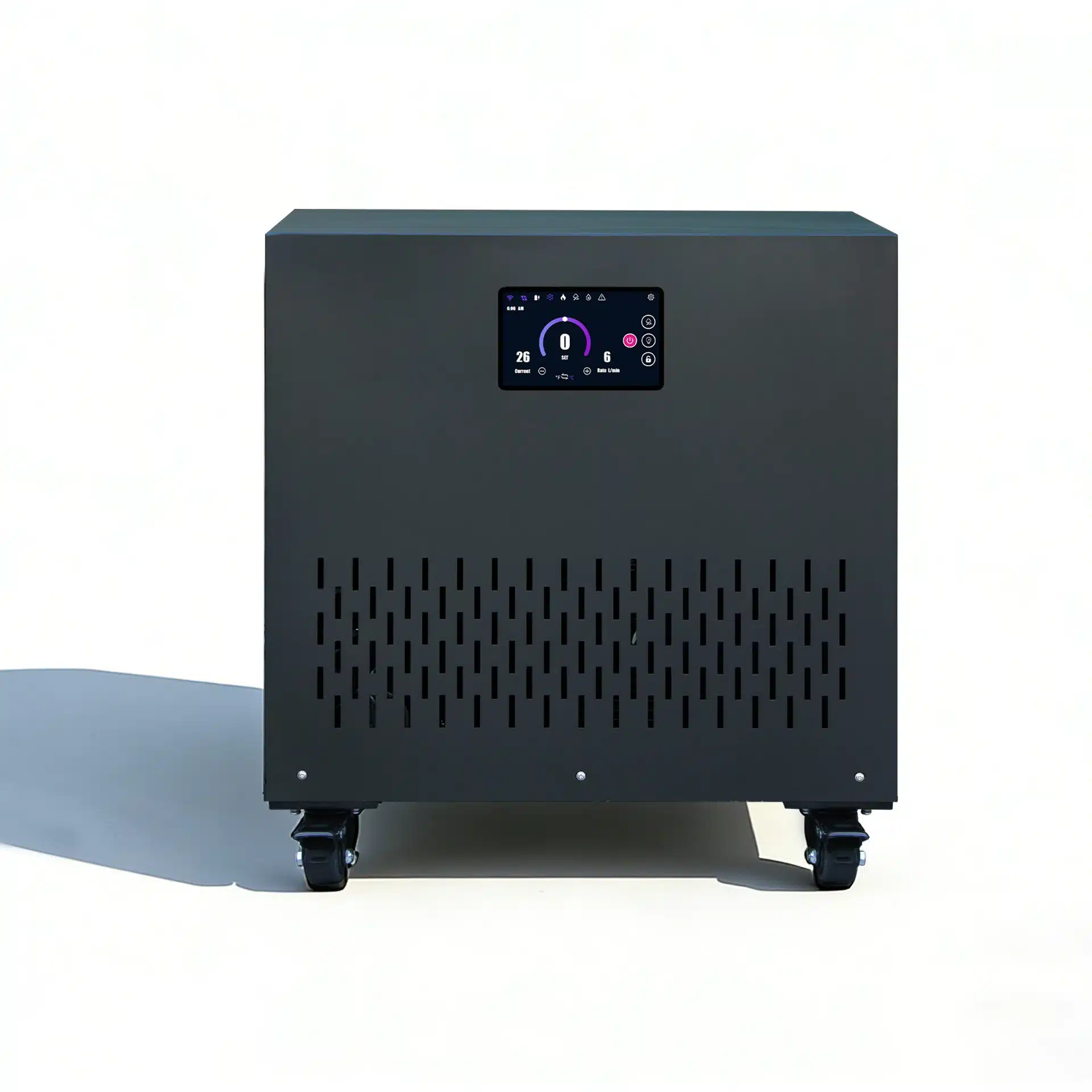
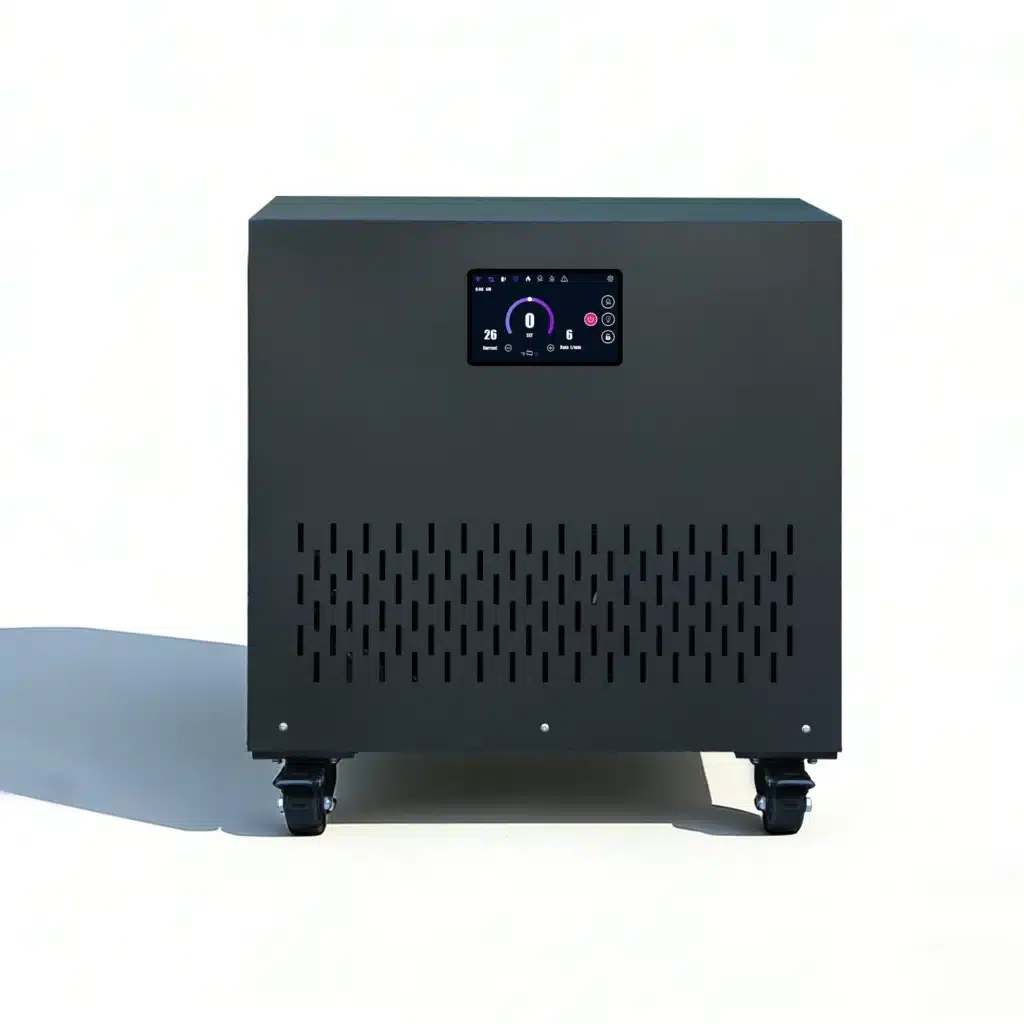
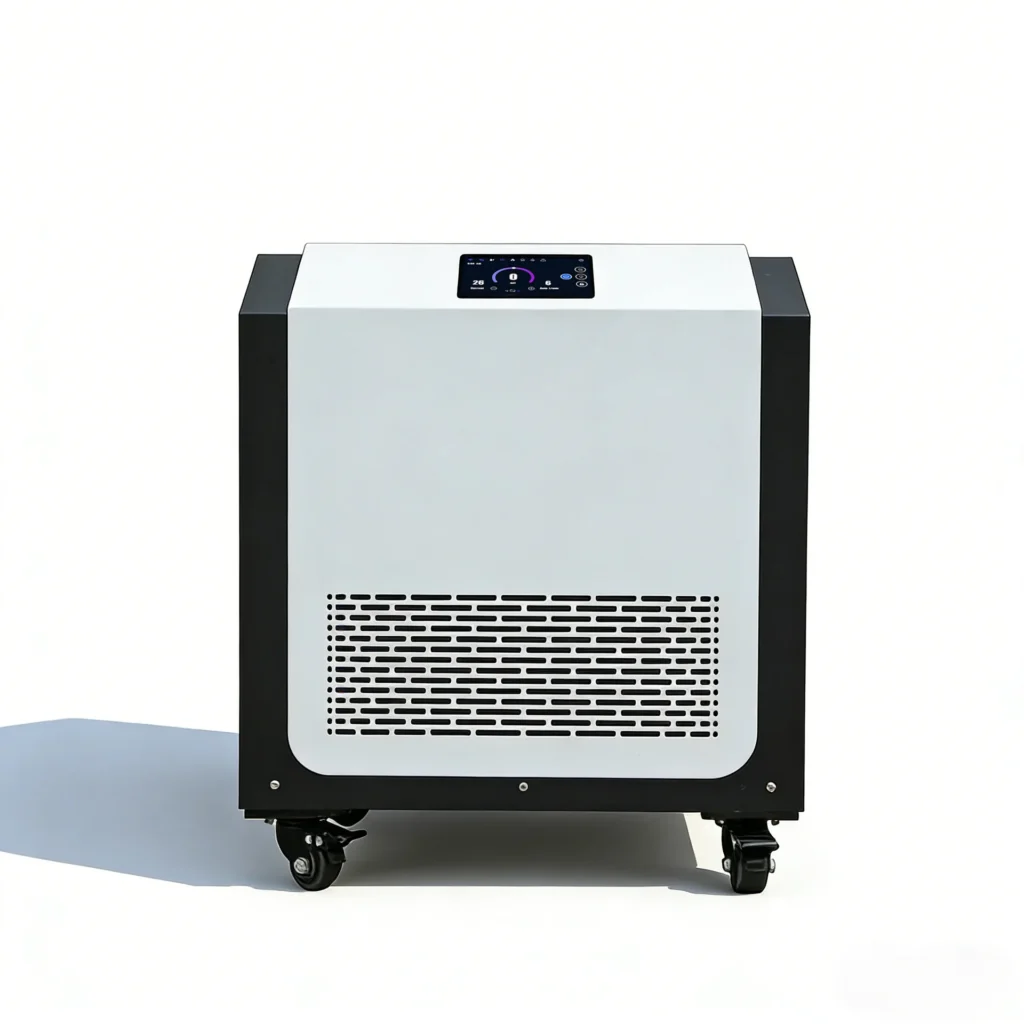
A heavy-duty 1.5HP commercial cold plunge chiller featuring industrial powder-coated galvanized steel casing, front exhaust ventilation, and integrated digital controls.
Pull-Down Speed & Bather Heat Load Calculations
How much cooling power does your facility actually require? Sizing a commercial refrigeration system requires calculating dynamic human bather thermal gain rather than static ambient tub heat loss.
A typical adult athlete entering an ice bath brings roughly 1,200 to 1,500 BTU of residual human body heat into the water over a 3-minute immersion. In a commercial facility serving 30 to 50 daily bathers, the cumulative thermal injection can overwhelm an undersized machine. Consider how different horsepower ratings perform across high-volume commercial scenarios:
| Chiller Power Rating | Nominal Cooling Capacity | Initial Pull-Down (120 Gal to 39°F) | Hourly Bather Capacity | Recommended Commercial Application |
|---|---|---|---|---|
| 0.8 HP Commercial | ~ 7,500 – 8,500 BTU/hr | 4.5 to 5.5 hours | 2 to 4 bathers/hr | Personal training suites, boutique PT clinics (up to 15 users/day) |
| 1.0 HP Heavy-Duty | ~ 10,000 – 11,500 BTU/hr | 3.0 to 3.8 hours | 5 to 8 bathers/hr | CrossFit boxes, wellness spas, athletic clubs (20–40 users/day) |
| 1.5 HP to 2.0 HP Direct-Cool | ~ 14,000 – 19,000 BTU/hr | 1.8 to 2.5 hours | 10 to 15 bathers/hr | Varsity sports centers, high-turnover public bathhouses (50+ users/day) |
In high-throughput facilities, a 1.5 HP unit restores 39°F water setpoints in under 10 minutes following a bather exit, preventing cumulative temperature creep (for complete baseline auditing procedures, consult our engineering guide on a cold plunge chiller cooling performance test). For facilities installing integrated all-in-one hardware where the chiller is housed inside a finished cabinet, see our engineering guide on an all in one ice bath for gym use.
Plant Room Heat Rejection & Airflow Ventilation Engineering
Refrigeration equipment does not destroy heat; it mechanically extracts heat from the tub water and rejects it into ambient air. A 1.5 HP compressor running at full capacity discharges up to 15,000 BTU/hr of hot air through its condenser fan. If this unit is installed inside an unventilated mechanical closet, basement storage room, or tight equipment enclosure, failure is inevitable.
Commercial contractors follow three mechanical layout guidelines for indoor plant rooms:
- Minimum Intake & Exhaust Clearances: Maintain at least 18 inches of unobstructed clearance along the condenser air intake side and 30 to 36 inches in front of the exhaust fan. Choking airflow causes high static backpressure, reducing condenser heat exchange and triggering high-pressure refrigerant lockouts. For external placement parameters, review our report on an outdoor chiller unit for cold plunge setups.
- Dedicated Mechanical Air Changes: The mechanical room housing the chiller requires active mechanical ventilation providing at least 10 to 15 air changes per hour (ACH). If ambient room temperatures exceed 100°F (38°C), compressor electrical efficiency drops sharply, increasing kWh consumption by 30%.
- Ducted Condenser Discharge: In tight enclosed wellness suites, install an exterior duct adapter boot over the chiller fan cowl, venting hot discharge air directly through an exterior wall louver or facility exhaust plenum.
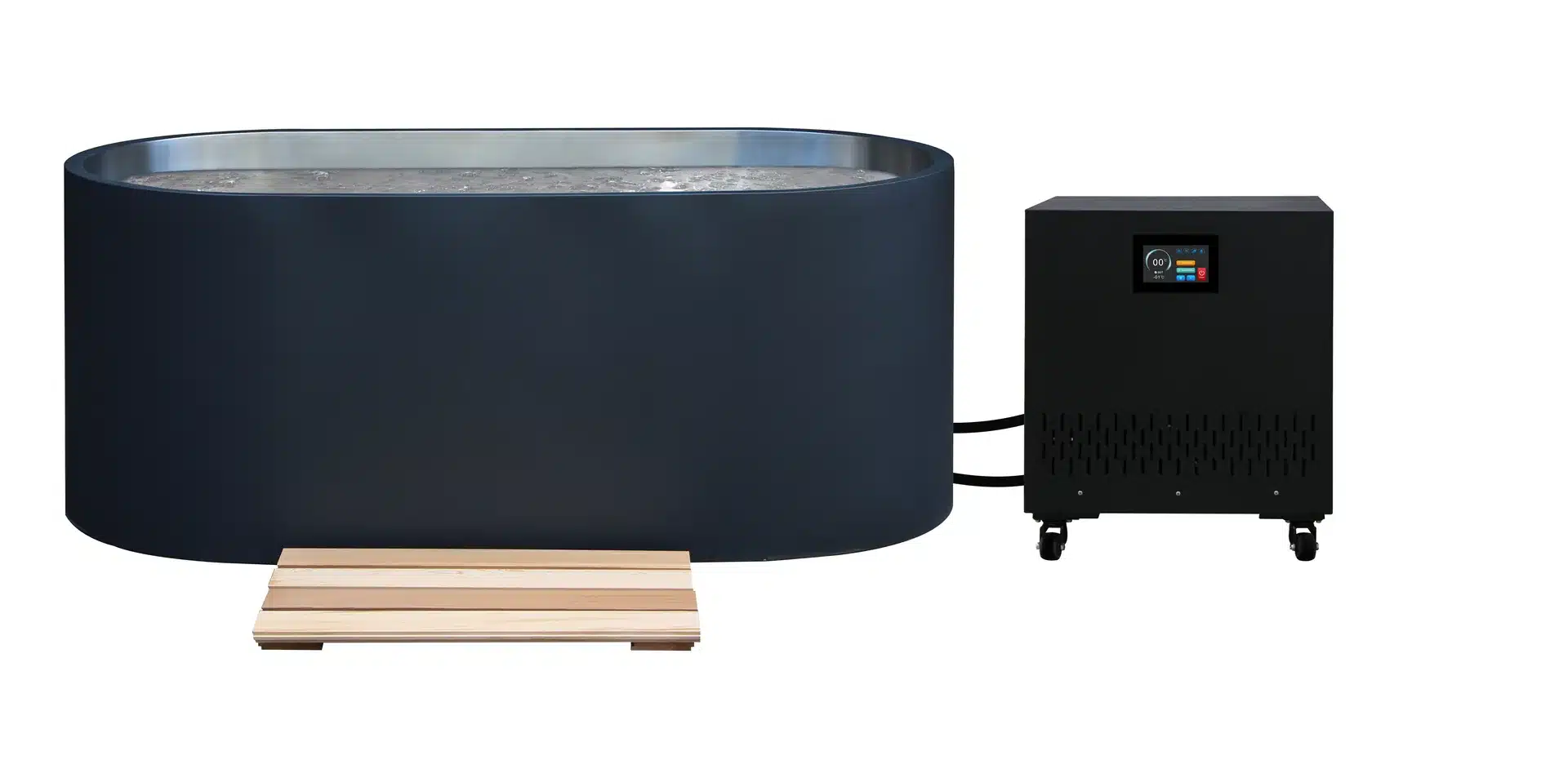
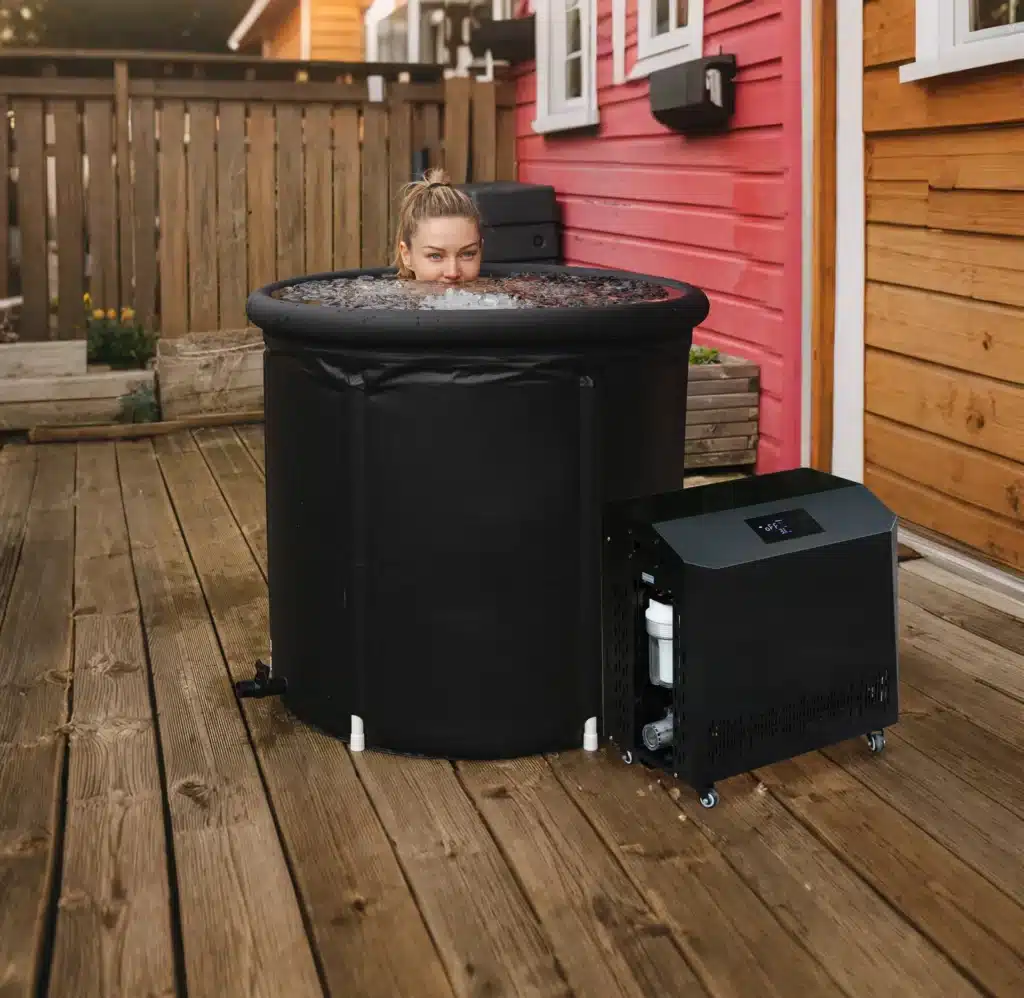
A commercial 1.5HP chiller paired with an insulated stainless steel cold plunge tub, delivering fast thermal recovery and automated sanitation.
Multi-Stage Water Sanitation: Meeting Public Health Department Standards
In municipal commercial health codes, public ice baths are regulated under semi-public commercial spa standards. When dozens of sweating athletes enter cold water daily, biological contaminants, dead skin cells, hair, and body oils accumulate rapidly. If water hygiene fails, health departments will mandate immediate facility closure.
Industrial commercial chillers incorporate high-capacity, multi-barrier sanitation circuits directly within the water loop:
- High-Surface-Area Pleated Sediment Filtration: Rather than small 5-inch disposable filter cartridges, commercial units utilize 20-micron or 50-micron pleated sediment filters with at least 25 to 50 square feet of media area. Filter housings feature pressure differential gauges that alert facility staff when cartridge cleaning is required.
- Automated Corona Discharge Ozone: Continuous ozone (O3) micro-bubble injection through a Mazzei venturi injector oxidizes dissolved organic compounds, eliminates bather odors, and clarifies water without leaving harsh chemical residuals.
- Germicidal UV-C Sterilization: Passing circulating water through an inline 254-nanometer UV-C quartz chamber disrupts the DNA of waterborne pathogens and bacteria on contact, providing robust microbiological safety under heavy bather traffic.
- VGB Anti-Entrapment Compliance: Under the federal Virginia Graeme Baker Pool & Spa Safety Act enforced by the CPSC Pool Safely standard, commercial suction lines must incorporate dual anti-entrapment suction outlets to prevent suction body entrapment.
For complete commercial facility disinfection guidelines and microbiological testing standards, refer to official CDC Healthy Swimming operating practices.
Electrical Service & Power Infrastructure for Commercial Chillers
High-capacity refrigeration systems demand dedicated, code-compliant electrical distribution. Commercial chillers draw substantial inductive startup current when the compressor rotor engages:
- Dedicated Branch Circuits: A 1.0 HP commercial chiller requires a dedicated 120V / 20A branch circuit. A heavy-duty 1.5 HP to 2.0 HP commercial unit requires a dedicated 240V / 15A to 20A double-pole circuit. Under National Electrical Code continuous-load rules, equipment running continuously for over three hours must not exceed 80% of branch breaker capacity.
- Industrial Class-A GFCI Protection: Commercial wet rooms require Ground Fault Circuit Interrupter (GFCI) breakers that disconnect electrical power within milliseconds if a ground fault leakage current exceeds 4 to 6 milliamps.
- Equipotential Bonding Conductors: All exposed metallic equipment—including stainless steel tub basins, chiller frames, and structural subframes—must be electrically bonded using solid 8 AWG bare copper wire to the facility grounding grid to eliminate stray voltage differentials.
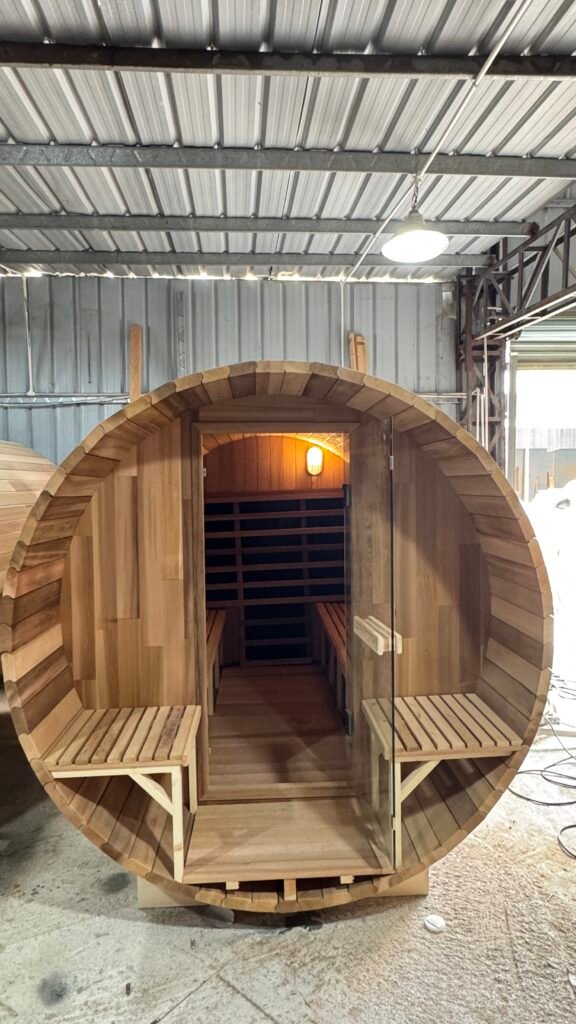
For facilities pairing commercial chillers with multi-person hot rooms, review our coordinated electrical and layout guide on a sauna and cold plunge for gym setup.
Hydraulic Pipe Sizing & Circulation Velocity Rules
A commercial refrigeration system cannot cool water it cannot move. One of the most common installation blunders in commercial recovery facilities is bottlenecking a high-capacity 1.5 HP chiller through restrictive 1/2-inch or 3/4-inch flexible garden hoses. When pipe diameter is undersized, hydraulic friction head loss spikes exponentially, slashing circulation flow rate from 25 GPM down to 8 GPM.
To maintain proper Reynolds numbers and boundary layer heat transfer across titanium evaporator coils, commercial builders follow three hydraulic sizing principles:
- Minimum 1-Inch to 1.5-Inch Internal Diameter (ID): Connecting plumbing lines between the chiller and tub must be at least 1-inch to 1.5-inch reinforced spiral-wire PVC hose or Schedule 40/80 rigid PVC pipe. This keeps dynamic fluid friction loss below 4 PSI per 50 feet of pipe run.
- External Water Pump Placement: While residential chillers incorporate small internal aquarium-style pumps, commercial installations benefit from external, high-head industrial centrifugal pumps equipped with commercial mechanical face seals capable of continuous 24/7 operation.
- Full-Port Ball Valves & Union Disconnects: Always install commercial true-union ball valves on both suction and discharge lines immediately adjacent to the chiller. This allows maintenance staff to isolate and disconnect the chilling machine for seasonal maintenance without draining hundreds of gallons from the plunge basin.
Automated Water Temperature Control & Telemetry Monitoring
In a commercial fitness facility, staff members do not have time to manually test water temperatures with a handheld floating thermometer every hour. Commercial chillers incorporate digital electronic expansion valves (EEV) and precision industrial microcontrollers that provide continuous telemetry:
- Dual NTC Temperature Probes: Separate temperature sensors placed at the evaporator inlet and outlet monitor real-time thermal pull-down performance, adjusting electronic refrigerant metering dynamically as bather heat load fluctuates.
- Keypad Lockout Security: Digital control touchscreens include PIN-protected menu locks preventing curious gym members from turning setpoints up to hot-tub temperatures or down below freezing thresholds.
- Remote App & BMS Integration: Commercial-grade controllers feature Wi-Fi or RS485 Modbus connectivity, allowing facility managers to monitor water temperature, schedule pre-opening chill cycles, and receive automated diagnostic fault alerts directly on mobile devices before opening hours.
Commercial ROI: Monetization & Payback Analysis
Investing in a commercial chilling system is an operational capital expenditure that yields measurable commercial returns. Operators deploy two proven business models to monetize cold plunge amenities:
- Premium Tier Membership Model: Adding an “All-Access Recovery” membership tier priced at $40 to $65 per month above base gym membership dues. With 45 enrolled members, the plunge amenity generates $2,250 in monthly recurring revenue ($27,000 annually), amortizing equipment acquisition within 4 to 6 months.
- Dedicated Contrast Therapy Bookings: Selling 30-minute private recovery sessions (paired with a commercial sauna) at $25 to $40 per session. Booking just 4 appointments daily yields $3,000 to $4,800 in high-margin monthly service revenue.
Factory-Direct Commercial Cold Plunge Chillers from OMNI Ice
At OMNI Ice, we manufacture commercial cold plunge refrigeration systems engineered specifically for wellness centers, varsity athletic facilities, and commercial gym franchises worldwide. As a source manufacturer, we eliminate distributor markups and supply turnkey commercial equipment backed by complete engineering documentation:
Featured Commercial Chilling Platforms
- OMNI Deep Freeze 1.0HP & 1.5HP Commercial Chillers: High-capacity commercial recovery machinery engineered with oversized titanium heat exchangers, 20-micron filtration, automated ozone, and dual cooling/heating capability.
- ProValue CH-08 0.8HP Ice Bath Chiller: Compact exterior-rated cooling unit engineered for boutique recovery studios and private training suites.
- WT-11 Large Ice Bath Tub (304 Stainless Direct-Cool System): An industrial-grade commercial plunge basin engineered with internal refrigeration cooling walls, eliminating exterior hose clutter entirely.
To examine full facility plumbing schematics, custom skid engineering, or containerload wholesale pricing, explore our complete OEM cold plunge equipment solutions or connect directly with our engineering team through our commercial equipment RFQ desk.
The Facility Director Procurement Checklist
Before issuing a commercial purchase order for your facility chilling system, verify these critical engineering parameters with your equipment manufacturer:
- Compressor Duty Rating: Verify that the compressor is an industrial rotary or scroll design rated for continuous duty cycling under commercial bather traffic.
- Heat Exchanger Metallurgy: Confirm the evaporator is constructed from 100% pure titanium coiled tubing to resist corrosion from dissolved chlorine, ozone, and sanitizers.
- Dedicated Electrical Drops: Ensure dedicated 120V/20A or 240V/20A GFCI-protected circuits are pulled directly to the equipment location prior to freight delivery.
- Airflow Clearances Verified: Confirm at least 18 inches of intake clearance and 30+ inches of exhaust clearance in the mechanical plant room to prevent thermal recirculation.
- Sanitation Approvals: Verify that the multi-barrier filtration, ozone, and UV systems comply with municipal public health spa codes.
When properly engineered and installed, a commercial cold plunge chilling system delivers relentless ice-cold performance, protects facility infrastructure, and provides a powerful revenue-generating recovery amenity that keeps athletes performing at their peak.