In high-end boutique wellness clubs, luxury Nordic spas, and private residential estates, natural wood remains the most visually striking choice for cold plunge design. The warm grain of Western Red Cedar offers an organic warmth that cold, sterile plastics and bare sheet metal cannot match. However, commercial wellness directors and residential buyers often discover that maintaining a wooden water-holding vessel is far more complex than caring for an indoor acrylic hot tub. Specifying a dedicated cedar cold plunge tub requires understanding how organic wood cells interact with constant cold water saturation, sanitizer chemistry, and seasonal moisture cycling.
When unlined cedar holds water continuously, the wood staves swell to form a watertight seal. But if that water is neglected, or if an operator treats cedar with the wrong chemical sanitizers, the wood fibers quickly degrade. High doses of chlorine bleach cedar of its natural protective oils, turning the timber mushy and gray, while poor water circulation allows black mold and slippery algae to take root in microscopic stave joints. Furthermore, hybrid tubs featuring internal stainless steel liners with external cedar cladding face hidden condensation traps if the insulation boundary is poorly engineered. Here is the operational maintenance and engineering guide facility directors and contractors need to prevent wood rot, eliminate seam leaks, and maintain commercial hygiene across years of heavy bather traffic.
Cedar Wood Science: Thujaplicin Chemistry vs. Chemical Sanitizers
To maintain a cedar plunge vessel properly, facility operators must understand why Western Red Cedar (Thuja plicata) resists decay in the first place. Old-growth and mature second-growth cedar contains natural extractive compounds known as thujaplicins and polyphenols. These water-soluble organic compounds act as natural fungicides and antimicrobial agents, preventing wood rot fungi from breaking down the cellulose and lignin structure of the wood cells.
However, modern water sanitation protocols can directly destroy this natural defense mechanism:
- The Chlorine Bleaching Trap: Traditional swimming pool chlorine tablets (trichlor) and heavy sodium hypochlorite dosing oxidize and strip away natural thujaplicins from the wood surface. Within weeks, the rich reddish-brown wood turns dull, weathered silver-gray. More critically, free chlorine levels above 3.0 PPM attack the lignin binder holding wood fibers together, leaving the inner surface soft, fibrous, and vulnerable to fungal penetration.
- Ozone and UV-C Sanitation (The Gold Standard): For wood-contact vessels, automated corona discharge ozone injection paired with an inline 254nm germicidal UV-C sterilizer provides optimal bather protection without damaging wood integrity. Dissolved ozone microbubbles destroy bacteria on contact and rapidly revert to dissolved oxygen, leaving zero corrosive chemical residues to leach wood tannins.
- Hydrogen Peroxide Maintenance: Commercial operators managing timber plunge pools frequently use stabilized hydrogen peroxide (H2O2) at 30 to 50 PPM as a gentle, non-chlorine oxidizer. Hydrogen peroxide breaks down organic bather waste without degrading timber cell walls or producing offensive chloramine fumes in enclosed spa suites.
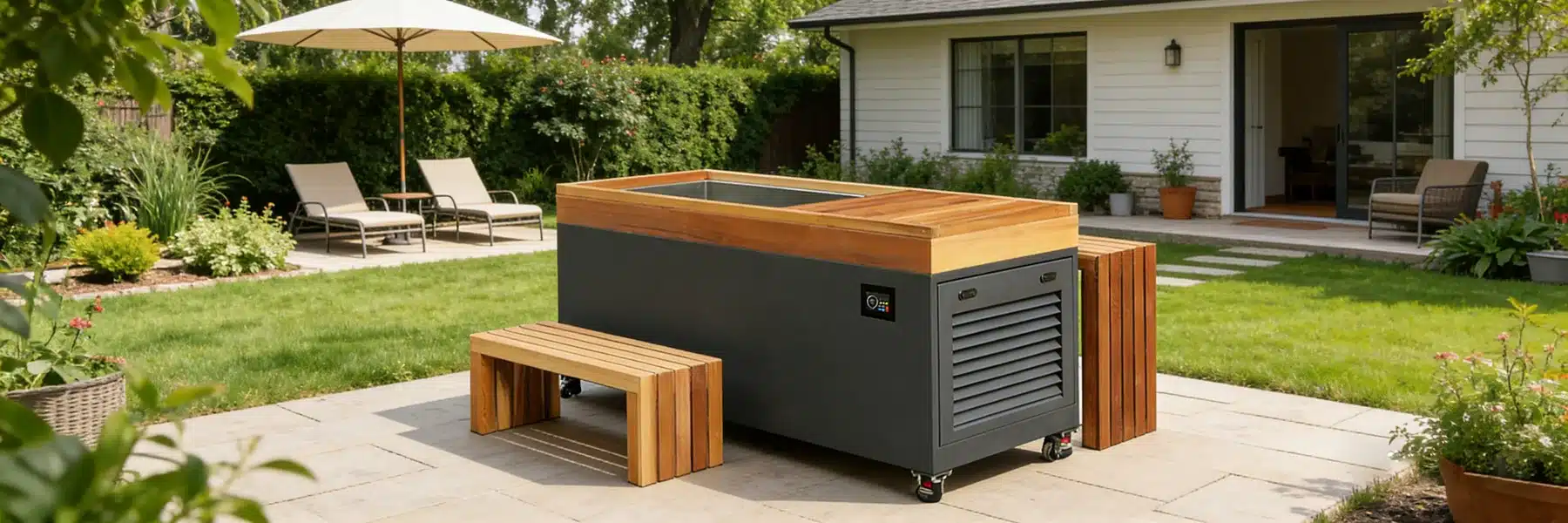
A premium Western Red Cedar cold plunge tub featuring precision-milled timber exterior paneling, providing architectural aesthetics and natural thermal insulation.
Vessel Architecture: Traditional All-Wood Staves vs. Hybrid Stainless Liners
In commercial spa and athletic training procurement, buyers must choose between two fundamentally different engineering architectures when specifying a cedar cold plunge tub: a traditional coopered solid-wood barrel, or a modern hybrid vessel combining a welded stainless steel liner with an exterior cedar cabinet.
Each construction format dictates distinct operational maintenance protocols:
| Construction Architecture | Water Contact Layer | Leak Prevention Mechanism | Commercial Maintenance Duty |
|---|---|---|---|
| Solid Coopered Stave Barrel | Raw Western Red Cedar staves | Natural wood swelling held under tension by 304 stainless steel exterior bands. | High: Must stay filled with water 24/7 to prevent timber drying and stave shrinkage. |
| Hybrid Stainless Liner with Cedar Cladding | Welded 304/316L Stainless Steel | 100% TIG-welded watertight metal basin; zero reliance on wood swelling. | Low to Moderate: Can be drained, scrubbed, or left empty indefinitely without leak risk. |
| Integrated All-in-One Cedar Cabinet | Stainless steel with closed-cell PU foam | Welded metal liner with internal equipment bay housing chiller and pumps. | Commercial Optimized: Exterior wood stays dry; internal plumbing is completely protected. |
For commercial facilities hosting high daily bather volumes, hybrid construction is overwhelmingly preferred. A welded stainless liner eliminates the risk of joint weeping, withstands aggressive commercial wipe-down sanitizers, and allows staff to drain and refill the tub rapidly without timber shrinkage. To review structural metal liner specifications, consult our engineering guide on metal tubs for ice baths.
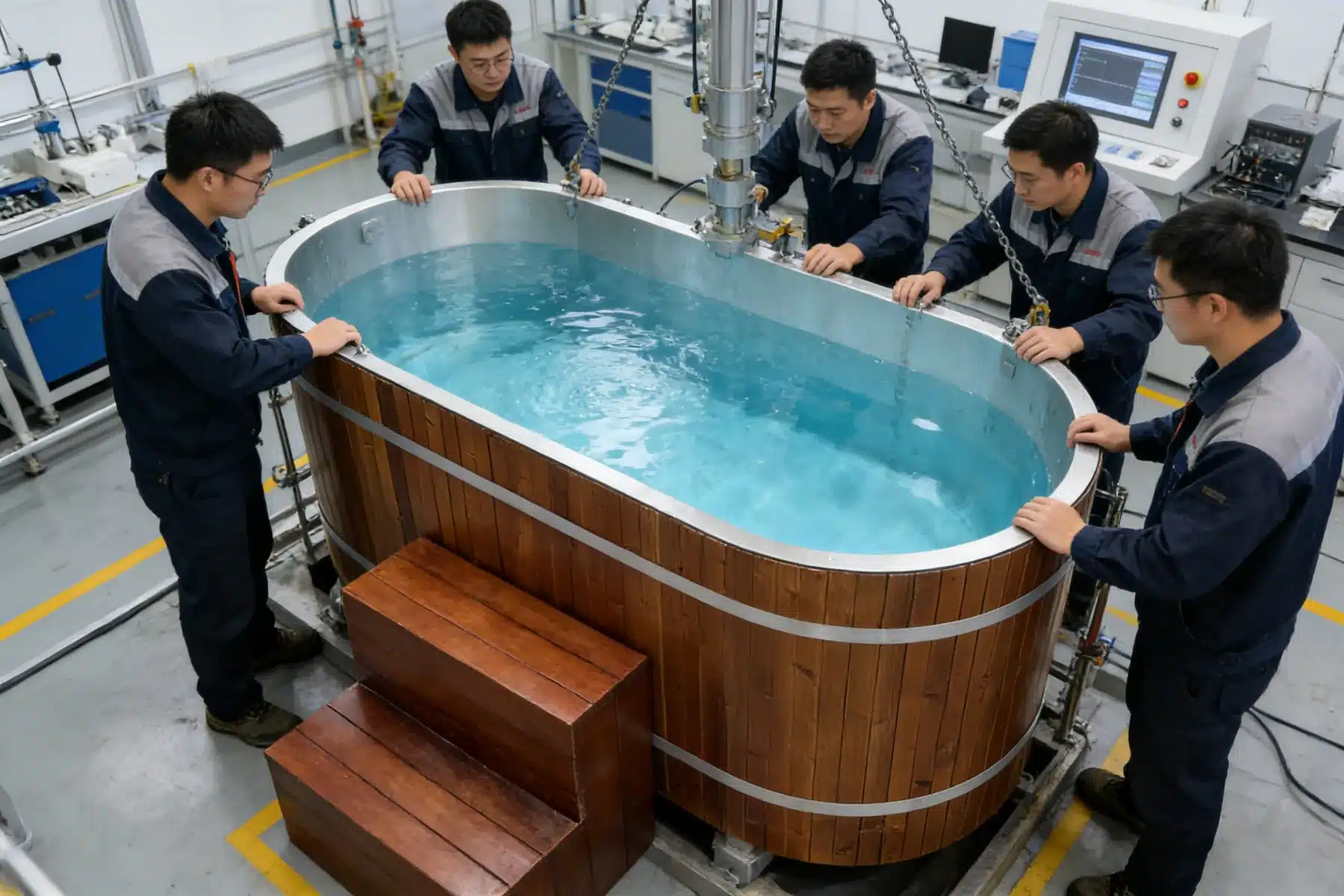
Factory assembly inspection of hybrid plunge tubs, verifying precision fit between internal stainless liners and exterior cedar cladding panels.
Preventing Wood Rot: Managing the Internal Condensation Boundary
In hybrid cold plunge tubs where a cold stainless steel liner sits inside an exterior cedar cabinet, a major hidden failure mode is interstitial condensation. When the tub water chills down to 38°F, the metal liner becomes ice-cold. If ambient air inside the cabinet contains humidity, water vapor condenses against the outside of the metal liner, dripping onto interior wood framing and promoting hidden rot.
Commercial equipment builders eliminate this thermal condensation bridge through three manufacturing controls:
- Direct-Spray Closed-Cell Polyurethane Foam: The exterior of the metal liner must be coated with a 35mm to 50mm jacket of high-density (40 kg/m³) closed-cell polyurethane foam. Because the foam bonds directly to the sandblasted steel substrate with zero air gaps, ambient air never contacts the 38°F metal, completely preventing sweat formation inside the cabinet.
- Cabinet Cavity Ventilation: The exterior cedar cladding must include small, screened convective breather slots near the top and bottom of the cabinet. This allows fresh air circulation to evaporate any incidental splash water that slips behind the timber fascia.
- Raised Equipment Baseplate: The structural subframe must lift the bottom edge of the cedar boards at least 1.5 to 2 inches off the ground. Wood staves that sit directly on wet concrete patio pavers will wick moisture upward through end-grain capillaries, rotting the lower 3 inches of the cabinet within two seasons.
Algae and Biofilm Elimination in Commercial Spas
Cold water (under 45°F) slows bacterial replication significantly compared to warm hot tubs. However, psychrophilic bacteria and cold-tolerant green algae can still form microscopic biofilms along timber joints, silicone gaskets, and plumbing fittings if circulation is stagnant.
Commercial spa directors enforce a four-step hygiene protocol to keep cedar plunge water crystal clear:
- Continuous 24/7 Water Circulation: Never turn the water circulation pump off when bathers are using the tub daily. Flowing water prevents stagnant dead zones where biofilm attaches to wood grain. The circulation pump should achieve a complete water turnover every 12 to 15 minutes.
- Bather Pre-Rinse Enforcement: Bathers exiting saunas or intense workouts carry body oils, dead skin cells, and sweat directly into the tub. Enforcing a mandatory 30-second warm-water shower prior to plunging cuts organic water load by over 80%. For facility layout spacing, review our guide on planning a sauna and cold plunge for gym setup.
- Weekly Surface Wipe-Downs: Once a week, wipe down the waterline and timber surfaces using a soft microfiber cloth and a mild citric acid or diluted hydrogen peroxide solution. Avoid stiff wire brushes that gouge cedar wood grain and create microscopic crevices for algae colonization.
- Filter Cartridge Rotation: Inspect the 20-micron pleated sediment filter weekly. Rinse trapped debris with clean tap water and soak cartridges in an enzyme filter cleaner monthly to dissolve body oils.
For official commercial water disinfection and public spa compliance regulations, reference the CDC Healthy Swimming operating practices.
Timber Sourcing: Clear Vertical Grain vs. Knotty Grade
When specifying timber for a water-holding basin or exterior equipment cabinet, not all cedar boards perform equally. Lumber mills grade Western Red Cedar into several architectural categories, and selecting the wrong grade for a wet application leads to premature timber failure.
Facility directors should understand the physical differences between two common wood grades:
- Clear Vertical Grain (CVG) Cedar: Cut perpendicular to the annual tree growth rings, creating uniform parallel grain lines running the full length of each board. Vertical grain wood expands and contracts evenly in response to humidity shifts, minimizing warping, cupping, or checking. CVG boards contain zero knots, eliminating weak points where water penetrates deep into end-grain fibers.
- Knotty / Flat-Sawn Cedar: Cut parallel to growth rings, displaying swirling grain patterns and dark branch knots. In a cold plunge tub, dark knots pose two severe engineering problems: knots shrink at a different rate than surrounding timber, causing small radial cracks where water leaks through; and knots can loosen and weep pitch over time. Knotty cedar is acceptable for garden fences, but water-retaining plunge vessels require clear vertical grain boards.
Water Drainage & Sump Basin Engineering for Timber Tubs
Proper drainage plumbing is essential for preserving the lifespan of a wooden cold plunge. Water that pools permanently in bottom corners promotes anaerobic bacterial growth and rots floor staves from the inside out.
Commercial-grade timber plunge tubs incorporate thoughtful plumbing geometry:
- Sloped Bottom Floor Profiling: Rather than a flat, dead-level floor that holds standing water puddles, factory-milled tubs incorporate a gentle slope toward a central or corner sump drain, ensuring 100% gravity evacuation during sanitation purges.
- Stainless Steel Sanitary Bulkheads: Through-hull drain fittings must be constructed from marine-grade 304 or 316 stainless steel with wide silicone compression gaskets. Plastic or brass fittings can crack under thermal cycling or react chemically with water sanitizers, staining adjacent timber staves with dark metallic oxidation rings.
- Full-Port Low-Point Drain Valves: Equip the main drain line with a 1.5-inch full-port stainless ball valve. In high-turnover athletic recovery centers, this allows maintenance crews to dump 120 gallons of water in under six minutes, speeding up weekly water refresh cycles.
Exterior Weathering: UV Protection and Stave Tension Management
Outdoor cedar cold plunge tubs face intense solar ultraviolet radiation and seasonal weather changes. Left untreated outdoors, sunlight breaks down lignin on the wood surface, transforming rich cedar honey tones into a rustic silver-gray patina.
Operators managing exterior aesthetics follow two seasonal maintenance procedures:
- Non-Toxic Penetrating Oil Finish: If you wish to preserve the vibrant amber-red hue of natural Western Red Cedar, apply a breathable, non-film-forming penetrating oil (such as clear tung oil or food-grade mineral oil) to the exterior cabinet wood once annually. Never apply thick polyurethanes, varnishes, or epoxy paint to exterior cedar staves; these surface coatings trap internal wood moisture, causing blistering, peeling, and rot beneath the plastic film.
- Stainless Band Tensioning (For Solid Wood Barrels): On coopered solid-wood tubs without internal metal liners, stainless steel tension bands expand and contract with the wood. In hot, dry summer periods, timber loses moisture and shrinks, requiring half a turn of tightening on the band bolts to prevent stave weeping. In wet rainy seasons, staves swell and bands must be loosened slightly to avoid crushing wood fibers.
For installations in commercial fitness clubs where integrated equipment cabinets eliminate exposed exterior hoses, see our analysis on an all in one ice bath for gym use.
Factory-Direct Cedar Cold Plunge Systems from OMNI Ice
At OMNI Ice, we manufacture precision-engineered cedar cold plunge tubs for commercial spas, luxury recovery studios, and boutique fitness resorts worldwide. Backed by CNC precision timber milling and sanitary stainless steel welding, our products provide turnkey commercial durability without distributor markups:
Featured Cedar Cold Plunge Equipment
- WT-13 Cedar Cold Plunge Tub with Built-In 1.0 HP Chiller: An integrated commercial hybrid plunge tub combining clear Canadian red cedar cabinetry, a heavy-gauge 304 stainless steel basin, and an enclosed high-flow chilling unit.
- WT-09 Metal Tub for Ice Baths (500L Plunge): A high-capacity 500-liter recovery basin featuring a welded stainless steel interior lined with dense PU foam and clad in kiln-dried red cedar.
- WT-04 Round Cedar & Stainless Cold Plunge Barrel: A space-efficient circular hybrid plunge barrel with an ergonomic interior seat and exterior cedar staves.
To examine full architectural layouts, container wholesale pricing, or custom OEM branding options, explore our OEM cold plunge equipment solutions or connect directly with our engineering team through our commercial equipment RFQ desk.
The Facility Director Maintenance Checklist for Cedar Tubs
Before commissioning your cedar cold plunge installation, establish this standard operating procedure with your facility team:
- Sanitizer Selection: Use automated ozone and UV-C as primary sanitizers; avoid harsh trichlor chlorine tablets that leach natural wood tannins.
- Closed-Cell Foam Inspection: On hybrid metal-cedar units, verify that continuous polyurethane foam isolates the cold liner from the timber frame.
- Base Height: Ensure the tub sits on an raised pad with rubber anti-vibration risers to prevent bottom staves from absorbing standing ground puddles.
- Bather Hygiene Enforcement: Enforce mandatory pre-plunge showers to keep organic sweat, oils, and dead skin cells out of the water loop.
- Weekly Mechanical Checks: Inspect 20-micron filter pressure gauges and clean internal basin surfaces with soft microfiber cloths.
When maintained with proper water chemistry, continuous hydraulic circulation, and thoughtful environmental moisture management, a cedar cold plunge tub delivers a breathtaking, organic recovery centerpiece that withstands years of rigorous commercial bather traffic.