For purists of traditional heat therapy, nothing matches the crackle of seasoned split birch, the rich aroma of heated timber, and the radiant thermal wave produced by wood coals. In outdoor mountain cabins, remote lakeside resorts, and off-grid residential backyards, homeowners and commercial retreat operators increasingly gravitate toward outdoor circular cabins. Specifically, buyers evaluate setting up a dedicated barrel sauna wood burning setup to achieve true 195°F–210°F Finnish heat without pulling 50-amp electrical lines into rural landscapes.
However, dropping a wood-fired stove inside a compact circular timber barrel presents strict physical and fire-safety constraints that electric cabins never deal with. In an electric unit, heating elements turn off with a digital contactor. In a wood-fired sauna, you have a 1,200°F combustion firebox operating inside an all-wood cylindrical envelope. You must manage chimney flashing penetrations through curved stave roofs, strict clearance-to-combustibles distances to avoid charring wood walls, hearth protection, and dual-direction convective airflow. Here is the operational engineering guide contractors and buyers need to specify timber staves, stove fireboxes, flue pipes, and hearth pads safely.
Wood Stove vs. Electric in Barrel Cabins: The Fire-Safety Envelope
A barrel sauna wood burning installation requires at least 18 to 20 inches of unshielded air clearance between the steel firebox and timber staves (reducible to 9 inches with certified dual-layer rear heat shields), an insulated UL-103HT double-wall stainless steel chimney pipe penetrating the roof, and a non-combustible cementitious hearth pad protecting the curved cedar or spruce baseboards.
The circular cross-section of a barrel sauna creates unique convective thermal benefits, but it also compresses interior clearance. In a rectangular cabin, vertical walls maintain consistent distance from a corner stove. In a barrel, the curved wall arches inward as it rises, meaning a stove placed against a side wall is physically closer to the curved roof than to the floor. When planning a barrel sauna wood burning installation, builders follow three safety zoning rules:
- NFPA 211 Clearance Compliance: Under national solid-fuel fire codes, single-wall steel stove surfaces require 36 inches of clearance from unprotected combustible wood. In a 6-foot diameter barrel, a 36-inch clearance is physically impossible. Therefore, installations require a manufacturer-certified multi-layer heat shield system (typically 20-gauge powder-coated steel with a 1-inch ventilated air gap behind it), which safely reduces required wall clearance down to 9–12 inches.
- Non-Combustible Floor Hearth: Hot wood embers or falling sparks can escape when feeding firewood or ladling water. The curved floor beneath and in front of the stove firebox must be covered by a certified steel hearth plate, slate tile, or fiber-cement board extending at least 16 inches in front of the loading door and 8 inches on all sides.
- Timber Guard Fence: In a tight circular hot room, bathers shifting positions on benches must never accidentally contact a 500°F stove jacket. A rigid three-sided wooden guardrail anchored to structural floor cradles is mandatory.

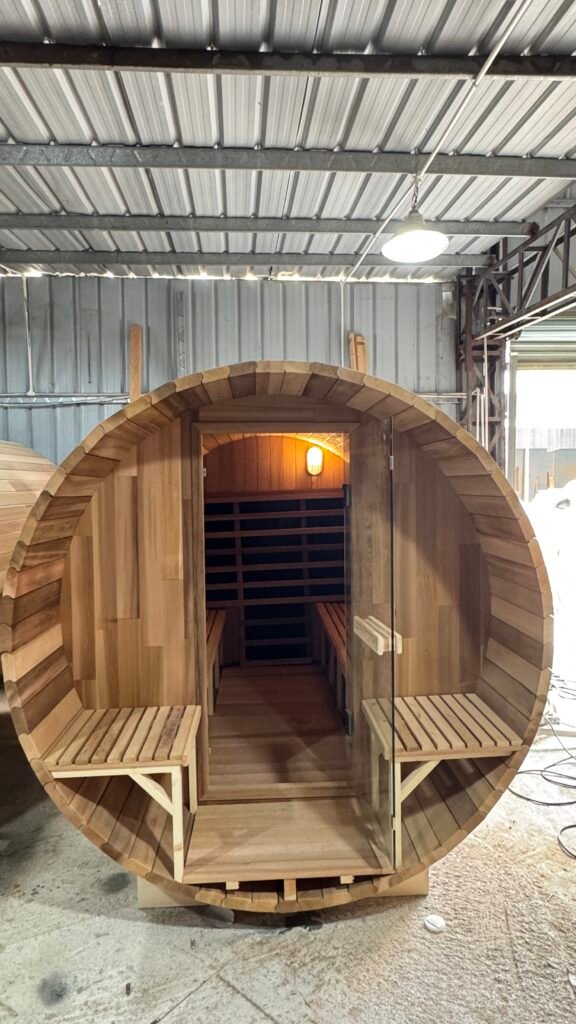
A classic outdoor barrel sauna featuring natural solid timber staves, heavy stainless steel compression bands, and dedicated exterior roof penetrations.
Chimney Pipe Flashing on Curved Staves: Preventing Leaks and Fires
The single greatest structural failure point in a wood-burning barrel sauna is where the chimney pipe exits the roof. In conventional residential construction, chimneys penetrate flat or pitched roofs with standard flat metal roof jacks. In a barrel sauna, the roof is a continuously curved radius of interlocking tongue-and-groove wood staves.
Cutting a hole through curved wood staves requires specialized chimney kit engineering:
- Class-A UL-103HT All-Fuel Insulated Pipe: The section of chimney pipe that passes through the wooden roof must never be single-wall black stovepipe. Single-wall pipe can reach surface temperatures over 800°F, pyrolyzing timber staves into charcoal over time. Building codes require double-wall, mineral-wool insulated stainless steel pipe rated for 2,100°F intermittent chimney fires (UL-103HT standard), maintaining a 2-inch continuous air clearance from wood fibers.
- High-Temperature Silicone or EPDM Boot: To seal the curved penetration against driving rain and snow, installers use a flexible, high-temperature silicone rubber flashing boot (rated to 500°F continuous). The flexible aluminum rim is molded by hand to match the exact radius of the curved staves, bedded in polyurethane sealant, and fastened with stainless steel lag screws.
- Spark Arrestor Chimney Cap: Flying sparks from burning resinous firewood can land on dry cedar shakes or surrounding forest vegetation. A stainless steel chimney cap equipped with a wire mesh spark arrestor screen is mandatory for rural and wildland installations.
The Aerodynamics of a Barrel: Natural Convective Circulation
Why do barrel saunas heat up 25% faster than rectangular hot rooms of equivalent cubic volume? The answer lies in fluid aerodynamics. In a traditional square room, hot air rises from the stove, hits a flat ceiling, and forms a stagnant thermal pocket in the upper 12 inches of the room, while cold air settles across the floor.
In a curved cylinder, the physics change dramatically:
| Aerodynamic Metric | Curved Barrel Geometry | Rectangular Box Cabin | Practical Advantage for Bathers |
|---|---|---|---|
| Thermal Dead Zones | Virtually Zero: Air rolls continuously along curved arch. | Significant: Hot air traps in 90-degree ceiling corners. | Faster heat distribution; eliminates cold corner pockets. |
| Preheat Time to 195°F (90°C) | 35 to 45 minutes (with dry split hardwood) | 55 to 75 minutes | Saves 30% on firewood consumption per session. |
| Löyly Steam Dispersion | Circular Wave: Steam curves down over benches evenly. | Top-Heavy: Steam hovers high, requiring towel waving. | Intense, uniform steam envelops shoulders and back naturally. |
When you ladle cold water onto 40 pounds of red-hot peridotite stones, the steam rises, hits the curved ceiling arch, and is directed smoothly downward along the opposite wall directly over the seated bathers. To compare convective airflow patterns against commercial rectangular rooms, see our technical analysis on commercial sauna ventilation.
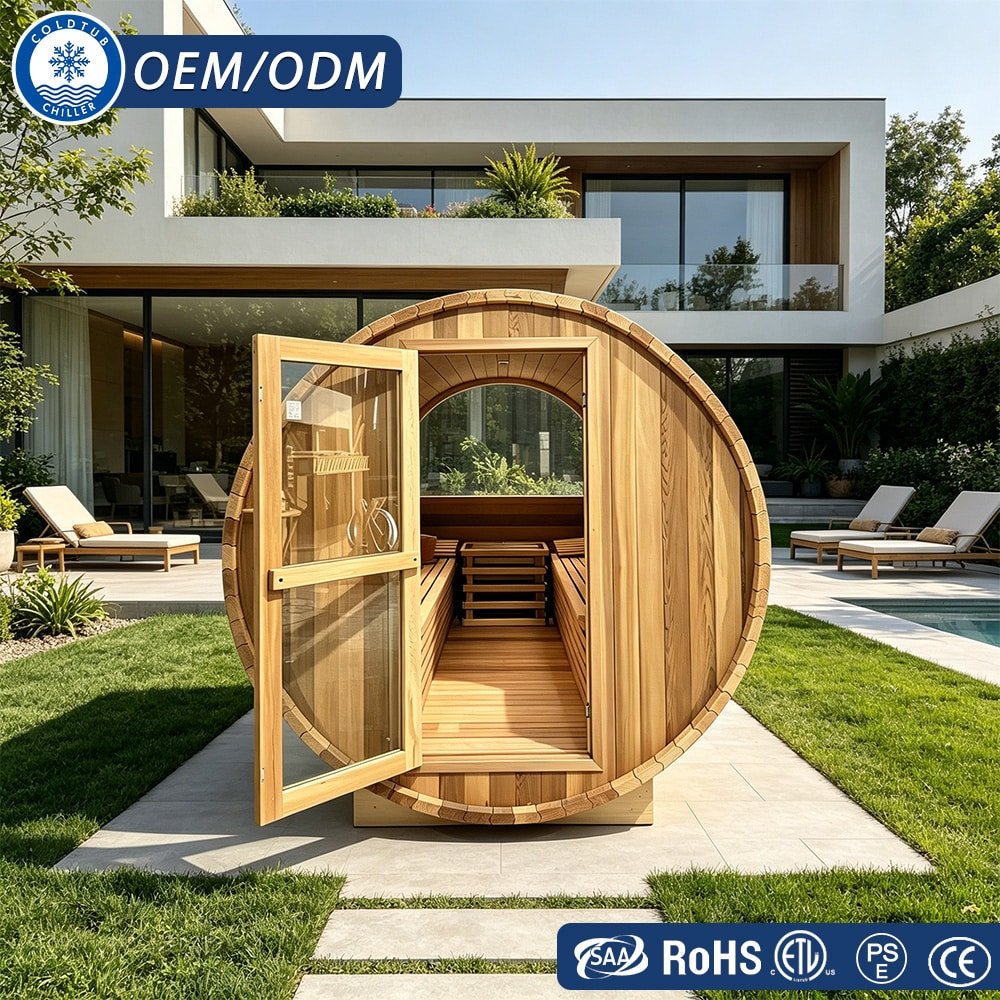
Precision-milled tongue-and-groove ball-and-socket staves allow the circular barrel to expand and contract naturally (for complete ball-and-socket stave joinery and cradle pad engineering, review our outdoor barrel sauna kit guide) through extreme seasonal weather cycles.
Timber Physics: Thermo-Treated Wood vs. Western Red Cedar
A wood-burning barrel sauna sits in direct contact with rain, snow, UV radiation, and seasonal humidity on the outside, while enduring 200°F dry heat and high-moisture steam cycles on the inside. Specifying cheap knotty pine or soft green timber will result in warped staves, weeping pitch pockets, and chronic water leaks around stainless bands.
Two timber selections dominate quality outdoor barrel builds:
- Thermally Modified Spruce / Pine (ThermoWood): Heated in oxygen-free kilns past 400°F, modifying cellular wood sugars into non-hygroscopic compounds. ThermoWood absorbs 50% less moisture than raw timber, virtually eliminating stave swelling, shrinking, and warping. It features an organic deep caramel color, emits zero hot sap, and offers exceptional dimensional stability in freezing climates.
- Clear Canadian Western Red Cedar: Renowned for rich thujaplicin tannins that provide natural defense against rot and fungal decay. Cedar provides natural thermal insulation (R-value of roughly 1.4 per inch of thickness), keeping exterior staves safe to touch while radiating pleasant, authentic cedar aromatics.
- Heavy-Gauge Stainless Steel Tension Bands: Barrel saunas are held together without interior nails. Heavy 304 stainless steel compression bands equipped with threaded tightening rods encircle the barrel. During the dry summer season, timber shrinks slightly and bands require half a turn of tightening; during wet winter months, staves swell and bands must be relaxed slightly.
If you are planning an indoor or multi-family installation where wood smoke and chimney venting are prohibited by municipal code, review our residential guide on apartment sauna permissions and electrical constraints, or review our compact indoor layout guide on a 2 person corner sauna, or check our solo hot room breakdown on a 1 person traditional sauna.
Foundation Preparation & Outdoor Equipment Anchoring
A completed 6-foot or 8-foot barrel sauna carries significant structural mass. Between solid 1.5-inch thick timber staves, tempered glass door panels, heavy stainless tension bands, a 200-pound cast-iron or steel wood stove, 40 to 60 pounds of dense igneous rocks, and four adult bathers, the total operational load exceeds 2,200 to 2,800 pounds.
Placing a barrel sauna directly on bare lawn, topsoil, or soft forest duff will cause uneven ground settling within one rainy season. As timber support cradles sink into wet soil, the cylindrical frame twists, pinching glass doors, loosening stainless compression bands, and opening stave seams. Professional contractors prepare one of three engineered foundation pads:
- Compacted Crushed Gravel Pad (Most Cost-Effective): Excavate 4 to 6 inches of organic topsoil, lay heavy geotextile landscape fabric, and compact 3/4-inch angular crushed gravel (not rounded pea gravel). The angular stone locks together to support cradle point loads while providing immediate gravity drainage for exterior rainwater and splash runoff.
- Reinforced Concrete Slab (Permanent Commercial Standard): A 4-inch 3,500 PSI poured concrete slab with welded wire mesh reinforcement provides an immovable, level equipment plane. Essential for commercial glamping resorts, public wellness clubs, or installations on unstable hillside grades.
- Structural Timber Decking with Joist Blocking: If installing on an existing outdoor deck, verify that floor joists are spaced 12 or 16 inches on center. Install solid joist blocking directly beneath each barrel cradle foot to distribute point loads across multiple structural beams without deck board sag.
Firewood Species & Moisture Management for Optimal Heat
The performance, chimney draft, and stone temperatures in a wood-fired sauna depend directly on fuel quality. Burning wet, unseasoned wood or resin-rich softwoods creates low burn temperatures, heavy chimney creosote accumulation, and bitter smoke that seeps into outdoor air intakes.
Contractors and seasoned sauna masters adhere to strict firewood rules:
- Seasoned Split Hardwoods (Below 18% Moisture): Dense hardwoods like birch, oak, ash, maple, and beech deliver higher BTU energy per cord and burn with clean, sustained coal beds. Test firewood with a digital pin moisture meter; split logs should read under 18% internal moisture before entering the firebox.
- Avoid Green Pine and Untreated Fir: Softwoods contain heavy terpenes, volatile pitch, and sap pockets that pop loudly, throwing sparks against the stove glass. Green softwoods produce excessive particulate smoke and rapidly coat double-wall chimney flues in flammable creosote glaze, creating chimney fire hazards.
- Small Split Sizing for Quick Convective Response: Use smaller split logs (2 to 3 inches in diameter) rather than massive fireplace logs. Smaller pieces combust rapidly, allowing operators to adjust cabin heat quickly between 180°F and 205°F during multi-round contrast sessions.
Pairing Wood-Burning Saunas with Cold Plunge Recovery
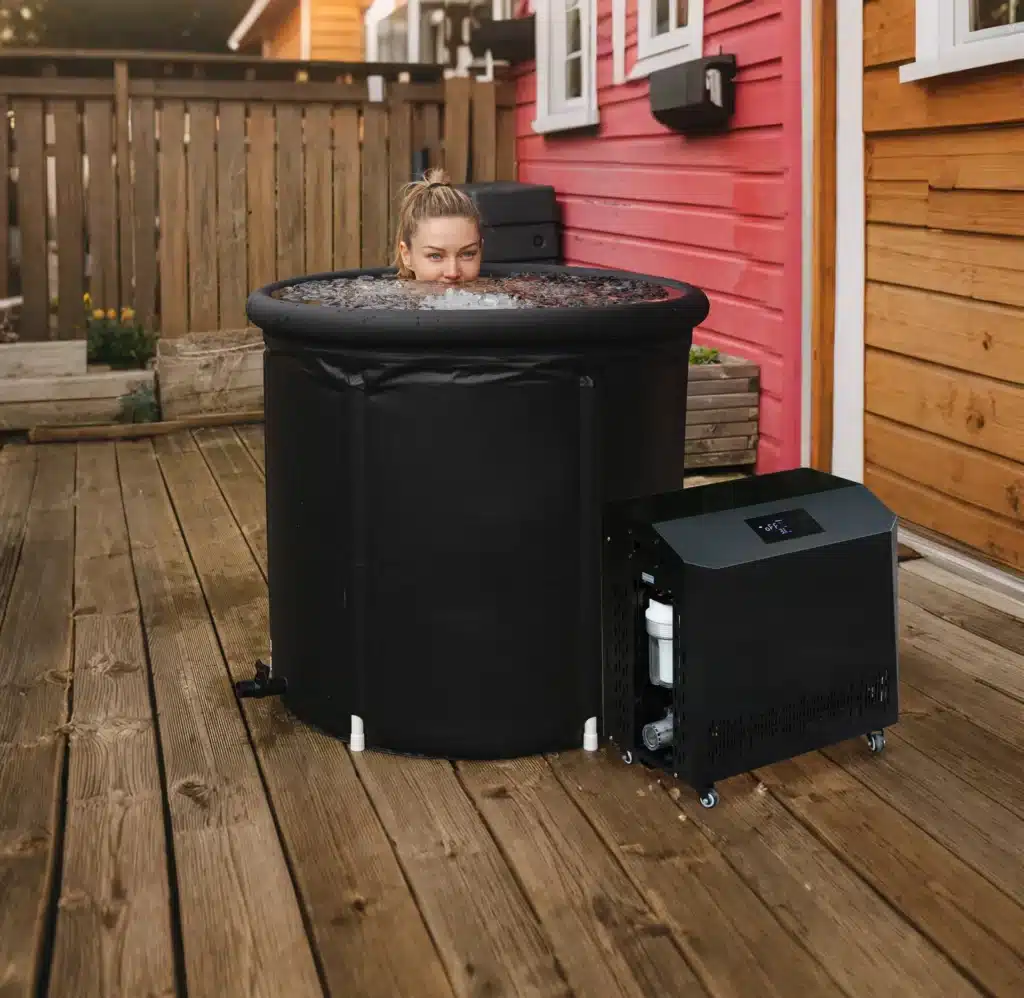
For athletic training compounds and luxury wellness retreats, the ultimate experience is contrast recovery—stepping out of a 200°F wood-fired barrel sauna and plunging directly into a 39°F ice bath. This extreme thermal swing triggers rapid vascular pumping, flushing metabolic waste from muscle tissue and stimulating profound endorphin release.
When designing an outdoor contrast recovery zone pairing a wood-fired sauna with a dedicated cold plunge:
- Safe Separation Distance: Keep the cold plunge tub at least 6 to 8 feet away from the sauna exterior door. This prevents windblown chimney ash from landing in the plunge water, and keeps chlorinated or ozonated water splashes from degrading exterior timber staves (for wood protection protocols, consult our cedar cold plunge tub maintenance guide).
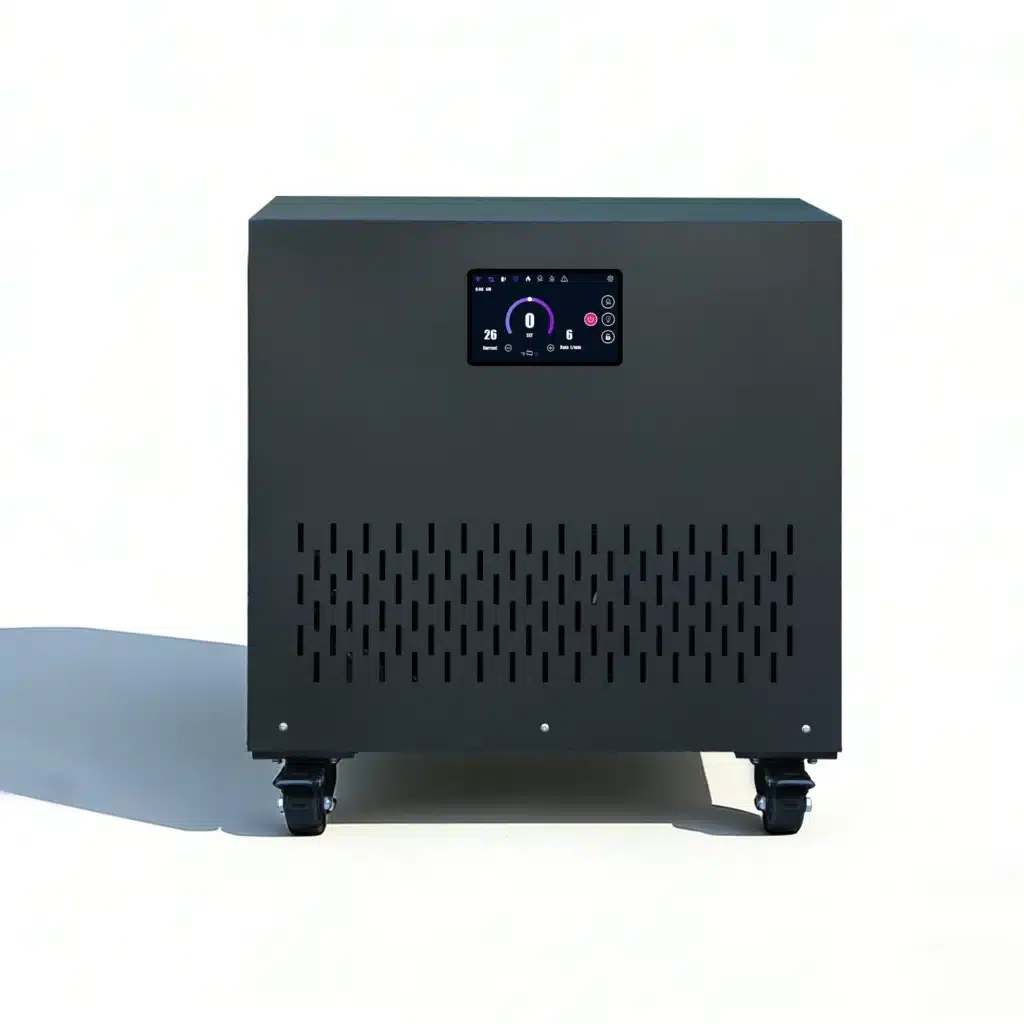
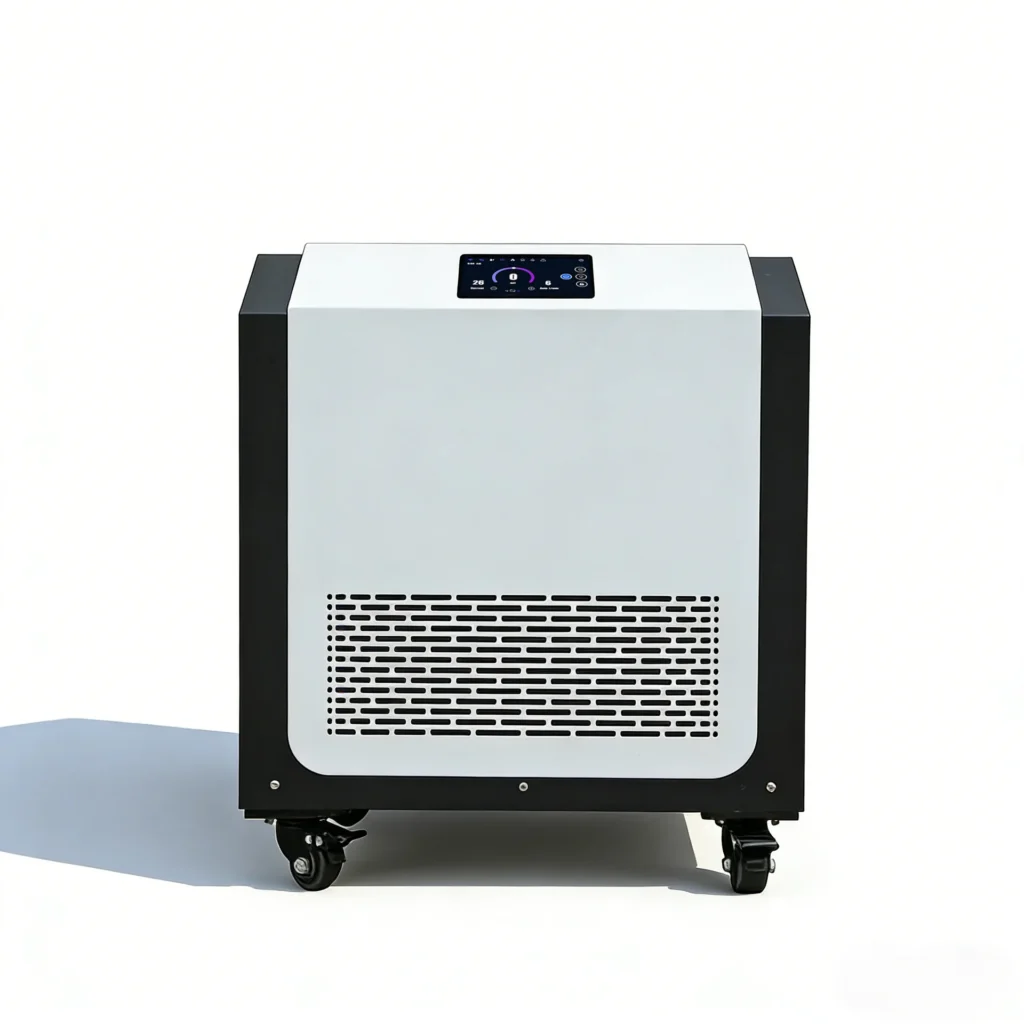
- Heavy-Duty Commercial Chilling: Bathers exiting a 200°F wood-fired sauna carry substantial residual skin heat. To maintain 39°F water temperatures across continuous cycles, pair your plunge with an industrial cooling unit. Review our engineering specifications on an outdoor chiller unit for cold plunge setups.
- Commercial Contrast Layouts: For facilities planning commercial wellness spaces, examine our layout and power planning guide on sauna and cold plunge for gym installations.
Factory-Direct Barrel Saunas & Recovery Equipment from OMNI Ice
As an international source manufacturing facility, OMNI Ice designs and fabricates precision pre-cut outdoor barrel saunas, commercial cold plunge tubs, and high-capacity chillers for resorts, gyms, and private estates worldwide. We eliminate third-party importer markups and supply complete turnkey hardware packages:
Featured Outdoor Barrel Saunas & Plunge Systems
- Mist Outdoor Barrel Sauna Series: Premium outdoor circular timber saunas precision-milled from Canadian red cedar or thermo-treated spruce, engineered for wood-burning or heavy electric stove packages with full front-porch overhang options.
- Integrated Sauna & Cold Plunge Combo Systems: Coordinated architectural recovery packages pairing outdoor barrel hot rooms with industrial stainless steel ice baths.
- Commercial Multi-Person Sauna Rooms: Large-format indoor and outdoor commercial sauna cabins built for sports clubs, boutique hotels, and wellness spas.
If your project requires a single off-grid barrel sauna or full containerload wholesale distribution, review our complete OEM cold plunge and sauna equipment solutions or connect directly with our engineering team through our commercial equipment RFQ desk for CAD submittal drawings and wholesale container pricing.
The Buyer Inspection Checklist for Wood-Burning Barrel Saunas
Before ordering an outdoor wood-fired barrel sauna package, verify these seven mechanical and safety specifications:
- Certified Firebox Clearances: Ensure the wood stove includes certified dual-layer heat shields to maintain safe clearances within the tight curved barrel diameter.
- Insulated Chimney Pipe: Verify that the chimney kit utilizes UL-103HT certified double-wall insulated stainless steel pipe through the curved wood roof.
- Flexible Roof Boot Flashing: Confirm that the flashing boot is high-temperature silicone with a malleable aluminum base molded directly to the curved stave radius.
- Timber Species Selection: Choose clear vertical-grain Western Red Cedar or thermally modified spruce (ThermoWood) to eliminate pitch weeping and minimize stave expansion.
- Stainless Compression Bands: Check that bands are heavy-gauge 304 stainless steel with accessible dual-nut tensioning rods for seasonal adjustment.
- Hearth & Ember Protection: Install a non-combustible cementitious or steel hearth pad extending at least 16 inches in front of the stove door.
- Ventilation Circulation: Ensure low fresh-air intake vents beneath the firebox and adjustable exhaust vents on the rear wall under the upper benches.
When properly engineered with certified heat shielding, high-temperature chimney penetrations, and premium dimensional timber, an outdoor wood-burning barrel sauna delivers the purest, most invigorating thermal therapy experience possible—providing decades of off-grid wellness and authentic steam rituals under open skies.