Converting a hot tub into a cold plunge using a cold plunge chiller for hot tub setups is one of the most ambitious — and most misunderstood — cold therapy projects a home user can attempt. The idea makes sense on paper: you already own a hot tub, it holds water, and chillers cool water. What most guides skip is exactly how different a hot tub is from a standard cold plunge vessel — and why getting the chiller selection wrong here is a far more expensive mistake than it would be with a smaller tub.
This guide covers what you actually need to know before buying: why the HP requirements are higher than most people expect, how to manage the hot tub’s built-in heater so it does not fight your chiller, how to connect everything correctly, and when a dedicated cold plunge setup makes more sense than adapting your existing hot tub. As a cold plunge chiller manufacturer supplying facilities across more than 80 countries, we see this specific setup question regularly — and the mistakes that come from getting it wrong.
Why Hot Tubs Are the Most Demanding Cold Plunge Application
A standard residential hot tub holds between 1,000 and 2,000 litres. A typical cold plunge tub holds 200 to 400 litres. You are asking a chiller to cool two to five times the water volume of a standard cold plunge setup — and that is before accounting for the additional thermal load that makes hot tubs uniquely challenging.
Hot tubs are engineered to retain heat. The insulation — typically 100mm or more of foam — is designed to keep water warm with minimal energy input. That same insulation slows the cooling process when you run a chiller. The large surface area means ongoing heat exchange even with a cover in place. And the jets and circulation system introduce complexity that a standard cold plunge tub simply does not have.
The result is that a hot tub cold plunge setup requires meaningfully more chiller power than the water volume alone would suggest — and even with the right HP, cooling times are significantly longer than a dedicated cold plunge tub.
Volume and HP Requirements at a Glance
| Vessel | Typical Volume | Insulation | Minimum HP |
|---|---|---|---|
| Standard cold plunge tub | 200–400L | Good | 0.5–1HP |
| Uninsulated bathtub | 150–300L | None | 1HP |
| Residential hot tub | 1,000–2,000L | Heat-retaining | 1.5–2HP minimum |
| Commercial spa / hot tub | 2,000L+ | Varies | 2HP+ |
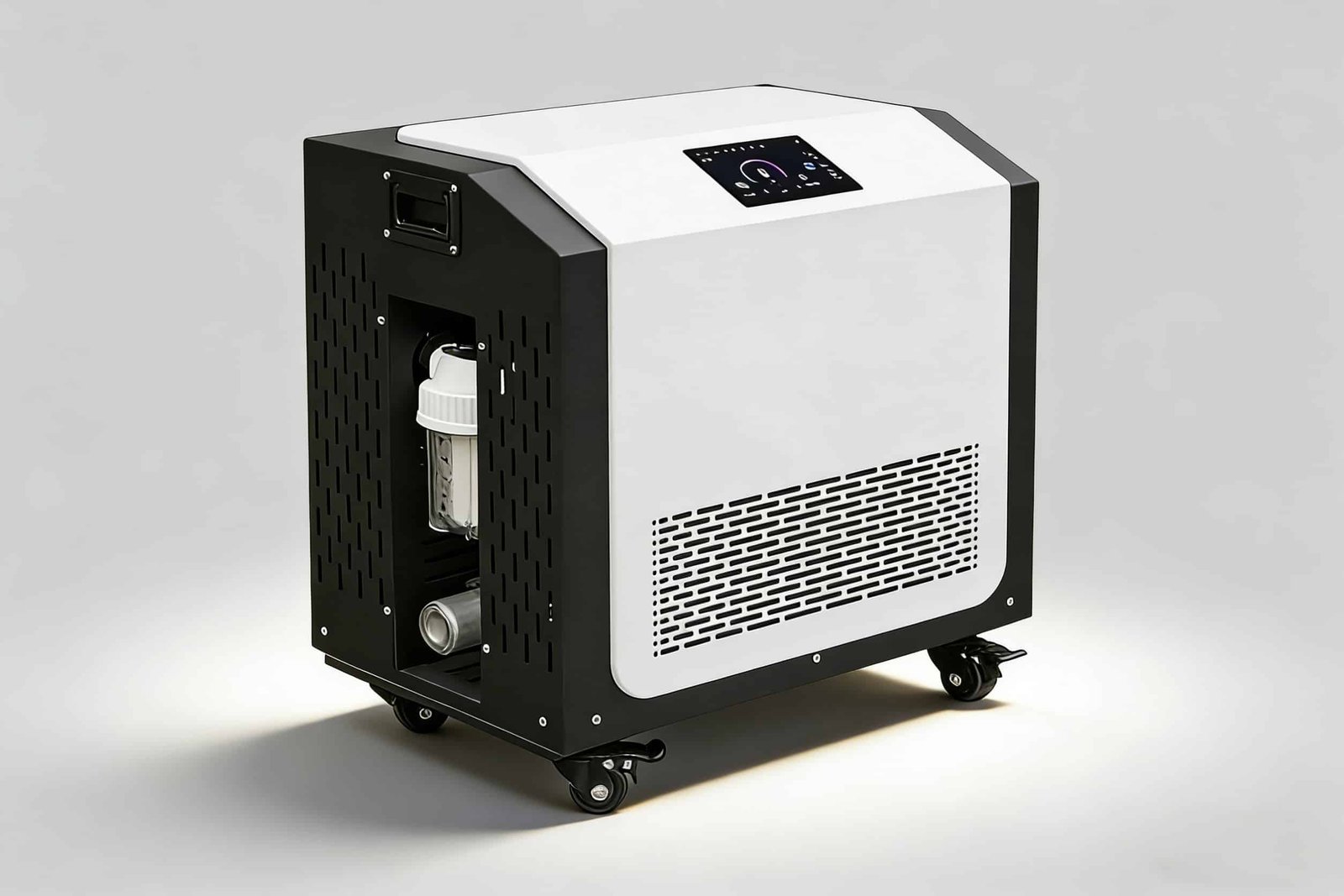
What HP Cold Plunge Chiller for Hot Tub Do You Actually Need?
According to ASHRAE cooling capacity standards, effective cooling capacity must account for the ongoing thermal load from the environment — not just the volume of water being cooled. For a hot tub, that thermal load is significant.
For a standard residential hot tub in a temperate climate:
- Under 1,200 litres: 1.5HP minimum, 2HP recommended for faster cooldown
- 1,200–1,600 litres: 2HP minimum
- Above 1,600 litres: 2HP or more, or consider a dedicated commercial cold plunge system
If your hot tub is outdoors in a climate above 28°C in summer, add 0.5HP to each figure. The chiller is fighting ambient heat on top of the water volume, and an undersized unit will run continuously without reaching target temperature.
For a detailed breakdown of how HP requirements scale with volume and ambient conditions, see our cold plunge chiller HP guide.
The most expensive mistake in hot tub cold plunge setups: buying a 1HP chiller for a 1,500-litre hot tub. It will run continuously, never reach cold plunge temperatures, and burn out within a year under that sustained load. If you are unsure, always go one HP level higher than your calculation suggests.
The Hot Tub Heater Conflict
This is the issue most guides skip entirely. Your hot tub has a built-in heating system with its own thermostat, typically set to maintain 37 to 40°C. When you run a chiller and the water temperature drops, the hot tub’s thermostat detects the drop and turns on the heater to compensate.
You now have a chiller removing heat and a heater adding it back at the same time. This dramatically slows your cooling speed, wastes electricity, and puts unnecessary strain on both systems.
Three ways to manage this:
- Turn off the hot tub heater manually before running the chiller. Most hot tubs allow you to switch the heater to standby or set the thermostat to its minimum. This is the simplest and most practical solution.
- Set the thermostat to its lowest possible setting. Some models cannot be fully disabled but can be set to 15 to 20°C — still warmer than cold plunge temperatures, but significantly reducing the conflict.
- Disconnect the heater circuit. This requires electrical work and likely voids your warranty. Only worth considering if you are permanently converting the hot tub to cold use.
The first option handles the problem for most setups. Turn the heater to standby before each cold plunge session and restore the setting when you are done.
How to Connect a Cold Plunge Chiller to a Hot Tub
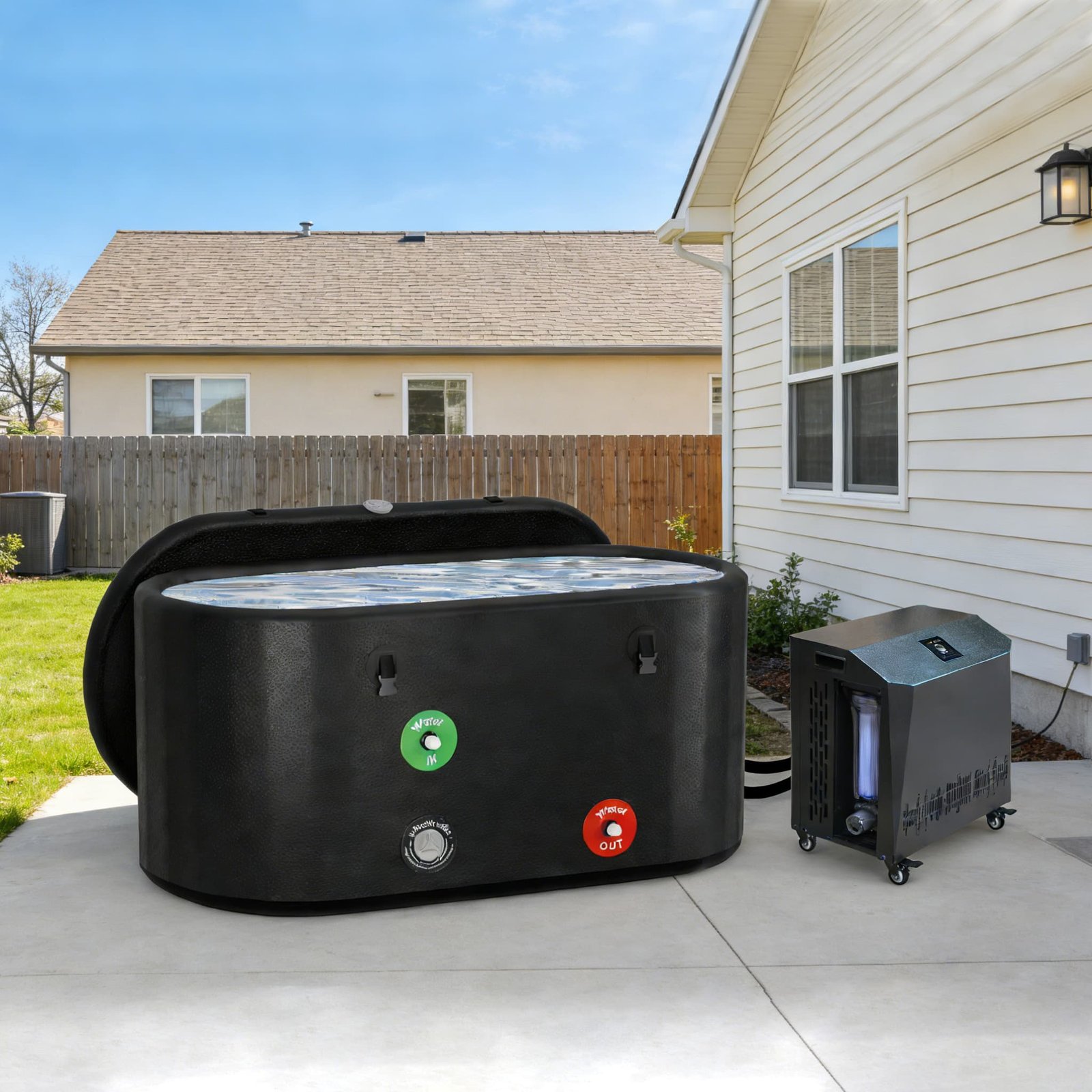
Hot tubs have more complex plumbing than a standard cold plunge vessel — jets, pumps, a heater manifold, and filtration all share the same water circuit. Connecting a chiller requires care to avoid disrupting the existing system.
Option 1: External Bypass Connection (Recommended)
Connect the chiller as an external loop — water drawn from the hot tub via a dedicated outlet, passed through the chiller, and returned via a separate inlet. This keeps the chiller circuit isolated from the hot tub’s jet and heater plumbing. Most hot tubs have drain valves or service ports that can be adapted for this purpose by a qualified plumber or hot tub technician.
Option 2: Over-the-Edge Hose Connection (Temporary)
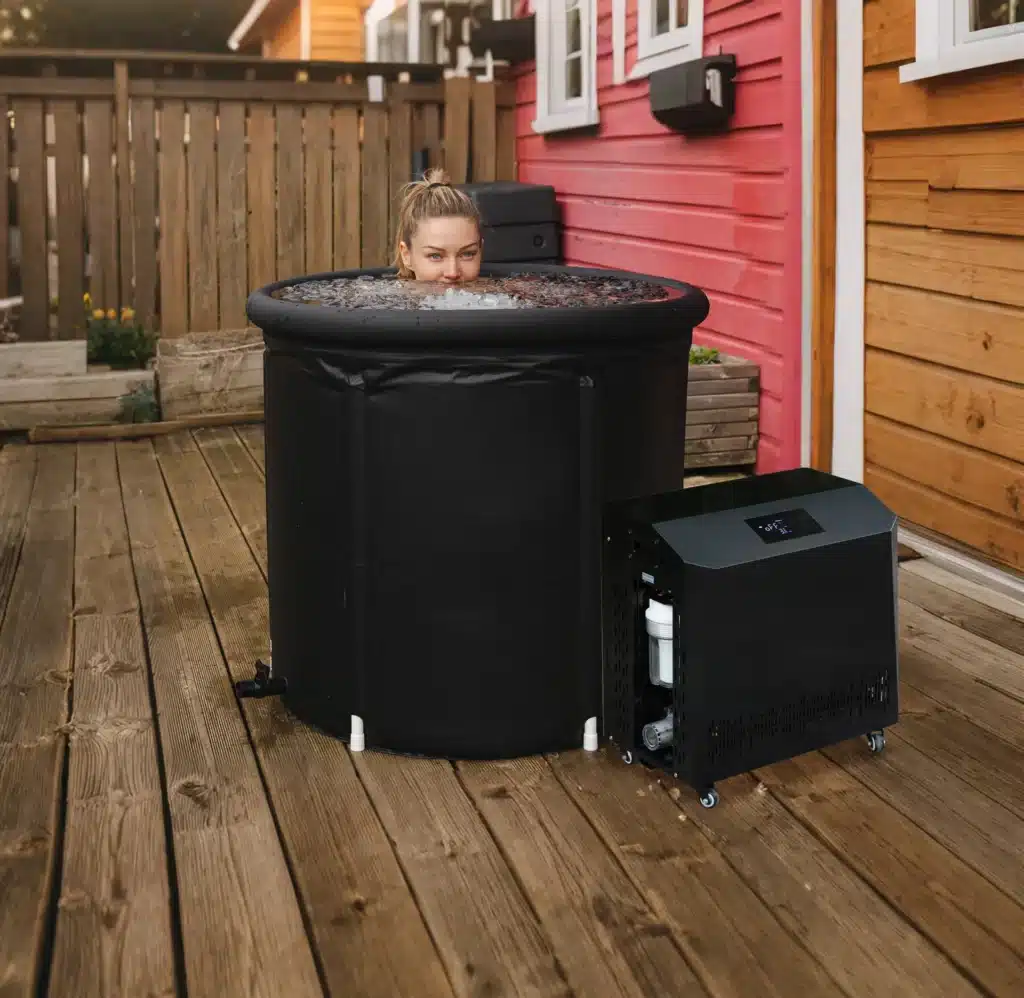
A submersible pump in the hot tub with hoses running over the edge to the chiller and back provides a functional temporary setup — the same approach used in cold plunge chiller for bathtub setups. For standard bathtubs, see our dedicated chiller for bathtub setup guide. Less clean, but fully reversible and useful for testing the concept before committing to a permanent installation.
With a hot tub, the over-edge hose run is longer and the pump must work harder. Use a pump rated for at least 2,000 LPH to ensure adequate flow.
The Correct Flow Sequence
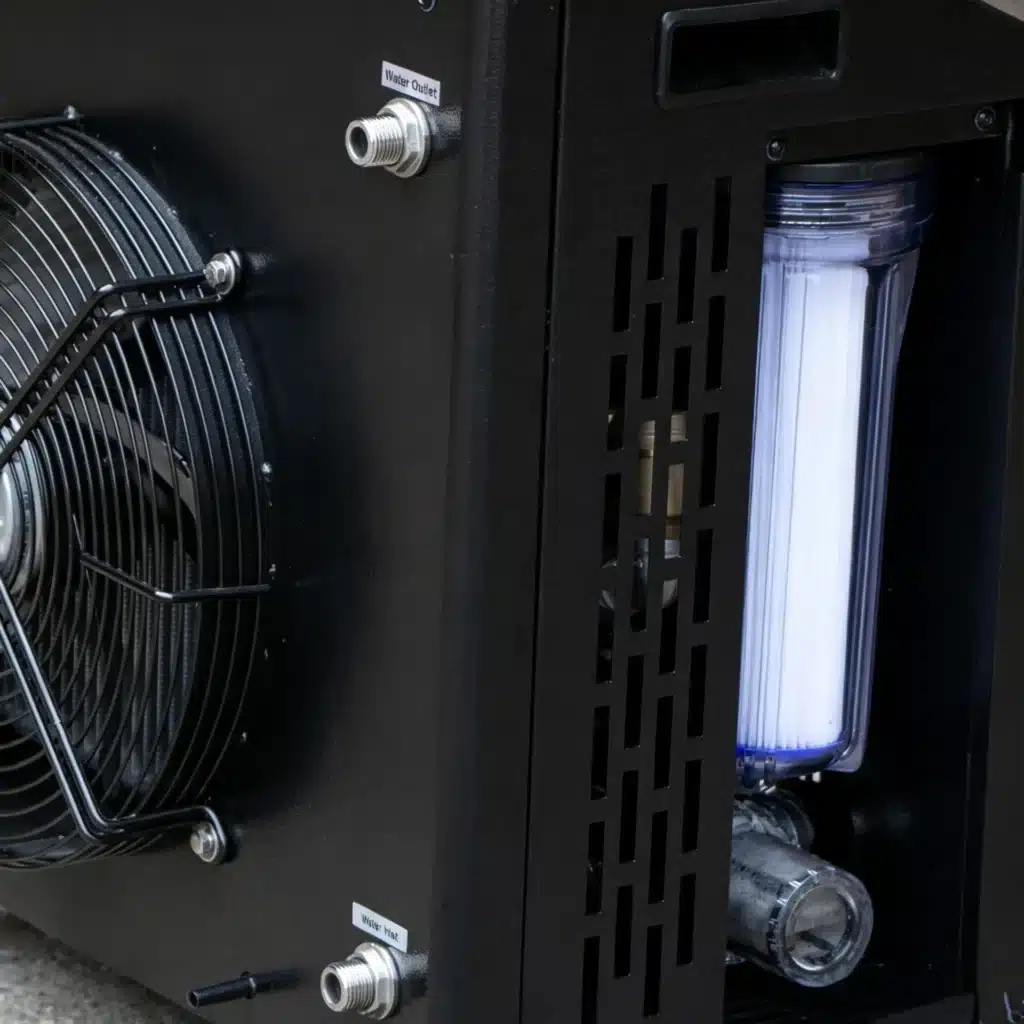
Regardless of connection method, water must flow in this order: hot tub outlet → pump → filter → chiller → hot tub inlet. The filter before the chiller is essential — hot tubs accumulate more debris than standard cold plunge tubs, and particulates in the chiller’s heat exchanger reduce efficiency and shorten its life.
Realistic Cooling Times
A 1.5HP chiller cooling a 1,200-litre hot tub from 38°C to 15°C takes approximately 6 to 10 hours depending on ambient conditions. Cooling to serious cold plunge temperatures of 3 to 10°C from a hot start takes 12 to 16 hours.
This is why most people who successfully use hot tubs for cold therapy either cool the water over 24 hours before a planned session, or maintain the water at cold plunge temperature continuously between sessions rather than cycling between hot and cold in the same tub.
If you want genuine contrast therapy — alternating between hot and cold on the same day — a single-tub solution is impractical for most people. Two separate vessels is how professional contrast therapy facilities operate, and for good reason.
When a Dedicated Cold Plunge Setup Makes More Sense
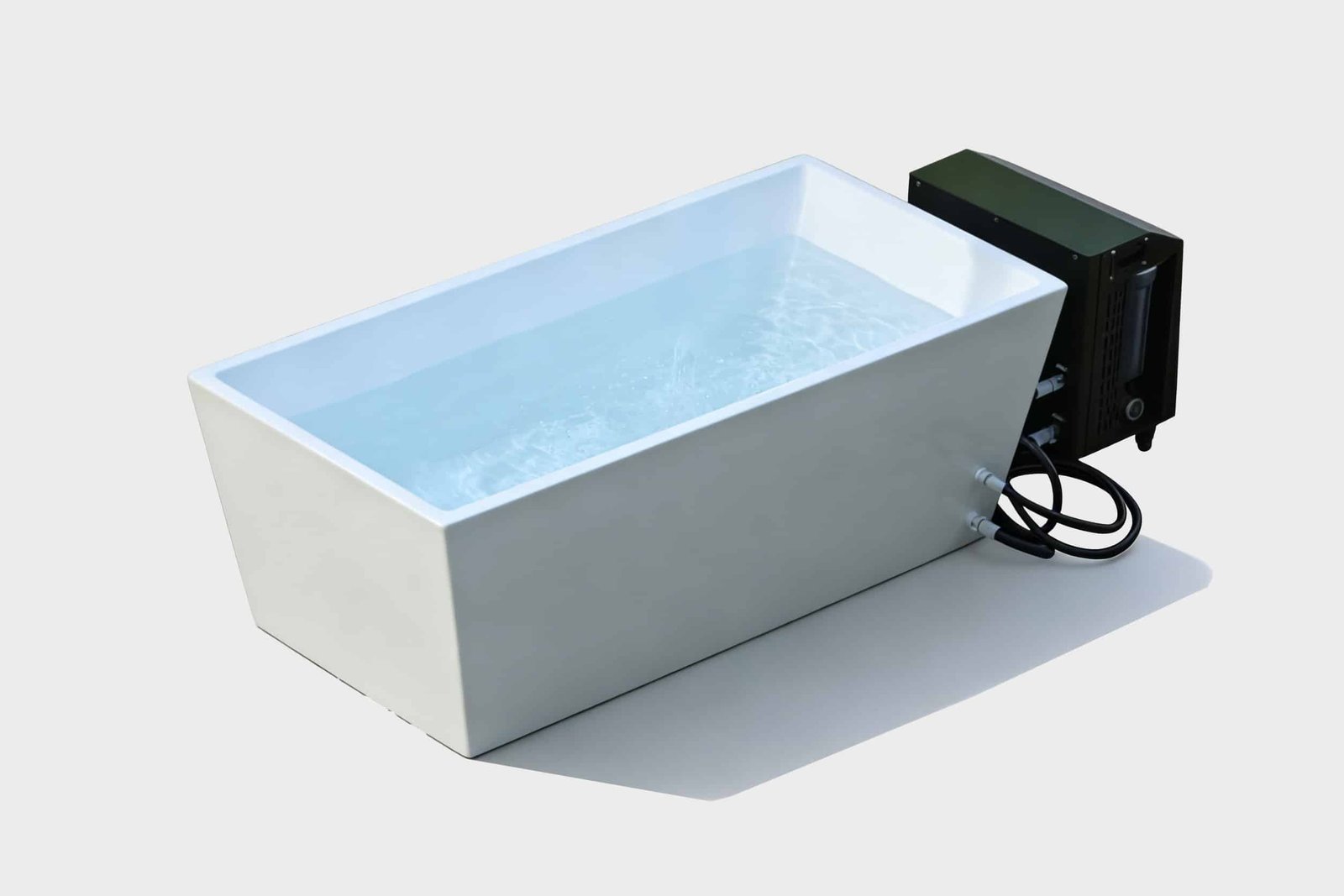
- Smaller volume means cooldown in 2 to 4 hours instead of 12 to 16
- No heater conflict — the chiller is the only thermal system in the loop
- Lower HP requirement for equivalent performance
- Lower ongoing electricity cost
- No interference with existing hot tub plumbing or warranty
Frequently Asked Questions
Can I use a 1HP chiller for my hot tub?
Will connecting a chiller void my hot tub warranty?
An external bypass connection that does not modify the hot tub’s existing plumbing or electrical systems generally does not void the warranty. Modifying internal plumbing, disabling the heater circuit, or making permanent changes may void it depending on your manufacturer’s terms. Use an external connection method and check your warranty documentation before making any modifications.
How long does it take to cool a hot tub to cold plunge temperature?
Starting from 38°C with a 1.5HP chiller on a 1,200-litre tub, expect 6 to 10 hours to reach 15°C and 12 to 16 hours to reach 3 to 8°C. Disabling the hot tub heater, using an insulating cover, and running the chiller in cooler ambient conditions all reduce this time. Planning the cooldown overnight before a morning session is the most practical approach.
What filter do I need for a hot tub cold plunge setup?
A dual-stage filter is recommended — a pre-filter for larger particles and a fine cartridge filter before the chiller inlet. Hot tubs accumulate more debris than standard cold plunge tubs due to jets and larger surface area. Replace the filter cartridge every 2 to 3 weeks for regular use rather than the standard 4 to 6 weeks.
Is it better to convert my hot tub or buy a dedicated cold plunge tub?
Not Sure What HP You Need for Your Hot Tub?
Tell us your hot tub volume, location, and how you plan to use it. We supply factory-direct cold plunge chillers from 0.5HP to 2HP+ to facilities and individual buyers across 80+ countries.