Here is how it usually goes. Someone decides to set up an inflatable cold plunge with chiller at home or in their gym. They buy the tub, they buy the chiller, they get everything delivered. Then they spend an afternoon trying to make the fittings connect — only to find that the tub’s inlet ports and the chiller’s hose connections are different sizes. Hardware store trip. Adapters. Finally it works.
Then they run the chiller for the first time and check the temperature four hours later. The water is at 18°C. They wanted 8°C. The chiller is running, the water is circulating, but the temperature is not moving the way they expected. They start wondering if the chiller is broken, or if the tub is the problem, or if they just wasted a significant amount of money.
Neither is broken. The setup is simply undersized for the environment — and nobody told them this would happen before they bought anything.
This guide is the information that should have come first. We manufacture both the inflatable ice bath tubs and the chillers at OMNI Ice, and we have shipped systems to gym chains, sports teams, and individual buyers across more than 60 countries. We know exactly where these setups go wrong and how to get them right.
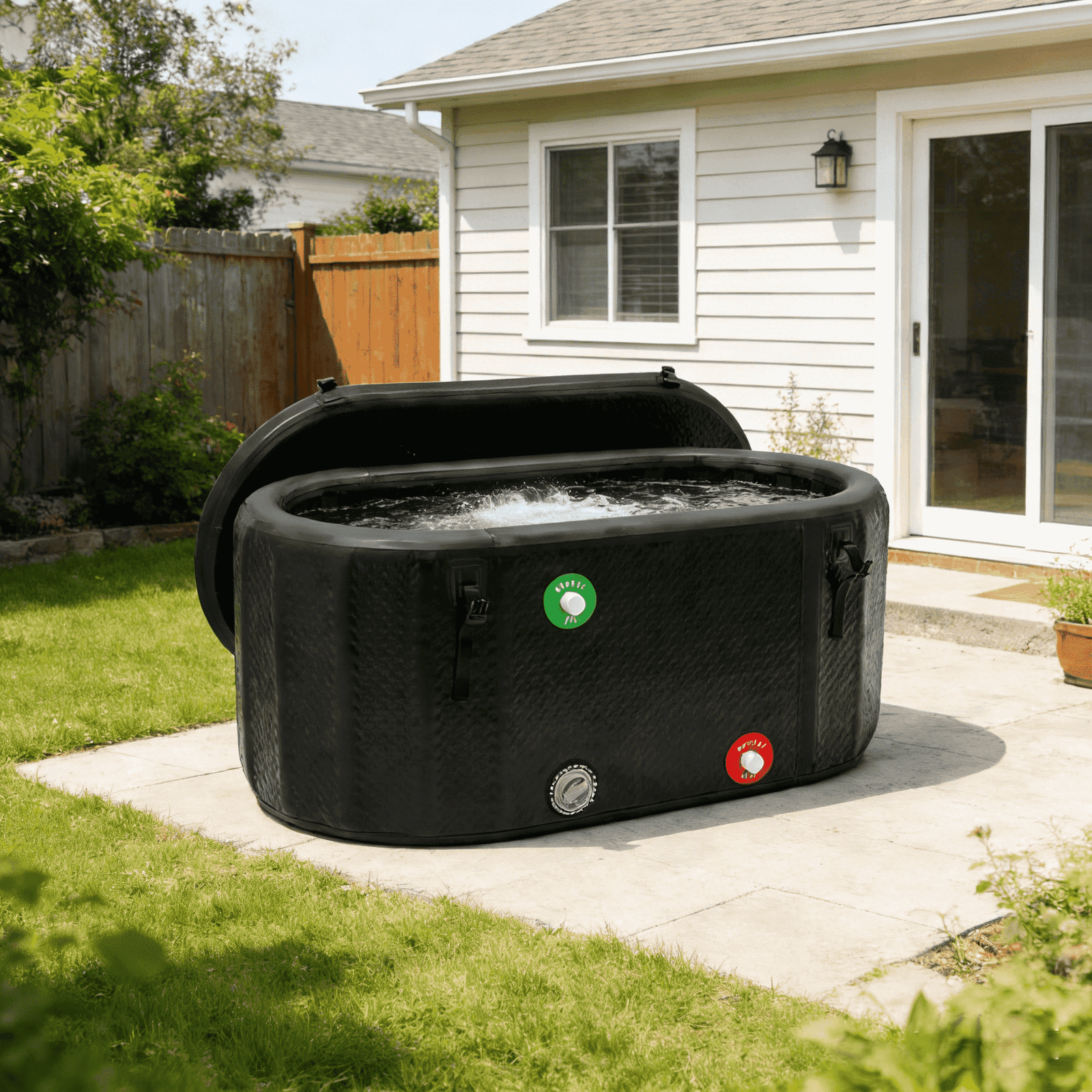
First: Can an Inflatable Tub Actually Hold Cold Water?
The honest answer is yes — but only if the tub is built for it.
There is a significant difference between a consumer inflatable and a commercial-grade one, and confusing the two is where most disappointment comes from. A cheap inflatable cold plunge tub uses single-layer PVC. The walls are thin, they flex under your hand, and they provide essentially zero thermal insulation. Cold water poured in will warm up within an hour. Pairing a chiller with one of these is not a setup — it is a losing battle against physics.
A commercial-grade inflatable is a different thing entirely. OMNI Ice’s WT-02 uses five-layer construction: an inner PVC waterproof canvas, a drop-stitch structural core, a thermal insulation layer, a temperature lock layer, and an outer UV-resistant coating. Inflated to 8 to 11 PSI, the walls are rigid enough to sit on the rim. One buyer described it as feeling like an inflatable paddleboard — that is the structural quality we are talking about.
The drop-stitch core is what separates this from a camping air mattress. It is the same technology used in rigid inflatable boats — thousands of internal threads hold the walls parallel under pressure, preventing the barrel shape from deforming. When you push against the wall of a properly inflated commercial inflatable, it does not give. That rigidity matters for cold therapy because a deforming tub changes volume as you get in and out, which affects temperature consistency.
So yes, the right inflatable can hold cold water. The question is whether the chiller can keep it cold — and that depends on HP selection more than anything else.
The HP Question: Why Most People Get This Wrong
Every chiller has an HP rating. Most buyers look at that number, look at the tub volume, find a product listing that says the chiller handles that volume, and assume they are done. The problem is that HP ratings are measured under standard lab conditions — typically 20°C ambient temperature, with a well-insulated vessel. An inflatable tub without the insulation of a rigid foam-cored cold plunge tub changes the equation.
Here is the real-world data from OMNI Ice factory testing. Using our 1HP OMNI Ice chiller in a 20°C ambient environment, starting with approximately 300 litres of water at 25°C: we reach 3°C in approximately 3.5 hours. That is with a commercial-grade 5-layer inflatable. The same test with a single-layer consumer inflatable takes significantly longer — the heat coming through the thin walls means the chiller is fighting a continuous losing battle rather than cooling efficiently.
And outdoors in summer? The calculation changes entirely. In 30°C+ ambient conditions, even a well-insulated inflatable loses heat fast enough that a 1HP chiller will hold a target temperature of around 10°C but struggle to push below that consistently. That is still useful for cold therapy — research published on PubMed cold water immersion shows significant benefits at temperatures up to 15°C — but if you want reliable sub-10°C performance outdoors in warm weather, you need more HP.
| Setup | Volume | Ambient Temp | Recommended HP | Time to 3°C from 25°C |
|---|---|---|---|---|
| Indoor, commercial-grade inflatable, temperate | ~300L | 20°C | 1HP | ~3.5 hours |
| Indoor, commercial-grade inflatable, temperate | ~300L | 20°C | 1.5HP | ~2.5 hours |
| Outdoor, warm climate | ~300L | 28–35°C | 1HP | ~4–5 hours (target ~10°C) |
| Outdoor, warm climate | ~300L | 28–35°C | 1.5HP | ~3.5–4 hours to 3°C |
The rule of thumb: for an inflatable cold plunge with chiller, size up by at least 0.5HP compared to what a rigid insulated tub of the same volume would need. If you are outdoors in summer, size up again. The cost difference between HP levels is small compared to the frustration of a chiller that runs continuously and never reaches your target temperature. For a full breakdown of how HP scales across all setup types, see our cold plunge chiller HP guide.
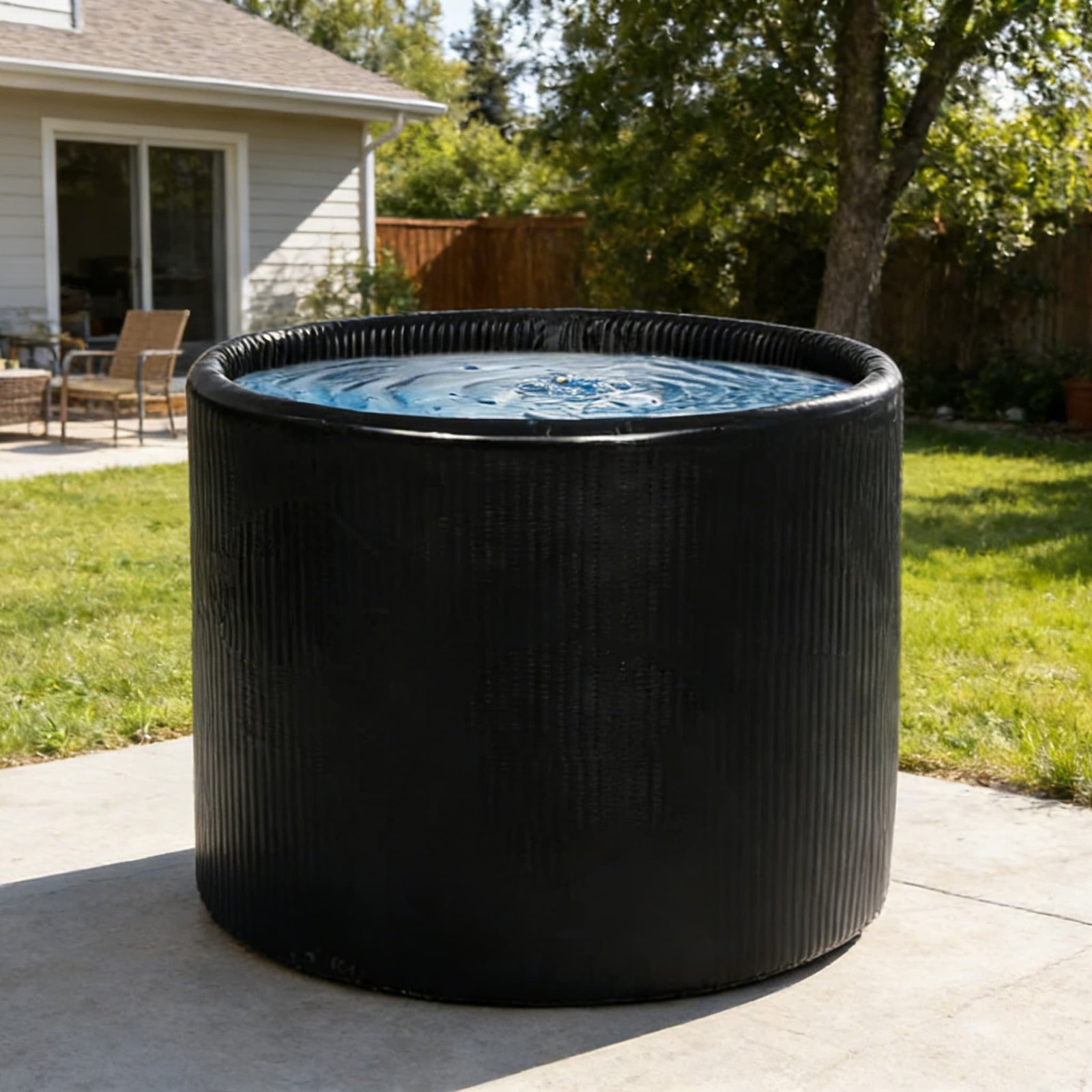
From real buyer feedback: A 6’2″, 195-pound user chose the larger XL barrel over a standard oval tub because he wanted deeper water immersion and less chiller load. He noted the barrel tub stayed colder with less stress on the chiller — depth reduces surface area relative to volume, which directly reduces heat gain. Barrel-style inflatables perform better thermally than flat oval ones for this reason.
The Fitting Problem — And How to Avoid It
The single most common complaint in buyer reviews of inflatable cold plunge setups is not about temperature or durability. It is about chiller compatibility. “Awesome cold plunge, easy to set up, but the chiller inlet and outlet had no way to connect without extra trips to the hardware store.”
This happens when the tub and chiller are bought from different manufacturers without checking fitting specifications. The industry standard is 3/4 inch hose fittings — but not every manufacturer uses this standard, and even among those that do, the exact port style varies.
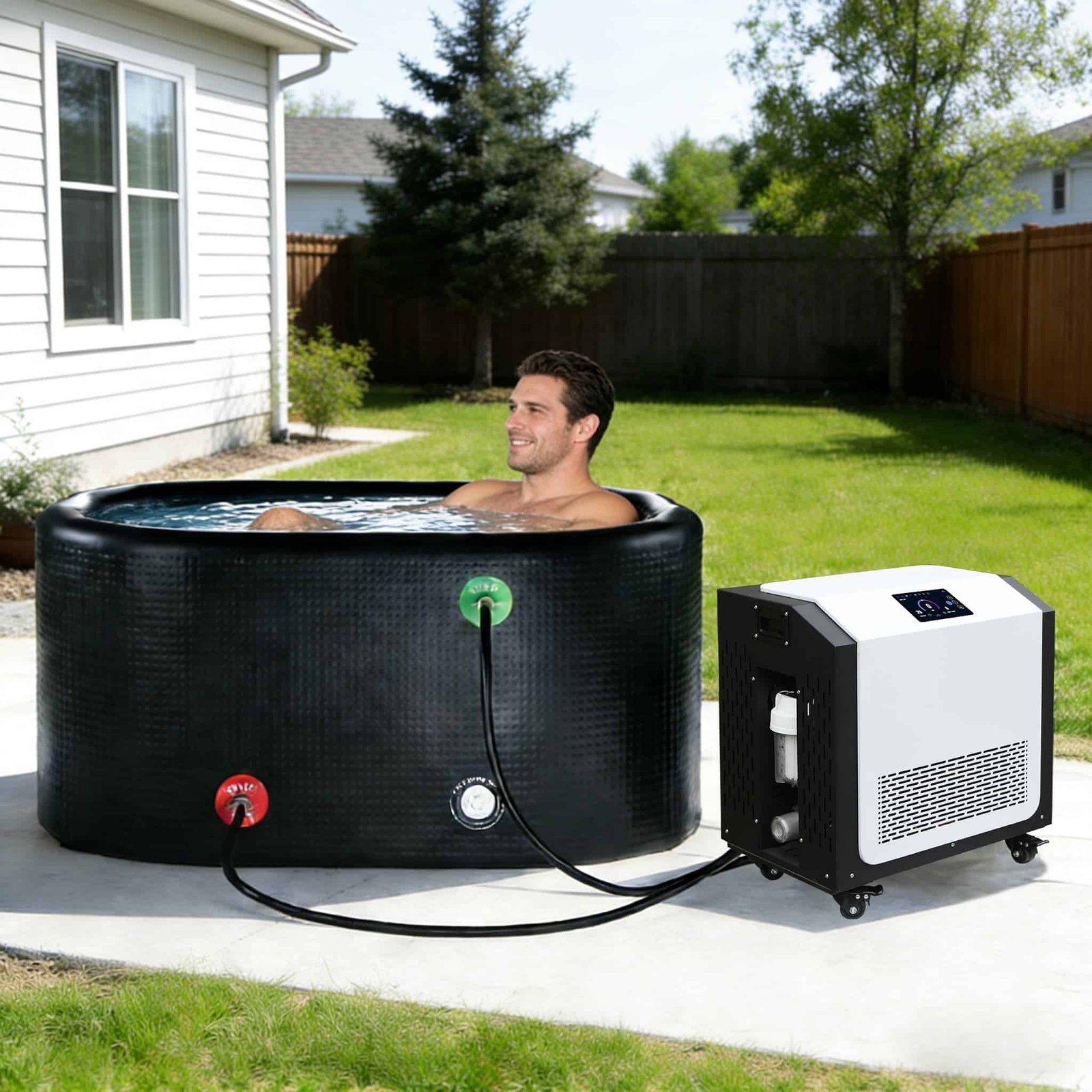
When you buy an OMNI Ice WT-02 tub alongside any OMNI Ice chiller, the fittings match. The inlet and outlet ports on the tub use the same 3/4 inch stainless steel quick-connect standard as our chiller hose connections. You connect two hoses and you are done — no hardware store, no adapters, no half-day of troubleshooting.
If you are buying from different sources, confirm the fitting standard before purchase. Ask specifically: what is the inner diameter of the inlet and outlet ports, and are they barbed or threaded? Get the same answer from the chiller manufacturer. Mismatched fittings are a $10 problem that causes $200 worth of frustration.
Which OMNI Ice Chiller Works Best with an Inflatable Cold Plunge?
We make five chiller models. For inflatable cold plunge setups, two are the most commonly specified.
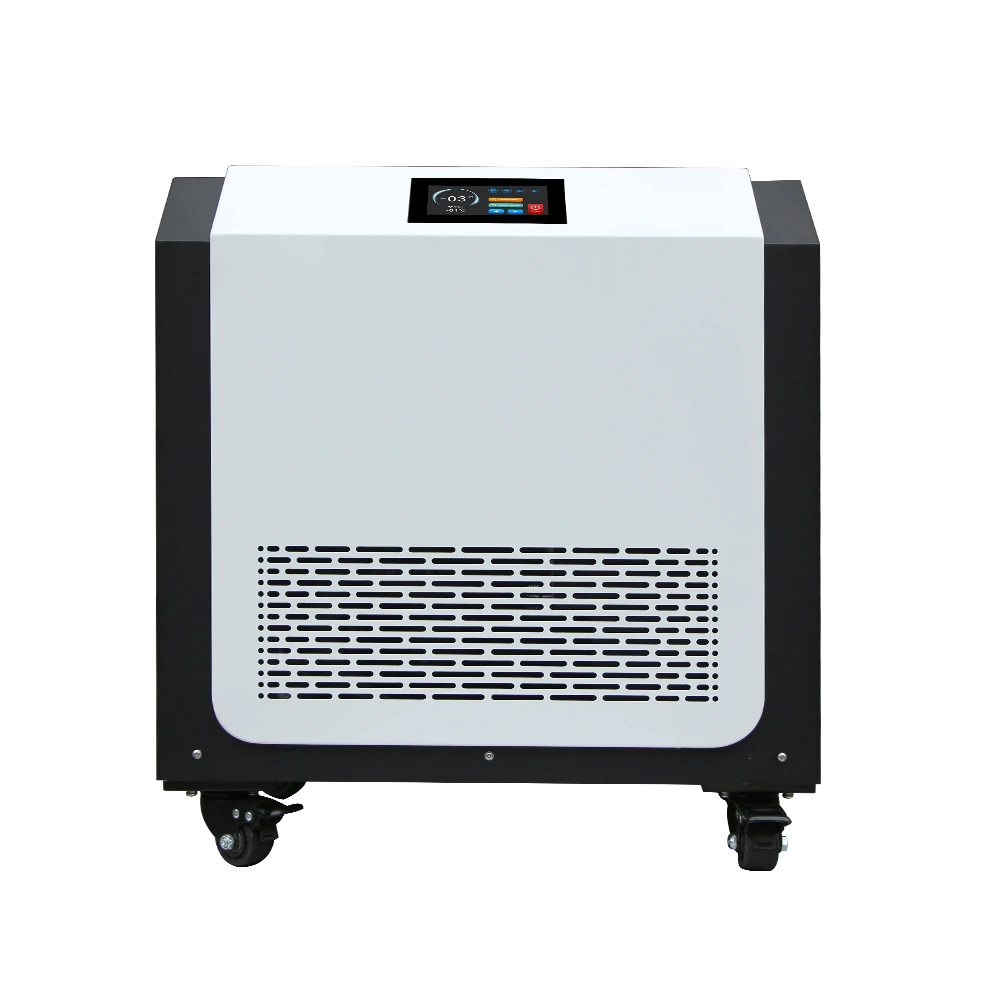
For home users and individual athletes: OMNI Ice CHM-10-RV (1HP)
The CHM-10-RV at 1HP is the right choice for most home inflatable cold plunge setups in temperate climates. It hits 3°C in approximately 3.5 hours on a standard 300-litre inflatable, has a self-priming built-in pump (no separate pump purchase), an external replaceable filter, ozone sanitation, and WiFi app control for iOS and Android. The 3°C to 42°C temperature range also means you can use it for contrast therapy — heat the water for recovery, then cool it back down for the next cold session.
For outdoor use, hot climates, or commercial setups: OMNI Ice CHU-15-RV (1.5HP)
When ambient conditions work against you — outdoor summer heat, high-traffic gym use, or simply wanting the fastest possible cooldown — the CHU-15-RV at 1.5HP is the right tool. The same 300-litre inflatable that takes 3.5 hours with the 1HP unit reaches 3°C in approximately 2.5 hours with the 1.5HP. In a gym running 20+ sessions per day, that faster recovery time between sessions matters operationally. It also has ozone disinfection and WiFi control as standard.
The chiller you choose now is not a permanent decision about your tub. When you eventually upgrade from an inflatable to a rigid cold plunge tub — which most serious users do at some point — the OMNI Ice chiller carries over completely. The investment in a quality chiller is the investment that compounds over time.
What Real Buyers Say — The Good and the Honest
Reading through verified purchase reviews gives a more accurate picture than any manufacturer description.
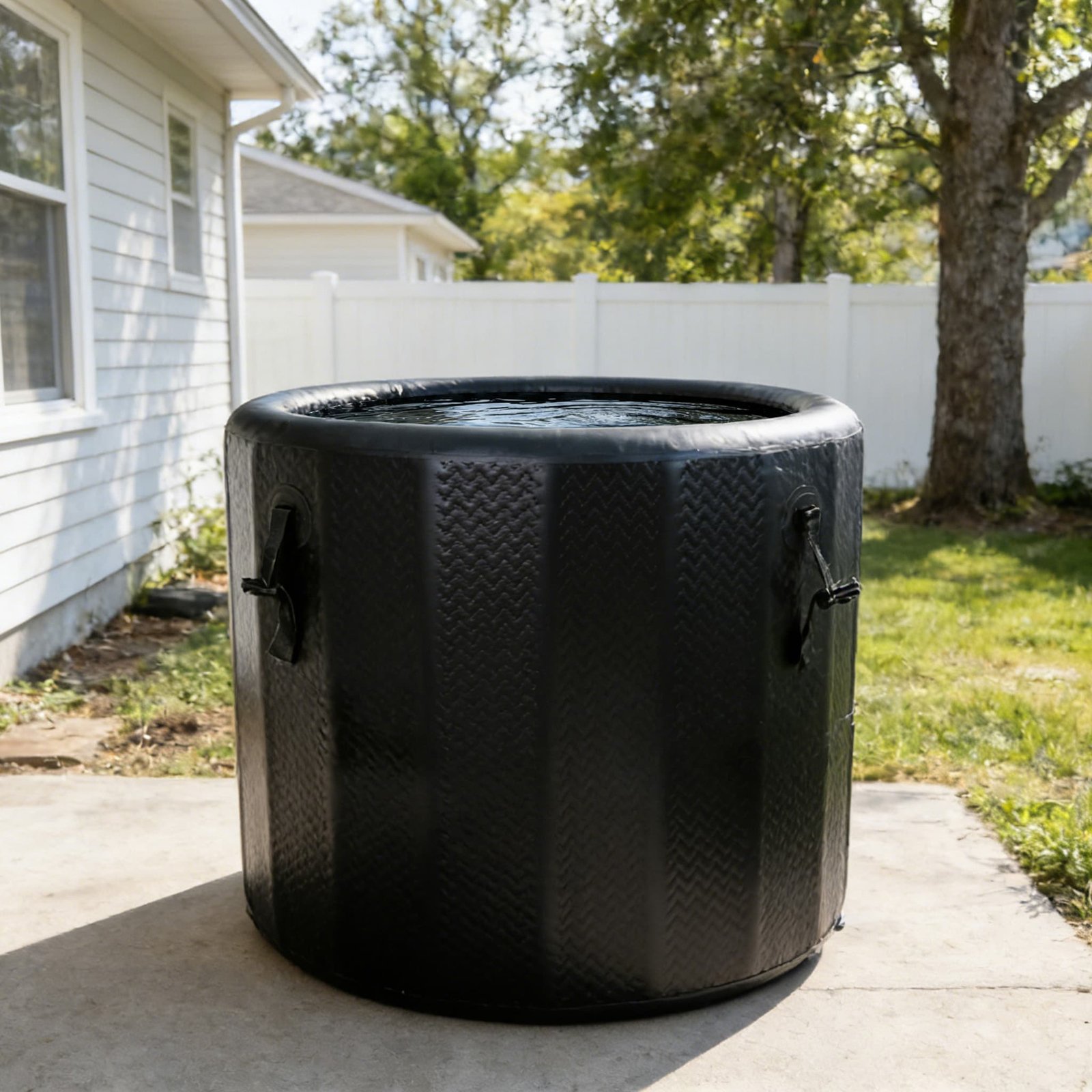
The consistent positive: build quality that exceeds expectations. Buyers who expected a glorified pool toy receive something that inflates to paddle-board rigidity and holds temperature in a way that surprises them. One buyer who had used three different inflatable cold plunge tubs before described this as “by far the best one yet” and specifically noted the depth of the barrel style allowed full submersion for a 6’5″ person.
“My water chiller connected seamlessly to the built-in inlet and outlet ports, and the tub holds temperature beautifully. The size is generous, the build feels professional-grade, and the insulated lid keeps the water clean and cold between sessions.”
— Verified buyer, February 2026
The honest negatives: in very hot climates, even a well-insulated inflatable has limits. One buyer in Houston noted the tub bows slightly on the sides and found that adding an external insulating blanket over the lid was necessary to maintain temperature properly during hot days. That is a real limitation — in consistently hot outdoor conditions, the inflatable’s thermal performance does not match a rigid foam-insulated tub. It is worth knowing upfront rather than discovering in summer.
Fitting incompatibility also comes up — always when the buyer sourced tub and chiller from different manufacturers. The fix is almost always straightforward adapters, but it adds friction to what should be a simple setup process. Buying from the same manufacturer eliminates the variable entirely.
How to Set Up Your Inflatable Cold Plunge with Chiller
Step 1: Inflate correctly
Inflate to 8 to 11 PSI. Under-inflation makes the walls soft and increases heat gain surface area — the tub performs better thermally when it is fully rigid. If the walls flex noticeably under hand pressure, add more air. A properly inflated commercial inflatable does not give when you push against it.
Step 2: Connect in the right order
Tub outlet → pump → filter → OMNI Ice chiller → tub inlet. The filter before the chiller is not optional — particulates in the water accumulate in the chiller’s heat exchanger and reduce efficiency over time. Use stainless hose clamps on every connection, not plastic clips.
Step 3: Fill with cold water
Starting with cold tap water instead of room temperature water cuts your initial cool-down time meaningfully. If your tap water comes out at 15°C instead of 20°C, your 1HP chiller has less work to do before the first session.
Step 4: Use the lid every time
The insulated lid is the simplest thing you can do to reduce chiller workload. Between sessions, heat gain through the open water surface is significant. In warm ambient conditions, an uncovered tub can gain 2 to 3°C per hour just from surface evaporation and convection. Keep it covered.
Step 5: Maintain the water
With a filter and ozone sanitation running, a single-user inflatable needs a full water change every 30 to 45 days. For commercial setups with multiple daily users, every 7 to 14 days. Cold water slows bacterial growth — it does not stop it. Clean water is also part of the therapeutic protocol, not just a hygiene consideration.
Inflatable vs Rigid: When to Upgrade
The inflatable cold plunge with chiller setup makes sense in specific situations: you are starting out and want to test whether cold therapy becomes a consistent habit before committing to a permanent installation. You need portability — a mobile trainer, a pop-up wellness event, a facility that reconfigures space regularly. You need flexibility in a commercial setting where inflatable units can be deployed or stored based on demand.
It makes less sense when you are running a high-traffic permanent installation where thermal consistency and daily durability are operational requirements. At that point, the rigid stainless steel options in the OMNI Ice lineup — with proper foam insulation, deeper immersion depth, and commercial-grade duty cycles — deliver better long-term performance.
The good news: the OMNI Ice chiller you buy for an inflatable today is the same chiller you use with a rigid tub tomorrow. You are not making a permanent decision about which vessel to use — you are making a permanent decision about which chiller to trust. For a full material comparison across tub types, the cold plunge tub material guide covers every option in detail. As a cold plunge chiller manufacturer that produces both inflatable tubs and rigid systems, OMNI Ice can supply either direction when you are ready.
Frequently Asked Questions
How long does it take to cool an inflatable cold plunge tub to 3°C?
Based on OMNI Ice factory testing: a 1HP chiller, 20°C ambient, 300 litres starting at 25°C reaches 3°C in approximately 3.5 hours. A 1.5HP chiller does the same in approximately 2.5 hours. Outdoors in 30°C+ conditions, add 1.5 to 2 hours to those figures, or consider a 1.5HP unit as the starting specification. Starting with cold tap water rather than room temperature water reduces initial cool-down time meaningfully.
Can I use a 0.5HP chiller with an inflatable cold plunge tub?
For a small inflatable tub in a consistently cool indoor environment, 0.5HP can work. For most real-world inflatable setups — particularly anything outdoors or in a room that gets warm — 0.5HP will struggle. The inflatable’s thinner insulation compared to a rigid foam-cored tub means the chiller has to compensate for more heat gain, and 0.5HP does not have the headroom to do that comfortably. OMNI Ice recommends 1HP as the practical starting point for most inflatable cold plunge setups.
Are commercial-grade inflatable tubs durable enough for gym use?
Yes, provided the specification is correct. The OMNI Ice WT-02 with 5-layer drop-stitch construction, 10 PSI rating, and stainless steel fittings handles commercial gym use reliably — we have units that have been running daily for over two years in gym environments. Single-layer consumer inflatables are not suitable for commercial use. Check for drop-stitch construction, minimum 8 PSI inflation rating, and stainless inlet/outlet fittings before purchasing any inflatable for commercial deployment.
What if my chiller does not fit the tub’s inlet ports?
Can I use this setup outdoors year-round?
Ready to Build Your Inflatable Cold Plunge System?
OMNI Ice manufactures both the WT-02 commercial-grade inflatable tub and the full chiller lineup. Matching fittings, factory-direct pricing, CE certified. Tell us your setup — indoor or outdoor, climate, daily usage — and we will recommend the right combination. Shipping to 80+ countries.