A commercial cold plunge chiller should be selected from a documented facility duty, not from horsepower or a generic “commercial grade” label. Record the usable water volume, starting and target temperatures, ambient conditions, opening hours, expected users, time between sessions, tub insulation, water-loop design, electrical supply and service plan before asking a supplier to recommend a configuration.
This guide gives gyms, hotels, spas, recovery studios and other multi-user sites a practical way to compare a commercial cold plunge chiller. It does not promise a fixed cooldown time, daily user count, sanitation result, return on investment or regulatory outcome. Those depend on the quoted equipment, complete installation, operating conditions, local rules and the facility’s own procedures.
Table of Contents
Commercial cold plunge chiller checklist
Commercial cold plunge chiller: quick answer
The right commercial cold plunge chiller is the configuration that meets a stated operating duty and can be installed, cleaned, monitored and serviced at the actual site. A home-use result, an unloaded factory test or a horsepower label is not enough evidence for a multi-user facility. Buyers should ask for model-specific electrical data, water connections, required flow, operating limits, included water-treatment components, maintenance access, test conditions and a responsibility map for the complete loop.

12 critical commercial cold plunge chiller checks
| Check | Facility input | Supplier evidence |
|---|---|---|
| 1. Water volume | Usable litres or gallons, not outside tub dimensions | Capacity recommendation linked to stated volume |
| 2. Temperature duty | Starting temperature, target range and acceptable pull-down time | Test result with the same conditions or clearly stated differences |
| 3. Ambient load | Indoor/outdoor location, room or air temperature, sun and ventilation | Operating envelope and installation clearances |
| 4. User load | Users per hour/day, session pattern and recovery time | Assumptions used for continuous or intermittent duty |
| 5. Tub and insulation | Tub material, exposed area, insulation and cover practice | Expected interface and any required changes |
| 6. Circulation | Pipe/hose length, diameter, elevation and restrictions | Required flow, pump basis and connection drawing |
| 7. Filtration | Debris load, filter access and maintenance staffing | Filter type, service trigger and pressure/flow limits |
| 8. Water care | Local requirements and facility operating procedure | Exact included components and compatibility limits |
| 9. Electrical | Verified voltage, frequency, circuit and wet-area context | Nameplate data, exact variant and installation documents |
| 10. Service access | Clearance, drainage, lifting route and downtime tolerance | Routine service tasks, spare-part route and escalation path |
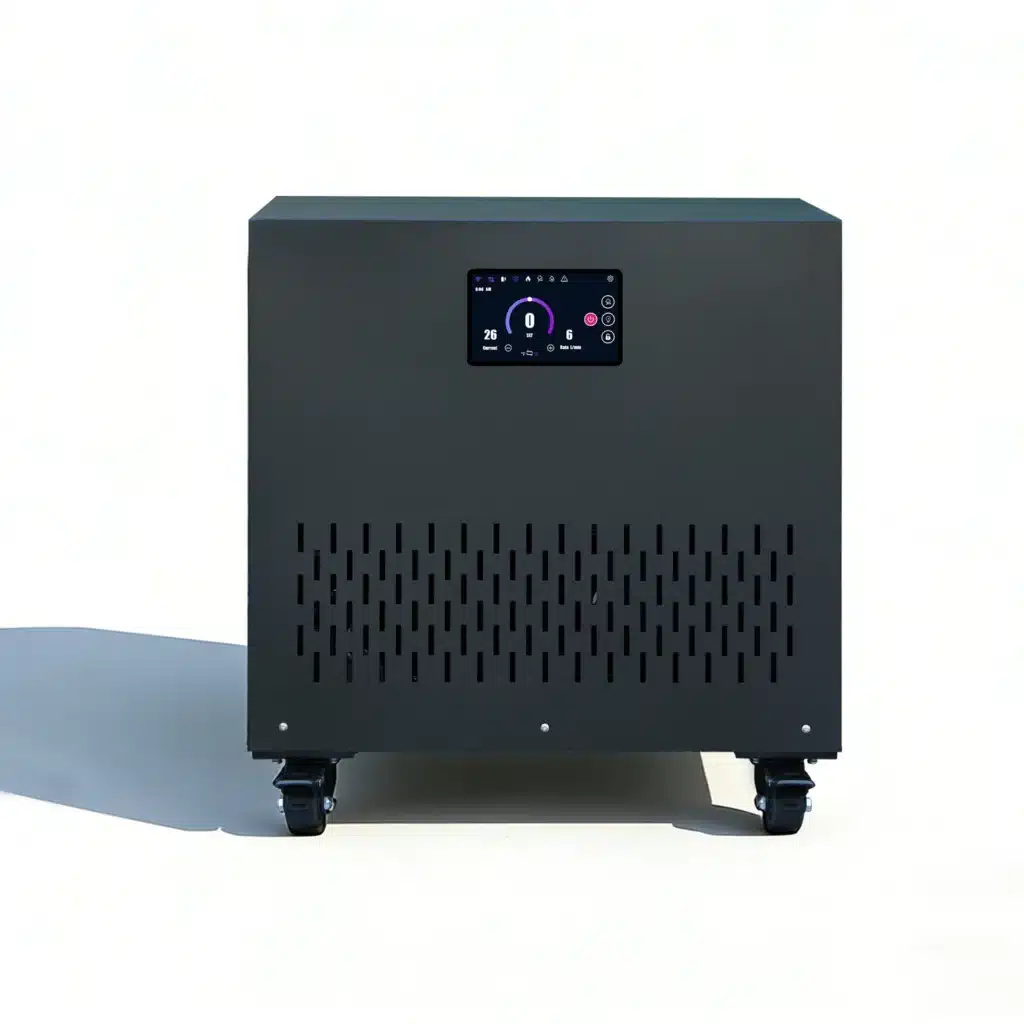
| 11. Controls | Local control, schedules, alarms and remote-access policy | Controller version, functions, fallback and update/support basis |
| 12. Acceptance | What must be measured, recorded and approved | Factory and pre-shipment records linked to the order |
These checks turn “we need a commercial cold plunge chiller” into an auditable purchase request. Unknown inputs should remain marked as unknown; they should not be replaced with sales assumptions that later appear to be buyer requirements.
Define load before comparing commercial chiller capacity
Cooling duty has two different cases. The first is pull-down: removing heat from the starting water until the target is reached. The second is temperature maintenance: removing ongoing heat entering through the tub, room or outdoor environment, circulation equipment and users. A commercial cold plunge chiller can perform differently in those cases, so the buyer should not treat one showroom temperature as a universal result.
For an initial engineering estimate, the heat removed from water can be expressed as Q = m × c × ΔT, where m is water mass, c is specific heat capacity and ΔT is the temperature change. That equation does not by itself choose a machine: heat gain, equipment efficiency, pump heat, ambient conditions and the required time still matter. The water chiller for ice bath sizing guide explains the inputs without converting horsepower into a guaranteed cooldown claim.
User count should also be stated as a pattern, not one impressive daily number. Ten sessions spread across a long day do not create the same short-term load as ten back-to-back sessions. Record the typical and worst expected sequence, the time allowed for recovery and whether the facility can pause the plunge if water or equipment readings leave the approved range.

Map the complete water loop and every responsibility
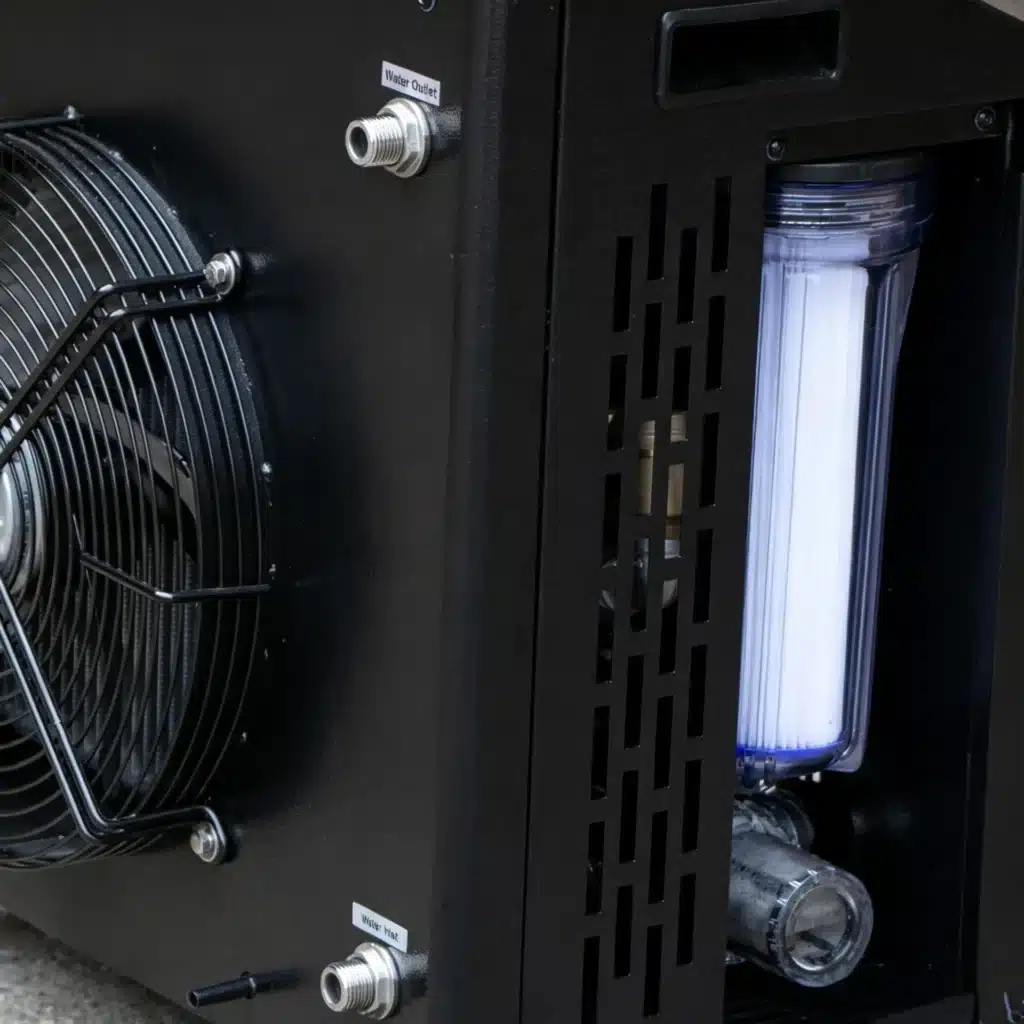
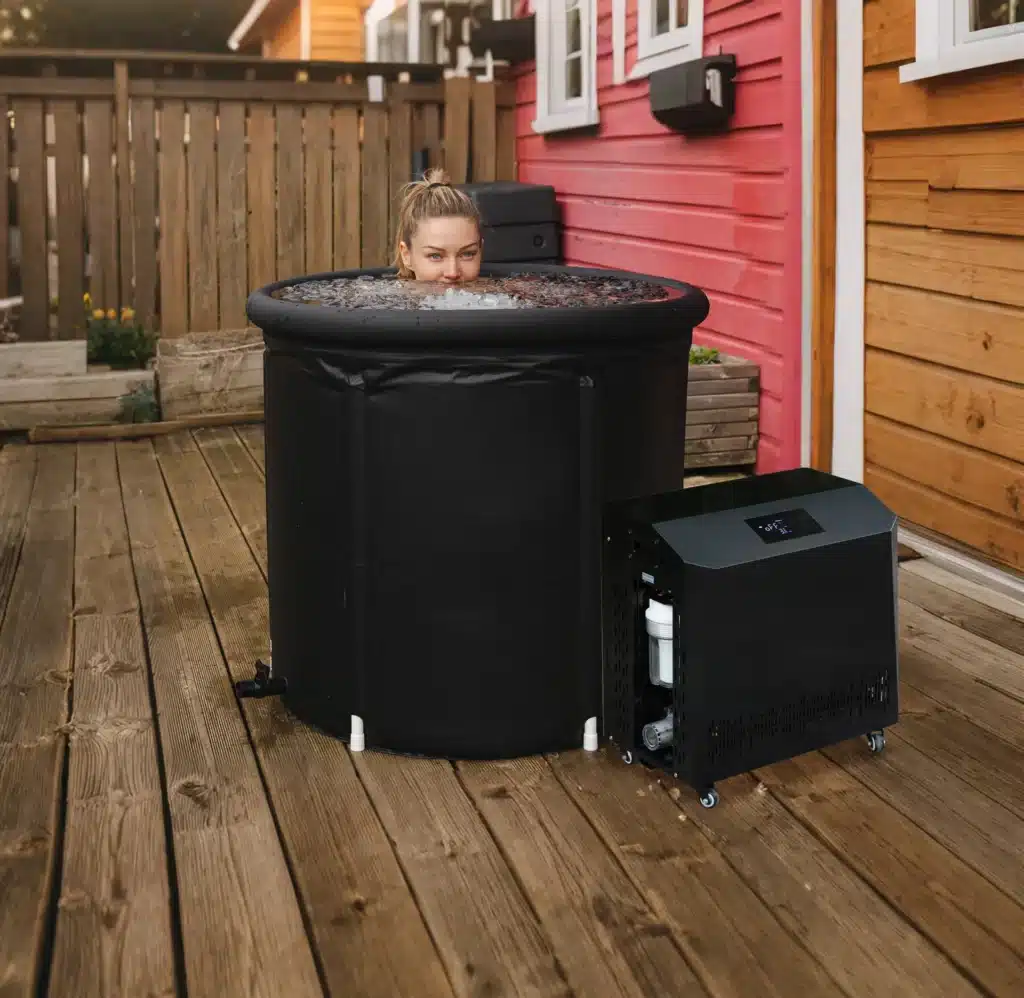
A commercial cold plunge chiller is one part of a water system. The tub, pump, filter, sanitation or disinfection equipment where applicable, hoses or pipes, valves, drains, controls and operating procedure must work together. Ask who selected each component, who confirms compatibility, who supplies connection drawings and who owns the final commissioning record.
Mechanical filtration removes suspended material; it does not prove that water is microbiologically safe. The cold plunge chiller filter guide separates filter function, restriction checks and service triggers. Multi-user facilities must also identify applicable health, building and operating rules. In the United States, the CDC describes its Model Aquatic Health Code as voluntary guidance that jurisdictions may adopt or modify; it is not a substitute for checking the actual local requirements.
Record normal flow or pressure at commissioning so later checks have a baseline. A gradual reduction can indicate a loaded filter, closed valve, blocked inlet, hose restriction, air entry or pump issue. Do not bypass a safety control or keep operating a commercial cold plunge chiller when leakage, damaged wiring, unusual noise, repeated protective trips or another unsafe condition is observed.
Review the site, electrical variant and service access
Send the supplier the destination voltage and frequency only after they have been verified for the site. Request the exact variant, nameplate fields, listed input, plug or cable arrangement and available installation documents. The 110V vs 220V cold plunge chiller guide shows why model suffix, frequency and current matter in addition to the voltage label.
Wet-area electrical design, grounding, protective devices, disconnects, cable routing and circuit capacity must be reviewed for the destination and actual installation. The U.S. Occupational Safety and Health Administration provides an electrical safety topic overview, but a commercial project still needs the qualified professionals and authorities required by its jurisdiction. A supplier quotation cannot approve the building installation.
Plan airflow and service access before finalizing the equipment location. Ask for clearances, exhaust-air direction, drain and condensate provisions, cleaning access, filter access, maximum hose distance or elevation if specified, and how the unit can be removed without dismantling the room. A cabinet squeezed into a decorative enclosure may match the interior design while undermining cooling or serviceability.

Evidence to request before approving a commercial cold plunge chiller
- Exact model and configuration code, including electrical suffix or revision.
- Current datasheet and nameplate fields for the quoted unit.
- Connection drawing with required flow, port sizes and any installation limits.
- List of included, optional and excluded pumps, filters, controls, water-care components, hoses and fittings.
- Performance record with water volume, starting and target temperatures, ambient conditions, time, cover state and measurement location.
- Controller functions and limits tied to the actual controller or software version.
- Maintenance tasks, access requirements, consumables and spare-part route.
- Requested test reports or certificates identified by document name, issuer, model coverage and revision—not a logo wall.
- Packing dimensions, weights, handling points and export packing method.
- Acceptance and deviation record signed by the responsible parties.
The cold plunge chiller factory acceptance test helps define functional evidence before release. The separate pre-shipment inspection checklist checks order identity, appearance, documents, accessories and packing. Neither record automatically establishes destination-country compliance; that decision belongs in the buyer’s compliance process.
Compare whole-life cost without inventing ROI
A commercial cold plunge chiller comparison should use the buyer’s own inputs. Include equipment and freight, taxes or duties where applicable, installation, electrical and plumbing work, ventilation or enclosure work, commissioning, measured energy, filter and water-care consumables, cleaning labour, planned service, spare parts and the operational effect of downtime. Keep currency, date, quantity and quotation basis attached to every number.
For energy, use measured complete-system kWh when possible. Otherwise calculate from verified input and realistic runtime assumptions, then label the result as an estimate. The cold plunge chiller electricity guide provides a transparent worksheet. Revenue, retention and utilization belong in the operator’s business case; they are not equipment specifications and should never be presented as guaranteed outcomes.

Copyable commercial cold plunge chiller RFQ fields
FACILITY: [gym / hotel / spa / studio / other]
DESTINATION: [country + city]
TUB: [model/material + usable water volume]
START / TARGET WATER TEMPERATURE: [°C or °F]
AMBIENT RANGE AND LOCATION: [indoor / outdoor / sheltered]
OPERATING HOURS: [hours/day]
USER LOAD: [typical + maximum users/hour and users/day]
RECOVERY TIME BETWEEN SESSIONS: [minutes]
INSULATION / COVER: [details]
WATER LOOP: [pump, filter, sanitation, hose/pipe sizes, length, elevation]
ELECTRICAL SUPPLY: [verified voltage + frequency + site review status]
CONTROL REQUIREMENTS: [local, schedules, alarms, remote]
SERVICE ACCESS / DOWNTIME TOLERANCE: [details]
DOCUMENTS REQUIRED: [datasheet, drawings, manual, labels, reports]
ACCEPTANCE TEST: [conditions, readings, records and approver]
PACKING / DELIVERY BASIS: [quantity, Incoterms® request, named place]Send those fields through the OEM cold plunge chiller solutions route when the project also includes branding, documents, packaging or a matched tub. A complete brief allows the supplier to return assumptions and gaps instead of hiding them inside a model recommendation.
Turn the commercial cold plunge chiller into an operating system
Procurement is only the first owner of a commercial cold plunge chiller. Before opening the facility, transfer the approved configuration and limits to operations, maintenance and any external service provider. The handoff should name who checks water condition, filter state, visible flow, leaks, temperature, controller alarms, ventilation and electrical condition; who can stop use; and who contacts the equipment supplier.
Create an opening check, an operating log and a closure or cleaning record that fit the site. Do not invent a universal interval. Base the schedule on model instructions, local requirements, actual user load and observed changes. A commercial cold plunge chiller operating log becomes more useful when it records exceptions—slow recovery, unusual noise, repeated alarms, filter loading or a changed setpoint—instead of showing only a daily tick.
| Observed condition | Immediate boundary | Record for follow-up |
|---|---|---|
| Reduced or absent flow | Follow the approved shutdown/check route; do not bypass flow protection | Filter state, valve positions, pump sound, error code and time |
| Water leak | Keep water away from electrical equipment and isolate as instructed | Location, estimated extent, photos and affected components |
| Repeated protective trip | Do not repeatedly reset without finding the cause | Nameplate, site supply, code, operating state and sequence |
| Temperature recovery slower than baseline | Check changed conditions before declaring compressor failure | Water volume, users, ambient, cover, flow and timestamps |
| Cloudy or unacceptable water condition | Pause use under the facility procedure | Readings, treatment actions, filter status and local-code response |
Keep a baseline from commissioning. When the same commercial cold plunge chiller later behaves differently, compare like with like: similar water volume, ambient condition, target, cover state and user load. This prevents a maintenance team from treating a seasonal heat load or loaded filter as proof of a refrigeration defect, while still escalating genuine faults with useful evidence.
Finally, control changes. A replacement pump, filter cartridge, hose diameter, controller, electrical variant or water-care component can alter the approved system. Record the proposed change, compatibility basis, document revision and any repeat test required before returning the commercial cold plunge chiller to normal operation. That change log is especially important when the tub and equipment came from different suppliers.
Commercial cold plunge chiller FAQ
What makes a cold plunge chiller commercial?
A commercial cold plunge chiller should be evaluated against a documented multi-user duty, installation, maintenance plan and service route. The word “commercial” alone does not prove capacity, continuous-duty suitability or regulatory acceptance.
How many users can one commercial cold plunge chiller support?
There is no universal user count. Water volume, user sequence, ambient heat, target temperature, tub insulation, circulation and allowed recovery time all affect the duty. Ask for an answer tied to those inputs and a stated test method.
Does the chiller’s filter make multi-user water safe?
No. Mechanical filtration can remove suspended particles, but it does not by itself establish sanitation or code compliance. The facility needs a complete water-management procedure based on the equipment instructions and applicable local requirements.
Should a facility buy a backup commercial cold plunge chiller?
That is an operational risk decision. Compare the cost and space of redundancy with the facility’s downtime tolerance, service access, spare-part route and ability to pause the plunge safely. Do not assume every dual-unit layout can share the same water loop.
What should be tested before shipment?
At minimum, identify the exact commercial cold plunge chiller and agreed configuration, then record the approved functional checks, water and ambient test conditions, electrical data, controller operation, leakage observations, accessories, documents, packing and any deviations.