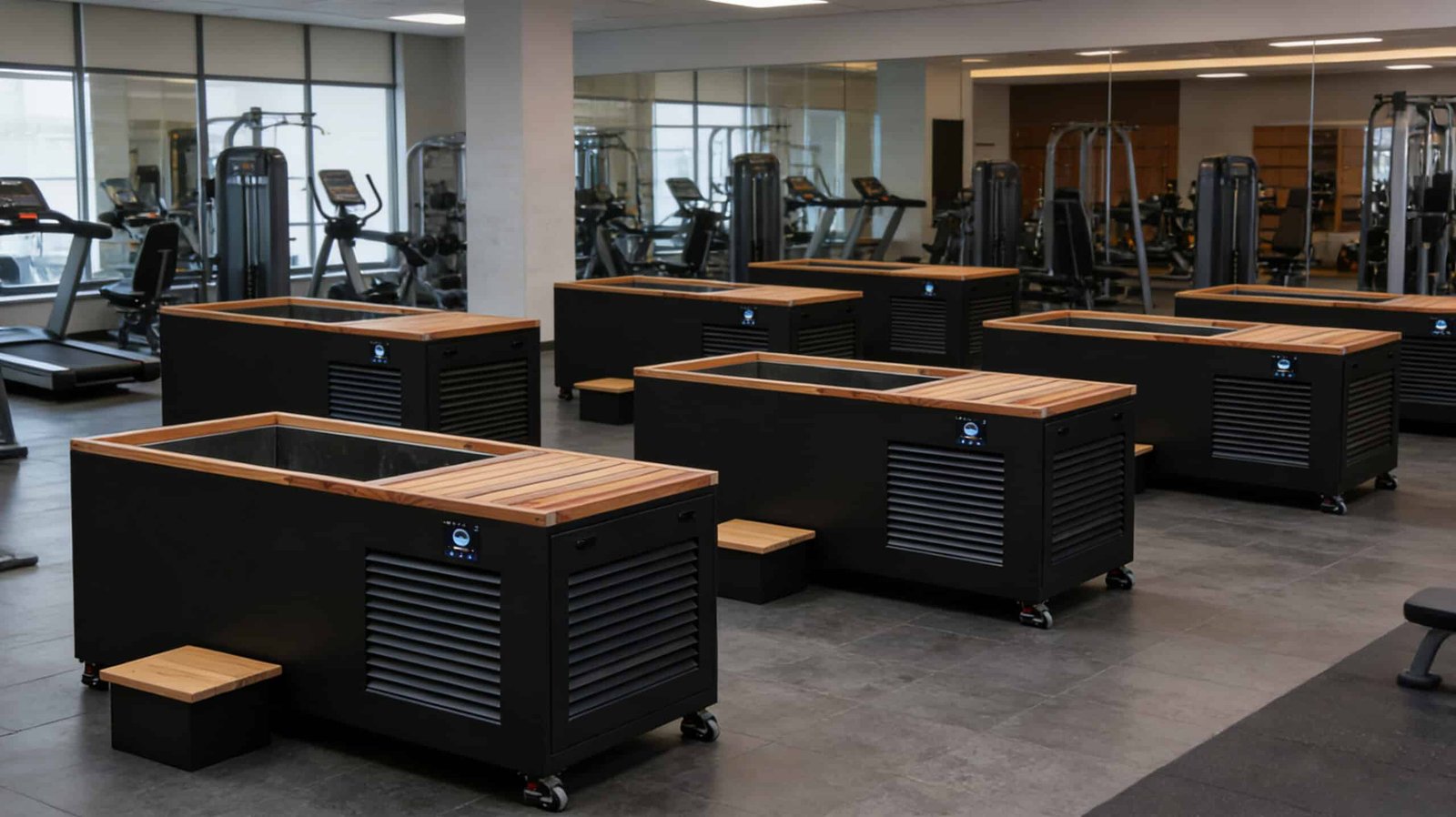
Adding a cold plunge for small business use is one of the smartest investments a gym or boutique studio can make right now — and one of the easiest to get completely wrong. A gym owner in Canada learned this the hard way. He bought a cold plunge chiller from another supplier with no filtration system included. Within six months of commercial use with 20+ daily members, hair and debris had clogged the water pump. The pump failed. The chiller ran continuously, cooled slowly, and rarely reached target temperature before the next session. The whole system needed to be replaced entirely.
The difference between a cold plunge for small business that works reliably for years and one that fails within months comes down to a few specific decisions made before any money changes hands. As a cold plunge chiller manufacturer supplying gyms, wellness studios, and sports facilities across more than 80 countries, OMNI Ice has seen both outcomes — and exactly what separates them.
Why a Cold Plunge Is One of the Best Investments a Small Gym Can Make
Before getting into specifications, it is worth being clear about the business case. Research published on PubMed cold water immersion benefits consistently shows that cold water immersion reduces inflammation, accelerates muscle recovery, and improves mental resilience with regular use. For gym members who train seriously, this is not a luxury — it is a tool that makes their training more effective.
For the business, the numbers are equally compelling. A cold plunge for small business gives a gym something most competitors do not have. It justifies a premium membership tier. It becomes a reason members talk about your facility to others. And critically, it gives members a reason to stay after their workout — increasing their time in your facility and their connection to it.
The Canadian gym we mentioned at the start saw a direct increase in new member sign-ups after finally installing a properly functioning cold plunge system. The cold plunge was not just an amenity — it became a member acquisition and retention tool. For a detailed breakdown of how commercial cold plunge for gyms installations drive business growth, our dedicated gym facility guide covers the full ROI case.
The Three Mistakes Small Businesses Make When Buying a Cold Plunge System
Mistake 1: Buying a Consumer-Grade Chiller for Commercial Use
Consumer-grade cold plunge chillers are designed for one or two sessions per day in a home environment. A small gym running 20 or more sessions daily is asking the compressor to operate at a duty cycle it was never rated for. The result is exactly what the Canadian gym experienced — continuous running, slow cooling, and premature failure.
The specification that separates consumer from commercial grade is duty cycle rating. Consumer units are rated for around 8 hours at 25°C ambient. Commercial units are rated for 24-hour continuous operation. This single specification predicts real-world reliability in commercial use better than HP rating alone — and it is almost never mentioned in consumer product listings.
Mistake 2: Skipping Filtration
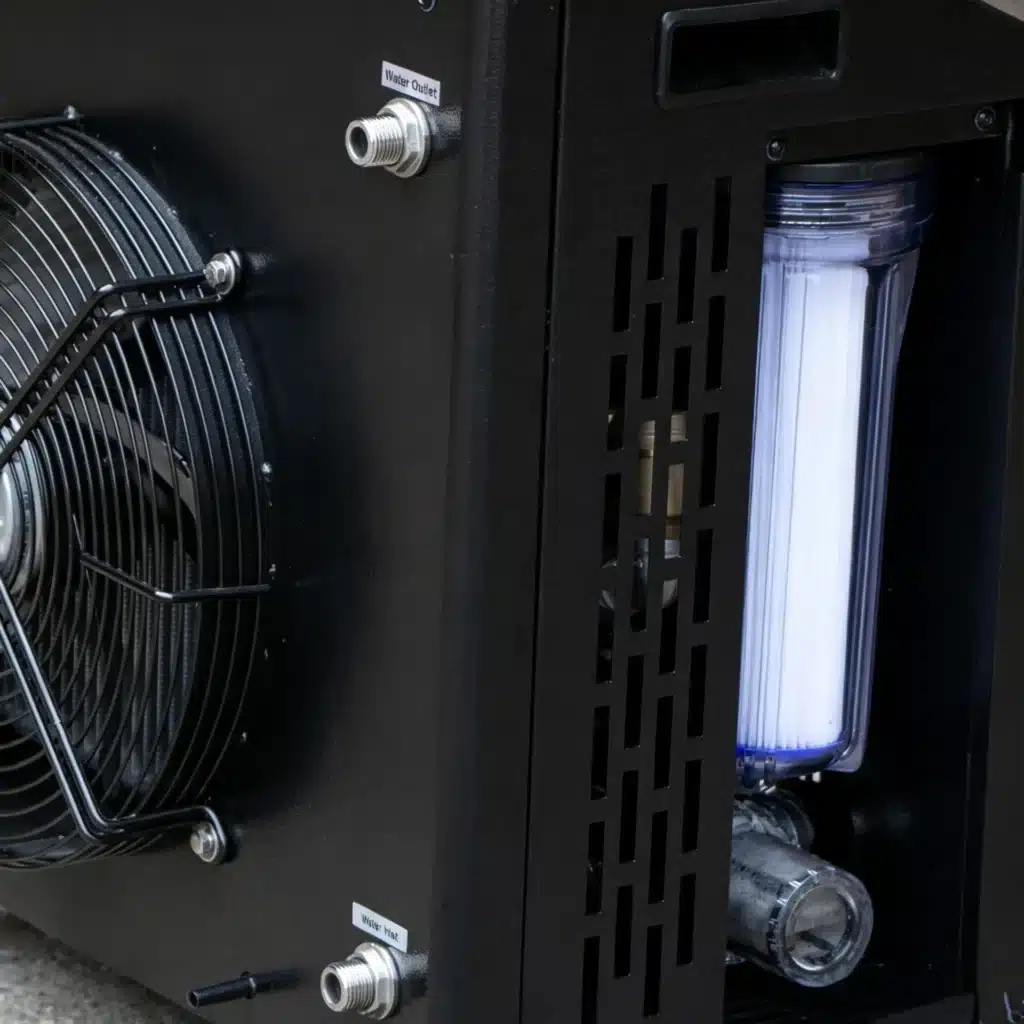
This is the mistake that destroyed the Canadian gym’s first system. In a home cold plunge with one user, water quality degrades slowly. In a gym with 20 daily users, hair, skin cells, and body oils enter the water every session. Without a mechanical filter before the pump and chiller, this debris accumulates in the pump impeller and heat exchanger. Flow drops, the chiller works harder, and components fail months ahead of their rated lifespan.
For any cold plunge for small business installation with more than 5 daily users, filtration is not optional — it is the difference between a system that lasts and one that does not.
Mistake 3: Underestimating Water Management
Cold water slows bacterial growth but does not stop it. In a commercial environment with multiple daily users, water quality without active sanitation degrades within days. Ozone disinfection is the professional standard — it eliminates bacteria without chemical residue, does not affect pH, and does not irritate skin. For a small business running a cold plunge as a member amenity, ozone keeps operational overhead low and water quality consistently high.
Real Case Study: A Canadian Gym Gets It Right the Second Time
Case Study — Boutique Gym, Canada
Situation: A newly opened gym in Canada wanted to offer cold plunge therapy as a premium membership benefit. Their first attempt — a consumer-grade chiller from another supplier with no filtration system — failed within six months. The pump clogged with debris, cooling was consistently slow, and water temperature rarely reached target before the next member session.
The problem: 20+ members using the cold plunge daily, no filtration, consumer-grade duty cycle, no sanitation system. The first unit was simply the wrong tool for the workload.
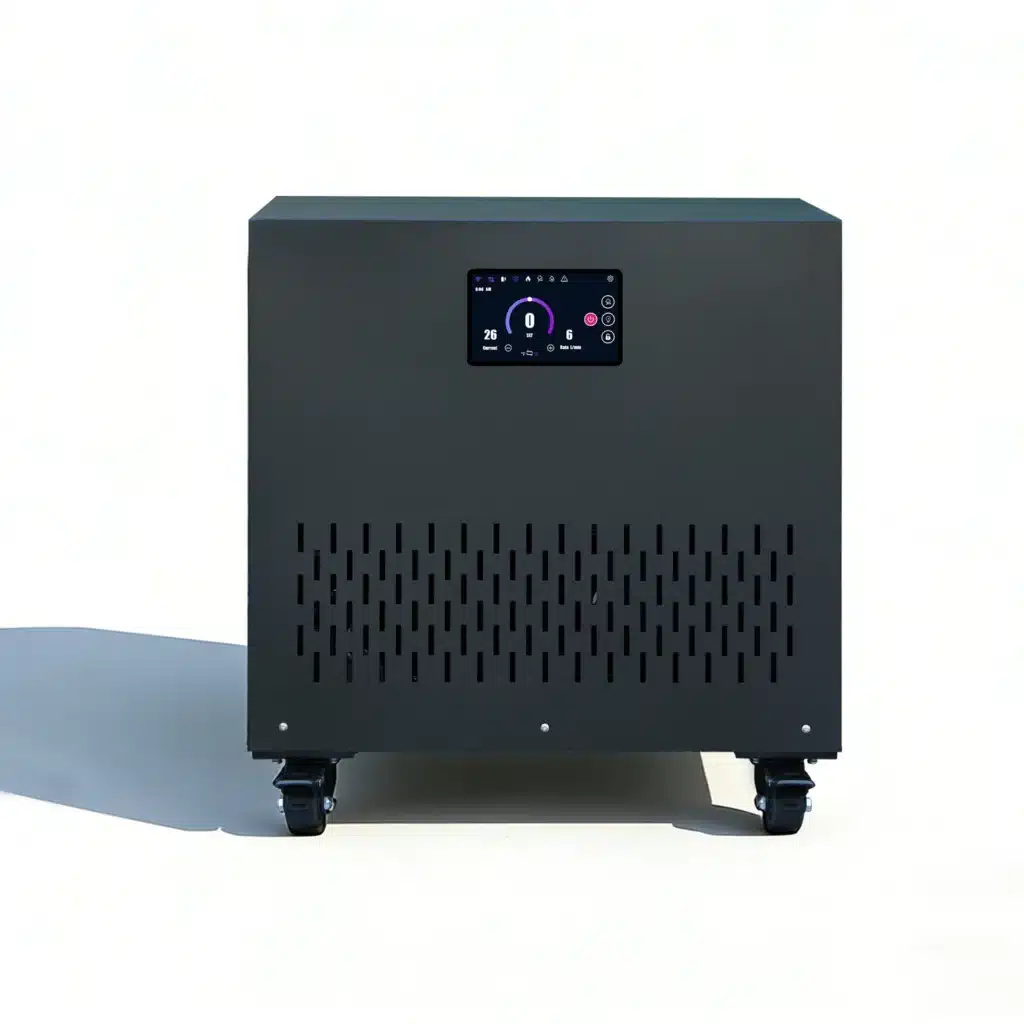
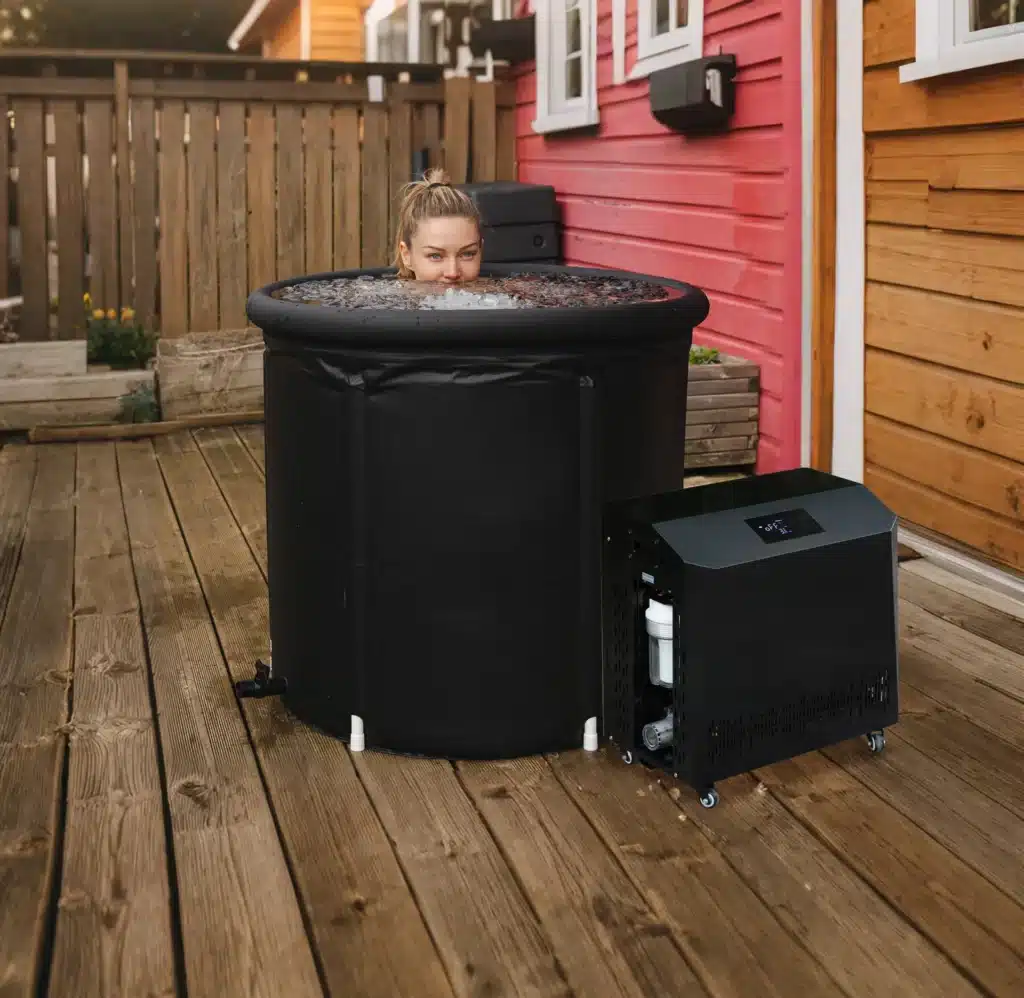
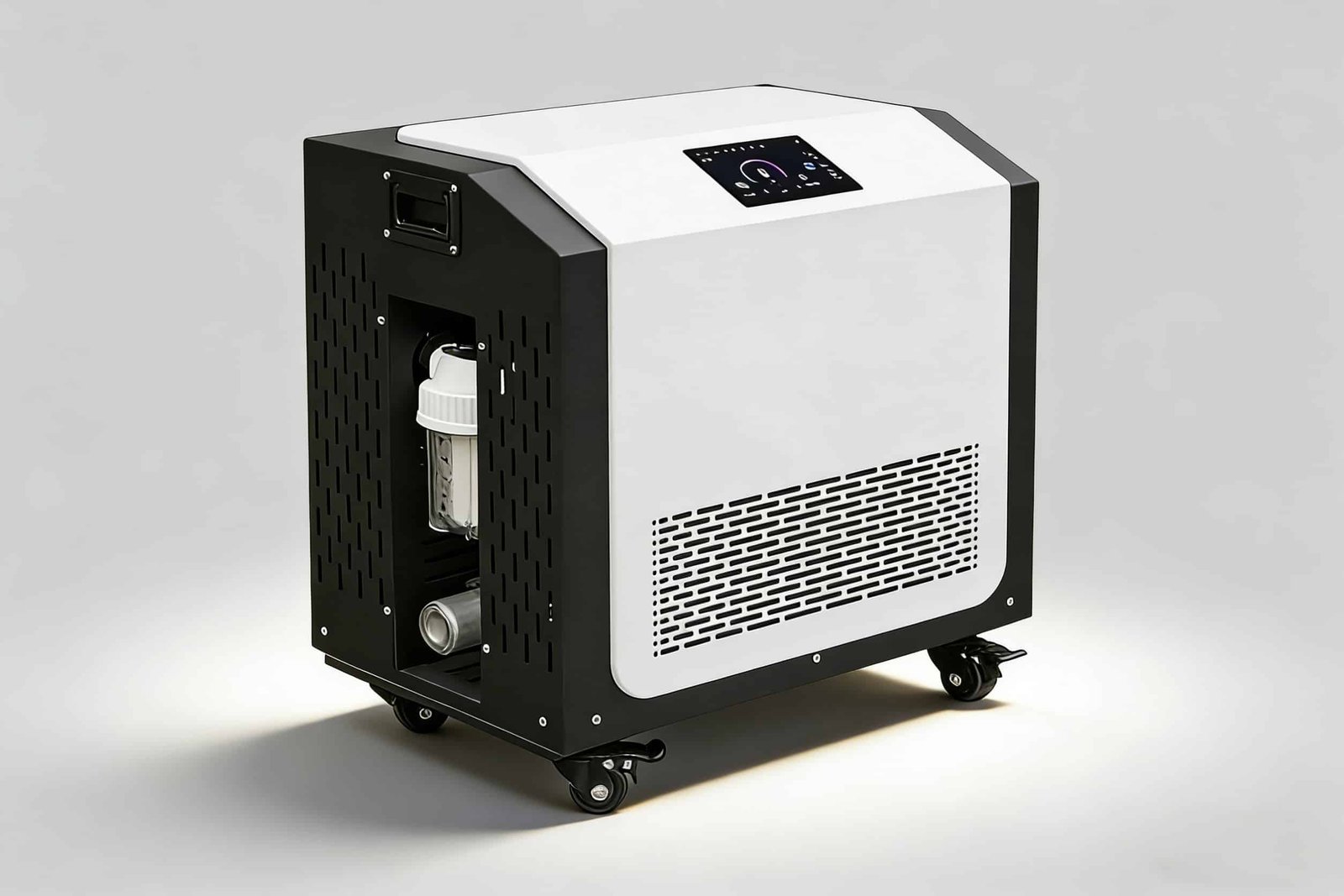
OMNI Ice solution: The gym replaced the failed system with an OMNI Ice CHU-10-RV — 1HP, reaches 0.5°C, built-in ozone disinfection, external replaceable filter, WiFi app control — paired with an OMNI Ice WT-10 all-in-one stainless steel cold plunge system.
Why this configuration: The CHU-10-RV’s ozone disinfection handles water quality automatically without chemical addition. The external cartridge filter catches hair and particulates before they reach the pump. The 1HP commercial-rated compressor handles 20+ daily sessions without running at its limit. WiFi app control allows the gym owner to monitor water temperature and schedule maintenance cycles remotely.
Result: Consistent sub-5°C water temperature across all sessions. No pump failures. Water changes every 10 to 14 days rather than every few days. And the business outcome that mattered most: a measurable increase in new member sign-ups from people specifically seeking post-workout cold therapy. Members who previously left immediately after their workout now stayed for cold plunge sessions — increasing their engagement and their loyalty to the facility.
What Specifications Actually Matter for Small Business Use
HP and Cooling Speed
For a small gym or studio running 10 to 30 sessions per day, 1HP is the practical minimum. OMNI Ice factory testing shows the CHU-10-RV cools 300 litres from 25°C to 3°C in approximately 3.5 hours at 20°C ambient — and recovers 1°C of temperature gain from a user session in approximately 10 to 15 minutes. For sessions spaced 15 to 20 minutes apart, this recovery rate is sufficient. For a detailed HP breakdown across different session volumes, see our commercial cold plunge chiller guide.
Filtration System
The minimum for any commercial installation is a pre-filter before the pump and a fine cartridge filter before the chiller inlet. Replace the cartridge every 2 to 3 weeks for a gym with 20+ daily users. This five-minute maintenance task prevents the far more expensive problem of pump and heat exchanger failure — the exact failure mode of the Canadian gym’s first system.
Ozone Disinfection
Ozone works automatically, requires no chemical purchasing, and leaves no residue. For a small business owner who needs water management to be simple and reliable, ozone is the right choice. The OMNI Ice CHU-10-RV includes built-in ozone as standard — nothing additional to purchase or install.
Remote Monitoring
WiFi app control means you can check water temperature, receive fault alerts, and schedule sanitation cycles from your phone without being on-site. For a small business owner managing multiple responsibilities, this reduces staff time on cold plunge management significantly.Running a hotel or resort spa instead? See our cold plunge for hotels and spas buyer’s guide for hospitality-specific specifications, installation types, and OEM options.
Running Costs: What to Budget for a Small Business Cold Plunge
| Cost Item | Frequency | Estimated Cost |
|---|---|---|
| Electricity (1HP, ~8 hours/day operation) | Monthly | $25–$45 |
| Filter cartridge replacement | Every 2–3 weeks | $8–$15 per cartridge |
| Full water change | Every 10–14 days | Water cost only, minimal |
| Total monthly operational cost | Monthly | ~$50–$80 |
| Premium membership revenue (50 members × $20/month) | Monthly | $1,000+ |
The real ROI question: How many additional memberships does a cold plunge help you sell or retain? For most small gyms, the answer is enough to cover the system cost within two to three months. The ongoing operational cost after that is effectively funded by the premium memberships the amenity generates.
Recommended OMNI Ice Configuration for Small Business
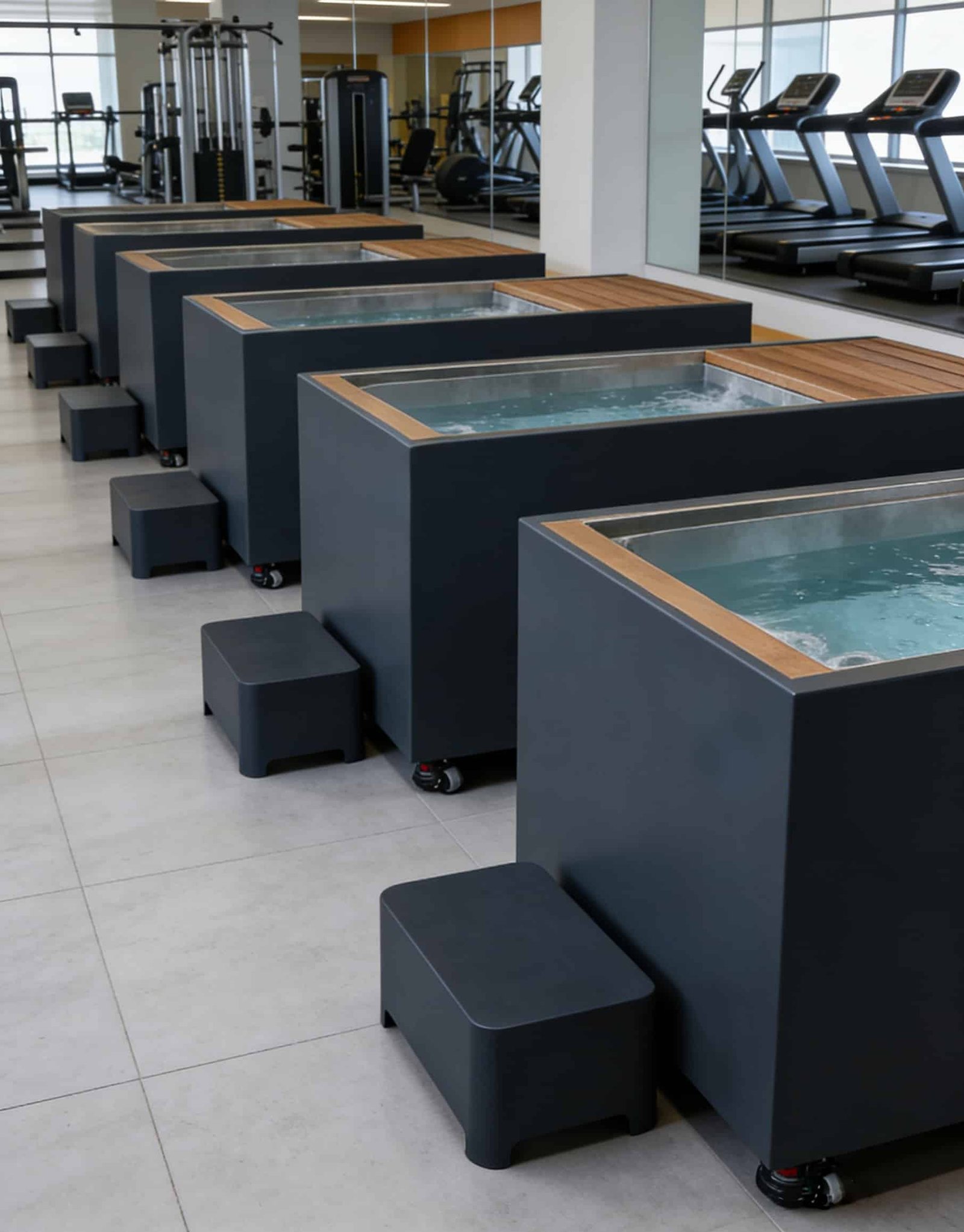
For most small gyms and boutique studios running 10 to 30 daily sessions, the configuration that delivers commercial reliability without oversized cost is straightforward.
Chiller: OMNI Ice CHU-10-RV — 1HP, reaches 0.5°C, built-in ozone, external filter, WiFi app control. This is the exact configuration the Canadian gym now runs successfully after replacing their failed consumer-grade system.
Tub: OMNI Ice WT-10 — all-in-one stainless steel system designed for commercial use, compatible with the CHU-10-RV with matching fittings. No adapter required, no compatibility issues.
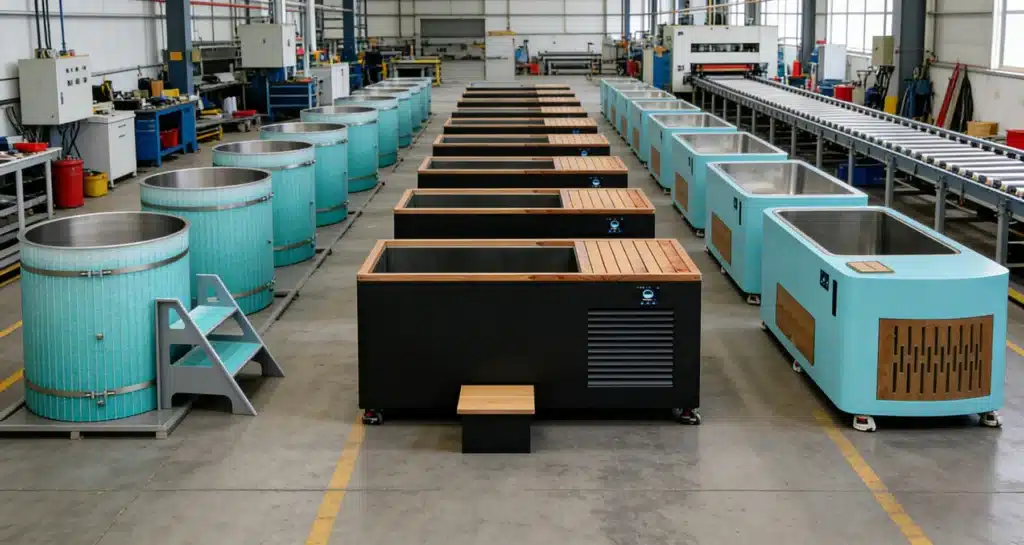
Both units are CE and ETL certified, factory-direct from OMNI Ice, with OEM branding available for businesses building their own cold therapy identity. For facilities expecting rapid growth above 30 daily sessions, the CHU-15-RV at 1.5HP provides additional headroom from day one. Browse the full range of cold plunge chillers or contact OMNI Ice for a configuration matched to your facility.
For CrossFit-specific equipment requirements and ROI breakdown, see: Cold Plunge CrossFit Setup Guide
Frequently Asked Questions
What is the best cold plunge setup for a small gym?
For a small gym running 10 to 30 sessions per day, the practical configuration is a 1HP commercial-rated chiller with built-in ozone disinfection, an external replaceable filter, and a stainless steel tub with matching fittings. The OMNI Ice CHU-10-RV paired with the WT-10 tub is exactly this configuration — the same setup the Canadian gym now runs successfully after replacing a failed consumer-grade system.
How much does it cost to add a cold plunge to a gym?
Factory-direct from OMNI Ice, a commercial cold plunge system for small business use is significantly less expensive than branded consumer products. The ongoing running cost is typically $50 to $80 per month for a facility running 20 daily sessions. Premium membership revenue typically covers the system cost within two to three months of installation.
How often does a commercial cold plunge need maintenance?
For a gym with 20 daily users: filter cartridge replacement every 2 to 3 weeks (under 5 minutes), full water change every 10 to 14 days, and a monthly wipe-down of the tub interior. With ozone disinfection running continuously, there is no daily chemical addition required. The WiFi app on OMNI Ice chillers allows remote monitoring so you can track water temperature without being on-site.
Can one cold plunge chiller handle multiple users per day?
Yes, provided it is correctly specified. A 1HP commercial-rated chiller like the OMNI Ice CHU-10-RV handles 20 or more sessions per day in a 300-litre insulated tub, recovering approximately 1°C of temperature gain per session in 10 to 15 minutes. For sessions spaced 15 to 20 minutes apart, this recovery rate is sufficient. Above 30 daily sessions, a 1.5HP unit provides the additional headroom needed.
Do I need CE certification for a commercial cold plunge chiller?
For facilities in Europe, CE certification is required for commercial electrical equipment. For North America, ETL certification is the relevant standard. OMNI Ice commercial chillers carry both CE and ETL certification, covering most major commercial markets globally.
Ready to Add a Cold Plunge to Your Gym or Studio?
Tell us your daily session volume, facility size, and location, and OMNI Ice will give you a direct configuration recommendation. Factory-direct pricing, CE and ETL certified, OEM available. We have helped gyms, wellness studios, and sports facilities across 80+ countries get the right system from day one.