Use this cold plunge chiller commissioning checklist after installation and before operational handover. Its purpose is to decide whether the identified chiller, tub, water loop, electrical supply and controls are ready for routine use at the destination site. A temperature shown on the controller is only one observation. The completed cold plunge chiller commissioning checklist should end with a signed pass, conditional pass or hold decision, supported by recorded site conditions and clearly listed open items.
This guide is for importers, distributors, installers, commercial facilities and OEM brand owners that need a practical handover record. It does not replace the exact product manuals, qualified electrical work, local wet-area requirements, a factory acceptance test, a pre-shipment inspection or a maintenance program. The five gates below move from system identity to site readiness, water-loop checks, controlled operation and signed handover.
What a cold plunge chiller commissioning checklist decides before handover
The final question is not simply “can the machine cool?” It is “is this complete installation ready for its agreed operating duty, and can a named operator use it within documented limits?” A chiller that ran correctly at the factory can still encounter different power, plumbing, ambient, drainage or user conditions after delivery.
| Stage | Decision at this stage | Typical timing | Related guide |
|---|---|---|---|
| Factory acceptance test | Did the identified unit or sample meet the agreed witnessed factory checks? | Before shipment | Factory acceptance test guide |
| Pre-shipment inspection | Do identity, appearance, quantity, documents, accessories and packing match the order? | Before release/loading | Pre-shipment inspection checklist |
| Site commissioning | Does the installed system operate with the real site, tub, utilities, water loop and controls? | After destination installation | This cold plunge chiller commissioning checklist |
| Maintenance | What recurring care and records keep the accepted baseline useful? | After handover | Maintenance checklist |
| Troubleshooting | What changed after a symptom appeared, and where is the safe escalation boundary? | After a fault or deviation | Troubleshooting guide |
For a self-assembled tub, pump, filter and chiller, first use the DIY cold plunge chiller setup guide to define the build and interface boundaries. Then commission the completed arrangement. Factory evidence cannot prove that a buyer-supplied pump, long hose route or destination circuit is correct.
The process logic is well established outside cold-plunge equipment. ASHRAE Guideline 0’s published scope describes commissioning as verification against the owner’s project requirements, with acceptance, documentation and operations-and-maintenance training across project phases. This article borrows those useful principles; it does not claim that this five-gate form establishes ASHRAE compliance for a project.

Gate 1: freeze the installed-system identity
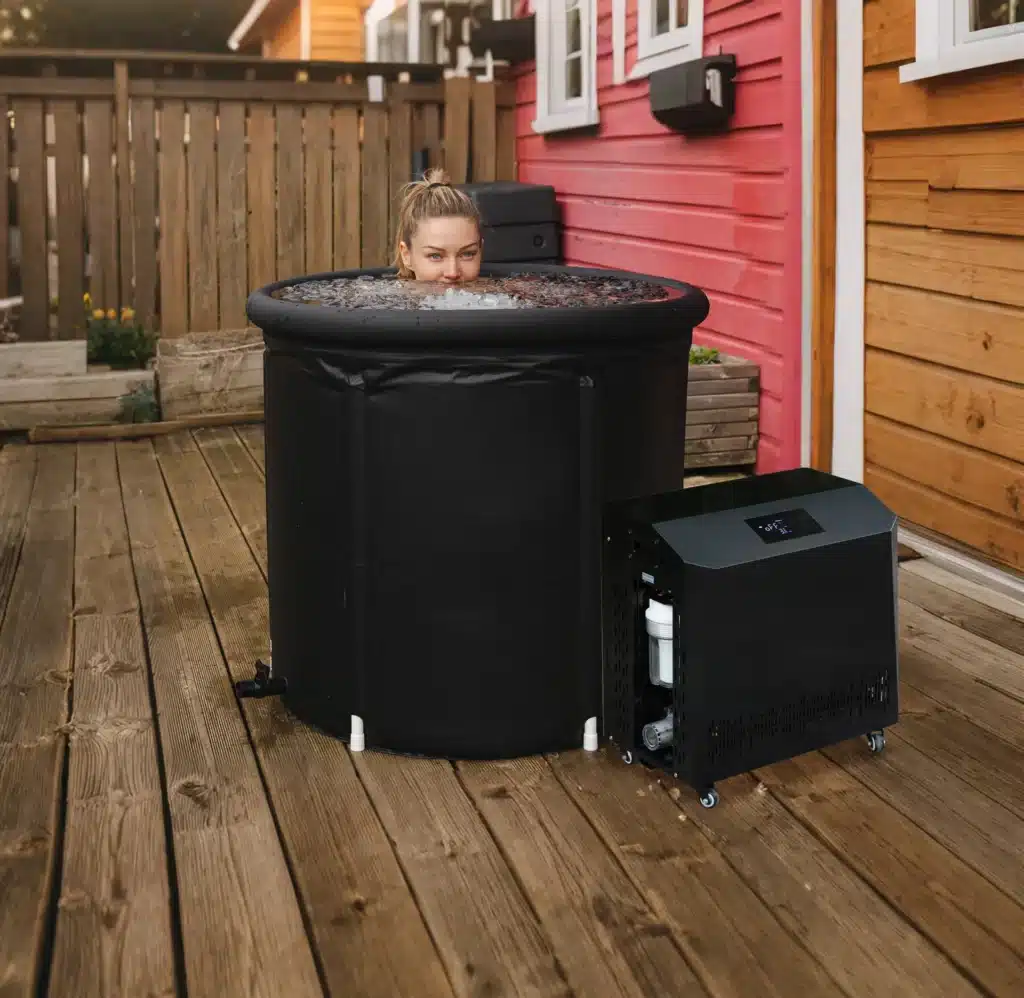
Begin the cold plunge chiller commissioning checklist while the equipment is still de-energized. Photograph the complete installation and identification plate, then compare the actual system with the approved order, drawings and manuals. The record should make it possible for a later technician to identify exactly what was accepted without guessing from color or horsepower.
| Identity field | Record | Hold when |
|---|---|---|
| Chiller | Model, revision, serial/equipment ID, electrical variant and controller version where relevant | The unit cannot be matched to the order or applicable manual |
| Tub | Model or description, usable water volume, ports, cover and insulation | The commissioned volume or interfaces differ from the approved basis |
| Water loop | Pump, filter, sanitation components, hose/pipe size, connection type and flow direction | A component, direction or permitted flow condition is unknown |
| Site | Installation address/area, indoor or outdoor condition, ambient limits, drainage and service access | The location conflicts with the equipment instructions or approved plan |
| Documents | Order/specification revision, drawings, manuals, inspection records and open-deviation list | Different teams are using different revisions |
A model number is not the whole system identity. One project may use an integrated pump and filter; another may use external components selected by the buyer or installer. The record should mark each item as supplier-provided, installer-provided or buyer-provided. That simple ownership field prevents a missing valve, connector or filter from being discovered only after the commissioning team has assembled.
Configuration changes require a visible disposition. If the installed hose size, pump, controller, plug, water-treatment component or tub differs from the approved record, do not silently edit the drawing to match. Name the change, assess its effect, obtain the required approval and identify any retest. Gate 1 passes only when the physical system and controlled record agree.
Gate 2: confirm site and electrical readiness before energizing
Commissioning is the wrong moment to improvise electrical compatibility. A qualified person should compare the unit nameplate and manual with the actual voltage, frequency, phase where applicable, connection method, circuit, protective devices and wet-area requirements. The cold plunge chiller commissioning checklist records that review and its reference; it is not a substitute for performing or approving electrical work.
- Confirm the equipment is on a stable, level and serviceable base.
- Keep required air inlets, exhaust paths and maintenance access clear according to the exact manual.
- Confirm drainage, fill and spill control before water is introduced.
- Check the permitted indoor/outdoor environment and weather protection for the specific unit.
- Keep plugs, connections, controls and electrical equipment out of standing water.
- Resolve damaged wiring, overheated parts, water ingress, missing protection or an unverified supply before energizing.
For a U.S. workplace safety reference, OSHA’s electrical safety quick card says not to operate electrical equipment while standing in water, not to repair cords or equipment unless qualified and authorized, and to use ground-fault protection in damp locations. Destination rules and the equipment instructions still control the actual project. Elsewhere, use the applicable local authority and qualified electrical professional rather than treating a U.S. page as a global wiring code.
Record the evidence as a reference, not a vague tick. Useful entries include the nameplate photograph, circuit or inspection reference, protective-device type, date, reviewer and any limitation. Never include passwords, access codes or personal data in a public handover pack. Gate 2 is a hold if electrical readiness or the wet-area boundary remains unresolved.

Gate 3: prove the actual water loop
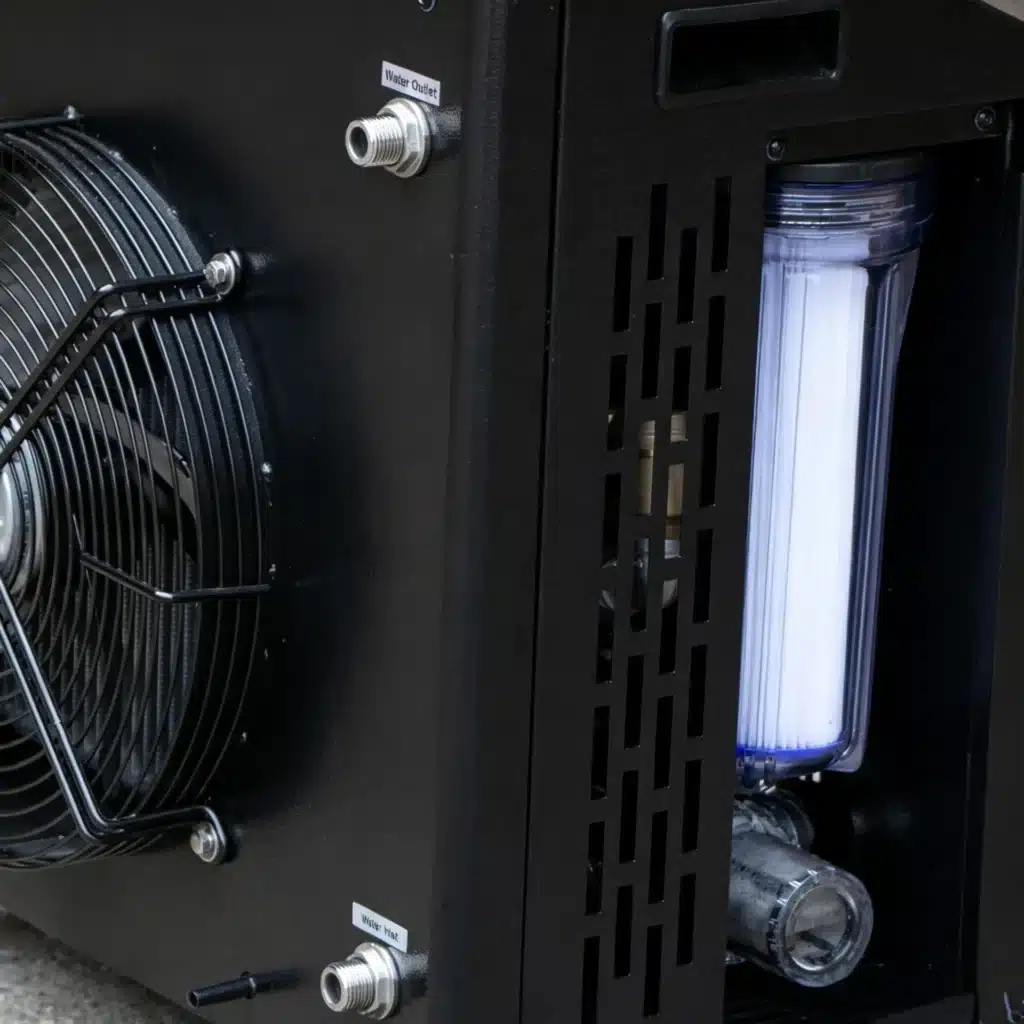
A chiller can be correctly selected and still receive poor flow at the site. This is why a cold plunge chiller commissioning checklist must trace the installed water path from tub outlet through every pump, strainer, filter, sanitation component and heat exchanger, then back to the tub. Compare that route with the approved drawing and the manuals for all connected equipment.
The team should confirm hose or pipe size, supported routing, valve positions, connection security, filter condition, drain points and the permitted method for filling, priming and removing air. Use the manufacturer’s procedure. Do not run a pump dry, bypass a flow switch or defeat an alarm to make the system appear ready.
| Water-loop check | Evidence to capture | Why “looks fine” is weak |
|---|---|---|
| Approved route | Marked drawing plus one wide installation photograph | A close-up cannot show sequence or flow direction |
| Connections | Port/fitting identity, seating, supports and close-ups | A dry fitting before operation does not prove it remains leak-free |
| Filter and pump condition | Clean starting condition, priming method and permitted operating indication | Open-flow marketing data is not flow through the installed loop |
| Leak observation | Locations checked, operating condition, duration and result | “No leaks” has no boundary without time and condition |
| Flow evidence | Measured value where required, or the model-approved observable indication | Water movement at the tub does not establish an unknown required flow rate |
There is no responsible universal flow value for every cold plunge installation. The accepted range must come from the exact chiller, pump, filter and plumbing design. If measurement is required, state the instrument, location, units and acceptance criterion. If only an observable indicator is permitted, describe it precisely and do not relabel it as measured flow.
Gate 3 passes when the as-installed route is documented, connections remain dry for the agreed observation, the pump and filter begin in the defined condition, and circulation meets the approved method. A leak, repeated loss of prime, restriction, cavitation-like noise or unexplained protection event sends the system to hold and the appropriate model-specific diagnosis.
Gate 4: record a controlled run, not a magic cooldown promise
The cold plunge chiller commissioning checklist needs a running baseline that another person can reproduce. “It reached 5°C” is not reproducible unless the record also states water volume, starting temperature, ambient condition, setpoint, timestamps, cover state, water-loop condition and measurement location.
| Baseline field | Example of a useful entry | Do not write |
|---|---|---|
| Duty | Usable water volume, start, target and operating schedule | “Normal cold plunge” |
| Environment | Ambient temperature/location, direct sun or nearby heat source, cover state | “Indoor” with no relevant condition |
| Water temperatures | Start, timed readings, controller value and independent location if required | One final screenshot |
| Circulation | Filter state, valve position and measured/approved flow indication | “Pump on” |
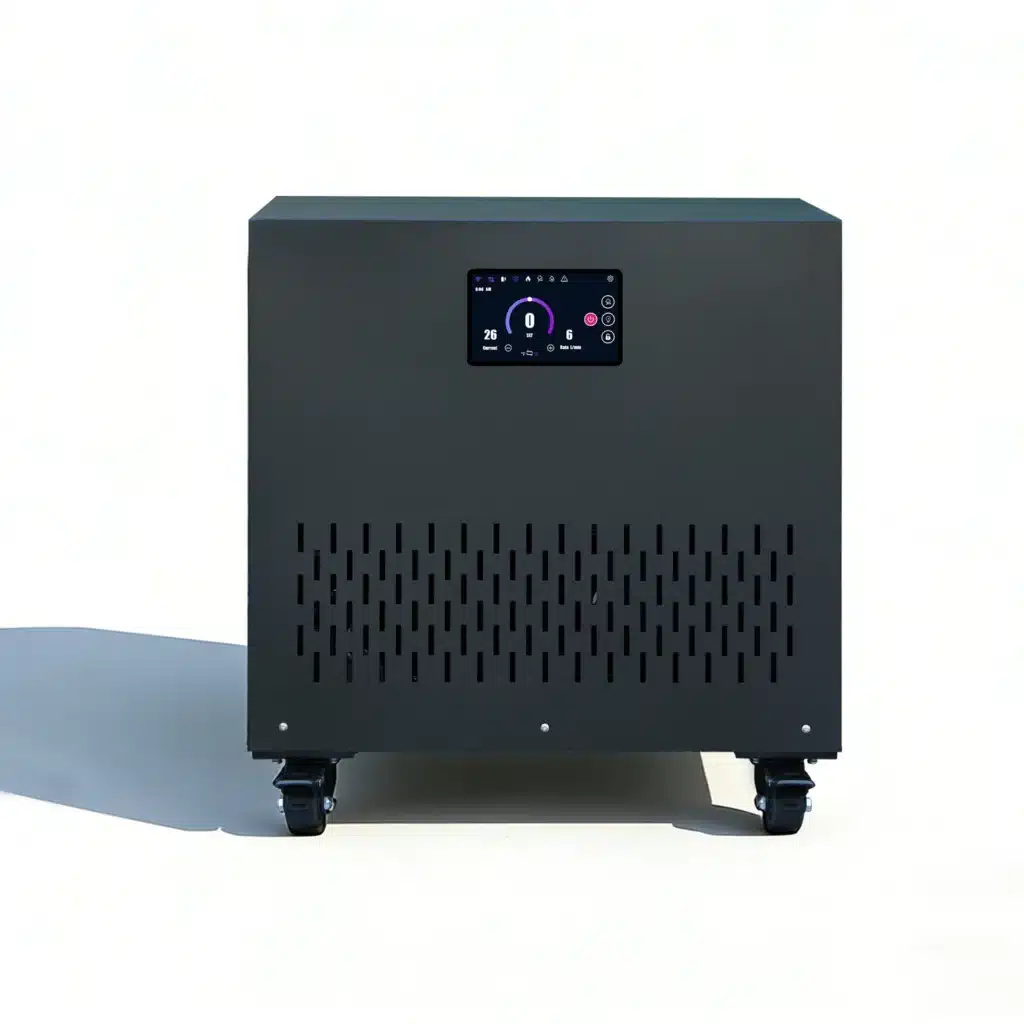
| Controls | Setpoint, displayed temperature, ordered mode, local/app control and alarms observed | “All functions good” |
| Outcome | Criterion, observation, evidence file and pass/hold disposition | A result without the approved limit |
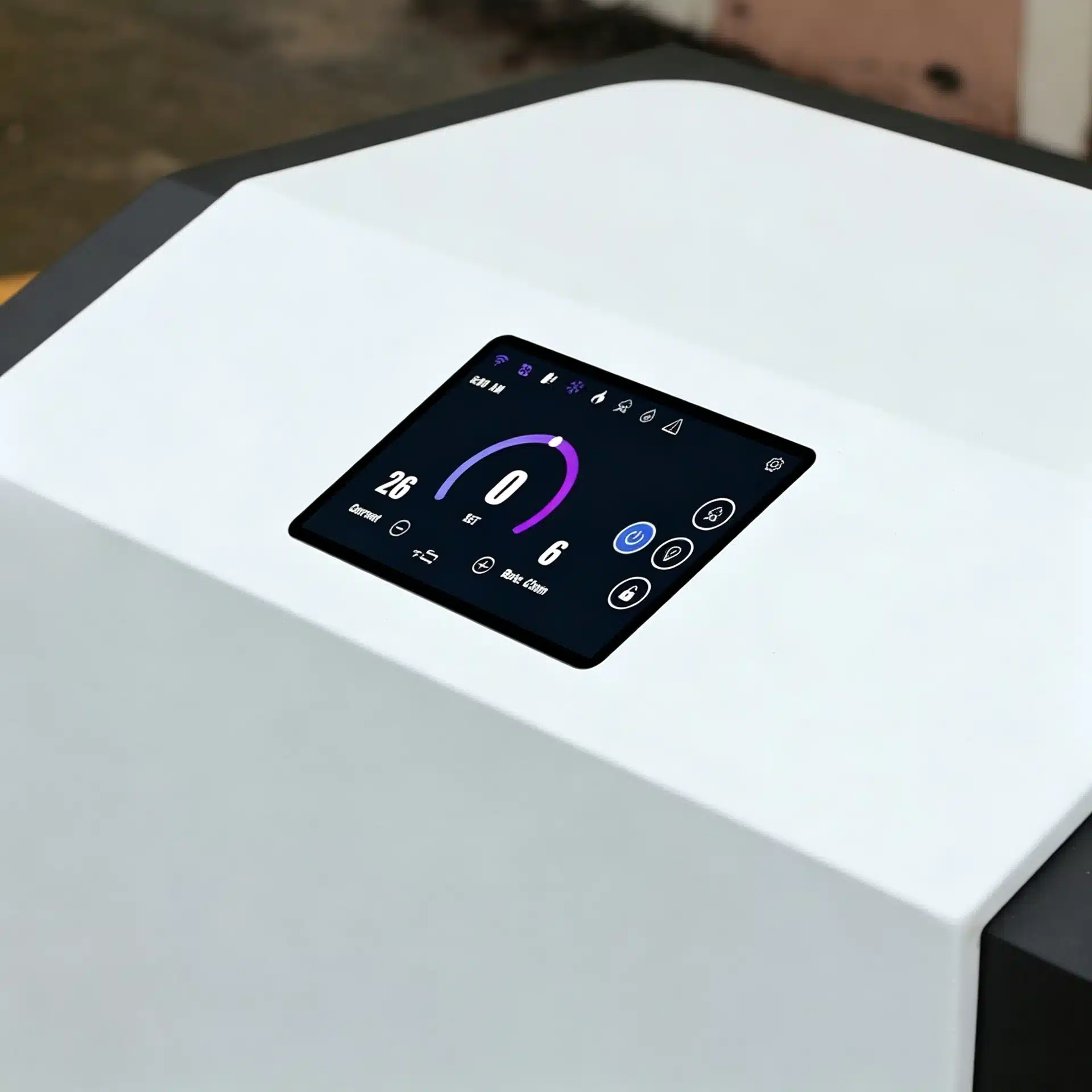
Use only the functions included in the ordered configuration. Demonstrate normal start, setpoint entry, temperature display, operating mode, scheduled or remote control where supplied, lockout where supplied and the documented shutdown method. Do not deliberately create unsafe electrical, low-flow or refrigerant conditions to “test” protection. If the approved commissioning plan includes an alarm test, it should specify a safe manufacturer-supported method and competent personnel.
A site run is not a universal product-performance claim. Record what happened under stated conditions and compare it with the project’s approved acceptance criterion. If the buyer needs a thermal pull-down test, define the reservoir, volume, start and target temperatures, ambient range, plumbing, cover, instrument, timing and retest rule before the run begins.
Gate 5: hand over operation, not just equipment
The last gate is frequently skipped because cooling has already started. Yet the handover page of a cold plunge chiller commissioning checklist decides whether tomorrow’s operator knows what “normal” looked like, which documents apply, which tasks are permitted and who owns an exception.
- Provide the exact operating and maintenance manuals for the installed revisions.
- Show the named operator the normal start, setpoint, shutdown, filter-access and visual-inspection steps permitted by those manuals.
- Record the accepted water-loop and running baseline.
- List consumables, accessible routine-care items and the maintenance start date without inventing a universal interval.
- State stop conditions and the escalation route for electrical, refrigeration, severe-leak or repeated-protection issues.
- Attach the drawing, commissioning record, approved deviations, photo index and contact path.
- Name every open item, owner, due date, operating restriction and retest requirement.
The U.S. Department of Energy’s federal-facility commissioning process ends with “hand off and integrate,” including final documentation of the process, people, systems information and actions taken. A cold plunge project is smaller than a federal facility, but the handover lesson scales down well: the result must survive after the commissioning team leaves.
Gate 5 passes when an authorized person accepts the operating scope, the operator has the agreed information, and no critical item is hidden in chat history. The cold plunge chiller maintenance guide can then be used to schedule recurring care and compare later observations with the accepted starting point.
Use pass, conditional pass and hold without blurring them
Every line in the cold plunge chiller commissioning checklist needs a result and authority. A blank is not a pass. “Pending” is useful only when it names an owner, due date and effect on operation.
| Disposition | Meaning | Required record | Operating consequence |
|---|---|---|---|
| Pass | The observation meets the approved criterion for the identified scope | Criterion, result, evidence, reviewer and date | Proceed to the next gate or final handover |
| Conditional pass | An authorized party accepts a bounded open item that does not invalidate the approved temporary use | Deviation, restriction, risk owner, action, due date and retest/closure | Operate only within the written conditions |
| Hold | Safety, identity, evidence, method or performance is unresolved | Observed issue, containment, owner and next decision | Do not hand over or use beyond the approved safe state |
| Not applicable | The installed configuration does not contain or require the item | Reason and approving reference | No test, but no silent omission |
Do not use conditional acceptance to postpone an unknown electrical supply, severe leak, missing equipment identity or defeated protective device. Those conditions belong on hold. Conversely, a non-critical paperwork correction may be conditional if the authorized buyer defines the restriction and closure. The contract and competent project team—not this generic guide—decide the final boundary.
Assign responsibility before the commissioning date
| Decision | Buyer / facility | Supplier | Installer / qualified trades | Operator |
|---|---|---|---|---|
| Acceptance basis | Define duty, site, required evidence and acceptance authority | Provide model-specific inputs, manuals and agreed support scope | Confirm installed work and local approvals within competence | Confirm practical operating needs |
| Configuration | Approve buyer-provided components and changes | Identify supplied model, revision and included components | Record as-installed interfaces and departures | Keep the accepted arrangement identifiable |
| Tests | Approve criteria, witnesses and disposition rules | Explain manufacturer-supported checks | Execute authorized site checks and return evidence | Witness normal controls and handover |
| Safety boundary | Provide a compliant site and qualified resources | State equipment instructions and escalation limits | Own electrical/plumbing work only within authorization | Stop and report conditions outside normal operation |
| Handover | Accept, conditionally accept or hold | Provide agreed files and support route | Close installation records and open items | Receive training, baseline and maintenance start point |
If one company fills several roles, keep the decisions separate in the record. A cold plunge chiller commissioning checklist should name both the person who performed each check and the person authorized to accept it; those are not automatically the same role. For remote commissioning, state what can be witnessed by video, what requires an on-site qualified person, how unit identity stays visible and where original readings and files are retained.
Copy this cold plunge chiller commissioning record
COLD PLUNGE CHILLER COMMISSIONING AND HANDOVER

PROJECT / SITE:
BUYER / FACILITY:
SUPPLIER:
INSTALLER / QUALIFIED TRADES:
COMMISSIONING DATE AND PARTICIPANTS:
ACCEPTANCE AUTHORITY:

INSTALLED-SYSTEM IDENTITY
Chiller model / revision / serial:
Electrical variant / controller version:
Tub / usable water volume / cover:
Pump / filter / sanitation components:
Hose or pipe sizes / fittings / valve positions:
Approved drawing, specification and manual revisions:

GATE 1 — IDENTITY AND CONFIGURATION
Observation / evidence:
Disposition / owner / due date:

GATE 2 — SITE AND ELECTRICAL READINESS
Location / base / clearance / drainage / environment:
Nameplate-to-supply review reference and reviewer:
Protective-device / wet-area review reference:
Disposition / owner / due date:

GATE 3 — WATER LOOP
Flow route and direction:
Fill / prime / air-removal method reference:
Filter starting condition / permitted flow evidence:
Leak-check locations, condition, duration and result:
Disposition / owner / due date:

GATE 4 — CONTROLLED RUN
Water volume / start / target / setpoint:
Ambient condition / cover / measurement locations:
Timed readings / circulation condition:
Controls and ordered functions observed:
Alarm or protection events:
Criterion / result / evidence:
Disposition / owner / due date:

GATE 5 — OPERATIONAL HANDOVER
Manuals / drawing / photo and record index:
Operator and training topics:
Accepted baseline / maintenance start date:
Stop conditions / support route:
Open deviations / restrictions / retest:

FINAL DECISION: PASS / CONDITIONAL PASS / HOLD
BUYER OR AUTHORIZED ACCEPTANCE / DATE:
SUPPLIER OR COMMISSIONING LEAD / DATE:
OPERATOR HANDOVER / DATE:
Adapt the form to the exact model, contract and destination. A completed cold plunge chiller commissioning checklist becomes the operating baseline only when its fields, evidence and signatures refer to the same installed system. Delete an item only with a reason; add project-specific checks when the approved duty requires them. Keep original files and identify photographs by project, unit, checkpoint and date. A messaging-app screenshot can support a record, but it should not be the only controlled copy.
Recommission when the accepted baseline no longer describes the system
Commissioning is not automatically a once-only event. Repeat the affected gates after a relocation, a different tub or pump, a changed water route, a controller or configuration change, material electrical work, major service, prolonged shutdown or a repeated performance deviation. The retest scope should match the change; replacing an accessible filter does not necessarily justify repeating every project check.
Use the original cold plunge chiller commissioning checklist as the comparison baseline. Record what changed, which requirements still apply, which gates were rerun and who accepted the new state. If the trigger is an active fault, begin with the troubleshooting guide. If it is routine care, record it in the maintenance history instead of treating every service visit as a new commissioning project.
Sources and scope were reviewed on September 11, 2026. Project contracts, current manuals, destination requirements and competent professional judgment remain controlling for a real installation.
Put commissioning requirements into the buying brief
Do not wait until delivery to ask who will commission the system. Put the required cold plunge chiller commissioning checklist, acceptance authority and evidence format into the buying brief. During model selection, send the destination, intended use, tub volume, starting and target temperatures, ambient conditions, expected use schedule, verified electrical supply, water-loop proposal, installation environment and acceptance expectations. Compare the available configurations on the OMNI Ice cold plunge chiller collection.
For an OEM or commercial project, state who supplies the tub, pump, filter, hoses, electrical work, installation, test instruments, commissioning record and operator training. OMNI Ice can then confirm the support scope for the selected model instead of making a blanket site promise. Send the project and handover requirements for review.
Cold plunge chiller commissioning checklist FAQ
What is a cold plunge chiller commissioning checklist?
A cold plunge chiller commissioning checklist is the destination-site record used to verify the identified installed system against approved requirements. It covers configuration, site and electrical readiness, the water loop, controlled running conditions, open deviations, operator handover and final acceptance.
Is commissioning the same as a factory acceptance test?
No. A factory acceptance test checks an identified unit or sample under agreed factory conditions before shipment. Commissioning checks the completed installation with the destination tub, utilities, plumbing, environment, controls and operator after installation.
What readings should be recorded during cold plunge chiller commissioning?
Record usable water volume, starting and target temperatures, setpoint, ambient condition, cover state, measurement locations, timestamps, water-loop and filter condition, permitted flow evidence, controller state, ordered functions, alarms and the approved acceptance criterion. Add electrical measurements only when the plan requires them and qualified personnel perform them.
Can a cold plunge chiller be conditionally accepted?
Yes, if an authorized buyer accepts a bounded non-critical deviation with written restrictions, owner, due date and closure or retest. Unknown electrical readiness, severe leakage, missing identity or defeated protection should remain on hold rather than being hidden behind conditional acceptance.
Who should sign the commissioning handover?
The contract should name the acceptance authority. The record commonly identifies the buyer or facility representative, supplier or commissioning lead, installer or qualified trades and receiving operator. One person may hold several roles, but the work performed and the authority to accept should remain explicit.