Cold Plunge Chiller Filter: What It Can—and Cannot—Do
Choose an ice bath filter by matching the cartridge to your chiller model, filter housing and water-flow requirements—not by micron rating alone. A cold plunge chiller filter captures physical debris; it does not disinfect the water.
This guide covers 20-micron vs 50-micron cartridges, housing fit and the signs that a filter needs attention. If you need a replacement, have the chiller model, cartridge part number and a clear photo of the housing ready before ordering.
Why Your Cold Plunge Chiller Needs a Filter
Reusable cold plunge water can collect visible debris, oils, hair, skin particles, and residues over time. A filter helps capture physical debris from the circulating water path before it reaches accessible components.
A filter does not by itself establish water safety or replace appropriate cleaning and water-care procedures. Water that looks clear may still need inspection when flow changes, debris is visible, or the water condition becomes unusual.
For general information on recreational-water health, see the CDC Healthy Swimming guidance.

What Is a Cold Plunge Chiller Filter?
A cold plunge chiller filter is a physical filtration component in the circulating water loop. Its useful performance depends on the exact medium, housing seal, bypass condition, rated water flow and pressure drop as the medium loads. A micron number alone does not prove biological removal, disinfection or suitability for a particular chiller.
Two common layouts are:
-
Supplied or integrated filter path — use the replacement element and service method specified for that exact model and configuration.
-
External inline filter path — before adding a housing, confirm hose and fitting compatibility, pump arrangement, rated flow range, allowable head loss and the chiller’s minimum-flow requirement.
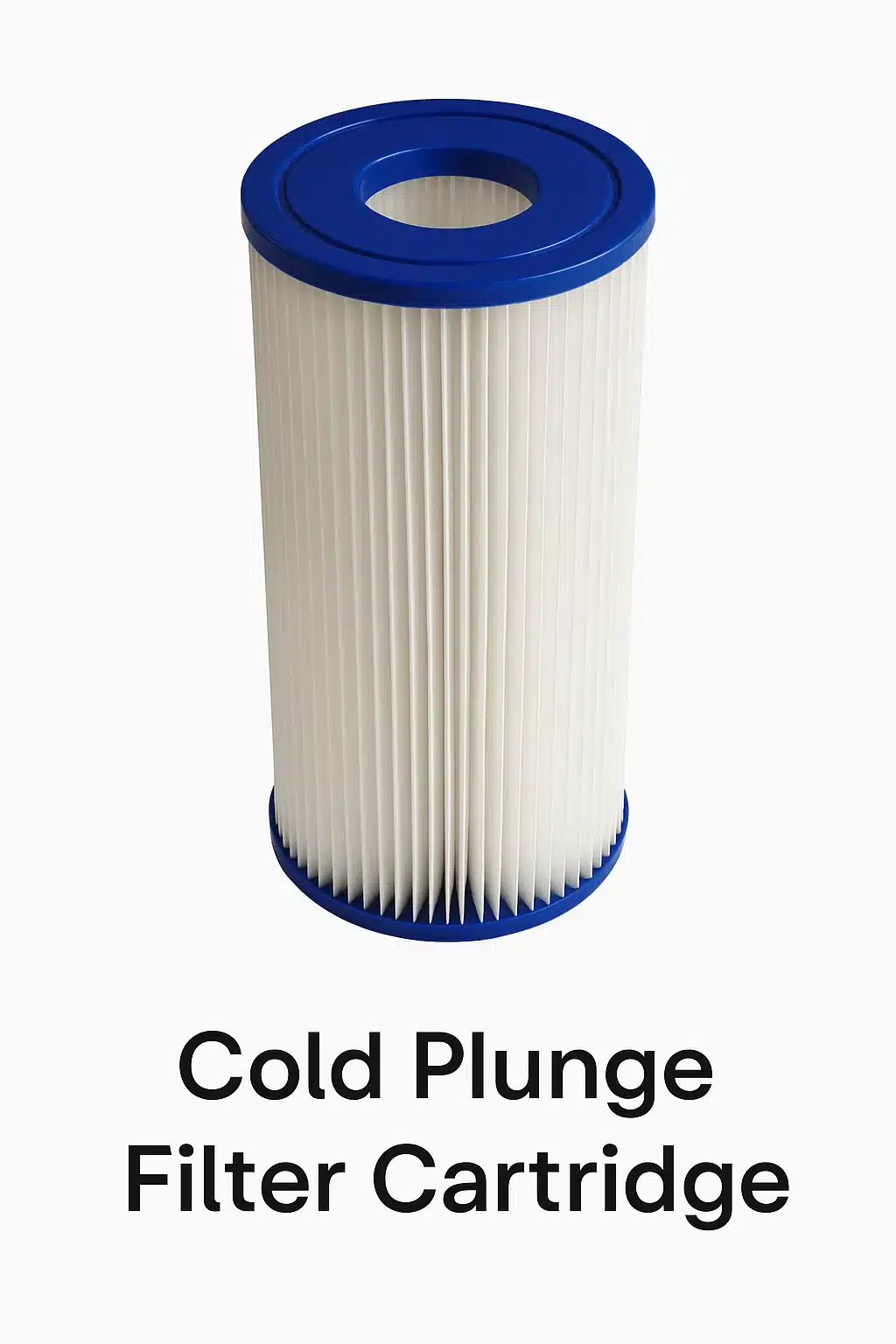
Physical Filters and Separate Water-Treatment Devices

1. Cartridge filters
A cartridge captures physical particles within the limits of its stated rating and test method. Confirm the exact part number, dimensions, seal arrangement, whether the rating is nominal or absolute, and the rated flow and pressure drop for the housing.
2. Coarse strainers or approved media filters
A coarse stage may intercept larger debris before a finer element, while some larger installations use other approved filter media. Selection still depends on the pump curve, available head, maintenance access and the equipment manufacturer’s permitted water path; it is not a universal residential-versus-commercial rule.
3. UV or ozone devices
UV and ozone equipment are not physical filters. Any treatment claim depends on the exact device, dose or exposure, water condition, installation and operating instructions. These devices do not replace debris filtration, cleaning or the water-care and disinfection procedure required for the site.
20-micron vs 50-micron ice bath filters
A 20-micron and a 50-micron cartridge cannot be compared by the number alone. Check whether each rating is nominal or absolute, the stated retention efficiency, and the conditions used to measure it. Also compare the cartridge length, diameter, end caps and seals: two cartridges with the same micron label may not fit or function in the same housing.
For a cold plunge chiller filter, ask for pressure drop at the intended flow, both with a clean element and at the manufacturer’s service limit. The housing, media area and debris loading all matter. There is no universal PSI loss, number of bathers or cleaning interval that can be assigned solely from a 5-, 20- or 50-micron label.
Use the approved cartridge for the exact model. A proposed finer element or extra pre-filter should be checked against the pump and chiller requirements before installation; adding a stage is not a guaranteed cure for an alarm or poor cooling.
Compare the filter layout on the actual model
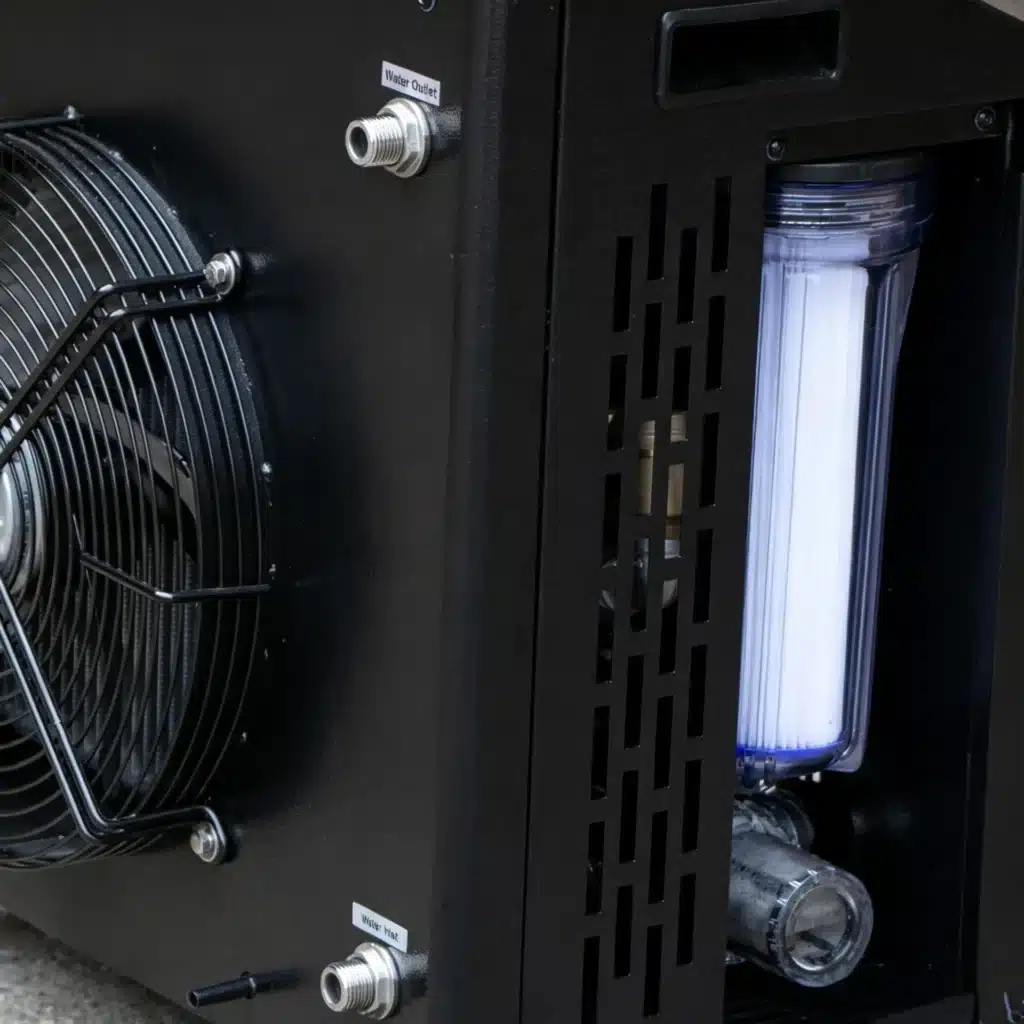
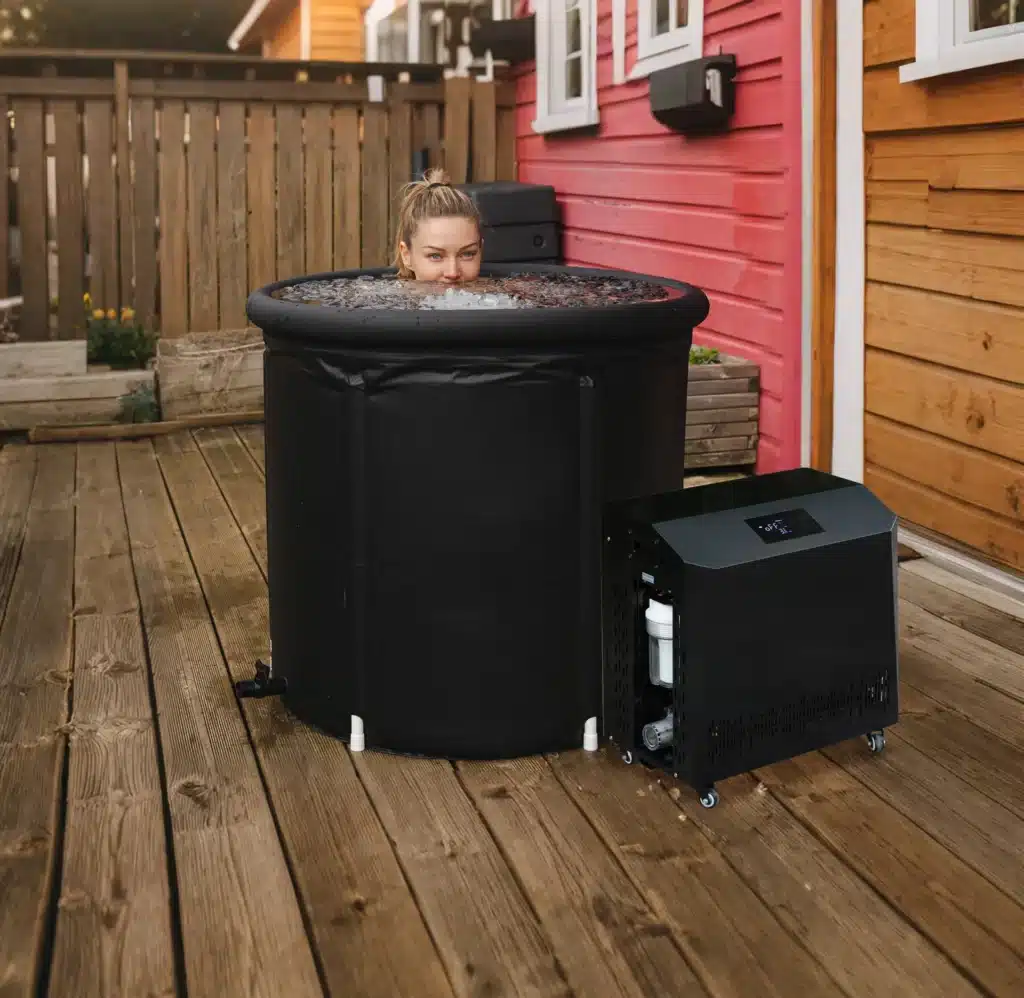
OMNI’s chiller brochure identifies external filtration on the listed CHU models and an internally installed filter on the CHM-10 variants. The CH-08 cooling-only series also shows an external filter arrangement. These differences matter when planning access and ordering replacement elements, but they do not establish one universal micron specification.
The larger CHU accessory spread lists a 5-inch filter and replacement elements; the CHM-10 spread lists 10-inch filter elements. Those catalogue labels are not sufficient to approve an interchangeable cartridge. Check the part number, end-cap design, seal and actual dimensions for the exact housing. Do not order a cold plunge filter merely because its advertised length looks close.
An internal housing may need cabinet access and room to withdraw the element; an external housing needs its own support, hose route and service space. Ask for a drawing or a clear service photograph before placing equipment in a tight recess. Choose a layout that staff can inspect and service without moving the filled tub or forcing a hose into a sharp bend. The quotation should also distinguish the filter supplied with the unit from spare cartridges and optional treatment equipment.
How Often Should You Replace Your Filter?
 Filter service timing depends on the exact filter medium, water condition, frequency of use, water-care procedure, and manufacturer’s instructions.
Inspect or service the filter sooner when you notice:
- Reduced water return flow.
- Visible debris or a heavily soiled filter medium.
- Unusual water odour, cloudiness, or changed water condition.
- New pump noise, airlocks, or a change in cooling performance.
Use the approved replacement part and service method for the exact system rather than applying one fixed number of days, weeks, or months.
5 Signs Your Filter Needs Attention
-
Reduced water flow from the chiller
-
Visible particles in the plunge tub
-
Unpleasant odors from the water
-
Yellowing or discoloration
-
Your chiller is working harder or louder than usual
These observations are reasons to inspect the filter and the complete water loop; they do not by themselves prove that the cartridge is overloaded or overdue. Check the water level, hoses, valves, pump condition, water-care record and the exact model manual before deciding whether to clean, service or replace a component.
Do All Cold Plunge Chillers Come With Filters?
No. Filter availability, filter location, and compatible accessories vary by model and supplied configuration.
| System configuration | What to confirm before use |
|---|---|
| Chiller with supplied filter path | Filter type, compatible replacement medium, and service procedure. |
| Chiller designed for an external filter | Hose route, fittings, pump compatibility, and approved filter housing. |
| Commercial or shared-use system | Site requirements, water-care procedure, inspection records, and accessible maintenance points. |
Before choosing a system, confirm the official documentation for the exact equipment rather than assuming that a filter, UV, ozone, pump, or accessory is included.
Choosing a Filter-Compatible Setup
Select a setup that provides a clear water path, accessible filter service, compatible fittings, and documented maintenance instructions. For installation sequence and water-path checks, read filter setup guide.
How to Compare Filter-Compatible Cold Plunge Chillers
Do not select a chiller from horsepower or micron rating alone. Ask every supplier to identify the exact water-loop configuration and complete the same comparison fields.
| Buyer check | Evidence to request |
|---|---|
| Cartridge and housing fit | Part number, dimensions, seal material, connection size and approved replacement element. |
| Water-loop operating data | Rated flow range, clean and loaded pressure drop or allowable head loss, minimum chiller flow and any flow-switch setting. |
| Service access | Isolation, drain or pressure-release procedure, tool clearance and safe steps in the model manual. |
| Water-care boundary | A separate cleaning and water-care procedure compatible with the filter, tub, pump, exchanger and any UV or ozone device. |
| Included supply | A bill of materials identifying the pump, filter housing, cartridge and treatment devices as included items or options. |

Visual Before & After: Why Filters Matter
Visible debris or cloudiness can trigger an inspection, but a clearer appearance is not evidence of microbiological quality, filter life or safe use. Compare appearance with water flow, cartridge condition and the water-care record for the exact installation.

Final Thoughts: Match Filtration to the Water Loop
Choose a cold plunge chiller filter by exact cartridge and housing compatibility, rated flow, pressure or head-loss limits and an accessible service procedure. A finer nominal micron rating is not automatically better if it moves the loop outside the pump or chiller’s required operating range.
Follow the exact model manual for inspection and service timing. Treat filtration as physical debris control, not as a substitute for cleaning, disinfection or the complete water-care procedure.
For cooling, circulation, pump or controller symptoms, use the troubleshooting guide.
Compare the documented filter arrangement in the chiller model collection. For a specific replacement, send your model and cartridge details, including photographs of the label, housing and connections.
Cold Plunge Chiller Filter FAQ
Does a filter sanitize cold-plunge water?
No. Mechanical filtration captures particles within the filter’s capability. Sanitation/disinfection, monitoring, cleaning and water replacement are separate parts of the water-management plan.
How often should the filter be changed?
Follow the exact manufacturer’s limit and use condition triggers such as restriction, damage, flow change, usage and contamination events. There is no universal interval for every system.
Can a dirty filter stop a chiller from cooling?
A restricted filter can reduce circulation, which can affect heat transfer or trigger model-specific protection. Verify the full water loop before diagnosing refrigeration components.
Can I use any cartridge that fits the housing?
Not safely by fit alone. Confirm the approved part, dimensions, media, flow/pressure characteristics, orientation and cleaning or replacement instructions.
What evidence should I send support?
Send the model and equipment code, symptom timing, alarm, water level, valve and hose photos, filter part/condition, service history, flow observation and a short continuous video where safe.