Built from OMNI Ice’s verified records of more than 1,600 technical support hours and 500 customer support tickets, this cold plunge chiller troubleshooting guide helps users start with the symptom they see, the controller code displayed on their actual unit, and the most appropriate next check.
Use this guide as a symptom-and-model navigation page. It helps distinguish water-path, pump, cooling, and controller issues before a repair decision is made. Detailed instructions remain in the linked articles below, while controller-code meanings should always be confirmed against the documentation for the exact model in use.
Controller Codes and Symptom Triage: Start With Your Model
This cold plunge chiller troubleshooting guide is organized by the symptom you see first, so you can move from a controller code or visible water-flow issue to the correct detailed check.
Both CH and CHM units may display controller codes when a fault occurs. The reference below combines documented OMNI Ice service data with the first checks that commonly help narrow down the issue. Confirm the exact model and controller before acting: the same code label may not carry the same meaning across every model.
| Displayed Code(s) | Meaning for the Relevant Model | What OMNI Ice Service Records Most Often Found | Safe First Check |
|---|---|---|---|
| E1 / E11 / FL | Water Flow Alarm | In 85% of documented cases, the cause was an airlock or a dirty filter rather than a failed pump. | Check the filter, O-ring, water level, and hose path; then follow the model-specific priming procedure. |
| E2 / HH | High-Temp Alarm | Restricted airflow from dust or insufficient clearance around the condenser. | Switch the unit off; check external airflow and visible dust, then follow the model manual. |
| E5 / AL | Sensor Fault | The temperature probe may be loose, shorted, or disconnected. | Record the model and code; use the model-specific sensor check procedure or contact after-sales support. |
| B13 / E8 | High Value / Low Temp | Water may be near freezing or the sensor may be open. | Record the model and code; follow the official model instructions before changing settings or replacing parts. |
Expert Insight: In one documented E11 case, the underlying issue was not a failed pump but an incomplete filter seal that allowed air into the water path. Check the filter seal and O-ring before replacing a pump, and confirm that all parts are seated according to the instructions for your model.
Use this table to choose the next guide, not as a substitute for the instructions supplied with your specific model. If the unit is not drawing water, follow Cold Plunge Chiller Pump Not Drawing Water If water is circulating but the temperature is not falling, read chiller not cooling guide
If a code persists after the safe checks, record the exact model and displayed code before contacting OMNI Ice after-sales support.
For cold plunge chiller troubleshooting involving a displayed code, always match the symptom and the code to the exact controller and model before ordering parts or changing settings.
Cold Plunge Chiller Pump Not Working — The Most Common Problem
When a chiller stops functioning properly, the first complaint is usually that the pump is running but no water is moving. This can happen suddenly after a water change or gradually as flow weakens over days. At OMNI Ice, we track these failures to ensure our cold plunge chiller repair strategies are always up to date.
Typical Causes Found in Our Support Logs:
-
Clogged Filter: A thin layer of biofilm or hair can reduce intake pressure by 40%, triggering a flow alarm.
-
Airlock: Trapped air bubbles in the impeller chamber prevent the pump from “grabbing” water.
-
Voltage Mismatch: We’ve seen cases where a 220V pump is incorrectly plugged into a 110V supply, causing the pump to hum but not spin.
-
Thermal Overload: High-pressure pumps can shut down automatically if they run dry for more than 2 minutes.
Next Step: If the pump runs but water still does not circulate, use our Cold Plunge Pump Troubleshooting & Repair Guide for a symptom-by-symptom diagnosis.
For routine pump placement, water-path checks, and long-term care, see pump performance guide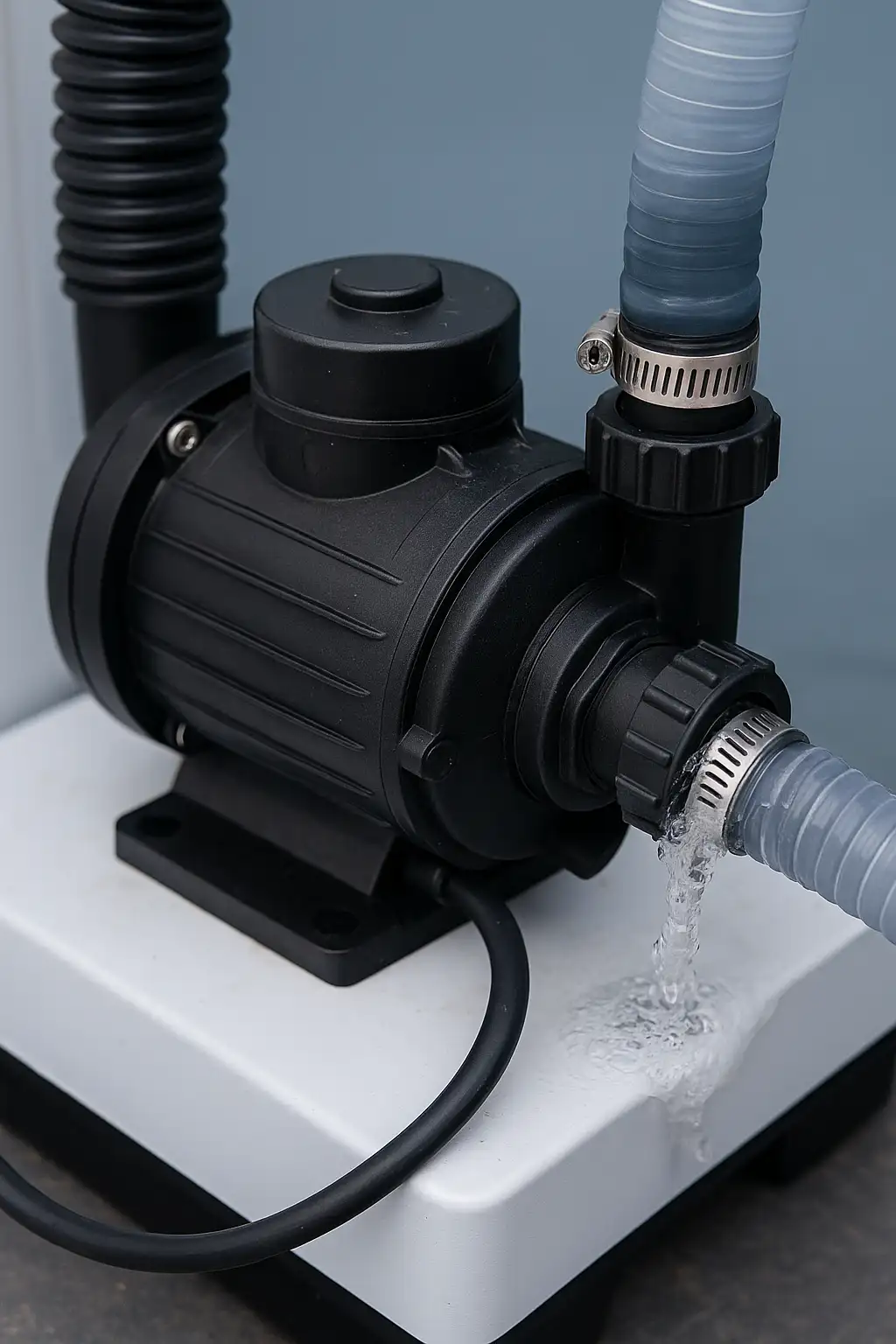
Cold plunge chiller troubleshooting should begin with the water path before a pump replacement is considered, especially when the pump appears to run but water does not move.
Weak Water Flow and Circulation Issues
Even if the pump works, circulation problems can reduce cooling performance. Weak flow makes it harder for the chiller to reach the target temperature, and stagnant water becomes a hygiene risk.
Key Warning Signs of Circulation Issues:
-
Noticeably slower cooling compared to normal operation (e.g., taking 4 hours instead of 2).
-
Water returning to the tub feels “warm” or weak at the jet.
-
The chiller cycles more frequently (turning on/off every 5 mins) without lowering the water temperature.
Data-Driven Insight: In most cases, the root cause is filter blockage or hose obstruction. We recently assisted a customer who had a “kinked” hose behind the unit that reduced cooling efficiency by 60% without triggering a fatal error.If weak flow began after a filter was installed or changed, review theCold Plunge Chiller and Filter Setup Guide before restarting.
In cold plunge chiller troubleshooting, weak circulation should be checked before assuming a cooling or compressor fault, because the filter, hose path, and water level affect the whole water circuit.
Cold Plunge Chiller Filter Problems
The filter is small but critical. Without it, debris quickly enters the pump and heat exchanger, causing expensive damage. With it, however, maintenance becomes essential.
Signs your filter is causing trouble:
-
Visible dirt or discoloration (yellowing) on the stainless steel or paper cartridge.
-
Reduced water flow despite normal pump operation.
-
Frequent “Buzzing” sounds from the pump as it struggles against resistance.
Maintenance Next Step: For an overview of the chiller-and-filter system, read chiller filter guide.
For cleaning-focused guidance, read ice bath filter guide.
For the role of filtration in real-world maintenance, read filtration maintenance guide
Commercial operators should use the facility filter playbook
Advanced Electrical Troubleshooting: Ozone & Screen Glitches
Our engineering team has identified “hidden” issues that often go undetected by standard DIY guides:
The Ozone Short-Circuit Loop
If your unit keeps rebooting or the screen flickers, it might be the Ozone Generator. If the check-valve fails and water enters the ozone module, it causes a 24V short circuit.
- Model-Specific Service Check: If the unit repeatedly reboots or the screen flickers, stop using it and provide OMNI Ice with the model, controller display, and symptom. Do not disconnect internal wiring unless the service procedure for that exact model instructs you to do so.
Hidden Failure Mode: A documented ozone-generator fault can allow water to reach the module and lead to repeated mainboard resets or a blank screen. If these symptoms appear, stop using the unit and arrange model-specific service before replacing parts or opening the electrical enclosure.
Sensor Drift & Phantom Values
If the screen says the water is 10°C but it feels like 2°C, your NTC sensor is drifting.
-
Next Step: Confirm the model and request the correct service procedure before changing controller parameters or replacing the temperature probe.
Step-by-Step Cold Plunge Chiller Troubleshooting Guide
Troubleshooting requires a logical approach. Work through the following steps before assuming your chiller needs professional repair.
-
Check the Filter: Remove and rinse the filter under running water. If it remains clogged, replace it immediately.
-
Inspect the Hoses and Connections: Tighten clamps, straighten hoses, and confirm all parts are submerged. Even a small leak allows air to enter the system.
-
Follow the model-specific priming procedure: If air is suspected, switch the unit off and use the priming instructions supplied for your exact model. Do not loosen hoses or open components unless those instructions say to do so.
-
If the pump seems hot or stops: Switch the unit off and allow it to cool. Before restarting, confirm that the pump has water and follow the operating instructions for your model.
-
Address suspected scale with model guidance: Use only an approved flushing or descaling procedure for your exact model. If the manual does not provide one, contact after-sales support before adding chemicals or opening the water circuit.
By following these steps, most cold plunge chiller repair situations can be resolved without replacing the unit.
Preventive Cold Plunge Chiller Maintenance
Preventive maintenance helps protect water flow, cooling performance, and the components that depend on clean water and adequate airflow. Follow the maintenance intervals and products specified for your exact model.
-
Weekly Cleaning Routine: Rinse filters, inspect hoses, and ensure the water remains clear.
-
Condenser Cleaning: Keep the exterior airflow area free of visible dust and obstructions. Follow the cleaning method recommended for your specific model.
-
System Flushing: Follow the flushing interval and approved procedure in your model documentation, especially where water conditions may cause mineral buildup.
-
Proper Setup: Position the pump below the water level to ensure a “flooded suction” environment, which prevents dry-running damage.
For a home routine, see home maintenance guide.
Effective cold plunge chiller troubleshooting also includes filter care, because a clean and correctly seated filter helps protect circulation and keeps debris out of the water path.
When to Repair or Replace Your Chiller
Troubleshooting works in most cases, but sometimes replacement is the smarter choice. Consider replacement if:
-
The compressor has an internal gas leak (rare but very expensive to fix).
-
The pump burns out repeatedly despite proper maintenance.
-
The chiller housing shows significant internal corrosion or cracks.
When replacement is the best option, explore our chiller collection for durable models, or pair them with our plunge cold tubs for complete systems.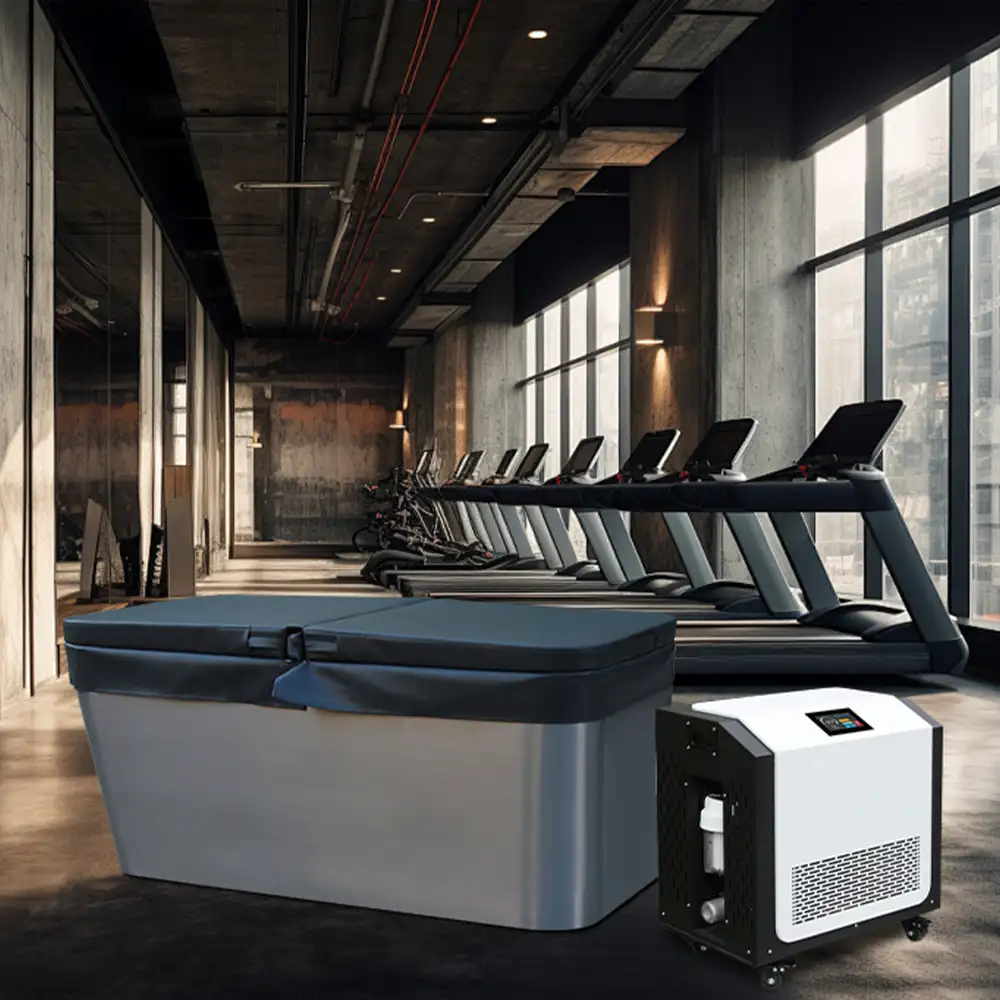
Choosing a Reliable Cold Plunge System & Safety
Cold immersion is most effective when the water is clean and the equipment is properly maintained. The CDC’s Healthy Swimming guidance explains how water quality, hygiene, and routine maintenance help reduce germ-related risks in recreational water. A poorly maintained chiller is not just inconvenient—it can contribute to poor water conditions and unnecessary equipment problems.
As a global supplier and manufacturer, OMNI Ice integrates strong pumps, efficient filters, and heavy-duty heat exchangers into every unit. This supports reliable circulation and temperature control when the system is correctly sized, installed, and maintained.
Conclusion
Use this cold plunge chiller troubleshooting page to identify the symptom first, then use the detailed guide for the specific pump, filter, flow, or cooling issue.
Most cold plunge chiller troubleshooting cases involve pump or filter problems that can be fixed with simple steps: cleaning, checking hoses, and removing airlocks. Based on OMNI Ice’s documented service records, regular maintenance prevents 99% of common issues, helping keep recovery routines uninterrupted.
If your pump has already stopped working, follow this pump guide for detailed repair steps. And if you are upgrading or setting up a new recovery space, visit our OMNI homepage to learn more about our manufacturing expertise.