Water chiller vs ice bags is not a universal “machine always wins” calculation. The lower-cost option depends on local ice prices, bags used per session, session frequency, measured electricity use, water-care costs, installation, maintenance and how long the system will operate. Compare both options over the same period and with the same target water conditions.
This guide gives homeowners, gyms, studios and B2B buyers a copyable cost method. It does not publish a fabricated break-even date. Enter your own invoices, meter readings and service assumptions to determine which water chiller vs ice bags scenario is lower for your project.
Water chiller vs ice bags: the quick answer
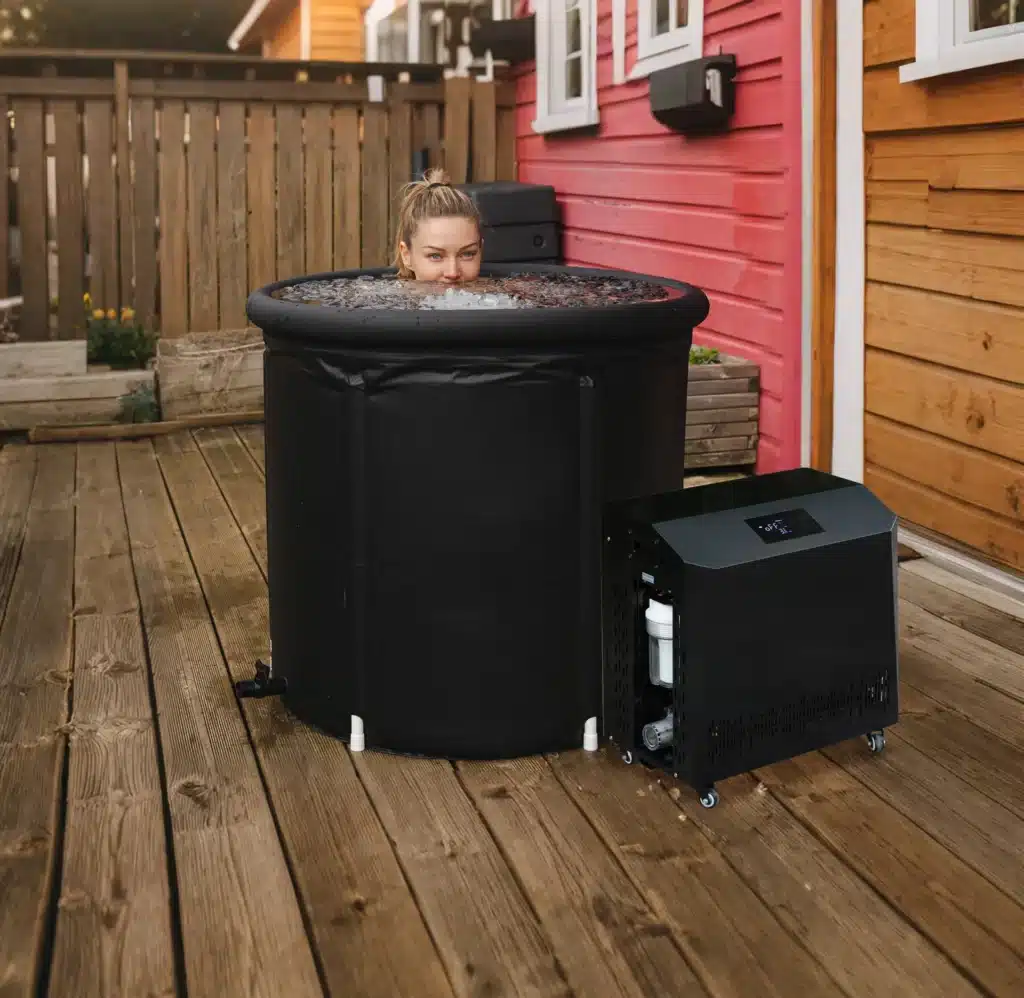
Ice bags usually have the lower initial commitment because the user buys only ice and a suitable tub. A water chiller requires equipment, compatible circulation, electrical planning and setup. The chiller can have the lower recurring cooling input when it is used frequently, but that outcome must be demonstrated with local values rather than assumed. A defensible water chiller vs ice bags decision therefore starts with dated local evidence.
| Decision | Ice-bag route | Water-chiller route |
|---|---|---|
| Initial spend | Tub, drainage and first ice purchase | Chiller, tub, hoses, fittings, pump/filter where required, electrical and installation work |
| Recurring cooling input | Bags or delivered ice for each refill/session | Measured kWh multiplied by the applicable tariff |
| Labour and logistics | Purchase, transport, storage, opening and disposal of bags | Setup, cleaning, filter care, monitoring and seasonal storage |
| Temperature planning | Depends on ice mass, starting water, mixing, melt and timing | Depends on heat load, selected unit, ambient conditions, setpoint and run time |
| Water management | Still requires a defined drain, refill and hygiene plan | Still requires filtration/sanitation decisions and model-specific maintenance |
| Evidence needed | Ice receipts, bags/session, sessions/month and labour time | Delivered equipment cost, energy meter data, tariff, consumables and service record |
Set equal boundaries before comparing water chiller vs ice bags
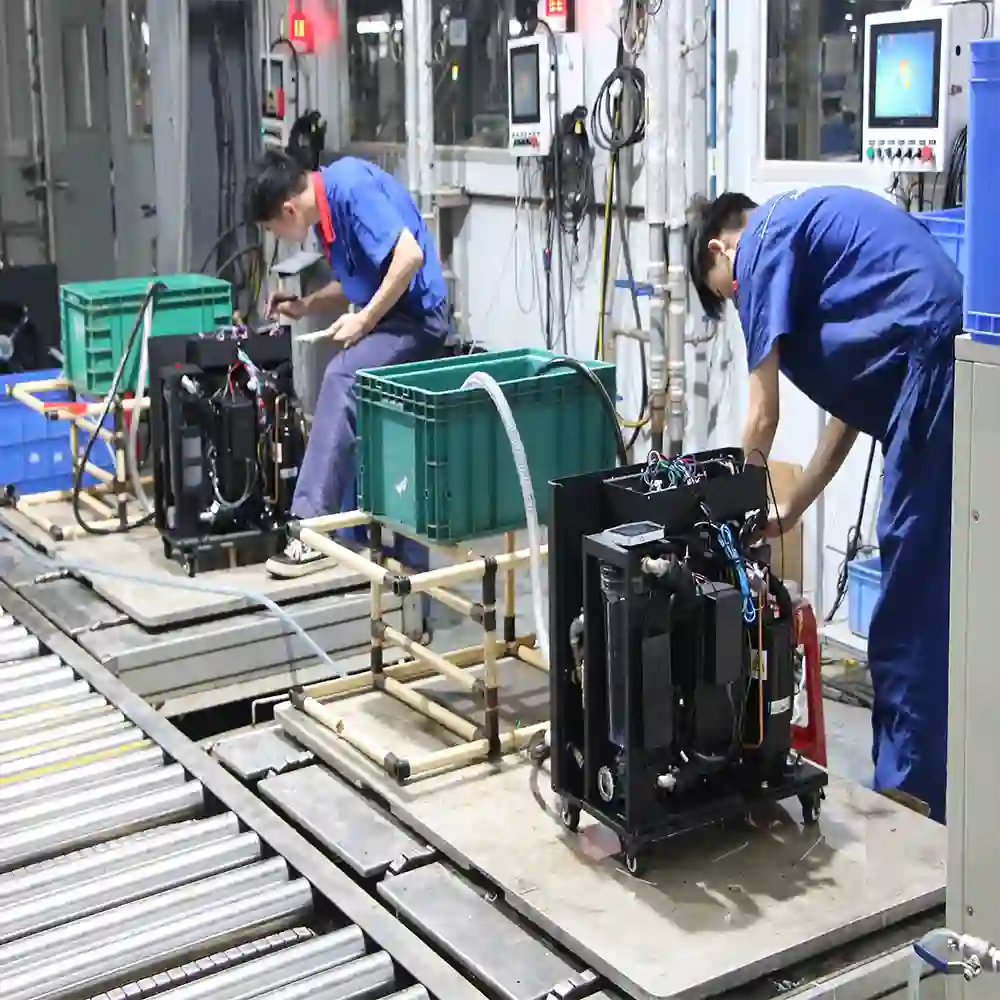
Choose one comparison period: a month, a season, twelve months or the buyer’s expected ownership term. Use the same planned session frequency, tub volume, starting water condition and target condition for both routes. If one case assumes a covered, insulated tub and the other assumes an uncovered tub outdoors, the result compares two systems rather than two cooling methods.
Separate one-time, recurring and event-driven costs. One-time costs include delivered equipment, installation and accessories. Recurring costs include ice or electricity, water-care consumables and routine labour. Event-driven costs include a failed component, an unscheduled service visit, a damaged hose or a change in electricity/ice price. Keep uncertain costs as ranges and label their source.
| Input | Your value | Evidence |
|---|---|---|
| Comparison period | [months] | Planned ownership/use period |
| Sessions per month | [count] | Booking or personal-use schedule |
| Target water condition | [temperature/time] | Operating plan |
| Local ice price | [currency/bag or mass] | Receipts or supplier quotation |
| Electricity tariff | [currency/kWh] | Utility bill, including time-of-use basis if relevant |
| Measured chiller consumption | [kWh/period] | Plug-in meter, submeter or facility meter record |
| Labour value | [currency/hour] | Internal rate or zero if excluded |
| Maintenance/consumables | [currency/period] | Invoices and model-specific schedule |
How to calculate the ice-bag side
Record actual bags or kilograms used, not a universal quantity from another tub. Ice demand changes with water mass, starting temperature, target temperature, ambient heat, tub material, cover use, mixing and the time available before use. A small amount of ice added to already-cold water is not comparable with cooling a full warm refill.
MONTHLY ICE COST =
(bags per session × price per bag × sessions per month)
+ delivery or travel cost
+ storage cost allocated to the period
+ labour time × chosen labour rate
+ water/drain/refill cost if included
Use receipts from several representative periods if prices or weather change. For a facility, record staff handling time and delivery constraints separately; management can then decide whether labour belongs in the financial comparison. Do not count labour for one route and omit it from the other.
How to calculate the water-chiller side
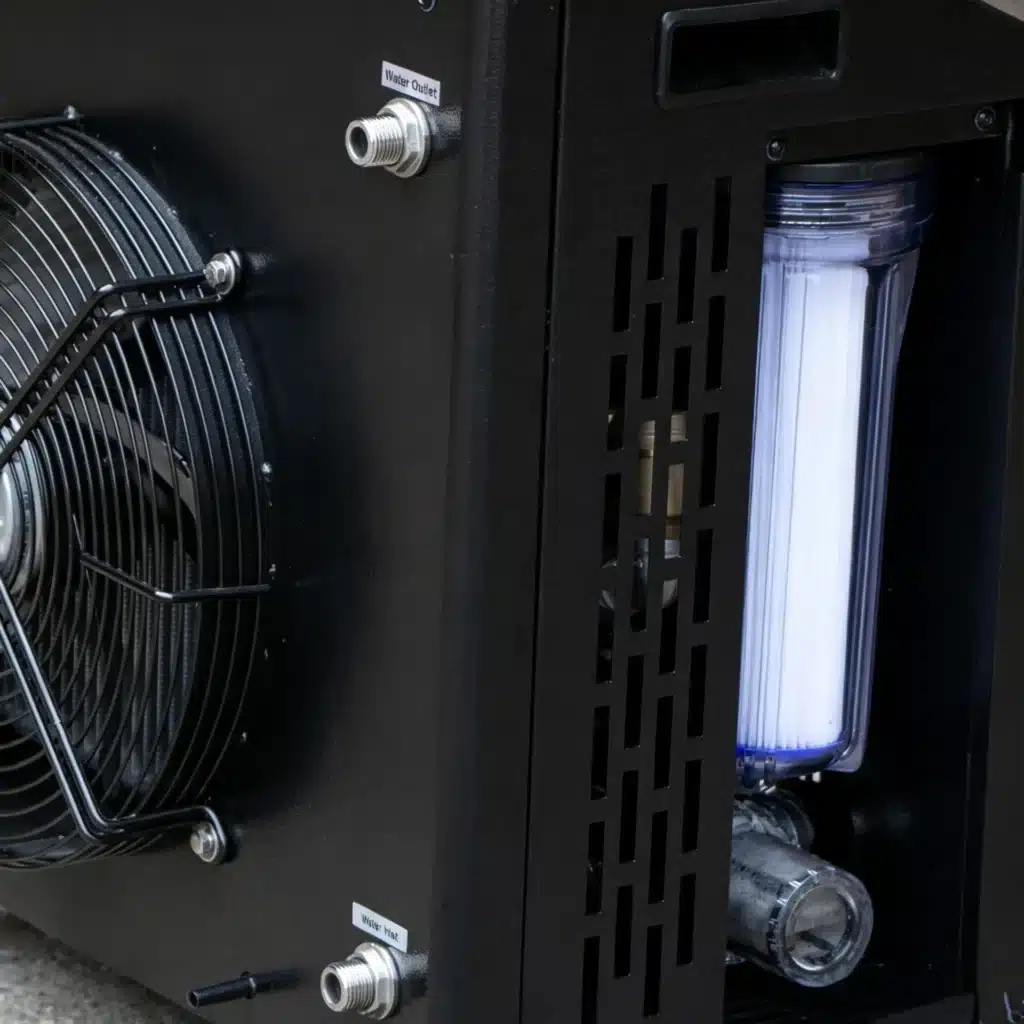
Start with delivered and installed cost, not the advertised chassis price. Include the compatible tub, pump or circulation arrangement, filter, hoses, fittings, insulation or cover, electrical work, freight, duties and commissioning responsibility where they apply. The broader ice bath chiller cost guide provides a purchase-to-operation checklist for those categories.
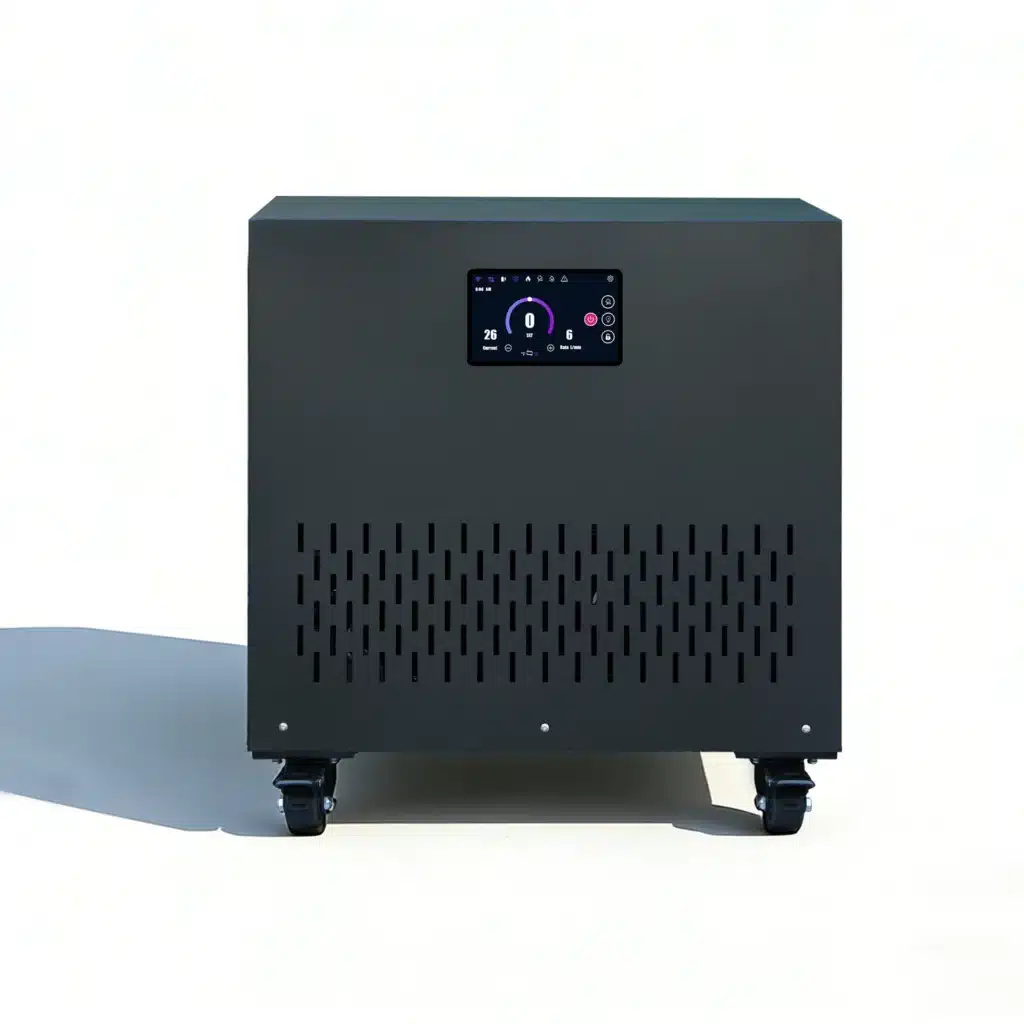
For energy, measure the complete operating setup over representative days. Rated input is a nameplate or specification field; it is not the same as continuous consumption. Compressor cycling, pump run time, ambient temperature, setpoint, insulation and user heat all influence measured kWh. The U.S. Energy Information Administration explains that utilities measure electricity use in kilowatt-hours, while local prices vary by customer type, place and time. Use the tariff on the project’s bill rather than a global average.
CHILLER COST FOR THE PERIOD =
delivered and installed equipment cost allocated to the period
+ measured kWh × applicable tariff
+ water-care consumables
+ routine service and cleaning labour
+ repair allowance or actual repair invoices
+ water/drain/refill cost if included
Use the cold plunge chiller electricity measurement guide to define the meter period and inputs. If a pump operates on a different schedule from the chiller, meter or estimate it separately and record the method. ENERGY STAR’s pool-pump guidance is not a cold-plunge certification, but it illustrates why required flow and operating schedule matter when evaluating circulation energy.
Water chiller vs ice bags break-even formula
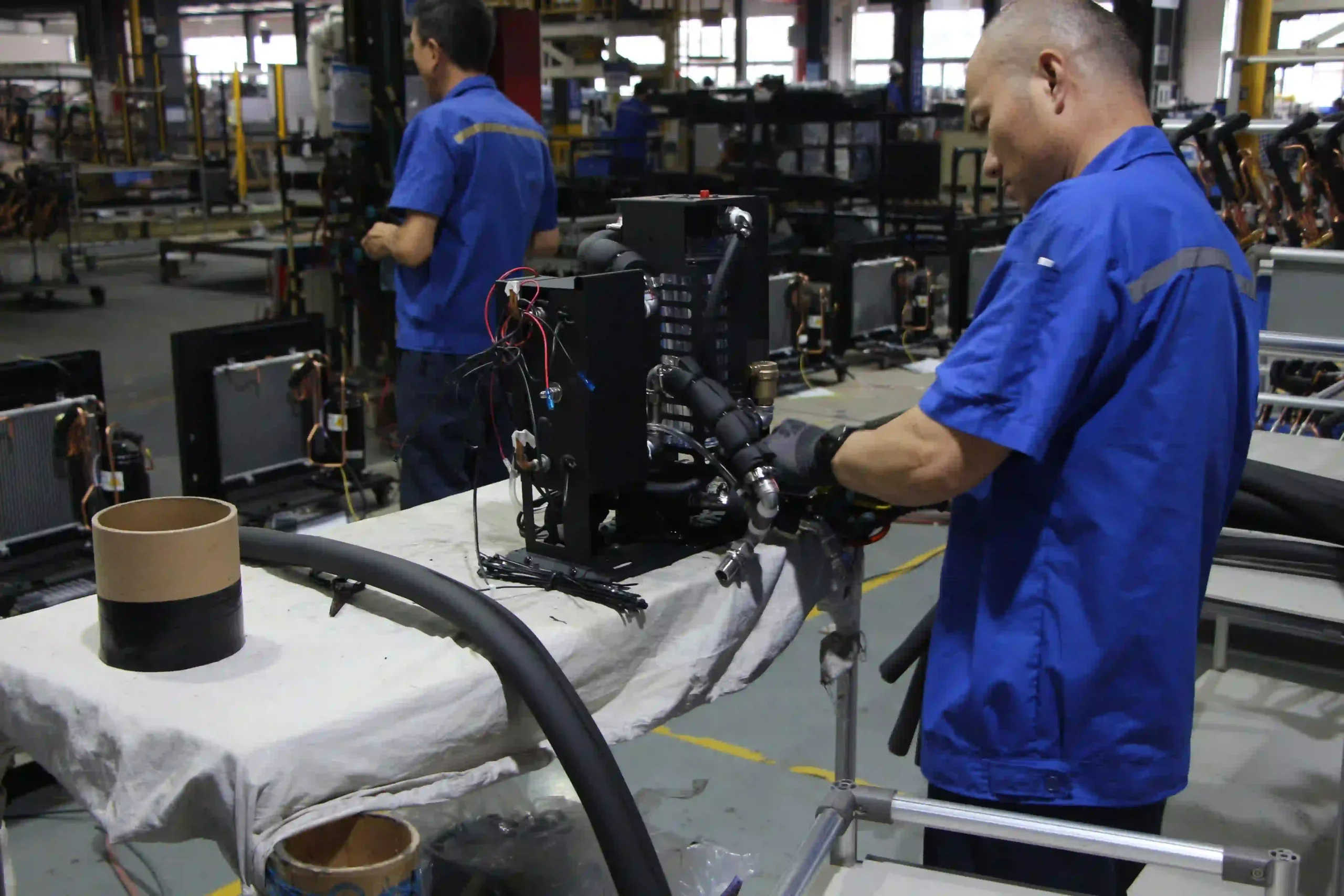
Break-even exists only when the chiller route has a higher upfront cost and a lower comparable recurring cost. Calculate the recurring difference with measured or documented values. If the recurring difference is zero or negative, the simple break-even formula does not produce a positive payback period.
MONTHS TO SIMPLE BREAK-EVEN =
(chiller upfront cost − ice-route upfront cost)
÷
(monthly ice-route cost − monthly chiller-route cost)
Important: this is a simple cash-cost comparison, not a promise of ROI. It excludes financing, tax, downtime, residual value and benefits that have not been assigned a defensible monetary value.
Run at least three scenarios: low use, expected use and high use. Then vary ice price, electricity tariff, ambient season and maintenance allowance. A result that changes completely after one small assumption should be treated as uncertain, not marketed as an “exact” payback date.
Non-price differences in water chiller vs ice bags
- Planning: ice requires purchase/storage timing; a chiller requires pre-cooling and run-time planning.
- Repeatability: either route needs a thermometer and a documented process if repeatable conditions matter.
- Space: ice needs delivery/freezer/storage handling; equipment needs ventilation, drainage, hose routing and service clearance.
- Noise: a chiller and pump create operating sound; verify the selected model and placement rather than assuming a universal level.
- Water care: neither route automatically makes shared water sanitary. Define filtration, sanitation, cleaning, replacement and local requirements.
- Electrical: a chiller system near water needs the correct electrical variant and installation review. Follow the manufacturer, local code and qualified professionals.
- Scaling: session count and staff workflow may change the preferred route for a gym, studio or hotel.
For commercial or public-facing installations, the CDC Model Aquatic Health Code is a useful U.S. planning reference for aquatic venues, but CDC states that it is guidance rather than federal law and it applies only where adopted or adapted by a jurisdiction. Ask the local authority and project professionals which requirements apply to the actual cold-plunge installation.

Nine critical inputs for a defensible comparison
- Comparison period and expected sessions per month.
- Tub volume, starting water temperature, target condition and preparation time.
- Actual ice quantity and price from recent receipts.
- Delivered chiller-system cost, including required accessories and installation.
- Measured full-system kWh over representative operating periods.
- Applicable electricity tariff, including time-of-use charges where relevant.
- Water, filters, cleaning supplies, labour and planned service.
- Space, noise, drainage, ventilation, electrical and workflow constraints.
- Low, expected and high-use sensitivity cases with dated assumptions.
If the project proceeds to equipment selection, use the water-chiller sizing guide, define the water loop through the cold plunge chiller filter guide, and send suppliers one OEM RFQ template. This keeps the water chiller vs ice bags decision connected to the system that will actually be bought.
If separately selected components will be assembled instead of buying a matched package, use the DIY cold plunge chiller setup checklist to map hydraulic, electrical, commissioning and stop-work checks before operation.
Six sensitivity checks before accepting the result
| Water chiller vs ice bags sensitivity | Recalculate when |
|---|---|
| Water chiller vs ice bags: use frequency | Sessions increase, decrease or become seasonal |
| Water chiller vs ice bags: ice price | Bag size, supplier, delivery charge or local price changes |
| Water chiller vs ice bags: electricity | The tariff, time-of-use window or measured kWh changes |
| Water chiller vs ice bags: ambient load | The setup moves outdoors, loses shade, or operates in a hotter season |
| Water chiller vs ice bags: labour | A business changes staffing, handling or cleaning workflow |
| Water chiller vs ice bags: ownership period | The planned use period or replacement assumption changes |
Keep every version dated. A buyer who changes the use frequency but keeps the old ice quantity, or changes the target condition but keeps the old energy reading, no longer has a like-for-like comparison. Sensitivity testing is more useful than presenting one precise-looking number with hidden assumptions.
- Water chiller vs ice bags evidence: attach receipts, meter exports and dated quotations.
- Water chiller vs ice bags scope: use the same tub, target condition and operating period.
- Water chiller vs ice bags uncertainty: show low, expected and high cases.
- Water chiller vs ice bags decision: state which non-price constraints changed the outcome.
Water chiller vs ice bags FAQ
Is a water chiller always cheaper than buying ice?
No. It depends on use frequency, local ice and electricity prices, equipment and installation cost, measured energy, maintenance and the comparison period.
How much ice should I assume per session?
Do not use a universal number. Measure the amount required in your tub under representative starting water, ambient, target temperature and timing conditions.
Can rated wattage predict the electricity bill?
It provides a specification input, but measured kWh over time is better for cost planning because compressor and pump operation vary with the setup and conditions.
What should a business include besides energy and ice?
Include staff handling, storage, drainage, water care, cleaning, service, downtime assumptions, space and electrical or installation work when those items affect the decision.
What is the safest way to publish a break-even claim?
Show the formula, date, comparison period, input values, evidence source and exclusions. Present scenarios rather than one guaranteed result.
Next step: collect thirty days of ice receipts or representative chiller meter data, complete the worksheet, and request a project-specific configuration through OMNI Ice if the chiller route remains suitable.