Start with the service instructions, then watch the condition
For a cold plunge chiller and filter, cleaning or replacement should follow the exact equipment instructions and observed conditions, not a universal weekly rule. Inspect sooner if water return weakens, the medium is visibly soiled or damaged, or water condition changes.
This guide is for the person maintaining an installed system. For filter types, pump compatibility and a new equipment specification, use the filter and water-loop selection guide.
Cloudiness, unusual odour, visible debris or changed flow call for inspection. Clear-looking water does not prove that the required water-management checks can be skipped.
What collects in the water path
Hair, skin debris, body oils, personal-care residues and material from the surrounding area can enter a tub during use. A filter can capture particles within its design limits, but appearance alone cannot establish water safety.
Check the water, accessible strainer, cartridge and return flow together. A change can come from the filter, hose route, water level or trapped air; do not assume that every flow problem requires a new pump.

Water Temperature Does Not Replace Water Care
Lower water temperature does not replace filtration, cleaning, or a manufacturer-approved water-treatment plan. Shared or frequently used systems should be operated according to the exact equipment instructions and applicable local requirements. For general recreational-water health information, see the CDC Healthy Swimming guidance.
What Happens When Filtration Is Not Maintained
Filtration supports the water path by helping capture debris before it accumulates in accessible components. It does not replace correct water treatment, cleaning, or responsive service when water condition, flow, or temperature changes.
When a filter is clogged, missing, or overdue for service, you may notice:
• Visible debris or a dirty filter medium.
• Reduced circulation, unusual pump noise, or a change in water return flow.
• Buildup in hoses, filter housings, or other accessible parts of the water path.
• A greater need for inspection and cleaning before diagnosing a pump or refrigeration fault.
Why Filtration Matters in Cold Plunge Chillers
Mechanical filtration and water disinfection are different functions. A filter does not by itself guarantee safe water, remove every contaminant or establish how often the water should be replaced.
| Finding | Maintenance response | Important limit |
|---|---|---|
| Visible debris in the medium | Inspect and clean or replace according to the permitted service method. | Colour alone does not establish remaining filter capacity. |
| Weak return flow | Check the filter alongside the external water level, hose route and other permitted checks. | A dirty cartridge is not the only possible restriction. |
| Clear-looking water | Continue the required water-care and equipment checks. | Appearance does not demonstrate that water is safe. |
What the filter can do—and what it cannot
Filters have two practical roles in a cold plunge system:
Protecting the water path
A serviced filter can help capture visible debris before it reaches the pump, hoses, and heat exchanger.Supporting maintenance decisions
Filter condition, water flow, visible debris, and unusual noise can help indicate when the water path needs inspection.
| Filter Type | Common use | Service decision |
|---|---|---|
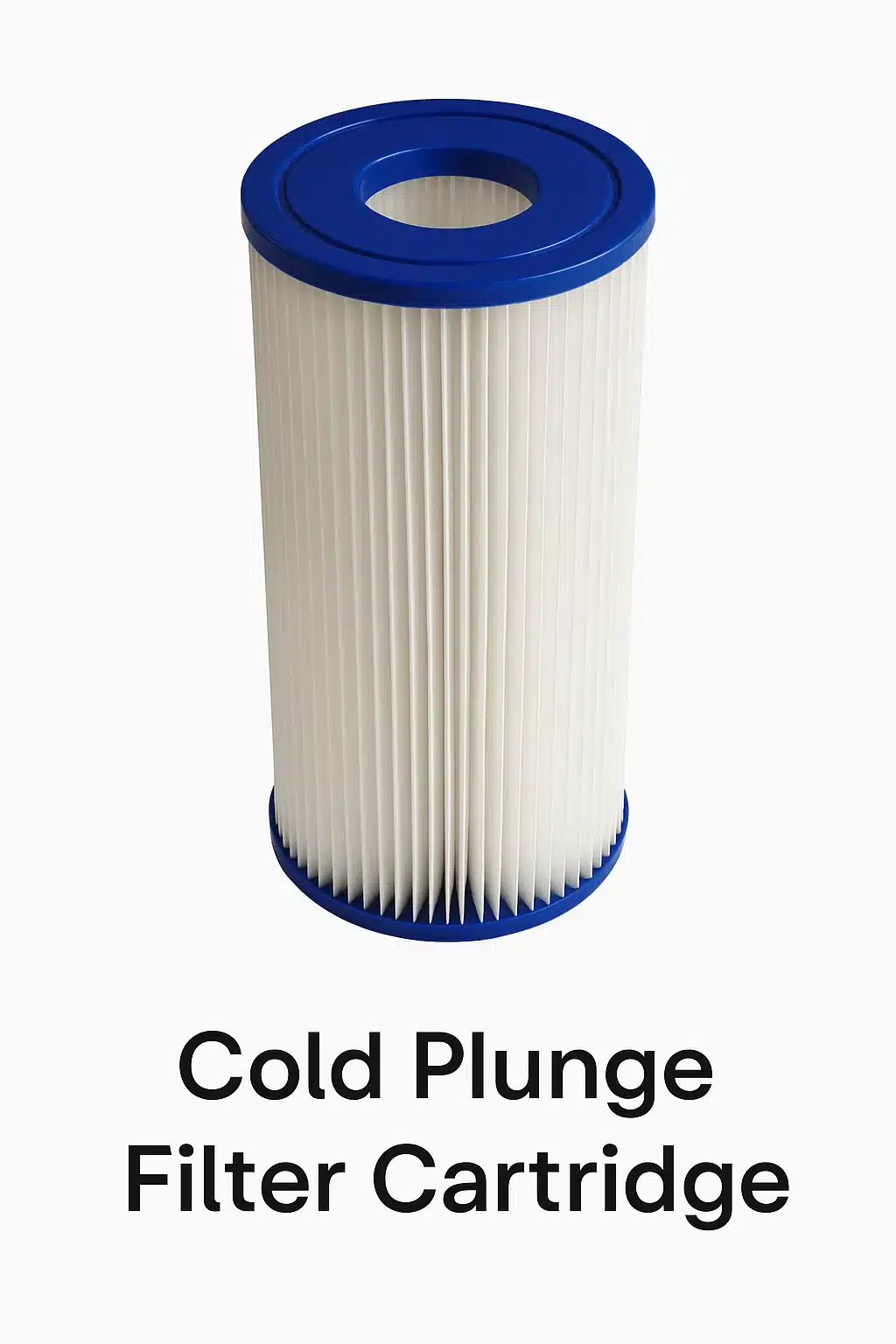
| Cartridge filter | Captures debris in many home and commercial setups. | Clean or replace according to the exact filter and system instructions. |
| Reusable filter medium | May allow rinsing where the manufacturer permits it. | Replace if damaged, excessively soiled, or no longer restoring normal flow. |
| Disposable filter medium | Used where replacement is specified by the system. | Replace rather than attempting to reuse it. |
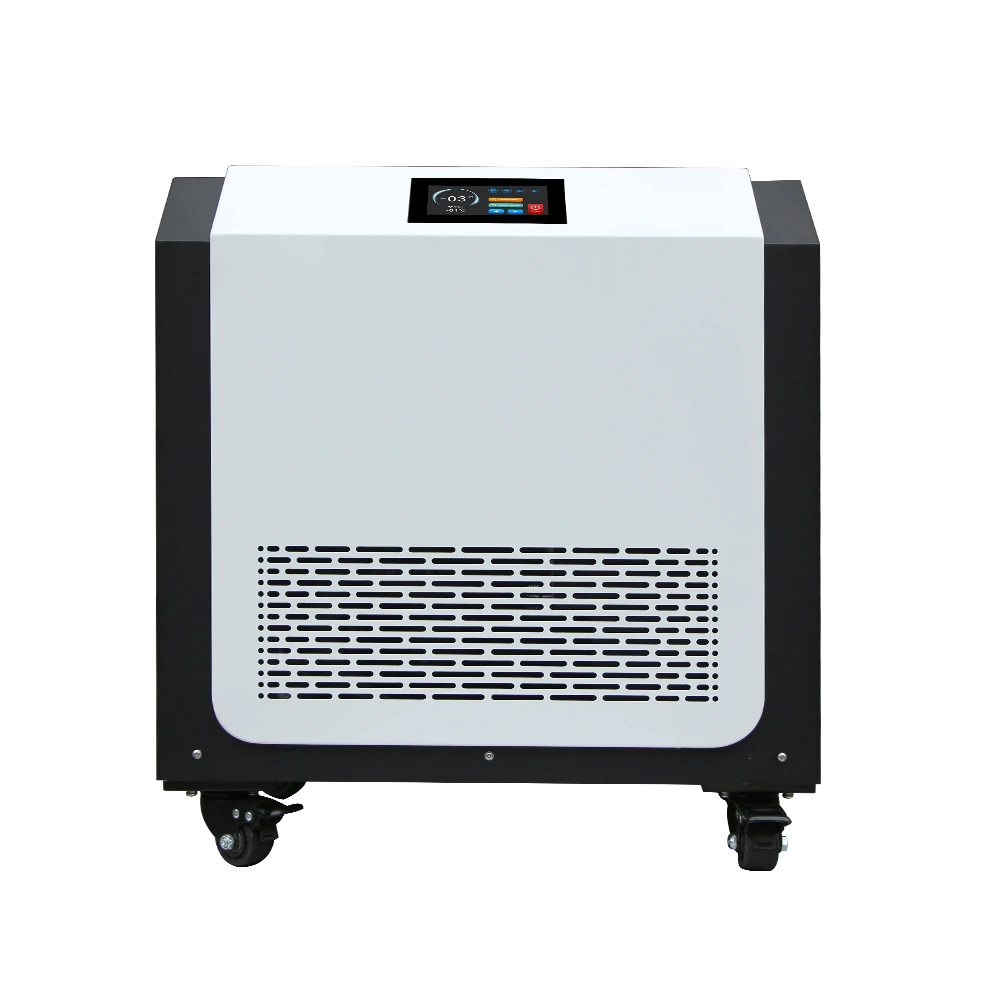
If you are checking a specific OMNI Ice model, use the official documentation for CHU-10-RV and CHM-10-RV to confirm the fitted filter, water-treatment features, compatible consumables, and maintenance procedure.
Cold plunge chiller and filter maintenance steps
Use the service method for the exact medium and housing. Before opening the housing, stop and isolate the equipment and follow its instructions for draining or relieving pressure. Do not open a running or pressurized housing.
- Inspect the cartridge, accessible strainer, housing and seals when flow or water condition changes.
- Rinse reusable media only when the manufacturer permits it.
- Replace disposable, damaged or unsuitable media with the specified compatible part.
- Check the housing, connections and hose route for visible leaks or restrictions.
- Use only cleaning methods and products approved for the installed materials and equipment.
- After reassembly, follow the filling or priming procedure and confirm normal flow before returning the system to use.
Don’t Skip the Housing
Clean accessible filter-housing surfaces using a method compatible with the housing, seals, filter medium, and the official system instructions. Do not introduce a cleaning product or chemical into the water path unless the manufacturer confirms that it is compatible.
Cooling does not replace the water-care routine
Cooling, filtration, water treatment and circulation are separate functions. Do not assume that a chiller filters or sanitises water unless the documentation for that exact configuration says so.
After idle time or changed water condition, follow the documented inspection, cleaning and restart procedure rather than choosing a universal number of days between services.
Ozone Systems Help—But Don’t Replace Filters
If your unit includes UV, ozone, or another supplemental treatment feature, use it only as described in the official documentation. Supplemental treatment does not eliminate the need to inspect the filter, maintain water flow, clean accessible components, and follow an appropriate water-care routine.
A condition-based maintenance schedule
| Usage pattern | What to check | When to service |
|---|---|---|
| Occasional home use | Filter condition, visible debris, water clarity, and flow. | Follow the filter and chiller instructions; service sooner if flow or water condition changes. |
| Frequent home use | Water path, filter medium, hose connections, and water-care routine. | Inspect more often because debris and flow resistance can build up faster. |
| Shared or commercial use | Documented water-care checks, filter condition, circulation, and records. | Follow site procedures, local requirements, and the installed system’s documentation. |
| After idle time or abnormal water condition | Water condition, filter housing, circulation, and restart procedure. | Service before returning the system to normal use. |
Practical maintenance habits
- Keep the correct replacement media available according to usage, the permitted service method and replenishment time.
- Do not bypass or remove a filter required by the approved water-path configuration.
- If water condition is abnormal, stop use and follow the water-management and equipment instructions. Replacing a filter alone may not resolve the problem.
- Keep inspection and service records for shared-use facilities.
- Do not add a chemical merely because it is labelled compatible with ozone; confirm compatibility with the full installed system and the approved water-care procedure.
Confirm the configuration before ordering parts
Before ordering filters or applying a maintenance routine, confirm the exact model and installed filtration configuration. Product names alone do not confirm the filter type, water-treatment features, compatible consumables, or maintenance interval.
For OMNI Ice equipment, check the official information for CHU-10-RV and CHM-10-RV before ordering parts or changing the water-care procedure.
Keep a usable service record
Record the equipment model, cartridge identity, inspection date, observed condition, action taken and whether normal return flow was restored. Photographs of the medium and external water path can help support assess a repeat problem.
Cold plunge chiller and filter maintenance is one part of operating the complete system; it does not replace water management. For broader symptoms, use the chiller troubleshooting guide. For filling and first operation of a packaged unit, use the startup guide.
FAQs about Cold Plunge Chiller Filters
What type of filter does a cold plunge chiller use?
Many systems use replaceable cartridge-style filters, but the filter type, size, material, and service method vary by model. Check the official documentation for your exact chiller and filter housing before ordering replacements.
How often should I replace the filter in a cold plunge chiller?
Replace or clean the filter according to the official instructions for the exact filter type and system. Service may be needed sooner when water flow drops, debris is visible, water condition changes, or usage is frequent or shared.
Do I need an additional filter for my cold plunge at home?
That depends on the existing water path, tub volume, water use, and manufacturer guidance. Do not add or bypass filtration equipment without confirming that the change is compatible with the pump, chiller, hose layout, and water-care procedure.
Can a filter extend the lifespan of a cold plunge chiller?
A properly serviced filter can help reduce debris reaching the pump, hoses, and heat exchanger. It cannot guarantee a service life, because durability also depends on installation, water condition, use, maintenance, and the exact equipment.
What happens if I don’t replace the filter on time?
An overdue filter can restrict water flow, collect debris, and make water-path problems harder to diagnose. Inspect the filter and related connections promptly when you notice reduced flow, unusual noise, visible debris, or changed water condition.
Ready to set up your chiller and filter system correctly? Read <chiller and filter setup guide.