If the tub only needs to stay cold, a cooling-only chiller is usually the simpler choice. A water chiller and heater makes sense when the same tub genuinely needs cold and warm operation, and the selected model can meet both duties under the project conditions.
Do not infer heating from a wide setpoint display or a generic “dual-mode” label. Confirm the model, heating method, electrical version and operating limits. This is an equipment guide, not a therapy protocol.
In this guide
Choosing cooling-only or dual mode
When does a water chiller and heater make sense?
Start with the operating plan. If the tub will remain cold, heating adds capability the project may never use. Dual mode becomes useful when the same vessel has a real warm-water role and enough time is available for the temperature change. One tub does not provide warm and cold water at the same time. If both sessions must run together, ask for a separate-vessel system design.
The model matters. OMNI’s CHM-10 page identifies heating and cooling; the CH-08 page identifies cooling only. Horsepower and controller appearance do not answer that question.
Send the usable water volume, start, target, ambient range and time for each mode, plus the destination and site power.
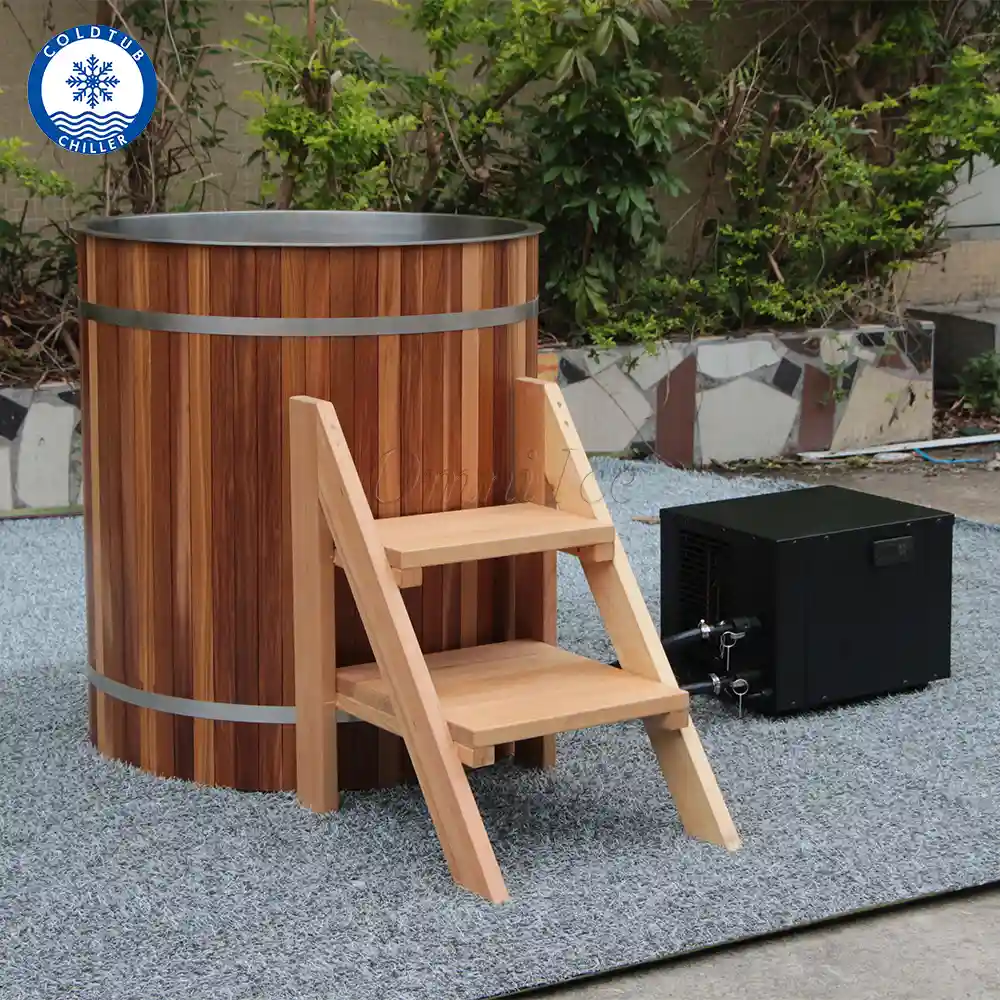
How one machine switches between cooling and heating
A water chiller and heater moves heat out of the water in cooling mode. In heating mode, a reversible heat pump changes the direction of heat transfer; other products may use a separate heating element.
The U.S. Department of Energy’s heat-pump explainer describes this general heat-transfer principle. It does not establish the capacity, range or controls of a cold-plunge model.
A selectable temperature is not usable capacity. Heating and cooling output can differ and can change with water and ambient conditions. Ask for each mode separately.
What to compare before paying for dual mode
| Buyer question | Why it matters | Confirm |
|---|---|---|
| 1. Will the tub really be used warm? | An occasional “maybe” may not justify dual mode. | Warm-water use and schedule. |
| 2. How fast must it change modes? | Same-day and overnight changes are different duties. | Start, target and time in both directions. |
| 3. What is the usable water volume? | Shell capacity may not equal operating fill. | Actual volume and sizing basis. |
| 4. What ambient range applies? | Each mode may have different limits. | Mode-specific operating envelope. |
| 5. Can the water loop handle both? | Hoses, seals and filters have limits. | Approved materials and range. |
| 6. Is flow adequate? | Poor circulation affects both modes. | Pump, filter, ports, hoses and bypass. |
| 7. Is the electrical version correct? | Voltage and frequency variants differ. | Nameplate version and site supply. |
| 8. How are modes changed? | Delays and restart behavior affect use. | Sequence, limits and alarms. |
| 9. Does the site fit? | Airflow, drainage and access matter. | Clearances and service space. |
| 10. How will it be accepted? | Cooling does not prove heating. | Separate observations for both modes. |
Use these questions to narrow the model; its manual and quotation still govern.
Define two duties, not one temperature range
Size a water chiller and heater for two jobs. For each mode, define usable volume, start, target band, ambient range, cover state, use pattern and time. Do not copy one mode’s result into the other.
Separate the initial temperature change from holding duty. A covered tub changing overnight differs from an uncovered tub used repeatedly. For same-day switching, use the first mode’s end condition as the second mode’s start.
Use the water-chiller sizing guide for cooling inputs. Near-freezing water or ice formation needs the separate zero-degree chiller conditions; heating capability does not establish that duty.
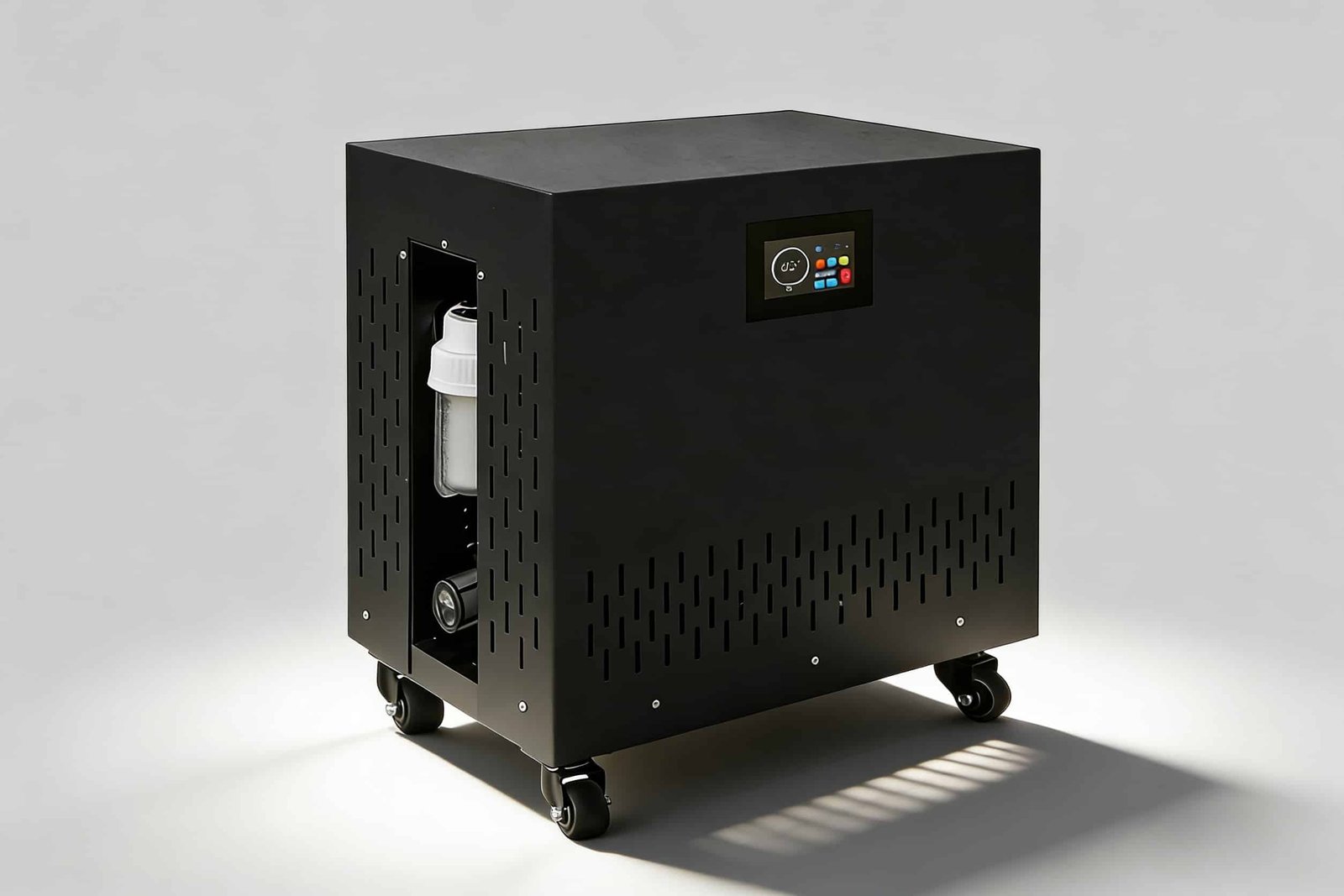
Make sure the water loop suits both modes
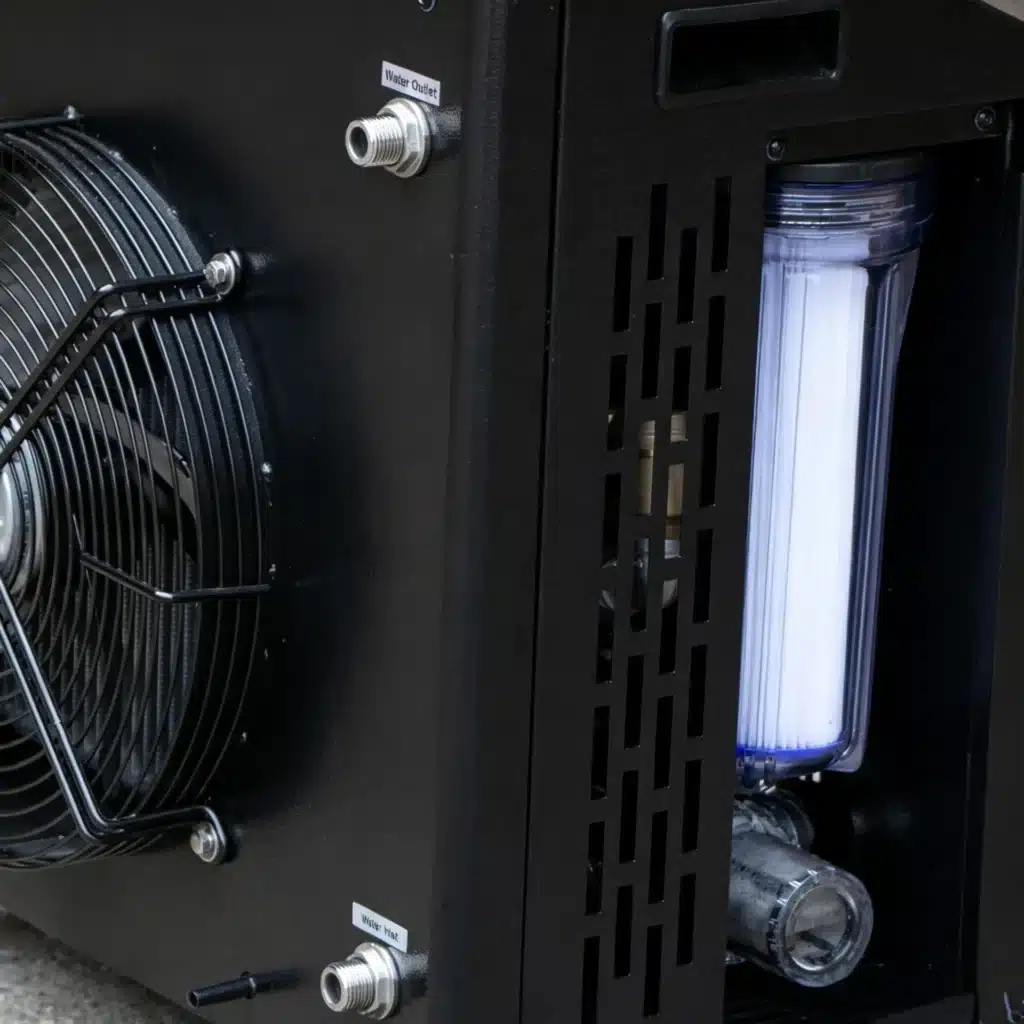
Map the path between tub and machine: ports, pump, filter, treatment, valves, bypass, drain and overflow. Record flow direction, connection sizes and who supplies each part. The selected model sets the order and flow.
Check every wetted part, not only the tub shell. Hoses, seals, adhesives, filters and fittings may have lower limits than the displayed range. Water care must also remain compatible.
The cold-plunge filtration guide covers circulation and maintenance. Heating does not replace water management, and filtration, ozone or UV does not remove the need for cleaning, testing and water replacement.
Ask what actually happens when the mode changes
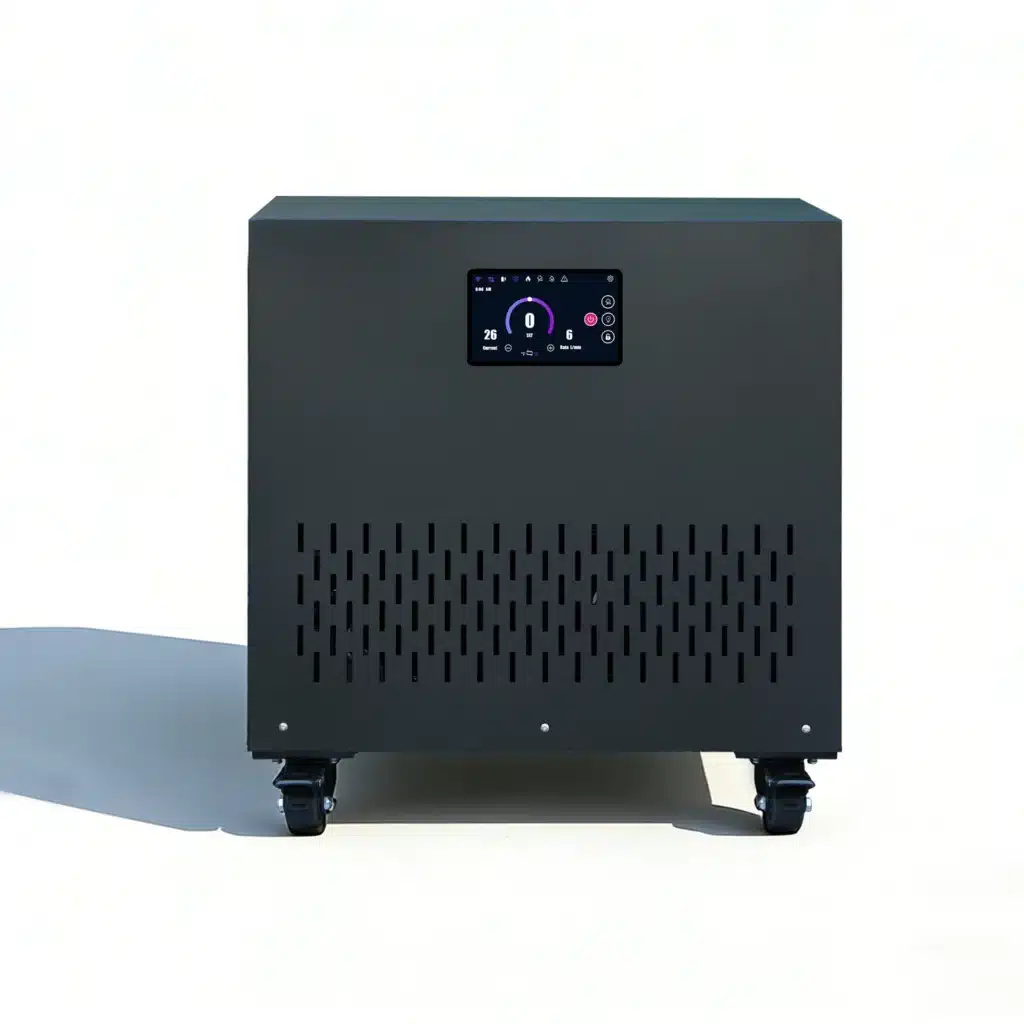
For your proposed water chiller and heater, ask how the operator changes modes: locally, by app or by schedule. Confirm any stop, delay, flow check or defrost sequence, and who can change the setting.
Ask what happens after power loss, low flow, sensor failure or network loss. The response is model-specific. A displayed temperature does not prove the unit can reach or hold it under project conditions.
Use the smart-control guide for account ownership, permissions and offline behavior. App access is a control feature, not performance evidence or a safety certification.
Check power, airflow, drainage and service space
Confirm voltage, frequency, current and connection method for the ordered version. The OMNI brochure lists CHM-10-RV for 110–120 V / 60 Hz and CHM-10-RW for 220–240 V / 50 Hz. Both have cooling and heating specifications; they are separate electrical versions, not one universal dual-voltage unit. A qualified professional must review wet-area power and protection for the destination. The U.S. Consumer Product Safety Commission’s GFCI fact sheet explains ground-fault protection near water.
Keep the required air path open. In cooling mode, a tight cabinet can feed warm discharge air back into the intake. Heating may have different ambient limits or defrost behavior. Follow the model’s clearance instructions and keep service points reachable.
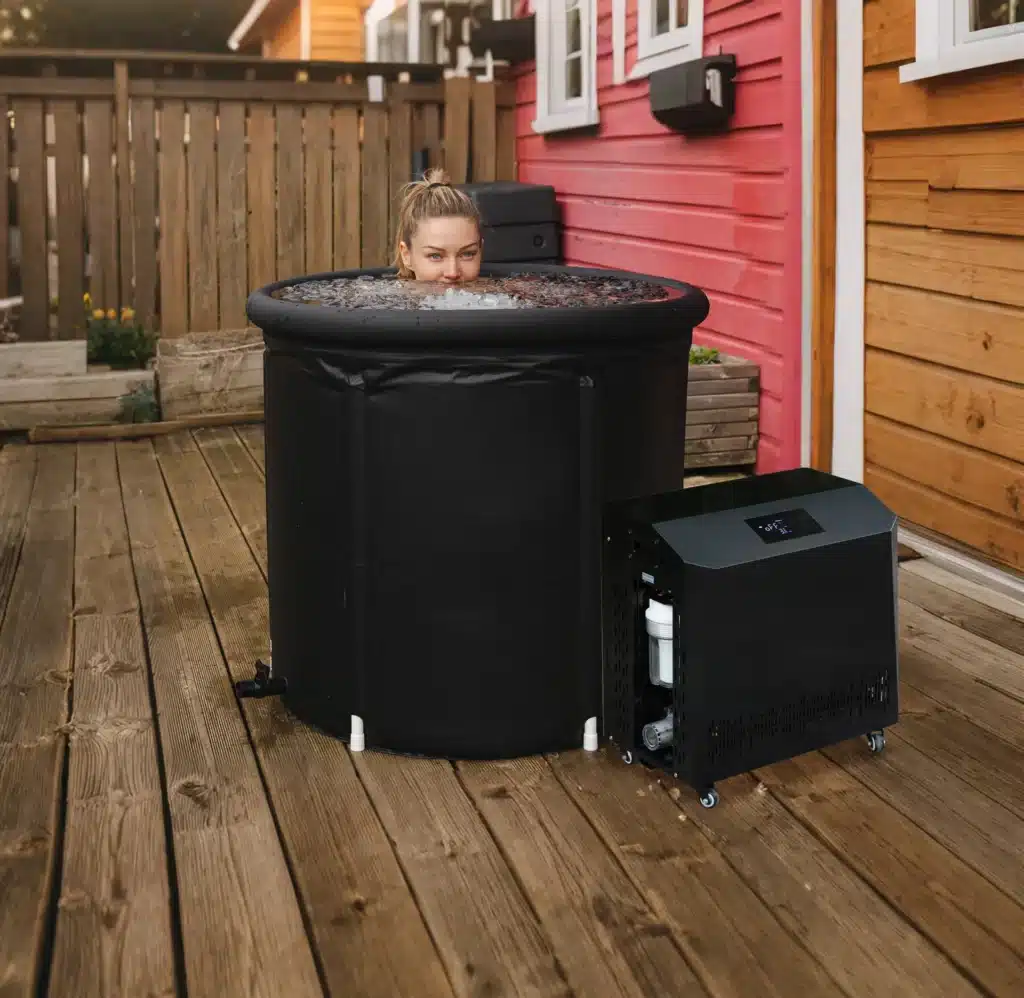
For outdoor use, confirm limits for rain, sun, dust, salt air, drainage and storage. A sheltered product photo does not establish an environmental rating.

What the supplier should show before you order
- The exact model, revision and electrical version, with the heating method named.
- Separate cooling and heating data with water temperature, ambient condition and other stated test conditions.
- The supported water-volume basis and any model-specific operating limits.
- A water-loop drawing showing ports, required flow and the supplied pump, filter and treatment components.
- Controller modes, switching sequence, alarms, limits and restart behavior.
- The current installation, operation, cleaning and maintenance documents.
- Airflow, clearance and indoor or outdoor limitations for the ordered configuration.
- Warranty boundaries, consumables, spare parts and the service route for the destination.
If a field is not documented, keep it open in the quotation instead of turning it into an assumed feature. Refrigerant-circuit work belongs with the qualified route required in the destination. In the United States, EPA Section 608 guidance covers technician certification for work that could release regulated refrigerants.
Prove cooling and heating as separate operating cases
Commission the water chiller and heater in both modes: does it cool as agreed, and does it heat as agreed? Record the model, supply, water volume, start, finish, ambient condition, elapsed time, cover state, flow and alarms.
Before either run, check the water path, leaks, drainage and airflow. Follow the approved changeover sequence and record any required delay.
The factory acceptance test guide offers a record structure for both modes. The handover should state what was observed and under which conditions.
Send a project brief a supplier can answer
TUB / USABLE WATER VOLUME: [ ]

COOLING START / TARGET / TIME ALLOWED: [ ]

HEATING START / TARGET / TIME ALLOWED: [ ]

HOW OFTEN EACH MODE WILL BE USED: [ ]

SAME-DAY CHANGEOVER REQUIRED: [YES / NO]

INDOOR / OUTDOOR / AMBIENT RANGE: [ ]

DESTINATION COUNTRY / SITE POWER: [ ]

TUB PORTS / HOSES / DRAIN / OVERFLOW: [ ]

PUMP / FILTER / WATER-CARE SCOPE: [ ]

LOCAL / APP / SCHEDULED CONTROL: [ ]

AIRFLOW / DRAINAGE / SERVICE CONSTRAINTS: [ ]

DOCUMENTS AND ACCEPTANCE RECORDS REQUIRED: [ ]

QUANTITY / OEM NEEDS / DELIVERY DESTINATION: [ ]
For an OMNI water chiller and heater example, review the CHM-10 configuration. If the tub only needs cooling, compare the CH-08 cooling-only model. Send your water volume, site power, target temperatures, changeover time and quantity through the OMNI project enquiry page so the quotation addresses the way you will actually use the tub.
Common questions about chiller-heater systems
Can every cold plunge chiller heat the water?
No. Heating must be built into the model. OMNI’s CHM-10 heats and cools; CH-08 is cooling-only.
Is a water chiller and heater better than a cooling-only unit?
No. It helps only when the project has a defined warm-water use. For a cold-only tub, cooling-only may be simpler.
Can the same tub and plumbing be used in both modes?
Only when the tub, hoses, seals, fittings, filter and water-care method suit the full requested range.
How quickly can one tub change from cold to warm?
There is no universal answer. It depends on water volume, start, target, ambient conditions, insulation, cover, circulation and model. Put the required time in the RFQ.
Does heating replace filtration or water treatment?
No. The installation still needs an appropriate plan for circulation, filtration, treatment, testing, cleaning and water replacement.