A zero degree cold plunge chiller (0°C) claim is meaningful only when it is tied to a complete test envelope. The record should identify the exact chiller configuration, usable water volume, starting temperature, target, ambient conditions, tub insulation, cover state, circulation path, measurement location, test duration and whether visible ice formed.
A zero-degree setpoint is not the same as verified bulk-water performance, and a colder target does not prove a better recovery outcome. This buyer guide explains how to evaluate a zero degree cold plunge chiller without relying on a dashboard photo, an unloaded factory reading or an unqualified comparison with a standard cooling system.
Table of Contents
Zero degree cold plunge chiller test guide
What does a zero degree cold plunge chiller mean?
It should mean that an identified system can work toward a water condition near 0°C under stated limits. The claim needs context because water volume, ambient heat, insulation, heat-exchanger design, flow, control logic and test duration change the result. At atmospheric pressure, pure water’s freezing behaviour also means the system may encounter local ice formation before every part of the tub reaches the same measured temperature.
Temperature is a measured quantity, not a marketing adjective. The U.S. National Institute of Standards and Technology explains the relationship between common temperature scales in its SI units and temperature guidance. For procurement, the practical requirement is traceability: identify the instrument, units, measurement point and conditions used for the result.
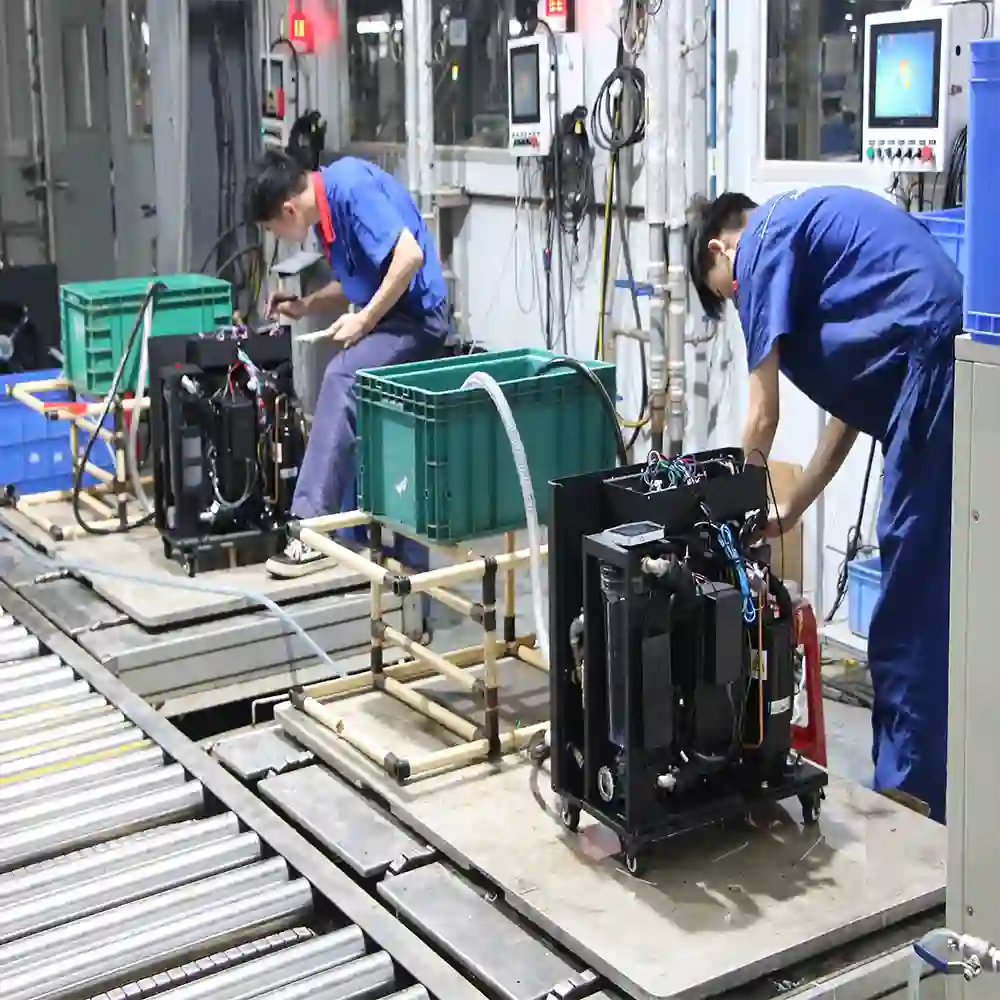
Nine conditions that change a zero degree cold plunge chiller result
| Condition | Why it matters | What to record |
|---|---|---|
| 1. Exact configuration | Different compressors, heat exchangers, pumps and controls can sit under one family name | Model, suffix, serial and revision |
| 2. Usable water volume | More water requires more heat removal | Measured fill volume |
| 3. Starting temperature | A larger temperature change requires more energy | Bulk-water start reading |
| 4. Ambient conditions | Room or outdoor heat enters the system | Air temperature, sun and airflow context |
| 5. Tub and cover | Surface area and insulation affect heat gain | Vessel, insulation and cover state |
| 6. Circulation path | Flow affects heat transfer and sensor representation | Pump, filter, hose size, length and elevation |
| 7. Measurement method | Controller, inlet, outlet and tub readings may differ | Instrument, location, time and calibration status |
| 8. Ice condition | Local ice can restrict flow or alter readings | Where ice formed and how operation responded |
| 9. Test duration and load | An empty overnight test differs from active use | Timeline, users or simulated load and final stability |
Without those nine fields, two zero degree cold plunge chiller videos cannot be compared reliably. One may use a small insulated vessel in a cool room over many hours; another may use a larger open tub with a warmer starting point. Both displays can be genuine while answering different questions.
Setpoint, controller reading and bulk water are different
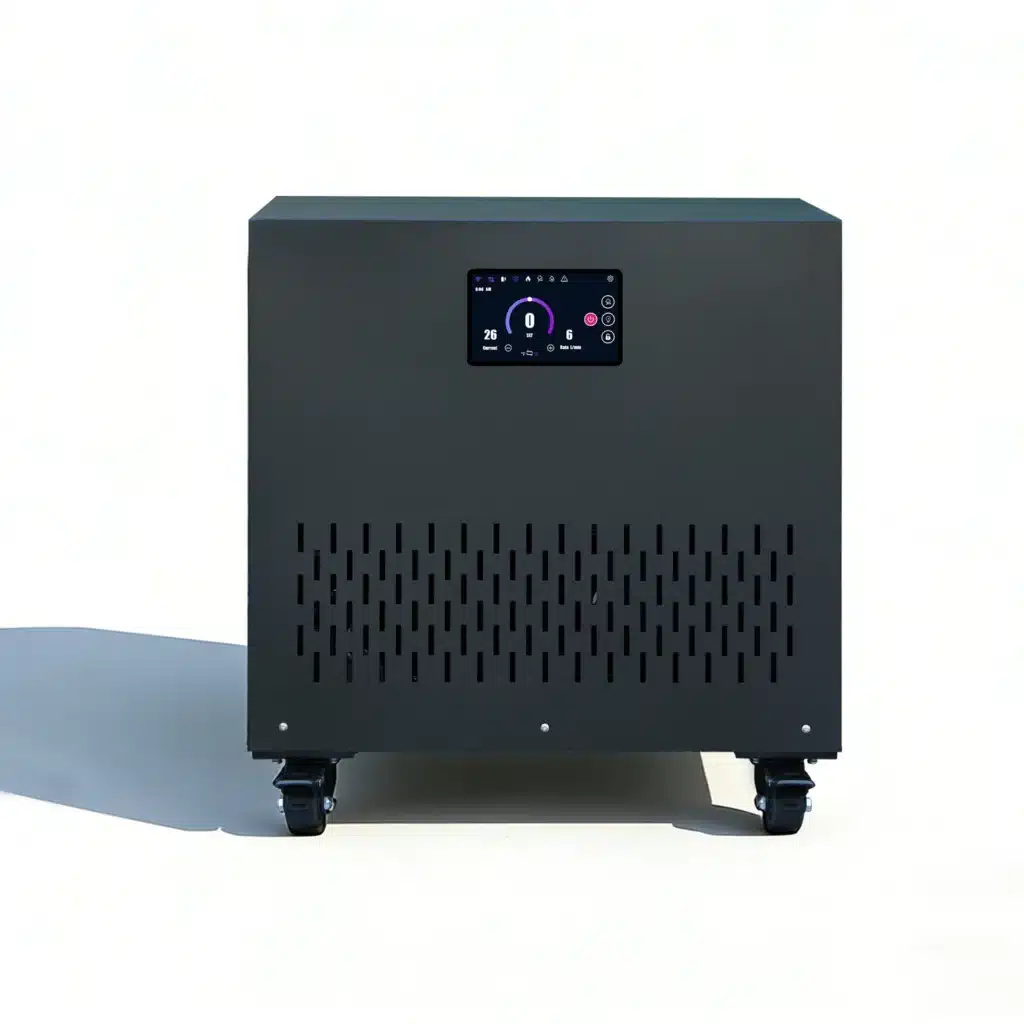
The setpoint is the requested control target. A controller reading is the value from a sensor at a defined location. The bulk-water condition is what exists across the usable tub. Sensor position, mixing, flow and control tolerances can create differences between them. A test should therefore record more than one timestamped reading and state where each measurement was taken.
Ask the supplier whether the displayed value comes from the chiller’s internal water path, the tub, an external probe or another point. If the purchase specification sets an acceptance tolerance, define the instrument and measurement location. Use the cold plunge chiller test instrument calibration checks to verify identity, range, status and the evidence behind that reading. Do not infer calibration from the number of decimal places on the display. NIST’s metrological traceability policy also explains that traceability requires a documented chain and does not by itself guarantee fitness for a particular purpose.

Ice formation changes the water-flow problem
A zero degree cold plunge chiller may operate near conditions where visible ice can form. That is not just a visual effect. Ice can develop around a cold surface, sensor, inlet or outlet, and excessive accumulation can affect circulation or control behaviour. The permitted condition and required response must come from the exact equipment documentation and test plan.
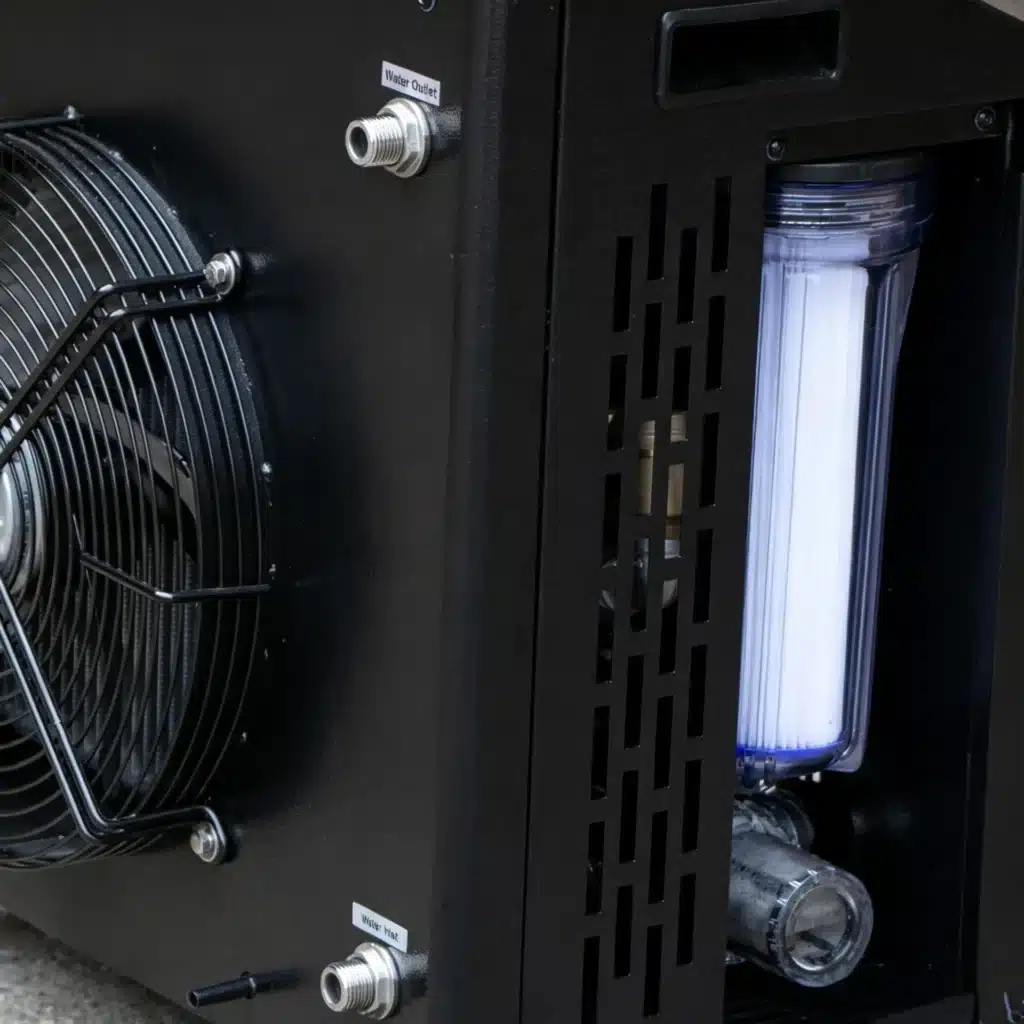
Confirm minimum required flow, pump basis, filter condition, hose restrictions and any freeze-protection logic. Never bypass a flow switch, protective trip or other safety control to force a colder result. If flow falls, use the pump-not-drawing-water checks and the filter restriction guide, then follow the model-specific service route.
The human-contact water loop also needs a clear materials and water-care plan. Do not add an automotive or industrial antifreeze product to plunge water. Any fluid, treatment method or secondary-loop design must be compatible with the equipment, intended use and applicable local requirements.
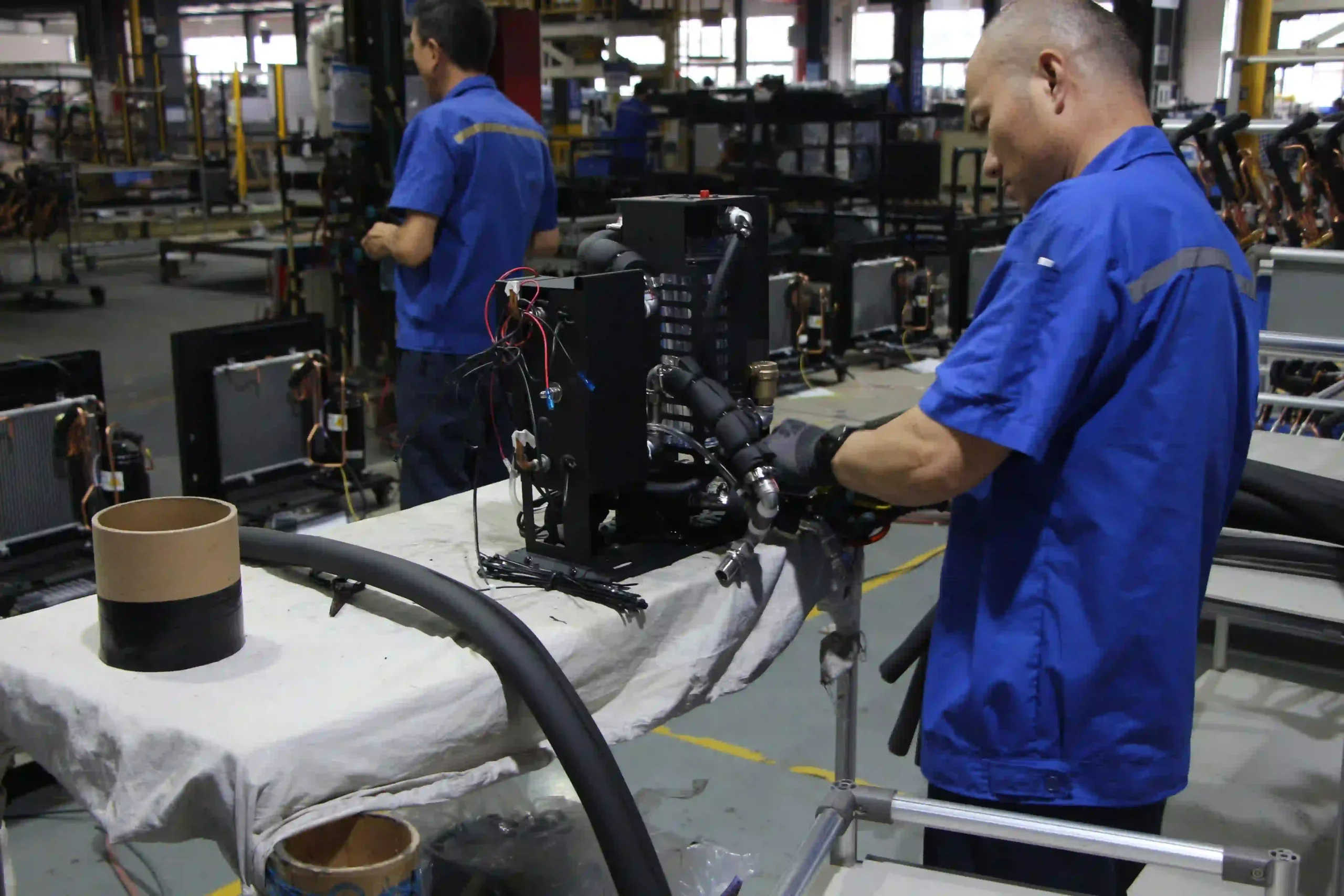
When is a zero degree cold plunge chiller relevant?
It is relevant when the buyer has defined a near-freezing or visible-ice operating requirement and accepts the added design, control, flow and maintenance considerations. It is not automatically the correct choice for every home, gym or hotel. Many projects need a stable cold-water range rather than ice formation, and the correct selection still begins with the actual duty.
- Use-case question: does the project genuinely require near-freezing water or visible ice?
- Capacity question: what water volume, start point, ambient condition and pull-down time must be supported?
- Installation question: can the site provide the electrical, ventilation, drainage, circulation and service conditions?
- Operation question: who monitors flow, ice condition, water care and protective alarms?
- Evidence question: will the buyer receive a test record for the exact ordered configuration?
Compare the thermal inputs in the ice-bath chiller sizing guide and the electrical variants in the voltage and frequency guide. If the requirement survives that review, include it in the RFQ instead of adding “0°C” after the model has already been chosen.
Zero degree cold plunge chiller evidence checklist
- Exact model, configuration suffix, serial or test-unit identifier.
- Nameplate and verified electrical variant.
- Usable water volume and vessel description.
- Starting water and ambient-air temperatures.
- Target, controller settings and protective limits.
- Timestamped temperature readings with instrument and location.
- Tub insulation, cover and exposure conditions.
- Pump, filter, hose, fittings, flow requirement and observed flow.
- Ice location, extent and any effect on circulation.
- Test duration, simulated or real load and stability period.
- Photos or video linked to the test record, not separated from it.
- Pass/fail criteria, deviations and responsible approval.
Use the factory acceptance test guide to convert these items into an agreed test method. Before dispatch, use the inspection checklist to confirm that the tested configuration, outgoing unit, documents and packing still match.
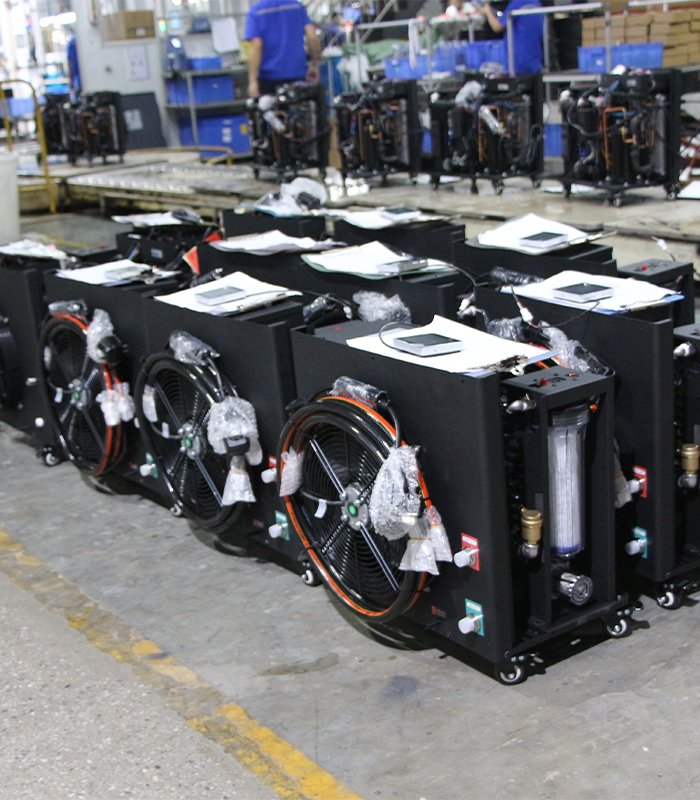
Use one protocol to compare a zero degree cold plunge chiller
When two suppliers make a low-temperature claim, send both the same protocol. State the tub, usable volume, starting water temperature, ambient range, cover state, hose arrangement, pump and filter condition, target, maximum test duration and required readings. Ask each supplier to identify any condition it cannot support before quoting a zero degree cold plunge chiller.
Define the measurement points. A practical record may include the controller value plus an independent reading at an agreed tub location after the water has circulated for a stated period. If temperature uniformity matters, use more than one tub location. Record the instrument model or identification and its check or calibration status. The goal is not laboratory language for its own sake; it is to prevent a zero degree cold plunge chiller claim from changing meaning between quotation, sample and production.
| Comparison field | Supplier A | Supplier B |
|---|---|---|
| Exact chiller configuration | Model/suffix/revision | Model/suffix/revision |
| Water volume and vessel | Value + description | Value + description |
| Start, ambient and target | Readings + units | Readings + units |
| Time to agreed condition | Timestamped record | Timestamped record |
| Controller and independent readings | Locations + instruments | Locations + instruments |
| Flow and ice observations | Requirement + result | Requirement + result |
| Protective events or deviations | Recorded response | Recorded response |
Separate three outcomes: setpoint accepted, measured target achieved and target maintained for the required period. They are not interchangeable. If visible ice is part of acceptance, describe the expected condition and allowed effect on flow. A photograph of ice without the water, ambient, time and circulation record is not sufficient proof of a repeatable zero degree cold plunge chiller result.
Repeat-production control matters as much as the sample. Ask which compressor, heat exchanger, controller, sensor, pump and other critical components were used in the tested zero degree cold plunge chiller. Require disclosure when a production unit differs, and decide whether the change needs a document review or repeat test. Use unit identity and revision control so evidence from one prototype is not silently applied to every later configuration.
Finally, distinguish equipment capability from user instructions. This article does not recommend a human exposure temperature or duration. The buyer or operator must establish the appropriate operating policy, warnings, supervision and local compliance route separately from the mechanical test of a zero degree cold plunge chiller.
Zero degree cold plunge chiller FAQ
Does a 0°C setting prove the tub water reached 0°C?
No. The setpoint, controller sensor reading and bulk-water measurement are different records. Ask for timestamped readings, the sensor or instrument location and the complete test conditions.
Will a zero degree cold plunge chiller always make visible ice?
No universal result should be assumed. Water composition, circulation, cold-surface temperature, ambient conditions, vessel, control logic and test duration affect whether and where ice forms.
Is a colder chiller automatically better?
No. The correct system is the one that meets the documented project duty and can be installed, operated and maintained safely. A lower advertised target does not prove better sizing, hygiene, reliability or user outcomes.
What should a factory test record include?
It should identify the zero degree cold plunge chiller configuration, water volume, vessel, starting and ambient temperatures, circulation path, measurement method, timeline, ice condition, protective events and approval criteria.
Can industrial antifreeze be added to plunge water?
Do not add automotive or industrial antifreeze to human-contact water. Any fluid or secondary-loop arrangement must be explicitly compatible with the equipment and intended use and reviewed against applicable requirements.