A 110V vs 220V cold plunge chiller comparison only becomes useful when voltage and frequency are matched to the destination site and the exact model variant. Before purchase, confirm the model suffix, nameplate input, plug and cable configuration, circuit/protection requirements, water duty and configuration-specific documents. Do not assume a 220V version is automatically faster, more efficient or interchangeable with a 110V version.

Quick decision rule: treat a 110V vs 220V cold plunge chiller as two configuration paths, not as a universal performance ranking. First match the complete voltage/frequency rating to the verified site supply. Then compare the exact model’s cooling duty, listed electrical input, plug/cable, water-loop requirements and destination documents. If any field is still generic—especially a claim such as “1 HP, available in all voltages”—keep the quotation open until the supplier returns a model suffix, nameplate data and configuration-specific evidence.
Voltage approval does not approve connected controls. If the quoted model includes an app, Wi-Fi or schedules, use the smart cold plunge with chiller control checklist to review local operation, accounts, data, updates and offline behaviour separately.
110V vs 220V cold plunge chiller: the buyer decision in one table
| Buyer needs to provide | Manufacturer needs to confirm | Evidence to retain before approval |
|---|---|---|
| Destination country and installation address | Applicable electrical version and available model suffix | Quotation and datasheet naming the exact variant |
| Nominal supply voltage and frequency | Rated voltage/frequency on the selected nameplate | Nameplate or label artwork for the sample configuration |
| Available outlet/receptacle and intended location | Plug, cable and connector supplied for that order | Approved plug/cable specification and sample photos |
| Site circuit information from a qualified professional | Listed input power and any model-specific current/startup requirements available | Electrical datasheet and local installation sign-off |
| Tub water volume, starting and target temperatures | Whether the chosen electrical variant is available in a model sized for the duty | Model-specific performance data with stated test conditions |
| Ambient conditions and expected operating schedule | Operating limits and configuration assumptions | Agreed sample test record |
| Required market documents and labeling language | Which reports, marks, manuals and labels apply to the exact model/configuration | Document list with model, version, issuer and revision |
This 110V vs 220V cold plunge chiller decision table is a procurement checklist, not electrical installation advice. The plug, receptacle, grounding, circuit protection and local code requirements must be confirmed for the destination site by a qualified professional. For example, U.S. OSHA guidance states that receptacles and plugs for different voltage or current ratings should not be interchangeable and that receptacles in wet or damp locations must be suitable for the location. See OSHA 1926.405. The applicable rule for a specific installation may differ by country, state, facility type and product listing.
Current OMNI model-document matrix
The following 110V vs 220V cold plunge chiller values are transcribed from the current OMNI model reference used for quotation screening. They are model-document fields, not independently verified test results or whole-series guarantees. The reference does not state one common test condition for every input-power value, so buyers should request the current datasheet and nameplate for the exact sample or production configuration.
| Model variant | Recorded voltage / frequency | Listed input power |
|---|---|---|
| CH-08-RV | 110–120V / 60Hz | 1.04 kW |
| CH-08-RW | 220–240V / 50Hz | 0.85 kW |
| CHM-10-RV | 110–120V / 60Hz | 1.07 kW |
| CHM-10-RW | 220–240V / 50Hz | 1.02 kW |
| HY-06-RV | 110–120V / 60Hz | 0.64 kW |
| HY-06-RW | 220–240V / 50Hz | 0.61 kW |
| HY-08-RV | 110–120V / 60Hz | 0.725 kW |
| HY-08-RW | 220–240V / 50Hz | 0.71 kW |
| HY-10-RV | 110–120V / 60Hz | 1.1 kW |
| HY-10-RW | 220–240V / 50Hz | 1.15 kW |
| HY-15-RV | 110–120V / 60Hz | 1.69 kW |
| HY-15-RW | 220–240V / 50Hz | 1.95 kW |
| HY-20-RW | 220–240V / 50Hz | 2.65 kW |
| CHU-05-RV | 110–120V / 60Hz | 0.47 kW |
| CHU-10-RV | 110–120V / 60Hz | 0.69 kW |
| CHU-10-RW | 220–240V / 50Hz | 0.80 kW |
| CHU-15-RV | 110–120V / 60Hz | 1.06 kW |
| CHU-15-RW | 220–240V / 50Hz | 1.06 kW |
| CT-19-RV | 110–120V / 60Hz | 0.95 kW |
| CT-19-RW | 220–240V / 50Hz | 1.09 kW |
How to read this matrix: RV and RW are separate model variants, not a promise that one physical unit can switch between both supplies. A blank or missing variant in the worksheet does not prove that another configuration is unsupported; it means availability requires confirmation. Input power is also not the same as cooling capacity, and it should not be used by itself to predict pull-down time or energy cost.
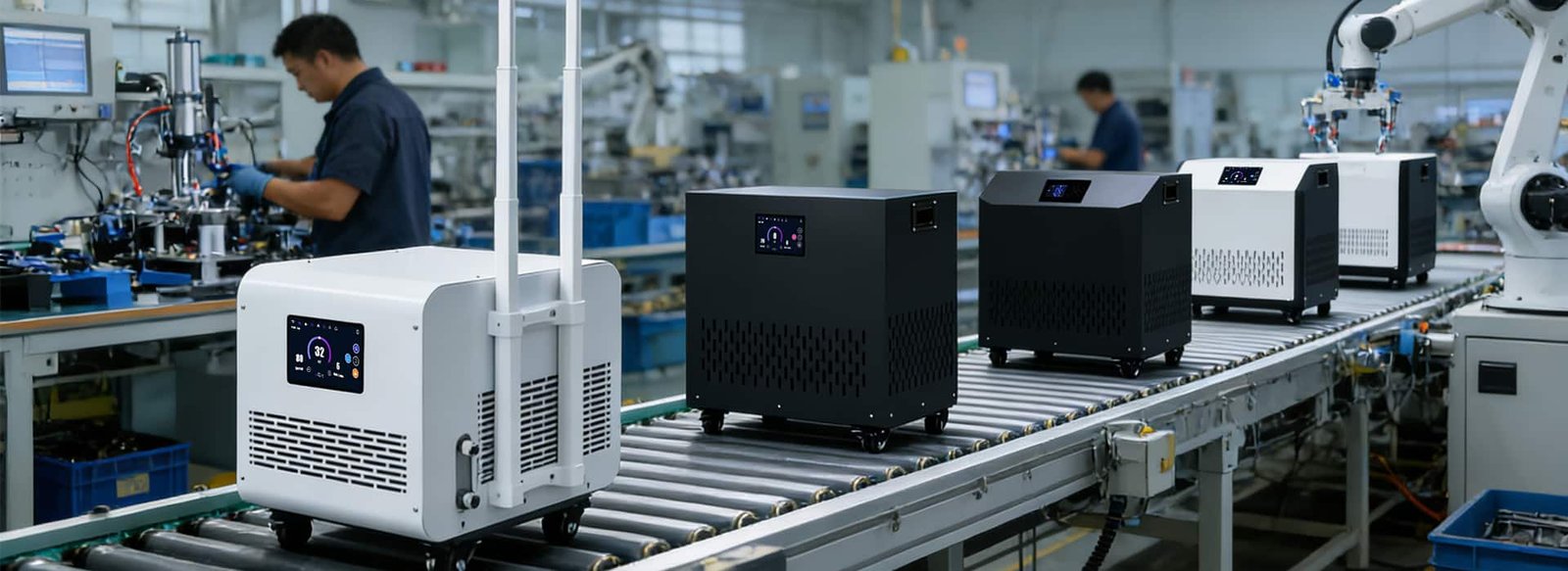
How 110V vs 220V cold plunge chiller voltage and frequency work together
A 110V vs 220V cold plunge chiller decision involves refrigeration, controls and water circulation. The rated supply affects the electrical components selected for that variant, while frequency can affect motors, compressors, pumps and control design. A buyer should therefore copy the complete rating—such as 110–120V / 60Hz or 220–240V / 50Hz—rather than asking only for “110V” or “220V.”
The destination country is useful context, but it is not enough to approve a unit. Commercial buildings, temporary sites, older properties and multi-market projects may have different available circuits. The final configuration should be matched to the actual site information and local requirements, not to a country stereotype.
Do not infer the plug or circuit from voltage alone
- Ask for the exact plug and cable specification for the order, including a photo or drawing.
- Confirm the equipment nameplate, rated input and any available current/startup information for the selected variant.
- Have the destination site’s qualified professional verify the receptacle, grounding, protective device, wet-location suitability and applicable local code.
- Do not use a travel adapter, improvised cord or plug substitution to make a mismatched unit fit the site.
- Keep the approved electrical details in the purchase specification so the sample, production batch, manual and label can be checked against the same version.
7 RFQ fields for a 110V vs 220V cold plunge chiller quote
- Destination country and installation type: home, gym, spa, hotel, recovery studio or another facility.
- Verified site supply: nominal voltage, frequency and circuit information supplied by the buyer’s qualified professional.
- Water duty: usable water volume, starting temperature, target temperature and acceptable pull-down time.
- Ambient conditions: expected air-temperature range, ventilation, indoor/outdoor placement and sun exposure.
- Usage pattern: hours per day, expected sessions, back-to-back use and maintenance windows.
- Physical integration: tub, hose size and length, pump/flow arrangement, filtration and sanitation components.
- Commercial scope: sample or production quantity, labeling language, plug/cable, manuals, market documents, branding and packaging.
Use these seven fields to make the 110V vs 220V cold plunge chiller request configuration-specific. Start with the cold plunge product selection guide if the tub and system format are not yet fixed. Use the cold plunge chiller sizing guide to organize water volume, temperature and heat-load inputs. For private-label or project review, the OEM cold plunge chiller solutions page explains the configuration and documentation path. When the 110V vs 220V cold plunge chiller choice is ready, send it with the OEM cold plunge chiller RFQ template.
How to approve a 110V vs 220V cold plunge chiller sample
For a 110V vs 220V cold plunge chiller sample, record the model suffix, serial or equipment code, nameplate, voltage/frequency, listed input, plug/cable, tub water volume, starting and target temperatures, ambient temperature, hose layout, flow arrangement and run time. Photograph the nameplate and supplied plug. Log any protective-device trip or abnormal stop, but do not diagnose or alter electrical components without qualified support.
A sample result applies to the tested configuration and conditions. If production changes the compressor, pump, controller, cable, plug, refrigerant, labeling or other electrical component, the buyer should ask what documentation and re-approval steps are required.
If the electrical variant also changes the refrigerant or refrigeration components, use the R32 and R290 refrigerant guide to request the safety class, charge, market documents and service path for the exact build.
Scope and responsibility boundaries
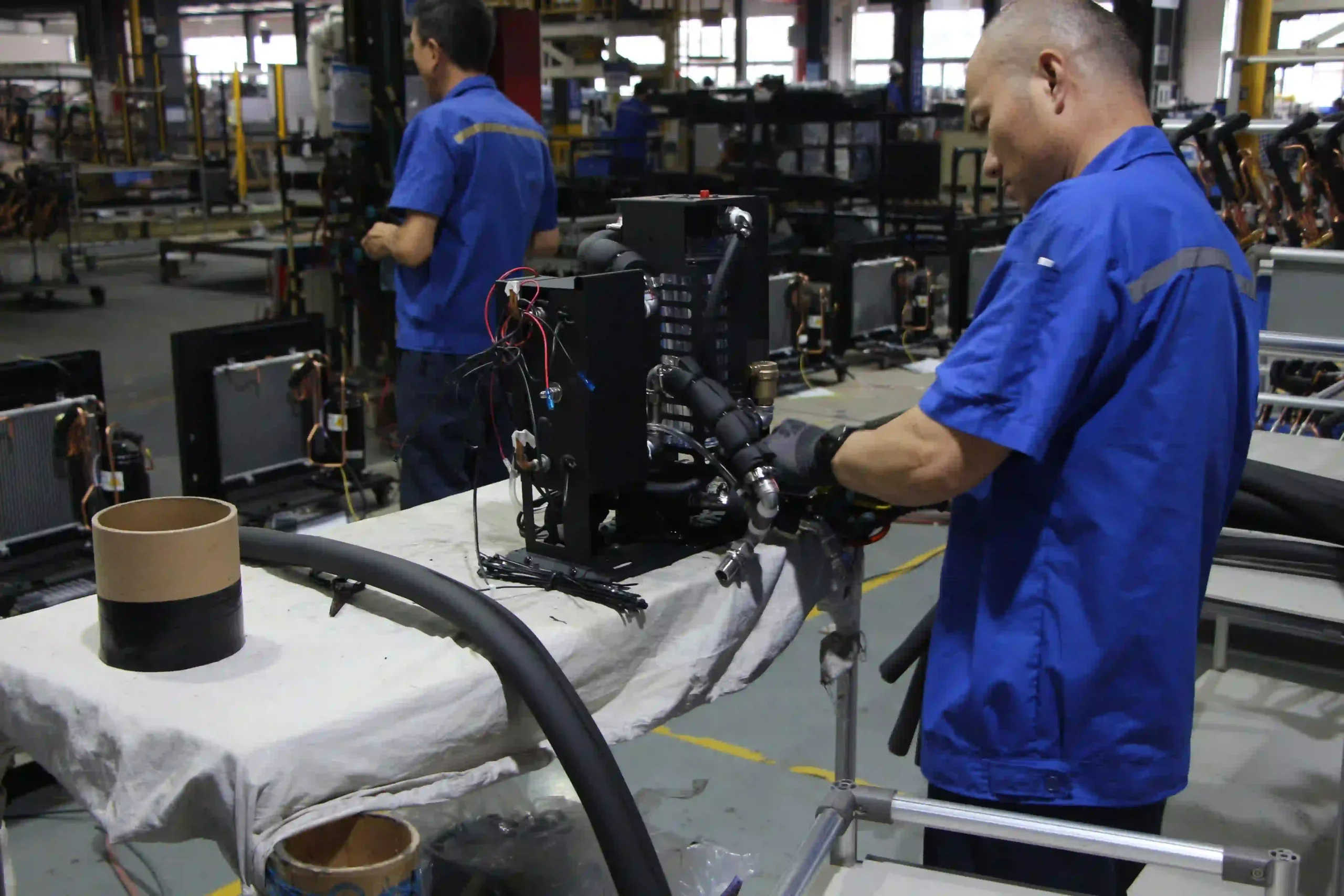
OMNI Ice is a recovery-equipment brand operated by Shenzhen Helsitec Technology Co., Ltd. OMNI Therapy® is a registered trademark used on selected products and legacy materials.
Use this 110V vs 220V cold plunge chiller guide as a procurement framework. Model availability, electrical ratings, input power, plug/cable, protection, labels and documents still need confirmation for the exact configuration and destination market before quotation or approval.
Request a chiller configuration and document review
For a 110V vs 220V cold plunge chiller review, send the destination country, verified voltage/frequency, tub water volume, starting and target temperatures, ambient conditions, intended operating schedule and estimated quantity. OMNI Ice can then review the model variant and the documentation scope that may be available for that project. Final electrical installation requirements remain the responsibility of qualified professionals and the applicable local authority.
FAQ
Is 220V always better than 110V for a cold plunge chiller?
No. In a 110V vs 220V cold plunge chiller comparison, the correct choice is the model variant that matches the destination supply and the approved installation. Cooling capacity, water load, ambient conditions and system design must be compared separately; voltage alone does not prove better cooling performance.
Can an importer infer the plug and circuit from the voltage?
No. Confirm the exact plug, cable, nameplate ratings and available manufacturer requirements for the selected variant. A qualified professional must verify the site’s receptacle, grounding, circuit protection, wet-location suitability and local code.
Does listed input power show how fast the chiller will cool the tub?
No. Listed input power describes electrical consumption under the referenced documentation, while cooling capacity describes heat removal. Pull-down time also depends on water volume, temperature difference, ambient heat gain, insulation, flow and the actual test conditions.
What evidence should a buyer keep when approving a sample?
Keep the model suffix, serial or equipment code, nameplate and plug photos, rated voltage/frequency and input, approved cable/protection details, tub and ambient conditions, flow setup, run log, document versions and any recorded deviations.