Your cold plunge chiller is running. The pump is circulating, the display shows your target temperature, everything looks normal — but the water is staying warm. Or it’s cooling, just far more slowly than it used to.
Before assuming the unit is broken, work through this list. The majority of cold plunge chiller not cooling problems are caused by issues you can fix yourself in under 20 minutes. These are arranged from most common to least common, based on what we see most frequently across home, gym, and commercial cold plunge installations.
If you find your cold plunge chiller not cooling, it’s important to diagnose the issue promptly to restore its efficiency.
Restricted Water Flow — The Most Common Reason a Cold Plunge Chiller Stops Cooling
Understanding why your cold plunge chiller not cooling can save you time and money in repairs.
If your cold plunge chiller is not cooling, start by confirming that water can circulate through the full loop. Restricted flow can prevent the heat exchanger from working as intended, so check the filter, hoses, water level, and air in the line before assuming a refrigeration fault.
The chiller works by drawing water from your tub, stripping heat from it through the heat exchanger, and returning cooled water. If circulation slows or stops, the chiller has no water to cool and the tub temperature doesn’t move.
Three things cause restricted water flow in a cold plunge chiller:
Clogged filter. The external cartridge filter captures hair, skin oils, and debris before they reach the heat exchanger. A filter running for six or more weeks without a change can reduce flow enough to trigger cooling problems or a flow alarm on the display. Turn off the unit, remove and inspect the cartridge. If it’s visibly dirty or overdue, replace it. After reinstalling, pour water into the inlet hose before restarting to clear any air from the line.
Kinked or blocked hoses. A hose compressed against a wall or bent too sharply can cut flow significantly without looking obviously wrong. Follow each hose from the tub to the cold plunge chiller and back. Straighten any bends, check that fittings are secure, and make sure nothing is sitting on the lines.
Air lock. An air pocket trapped in the hose blocks water circulation even when the pump sounds like it’s running. Most common after initial setup, after changing the filter, or if the tub water level dropped low enough to pull air into the inlet. Turn off the unit, pour water directly into the inlet hose to displace the air, then restart.
Next, if your cold plunge chiller not cooling is a recurring issue, consider these solutions.
Blocked Airflow Causing the Cold Plunge Chiller to Overheat
Blocked airflow may lead to your cold plunge chiller not cooling effectively.
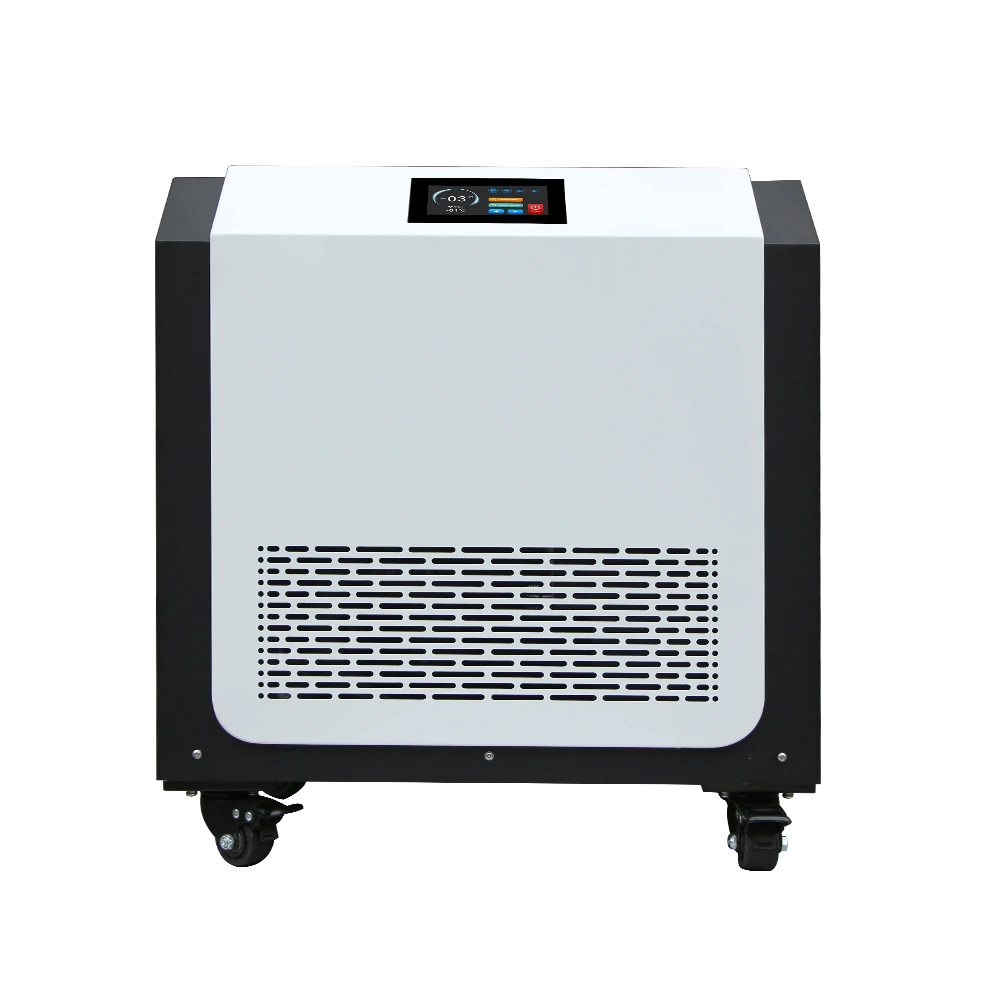
Every cold plunge chiller pulls heat out of your water and expels it as warm air through the exhaust fan. If that warm air can’t escape — unit against a wall, inside a cabinet, in an enclosed space — it recirculates back into the intake and the chiller fights its own exhaust heat.
Check that the intake and exhaust are unobstructed and keep the clearance specified in the official installation guidance for your exact model. Warm exhaust can be a useful observation, but it does not confirm that every part of the refrigeration system is working correctly. If airflow is clear and cooling remains poor, record the model, controller code or message, ambient temperature, and water-flow condition before contacting support.
Ensure there’s sufficient airflow; otherwise, your cold plunge chiller not cooling will continue to be a problem.
Dirty Condenser Coils Reducing Cold Plunge Chiller Performance
Regular maintenance can prevent a cold plunge chiller not cooling from becoming a frequent concern.
The condenser coils — the metal fins visible near the exhaust fan — release heat from the refrigerant into the surrounding air. A layer of dust or pet hair reduces their ability to dissipate heat, forcing the cold plunge chiller to work harder for less cooling output.
This builds gradually, which is why it gets missed. The unit was cooling well six months ago, now it’s struggling, and nothing obvious has changed.
Turn off the cold plunge chiller and clean the fins gently with a soft brush or vacuum attachment. The fins are thin aluminium and bend easily — don’t use a pressure washer. After cleaning, run the unit for 30 minutes and check whether temperatures improve. For gym installations with high dust levels, monthly checks are worth adding to the maintenance routine.
Ambient Temperature Too High for Your Cold Plunge Chiller’s Rated Capacity
In summer, your cold plunge chiller not cooling may indicate the ambient temperature is too high.
Rated cooling performance depends on the exact model, water volume, starting water temperature, tub insulation, and surrounding temperature. A unit may cool more slowly or stabilize at a higher temperature in a hot installation without having a mechanical fault. Compare the setup with the operating conditions in the official manual for that exact model before treating the difference as equipment failure.
Shade the unit from direct sun, improve ventilation in the space, or relocate the installation somewhere cooler. If performance drops mainly during hot periods and improves when ambient temperature falls, heat load is a likely contributor. For sizing considerations, see our cold plunge chiller HP guide.
Tub Insulation Mismatch Overloading the Cold Plunge Chiller
Check insulation if your cold plunge chiller not cooling issue persists, especially with uninsulated tubs.
A cold plunge chiller sized for an insulated tub will underperform on an uninsulated vessel. Purpose-built cold plunge tubs have 40 to 60mm of foam in the walls. Standard bathtubs have 4 to 6mm of acrylic with nothing behind them — heat loss is three to four times higher.
This is common when someone tries their chiller on a bathtub or inflatable as a secondary setup. Nothing changed on the chiller — but the thermal load on it changed dramatically.
Add a foam lid to cut surface heat gain. Accept that the realistic temperature floor on an uninsulated vessel is higher than the spec sheet shows: a 1HP cold plunge chiller on a 300-litre bathtub indoors will typically hold 13 to 15°C rather than 8 to 10°C. A 1.5HP unit brings that closer to 8 to 10°C. For a full comparison of how tub type affects chiller requirements, see our chiller for cold plunge guide.
Temperature Sensor Reading Incorrectly
Faulty temperature sensors could lead to a cold plunge chiller not cooling as expected.
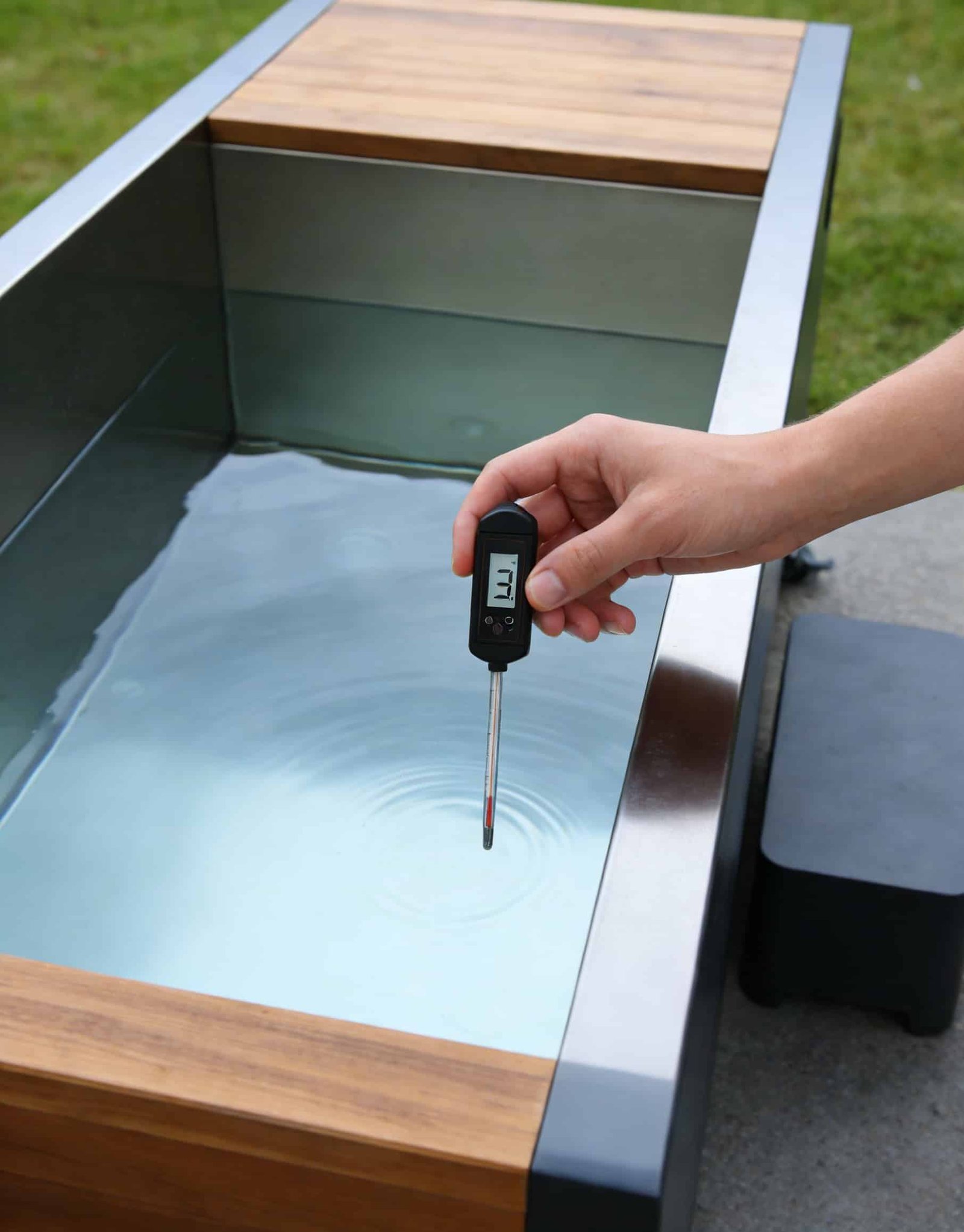
Sometimes the cold plunge chiller is cooling correctly — but the display doesn’t match what’s in the tub. If the unit shows 10°C and the water feels much warmer, the sensor may be misreading.
Check with an independent thermometer. If there’s a significant gap, verify that the sensor is fully submerged and not touching the tub wall or exposed to air. If the discrepancy persists after repositioning, contact your supplier — sensor replacements are typically simple and inexpensive.
Refrigerant Leak in the Cold Plunge Chiller
If you suspect a refrigerant leak, it could explain why your cold plunge chiller not cooling anymore.
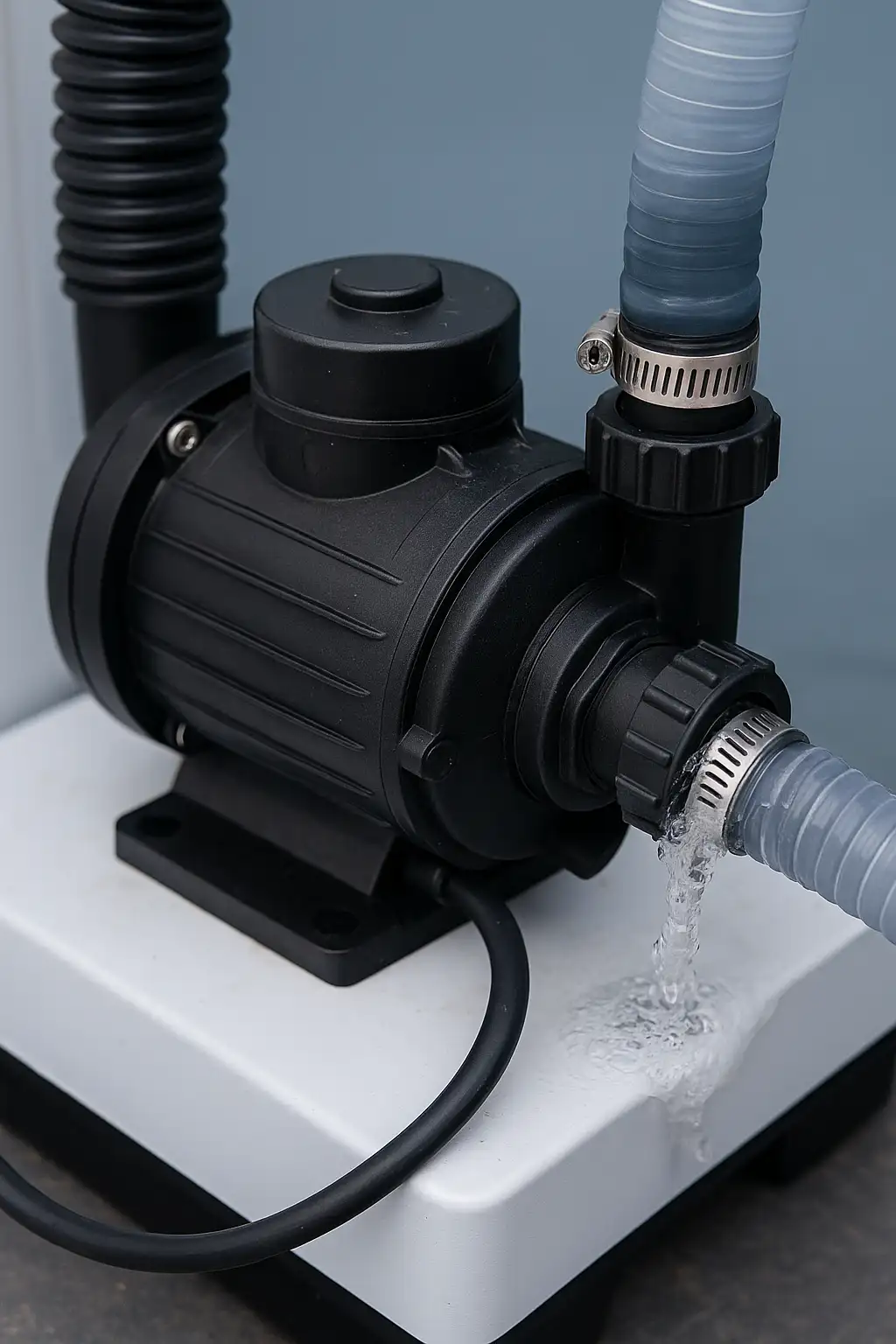
If you’ve worked through all the above and the cold plunge chiller is still not cooling, a refrigerant leak is the next possibility. Refrigerant doesn’t deplete under normal operation — low levels mean something is leaking.
Possible signs of a refrigeration-system fault can include continuous compressor operation, little or no temperature change, unusual frost, or abnormal exhaust behavior. These signs are not a diagnosis on their own; confirm that water flow and airflow are normal first, then document the model, controller display, and symptoms for service support.
Do not add refrigerant or open the sealed refrigerant circuit yourself. Refrigerant work should be handled by a qualified technician under applicable local requirements; in the United States, see the EPA Section 608 technician certification requirements. Contact your supplier with the unit model, purchase date, and a clear description of the symptoms.
Compressor Failure
Be alert for signs of compressor failure if your cold plunge chiller not cooling is the result of mechanical issues.
When the compressor fails, the cold plunge chiller runs but produces no cooling at all. The fan operates, the display works, the pump may circulate water — but the exhaust air is room temperature rather than warm, and the tub temperature doesn’t change regardless of how long the unit runs.
Compressor failure is one possible explanation when the fan and pump operate but cooling is absent; it should be considered only after water flow, airflow, coil condition, and controller information have been checked. Actual compressor service life depends on the exact unit, sizing, installation, maintenance, and operating conditions.
Contact your supplier. Depending on warranty status and unit age, options are warranty replacement, technician repair, or full unit replacement.
Quick Diagnosis Checklist
To summarize, ensure you address the checklist if your cold plunge chiller not cooling remains unresolved.
Work through in order — most cold plunge chiller not cooling problems are resolved by steps 1 to 4:
- Water flow — filter clean? Hoses clear? Air lock?
- Airflow — 30cm+ clearance around exhaust fan?
- Condenser coils — dusty or clogged?
- Ambient temperature — hotter than usual?
- Tub insulation — has the setup changed?
- Sensor accuracy — confirmed with independent thermometer?
- Refrigerant — compressor running non-stop, ice on lines?
- Compressor — exhaust air cool rather than warm?
For pump-specific problems—no circulation, intermittent flow, or pump noise—see our Cold Plunge Pump Troubleshooting & Repair Guide
If the unit displays a controller code, or if no-cooling checks do not identify the cause, use the troubleshooting guide for model-specific code triage and the next diagnostic path.
Cold Plunge Chiller Not Cooling — FAQ
If your cold plunge chiller not cooling is a common query, knowing the FAQs can help you troubleshoot.
Q: My cold plunge chiller is running but the water won’t get cold at all. What should I check first?
A: Start with water flow — check the filter, check the hoses for kinks, and check for an air lock. A completely blocked filter or severe air lock can stop all cooling even when everything else appears to be working. If flow is confirmed normal and the exhaust air from the chiller is cool rather than warm, the refrigeration system has a problem and you need a technician.
Q: My cold plunge chiller used to reach 8°C but now only gets to 13°C. What changed?
A: Gradual performance decline rather than sudden failure points to condenser coils that need cleaning, a filter that’s partially blocked, or rising ambient temperatures as the season changes. Check all three before assuming the unit is failing. Slow decline over weeks is almost always environmental or maintenance-related rather than mechanical failure.
Q: How long should initial cooldown take on a cold plunge chiller?
A: For a standard 300-litre insulated tub starting at 20°C, expect 60 to 90 minutes to reach 10°C with a 1HP cold plunge chiller indoors. Reaching 3 to 5°C takes 2 to 3 hours. If it’s taking significantly longer than this, work through the checklist above — slow cooling and no cooling share the same root causes.
Q: Can I fix a cold plunge chiller not cooling myself?
A: For the first six causes in the checklist — yes. Water flow, airflow, condenser cleaning, ambient temperature, insulation mismatch, and sensor issues are all DIY fixes. Refrigerant leaks and compressor failures require a certified refrigeration technician.
Q: How do I prevent cooling problems with my cold plunge chiller?
A: Three things cover most preventive maintenance: replace the filter every 4 to 6 weeks, keep the condenser coils clean, and make sure the unit has 30cm+ clearance for airflow. A correctly sized cold plunge chiller in a well-ventilated space with regular filter changes will run without cooling problems for years. Most issues we see come from undersized units, poor ventilation, or filters that haven’t been changed in months.
Ultimately, understanding the reasons for a cold plunge chiller not cooling can enhance its performance.