A sauna cold plunge combo is not a new idea. Nordic cultures have been alternating between extreme heat and cold water for centuries — stepping out of a wood-fired sauna and plunging into a frozen lake is practically a cultural ritual in Finland, Sweden, and Norway. What has changed is that this practice is now backed by a growing body of research, and the equipment to replicate it at home or in a commercial wellness facility has become genuinely accessible.
Done correctly, a sauna cold plunge combo delivers physiological benefits that neither heat nor cold therapy achieves alone. The contrast between the two — rapid temperature shift, repeated deliberately — is what drives the response. This guide covers the science, the protocol, and most importantly, the equipment decisions that determine whether your setup actually delivers the contrast therapy experience or just costs money and takes up space.
Why Contrast Therapy Works: The Science Behind the Sauna Cold Plunge Combo
Research published on PubMed contrast therapy research shows that alternating heat and cold exposure produces a distinctive cardiovascular and hormonal response that neither stimulus alone generates. The heat phase dilates blood vessels and raises core temperature. The cold phase causes rapid vasoconstriction and triggers a norepinephrine release — a neurotransmitter associated with improved mood, focus, and stress resilience.
The alternation between these two states — repeated two to three times in a single session — creates what researchers describe as a vascular pump effect. Blood moves rapidly from the periphery to the core and back, improving circulation, reducing inflammation markers, and accelerating metabolic waste removal from muscles. For athletes, this translates to faster recovery. For general wellness users, it translates to improved mood, energy, and sleep quality that most users report noticing within the first week of regular practice.
The key word is contrast. A sauna alone is beneficial. A cold plunge alone is beneficial. A sauna cold plunge combo used correctly is meaningfully more effective than either on its own.
The Contrast Therapy Protocol: How to Use a Sauna Cold Plunge Combo
Getting the most from a sauna cold plunge combo requires following a protocol rather than simply moving between hot and cold whenever it feels comfortable. Here is the protocol that most wellness practitioners recommend.
Standard Contrast Therapy Protocol
| Phase | Duration | Temperature | What Happens |
|---|---|---|---|
| Sauna — Round 1 | 10–15 minutes | 80–100°C | Core temperature rises, blood vessels dilate |
| Cold Plunge — Round 1 | 2–3 minutes | 8–15°C | Rapid vasoconstriction, norepinephrine spike |
| Rest | 5 minutes | Room temperature | Body equilibrates |
| Sauna — Round 2 | 10–15 minutes | 80–100°C | Second heat phase amplifies contrast response |
| Cold Plunge — Round 2 | 2–3 minutes | 8–15°C | Second cold response |
| Rest | 5–10 minutes | Room temperature | Full recovery |
Two full rounds is the standard protocol for most users. Advanced practitioners do three rounds. Total session time including rest periods is typically 50 to 70 minutes.
Always end on cold, not heat. Ending a contrast therapy session in the sauna leaves the body in a vasodilated, heat-stressed state. Ending in the cold plunge closes the session with the anti-inflammatory, recovery-promoting response that is the point of the whole protocol.
Setting Up a Sauna Cold Plunge Combo at Home
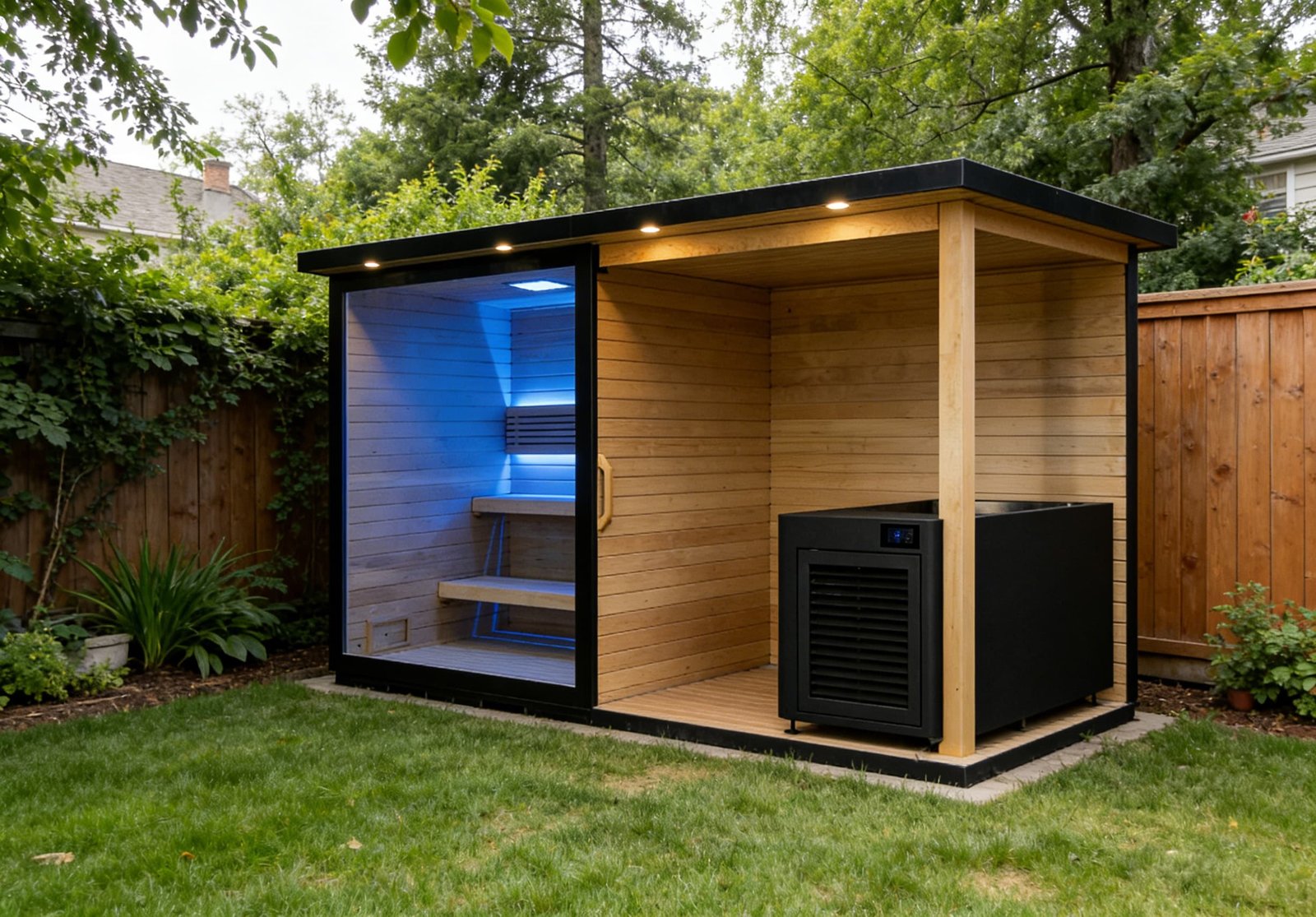
The outdoor sauna cabin with an adjacent cold plunge tub has become one of the most sought-after home wellness installations in recent years. Cedar sauna cabin with a wooden cold plunge barrel immediately adjacent — this format works best for home contrast therapy for one key reason: physical proximity.
The transition from sauna to cold plunge should take no more than 30 seconds. The cardiovascular response begins immediately upon leaving the heat, and a long walk reduces the contrast effect. Adjacent or same-structure installations maximise this transition speed.
Outdoor positioning is ideal. The sauna generates significant heat and humidity — outdoor installation handles this naturally. The cold plunge benefits from shade and cool ambient air. A covered outdoor structure — pavilion, pergola, or purpose-built sauna cabin with adjacent cold plunge deck — provides the weather protection both units need while maintaining the outdoor wellness aesthetic.
For outdoor sauna cold plunge combo setups and what to consider for year-round outdoor installation, our guide on outdoor cold plunge tub with chiller setups covers the climate, insulation, and HP considerations in detail.
The Equipment Decision: What Your Sauna Cold Plunge Combo Actually Needs
The Cold Plunge Tub
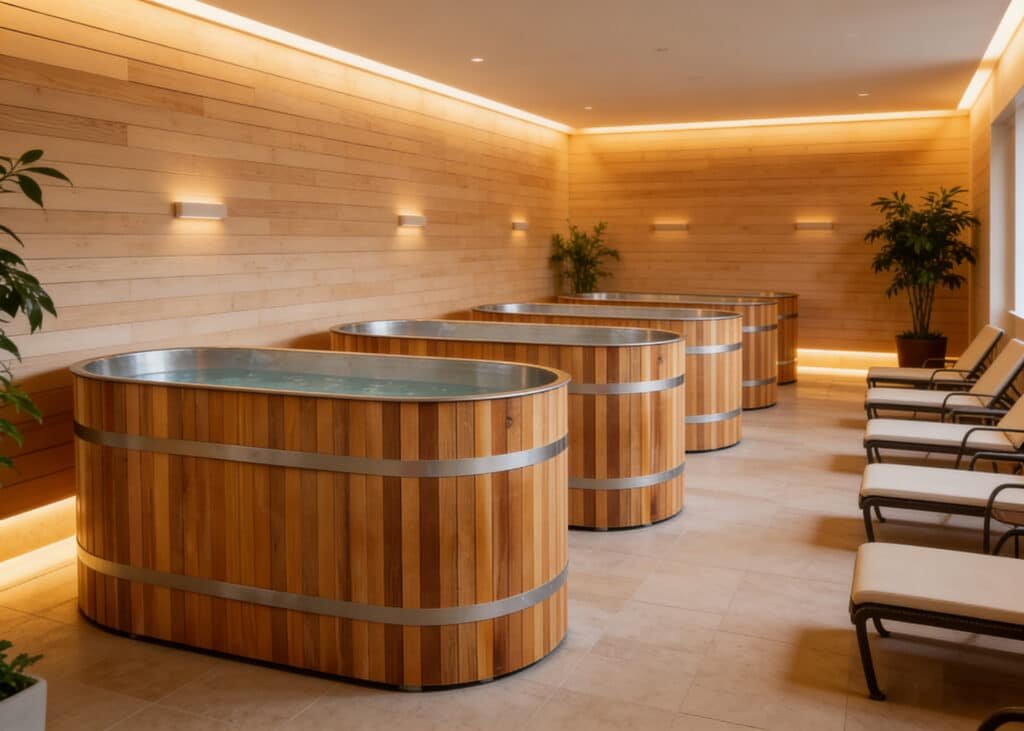
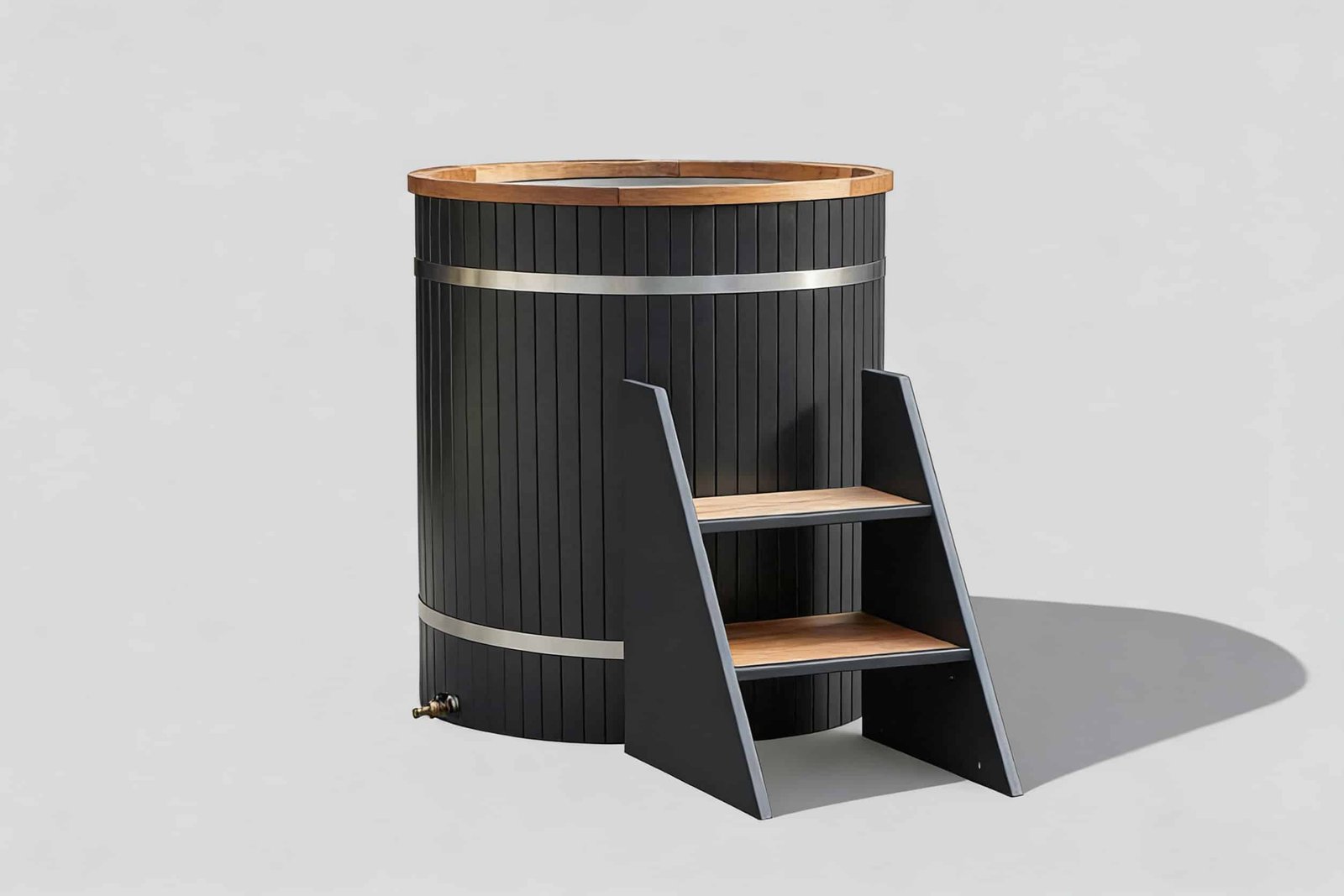
For a sauna cold plunge combo setup, tub material choice has both aesthetic and practical implications. Cedar wood or cedar-wrapped stainless steel is the natural complement to a sauna environment — visually coherent, naturally warm to the touch despite the cold water inside, and appropriately durable for outdoor use.
The OMNI Ice WT-05 hybrid cold plunge tub is the most commonly specified tub for home sauna combo setups. The stainless steel inner liner handles all water contact and chiller connection. The cedar exterior provides visual warmth and passive insulation. At 950mm depth, it provides full shoulder immersion — the depth required for the full-body vasoconstriction response that makes the cold phase effective.
The Chiller
A sauna cold plunge combo setup creates a specific demand on the chiller: the cold plunge tub is positioned adjacent to a sauna generating 80 to 100°C of heat. Even with a well-insulated tub, ambient heat from the sauna environment raises the thermal load compared to a standard indoor installation.
The second consideration is the heating function. Many sauna cold plunge combo users want to use the same tub for warm water therapy — either as a warm soak before the sauna or as a contrast therapy variant. A chiller with built-in heating covers both use cases without requiring a separate vessel.
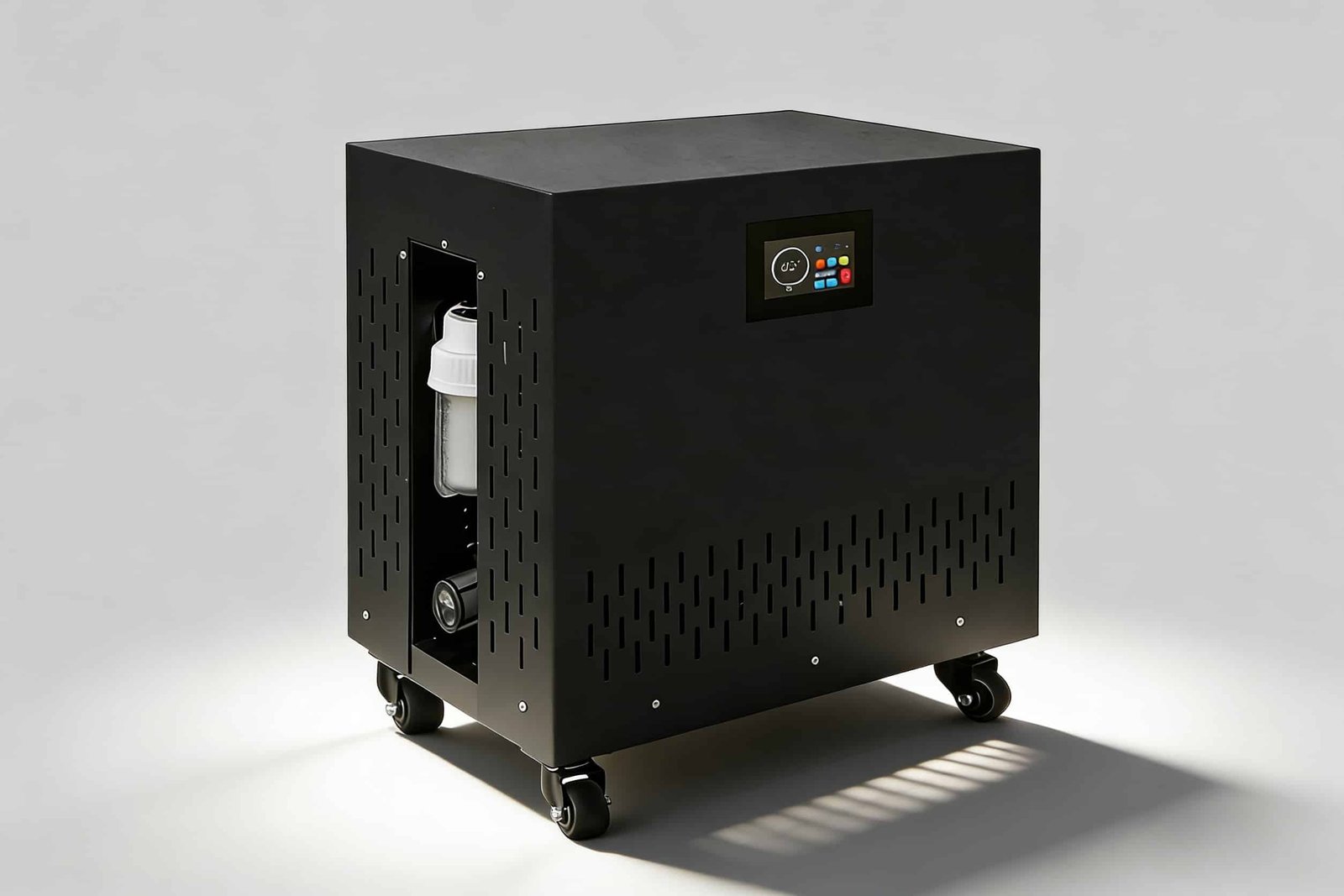
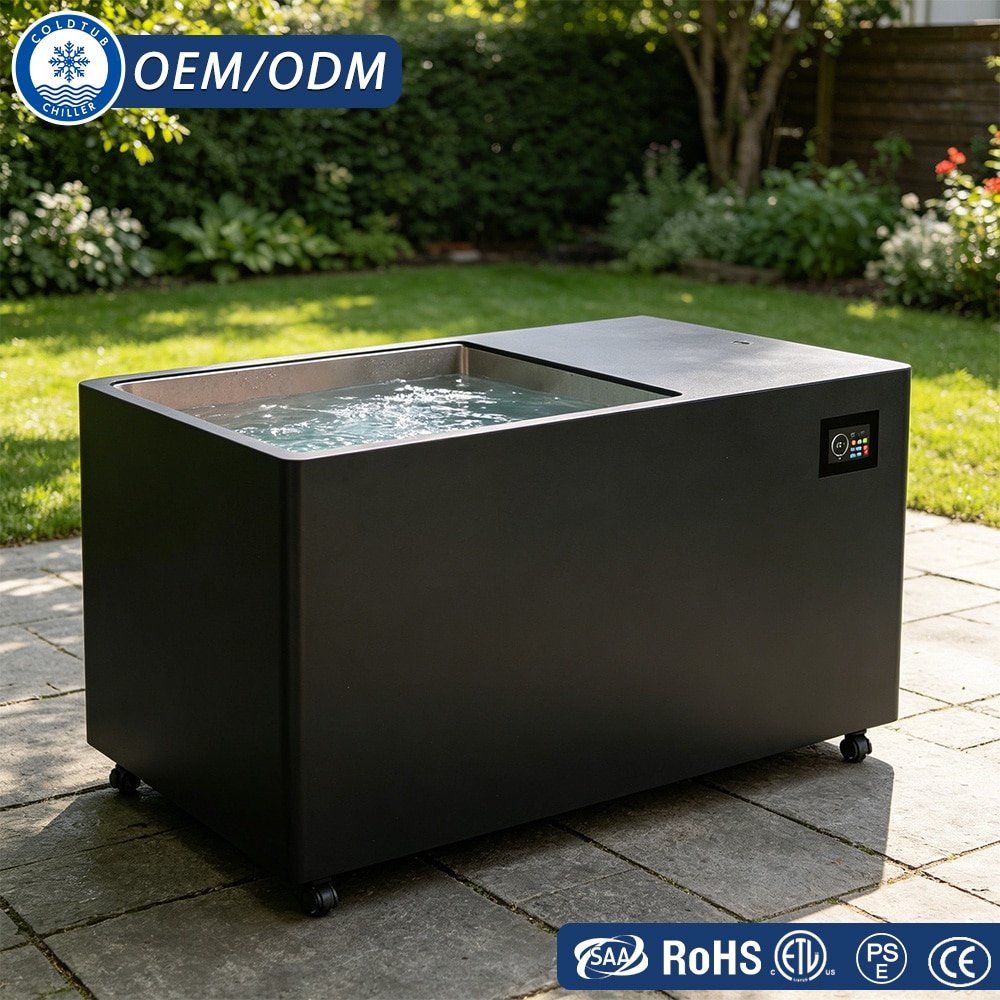
The OMNI Ice CHM-10-RV is the recommended chiller for most home sauna cold plunge combo setups. At 1HP with a 3°C to 42°C range, it cools the tub for cold plunge phases and heats it for warm water therapy. Built-in ozone disinfection handles water management automatically. WiFi app control means you can pre-cool or pre-heat the tub before your session — set it from your phone while you are still in the sauna.
For outdoor sauna setups in warm climates, 1.5HP provides additional headroom. For HP sizing guidance, see our cold plunge chiller HP guide.
Commercial Sauna Cold Plunge Combo: Hotels, Spas, and Wellness Facilities
Hotels and luxury spas are increasingly building dedicated contrast therapy suites — private or semi-private spaces with sauna, cold plunge, and rest area — as premium amenity offerings that justify higher room rates and attract wellness-focused guests.
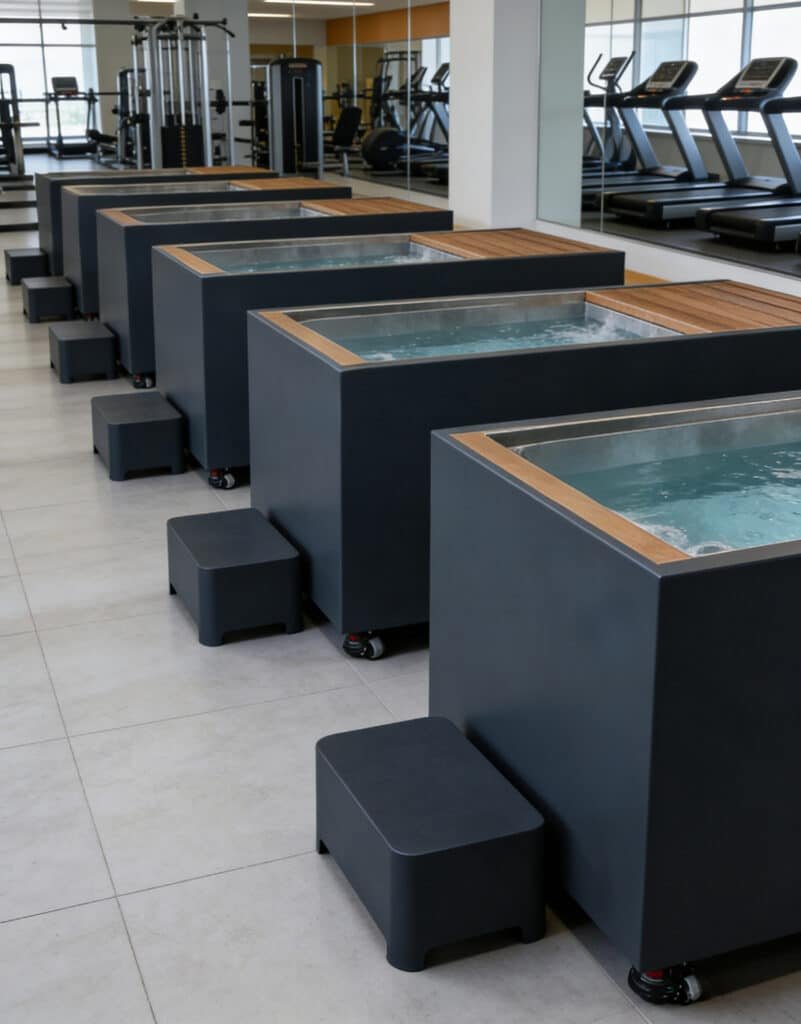
For commercial installations, multiple daily users mean a higher HP chiller with commercial-grade duty cycle is required. Water management with ozone disinfection and mechanical filtration becomes a daily operational necessity. The aesthetic quality of the installation directly affects the perceived value of the experience and what the facility can charge for it.
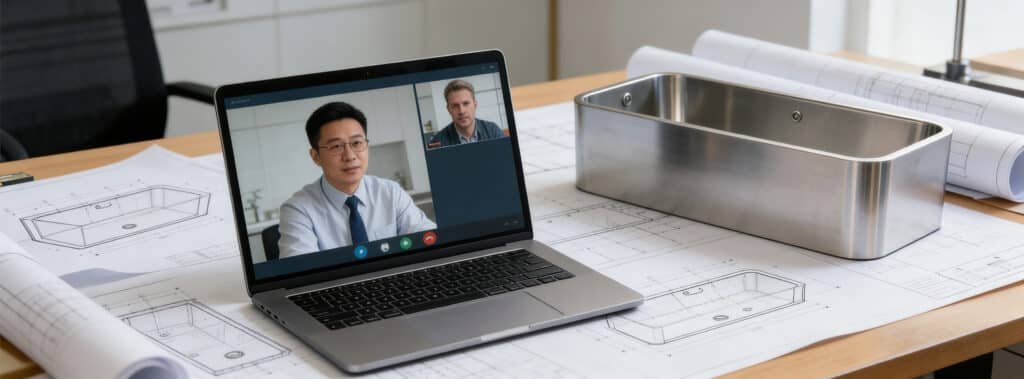
OMNI Ice supplies complete sauna cold plunge combo systems for commercial wellness installations, including OEM branding for hospitality brands. Our full range of sauna cold plunge combo systems covers both home and commercial specifications. As a cold plunge chiller manufacturer supplying facilities across 80+ countries, OMNI Ice can match the right system to any facility size and usage requirement.
For hotel and resort buyers planning a thermal circuit installation, our hotel cold plunge buyer’s guide covers chiller sizing, sanitation requirements, and design integration for hospitality environments.
Maintenance for a Sauna Cold Plunge Combo Setup
A sauna cold plunge combo used regularly needs a consistent maintenance routine. The sauna environment adds dust, wood particles, and high-humidity air to the area around the cold plunge tub and chiller.
- After each session: Replace the insulated lid immediately. Heat gain through an uncovered tub in a warm sauna environment is significant.
- Weekly: Check water clarity. Sauna users carry sweat, body oils, and wood particles into the cold plunge.
- Every 2–3 weeks: Replace the filter cartridge. Sauna combo setups accumulate particulates faster than standalone installations.
- Every 3–4 weeks: Full water change. Monthly changes maintain the water quality standard that regular contrast therapy users expect.
- Seasonally: Inspect the chiller’s external components for weather-related wear, particularly for outdoor installations.
Frequently Asked Questions
How long should you stay in the cold plunge after a sauna?
What temperature should the cold plunge be for sauna contrast therapy?
Can I use the same tub for both hot and cold therapy?
How many rounds of sauna and cold plunge should I do?
What is the best cold plunge tub for a sauna combo setup?
Building a Sauna Cold Plunge Combo Setup?
OMNI Ice supplies complete contrast therapy systems — from single home installations to commercial wellness facility packages. Tell us your space, climate, and usage requirements, and we will give you a direct recommendation. Factory-direct, CE certified, OEM available.