A cold plunge for athletes should be selected from the training program, user load and facility operating plan—not from a universal temperature or recovery promise. Coaches and sports-medicine staff own the athlete protocol; the equipment team owns reliable water conditions, circulation, cleaning, access, maintenance and records for the approved use.
This guide is for teams, schools, performance centers, training facilities and procurement groups evaluating a cold plunge for athletes. It explains evidence review and facility requirements without providing individual medical advice. Research findings do not make one protocol suitable for every athlete, sport, training phase or health condition. CrossFit boxes that also need member-flow, wet-area and staffing decisions should use the cold plunge CrossFit setup guide.
Table of Contents
Athletic facility buyer checklist
Cold plunge for athletes: quick answer
The right cold plunge for athletes is the system that can deliver the facility’s approved water range under the expected sequence of users while supporting cleanability, water management, safe entry, supervision and service. Define the tub, chiller, pump, filter, controller, drainage, treatment responsibility and room interfaces together.
Do not ask a supplier for “the athlete model” without context. A professional team using scheduled groups after training has different peak demand from a rehabilitation room serving one supervised athlete or a school facility with restricted operating periods. Translate the program into a written equipment duty.
Read cold-water immersion evidence in context
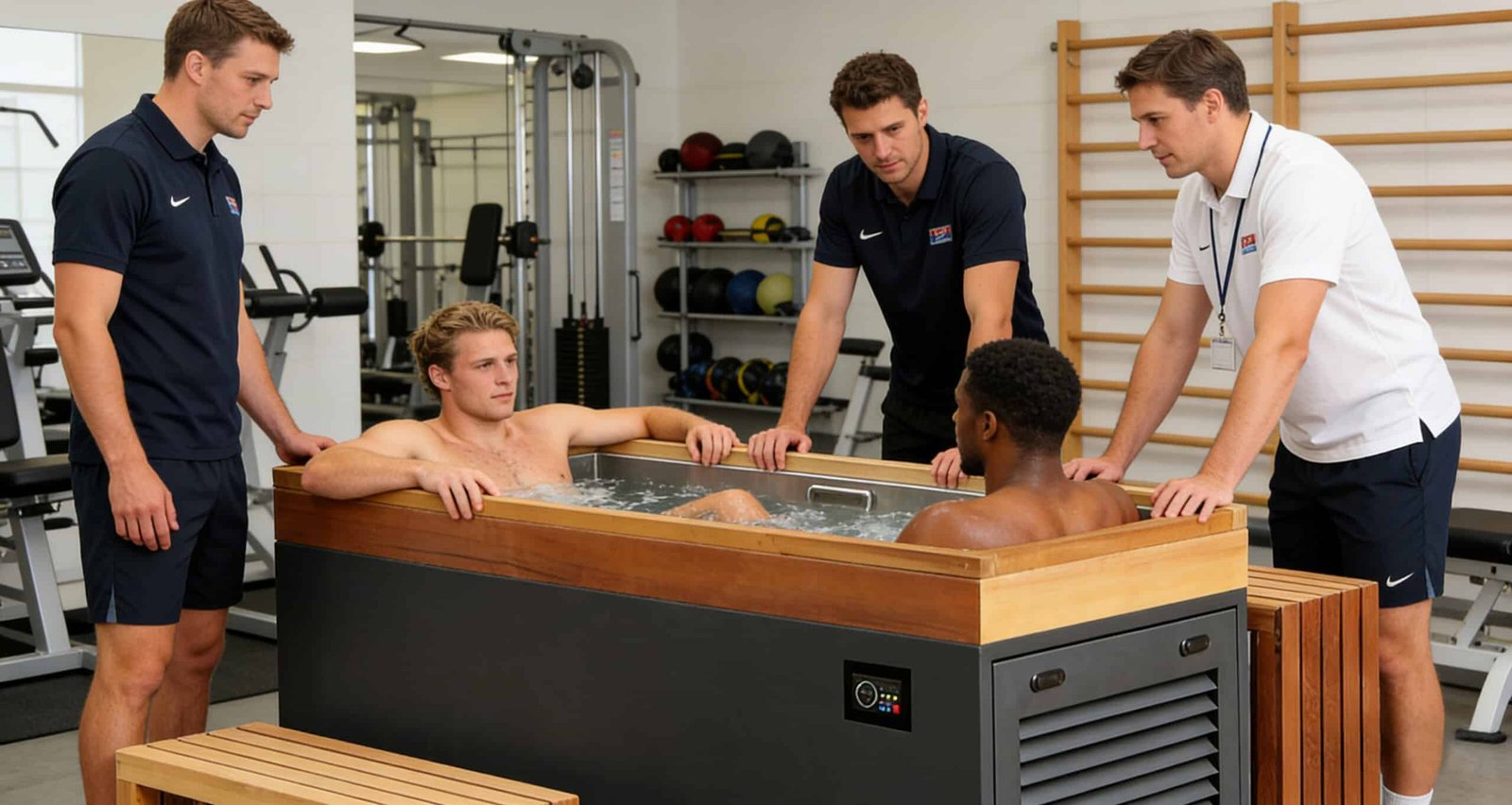
Cold-water immersion research varies by participant group, preceding exercise, water temperature, immersion depth, duration, comparison condition and outcome timing. A systematic review indexed by PubMed on physical-performance recovery after cold-water immersion reported that effects differed across performance measures, time points and exercise or environmental contexts. That is a reason to avoid a one-size-fits-all claim.
A separate post-exercise recovery review assessed subjective and objective outcomes and also described mixed findings across measures. Facilities should review the full studies, populations and limitations with qualified staff instead of turning one result into a universal cold plunge for athletes protocol.
Keep three statements separate: what a study observed, what a sports professional recommends for a particular program, and what the equipment can physically deliver. A chiller’s temperature capability is not proof of improved performance, faster healing or suitability for an individual athlete.
Write the athlete-program brief first
- Program owner: coach, sports scientist, athletic trainer, therapist or other qualified lead.
- User group: sport, age range, team size and any access restrictions set by the organization.
- Use context: post-training, post-match, heat management, supervised rehabilitation or another defined purpose.
- Approved operating envelope: water range, session control and screening or supervision requirements set by the program.
- Peak sequence: expected users per hour, water displacement, time between users and cleaning windows.
- Facility inputs: usable volume, ambient range, verified electrical supply, drainage, ventilation and service access.
- Stop conditions: water, equipment, athlete or staffing conditions that close the station.
The supplier does not need private athlete health data. It needs the physical and operational duty required to recommend a cold plunge for athletes configuration. Keep health screening and individual decisions under the facility’s appropriate privacy and professional controls.
A cold plunge for athletes purchase file should therefore contain facility requirements without exposing individual medical information.
12 cold plunge for athletes equipment checks
| Check | Facility input | Evidence or decision |
|---|---|---|
| 1. Intended duty | Approved program use | Written boundary between protocol and equipment |
| 2. User sequence | Typical and peak athletes per hour | Capacity and recovery assumptions |
| 3. Water volume | Usable fill plus displacement | Drawing or measured configuration |
| 4. Thermal duty | Starting range, operating range and allowed recovery | Model-specific calculation or representative test |
| 5. Tub construction | Entry, internal geometry, finish and load | Dimensions, materials and cleaning access |
| 6. Water loop | Pump, filter, treatment, ports and drain | Complete flow and responsibility diagram |
| 7. Utilities | Voltage, frequency, drainage and ventilation | Qualified site review and exact equipment variant |
| 8. Supervision | Visibility, staffing and restricted access | Operating and emergency procedure |
| 9. Water management | Testing, cleaning, replacement and closure | Named owners and records |
| 10. Maintenance | Filter, consumables, spares and service window | Lifecycle plan and escalation route |
| 11. Documents | Instructions, labels, test and training records | Revision-controlled document list |
| 12. Acceptance | Factory and site pass/fail criteria | Signed results and deviation disposition |
Cold plunge for athletes capacity and cooling
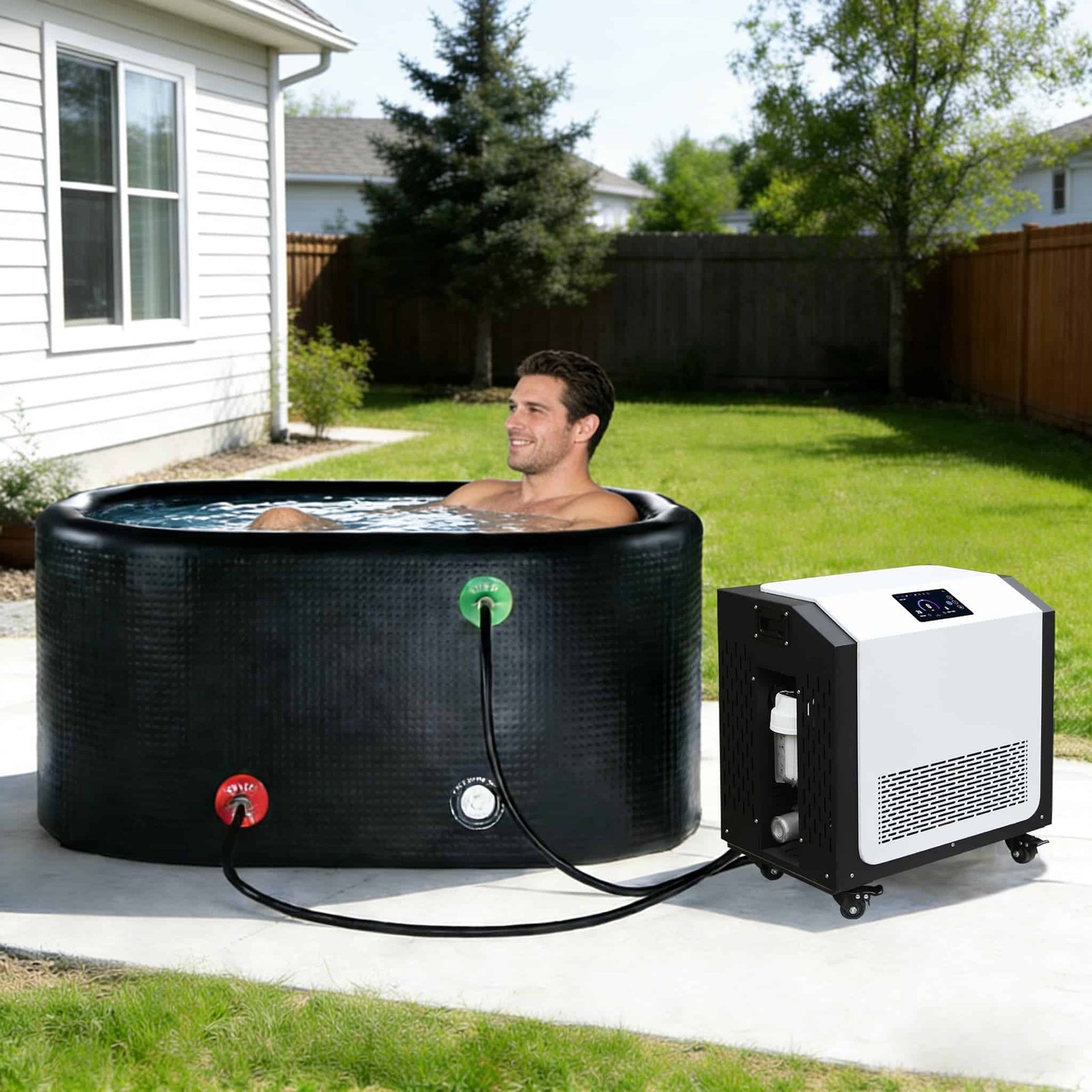
Daily headcount is not enough to size a cold plunge for athletes. Record the most demanding realistic sequence: number of users, spacing, water displacement, opening conditions, ambient range and the temperature band the program intends to maintain. Group use after one training session creates a different short-term load from appointments distributed through the day.
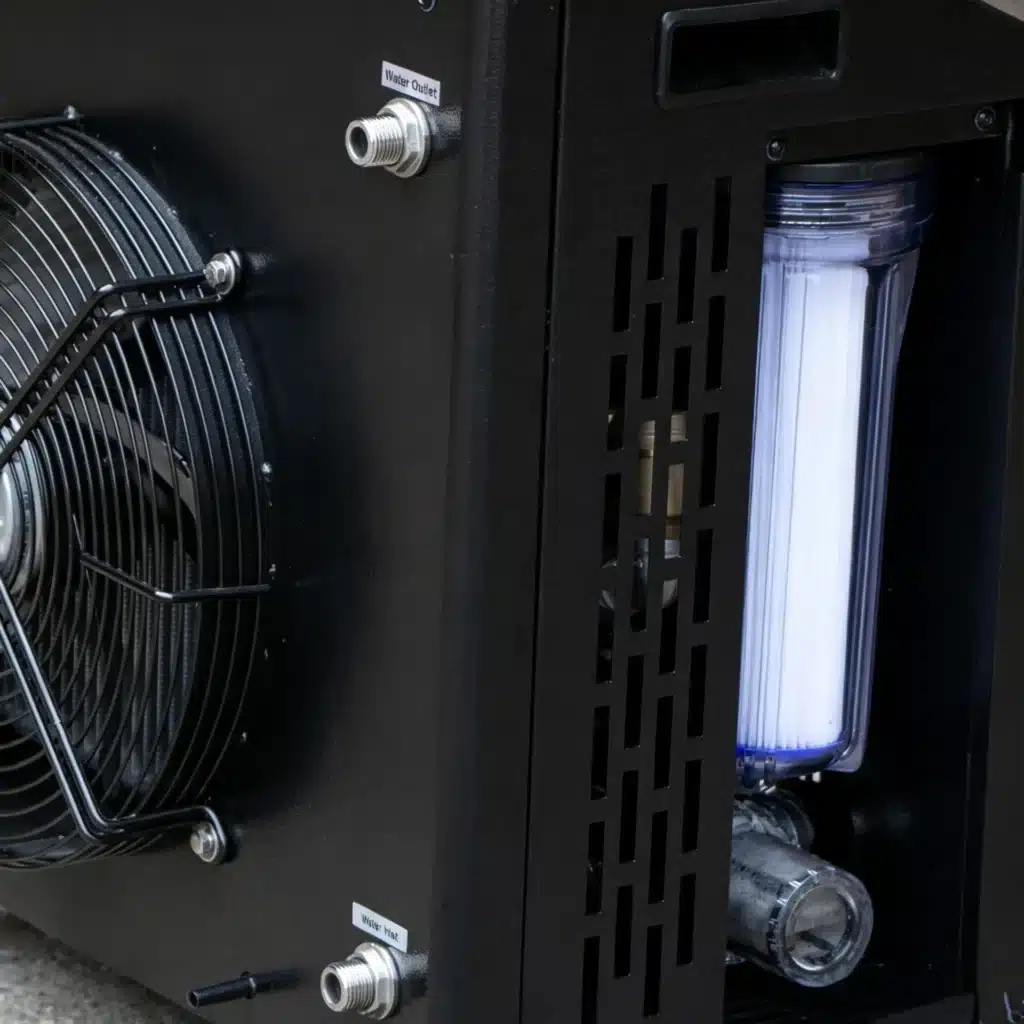
Separate initial pull-down from recovery between users and steady maintenance. Ask the supplier to identify the exact chiller, water volume, starting and target temperatures, ambient condition, flow, cover state, elapsed time and measurement points behind its result. Horsepower labels are not directly comparable when the equipment and test methods differ.
If the approved program requires conditions near freezing, use the zero-degree cold plunge chiller guide to review ice formation, sensors, flow and operating boundaries. Do not assume that every cold plunge for athletes needs that capability; colder is not automatically better.
Cold plunge for athletes water management
A shared cold plunge for athletes needs an operating plan covering circulation, filtration, water treatment, testing, cleaning, water replacement, contamination response and closure. Mechanical filtration removes certain suspended material; it does not by itself establish microbiological control or compliance.
Determine the applicable health and facility rules with the local authority. The CDC’s Model Aquatic Health Code is guidance for public aquatic venues and includes operation and maintenance topics; the CDC also makes clear that jurisdictions decide whether to adopt or adapt it. A school, club or professional facility should document its actual classification and obligations.
Create baseline records at commissioning: clean-filter condition, observed flow, controller settings, representative water readings and normal thermal recovery. The cold plunge filter-system guide explains how circulation, filtration and treatment responsibilities differ.
These baselines make a cold plunge for athletes easier to monitor across busy team sessions and seasonal staff changes.

Plan athlete flow, access and supervision
Map the route from training area to changing, entry, immersion station and exit. Address wet surfaces, handholds, deck drainage, towels, footwear, visibility and separation from electrical or service areas. The entry method must fit the intended athletes and any accessibility review required by the venue.
Supervision depends on the program and organization. Define who authorizes use, who observes the area, how athletes call for assistance and who can stop a session or close the station. Keep emergency access clear and make shutdown controls known to trained staff.
Any cold plunge for athletes access policy should be visible to staff and consistent with the organization’s approved program.
For the broader sports-facility solution path, see professional sports recovery ice bath systems. That page covers OMNI’s sports project route; this article remains the evidence and buyer checklist owner.
Cold plunge for athletes operations and records
| Record | Minimum purpose |
|---|---|
| Opening inspection | Confirm area condition, access, water, flow, controller, leaks and required readings |
| Use log | Capture workload and unusual conditions without unnecessary health data |
| Cleaning and water log | Show checks, corrective action and responsible staff |
| Maintenance log | Track filter service, consumables, parts and technician work |
| Exception and closure log | Record alarms, repeated trips, slow recovery, incidents and reopening approval |
| Change record | Control replacement components, settings and operating-procedure revisions |
Do not mix individual clinical notes with routine equipment records. The facility should apply its privacy, healthcare and employment policies to athlete information. Equipment records should identify conditions and actions needed to operate the cold plunge for athletes, not diagnose a person.
Require model-specific procurement evidence
- Exact tub, chiller, pump, filter, controller and optional-component models.
- Usable water volume, tub dimensions, entry geometry and loaded-weight assumptions.
- Water-loop drawing, port sizes, flow direction, drain and overflow.
- Electrical nameplate and documents for the destination variant.
- Operating envelope, airflow and service-clearance requirements.
- Representative cooling test or calculation with all material conditions stated.
- Cleaning, maintenance, consumables and spare-part documentation.
- Factory-acceptance, pre-shipment and site-commissioning criteria.
- Training, escalation contacts and warranty-claim evidence requirements.
Use the cold plunge chiller factory acceptance test to define a release record. A signed factory check does not replace qualified installation, destination review, site commissioning or the sports program’s own clinical and operational approval.
Only after those responsibilities are accepted should the cold plunge for athletes enter routine facility use.
Copyable cold plunge for athletes RFQ
FACILITY / SPORT / DESTINATION: [ ]
PROGRAM OWNER AND SUPERVISION MODEL: [ ]
TYPICAL / PEAK USERS PER HOUR: [ ]
USABLE WATER VOLUME / USER DISPLACEMENT: [ ]
APPROVED OPERATING RANGE: [ ]
STARTING CONDITION / ALLOWED RECOVERY: [ ]
INDOOR / OUTDOOR / AMBIENT RANGE: [ ]
TUB GEOMETRY / ENTRY / FINISH: [ ]
PUMP / FILTER / WATER-CARE SCOPE: [ ]
VERIFIED VOLTAGE / FREQUENCY: [ ]
DRAINAGE / AIRFLOW / NOISE / SERVICE: [ ]
CLEANING / MAINTENANCE / SPARES: [ ]
DOCUMENTS / TESTS / TRAINING: [ ]
QUANTITY / PACKING / DELIVERY BASIS: [ ]
LOCAL APPROVAL AND COMMISSIONING OWNER: [ ]
For an exact cold plunge for athletes project response, send this brief through the OEM cold plunge chiller solutions page. Ask the supplier to return its proposed configuration, test basis, assumptions, exclusions and open points.
Cold plunge for athletes FAQ
What temperature should athletes use?
There is no universal temperature for every athlete and training goal. Qualified program staff should set the protocol after considering the evidence, population, exercise context and individual factors.
Does every athletic facility need a 0°C chiller?
No. Equipment range should follow the approved program and site duty. Near-freezing operation adds ice, flow, sensor and maintenance considerations and is not automatically more effective.
How many athletes can one plunge support?
It depends on tub geometry, usable volume, athlete sequence, operating range, recovery time, water management, cleaning and supervision. State the peak sequence and require documented assumptions.
Can equipment suppliers provide athlete recovery protocols?
They can provide equipment operating limits, but an individualized or team protocol belongs with qualified sports-performance or healthcare personnel and the facility’s governance process.
What should pass before athletes use the system?
Accept the installed equipment, utilities, flow, drainage, representative thermal condition, water-management plan, access, supervision, staff training, maintenance route, shutdown process and applicable local reviews.