Cold plunge OEM manufacturing begins when a brand owner defines a controlled product requirement and assigns engineering, validation, compliance and change-control responsibilities. A logo on an existing unit is private label; a different appearance or feature is not automatically a validated OEM product.
This guide explains the OEM development and procurement process. It does not promise a fixed minimum order quantity, development time, tooling cost, margin or market result. Every cold plunge OEM manufacturing project depends on the selected platform, new requirements, test scope, documentation, quantity, destination and approval cycles.
Table of Contents
OEM manufacturing project checklist
Cold plunge OEM manufacturing: quick answer
A sound cold plunge OEM manufacturing process moves through a gated sequence: use case, product requirements, feasibility, architecture and interfaces, prototype or sample, verification, destination compliance review, pilot or first article, production release and controlled changes. Each gate needs an owner and recorded acceptance.
The buyer should state what is new, what remains from the supplier’s existing platform and who owns each decision. The supplier should return feasibility, assumptions, open risks, cost and schedule by revision. Marketing claims should follow verified product evidence rather than driving undocumented specifications.
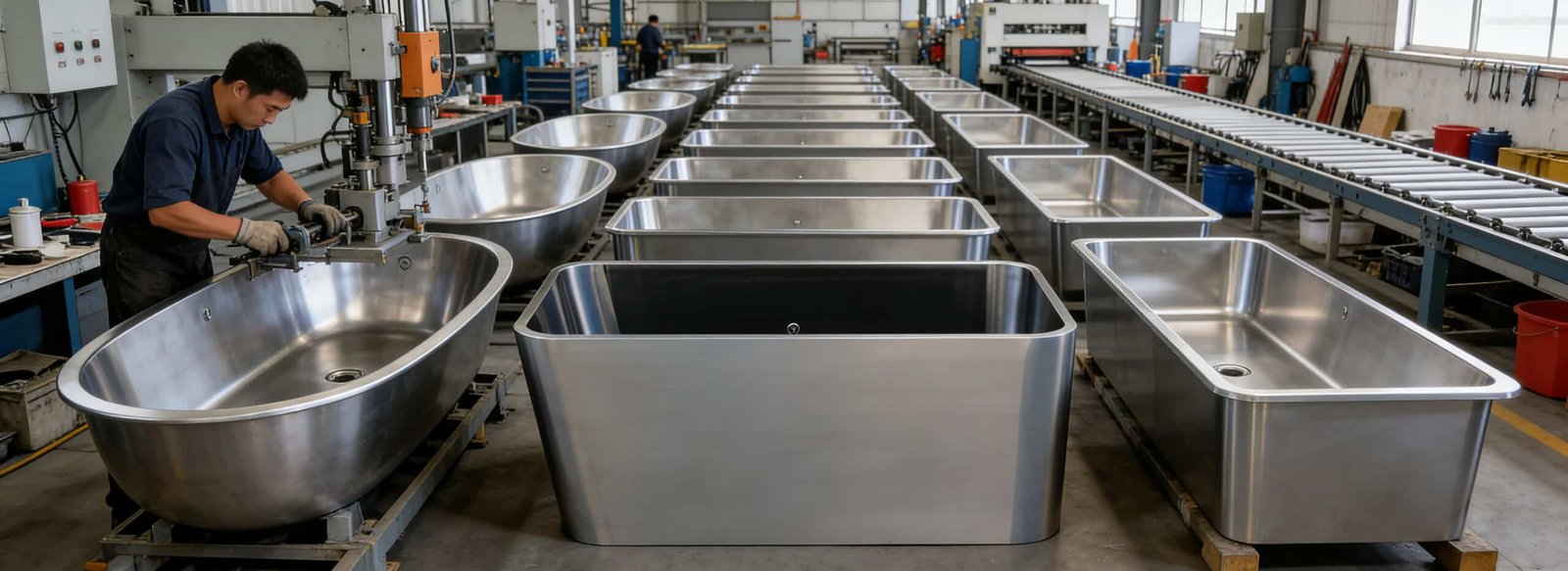
10 cold plunge OEM manufacturing stages
| Stage | Buyer output | Supplier output |
|---|---|---|
| 1. Use case | Users, environment, duty and destination | Fit assessment and missing inputs |
| 2. Requirements | Prioritized measurable product requirements | Feasibility, assumptions and exceptions |
| 3. Architecture | System boundaries and owned interfaces | Proposed tub, refrigeration, water-loop and control design |
| 4. Industrial design | Approved appearance, branding and service constraints | Drawings, materials and manufacturing proposal |
| 5. Prototype | Prototype purpose and acceptance plan | Traceable build and issue list |
| 6. Verification | Test cases linked to requirements | Results, conditions, failures and corrective actions |
| 7. Compliance | Destination and intended-use review | Required technical file inputs and model evidence |
| 8. First article | Production-like acceptance criteria | Approved unit, records and deviations |
| 9. Production release | Frozen specification and quality plan | Controlled bill, work instructions and inspection route |
| 10. Lifecycle | Change, service and field-feedback process | Revision notices, spares and corrective-action support |
The stages can overlap, but skipping their decisions creates hidden risk. A visually finished sample is not a production release if the cold plunge OEM manufacturing bill, software version, electrical variant, tests and documents remain undefined.
Cold plunge OEM manufacturing versus private label
Private label normally begins with an existing supplier platform and changes controlled branding, packaging or selected options. Cold plunge OEM manufacturing involves buyer-defined product requirements or design responsibility beyond that standard platform. ODM can describe a supplier-designed product sold or adapted for a brand, but the label alone does not define legal or engineering responsibility.
Create a responsibility matrix instead of debating terminology. Identify who owns industrial design, structural design, refrigeration selection, water-loop design, electrical architecture, firmware or app, safety analysis, destination compliance, artwork, technical documents, testing, field changes and after-sales support. If a responsibility has no owner, the project is not ready.
Brands that need only logo, colour, carton and manuals should use the private label cold plunge checklist. Buyers sourcing an existing unbranded tub at volume should use the wholesale cold plunge tub guide. Keeping those intents separate prevents duplicated requirements and competing pages.
Freeze measurable OEM product requirements
A cold plunge OEM manufacturing brief should state users and environment, usable water volume, starting and operating temperature ranges, ambient conditions, intended operating hours, peak use pattern, tub and insulation requirements, water-loop interfaces, electrical variants, controls, service access, packaging and destination markets.
Write requirements so they can be verified. “Premium,” “quiet,” “commercial grade,” “smart” and “fast cooling” are not acceptance criteria. Replace them with a measurement, condition and method, or mark them as a design objective requiring agreement. The OEM cold plunge chiller RFQ template helps collect the technical and commercial inputs before model selection.
Separate must-have requirements from preferences. When one preference conflicts with another—such as a smaller enclosure versus airflow, or a quieter location versus service access—the cold plunge OEM manufacturing team needs an explicit trade-off decision. Record who approved it and which test confirms the result.
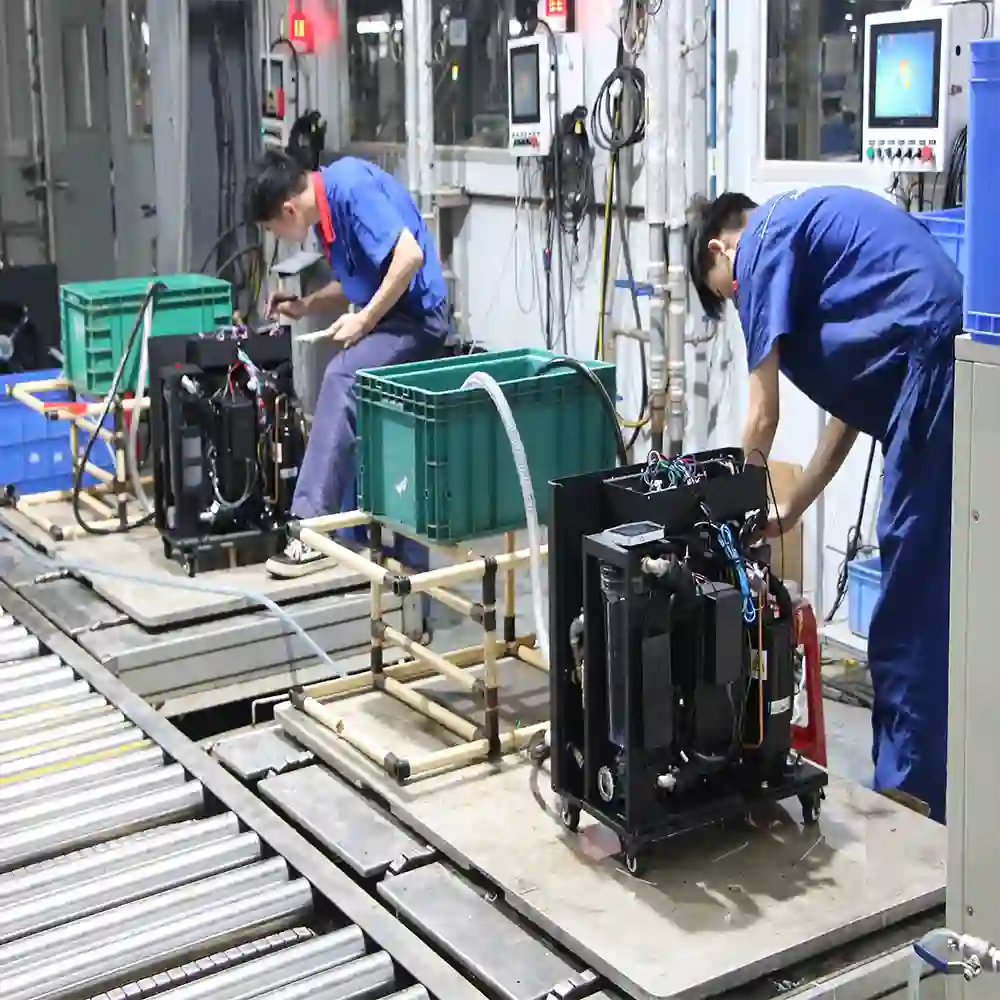
Prototype, verify and approve a production-like first article
State what each build is meant to prove. An appearance sample may validate colour and branding but say nothing about cooling or electrical performance. An engineering prototype can validate an interface but may use non-production parts. A first article should represent the released cold plunge OEM manufacturing process closely enough to support production acceptance.
Before repeat production, use the cold plunge chiller golden sample approval record to bind the accepted physical unit to its configuration, document revisions, test evidence, deviations and future change rules.
Link every verification result to a requirement and test condition. For cooling, identify water volume, starting and target temperatures, ambient condition, cover state, circulation, elapsed time and measurement locations. For connected controls, verify local operation, permissions, offline behaviour, update ownership and support boundaries. The factory acceptance test guide provides an order-linked record structure.
When a test fails, preserve the original result, corrective action, changed part or setting and repeat result. Do not overwrite the failure with a clean final sheet. A transparent cold plunge OEM manufacturing validation trail helps the buyer understand what was proven and what remains conditional.
For a repeated, material or control-system failure, the eight-field supplier corrective-action record separates containment, cause evidence, approved actions, implementation and effectiveness review from the product retest itself.
Assign compliance and technical-document ownership
Destination compliance cannot be inferred from a certificate logo, another model or the supplier’s export history. Identify intended use and markets, then determine applicable product, electrical, radio, chemical, environmental, packaging, labelling and consumer-information requirements with qualified advisors. The required route can change when a cold plunge OEM manufacturing project changes a component or claim.
The European Commission’s general product compliance guidance explains that manufacturers and importers must identify applicable requirements, complete conformity assessment where required, maintain technical documentation, provide traceability and instructions, and act when a product presents risk. U.S. importers likewise retain responsibility for their entries under CBP rules.
For connected products, document cybersecurity capabilities and lifecycle support. NIST’s foundational cybersecurity activities for IoT product manufacturers emphasizes that manufacturers should provide customers with security functionality and information needed to manage risk. Apply the concepts to the actual controller, app, accounts, cloud services and update process rather than adding a generic “smart” claim.
Control cold plunge OEM manufacturing changes
Define which changes require buyer approval before production or shipment: compressor, heat exchanger, pump, filter, hose, power supply, controller, firmware, material, coating, adhesive, fittings, supplier, label, manual, packaging or test method. The cold plunge OEM manufacturing contract should specify notice timing, evidence required and disposition of existing inventory.
For a proposed substitution after sample approval, use the change-approval worksheet to connect the before-and-after comparison, repeat evidence, authorization and first affected production units.
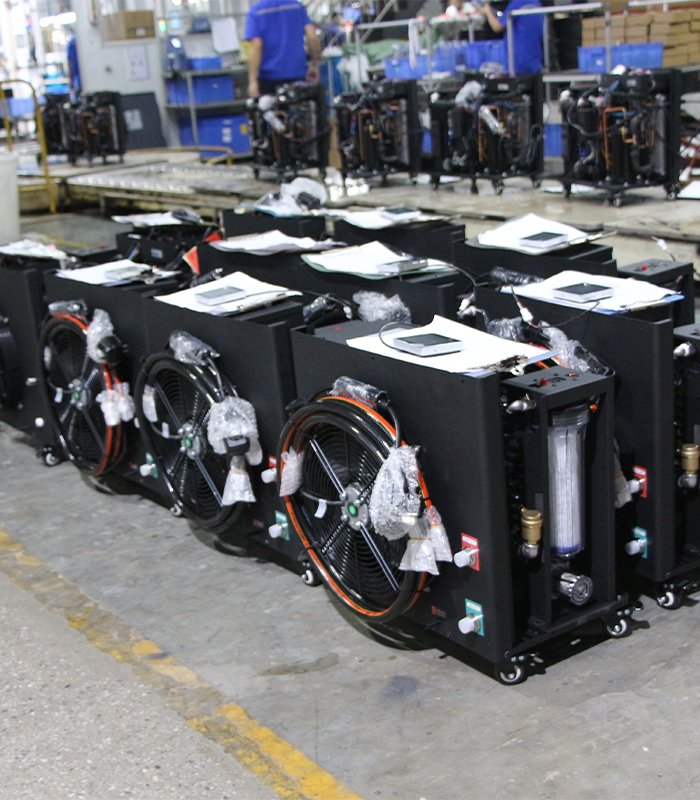
Maintain a configuration record for each production lot. It should connect model and revision, key components, firmware where relevant, labels and manuals, inspection results, deviations and shipment identity. Without configuration traceability, field feedback cannot be reliably connected to the units affected. The batch traceability guide provides the two-direction retrieval test and minimum buyer fields.
Copyable cold plunge OEM manufacturing RFQ fields
BRAND / DESTINATION MARKETS: [ ]
INTENDED USE / USERS / ENVIRONMENT: [ ]
EXISTING PLATFORM OR NEW REQUIREMENTS: [ ]
USABLE WATER VOLUME / TEMPERATURE DUTY: [ ]
AMBIENT / OPERATING HOURS / USER PATTERN: [ ]
TUB / INSULATION / WATER-LOOP INTERFACES: [ ]
VOLTAGE / FREQUENCY / ELECTRICAL VARIANTS: [ ]
CONTROLLER / APP / DATA / UPDATE REQUIREMENTS: [ ]
INDUSTRIAL DESIGN / LOGO / COLOUR / FINISH: [ ]
REQUIREMENTS OWNERSHIP MATRIX: [ ]
PROTOTYPE / VERIFICATION / FIRST ARTICLE: [ ]
DESTINATION COMPLIANCE / TECHNICAL FILE: [ ]
DOCUMENTS / LABELS / LANGUAGES: [ ]
CHANGE-CONTROL / SPARES / SERVICE: [ ]
QUANTITY / DELIVERY / PACKING / ACCEPTANCE: [ ]
Send the completed cold plunge OEM manufacturing brief through OEM cold plunge chiller solutions. Require a response that lists feasibility, assumptions, open points, buyer inputs and the next approval gate.
Cold plunge OEM manufacturing FAQ
What is the difference between OEM and private label?
Private label generally uses an existing platform with controlled branding and packaging changes. OEM involves buyer-defined product requirements or design responsibility beyond that platform. Use a responsibility matrix because terminology varies.
What is a normal OEM MOQ?
There is no universal MOQ. It depends on tooling, custom parts, component commitments, validation scope, production setup and commercial agreement. Request dated quantity scenarios tied to one specification revision.
Who owns compliance in an OEM project?
Responsibilities depend on the market, intended use and contractual roles. Define who identifies requirements, supplies evidence, completes assessments, retains documents and acts on field issues; do not assume the factory owns every obligation.
Is one prototype enough to release production?
Only if it represents the released configuration and all required acceptance evidence is complete. Appearance, engineering and production-like samples often answer different questions.
What should a change notice include?
Identify the current and proposed revision, reason, affected models and lots, technical and compliance impact, verification required, timing, inventory disposition and buyer approval status.