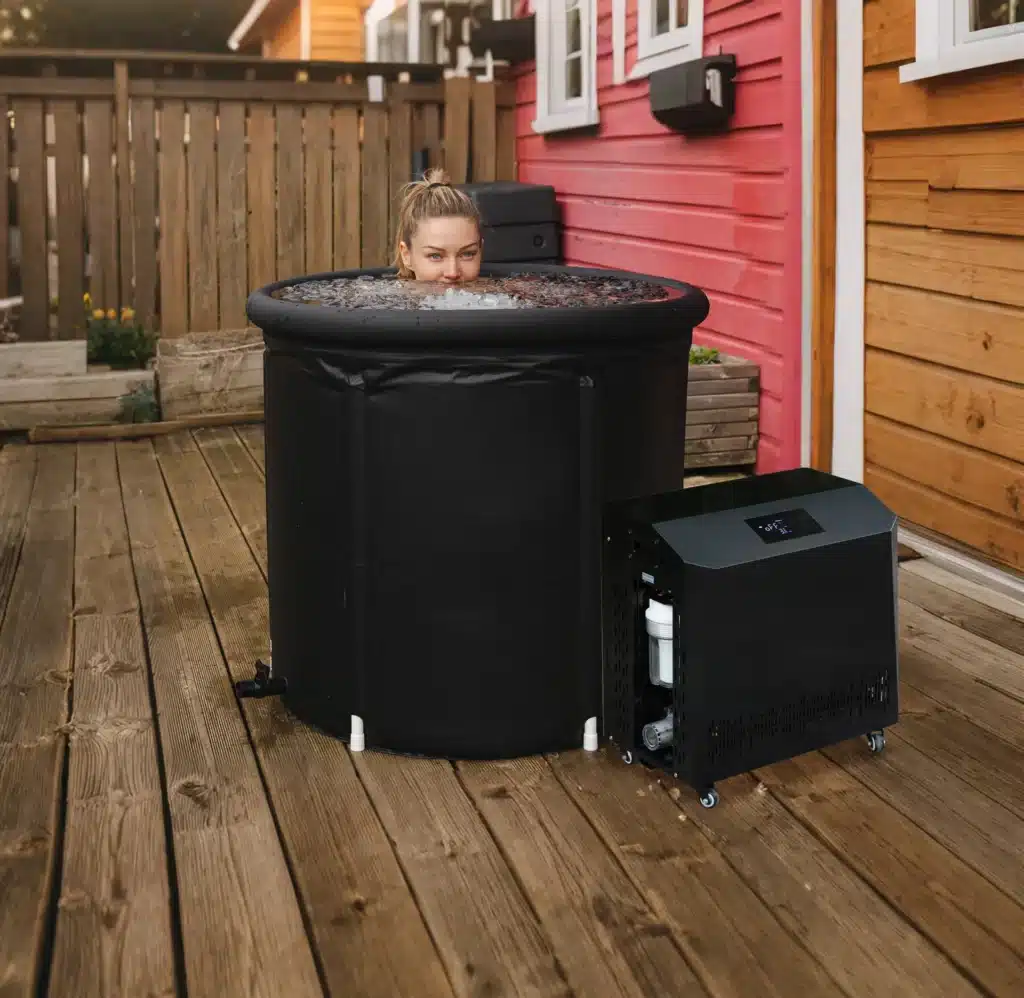
An outdoor cold plunge tub with chiller needs a site plan that treats the vessel, refrigeration equipment, water loop, electrical supply, drainage, weather exposure and operating routine as one system. Before purchase, document climate, sun and rain exposure, wind and salt air, level support, filled load, condenser airflow, service clearances, freeze or heat protection, water care and commissioning conditions.
This page owns outdoor siting and installation planning. The WT-06 outdoor cold plunge product page owns that model’s specifications, while the cold plunge tub material guide owns cross-material selection. This guide does not claim that every chiller is weather-rated or that one enclosure works in every climate.
Outdoor cold plunge tub with chiller: the short answer
Choose the location before choosing the equipment. A useful outdoor cold plunge tub with chiller specification answers five questions:
- Can the base carry the documented filled system and user load?
- Can the equipment reject heat and remain within its stated ambient and weather limits?
- Can qualified local professionals provide the required electrical supply and wet-area protection?
- Can rain, overflow, condensation and service water drain without damaging the site?
- Can operators inspect, clean, isolate and service every component safely?
If any answer is unknown, mark it as an open project input. Do not solve it with an unverified “outdoor-ready” label.
Approve the outdoor cold plunge tub with chiller only when the site drawing, equipment schedule and operating procedure describe the same configuration. Keep assumptions visible until the responsible supplier or local professional closes them.

Map the outdoor cold plunge tub with chiller installation zone
Prepare a scaled sketch or marked photograph. Show the tub footprint, chiller, pump and filter, hose route, electrical point, drain path, required service sides, user entry path, cover movement, walls, landscaping, roof runoff and nearby heat sources. Add prevailing sun and wind directions where relevant. This simple evidence prevents a buyer from discovering after delivery that a door cannot open, a filter cannot be removed or hot condenser air has nowhere to go.
If the equipment is expected to roll between positions or travel between venues, add the portable chiller move-cycle record. Outdoor site suitability and repeatable transport are separate approvals.
Number the interfaces on the drawing and use the same numbers in the outdoor cold plunge tub with chiller RFQ. That gives purchasing, installation and commissioning teams one shared reference.
| Site zone | Record before approval | Common hidden conflict |
|---|---|---|
| Support | Dimensions, empty/filled loads, support points, slope, surface and structural sign-off where required | Deck or paver movement after filling |
| Equipment air | Manufacturer clearances, intake/discharge direction, ambient range and wind/screen effects | Hot-air recirculation inside a decorative box |
| Wet services | Supply, protection, isolator, cable route, drainage and local authority requirements | Extension leads, standing water or inaccessible isolation |
| Operation | Entry/exit, non-slip route, cover storage, cleaning access, noise context and supervision plan | A visually attractive but unserviceable installation |
12 critical outdoor cold plunge tub with chiller checks
1. Document climate and exposure
State the project location, seasonal ambient range, direct-sun hours, rain or snow exposure, prevailing wind, dust, coastal salt and any chemical or irrigation spray. Ask the supplier to identify the exact equipment limits and storage or shutdown requirements. An outdoor cold plunge tub with chiller suitable for a shaded dry courtyard may not be suitable for an exposed coastal roof.
2. Verify the equipment weather rating
Request the nameplate, manual, enclosure rating and installation conditions for the quoted model. Distinguish protection from rain entry, permitted operating ambient, corrosion resistance and freeze protection; one statement does not prove the others. Do not put indoor-only refrigeration equipment into an outdoor cold plunge tub with chiller installation because a generic cover is available. For a project moving inside, use the indoor cold plunge installation checklist to verify floor load, moisture control, heat rejection, electrical routing and service access.
3. Size for the real outdoor duty
Provide usable water volume, starting and target water temperatures, required pull-down time, ambient conditions, solar exposure, cover schedule, occupancy and daily operating pattern. Use the cold plunge chiller sizing checklist. For an outdoor cold plunge tub with chiller, direct sun, warm air, wind and repeated cover opening can change heat gain; a horsepower label alone cannot resolve those inputs. The cold plunge insulation guide separates those boundary checks from airflow and sizing.
4. Keep condenser air moving
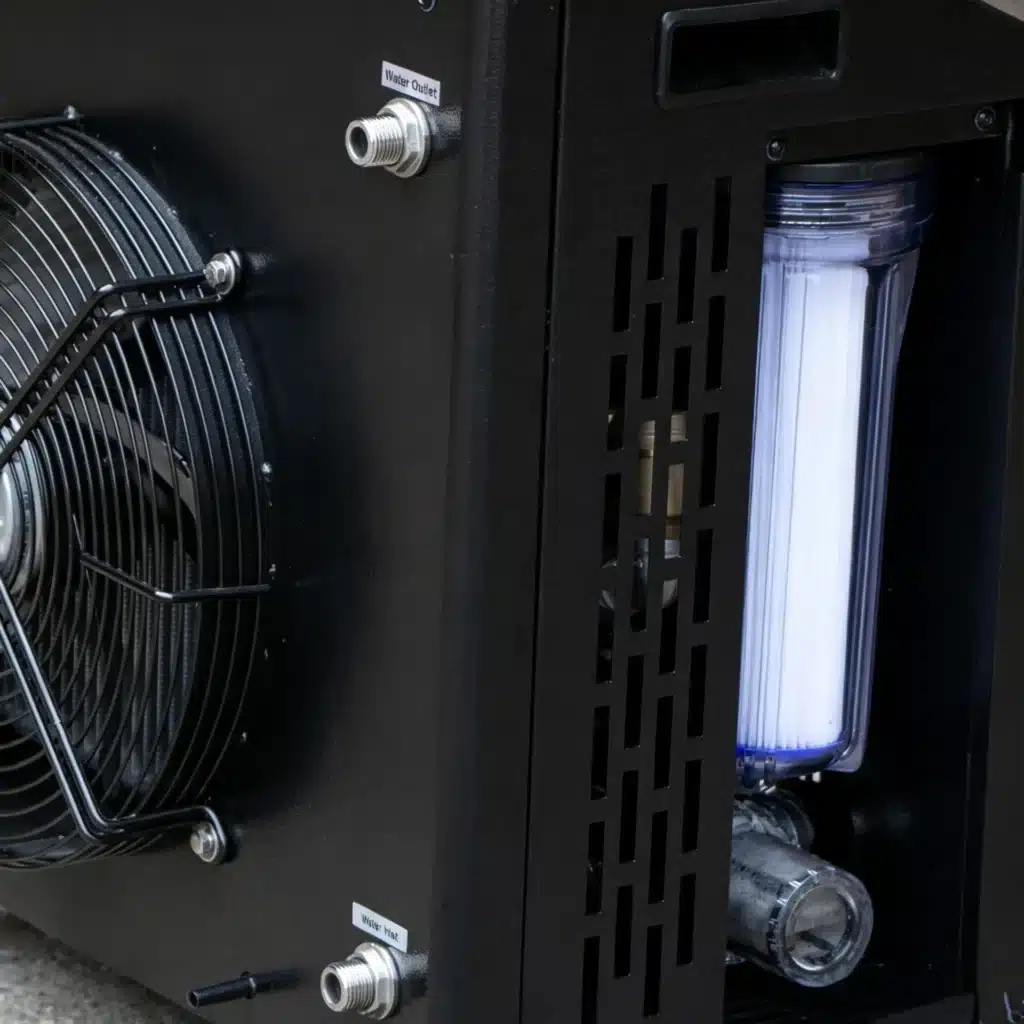
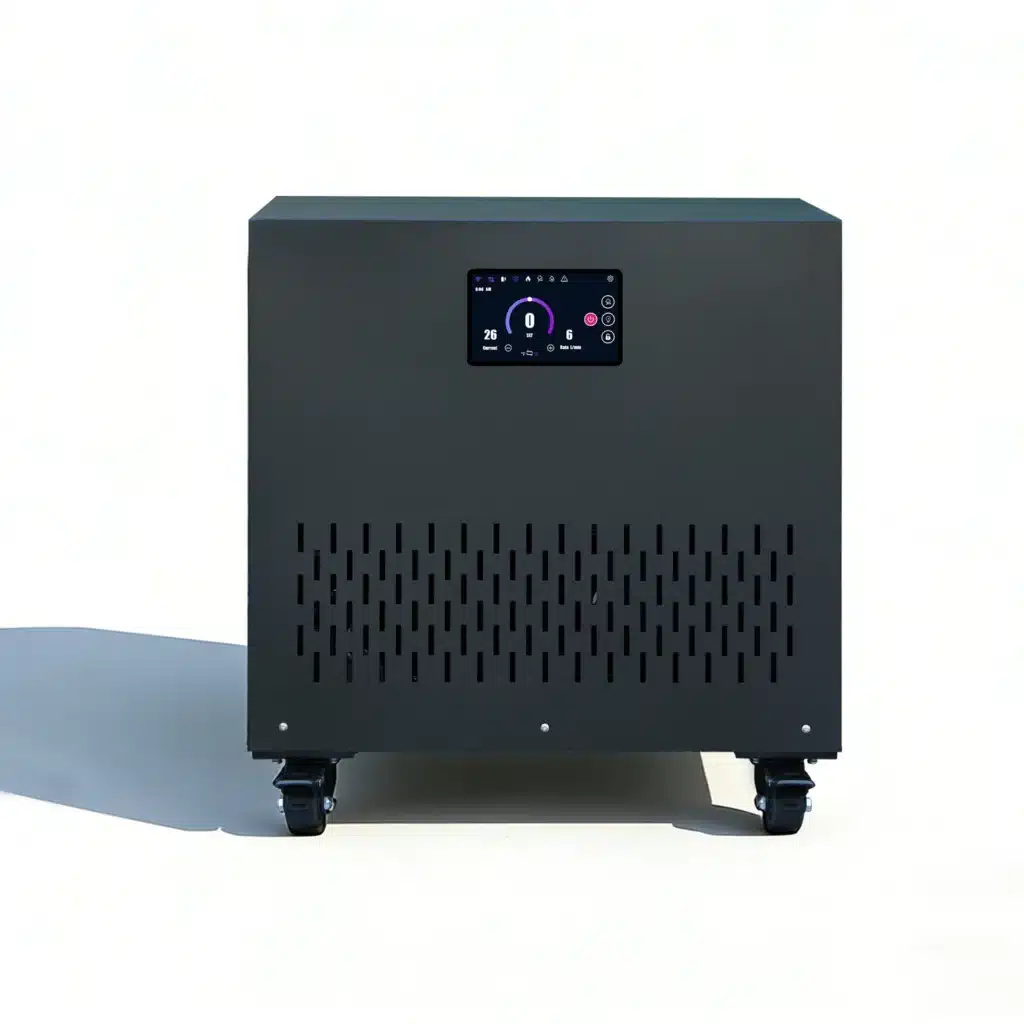
Follow the manufacturer’s intake, discharge and service clearances. Do not hide the chiller in a tight timber cabinet or against a wall unless the approved design provides enough free area and prevents hot-air recirculation. Screens, foliage and wind can also affect airflow. Compare performance claims with the cold plunge chiller efficiency test-input guide.
The airflow and heat-discharge handoff lists the model data and air-path evidence to request when screening or enclosing the equipment. It distinguishes moving air around the cabinet from removing heat from the surrounding space.
5. Confirm support and filled load
Record the tub, water, users, chiller, steps and accessories as the installed load. Show support points and required level tolerance. A qualified project professional should assess decks, elevated terraces and other structures. An outdoor cold plunge tub with chiller must not rely on visual inspection alone when structural capacity is a project issue.
6. Design drainage before delivery
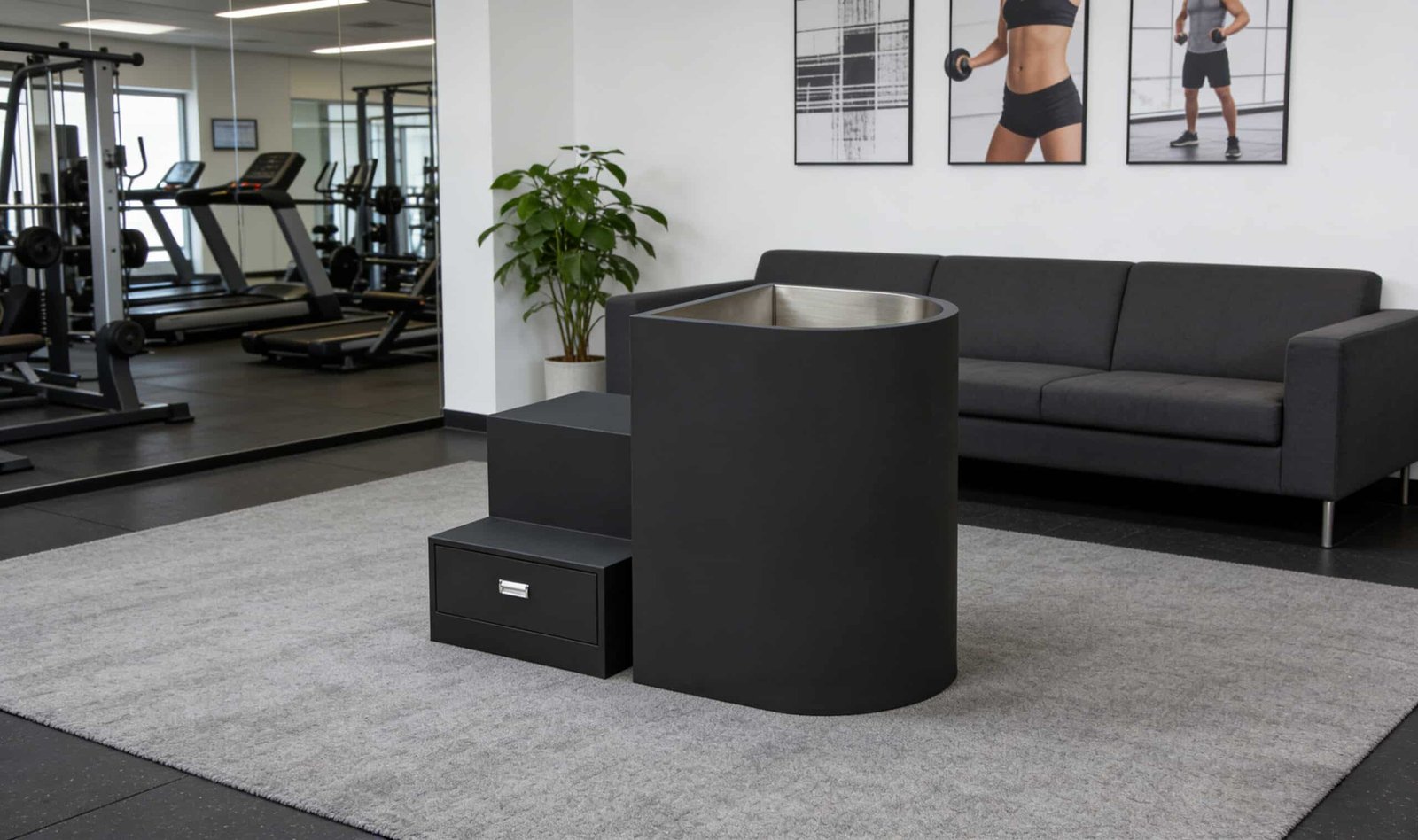
Plan for tub draining, overflow, rainwater, condensation, hose disconnection and maintenance wash water. Keep water away from electrical equipment, building openings, foundations and walking hazards. Confirm where treated water may legally discharge. A covered outdoor cold plunge tub with chiller still needs an intentional drainage route, and that route should be tested before users enter.
For the source-to-destination evidence behind that test, use the five-event cold plunge drainage plan. It separates planned drain-down from splash, condensation, service water and abnormal leakage before the outdoor weather boundary is added.
7. Treat electrical work as wet-area work
Confirm voltage, frequency, phase, nameplate current, circuit, protective devices, grounding/earthing, isolation and cable routing with a qualified local professional and the authority having jurisdiction. CPSC warns that wet skin and surfaces can increase shock risk; see its pool and spa electrical-safety guidance. For U.S. workplaces, consult OSHA’s general electrical requirements. Avoid temporary extension arrangements.
8. Define water-loop routing and protection
Specify hose or pipe size, length, fittings, isolation points, pump, strainer/filter, flow direction, priming and protection from impact, kinking or trip hazards. Route the outdoor cold plunge tub with chiller lines so they can be inspected and drained when needed. If the installation uses a flexible vessel, the inflatable cold plunge with chiller guide covers port loads and connection limits.
9. Plan for heat, freeze and shutdown
Ask the manufacturer for operating and storage limits and a written seasonal procedure. Depending on the exact system and climate, the plan may include draining exposed lines, moving components, approved heating or freeze protection, shading or suspending use. Never improvise a heater or sealed cover around refrigeration equipment. The outdoor cold plunge tub with chiller owner should know who triggers shutdown and how it is verified.
10. Select materials for the actual environment
Identify every water-contact and exposed layer, including fasteners, welds, coatings, cladding, ports and frames. Ask about UV, salt, moisture, cleaning chemistry and dissimilar-metal exposure. ASTM A240/A240M defines requirements for specified stainless plate, sheet and strip, but the material-standard scope does not certify a completed tub or universal corrosion resistance. Use the material guide for a controlled evidence request.
11. Define water care and operator records
Specify cleaning, filtration, treatment, measurements, water replacement, inspection and responsibility for the intended venue. CDC presents the Model Aquatic Health Code as guidance for public aquatic venues; determine which local rules apply to the project. Do not publish one chemical dose for every outdoor cold plunge tub with chiller, vessel material and usage level.
12. Preserve service and emergency access
Leave access to labels, disconnects, filters, panels, drains, pumps and connections. Define how operators isolate water and power, respond to leaks or alarms and keep users away from equipment. In the United States, EPA’s Section 608 technician-certification information explains requirements for technicians performing covered refrigerant service. Destination rules and the equipment manual govern the actual service boundary.

Outdoor cold plunge tub with chiller climate matrix
| Scenario | Add to the RFQ | Evidence before approval |
|---|---|---|
| Hot sun | Peak ambient, sun hours, shade/cover plan, target and recovery duty | Performance basis, operating limits, airflow layout and surface limits |
| Cold or freezing season | Minimum ambient, unattended periods, outage risk and seasonal use | Written drain, storage, freeze-protection and restart procedure |
| Rain or wind | Exposure direction, roof runoff, flood path, enclosure and anchoring questions | Weather-rating documents, drainage sketch and approved clearance design |
| Coastal or corrosive | Distance/exposure, salt, chemicals, cleaning and inspection interval | Materials/finish schedule, care limits and corrosion inspection plan |
The matrix is an information request, not a universal design. Supplier evidence, local professionals and applicable codes must be reconciled for the actual outdoor cold plunge tub with chiller.
Commission the outdoor cold plunge tub with chiller
At handover, record model and serial identity, visible condition, site photos, support and level, clearances, electrical supply, protective-device verification by the responsible professional, water-loop diagram, leak test, stable flow, filter condition, controller and alarms, ambient and water temperatures, time stamps, noise/vibration observations, drainage test and shutdown procedure. The record must identify the approved outdoor cold plunge tub with chiller revision. Use the pre-shipment inspection checklist before dispatch, then repeat installation-dependent checks on site.
If performance differs from the approved duty, preserve readings and use the cold plunge chiller not-cooling guide. It separates water flow, airflow, heat load, sensors, controls, electrical supply and refrigeration faults so the installer does not start with random component replacement.
Copyable outdoor cold plunge tub with chiller site RFQ
OUTDOOR COLD PLUNGE TUB WITH CHILLER SITE RFQ
BUYER / BRAND / DESTINATION:

PROJECT TYPE / QUANTITY:

SITE DRAWING / PHOTOGRAPHS:

TUB MODEL / DIMENSIONS / USABLE VOLUME:

EMPTY / FILLED / USER LOAD DATA:

SUPPORT SURFACE / LEVEL / STRUCTURAL REVIEW:

START WATER / TARGET WATER / PULL-DOWN TIME:

DAILY USE / OCCUPANCY / COVER SCHEDULE:

SEASONAL AMBIENT RANGE / DIRECT SUN:

RAIN / SNOW / WIND / DUST / SALT EXPOSURE:

CHILLER MODEL / PERFORMANCE TEST CONDITIONS:

OPERATING / STORAGE / WEATHER LIMITS:

INTAKE / DISCHARGE / SERVICE CLEARANCES:

WATER LOOP / PUMP / FILTER / HOSE PLAN:

VOLTAGE / FREQUENCY / PHASE / CIRCUIT PLAN:

DRAIN / OVERFLOW / CONDENSATION ROUTE:

FREEZE / HEAT / STORM / OUTAGE PROCEDURE:

WATER CARE / CLEANING / OPERATOR RECORDS:

SITE ACCEPTANCE TEST / REQUIRED DOCUMENTS:

ASSUMPTIONS / EXCLUSIONS / OPEN POINTS:
Attach the site map and this schedule to the OEM chiller RFQ template. A supplier should identify every unanswered item and distinguish published model data from a project estimate.
Frequently asked questions about an outdoor cold plunge tub with chiller
Can any cold plunge chiller be installed outdoors?
No. Confirm the exact model’s enclosure rating, permitted ambient range, rain and sun exposure, drainage, airflow, electrical installation, storage limits and shutdown procedure. An indoor-only unit does not become outdoor-rated merely by adding a cover.
Should an outdoor cold plunge chiller be covered?
Use only a cover or shelter compatible with the equipment instructions and site conditions. It must not block intake, discharge, drainage, controls or service access, and it must not recirculate condenser heat.
How should an outdoor cold plunge tub with chiller be sized?
Use usable water volume, start and target temperatures, ambient and solar exposure, pull-down time, cover use, occupancy and operating schedule. Ask for the conditions behind performance data rather than relying on horsepower alone.
What happens to the system in freezing weather?
Follow a written procedure approved for the exact tub, chiller, pump, filter and piping. Depending on the equipment and climate, it may require draining, approved freeze protection, indoor storage or suspended operation. Do not improvise.
What should be checked at outdoor commissioning?
Record identity, condition, support, clearances, electrical verification, water-loop routing, leak-free stable flow, controller and alarms, drainage, ambient and water conditions, pull-down performance and the seasonal shutdown plan.
For an outdoor cold plunge tub with chiller project, send OMNI Ice the destination, site photographs, climate exposure, tub volume, operating duty, electrical supply, water-loop plan, drainage route and required evidence through the official project contact page. The response should list the proposed configuration and every condition still requiring local confirmation.