A cold plunge chiller nonconformance report should stop an affected unit, batch or shipment from moving forward until the failed requirement, affected scope, disposition and closure evidence are explicit. A corrected-defect photograph cannot close the issue. Release requires a record that connects the finding to the exact order and configuration, shows what was contained, identifies who approved the disposition and proves the required recheck was completed.
This article is for importers, distributors and OEM brand owners reviewing a failed inspection, factory acceptance test or document check. It provides nine closure fields and a practical decision path. The acceptance limits and approval authority must come from the applicable purchase order, specification, drawing, quality agreement or contract. This is not a statement that every OMNI order uses the same form.
When a cold plunge chiller finding needs a controlled report
Open a controlled record when a product, document, test result or shipment condition fails an applicable requirement and the decision could affect release. A cold plunge chiller nonconformance report begins with that requirement gap, not with how dramatic the defect looks. A wrong electrical label can be more consequential than a visible scratch. A missing test file can block acceptance even when the machine powers on.
Start with the source of the requirement. Name the purchase-order line, approved drawing revision, specification clause, sample standard, packing instruction or test criterion. Avoid entries such as “quality problem,” “not acceptable” or “customer complaint” without the requirement being evaluated. Those descriptions do not tell the supplier what must be restored or the buyer what evidence should close the issue.
The pre-shipment inspection checklist identifies what was checked before release. The factory acceptance test guide defines witnessed functional checks. This page owns the next task: controlling and closing a failed result after it has been found.
| Finding | Minimum action | Release implication |
|---|---|---|
| Administrative typo with no effect on product identity, requirement or supplied evidence | Correct under the document-control method and retain the revision trail | Release only if the authorized process confirms no affected product or decision |
| Product, test, label, document, quantity or packing requirement is not met | Identify the affected item, contain it and open a controlled nonconformance record | Keep the affected scope on hold until disposition and required verification are complete |
| The finding may affect other units, lots, documents or shipped orders | Expand the investigation using traceability and define the full affected population | Do not limit the hold to the first unit merely because it revealed the issue |
| The requirement or approved baseline itself may need to change | Separate the nonconformance from the formal engineering or commercial change request | A defect record cannot silently revise the approved design or contract |

Define the affected scope before proposing a fix
The first discovered unit is evidence of a finding, not automatically the full boundary of the problem. In a cold plunge chiller nonconformance report, record its serial or equipment ID, order, model, electrical variant, build or document revision and the date and station where the issue was detected. Then ask what common input could connect other units to the same condition.
Use the batch traceability method in both directions. A backward check asks which component lot, work instruction, approved change, operator step or file revision fed the affected unit. A forward check asks which other units, packing lists, labels, test reports or shipments used that same input. The result can be one unit, a defined group or a wider population. “All units made this month” is not precise when a narrower evidence-based scope can be established.
Containment follows that scope. Physically identify and segregate held units where practical. Block the relevant digital release or document package. Preserve the original evidence before rework, including photographs, measurements, file revisions and inspector observations. If an item has already shipped, record the destination, responsible contact and the decision path rather than quietly treating it as factory stock.
NASA’s product-assurance procedure describes a disciplined nonconformance path that includes identification, documentation, evaluation, segregation or control, disposition and reverification after repair or rework. The NASA procedural requirements for hardware quality assurance apply to a different industry and risk level. They are cited here for the record-control logic, not as a claim that a cold plunge chiller project is governed by NASA requirements.
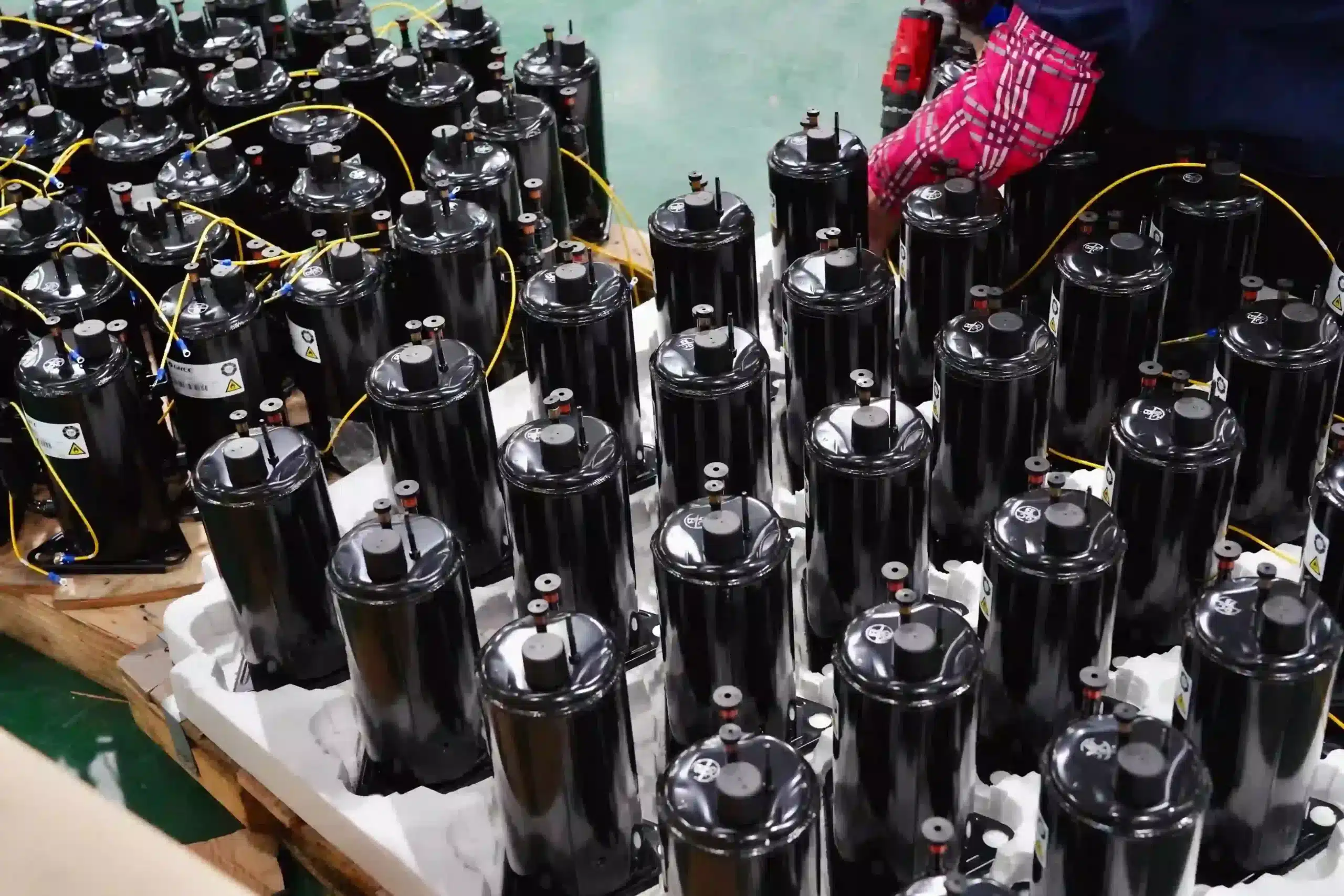
Nine fields in a cold plunge chiller nonconformance report
A useful cold plunge chiller nonconformance report should let a buyer reconstruct what failed, what was protected and why the final release decision was authorized. Use these nine fields as a minimum data structure. Add project-specific fields where the contract, destination market or risk requires them.
| Field | What to record | Weak entry to reject |
|---|---|---|
| 1. Record identity | Unique NCR number, issue date, order/project and responsible coordinator | Loose photo folder or chat message with no controlled reference |
| 2. Affected identity | Model, configuration, serial/unit IDs, quantity, lot or document revision | “Several chillers” without an auditable population |
| 3. Failed requirement | Exact drawing, specification, sample, label, test or packing requirement and revision | “Customer standard” with no source |
| 4. Objective finding | Observed condition, location, measurement or file mismatch, with evidence references | Opinion such as “looks bad” or an edited after-photo only |
| 5. Immediate containment | Held stock, stopped process, blocked file, notified shipment or other protective action | “Factory informed” without identifying what cannot move |
| 6. Affected-scope basis | Traceability inputs checked, population included and excluded, and evidence for the boundary | Only the first failed unit is listed |
| 7. Disposition and authority | Rework, repair, return, scrap, concession or other authorized route; approver and date | Supplier chooses “use as is” without named buyer authority |
| 8. Correction and verification | Work performed, instruction/revision, reinspection or retest method, result and evidence | “Fixed” with no result against the original requirement |
| 9. Closure and release | Open actions, corrective-action reference if needed, final status, release scope and signatures | A closed checkbox while related units or documents remain unresolved |
Keep correction and corrective action separate. Correction addresses the detected nonconforming item, such as replacing a label or reworking a connection. Corrective action investigates and addresses a cause to reduce recurrence. Not every isolated finding requires a large corrective-action project, but closing the product record must not hide an unresolved repeated or systemic cause.
When recurrence or a failed control warrants systemic escalation, use the cold plunge chiller corrective action request to define cause evidence, action implementation and an effectiveness check. Keep the CAR linked to the item-level NCR.
The cold plunge chiller quality-document register should reference the NCR and its final status. It should not replace the detailed record. The register answers which files exist and whether they are current; the NCR answers what happened to one defined issue and affected scope.
Control who can approve each disposition
A supplier may be able to rework a unit to the approved requirement under an authorized instruction. That does not automatically give the supplier authority to accept a different requirement. The cold plunge chiller nonconformance report should name who can approve each disposition. “Use as is” and concessions can change what the buyer receives, so approval must follow the contract and delegated authority. A price adjustment is not technical acceptance unless the responsible buyer also authorizes the requirement deviation.
Use the following disposition distinctions during the review:
- Rework: bring the item back to the existing requirement using an approved method, then verify it against that requirement.
- Repair: restore usable condition through a method that may not return the item fully to the original requirement. Define approval and verification carefully.
- Return or replace: remove the item from the accepted supply and provide a conforming replacement under the agreed commercial process.
- Scrap: permanently prevent unintended use when the item cannot be accepted or economically recovered.
- Concession or use as is: accept a defined deviation for a defined scope through authorized approval. Do not treat it as a general revision.
If the proposed route alters a material, component, controller, label, connection or other approved baseline, route the proposal through the engineering change-control record. The NCR can reference the approved change. It should not become an informal substitute for design review, validation or buyer approval.
Record commercial consequences separately from technical disposition. Replacement timing, freight allocation, reinspection cost and schedule recovery may need agreement, but they do not prove that the corrected product meets the requirement.
Close against the original requirement, not the appearance of effort
Verification in a cold plunge chiller nonconformance report should answer the same question that failed. If a dimension was out of tolerance, remeasure it with an identified method and applicable instrument. If the wrong label revision was used, compare the replacement label and affected document set with the approved file. If a water-loop joint leaked, define the rework and repeat the relevant leak check under the agreed condition. A photograph of a technician working is evidence of activity, not evidence of conformity.
Retest scope should consider what the correction could disturb. Replacing an electrical component may require more than a visual confirmation. Reopening a water connection may require a leak check. Repacking a unit may require another accessory, mark and protection review. Use the original acceptance documents and the nature of the intervention to define the recheck. Do not invent a universal retest list from this article.
| Status | Required evidence | Buyer decision |
|---|---|---|
| Open | Finding recorded, scope or disposition still unresolved | Keep affected items and linked release records on hold |
| Corrected, awaiting verification | Work record exists but the applicable reinspection or retest is incomplete | Do not release on the basis of the correction record alone |
| Conditional disposition | Named authority accepts a bounded deviation with restrictions and remaining actions | Release only the stated scope and preserve the conditions |
| Closed | Affected scope, authorized disposition, verification results and related actions are complete | Release only the population explicitly covered by the closure |
For a warranty or field issue, link the affected unit record to the warranty evidence checklist. A factory NCR and a customer-facing warranty claim may share serial, symptom and component information, but they have different owners and commercial decisions.
Walk a cold plunge chiller nonconformance report through one issue
Illustrative scenario, not an OMNI customer case: an outgoing check finds that two identified units carry an earlier controller-label revision than the approved order file. The physical controllers have not yet been shown to be wrong, but the supplied identity evidence does not match the release baseline. The cold plunge chiller nonconformance report therefore records a document-and-label requirement failure rather than guessing at a controller performance defect.
The first containment action holds those two units and blocks their release documents. The scope review then checks which label file was available at the printing station, when it changed and which serial IDs were processed during that period. The traceability result identifies twelve units that could carry the same label revision. Eight remain unpacked, four are already packed and none has shipped. The report expands the affected population to all twelve because the common file and time window support that boundary.
The disposition is not “change the labels” until the approved authority confirms the correct file and whether any related manual, nameplate photograph or packing record must also change. Once confirmed, the rework instruction identifies the replacement label, removal method, application position and document updates. The cold plunge chiller nonconformance report retains the original finding photographs and file hashes so the before-and-after evidence remains distinguishable.
Verification samples every affected serial ID for the label identity and position because the correction was applied to all twelve. The reviewer also checks that the release photographs and packing records reference the corrected revision. If the wrong file entered production because a superseded version remained available, a separate corrective-action record can address document access and prevention. That systemic action does not replace product verification.
The final cold plunge chiller nonconformance report closes only after all twelve units are accounted for, the authorized disposition is recorded, the reinspection evidence is attached and the shipment-release list names the corrected serial IDs. If one packed unit cannot be located or one document remains on the old revision, the report stays open for that scope. This example shows why “two labels fixed” is not the same as a controlled closure.
Copyable cold plunge chiller nonconformance report
Use the following cold plunge chiller nonconformance report fields in a controlled form, spreadsheet or quality system. Keep evidence files under stable names and reference them from the record rather than relying on a temporary message thread.
- NCR identity: unique number; issue date; order/project; coordinator; current status.
- Affected product: model; electrical and control variant; build/document revision; serial/unit IDs; quantity; location.
- Requirement: source document; revision; clause or characteristic; acceptance criterion.
- Finding: observed result; method; instrument if applicable; date; inspector; photo/file references.
- Containment: physical and digital hold; process stop; shipment notification; responsible person; completion time.
- Scope: shared lot, process, file or change reviewed; included and excluded units; traceability evidence.
- Disposition: authorized route; instruction; approving role/person; date; restrictions and commercial reference.
- Verification: correction performed; reinspection/retest method; actual result; evidence; verifier and date.
- Closure: related corrective action or change record; remaining actions; final release population; signatures and date.
For a broader sourcing package, connect the cold plunge chiller nonconformance report to the OEM cold plunge chiller solutions page and the OEM RFQ template. To discuss a specific OMNI configuration, send the order scope, affected identifiers and requirement reference to OMNI. Do not remove unresolved fields to make the report appear complete.
Questions buyers ask about nonconformance reports
Is a defect photo enough to open and close an NCR?
No. A useful record identifies the failed requirement, affected product and scope, containment, authorized disposition, correction, verification and final release status. Photographs can support those fields but do not replace them.
Does every cosmetic issue require a full corrective action?
Not automatically. The applicable quality agreement should define reporting and escalation. The product finding still needs an authorized disposition and closure. Repeated, systemic or high-impact findings may require a separate cause and corrective-action process.
Can the supplier approve use as is?
Only when the contract and delegated authority allow it. A supplier should not silently change a buyer-approved requirement. Record the exact affected scope, approving authority, conditions and related commercial decision.
What is the difference between rework and repair?
Rework returns the item to the existing requirement. Repair restores usable condition through an authorized method that may not fully restore the original requirement. The approval and verification route should reflect that difference.
When is a cold plunge chiller nonconformance report closed?
Close the cold plunge chiller nonconformance report only when the affected scope is defined, containment is complete, the disposition is authorized, required correction and verification are recorded, related actions are addressed and the final release population is explicit.