A cold plunge chiller noise test is useful only when the sound result is tied to a defined machine state, instrument, measurement position, room condition and background level. A single decibel number without those conditions cannot tell a buyer whether two chillers are comparable or whether the installed system will suit a bedroom, treatment room, studio or commercial facility.
This article helps importers, facility planners, installers and OEM buyers specify eight measurement conditions before accepting a noise claim. It does not set a universal sound limit, diagnose hearing risk or replace the exact product instructions, local rules or an acoustic professional’s site assessment.
Define what the noise claim is supposed to prove
Begin with the buyer decision. A cold plunge chiller noise test for factory comparison may ask which configuration produces less sound under matched conditions. A home installation may ask whether the unit can operate near sleeping or working areas. A hotel, spa or gym may need a room-level acoustic assessment that includes several chillers, pumps, ventilation equipment and reflective surfaces. These are not the same test.
Write the intended use beside the result. State whether the number describes one identified chiller, the complete water system, a declared operating mode or a specific installation. Do not transfer a quiet-room catalogue value to a mechanical room without checking the configuration and environment that produced it.
Noise also changes during a cycle. A compressor start, fan-speed change, pump prime, valve movement or protective restart may sound different from stable temperature holding. If the buyer cares about both steady sound and short events, record both instead of averaging them into one unexplained figure.
| Buyer question | Test boundary | Evidence needed |
|---|---|---|
| Which chiller configuration is quieter? | Matched models or variants under the same water, air, operating and measurement conditions | Side-by-side condition sheet and repeated results |
| Will this installed system disturb an occupied room? | Chiller, pump, structure, enclosure and room during representative operation | Site measurement and room assessment, not a factory number alone |
| Did a noise complaint indicate a new fault? | Current system compared with an accepted baseline at the same operating state | Component-state observations, vibration path and service checks |
| Does the result meet a contract requirement? | The exact method, position, metric and acceptance limit named in the agreement | Signed test record with instrument and configuration identity |
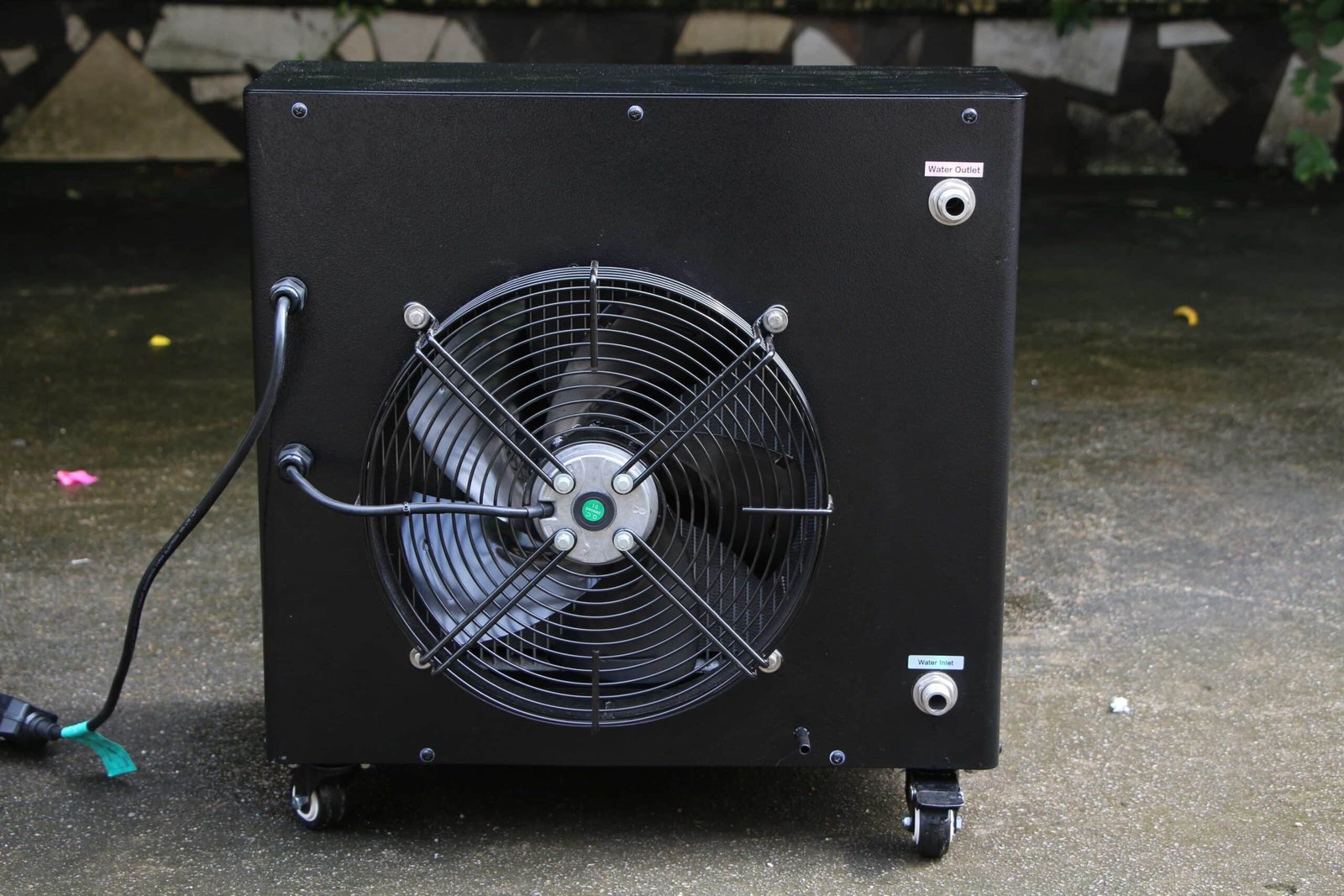
Eight conditions to record in a cold plunge chiller noise test
Every reported result should travel with a condition sheet. The following eight fields keep the number connected to the machine and test that produced it.
| Condition | What to record | Why it matters |
|---|---|---|
| 1. Equipment identity | Model, serial or sample ID, electrical variant, controller revision and included pump/filter arrangement | Similar cabinets can use different fans, compressors, pumps or control logic |
| 2. Operating state | Cooling, heating, standby, pull-down or holding; compressor, fan and pump state; water temperatures and elapsed time | Sound can change as components start, stop or change speed |
| 3. Instrument | Sound level meter or measurement system, microphone, serial ID, calibration/check status and applicable method | A smartphone reading and a verified measurement instrument do not have the same evidentiary weight |
| 4. Reported metric | Weighting, time response, averaging or event duration, units and any minimum/maximum values retained | Two values labelled dB may represent different processing |
| 5. Microphone position | Distance, height, angle, machine face, coordinate or marked photograph, and operator position | Moving the microphone can materially change the result |
| 6. Background condition | Chiller off measurement, nearby equipment state, traffic or voices, and whether background affected the test | The room may dominate the measured level |
| 7. Acoustic environment | Indoor/outdoor location, room dimensions, nearby walls, floor, enclosure, doors and reflective surfaces | A factory floor, open yard and furnished room do not produce equivalent readings |
| 8. Installation and vibration path | Feet or casters, support surface, hose contact, cabinet panels, pipe restraints and any isolation used | Structure-borne vibration and rattles can be mistaken for airborne machine noise |
The phrase cold plunge chiller noise test does not create the method. The project needs a named test procedure or a mutually approved condition sheet. If the supplier provides a figure, ask for all eight fields and any stated uncertainty or limitation. If the buyer provides the acceptance limit, attach the room, distance and operating definition that makes the limit meaningful.
The U.S. National Institute for Occupational Safety and Health publishes a Sound Level Meter application and measurement guidance. NIOSH explains the app’s intended occupational-noise use and the role of an external calibrated microphone for professional accuracy. That source supports instrument discipline; it does not establish a cold plunge chiller acceptance value or turn a phone into universal compliance evidence.
Use a repeatable measurement sequence
Set up the equipment and room before collecting a number. A repeatable cold plunge chiller noise test marks the chiller location and microphone coordinates. Keep normal panels, doors and screens in their intended positions. Confirm that the water circuit is primed and the equipment can run without an unresolved installation fault. Use the indoor installation checklist when the room, drain, power or service arrangement is still open.
A practical sequence is:
- Photograph or draw the equipment, surrounding surfaces and measurement points.
- Record the instrument, microphone and calibration or field-check status.
- Measure the background with the chiller and defined auxiliary equipment off.
- Start the system and log time-stamped component states rather than writing only “running.”
- Record the agreed steady operating interval at each measurement position.
- Capture separately any startup, shutdown, speed-change or abnormal event relevant to the buyer.
- Repeat the measurement or comparison under the same stated conditions.
- Save raw observations, processed results and deviations with the test record.
Do not subtract an unknown background value or apply a correction silently. If the background is too close to the operating measurement for the chosen method, mark the result as limited and improve the test environment or use a qualified acoustic assessment. A neat final number should not conceal poor separation between the machine and room sound.
For a comparison, swap only the variable being evaluated. If one unit is measured near a wall and another in open space, the result combines product and placement differences. If one includes the circulation pump and the other does not, the boundary is different. Preserve those distinctions in the table.
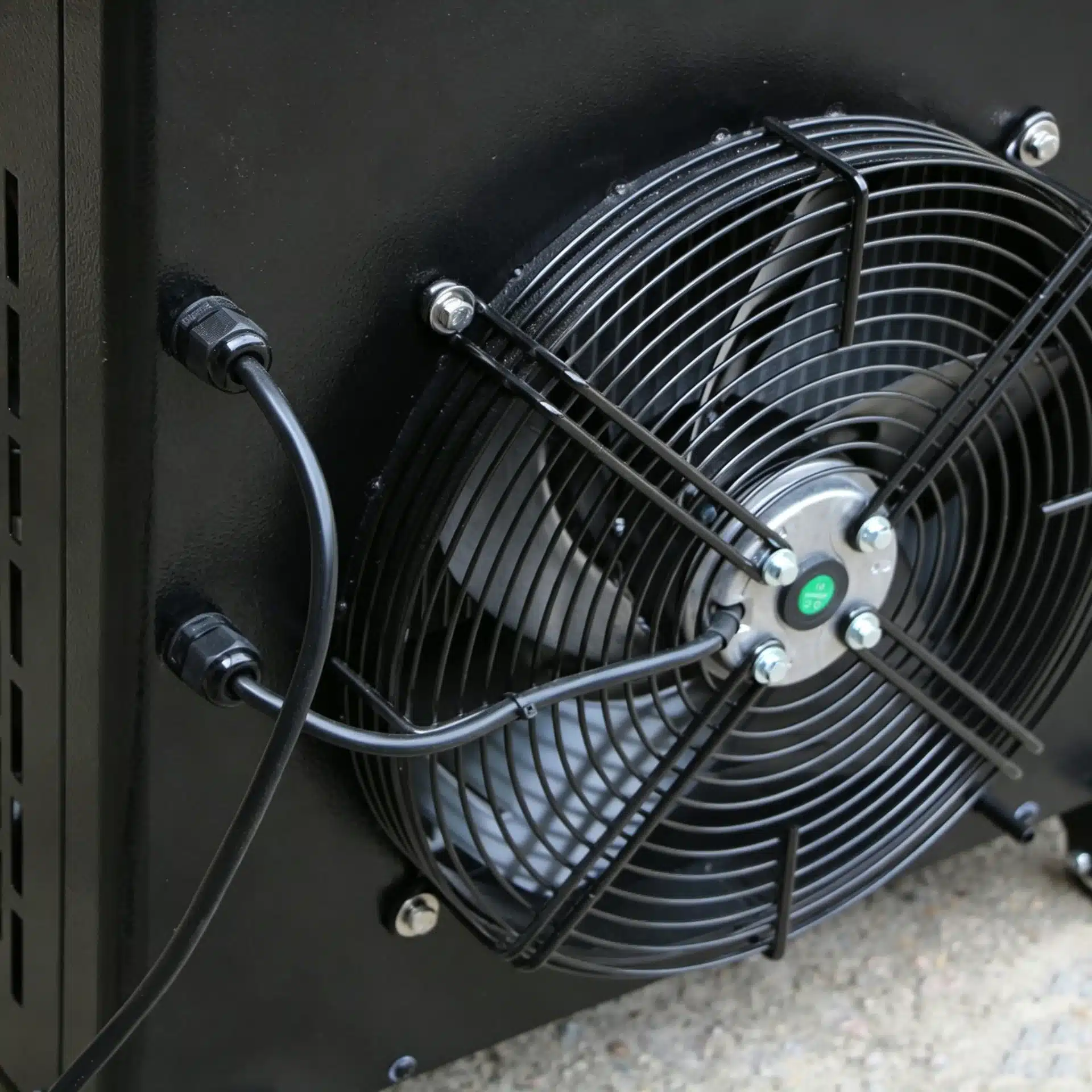
Separate fan, compressor, pump, water and structure paths
A cold plunge chiller noise test for a complaint should not immediately assign the sound to the compressor. Listen and record when the sound appears. Does it begin with the fan, pump, compressor or water flow? Does it change when a hose is moved away from a panel or wall? Is the sound airborne, a panel rattle, a pipe vibration or turbulence at a restriction?
Use observations to narrow the service question without bypassing safety boundaries. Do not open energized electrical or refrigeration compartments for an informal noise test. Stop and follow the exact manual and qualified service route when there is severe vibration, repeated protective shutdown, electrical concern, refrigerant-system concern or a new mechanical impact sound.
| Observed pattern | Useful non-invasive check | Next record |
|---|---|---|
| Sound starts with the condenser fan | Record fan state, nearby grille/panel condition, clearances and the marked microphone position | Airborne sound and panel-condition observation |
| Low-frequency vibration appears through the floor or cabinet | Record support surface, feet/casters, hose or pipe contact and whether the structure carries vibration | Installation and vibration-path sketch |
| Sound changes with water flow or valve position | Record pump state, verified flow basis, bypass position and signs of air or restriction | Water-loop and pump observation; do not infer flow from sound alone |
| New sound follows maintenance or relocation | Compare panel fit, connections, support and operating state with the accepted baseline | Change and recommissioning record |
The cold plunge pump troubleshooting guide covers water-circulation symptoms and escalation. The flow-rate measurement record explains why sound or outlet feel cannot establish actual flow. Link the records when one symptom crosses both systems, but keep the noise result and hydraulic measurement distinct.
Translate the result without promising the installed room
A factory cold plunge chiller noise test is a product data point under its stated conditions. The installed experience also depends on distance, partitions, doors, background, furnishings, wall and floor construction, equipment grouping and operating schedule. A catalogue number cannot by itself predict whether a guest room, treatment room or neighboring tenancy will find the system acceptable.
For a home installation, use the home chiller buyer checks to coordinate placement and service needs. Short-term-rental operators can use the Airbnb cold plunge planning guide for guest, neighbor and maintenance considerations. Commercial facilities should define occupancy, operating hours and simultaneous equipment rather than adopting a residential expectation.
Heat and sound also share an installation trade-off. Hiding an air-cooled chiller in a tight enclosure may reduce direct line of sight while harming its permitted air path or creating recirculation. Review the heat-rejection and airflow handoff before accepting an acoustic enclosure. Any lining, screen, duct or panel arrangement must remain compatible with model-specific ventilation and service requirements.
Write the acceptance statement narrowly. For example: “The identified unit met the project sound criterion at the marked positions, in the stated room, during the recorded operating states.” Do not shorten that to “quiet chiller” or apply it to every model, room or duty cycle.
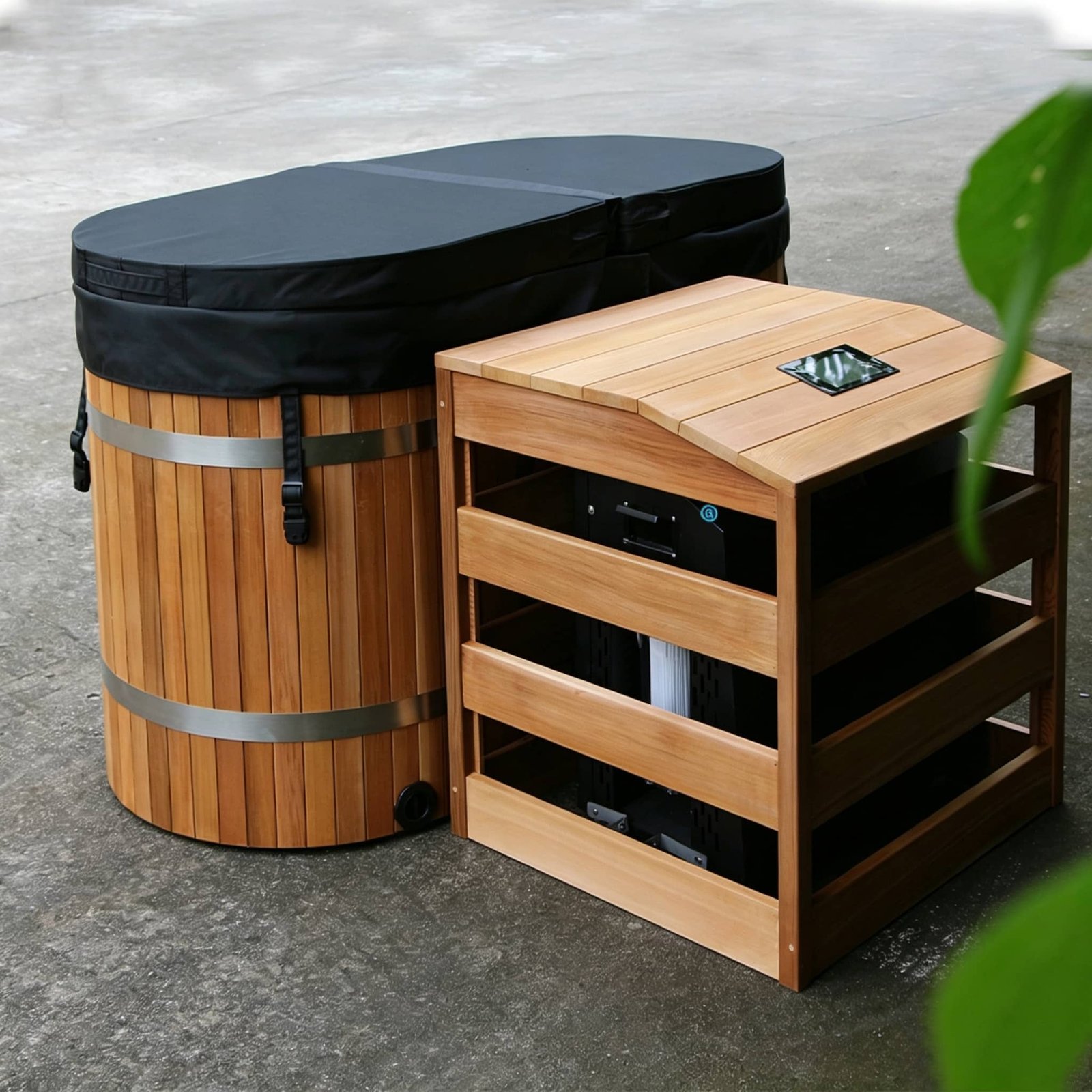
How to read a cold plunge chiller noise test comparison
Illustrative comparison, not an OMNI product test: Supplier A reports a lower sound value for one chiller than Supplier B. The first report was taken outdoors at a marked position during stable holding. The second was taken in a small reflective room during initial pull-down, with an external circulation pump running. The values appear comparable in a quotation table, but the boundaries are different enough that the ranking cannot support a product decision.
First normalize the equipment boundary. Ask whether each cold plunge chiller noise test includes the same auxiliaries and operating state. If one result includes a pump and the other is chiller-only, retain both facts rather than subtracting an assumed pump contribution. If one machine is in pull-down while another is holding temperature, repeat the tests at agreed states. Sound events during startup can be reported separately from the steady interval.
Next normalize the measurement definition. Confirm the instrument, microphone, metric, distance, height, machine face and background. A report that states only a number and unit cannot be repaired by adding a generic distance after the fact. The cold plunge chiller noise test should preserve the actual setup or be repeated. Mark any result that depends on an undocumented photograph, estimated microphone location or unknown room as limited evidence.
Then separate the product comparison from the site decision. Even a matched factory cold plunge chiller noise test does not predict every occupied room. Use the matched result to compare the identified configurations. Use a site assessment to decide whether the final room, enclosure, floor and operating schedule are acceptable. A buyer can require both records without asking the factory test to answer a building-acoustics question it was not designed to solve.
Procurement can define two acceptance levels without mixing them. Level one is a supplier-data gate: the quotation or submittal must include a cold plunge chiller noise test with the eight recorded conditions, stated limitations and identified configuration. Level two is a destination gate: the completed installation must be assessed under the agreed room and operating conditions. Passing level one supports product selection; it does not waive level two when the room outcome is commercially important.
Keep the decision evidence in separate columns. Record the supplier value and method, the buyer’s comparison conclusion, the site criterion source, the installed result and every open exception. This prevents a later reviewer from treating a catalogue figure as the final room result. It also allows a complaint investigation to compare like with like: the accepted factory baseline, the accepted site baseline and the current observation remain three distinct records.
Finally, write the conclusion with conditions attached: “Configuration A produced the lower recorded result under the common test setup.” Do not rewrite that as “Configuration A is silent” or “best for bedrooms.” The first statement can be traced to a cold plunge chiller noise test record. The second turns a bounded comparison into an unsupported promise.
Copyable cold plunge chiller noise test record
- Decision: comparison, contract acceptance, room assessment, baseline or complaint investigation.
- Equipment: model; serial/sample; electrical and controller variant; included pump/filter; panel and enclosure state.
- Operating point: mode; water temperatures; ambient condition; elapsed time; compressor, fan and pump state.
- Instrument: meter; microphone; serial IDs; calibration/check status; method or procedure.
- Metric: weighting; response; averaging/event duration; reported statistics and units.
- Positions: marked coordinate, distance, height, angle, machine face and operator position.
- Environment: indoor/outdoor; room dimensions; walls, floor, doors, screens and other active equipment.
- Background: off-state reading; nearby sources; limitation or correction method.
- Results: time-stamped values by position and state; repetitions; startup or abnormal events.
- Decision and exceptions: criterion source; pass/hold status; deviations; responsible person and evidence.
Use the OEM cold plunge chiller RFQ template to request model-specific sound information together with electrical, water and installation data. To discuss an OMNI configuration, send the intended room, operating schedule and measurement requirement to OMNI. A useful cold plunge chiller noise test request states what decision the result must support instead of asking only, “How many dB?”
Questions buyers ask about chiller noise testing
Can two cold plunge chiller dB values be compared directly?
Only when the equipment configuration, operating state, metric, instrument, microphone position, background and environment are sufficiently matched. Otherwise, the difference may come from the test rather than the products.
Is a smartphone app enough for buyer acceptance?
It may help with preliminary screening, but acceptance evidence should follow the agreed method and instrument requirements. NIOSH describes professional accuracy with an external calibrated microphone. Do not present an uncontrolled phone reading as universal compliance proof.
Where should the microphone be placed?
Use the position defined by the test method or buyer agreement and record it precisely. A universal distance is not supplied by this article because product geometry, room use and the decision being tested differ.
Should the pump be included in the test?
Include it when the claimed boundary is the complete operating system. Exclude it only when the report clearly states a chiller-only boundary and that boundary supports the buyer’s decision.
What makes a cold plunge chiller noise test repeatable?
A repeatable cold plunge chiller noise test preserves equipment identity, operating state, instrument and metric, microphone coordinates, background, room condition, installation details and the sequence used to collect each result.