A cold plunge CrossFit setup should be designed as a managed wet-area operation: define the user policy, peak throughput, clinical boundary, water-management plan, electrical and drainage requirements, entry and exit, supervision, maintenance, service response and measurable business case before selecting equipment. Horsepower, a low setpoint or social-media demand does not prove facility fit.
This page owns CrossFit-box workflow and facility planning. The broader equipment category remains on the commercial cold plunge for gyms page, while team and elite-athlete facility design remains on the professional sports recovery ice bath page. This article does not prescribe a recovery protocol or claim that cold immersion improves performance, retention or revenue. For the wider evidence and procurement boundary, use the cold plunge for athletes guide. If the project belongs to a clinic rather than a fitness box, use the physical-therapy cold plunge procurement guide.
Table of Contents
CrossFit facility planning map
Cold plunge CrossFit setup: quick answer
Build the operation before buying the hardware. Assign an accountable manager, define permitted users and hours, estimate peak immersions and reset time, obtain site and electrical review, create a water-treatment and record plan, specify the full water loop, validate entry and emergency controls, commission the installation under measured conditions, train staff, and set lockout/service rules. A cold plunge CrossFit project should not open until those records agree.
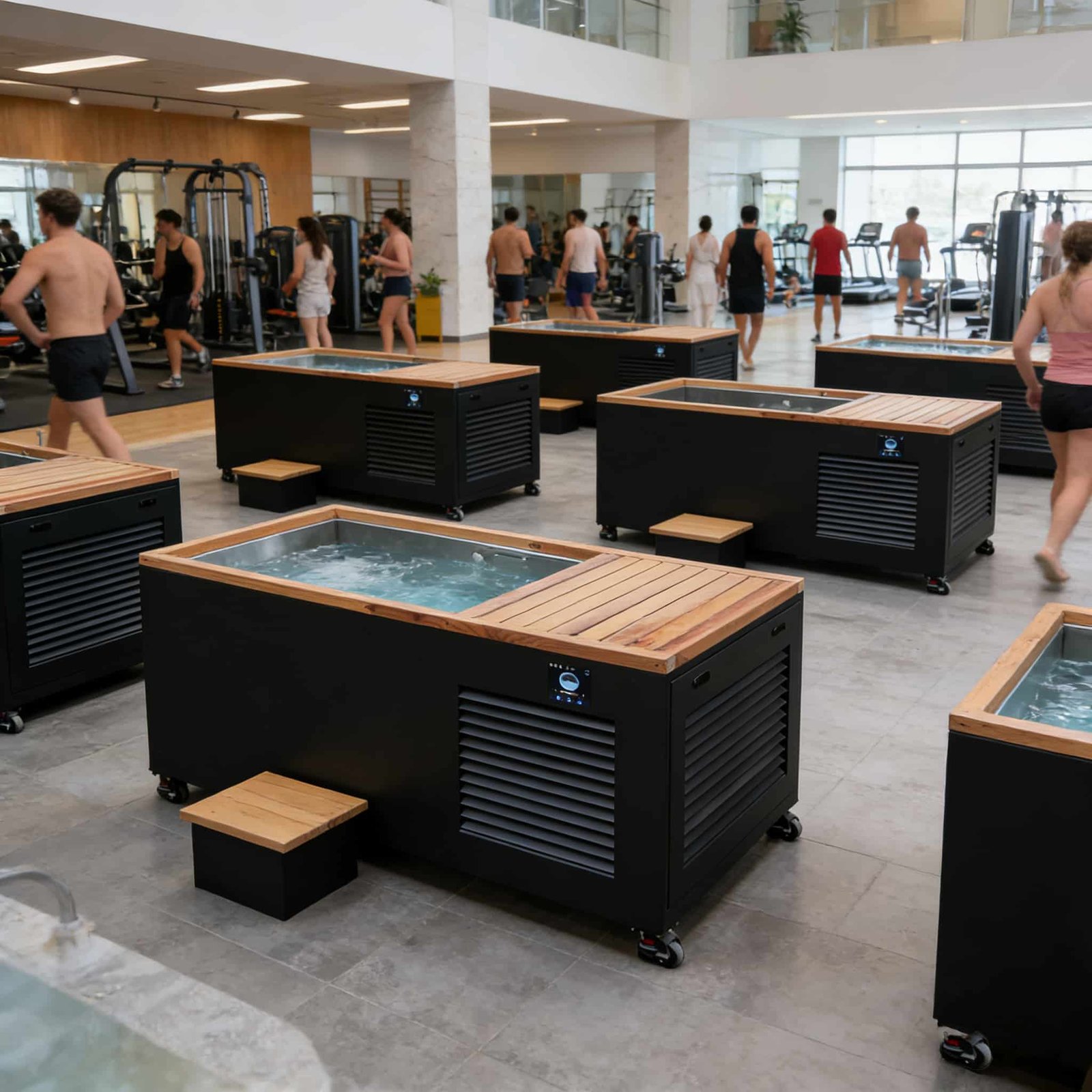
12 critical cold plunge CrossFit facility checks
| Check | Decision input | Release evidence |
|---|---|---|
| 1. Responsibility | Owner, operator, coach, cleaner and service boundaries | Named responsibility matrix |
| 2. User policy | Eligibility, access, supervision, occupancy and prohibited use | Approved facility policy |
| 3. Throughput | Peak users, immersion schedule, reset and cleaning windows | Capacity model |
| 4. Clinical boundary | Who may prescribe or modify any protocol? | Written non-clinical/clinical handoff |
| 5. Site | Filled load, access, drainage, condensation, slip and ventilation | Approved layout |
| 6. Electrical | Voltage, frequency, current, circuit, grounding and wet-area fit | Qualified installation record |
| 7. Water | Testing, treatment, filtration, cleaning and contamination response | Water-management plan and log |
| 8. Equipment | Volume, target, ambient, pull-down, heat load, flow and controls | Configuration specification |
| 9. Entry/exit | Steps, handholds, circulation, accessibility and emergency access | Site risk and access review |
| 10. Commissioning | Measured temperatures, flow condition, controls, leaks and records | Signed baseline and deviations |
| 11. Service | Lockout, support, spares, warranty and return-to-use authority | Maintenance/service procedure |
| 12. Business case | Actual adoption, uptime, cost and attributable revenue | Measured facility dataset |
1–2. Define responsibility and the user policy
Name the person who owns water quality, pre-opening checks, access control, logs, incident response, equipment maintenance and the decision to close or reopen the plunge. Coaches, front-desk staff, cleaners and external technicians should know their boundaries. A general “staff will handle it” statement creates gaps at shift changes.
The user policy should state membership or visitor eligibility, orientation requirement, hours, maximum simultaneous users, supervision level, prohibited behavior, personal-item and hygiene rules, entry/exit method, stop conditions, emergency communication and consequences for bypassing a lock or cover. Have qualified professionals review health-related eligibility and warnings. Do not ask equipment sales staff to write a clinical protocol.
3. Model peak throughput and recovery windows
Daily member count is not the design load. Record class schedule, expected adoption, peak arrivals after each class, simultaneous occupancy, planned immersion time set by the facility, transition time, cleaning or testing interruptions and hours available for temperature recovery. A single-user tub serving one person every fifteen minutes has a different operating pattern from an open-access two-person vessel.
Estimate heat added by incoming users and the environment, but do not invent a cooling result from horsepower. Request a selection under stated water volume, starting and target temperatures, ambient range, cover use, peak load, acceptable deviation and recovery time. The supplier should identify assumptions, and commissioning should test the approved scenario.
Use a capacity worksheet before requesting quotes
For every operating hour, list the class end time, expected eligible users, approved simultaneous occupancy, transition allowance, test/cleaning window and temperature-recovery window. Mark the most demanding consecutive classes. A cold plunge CrossFit design should be sized to a documented peak scenario, not a marketing estimate of total memberships.
| Worksheet field | Why it matters | Evidence source |
|---|---|---|
| Working volume | Sets the water mass the system must condition | Measured fill level, not maximum shell volume |
| Ambient range | Changes heat gain and equipment operating conditions | Site measurements and design weather |
| Peak users | Adds heat and contamination load | Class schedule plus conservative adoption scenario |
| Reset window | Limits time for temperature recovery, testing and cleaning | Approved operating workflow |
| Availability target | Defines acceptable downtime and redundancy need | Facility decision, not supplier assumption |
Ask suppliers to answer the same cold plunge CrossFit worksheet and identify what they cannot guarantee. If one bidder assumes a covered vessel at mild ambient temperature and another assumes an uncovered outdoor tub at peak use, their horsepower and price cannot be compared directly.
4. Keep the clinical boundary explicit
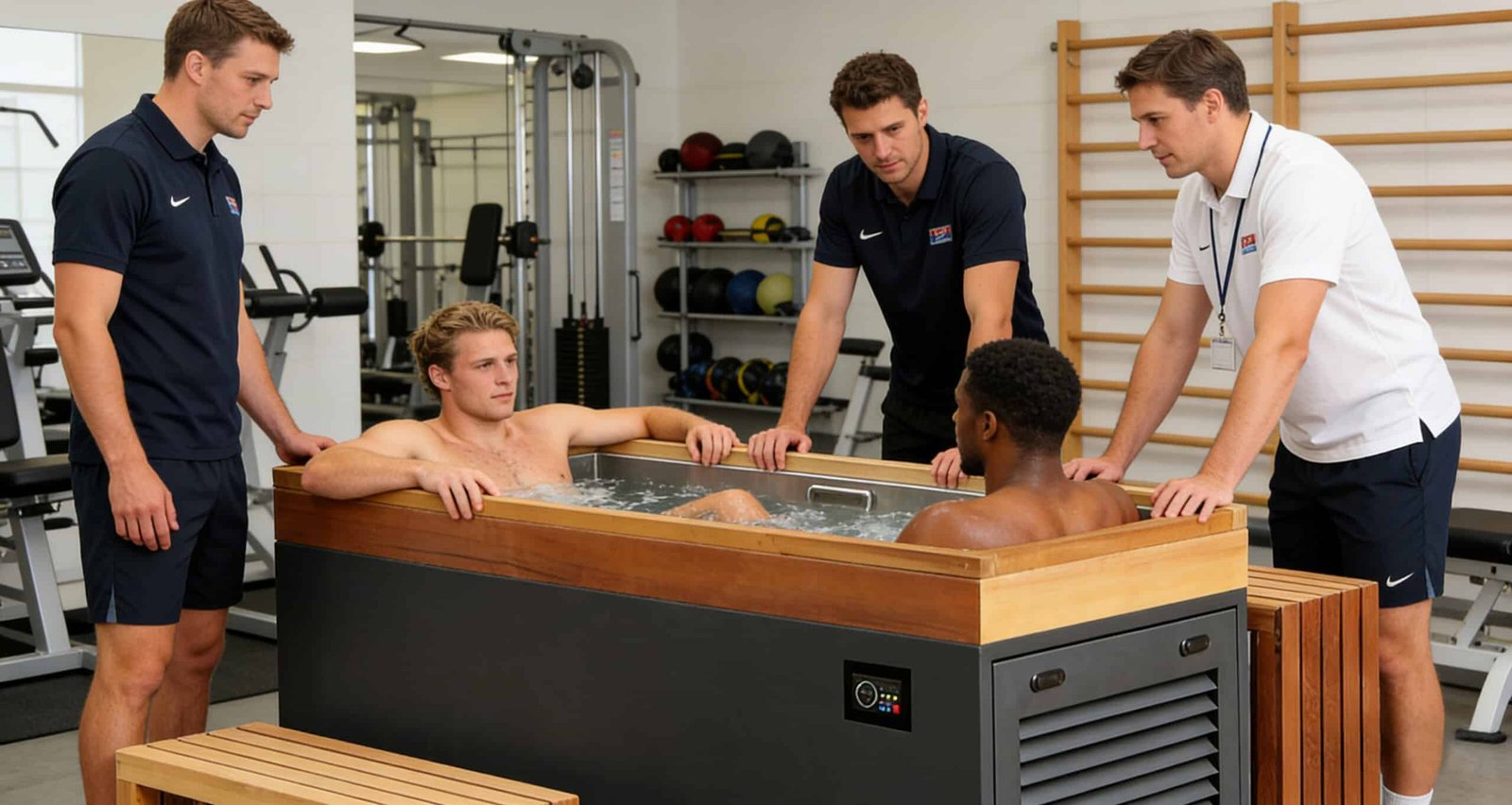
A cold plunge CrossFit amenity is not automatically a medical service, and an equipment guide cannot decide who should use cold water, at what temperature or for how long. Claims and operating language matter. Avoid promising injury treatment, faster healing, guaranteed recovery or performance gains unless a qualified team has established an appropriate evidence and regulatory basis.
If the facility partners with a licensed clinician, document who screens users, who sets and changes any protocol, how consent and health information are handled, what observations are recorded and how the coach-to-clinician handoff works. The equipment operator should not improvise a protocol because a member requests “colder” or cites an influencer.
The CDC/NIOSH overview of cold-related illness and immersion hypothermia provides general hazard context. It is not a sports-recovery protocol, but it reinforces why access, stop rules, observation and emergency planning deserve formal attention.
5. Design the wet-area layout and drainage
Verify delivery access, vessel dimensions, working water volume and total filled load. Assess the supporting surface, level, drainage, overflow route, condensation, slip resistance, lighting, ventilation, equipment clearances, hot-air discharge, hose protection, changing traffic, privacy, barriers, cover handling, cleaning access and technician access. Keep emergency and accessible routes clear.
Locate the plunge so a wet user does not cross lifting lanes, electrical cords or congested class traffic. Provide stable entry and exit appropriate to the approved users and site requirements. Accessibility obligations vary by facility and jurisdiction; include a competent accessibility review rather than assuming a movable step solves access.
6. Match the exact electrical configuration
Record model, voltage, frequency, current, plug or termination, grounding, circuit protection, dedicated-circuit requirement and all connected pumps or accessories. Have a qualified person assess equipment suitability and installation in the wet or damp environment. Do not use an adapter or extension cable simply because it makes the unit turn on.
For U.S. workplace context, OSHA’s general electrical standard addresses equipment suitability in damp or wet locations, and 1910.305 addresses wiring methods and wet-location receptacles. These references do not replace the locally applicable electrical, building or aquatic-facility rules.
7. Operate a documented water-management system
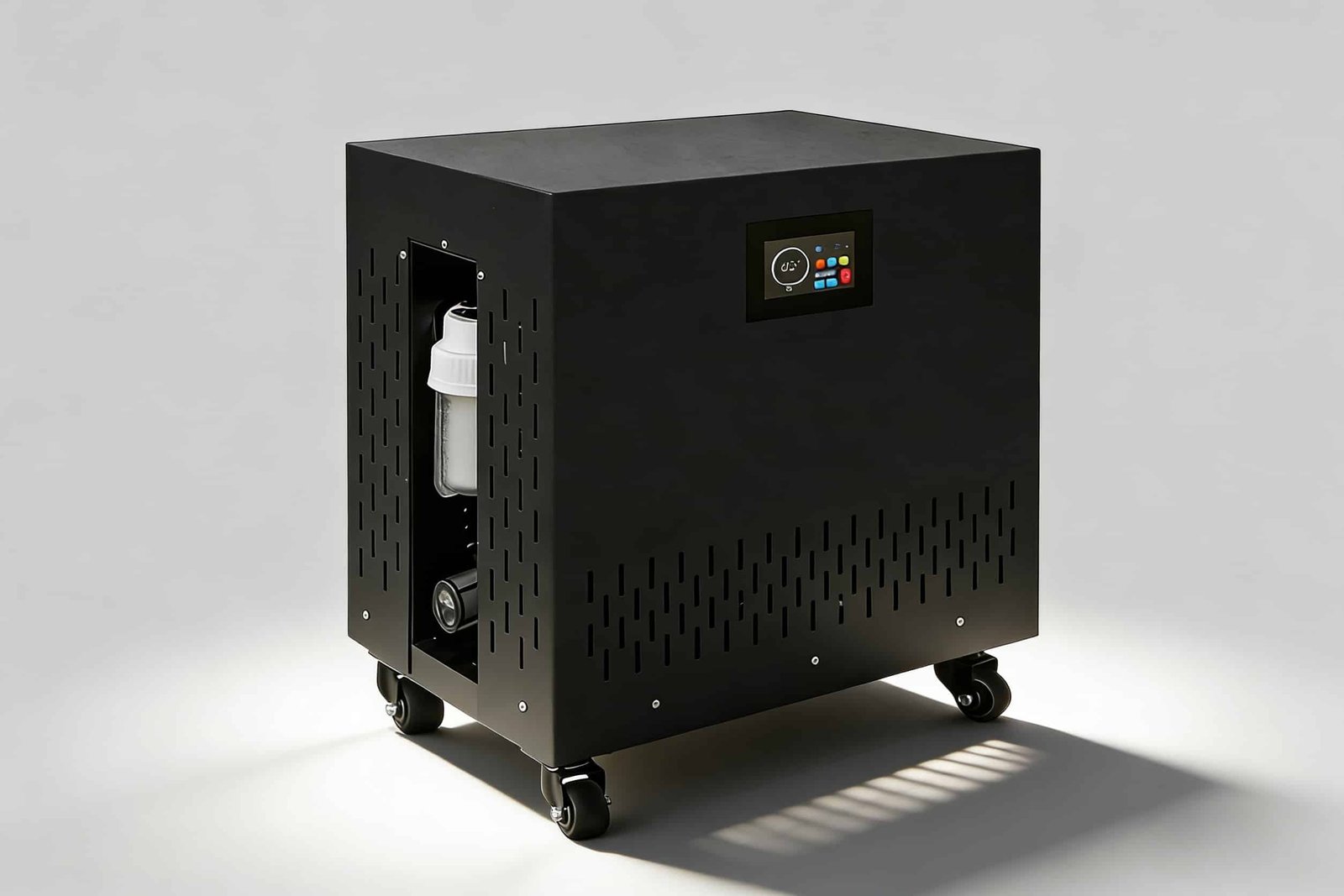
High turnover increases debris, perspiration, cosmetics and treatment demand. Define the water source, approved chemicals or treatment method, test equipment, target ranges set for the actual installation, test frequency, bather-load controls, filter service trigger, cleaning, water replacement, contamination response, chemical storage and staff training. Follow product compatibility limits.
The CDC’s aquatic-facility operating toolkit emphasizes trained operators, testing, accurate records, filtration/recirculation maintenance and incident procedures for public pools and hot tubs. A cold plunge may be treated differently by local rules, so use the toolkit as operational context and ask the responsible authority what applies.
Ozone, UV or a cold setpoint does not prove safe water. Keep treatment data with filter, flow and maintenance history. The filter owner guide explains flow-related checks, while the maintenance guide provides a condition-based record structure.
8–9. Control access, supervision, entry and emergencies
Use orientation, signage and physical access controls that match the facility policy. Instructions should cover occupancy, safe entry and exit, behavior, stop conditions, control-panel restrictions, what to do if flow or temperature appears abnormal, and how to summon staff. Lock and clearly mark the plunge when it is not released for use.
Define staff observation and emergency actions with qualified safety and medical input. Keep communication, first-aid resources and access for responders available. Record incidents and near misses, preserve equipment and water evidence, and conduct a formal review before reopening. Do not reset an alarm or resume operation merely to avoid disrupting a class.
Specify the complete cold plunge CrossFit water loop
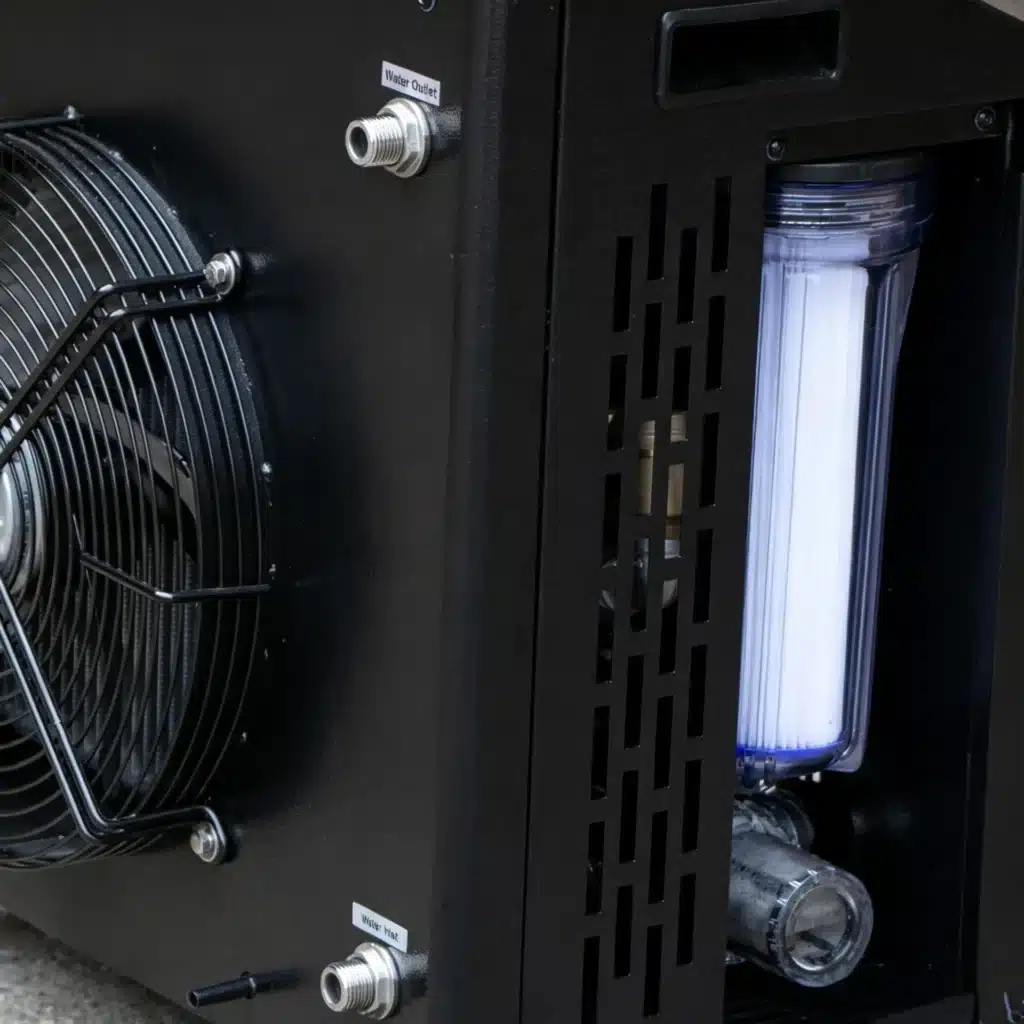
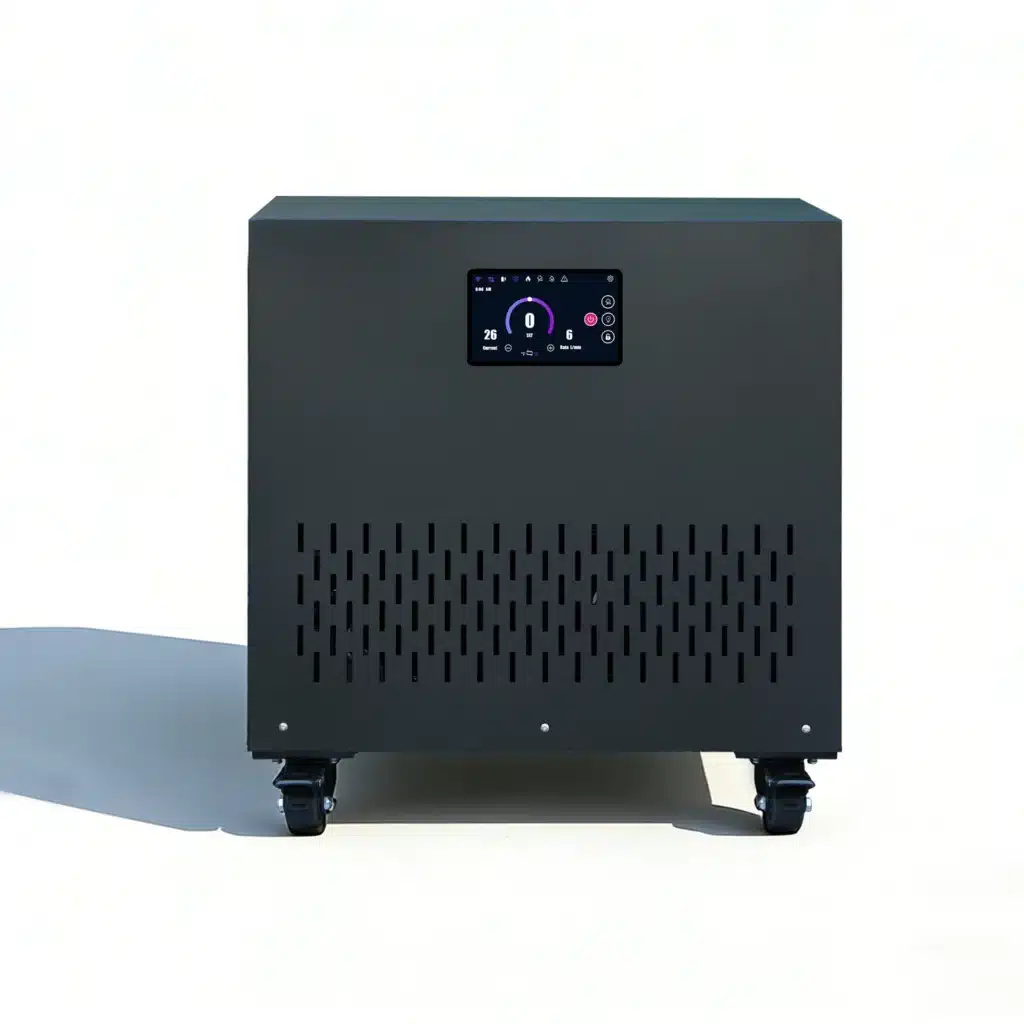
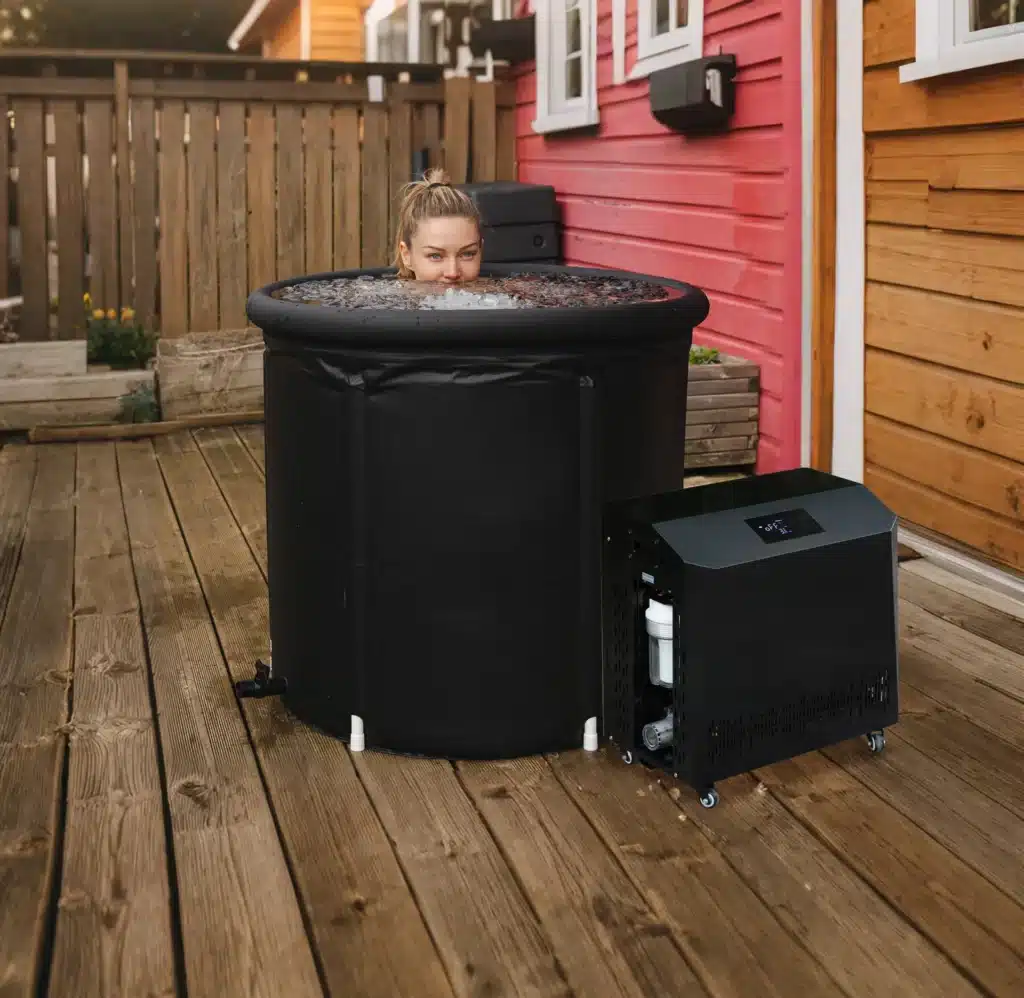
The configuration should identify the tub, working volume, chiller, pump, filtration, treatment, fittings, hose diameter and length, elevation, valves, drains, cover, controller, electrical variant and approved consumables. Request flow and temperature evidence under stated conditions plus clear boundaries for buyer-supplied components and installation.
Compare integrated and modular designs on service access, redundancy, sanitation, cleaning, parts, noise, weather protection and downtime. For a project-specific response, use the OEM chiller RFQ template; it prevents suppliers from quoting different assumptions under the same headline.
Use the cold plunge chiller uptime architecture guide when the CrossFit facility must compare N+1 capacity, duty/standby, quick-swap equipment or a repair-based recovery route.
Require a supplier acceptance package
For each cold plunge CrossFit proposal, request the controlled model and revision, scope of supply, dimensions and filled-weight inputs, electrical data, working-volume range, operating/ambient limits, water-loop diagram, flow requirements, approved treatment compatibility, controller functions, installation instructions, maintenance schedule, consumables, warranty, service boundary, spare parts, packaging and delivery conditions.
Attach measurable acceptance criteria to the purchase order. Identify visual and nameplate checks, water-loop integrity, flow evidence, controller operation, temperature-test conditions, alarms that can be safely demonstrated, accessories, manuals, labels and packing. Require dated records tied to the actual unit or lot. A showroom video is not the acceptance file for the shipped cold plunge CrossFit system.
If the supplier changes a pump, controller, refrigerant, electrical component, hose, filter, software revision or manufacturing location, require impact review before shipment. Determine whether previous tests, instructions, spares and destination documents still apply. Configuration control prevents a lower-cost substitution from becoming a facility problem after installation.
Use a pre-shipment inspection when project risk justifies it. Reconcile quantity, unit identity, visible condition, accessories, labels, documents, packaging and shipping marks with the approved order. The facility should receive enough evidence to prepare installation before delivery.
10. Commission under measured facility conditions
Record equipment identity, configuration, water volume, ambient condition, supply voltage where safely measured, starting and target temperatures, elapsed time, cover state, normal flow indication, filter state, controls, alarms that can be safely tested, leaks, sound, drainage and all deviations. Establish the normal baseline before member access.
Run an operational simulation that includes class turnover, testing, cleaning, entry/exit, staff handoff and a mock fault. Confirm the facility can close the plunge without disabling other operations. If a supplier claim cannot be reproduced, resolve the conditions or specification before release.
Train staff on a daily release sequence
A cold plunge CrossFit opening check should confirm that the system identity and operating status are correct; required water tests pass; water level and visible condition are acceptable; circulation/filter indication is normal; controller mode and displayed temperature are within the approved plan; no leak, damaged cable, unstable step or blocked drain is visible; instructions are present; and emergency communication works.
The closer should record final water and equipment condition, contamination or incident reports, cleaning, filter observations, lock/cover status and any maintenance request. Define whether the system circulates, shuts down or enters another mode after hours according to its instructions. Staff should never guess at a seasonal or overnight procedure.
Use scenario drills during onboarding: an unauthorized user, a person unable to exit, failed water result, no visible flow, temperature outside the release band, repeated trip, leak and after-hours alarm. For each event, staff must know the immediate stop action, who to contact, what evidence to preserve and who can release the cold plunge CrossFit system again.
Audit a sample of logs against actual conditions. A completed checkbox is not evidence if readings are copied or impossible. Trend missed checks and retrain before they become routine. This operating discipline matters more than a high feature count.
11. Set maintenance, lockout and service rules
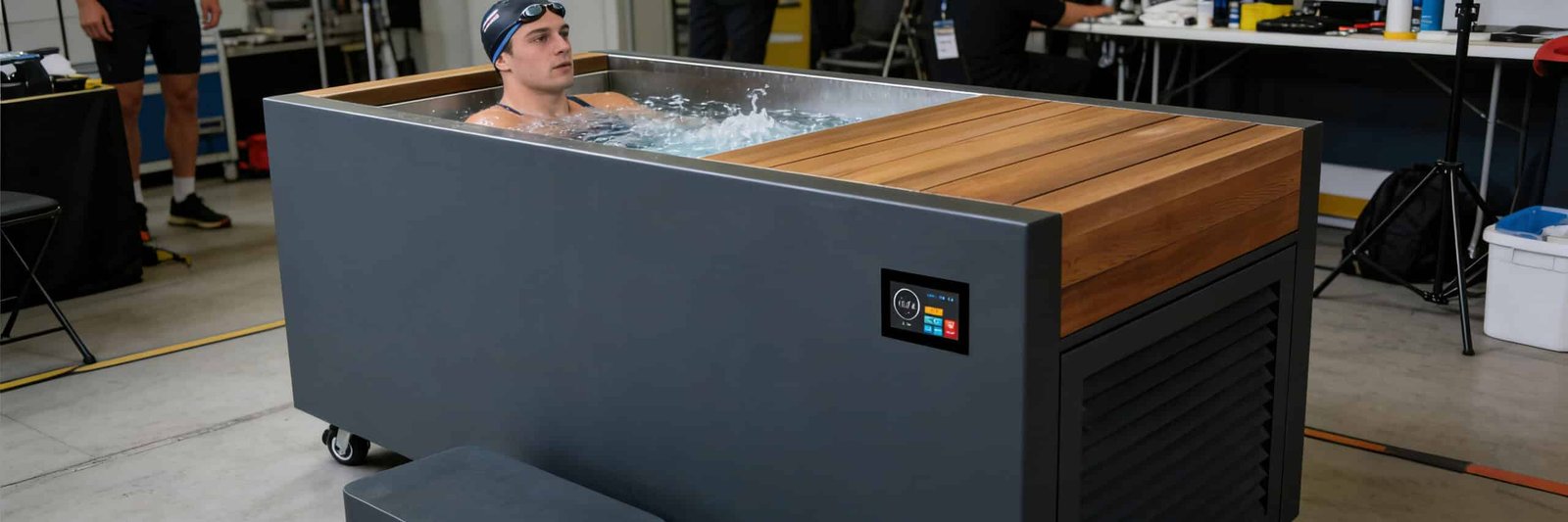
Create before-opening, condition-based, periodic and seasonal tasks from the model instructions and water plan. Record water level, test results, filter/flow condition, controller state, leaks, hoses, fittings, accessible airflow surfaces, surroundings, cover, entry components and abnormal sound. Define the qualified-service boundary for internal electrical, refrigerant and sealed-system work.
Stock justified consumables and critical spares, identify part numbers, and document warranty evidence and freight responsibility. Set a maximum response path based on operational needs, not an unsupported promise. A cold plunge CrossFit amenity with no lockout process can turn one small fault into repeated exposure and longer downtime.
12. Use measured adoption and cost—never fake ROI
Record the capital cost of equipment, delivery, site work, electrical, drainage, installation, commissioning and training. Track recurring electricity assumptions, water, treatment, filters, labor, cleaning, inspections, parts, service, insurance impact and downtime. Do not claim retention or membership growth unless the facility has a defensible attribution method.
| Metric | Useful calculation | Limitation |
|---|---|---|
| Adoption | Unique authorized users and sessions per available day | Use does not prove recovery benefit |
| Availability | Released hours minus lockout/service hours | Exclude scheduled closure transparently |
| Operating cost | Measured amenity-specific cost per month and per use | Allocation assumptions must be shown |
| Qualified demand | Prospect/member inquiries specifically citing the amenity | Inquiry is not retained revenue |
| Attributed contribution | Verified incremental contribution minus all incremental costs | Control for pricing, campaigns and seasonality |
Use a pilot gate when uncertainty is high. Define the trial period, safety and operating acceptance, adoption target, uptime target, maximum cost and stop criteria before launch. Continue, resize or remove the installation from evidence—not because competitors post dramatic videos.
Document the final cold plunge CrossFit decision with the measured conditions, limitations and responsible approver. If the program changes to supervised clinical use, re-open the clinical, insurance and operating review instead of silently expanding scope.
Schedule a formal cold plunge CrossFit review after the pilot and after any significant incident, equipment change or demand increase. Compare actual peak load with the original worksheet and revalidate the water, access, service and staffing plan.
Cold plunge CrossFit FAQ
What size chiller does a CrossFit gym need?
No horsepower answer is reliable without working volume, starting and target temperatures, ambient design range, insulation, cover use, peak users, flow condition and acceptable recovery time. Request a configuration-specific selection.
Can coaches prescribe a cold-plunge protocol?
Scope and licensing rules vary. The facility should obtain qualified clinical and legal guidance, define the coach’s boundary and avoid disease, injury-treatment or guaranteed-performance claims without an appropriate basis.
How often should the water be tested?
Use the approved water-management plan, equipment instructions, bather load, treatment system and local rules. Increase monitoring when use or contamination risk rises; a universal interval is not appropriate for every facility.
Should a gym choose one large tub or multiple smaller tubs?
Compare throughput, simultaneous occupancy policy, contamination isolation, entry/exit, floor load, cleaning, redundancy, supervision and downtime. Multiple vessels can add flexibility but also add water loops and operating tasks.
How should a gym measure whether the plunge is worthwhile?
Track safe availability, authorized adoption, operating cost, service time, qualified demand and defensibly attributed contribution. Do not convert general member enthusiasm into a fabricated retention or ROI claim.
Evidence note: This cold plunge CrossFit facility guide was technically and source reviewed on September 10, 2026. CDC/NIOSH and OSHA sources provide general hazard and U.S. workplace context; equipment instructions, facility professionals and applicable local rules remain controlling.
For a configuration review after facility approval, send project inputs. We will state assumptions and evidence requirements rather than promise ROI.