Cold plunge physical therapy equipment should be purchased only after the clinic defines the intended use and claims, clinical authority, patient-selection and consent process, protocol ownership, accessibility, water-management plan, wet-area safety, equipment specification, documentation, commissioning, maintenance and incident response. The chiller supplier should not invent a treatment protocol or promise clinical outcomes.
This page owns clinic procurement and governance. It does not prescribe cold-water immersion, diagnose or treat a condition, establish a standard of care, or replace the sports recovery facility and commercial gym owners. Licensed professionals and applicable regulators must control clinical decisions.
Table of Contents
Clinic procurement and governance map
Cold plunge physical therapy: quick answer
Begin with a written intended-use statement approved by the clinic, not a chiller model. Decide who has clinical authority, who may be considered, how consent and stop criteria are handled, what the clinic will and will not claim, and what records are required. Then specify the site, water system, electrical configuration, equipment performance, supplier evidence, commissioning tests, maintenance and incident process. Release cold plunge physical therapy equipment only after the complete pathway is approved.
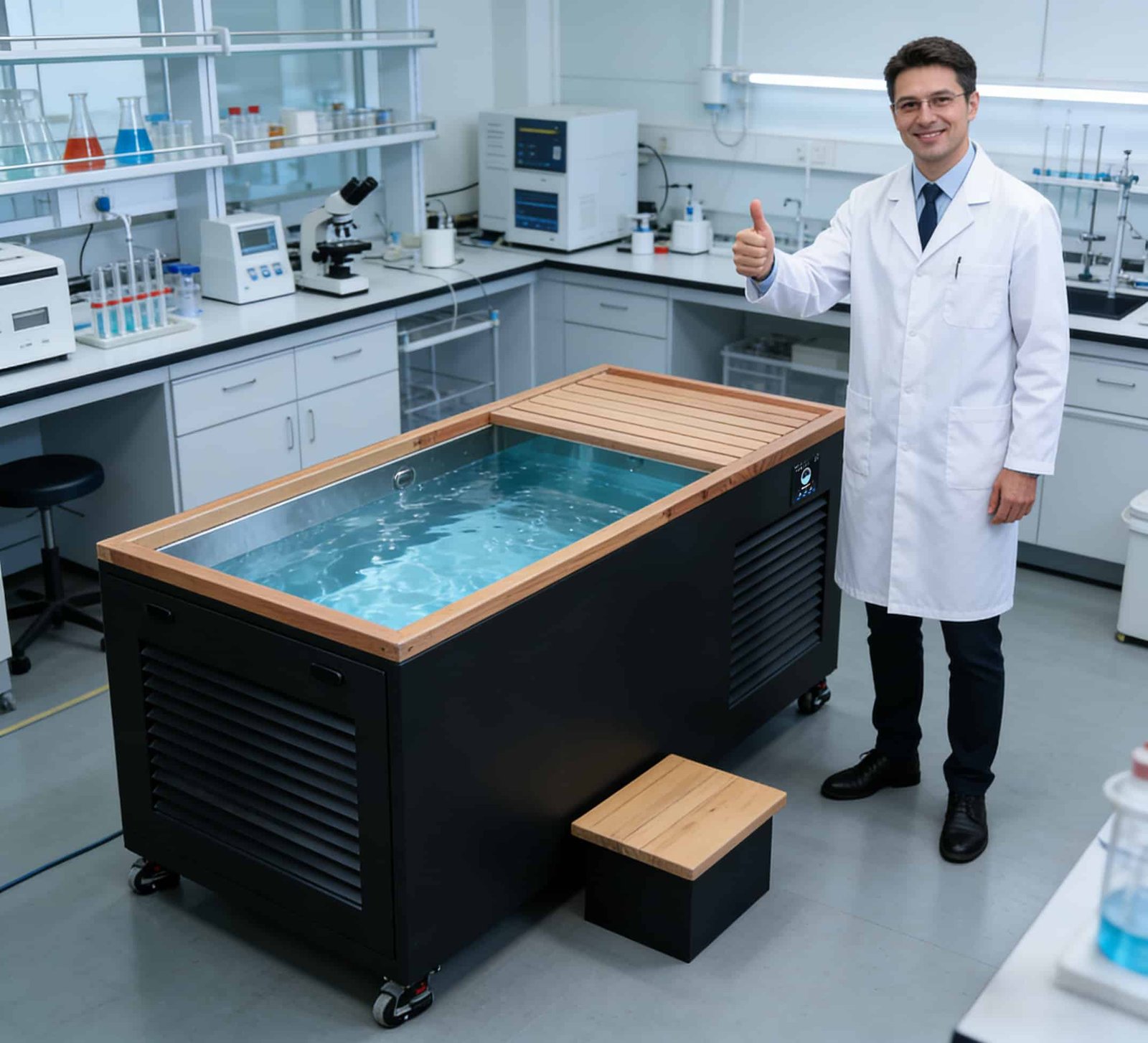
12 critical cold plunge physical therapy clinic checks
| Check | Clinic decision | Required record |
|---|---|---|
| 1. Intended use | What exactly will the clinic use and claim the system for? | Approved intended-use and claims statement |
| 2. Clinical authority | Who approves eligibility, protocol, monitoring and stop criteria? | Governance and scope matrix |
| 3. Patient pathway | How are screening, consent, privacy, observation and follow-up handled? | Clinic-approved workflow |
| 4. Accessibility/site | Can intended users safely reach, enter and exit the vessel? | Access and facility assessment |
| 5. Water control | Who tests, treats, filters, cleans and closes the system? | Water-management and infection-control plan |
| 6. Electrical | Does the exact supply and wet-area installation meet applicable requirements? | Qualified installation record |
| 7. Equipment | Can the configuration meet volume, temperature, ambient, flow and duty requirements? | Controlled system specification |
| 8. Supplier evidence | Do documents match the destination, model and configuration? | Traceable compliance/service file |
| 9. Commissioning | Did the installed system pass measured functional and operational checks? | Signed baseline and deviations |
| 10. Operation | What is recorded before, during and after use? | SOPs, logs and training records |
| 11. Service/incidents | Who locks out, reports, investigates and reopens the system? | Incident and service procedure |
| 12. Evidence/purchase | Is the proposed use supported and operationally justified? | Clinical and procurement approval |
1. Define intended use and claims before selecting hardware
Write who will use the system, in what setting, for what stated purpose, under whose authority and with what limitations. Separate general wellness language from diagnosis, cure, mitigation, treatment or prevention claims. Product naming, website copy, sales scripts, consent forms and clinician communications should not contradict the approved intended-use statement.
In the United States, the FDA’s page on medical device guidance explains that intended use and indications for use are central to the analysis. FDA’s general wellness guidance describes its policy for certain low-risk products. These resources do not classify an unspecified cold plunge or authorize a clinic claim; obtain advice for the exact product and use.
If the clinic changes from general wellness access to condition-specific cold plunge physical therapy, reassess regulatory, clinical, documentation, consent, staff-scope and insurance consequences before changing the website or workflow. A disclaimer cannot cure an unsupported intended use.
Create a claims-to-evidence matrix
List every statement the clinic intends to use in advertisements, website copy, referral materials, consent documents and staff scripts. For each cold plunge physical therapy claim, record the exact wording, intended audience, condition or wellness context, responsible clinical reviewer, supporting evidence, regulatory review, limitations and approval date. Remove statements that cannot pass the clinic’s review.
| Claim field | Question | Hold trigger |
|---|---|---|
| Purpose | Does the wording describe general wellness or a diagnosis/treatment purpose? | Purpose is ambiguous or conflicts across materials |
| Population | Who is the statement intended for? | The evidence does not match the intended population |
| Outcome | What measurable result is asserted? | The wording promises an unverified result |
| Evidence | What source and review support the exact statement? | Only supplier copy or testimonial is available |
| Authority | Who approved clinical and regulatory use? | No accountable approver is named |
Keep the matrix under change control. A new service package, diagnosis-specific landing page or referral partnership can alter the intended-use analysis even when the physical equipment is unchanged. Re-review cold plunge physical therapy materials before publication, not after a complaint.
2. Assign clinical and operating authority
Name the licensed professional or committee authorized to approve eligibility criteria, contraindication handling, protocol parameters, observation, stop criteria, adverse-event response and changes. Separately name the people responsible for water quality, equipment checks, cleaning, maintenance, service contact and facility closure. Clinical and equipment responsibilities can interact but should not be blurred.
Define what front-desk staff, assistants, therapists, cleaners and equipment technicians may and may not do. An equipment technician can document controller and flow behavior without deciding that a patient should continue. A clinician can stop a session without opening electrical or refrigerant sections. Train each role on the handoff.

3. Design the patient pathway without inventing a protocol
The clinic’s qualified team should determine screening, informed consent, privacy, assistance, monitoring, documentation, stop criteria and follow-up. The supplier should provide equipment operating limits, warnings, controls and maintenance information—not a copy-and-paste temperature or duration presented as universally therapeutic.
Map the pathway from arrival to exit: identity confirmation, clinical authorization, changing, hygiene step, safe approach, transfer or entry, observation, exit, drying, reassessment, cleaning and record completion. Define what happens if the patient feels unwell, cannot exit independently, exceeds an approved parameter, slips, contaminates the water or the equipment alarms.
Cold plunge physical therapy records should collect only information the clinic has approved and can protect. Do not place personal health details in an equipment maintenance log visible to unrelated staff. Link patient and equipment events through a controlled reference where needed.
4. Assess site access, transfer, load and drainage
Confirm delivery route, vessel dimensions, working volume, filled weight, support surface, room clearances, ventilation, lighting, privacy, changing area, slip resistance, hand support, transfer method, emergency access, drainage, overflow, condensation and the consequence of a leak. Include users with the mobility, balance, pain or assistance needs expected in the clinic’s approved pathway.
Accessibility and building obligations depend on the facility and jurisdiction. Do not assume a loose step stool or generic handrail makes the installation accessible. Have a competent professional evaluate routes, turning space, transfer equipment, staff assistance and emergency egress. Preserve manufacturer clearances and service access while solving entry needs.

5. Approve a water-management and infection-control plan
Define source water, working volume, patient load, approved treatment products, test method, target ranges set for the exact system, testing frequency, filter and circulation controls, cleaning, water-change triggers, contamination events, chemical storage, staff training and closure criteria. Confirm compatibility with all water-contact materials and clinician-approved patient considerations.
The CDC’s aquatic-facility operating toolkit emphasizes trained operators, water testing, accurate records, recirculation and filtration maintenance, bather-load control and incident procedures for public pools and hot tubs. It is not a cold plunge physical therapy protocol; use it as operational context and determine what clinic, health-care and local rules apply.
Cold temperature, clear appearance, ozone or UV does not establish acceptable water. Keep water results and corrective actions with the equipment’s flow/filter history. Use the cold plunge filter checklist for water-loop evidence, not as a substitute for the clinic’s infection-control plan.
6. Obtain qualified wet-area electrical review
Match the exact model’s voltage, frequency, current, plug or termination, grounding, circuit protection and connected accessories to the site. Identify disconnect, emergency shutoff and lockout methods. A qualified person should determine equipment suitability and installation requirements for the wet or damp environment.
For U.S. workplace context, OSHA’s general electrical standard addresses equipment in damp or wet locations. This is not a complete clinic-installation code analysis. Follow the authority having jurisdiction and do not use extension cords, improvised adapters or exposed routing to solve a specification mismatch.
7. Specify the complete equipment configuration
Provide working water volume, starting and target temperatures set by the clinic, ambient design range, required pull-down and hold performance, expected daily and peak use, cover state, vessel insulation, circulation and filtration design, treatment method, hose path, elevation, electrical supply, indoor/outdoor environment, noise limit and service constraints.
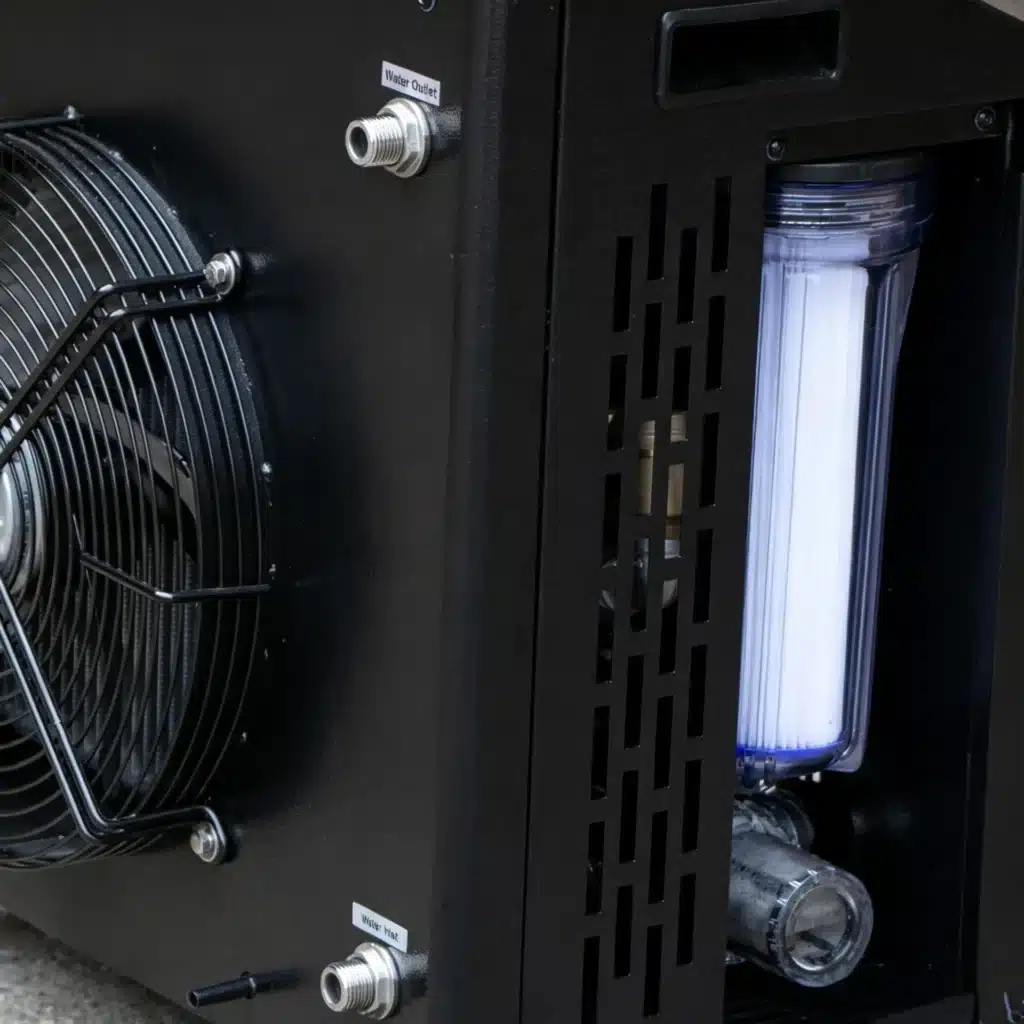
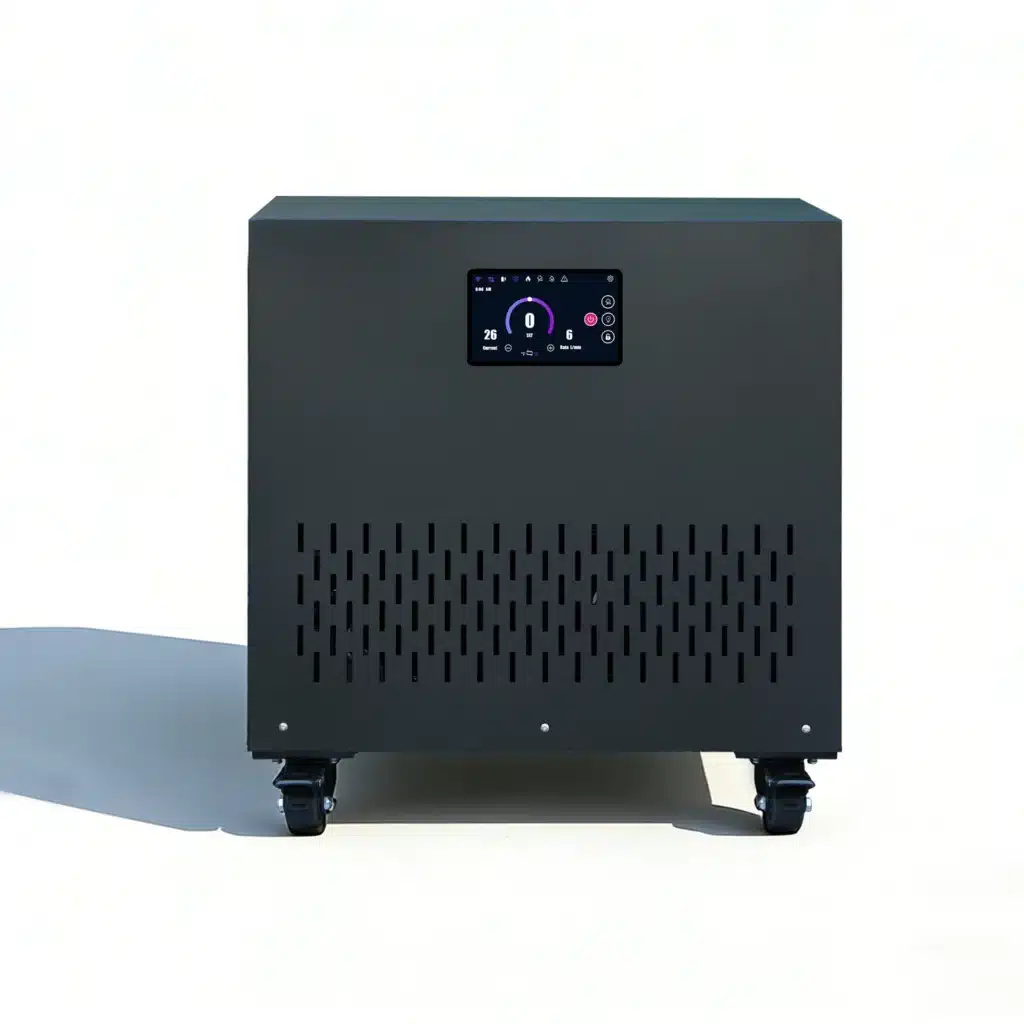
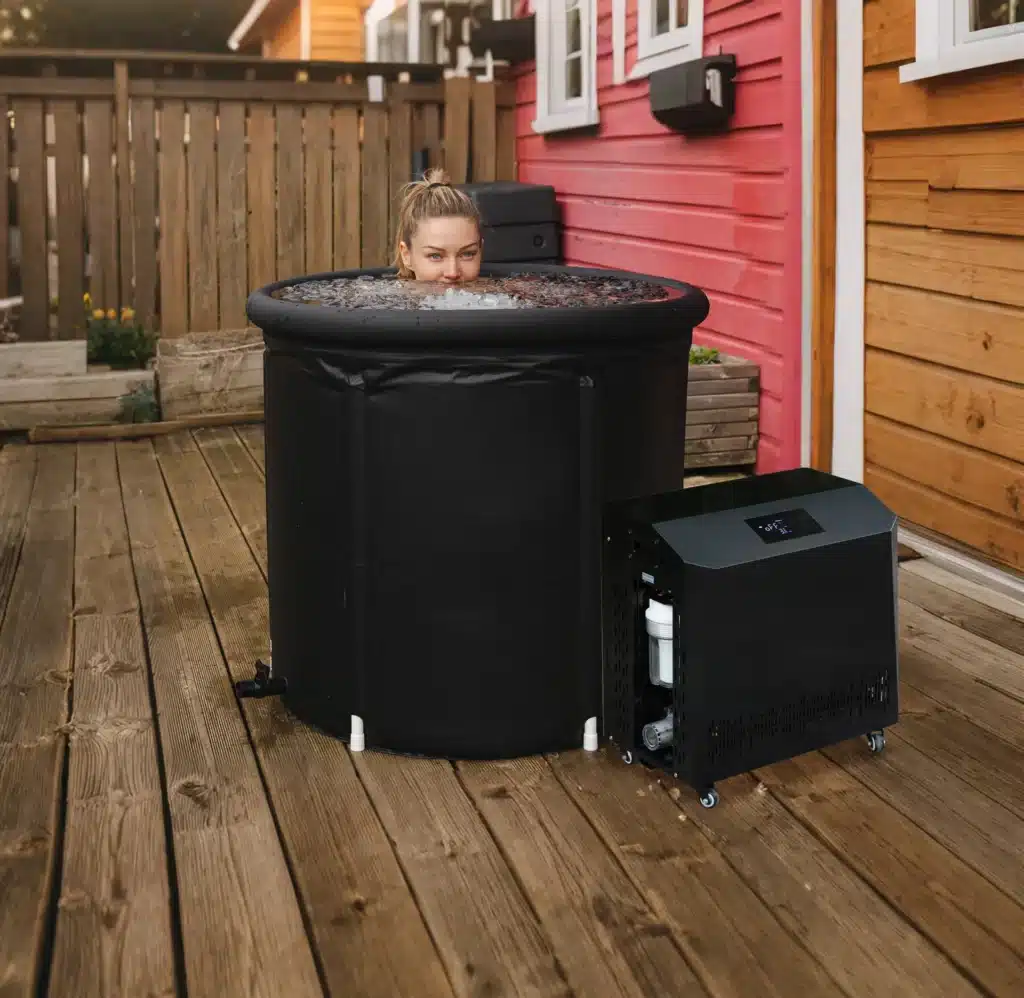
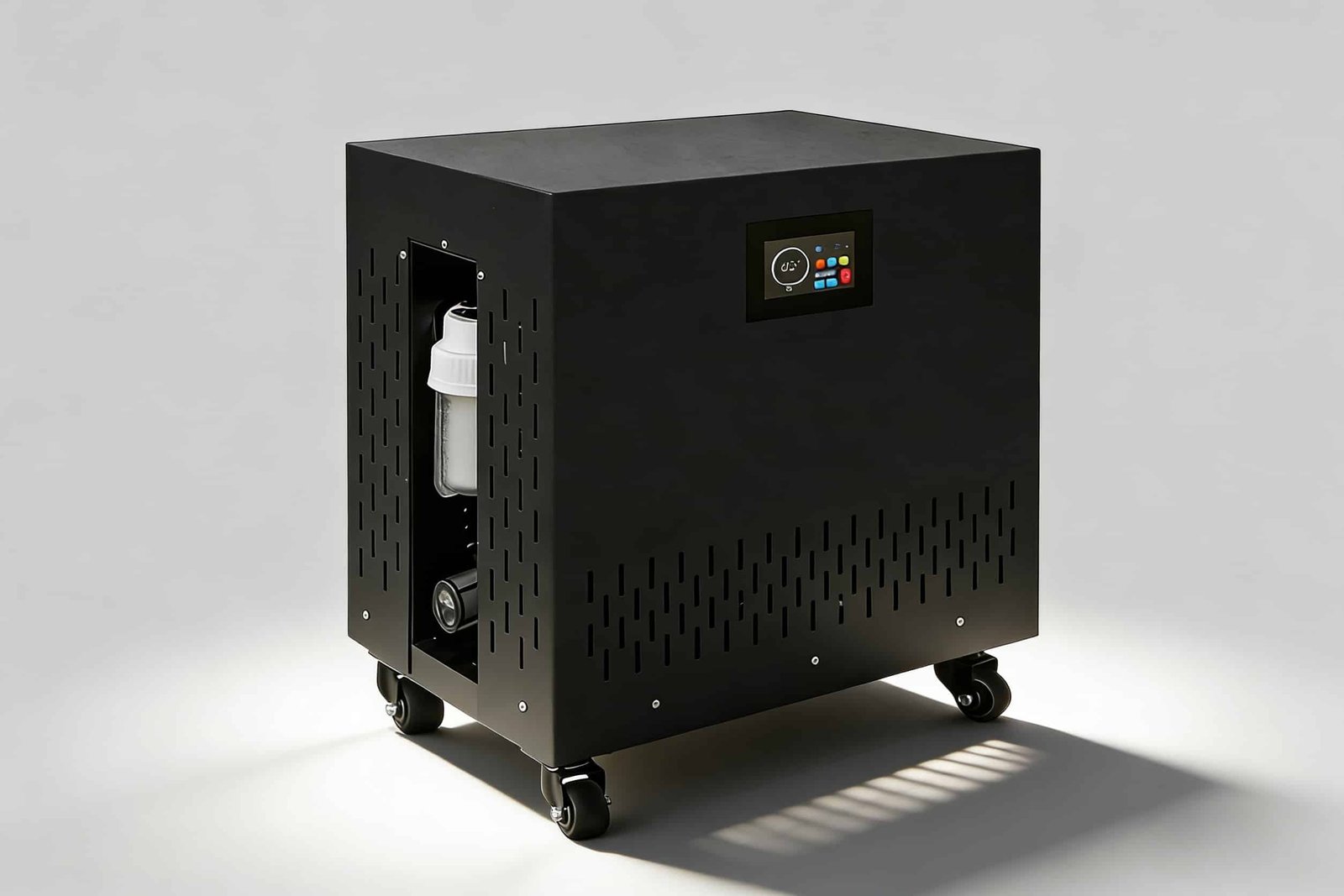
The controlled specification should identify tub, chiller, pump, filter, sanitation components, controller, software or remote access, fittings, hoses, valves, drains, cover, accessories, labels, manuals, spare parts and approved consumables. Horsepower alone is not a clinical or engineering selection. The OMNI commercial configuration page lists system inputs without assigning a therapy protocol.
8. Verify supplier documents against the exact model
Request the quotation and controlled specification, model/revision identity, electrical and refrigerant data, dimensions and weights, water-loop diagram, materials information relevant to cleaning/treatment compatibility, installation instructions, operating manual, warnings, maintenance schedule, consumables, service boundary, warranty, spare-parts list and destination-specific compliance evidence.
Check that reports, declarations and labels actually identify or validly cover the proposed configuration. A logo, component certificate or report for another voltage or model is not blanket evidence. Add document acceptance and missing-evidence questions to the OEM chiller RFQ.
Score proposals on evidence and operability
Use weighted requirements set by the clinic: intended-use fit, destination documentation, water-system design, cleaning compatibility, access, electrical/site fit, measured performance under stated conditions, control simplicity, alarms, service access, consumables, spares, warranty and supplier response. Mark mandatory gates separately from preferences so appearance cannot offset a missing safety or compliance item.
Require each supplier to list assumptions, exclusions and buyer-supplied interfaces. One proposal may include tub, circulation, filter and commissioning while another includes only a chiller. Normalize the scope before comparing price. Record capital, installation, water treatment, filters, staff time, maintenance, service, freight, downtime and planned replacement rather than relying on a claimed “clinical ROI.”
The cold plunge physical therapy procurement committee should document why a proposal passed, failed or requires clarification. Where evidence is incomplete, hold the decision or run an approved sample and acceptance test. A higher price does not prove clinical or technical suitability, and a lower price does not prove poor quality.
Before contract signature, reconcile the approved cold plunge physical therapy configuration with the intended-use statement and claims matrix. Any mismatch must return to clinical, regulatory and procurement review.
Make the contract identify document precedence, acceptance tests, deviation authority, change notification, installation responsibility, training, warranty evidence, response route and ownership of buyer-supplied interfaces. If a supplier provides only a component, do not let the contract imply that it validated the clinic’s complete water system or patient pathway.
Plan a controlled pilot before full cold plunge physical therapy rollout. Define the participating staff, non-negotiable clinical and operating gates, equipment uptime requirement, water-test acceptance, maximum unresolved events, review period and stop criteria. Expand only after authorized reviewers approve the evidence.
At the end of the pilot, reconcile observed workflow, assistance needs, cleaning time, water demand, equipment behavior, service response and documentation burden with the purchase assumptions. Record limitations and required changes. A successful technical test does not by itself establish a clinical outcome, and a positive patient comment does not replace the clinic’s evidence framework.
9. Commission both equipment and workflow
Record model, serial, revision, installed components, working volume, ambient condition, starting and target temperatures, elapsed time, cover state, flow indication, filter condition, controller functions, safely testable alarms, leaks, drainage, normal sound and all deviations. Do not hide a failed test by changing the acceptance limit after installation.
Then simulate the patient pathway with trained staff and no clinical exposure: authorization, access, control settings, entry assistance, observation position, exit assistance, cleaning, record handoff, lockout and emergency communication. Resolve conflicts between clinical workflow and equipment instructions before release. For supplier-side acceptance planning, use the factory acceptance test guide before shipment.
10. Keep separate clinical, water and equipment records
The clinical record should follow the clinic’s privacy and documentation policy. The water log should record tests, treatment, bather/patient load as authorized, cleaning, filter service, contamination events and release decisions. The equipment log should record identity, controller state, temperatures, flow/filter observations, leaks, maintenance, faults, service and parts.
Use a controlled reference to connect an incident across records without exposing unnecessary patient information. Trend repeated low-flow events, failed water tests, lockouts and complaints. A maintenance schedule should be condition- and model-based; the maintenance owner provides the equipment framework.
11. Define service, incident and return-to-use authority
Close and lock the system for contaminated water, a failed required test, damaged wiring, burning smell, repeated protective-device trip, uncontrolled leak, circulation failure, unstable access component, unresolved alarm or any condition outside the approved pathway. State who contacts clinical leadership, facilities, infection control, the supplier, service technician, insurer or regulator as applicable.
Internal electrical, refrigerant and sealed-system work belongs to qualified personnel. Keep model/serial data, photos, controller state, water/ambient readings, flow/filter evidence, maintenance history and actions taken for support. Only the named clinical and operating authorities should release the cold plunge physical therapy system after corrective action.
12. Make an evidence-led purchase decision
Separate three questions. First, does the clinic have a defensible clinical and regulatory basis for the intended use and claims? Second, can the facility safely and consistently operate the water, access and equipment system? Third, does the specific configuration meet the measured technical requirement and total ownership budget?
| Decision | Minimum condition |
|---|---|
| Proceed to quotation | Intended use, governance, site and operating responsibilities are defined |
| Proceed to purchase | Configuration, documents, service and acceptance criteria are approved |
| Proceed to patient access | Installation, commissioning, training, water plan and workflow all pass |
| Hold | Any clinical, regulatory, access, water, electrical or evidence gap remains |
Do not justify the purchase with an invented patient-volume increase, revenue figure, recovery promise or generic “clinical-grade” label. Record capital cost, site work, operation, consumables, staff time, service, downtime and replacement planning. The clinic’s governance and outcomes framework—not supplier marketing—decides whether the program is appropriate.
Cold plunge physical therapy FAQ
Is a cold plunge automatically a medical device?
No universal answer applies. Product design, intended use, indications, claims and jurisdiction matter. Define the exact use and obtain qualified regulatory advice rather than relying on a wellness label or disclaimer.
What temperature and duration should a clinic use?
This equipment guide does not prescribe either. The clinic’s authorized professionals must establish patient-specific eligibility, parameters, monitoring and stop criteria using applicable evidence, scope and standards.
Can the equipment supplier provide a therapy protocol?
The supplier should provide operating limits, warnings and equipment instructions. Clinical protocols, consent and patient decisions should remain with appropriately qualified and authorized clinic professionals.
What records should the clinic keep?
Maintain appropriately separated clinical, water-quality, cleaning, equipment, maintenance, service, training and incident records, linked through controlled references when necessary and protected under clinic policy.
What must pass before first patient use?
The intended-use and governance review, site/access assessment, water plan, electrical installation, configuration/document review, measured commissioning, staff training, patient pathway, emergency process and release authorization must all pass.
Evidence note: This cold plunge physical therapy procurement guide was clinically bounded and source reviewed on September 10, 2026. FDA, CDC and OSHA sources provide general U.S. regulatory, operating and workplace context; they do not approve a specific product, use or protocol.
After the clinic approves its intended use and operating requirements, send OMNI Ice the controlled equipment inputs. We will respond on configuration and testing—not prescribe treatment or promise outcomes.