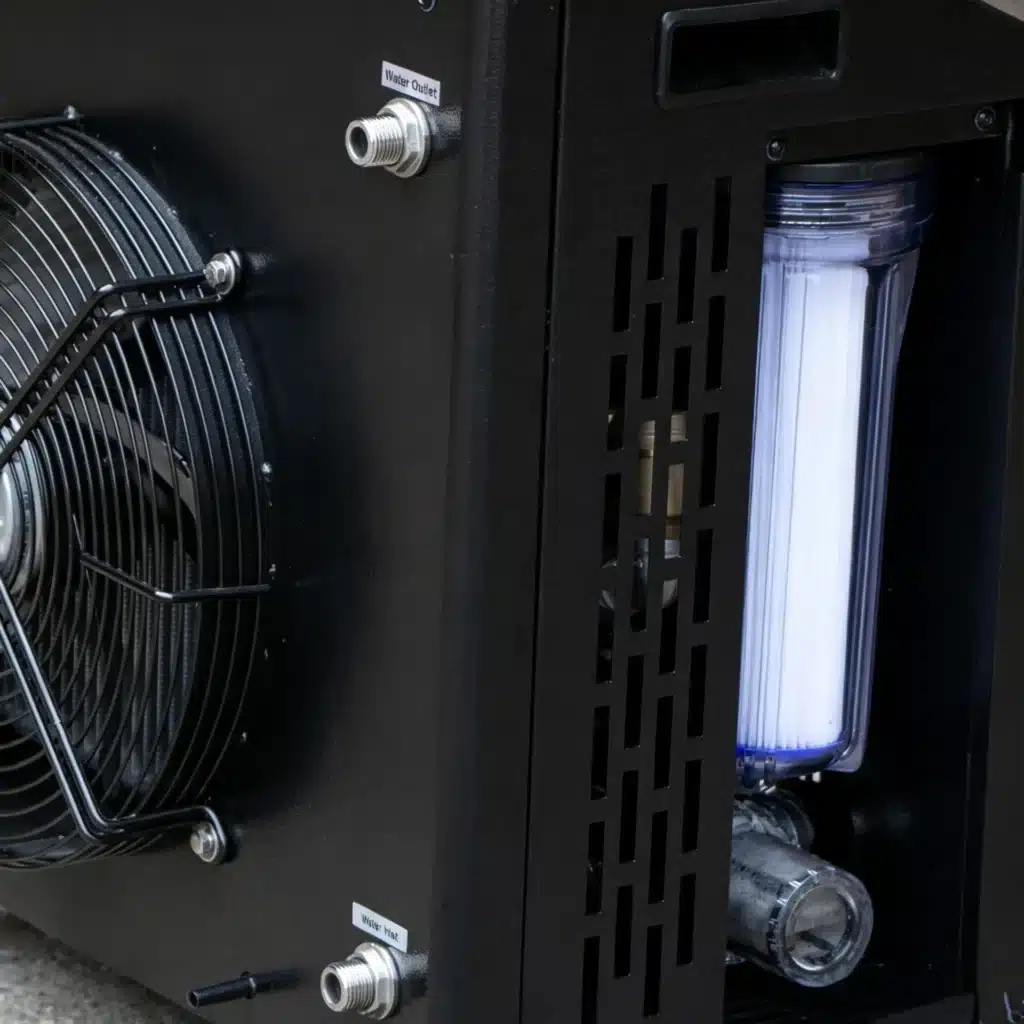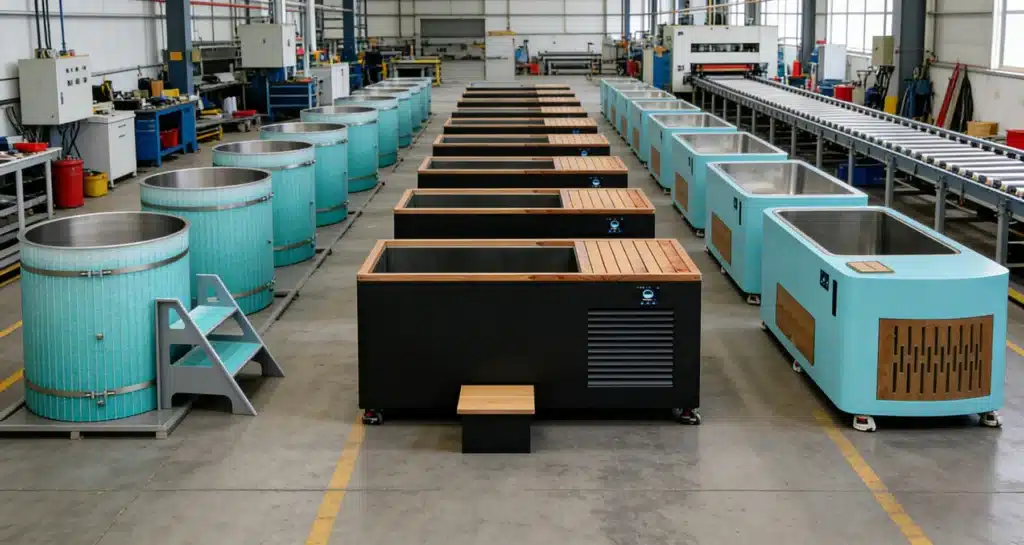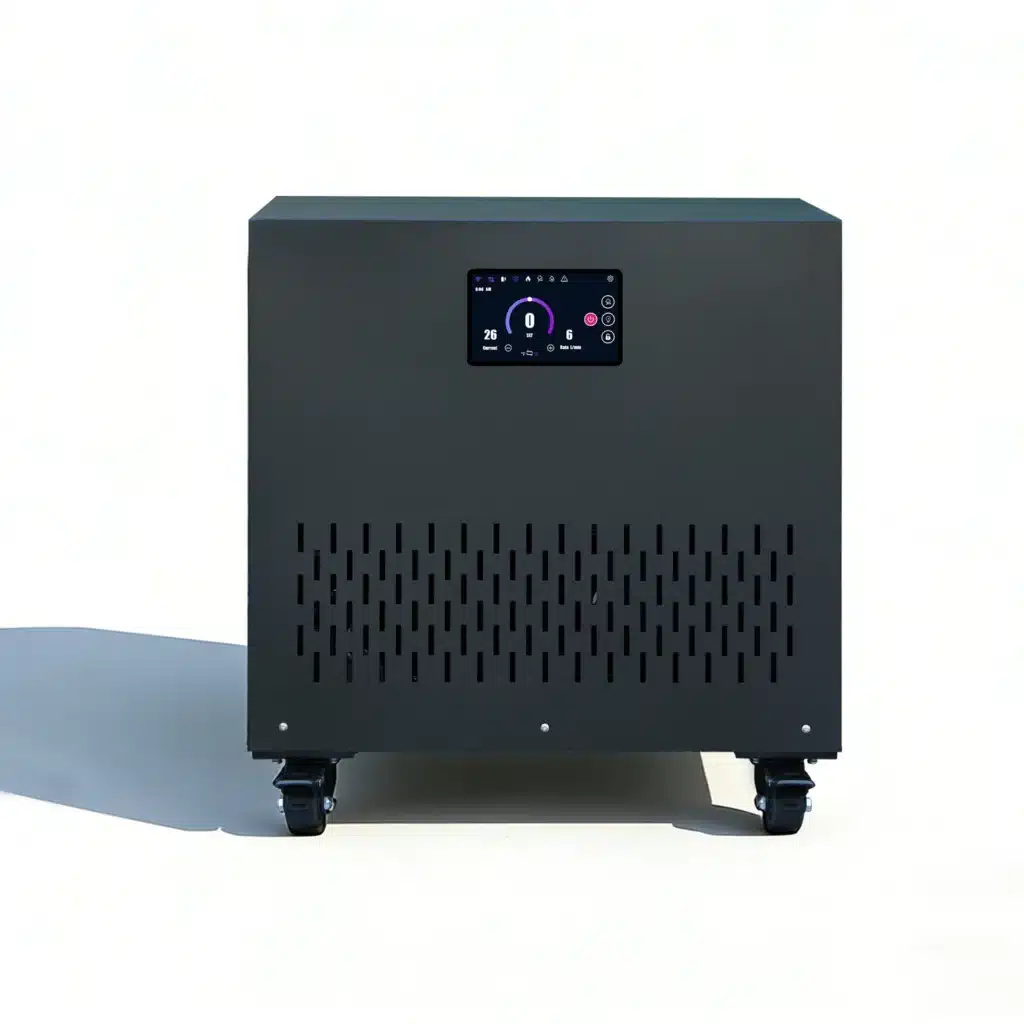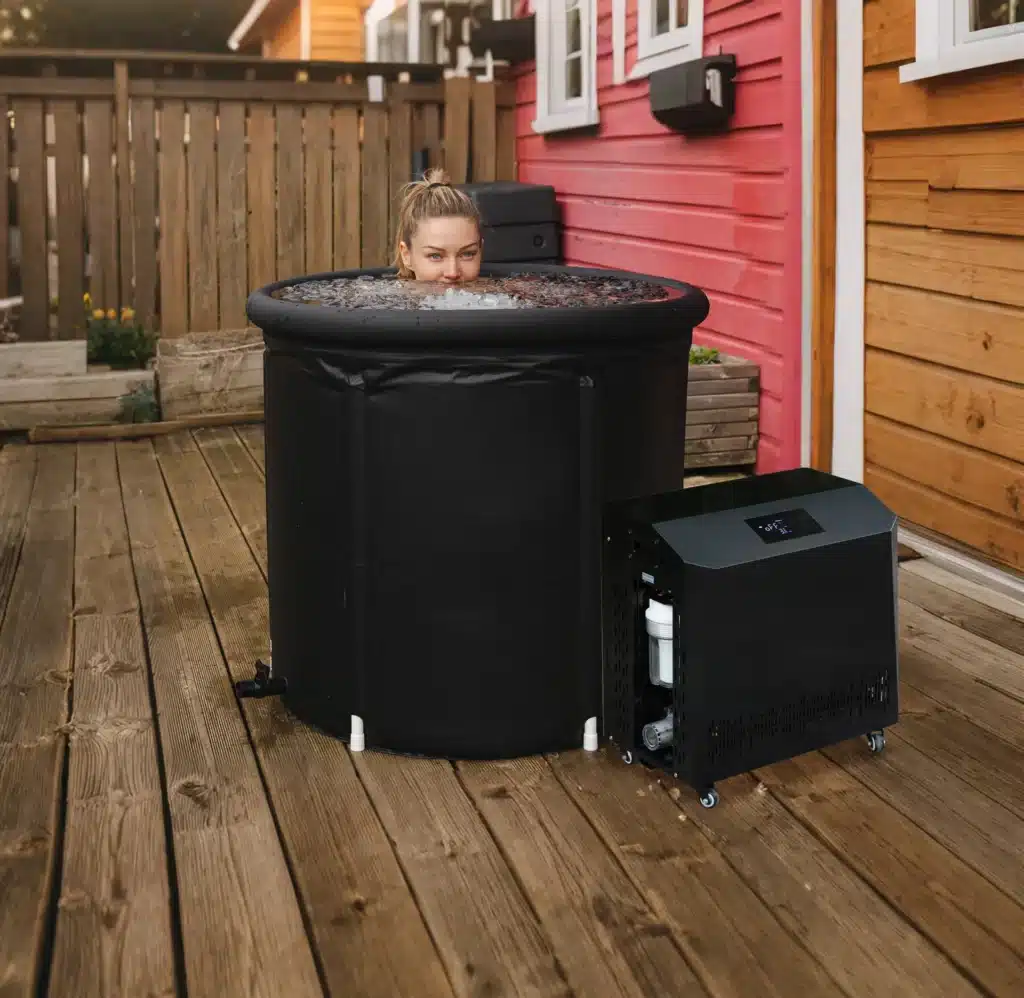
A Sun Home Cold Plunge should be compared by exact model, installation conditions, water capacity, cooling range, electrical requirements, sanitation design, maintenance burden, warranty terms and total ownership fit—not by brand name or a single temperature claim. Buyers who already own a suitable tub, need a serviceable modular layout or want an OEM configuration should compare a separate chiller-and-water-loop option before choosing an integrated or bundled system.
This is not a hands-on review of a purchased Sun Home unit. It is an evidence-led buyer comparison based on Sun Home’s official product, support and warranty pages reviewed on September 10, 2026. OMNI Ice manufactures cold-plunge chillers and therefore has a commercial interest in modular alternatives. Specifications, prices and terms can change; the seller’s current model-specific documents and written quotation control.
Table of Contents
Sun Home comparison map
Sun Home Cold Plunge alternatives: quick answer
First identify the exact Sun Home Cold Plunge model because Sun Home publishes more than one system and the specifications are not interchangeable. Then compare three architectures on the same requirements: a bundled inflatable tub and standalone chiller, an integrated hard-shell plunge, and a modular chiller connected to a compatible tub. The right answer depends on the site and service plan—not on which architecture looks most premium.

What Sun Home currently publishes
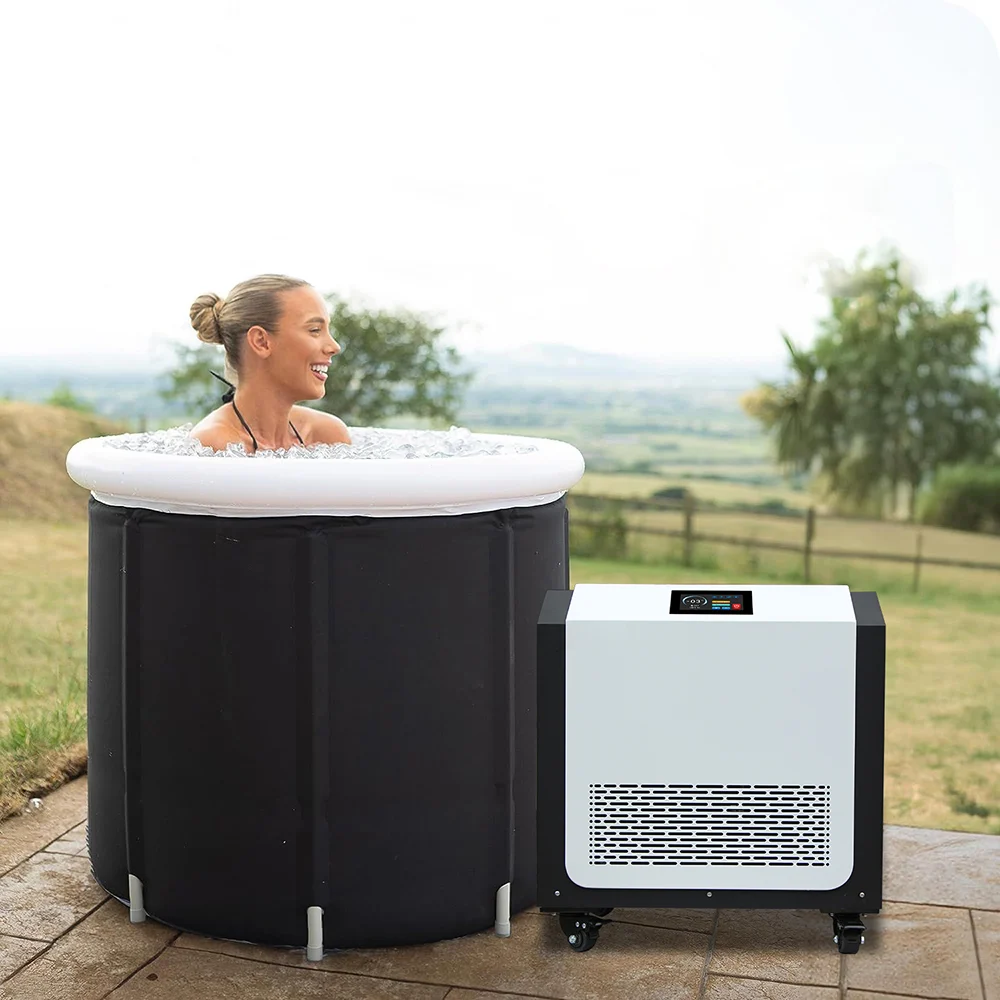
Sun Home’s official Cold Plunge Performance Series page describes horizontal and vertical inflatable configurations using the same standalone chiller. At the review date, that page published a 32°F–107°F temperature range, approximately 80–90 gallons of water, 110–120V/11A electrical data, ozone injection, 20-micron filtration and model-specific placement and maintenance instructions.
The official Sun Home Cold Plunge Pro product page presents a different hard-shell line with variant-dependent specifications. At the review date, the selected Pro information included a published 28°F minimum, 150-gallon capacity, ozone and UV sanitation, and a dedicated 15A GFCI circuit. Those figures should not be copied to a Performance Series unit or another Pro variant.
| Published line | Architecture | Facts to reconfirm before purchase |
|---|---|---|
| Performance Horizontal/Vertical | Inflatable tub plus standalone chiller | Orientation, current temperature range, water capacity, supply/circuit, clearance, filter and care intervals |
| Cold Plunge Pro variants | Integrated hard-shell system | Selected variant, dimensions, filled weight, minimum temperature, capacity, sanitation, circuit and access |
| Modular alternative | Separate compatible tub, chiller and specified water loop | Heat load, flow, fittings, filtration, treatment, controls, wet-area safety and responsibility for integration |
The purpose of this table is not to declare one winner. It prevents a common comparison error: treating “Sun Home Cold Plunge” as one fixed configuration and comparing it with an unspecified “1HP chiller.” Ask both sellers for dated, model-specific evidence under the same operating conditions.
What the published numbers do—and do not—prove
A listed minimum water temperature is a product specification, not a guarantee that every installation will reach that number within a particular time. The result can change with the selected variant, starting water temperature, water volume, ambient conditions, cover use, airflow, user heat load, supply voltage, flow and maintenance state. Ask for the conditions and tolerances behind any claim that matters to the purchase decision.
Likewise, an 80–90 gallon or 150 gallon published capacity describes a model, not the amount every user should fill in every situation. Operating level, displacement, access and overflow control still depend on the instructions and user. A sanitation feature describes installed equipment; it does not prove water quality without the required circulation, filtration, testing, treatment, cleaning and records.
Electrical shorthand also needs context. A standard plug does not remove the need to verify circuit capacity, GFCI protection, grounding, installation location and local requirements. “Indoor and outdoor” does not mean unrestricted exposure or operation in every temperature. Follow the exact Sun Home Cold Plunge manual for clearances, ambient limits, drainage, storage and freeze protection.
Finally, customer reviews and editorial awards can describe experiences but cannot replace project acceptance criteria. For a high-use or revenue-generating installation, request a configuration-specific quotation, written commercial terms, operating instructions and service route. Apply the same standard to a modular alternative so the comparison remains fair.
Three architectures, three responsibility boundaries
| Architecture | Usually attractive when | Questions the buyer still owns |
|---|---|---|
| Bundled inflatable | Portability, a complete matched package and a lower permanent-space commitment matter | Surface, filled weight, hose routing, airflow, weather limits, care interval and puncture risk |
| Integrated hard shell | A finished installation, built-in water treatment and minimal external plumbing are priorities | Delivery path, structural load, drainage, service access, site preparation and long-term parts route |
| Modular chiller plus tub | The tub already exists, the vessel is customized, components need independent service or an OEM brand needs configuration control | Compatibility, hydraulic design, filtration, sanitation, controls, installation and system-level commissioning |
A modular system is not automatically simpler. It creates flexibility by separating components, but someone must own the interfaces. A complete Sun Home Cold Plunge can reduce integration choices, yet the buyer still needs to verify site, electrical, drainage, weather, maintenance and warranty conditions.
10 critical Sun Home Cold Plunge buyer checks
| Check | Ask Sun Home | Ask a modular supplier |
|---|---|---|
| 1. Exact model | Model/variant, revision and included items | Chiller model, tub, pump, filter, controls and interfaces |
| 2. Intended use | Residential or commercial suitability and written terms | Duty cycle, user load and configuration responsibility |
| 3. Water conditions | Published capacity and approved operating range | Actual volume, setpoint, ambient range and pull-down target |
| 4. Cooling evidence | Conditions behind published performance | Selection record and test conditions for the proposed system |
| 5. Electrical | Voltage, frequency, current, plug, GFCI and dedicated-circuit needs | Same fields plus installed pump and accessories |
| 6. Site fit | Dimensions, filled weight, clearance, weather and delivery path | Component locations, hoses, elevation, airflow, drainage and access |
| 7. Water care | Filter, sanitation, test and water-change instructions | Specified filtration/treatment plan and material compatibility |
| 8. Maintenance | Operator tasks, intervals, consumables and shutdown steps | Maintenance boundary for every component |
| 9. Warranty/service | Current written terms for the exact use and location | Component and system responsibilities, spares and response route |
| 10. Total fit | Delivered scope, installation needs and exclusions | Integration, installation, commissioning and ownership cost |
1–2. Confirm the exact model and intended use
Record the full model and selected variant, not just Sun Home Cold Plunge. Request the current product page or spec sheet, manual revision, included items and written quotation. Confirm whether the quoted package includes the tub, chiller, cover, filters, hoses, steps, treatment equipment, delivery and any installation or commissioning service.
Tell the seller whether the unit will serve a home, hotel, gym, studio, clinic, short-term rental or another setting. Commercial or income-generating use can change warranty, maintenance, sanitation, risk assessment and local approval needs. Do not assume a residential product page establishes commercial suitability.
3–4. Compare performance under stated conditions
A minimum-temperature number does not tell you how quickly a system will cool the buyer’s water or hold a setpoint in the intended environment. Record water volume, starting and target temperatures, ambient temperature and humidity, cover use, insulation, heat added by users, operating hours, airflow, flow condition and acceptable pull-down time. Ask which conditions support any published claim.
For a modular alternative, do not select from horsepower alone. The system needs a heat-load and hydraulic fit. The home cold plunge chiller guide explains the selection inputs, while the water chiller and heater guide covers projects that genuinely require both modes.
5–6. Verify electrical and physical site fit
Match the model’s voltage, frequency, current, plug, grounding, GFCI and dedicated-circuit instructions to the destination. Have a qualified person assess the wet-area installation and local code requirements. Avoid extension-cord assumptions, shared overloaded circuits and placements where drainage or condensation can reach electrical equipment.
Check delivery width and turning space, installed footprint, filled weight and supporting surface, access steps, safe entry, drain route, ventilation clearance, discharge-air recirculation, direct sun, rain and freezing exposure. A Sun Home Cold Plunge manual may set model-specific distances and ambient limits; a modular supplier must state comparable requirements for each component.

7–8. Compare water care and maintenance as a system
Identify mechanical filtration, sanitation features, approved treatment products, testing method, cleaning and water-change instructions, consumables, service intervals and material restrictions. Ozone or UV, where included, does not eliminate filtration, water testing, cleaning or operating procedures. A commercial site may have additional local public-health requirements.
Ask what the operator must do after use, weekly, conditionally, seasonally and before storage. Confirm filter identifiers, availability and replacement method; freeze protection; drain and flush procedures; accessible cleaning; and the threshold for qualified service. Compare time and consumable cost, not only feature labels. The maintenance owner guide provides a record-based framework.
9. Read the current warranty and service documents
Sun Home’s official warranty information page states, at the review date, a one-year residential limited warranty against manufacturing defects for the Sun Home Cold Plunge Pro and Sun Home Cold Plunge, with extended warranties available. The page also says commercial buyers receive separate commercial terms at the point of sale and describes exclusions and post-delivery labor or shipping responsibilities. Confirm which terms and effective date apply to the exact order.
For every alternative, request the same fields: coverage period and start date; residential/commercial scope; covered parts; labor, travel and freight responsibility; exclusions; required maintenance records; claim evidence; response channel; remote diagnosis; replacement-part availability; and remedies. If different online pages, manuals or quotations conflict, obtain written clarification before purchase.
Model three ownership and failure scenarios
A comparison should include more than the purchase day. Model a normal-use year, a high-ambient or high-user-load period, and one service event. For each scenario, list who tests water, changes filters, cleans accessible parts, winterizes the system, diagnoses low flow, removes panels, handles refrigerant work, pays freight, provides replacement parts and authorizes return to service.
| Scenario | Sun Home Cold Plunge questions | Modular-system questions |
|---|---|---|
| Normal operation | Which consumables, intervals, water tests and shutdown steps apply to the exact model? | Which party owns the tub, chiller, pump, filter and treatment schedule? |
| Performance complaint | Which readings, photos, controller information and maintenance records does support require? | Who determines whether heat load, flow, installation or a component caused the symptom? |
| Component failure | Can the failed part be serviced in place, and who pays labor, travel and freight? | Can one component be isolated and replaced without returning the full system? |
| Relocation/storage | What drain, flush, transport, upright-rest and restart instructions apply? | How are each component and all water lines drained, protected and recommissioned? |
Request written answers before buying if downtime matters. An integrated system can offer one support route, but repair may depend on access to proprietary parts and the seller’s process. A modular system can allow component-level replacement, but disputes are possible if tub, hydraulic design, electrical work and chiller came from different parties. The contract and commissioning record should close that gap.
Total ownership cost should include the delivered product, required site work, circuit work, drainage, installation, commissioning, electricity assumptions, water treatment, filters, cleaning, seasonal protection, expected spare parts, service labor, freight and downtime. Do not copy a universal daily-energy or maintenance-cost claim into a Sun Home Cold Plunge decision; climate, setpoint, insulation, operating mode and local rates materially change the result.
For a business installation, add an operational release plan. Name the person responsible for daily checks, water records, incident response, user instructions and removing the plunge from service. Define the measurable condition that triggers filter service, water replacement, technical support or closure. Keep the model, serial number, manual revision, commissioning readings, treatment record and support history together so a future operator does not have to reconstruct the system from emails.
For a home installation, the record can be simpler but should still identify the circuit, drain route, approved treatment and consumables, freeze or storage procedure, and emergency shutoff. These controls are relevant whether the buyer selects a Sun Home Cold Plunge or a modular alternative. Product convenience does not remove the owner’s responsibility to operate the installed system according to its instructions.

10. Choose by project fit, not a universal winner
| If this is the priority | Architecture to investigate first | Evidence still required |
|---|---|---|
| A matched, portable package | Bundled inflatable Sun Home Cold Plunge or equivalent | Exact model, placement, electrical, care and written warranty |
| A finished hard-shell installation | Integrated plunge | Delivery/structural plan, service access, sanitation and variant-specific terms |
| Keep an existing compatible tub | Modular chiller and water loop | Vessel ports, flow, heat load, filtration, treatment and safe installation |
| Custom shape, finish or brand | Engineered modular or OEM system | Controlled specification, sample, test, inspection and change control |
| Independent component service | Modular system | Isolation, access, spare parts and clear component/system warranties |
There is no honest blanket answer that a Sun Home Cold Plunge or an OMNI Ice alternative is “best.” A complete package may reduce integration work; a modular system may improve configuration flexibility and service access. Either can fail the project if its electrical supply, heat load, water treatment, site, duty cycle or responsibility boundary is wrong.
Send one comparison RFQ to every supplier
For an apples-to-apples response, send: destination country; residential or commercial use; indoor/outdoor environment; vessel model, dimensions and working volume; starting and target water temperatures; ambient design range; pull-down and hold requirement; daily user load; electrical supply; preferred architecture; filtration and sanitation needs; hose distance/elevation for modular systems; installation constraints; delivery postcode; quantity; required documents; warranty expectations; and target commissioning date.
Ask the supplier to mark every assumption, exclusion and buyer-supplied item. For an OMNI Ice modular or OEM option, start with the nine-input RFQ template and request a configuration-specific answer. For an existing bathtub conversion, first use the bathtub compatibility checklist.
Sun Home Cold Plunge FAQ
Is this a hands-on Sun Home Cold Plunge review?
No. This is a disclosed buyer comparison based on official manufacturer pages reviewed on September 10, 2026. We did not purchase and independently laboratory-test a Sun Home unit for this article.
What is the main alternative to a Sun Home Cold Plunge?
The main architectural alternative is a modular system: a compatible tub connected to a separately specified chiller, pump, filter and sanitation plan. It offers flexibility but requires clear responsibility for integration and commissioning.
Can I connect a chiller to my existing tub?
Sometimes, but compatibility must be checked. Confirm vessel material and condition, ports or reversible plumbing route, working volume, flow, fittings, drainage, filtration, treatment, wet-area electrical safety, condensation and commissioning.
Should I compare cold plunge systems by horsepower?
No. Horsepower alone does not define delivered cooling. Compare performance under stated water volume, starting/target temperatures, ambient conditions, flow, insulation, cover use, heat load and acceptable pull-down time.
What should I verify immediately before ordering?
Verify the exact model and revision, included scope, current specifications, manual, site and circuit requirements, water-care plan, commercial/residential suitability, delivery needs, warranty terms, return conditions, service route and all quotation assumptions.
Evidence note: Official Sun Home product and warranty pages were checked on September 10, 2026. This article avoids current-price comparisons because promotions and configurations change. Reconfirm all facts against the exact model’s current quotation, specification, manual and written terms.
Comparing a Sun Home Cold Plunge with a modular system? Send OMNI Ice the ten RFQ inputs above. We will state the proposed configuration, operating assumptions, buyer-supplied interfaces and evidence needed before release.