Leo

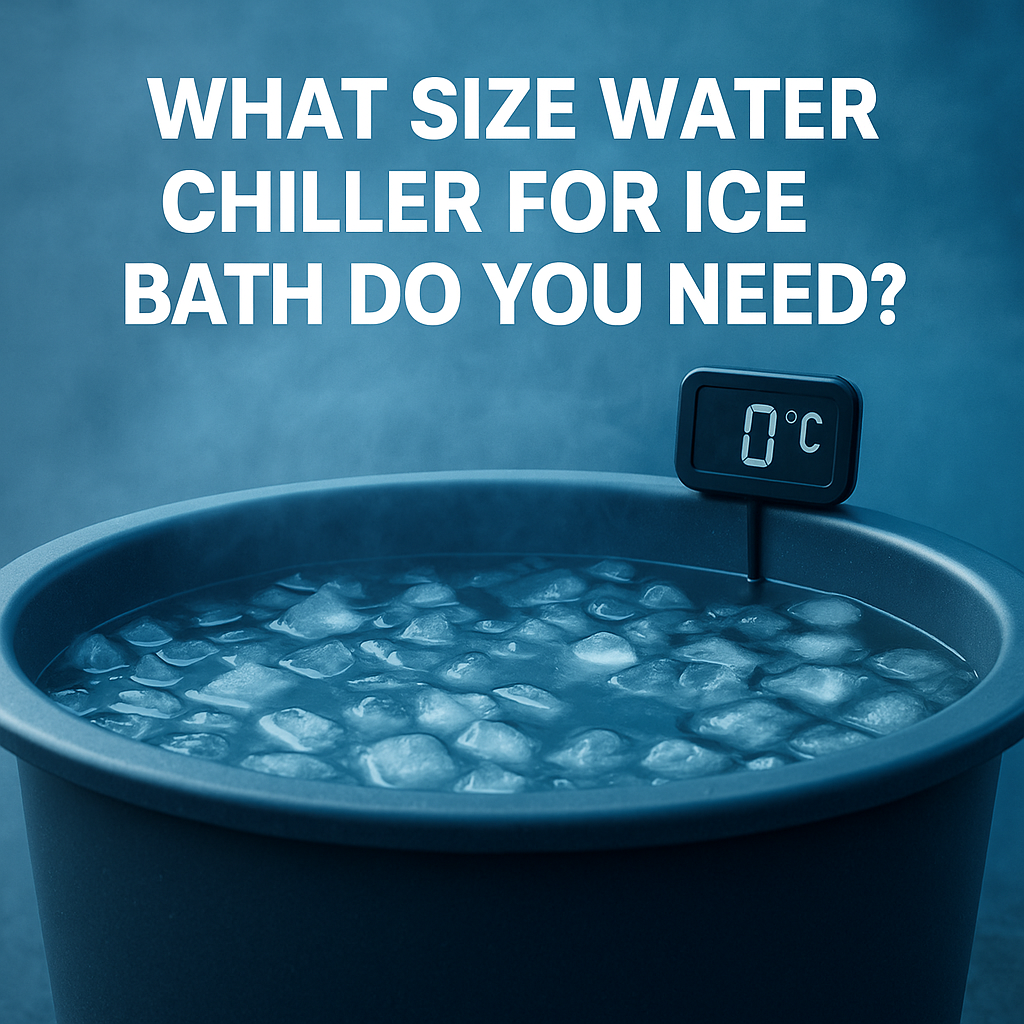
Cold plunge tub filled with ice cubes and a thermometer showing 0°C, illustrating what size water chiller for ice bath is needed

What Size Water Chiller for Ice Bath Do You Need? (Complete Guide)

What Size Water Chiller for Ice Bath Do You Need? (Complete Guide) Choosing the right water chiller size for an ice bath is less about the physical dimensions of the machine and more about cooling power, commonly expressed as horsepower (HP). When people search “what size water chiller for ice bath”, they are usually trying to avoid two problems: Buying a chiller that takes all night to cool Paying extra for power they don’t actually need This guide explains how HP relates to tub volume, cooling time, and real-world performance—so you can size correctly from the start. Why Ice Bath Chiller Horsepower (HP) Matters Horsepower determines how fast water temperature drops and how stable it remains during repeated plunges. Too little HP → slow pull-down, unstable temperatures Too much HP → higher upfront cost and unnecessary energy use In practice, HP directly affects whether your tub can reliably reach 0–4°C (32–39°F) and stay there during normal use. The goal isn’t maximum power—it’s balanced sizing based on water volume and usage frequency. How to Calculate What Size Water Chiller for Ice Bath You Need Cooling power reflects how much heat the chiller can remove per unit time. The required HP depends on four practical factors: Water volumeMore water = more heat energy to remove. Cooling efficiency per HPIn real-world plunge systems, 1 HP effectively supports ~250–300L under normal conditions. Target temperature & pull-down timeSmaller chillers take longer to reach near-freezing temperatures. Usage patternRepeated plunges demand more recovery capacity than occasional use. This is why matching liters (or gallons) to HP is critical for performance. Recommended Horsepower (HP) by Tub Water Volume The table below reflects practical, field-tested sizing, not theoretical maximums. Tub Water Volume Recommended Chiller Gallons Practical Outcome 200–250 L 0.5 HP 53–66 gal Solo use; reaches 0–4°C in ~2–3 hrs 300–330 L 1.0 HP 79–87 gal Ideal for home inflatables; stable daily use 330–400 L 1.5 HP 87–105 gal Family tubs / light gym use 400–550 L 2.0 HP+ 105–145 gal Commercial use; rapid recovery These are recommended ranges, not rigid limits.A ~50L buffer accounts for body displacement, insulation quality, and climate. Home vs. Commercial Ice Bath Chiller Size Requirements For Home Users Typical volume: 200–350L Cooling expectation: Overnight or within a few hours Priority: Quiet operation, energy efficiency, reasonable cost In most cases, 1.0–1.5 HP is technically sufficient for home use. For Gyms & Recovery Studios Typical volume: 350–500L+ Cooling expectation: Fast pull-down between users Priority: Durability, filtration, 24/7 reliability Commercial environments usually require 2.0 HP or above to handle continuous demand. Example shown for reference only. Performance varies by tub size, environment, and usage frequency. Why Correct HP Sizing Affects Performance & Cost If You Undersize Cooling can take 6–10 hours Water may never reach 0°C Poor consistency between sessions If You Oversize Higher upfront investment Increased electricity usage Short-cycling in small tubs If You Size Correctly Cooling in 2–4 hours Stable near-freezing temperatures Better long-term energy efficiency Real-World Sizing Examples Home Inflatable Tub (300L / 79 gal)A 1.0 HP chiller cools water to ~2°C in about 3 hours and maintains temperature all day—often described as the best balance of cost and performance. Small Gym Tub (350L / 92 gal)A 1.5 HP system allows fast recovery between sessions, keeping water at 0–1°C during busy periods. Cold Therapy Studio (500L / 132 gal)A 2.0 HP system with filtration maintains 0°C under heavy daily use, ensuring consistency for clients. Cost by HP: Upfront & Operating Estimates Chiller Size Typical Price Monthly Electricity 0.5 HP $600–900 $10–15 1.0 HP $1,000–1,500 $15–25 1.5 HP $1,600–2,000 $25–35 2.0 HP+ $2,200–3,000+ $35–50 By comparison, regular ice use often costs $600–1,200 per year. According to Harvard Health, the benefits of cold exposure depend on consistent temperature control—something only a properly sized chiller can provide. Maintenance Tips to Keep HP Working Efficiently Keep it clean: Flush water weekly and use filters to prevent bacteria. Energy savings: Use a lid/cover on your tub to trap cold. Right placement: Keep the chiller in a shaded, ventilated area. Regular servicing: Check coolant and pump every 6–12 months. Scientific Perspective: Why Consistency Matters Cold plunge isn’t a fad. Mayo Clinic research shows consistent cold therapy can: Reduce inflammation Improve muscle recovery Enhance sleep and stress resilience Without a chiller, water warms up quickly, making it impossible to maintain 0°C daily. FAQs: Ice Bath Chiller Sizing Can a 0.5 HP chiller handle a 300L tub?No. Cooling time becomes impractically long. 1.0 HP is the minimum. What’s best for inflatable tubs?Most inflatables (280–300L) pair best with 1.0 HP. Do I need 2 HP at home?Only for very large tubs or multiple daily users. Can modern chillers reach 0°C?Yes—properly sized modern systems can maintain 0–1°C. Conclusion: Choosing the Right Size Ice Bath Chiller So, what size water chiller for ice bath do you need? For most homes: 1.0 HP (300–330L / 79–87 gal) For larger family tubs: 1.5 HP (330–400L / 87–105 gal) For commercial setups: 2.0 HP+ (400–550L / 105–145 gal) Choosing the right horsepower ensures faster cooling, stable temperatures, and long-term energy efficiency. 👉 Still unsure how to evaluate whether an ice bath chiller is the right investment overall?Read our complete guide:《Best Cold Plunge Chiller for Home Use: How to Choose the Right Model》

What Size Water Chiller for Ice Bath Do You Need? (Complete Guide) Read More »

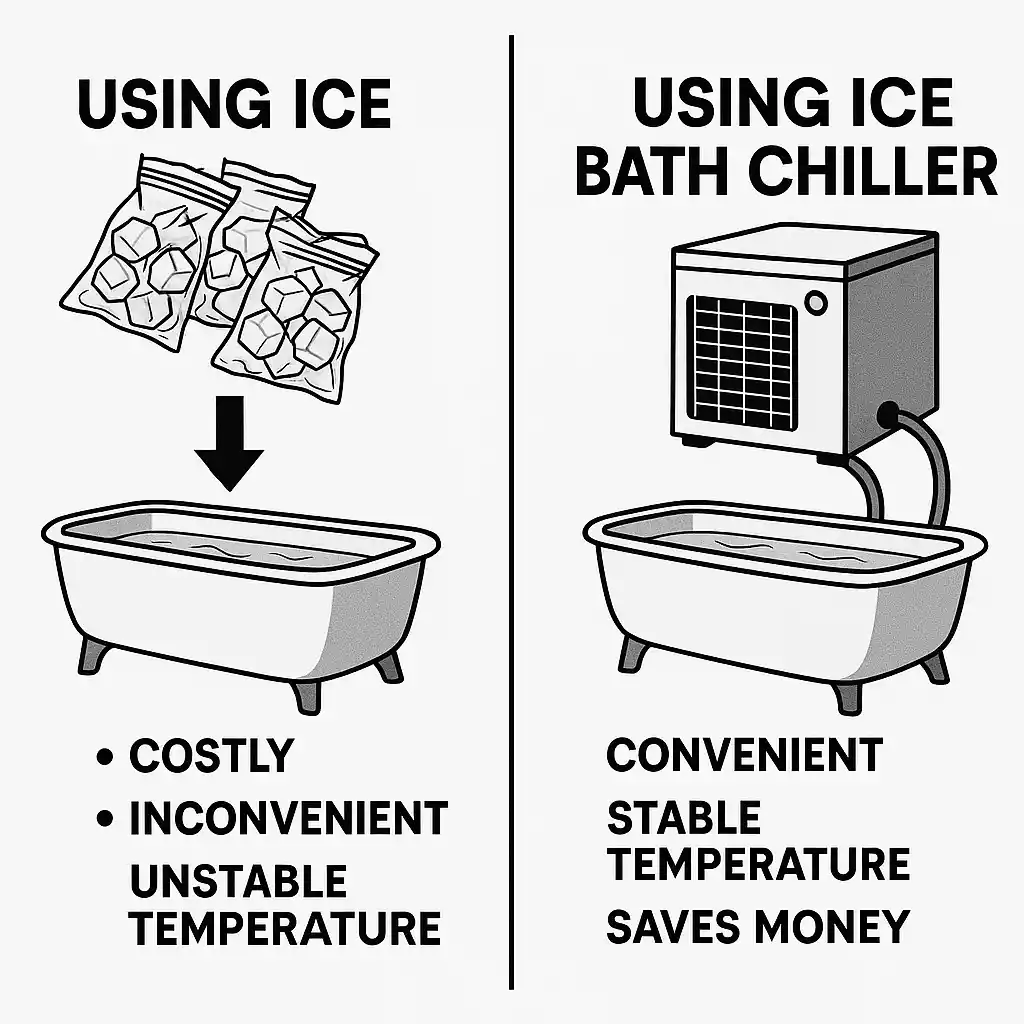
Infographic comparing using ice vs ice bath chiller for cold plunge tubs, showing that ice is costly, inconvenient, and unstable, while a water chiller provides stable temperature, convenience, and cost savings

How Much Does an Ice Bath Chiller Cost? A Complete Price Breakdown

How Much Does an Ice Bath Chiller Cost? A Price Breakdown for 2026 Ice bath chiller cost varies more than most buyers expect — from under $800 for a basic home unit to over $5,000 for a commercial-grade system. The number that matters most isn’t the sticker price, it’s the total cost of ownership over 12 months. This guide breaks down what you’re actually paying for at each price tier, and what separates a chiller worth buying from one that costs you more in the long run. That’s why more people are asking: are ice bath chillers worth it?According to Harvard Health, cold exposure offers real health benefits when done consistently. A water chiller for ice bath provides that consistency by keeping water at the perfect temperature without daily trips to buy ice. The Rise of Cold Plunge Therapy and Ice Bath Chillers Cold therapy has ancient roots in Roman baths and Nordic plunges, but modern science has validated its benefits. Athletes like Cristiano Ronaldo, LeBron James, and UFC fighters swear by ice baths for recovery. Physiological – reduces inflammation, accelerates muscle repair Psychological – improves sleep, relieves stress, builds resilience Performance – enhances training frequency by cutting recovery time The catch? Achieving these benefits requires water at stable cold temperatures—something ice alone cannot provide. This is where ice bath chillers come in. Why Ice Alone Fails Compared to a Water Chiller for Ice Bath At first glance, bags of ice seem cheaper. But for regular plungers, ice-only setups fail in four key areas: Cost – $50–$100 monthly on ice adds up to $600–$1200 per year Time – 20–30 minutes spent buying, transporting, and dumping ice each session Inconsistency – water starts at 5°C but warms quickly as ice melts Sustainability – constant ice production wastes water and energy 👉 By contrast, a water chiller for ice bath eliminates these problems with one-time investment. What Is an Ice Bath Chiller and How Does It Work? An ice bath chiller is a dedicated water cooling unit designed for plunge tubs. It works by circulating water through a refrigeration system that lowers and stabilizes temperature. Core Features of Modern Cold Plunge Chillers: Cooling Power (HP) – 0.5HP for small tubs, 1HP for medium tubs, 1.5HP+ for commercial setups Temperature Range – can reach 0–5°C, some units even create ice Filtration Systems – keep water clean for repeated use Smart Controls – WiFi/app integration allows temperature scheduling Portability – handles and wheels for flexible use in homes and gyms This combination makes chillers a superior alternative to ice, especially for those serious about recovery. Cost-Benefit Analysis: Ice vs Water Chiller for Ice Bath Factor Using Ice Bags Using Water Chiller Initial Cost $0–$200 (basic tub) $800–$2000+ Recurring Cost $600–$1200 annually $60–$120 annually (electricity + filter) Time Investment 20–30 min per plunge <5 min Temperature Stability Fluctuates, melts fast Consistent 0–5°C Convenience Manual effort every time Always ready Suitability Occasional plunges Regular users, athletes, gyms 👉 Break-even: If you plunge 3+ times weekly, a cold plunge chiller pays for itself in 12 months. Who Should Invest in an Ice Bath Chiller? Home Users If cold plunging is part of your wellness lifestyle, a home water chiller for ice bath ensures convenience and reliability. Gyms and Recovery Studios Facilities gain a professional edge by offering consistent cold therapy, improving member satisfaction. Sports Teams and Clinics Athletes need precise recovery tools. Consistency from a cold plunge chiller supports peak performance. Wellness and Biohacking Enthusiasts Corporate executives, biohackers, and Wim Hof followers benefit from stable, on-demand cold immersion. Technical Considerations Before Choosing a Water Chiller for Ice Bath Before buying, evaluate these factors: Tub Size & Water Volume – Match chiller HP to capacity. Power Supply – Ensure compatibility (110–120V US, 220–240V EU). Filtration – Look for dual-stage filters for hygiene. Mobility – Wheels and handles improve usability. Maintenance – Easy-to-change filters prevent downtime. 👉 For product categories, see our Cold Plunge Chiller Manufacturer page. Real Experiences: Why Athletes and Users Prefer Ice Bath Chillers Athletes – report faster muscle recovery after heavy training Wellness Users – note improved sleep and reduced stress Gym Owners – highlight customer satisfaction after installing chillers “I used to spend $300/month on ice. After buying a 1HP ice bath chiller, my cost dropped to $15/month in electricity. Best decision I’ve made.” Alternatives to Water Chillers for Ice Bath (and Why They Fall Short) DIY Ice Bags/Frozen Bottles – cheap, but unsustainable Portable Chillers – affordable, good for entry-level users Commercial Chillers – large-scale systems for gyms and clinics For a deeper breakdown of types, read our 《Best Water Chiller for Cold Plunge: How to Choose the Right System for Your Tub》. FAQs About Ice Bath Chillers Q1: How long does a chiller take to cool water?A 1HP unit cools 300L to 5°C in 3–4 hours. Q2: Do I still need ice with a chiller?No, quality chillers reach near-freezing without extra ice. Q3: How often should filters be replaced?Every 2–3 months depending on usage. Conclusion: Are Ice Bath Chillers Worth It in 2026? So, are ice bath chillers worth it? If you plunge only occasionally, ice may be fine. But if cold therapy is part of your routine, a chiller is a game-changing investment. According to Mayo Clinic, cold therapy supports healing and reduces inflammation. That makes a water chiller for ice bath not only practical but evidence-based. 👉 Ready to invest? Explore our Best Ice Bath Chiller for Home or browse the full range of cold plunge chillers.If you’re still deciding whether a chiller is the right investment, read our complete guide: Are Ice Bath Chillers Worth It?

How Much Does an Ice Bath Chiller Cost? A Complete Price Breakdown Read More »

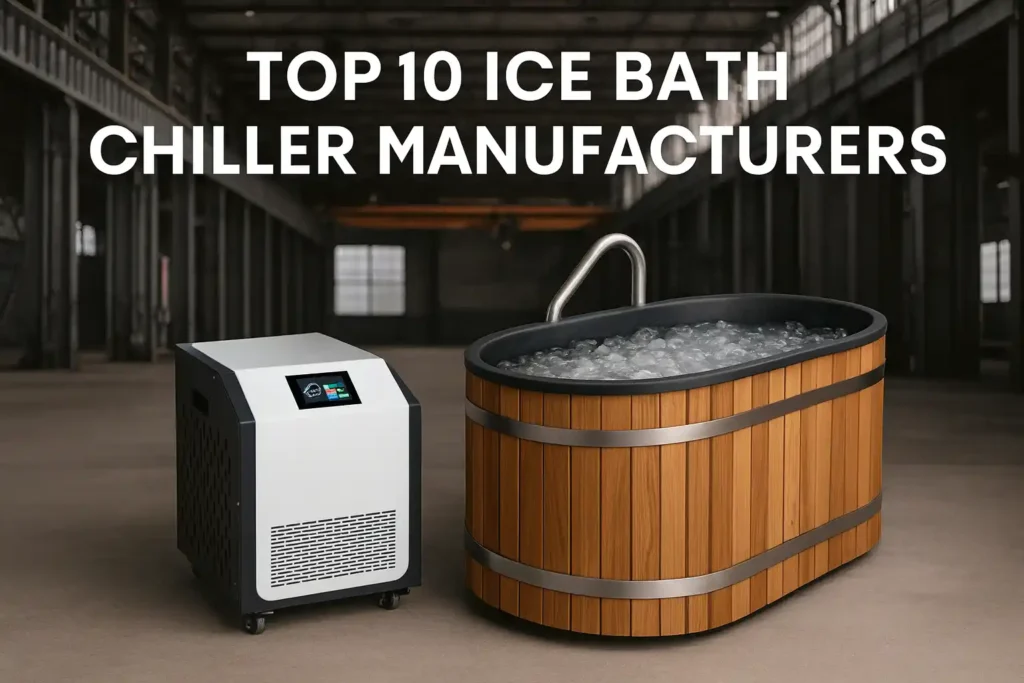
Factory background featuring a wooden cold plunge tub filled with ice and an OEM ice bath chiller unit, showcasing 0°F cooling capability for recovery and therapy

Top 10 Ice Bath Chiller Manufacturers for 2025 (OEM & Global Supply)

How to Choose the Best OEM Chiller Manufacturer in 2026 Selecting the right OEM Chiller Manufacturer means balancing cooling performance, durability, and global supply flexibility. In this 2026 guide, we analyze the top industry players to help you find a reliable OEM Chiller Manufacturer that meets global supply standards, from home recovery to large-scale commercial facilities. 1. Penguin Chillers (USA) — Compact Plug-and-Play Systems Penguin Chillers is a U.S.-based manufacturer specializing in compact, plug-and-play cold therapy units. Their models typically range from 3/4 HP to 1 HP, delivering stable water temperatures in the low-to-mid 40s °F, ideal for home users and small gyms. Designed for easy setup and low maintenance, they are best for users prioritizing portability over deep-freeze capability Penguin Chillers official site 2. iCoolsport (Australia) — Elite Sports Portability With over 20 years in the industry, iCoolsport has become a trusted supplier for elite sports teams worldwide. Their MiPod Elite series integrates a plunge tub and internal chiller (up to 2 HP) into a portable frame, making it ideal for training camps and competition environments. These systems focus on rapid cooling and mobility, though they operate above freezing point iCoolsport official site 3. American Chillers (USA) — Engineered Continuous-Duty Systems American Chillers designs heavy-duty refrigeration systems for hydrotherapy facilities, sports complexes, and medical institutions. Known for continuous-duty performance and integration capability, they can deliver customized capacity and cooling profiles. Their equipment is built for organizations that require robust, engineered solutions over portable consumer models American Chillers official site 4. The Pod Company (UK) — Universal Chiller Compatibility The Pod Company is recognized for its “Universal Chiller,” a portable unit compatible with most plunge tubs. With setup times of about 10 minutes and a target water temperature of 39°F (≈3–4°C), it appeals to boutique studios, wellness centers, and home users seeking flexibility without permanent installation. The Pod Company official site 5. OMNI Therapy (China) — OEM, 0°C & Ice-Making Capability OMNI Therapy is a large-scale manufacturer offering a complete range of cold-plunge chillers and matching tubs. The portfolio spans economic entry-level models, smart-controlled chiller systems, and deep-freeze performance units, with select models capable of cooling water to 0°C or functioning as a true ice-making chiller for maximum recovery intensity. OEM/ODM services enable full customization of capacity, casing materials, control systems, and integration with existing setups. Typical clients include distributors, gyms, spa chains, sports teams, and rehabilitation centers. With global exports and strict quality control, OMNI Therapy delivers factory-direct solutions for both commercial-grade and home cold plunge applications OMNI Therapy official site 6. Nuvio Recovery (USA) — Compact Retrofit Chillers Nuvio Recovery develops compact chillers designed to convert standard containers into effective cold plunge systems. These are ideal for budget-conscious home users and small wellness spaces looking for quick deployment. While not designed for extreme cold, they offer an accessible entry point into cold water therapy Nuvio Recovery official site 7. Glacier Pool Coolers (USA) — Large-Volume Evaporative Cooling Glacier Pool Coolers specializes in fan-driven evaporative cooling for large water bodies, including plunge tanks and pools. This method can lower water temperatures significantly in warm climates without refrigerants, although it cannot achieve near-freezing temperatures like compressor-based systems Glacier Pool Coolers official site 8. Whaley Products Inc. (USA) — Custom Industrial Cooling Whaley Products has over three decades of experience in manufacturing custom cooling systems for industrial, commercial, and sports recovery applications. Their OEM services are suited for projects requiring specialized configurations, such as integration with facility-wide HVAC or water treatment systems Whaley Products official site 9. AquaCal AutoPilot (USA) — Pool Climate Control Expertise AquaCal AutoPilot produces a range of pool chillers and heat-cool systems. The TropiCool series offers dedicated cooling, while the IceBreaker line combines heating and cooling in one unit. With a strong U.S. service network, these systems are popular in both residential and commercial pool environments AquaCal AutoPilot official site 10. MistCooling Inc. (USA) — Misting and Pool Cooling Systems MistCooling Inc. offers cooling solutions for sports, hospitality, and commercial markets. Their pool coolers can lower water temperature by 8–10°F, making them suitable for outdoor pools and large water features where energy efficiency is key. They are less suited for applications requiring precise temperature control below 5°C MistCooling Inc. official site Comparison Table Manufacturer Country Cooling Type Lowest Temp OEM Support Best For Penguin Chillers USA Refrigeration ~37°F Limited Home users, small gyms iCoolsport Australia Refrigeration ~41°F Limited Sports teams, mobile setups American Chillers USA Refrigeration 32–37°F Yes Institutional use The Pod Company UK Refrigeration ~37°F No Studios, home OMNI Therapy China Refrigeration 32°F & ice-making Yes Distributors, gyms, rehab Nuvio Recovery USA Refrigeration ~37°F No Budget setups Glacier Pool Coolers USA Evaporative 46–54°F drop Limited Large volumes Whaley Products Inc. USA Refrigeration 32–41°F Yes Engineered facilities AquaCal AutoPilot USA Refrigeration 41–50°F Limited Pool market MistCooling Inc. USA Evaporative 46–50°F drop Limited Outdoor pools This comparison helps you choose a reliable OEM Chiller Manufacturer for your business Conclusion: Choosing a Reliable Partner for Commercial Ice Bath Systems When selecting an ice bath chiller manufacturer in 2026, the real value lies beyond cooling performance — it’s about long-term stability, OEM flexibility, and after-sales support that helps your business scale. If you are looking for a trusted OEM Chiller Manufacturer, OMNI Ice offers factory-direct solutions. As a professional Cold Plunge Chiller Manufacturer – Asia Factory,OMNI Ice provides complete solutions for gyms, spas, and recovery centers — from 0 °C ice-making chillers to full Ice Bath Tub Supplier for Gyms & Hotels systems with ozone disinfection and smart Wi-Fi control. Every system is engineered for energy efficiency and water reuse, offering measurable ROI for commercial clients who value quality and consistency.When selecting an OEM Chiller Manufacturer in 2026, the real value lies beyond cooling performance — it’s about long-term stability, OEM flexibility, and after-sales support that helps your business scale. Explore our Smart 1.5HP Ice Bath Chiller and discover how OMNI Ice can elevate your commercial ice bath system to the next level.

Top 10 Ice Bath Chiller Manufacturers for 2025 (OEM & Global Supply) Read More »

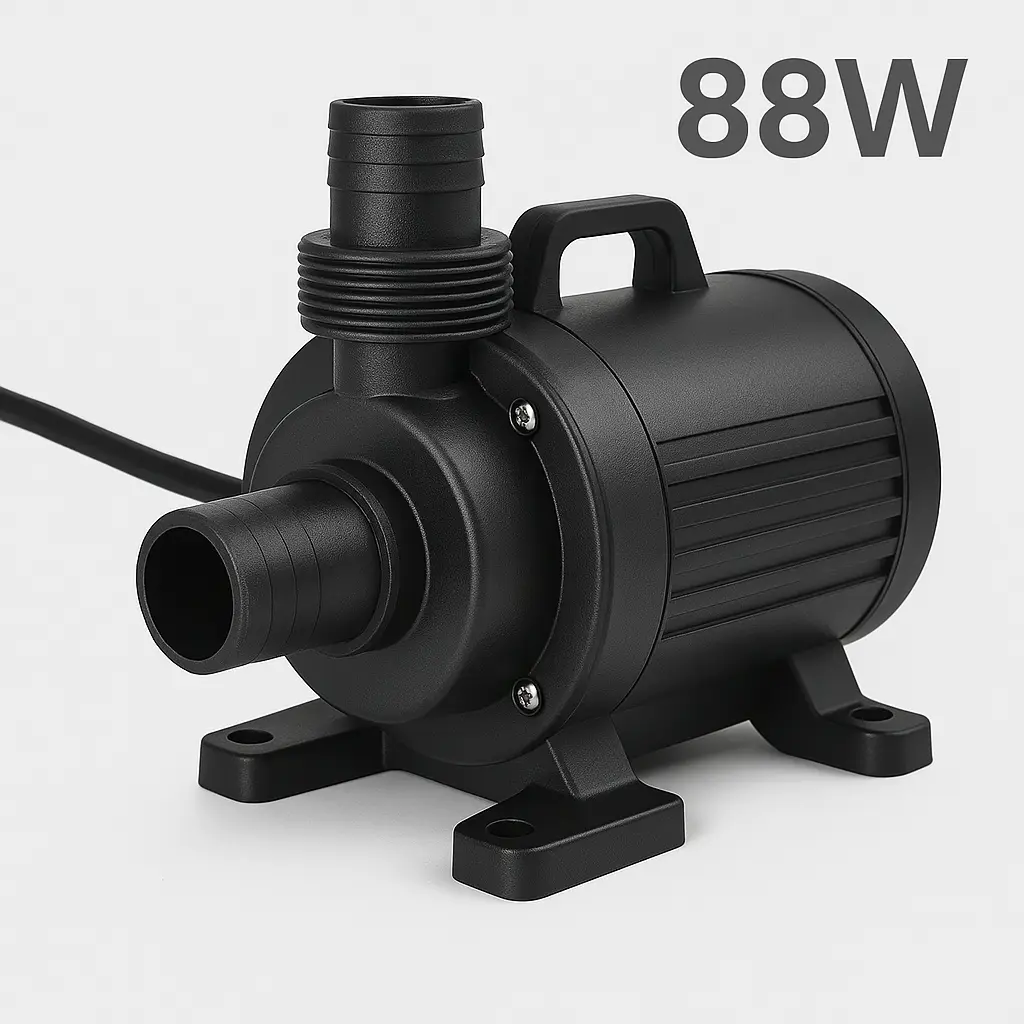
Compact 88W brushless DC water pump designed for cold plunge chillers, delivering efficient and quiet water circulation for ice bath systems

Cold Plunge Pump Troubleshooting: Common Problems & Fixes Explained

Cold plunge pump troubleshooting is one of the most common concerns for ice bath users when water circulation or cooling performance suddenly drops. When your cold plunge chiller pump stops working or your tub simply isn’t cooling as it should, it can disrupt your recovery routine and cause unnecessary frustration. This guide will walk you through the main causes, repair methods, and preventive measures for pump-related issues in cold plunge systems. How the Cold Plunge Pump Works The chiller pump for cold plunge is responsible for circulating cold water from your tub through the chiller unit and back into the tub. This process ensures a consistent temperature and even cooling. If the pump fails, you might experience: Water not moving at all (cold plunge pump not working). Water circulating but not cooling (plunge not cooling). Inconsistent flow or strange noises. Why Pump Performance Affects the Entire Chiller System The pump does more than move water—it determines how efficiently the chiller can extract heat from the system. When flow rate drops, cold water does not circulate evenly, causing temperature fluctuations and increased strain on the chiller unit. Over time, this imbalance can lead to system-wide issues that require full cold plunge chiller troubleshooting rather than simple pump repair. Common Pump-Related Issues Below are the most frequent pump-related problems in cold plunge setups: No Water Flow Blocked filter or debris inside the pump. Loose hose connections. Electrical connection failure. Pump Runs but No Cooling The chiller is on but the refrigerant cycle is interrupted (cold plunge chiller repair may be required). Water temperature sensor malfunction. Low Flow Rate Impeller damage. Mineral buildup in the pipes. Kinked or bent hoses. While pump-related issues are one of the most common cold plunge failures, they are usually part of a larger system problem. For a complete, system-level diagnosis—including filters, chillers, circulation, and temperature control—see our full Cold Plunge Chiller Troubleshooting & Maintenance Guide. Step-by-Step Troubleshooting If your cold plunge pump not working, follow these steps: Step 1: Check Power & Controls Ensure the unit is plugged in. Confirm your smart control or manual switch is on. Step 2: Inspect the Filter Remove and clean the filter to restore flow. For units with integrated filtration (cold plunge pump and chiller systems), check both the primary filter and pre-filter. Step 3: Flush the Lines Disconnect hoses and flush with clean water to remove any blockage. Step 4: Test the Pump If the pump still won’t run, test it with a separate power source to confirm if the motor has failed. If pump operation appears normal but cooling performance is inconsistent, the issue may extend beyond the pump itself. In these cases, a full cold plunge chiller troubleshooting process is recommended to inspect filters, heat exchangers, and circulation efficiency. Preventive Maintenance Weekly: Rinse the filter and check for debris. Monthly: Inspect hose connections and fittings. Quarterly: Perform a deep clean and descale the system. Routine maintenance can extend pump life significantly and prevent emergency cold plunge chiller repair needs. Common Mistakes That Lead to Pump Failure Many pump issues are caused by setup and usage errors rather than defective parts. Running the pump without proper filtration, allowing air to enter the hoses, or operating the system with low water levels all increase wear on the motor. Avoiding these mistakes significantly reduces the need for emergency cold plunge pump troubleshooting. When to Replace the Pump If your cold plunge pumps show signs of motor burn, excessive vibration, or persistent failure even after repair, replacement may be more cost-effective than continued maintenance Choosing a Replacement Pump When selecting a new pump for your cold plunge, consider: Flow Rate (L/min) that matches your chiller. Power Compatibility with your electrical setup. Material Quality for corrosion resistance. If your tub is larger or used commercially, pairing with a high-performance Ice Bath Chiller Manufacturer model can maximize cooling efficiency. Recommended Chiller Systems For pumps paired with chillers, we recommend: CHU Series for 0°C capability. CHM Series for smart control. CH-08 for budget-friendly home use. Learn more in our Cold Plunge Chiller Manufacturer Asia – Top Factory for Global Buyers page. External Resources Pump failures are often the first visible symptom of a deeper system issue. If troubleshooting the pump does not fully resolve your problem, follow our complete cold plunge chiller troubleshooting guide to ensure every component is inspected and maintained properly. For a deeper technical understanding of pump mechanics, you can review Pumps and Circulation Systems Guide – Engineering Toolbox. For specific steps on fixing a chiller pump not drawing water, read: 《How to Solve the Issue of a Chiller Pump Not Drawing Water》 If your cold plunge chiller is running but not cooling the water, see: 《Cold Plunge Chiller Not Cooling: 8 Causes and How to Fix Each One》

Cold Plunge Pump Troubleshooting: Common Problems & Fixes Explained Read More »

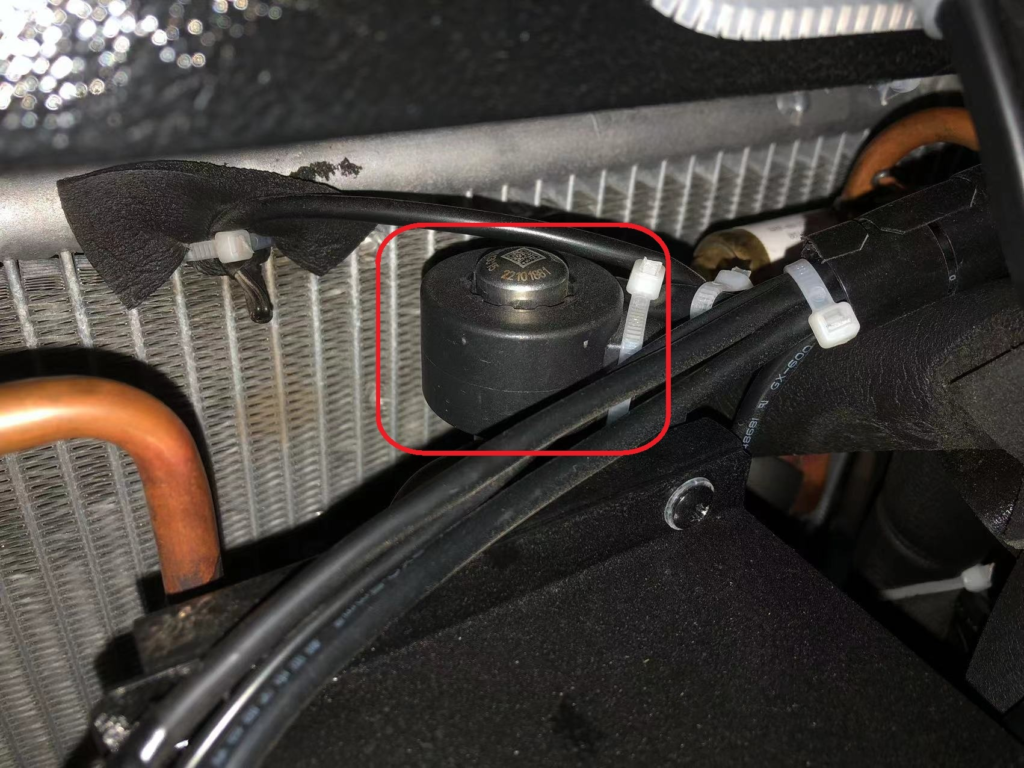
Close-up of an electronic expansion valve (EEV) used to optimize cold plunge chiller efficiency and refrigerant control.

Chiller Pump for Cold Plunge: How to Ensure Optimal Performance and Longevity

A high-performance chiller pump for cold plunge is the beating heart of any professional-grade ice bath system. It doesn’t just circulate water — it ensures even cooling, consistent filtration, and a safe, refreshing plunge every time. Whether you’re running a professional wellness center or enjoying a home setup, understanding how your chiller pump works, how to maintain it, and how to troubleshoot common issues is essential for getting the most out of your investment. In this guide, we’ll cover the working principle of a cold plunge chiller pump, the most common problems and their solutions, preventive maintenance tips, and how to choose the right pump for your setup. We’ll also connect you to our detailed guide on 《cold plunge chiller pump not drawing water》 for in-depth troubleshooting. How a Chiller Pump for Cold Plunge Works A cold plunge chiller pump works hand-in-hand with the chiller unit to circulate water through a cooling and filtration loop. Here’s the process: Water Intake – The pump pulls water from the plunge tub via an intake pipe. Cooling Stage – The chiller cools the water to the set temperature. Filtration Stage – Integrated or external filters remove debris, dirt, and bacteria. Water Return – The chilled and filtered water is pumped back into the tub for use. This continuous loop ensures the water stays both cold and clean — two non-negotiable factors for safe and effective cold therapy. Common Problems with Chiller Pumps and How to Fix Them Even the best systems can experience occasional pump issues. Here are the most frequent ones we encounter: Problem Likely Cause Recommended Solution Pump not starting Power supply issue or faulty motor Check power connection, inspect motor wiring, replace if faulty Weak water flow Blocked filter or intake pipe Clean or replace filters, remove debris Intermittent operation Overheating or airlock Ensure pump ventilation, bleed air from system Noisy pump Worn bearings or trapped debris Clean pump housing, replace bearings if needed Water not cooling Pump running but chiller idle Check chiller thermostat, ensure pump is correctly connected   For a detailed breakdown of one of the most common faults, see our guide on cold plunge chiller pump not drawing water. Preventive Maintenance for Chiller Pumps Preventive care is the easiest way to extend the life of your pump and avoid costly repairs: Clean Filters Regularly – Replace or clean every 2–4 weeks depending on usage. Check Connections – Ensure all hoses are tight and leak-free. Avoid Dry Running – Always ensure the tub is filled before turning the pump on. Inspect for Wear – Look for signs of rust, cracks, or worn seals. Maintain Proper Water Chemistry – Balance pH and sanitization to prevent scaling or corrosion. How to Choose the Right Chiller Pump Our OMNI Ice systems utilize industrial-grade magnetic drive pumps to ensure zero leakage and ultra-quiet operation. When selecting a pump, consider: Flow Rate – Match to the volume of your plunge tub. Compatibility – Ensure it works with your chiller model. Durability – Stainless steel or corrosion-resistant housing is ideal. Noise Level – Low-noise pumps enhance user experience. Filtration Integration – Systems with built-in filters save space and simplify maintenance. If you need a complete solution, explore our Ice Bath Chiller Manufacturer page for professional-grade chillers that pair seamlessly with high-quality pumps. When to Consider a Replacement A well-maintained chiller pump can last years, but signs that it’s time to replace include: Persistent noise even after cleaning Reduced water flow despite clean filters Frequent overheating Visible corrosion or leaks Investing in a high-quality replacement not only restores performance but also ensures your cold plunge remains a safe, effective recovery tool. Conclusion A chiller pump for cold plunge is central to keeping your water cold, clean, and ready for recovery. By understanding how it works, knowing the common issues, and following a regular maintenance schedule, you can extend its lifespan and ensure optimal performance. For more insights on system care and troubleshooting, check our detailed guide on cold plunge chiller pump not drawing water or visit our main Ice Bath Chiller Manufacturer page to explore professional cold plunge solutions. Reference: For further reading on pump maintenance best practices, see Energy.gov’s guide on pump efficiency. Choosing the right chiller pump for cold plunge is the first step to a perfect recovery session. Ready to Upgrade Your Recovery? Selecting the right chiller pump for cold plunge is crucial for a consistent 0°C experience. At OMNI Ice, we specialize in high-durability cooling solutions for both home and commercial use. Explore our Chiller Collection →

Chiller Pump for Cold Plunge: How to Ensure Optimal Performance and Longevity Read More »

Multiple chiller production lines

Cold Plunge Chiller With Filter: The Complete Guide to Clean, Cold Recovery

Why a Filtered Cold Plunge Matters More Than You Think A  cold plunge chiller with filter is the perfect solution for those who want crystal-clear, icy water for recovery sessions. By combining powerful cooling with advanced filtration, it ensures every plunge is both refreshing and hygienic Cold water immersion has become one of the most discussed recovery methods in sports, wellness, and even mental health circles. But maintaining safe, crystal-clear water in your plunge is not just about keeping it cold — it’s also about effective filtration. In this guide, we’ll break down how a cold plunge chiller with filter works, why it’s essential, and how to select a system that meets your needs without compromising safety or efficiency. A cold plunge chiller with filter is the ultimate solution for keeping your plunge at 0–5°C while ensuring the water stays crystal-clear and hygienic. By combining advanced cooling technology with a built-in filtration system, it provides both optimal recovery conditions and long-term water safety. Today, cold water immersion is one of the most popular recovery methods in sports, wellness, and mental health. However, maintaining safe, clean water in your plunge isn’t just about lowering the temperature — it also requires effective filtration. In this guide, we’ll explain how a cold plunge chiller with filter works, why it’s essential, and how to choose the right system without compromising safety or efficiency. Many cold plunge owners focus only on water temperature — often aiming for 0–5°C (32–41°F) to maximize the physical and mental benefits. However, without filtration, your plunge can quickly become a breeding ground for bacteria, algae, and unpleasant odors. A built-in or external filter addresses three major concerns: Hygiene – Removes debris, skin cells, and contaminants that can accumulate after each session. Safety – Reduces harmful bacteria and prevents infections, especially for shared or commercial setups. Longevity – Keeps your chiller’s internal components free from buildup, extending its life span. According to CDC water hygiene guidelines, filtration combined with proper disinfection is the single most important factor in keeping water safe for repeated use. How a Cold Plunge Chiller With Filter Works A standard cold plunge chiller is designed to circulate water through a refrigeration system that drops the temperature to your desired range. When a filter is integrated, the process includes an additional filtration loop: Water Intake – A pump draws water from your plunge tub. Filtration Stage – Water passes through a cartridge or sand filter to remove particulates. Cooling Cycle – The chiller’s heat exchanger rapidly cools the filtered water. Return Flow – Clean, cold water is returned to the plunge tub. Some advanced units also feature UV-C or ozone disinfection, adding another layer of pathogen control. Choosing the Right Filtration Type for Your Plunge Filters are not one-size-fits-all. The choice depends on usage frequency, water volume, and budget. Cartridge Filters (PP Cotton / Paper) – Easy to replace, great for home setups. Sand Filters – Long-lasting and ideal for large commercial cold plunges. Multi-Stage Systems – Combine mechanical filtration with UV or ozone for maximum safety. For small to medium plunge tubs, a compact chiller and filter combo is often the most efficient option. Systems like the ones featured on our cold plunge chiller product page are designed for both personal and professional use. Temperature & Water Quality: Finding the Balance The sweet spot for recovery is 0–5°C, but colder isn’t always better if it means sacrificing water hygiene. Remember: If the water smells, feels slimy, or looks cloudy, temperature alone won’t make it safe. Daily or weekly filter maintenance can drastically reduce chemical treatment needs. High-usage setups (e.g., gyms, spas) should aim for continuous filtration rather than periodic cleaning. Energy Efficiency and Cost Considerations A cold plunge chiller with filter will naturally consume more power than a chiller alone, but you can minimize running costs by: Choosing an appropriately sized unit – Avoid oversizing for your water volume. Using insulated tubs and covers – Helps retain temperature, reducing compressor cycles. Scheduling run times – Use timers or smart controls to match usage patterns. In the long run, the extra filtration cost is outweighed by savings in water replacement and reduced wear on the chiller Installation Tips for Optimal Performance Place the chiller in a ventilated area to improve cooling efficiency. Ensure tight, leak-free connections between the plunge tub and chiller inlet/outlet. Mount the filter housing where it’s easy to access for cleaning or cartridge swaps. Consider adding a Wi-Fi control system for remote temperature and pump operation. If you’re unsure how to integrate filtration into your setup, our cold plunge systems page provides options that include both components in one streamlined package. Outbound Reference For further reading on water safety in cold therapy applications, visit Mayo Clinic’s guide on cold therapy. Maintenance: Keeping Your Plunge Fresh and Safe A well-maintained system not only protects users but also extends equipment life. Basic maintenance includes: Rinsing cartridge filters every few uses and replacing as needed. Checking pump and hose connections for blockages or leaks. Running a shock disinfection (chlorine or bromine) periodically for extra safety. Following the manufacturer’s cleaning schedule for the chiller’s internal components. Cold Plunge Chiller With Filter in Real-World Use In real-world use, a cold plunge chiller with filter is not just about cooling performance — it’s about how the system behaves over time. Different environments introduce different challenges. Home users care about low maintenance and clean water. Gyms and wellness centers must manage hygiene under high usage. Facilities need filtration systems that pass operational checks and reduce downtime. That’s why we’ve broken this topic into several focused guides, each addressing a specific real-world scenario — from daily hygiene and filtration logic to full facility-grade setups. The Bottom Line A cold plunge chiller with filter is not a luxury — it’s a necessity for anyone serious about recovery, whether at home, in a clinic, or in a commercial wellness center. By combining consistent low temperatures with effective filtration, you get the best of both worlds: the

Cold Plunge Chiller With Filter: The Complete Guide to Clean, Cold Recovery Read More »

OMNI Therapy chiller system shown connected to a standard bathtub, demonstrating home-use compatibility for 0°C cold therapy

The Facility Playbook for a Cold Plunge Chiller + Filter (2025)

A cold plunge chiller and filter isn’t just a nice upgrade—it’s the difference between a novelty tub and an auditable, low-downtime recovery asset. In facilities where dozens of people cycle through daily, the winning installs do three things well: hit dose-controlled temperatures every time, keep water hygiene verifiable, and pass operational scrutiny (logs, standards, and safety). Public health guidance (MAHC) and product standards (NSF/ANSI 50) now make it practical to engineer small plunge systems with the same discipline as larger aquatic venues To understand how modern cold plunge systems integrate cooling, filtration, and hygiene into a single, reliable recovery solution, see our cold plunge chiller with filter complete guide.   What exactly is a “chiller + filter” loop—and why order matters A reliable loop looks like this: Tub → pre-filter (cartridge or sand) → circulation pump → chiller heat-exchanger → return to tub. Putting the filter before the chiller shields the heat-exchanger from grit and organic load, protecting cooling efficiency and extending seal/pump life. In higher-traffic environments, add UV or ozone as secondary disinfection. When components align with NSF/ANSI 50 (filters, pumps, UV, controllers, feeders), you’re working inside a well-understood performance envelope referenced by many health codes. nsf.orgThe ANSI Blog For a ready-matched kit approach, compare models under Cold Plunge Systems – Tubs,Chillers & Full OEM Combos and shortlist by volume, turnover, and serviceability. This loop logic—especially filter-first protection and turnover control—is explained in more detail in our complete guide to cold plunge chillers with filters, including sizing, hygiene standards, and real-world maintenance considerations. Dose the cold, not just the hype: evidence-based temperature × time Across recent reviews and meta-analyses, cold-water immersion (CWI) after exercise meaningfully reduces DOMS and perceived fatigue versus passive recovery. The most practical and repeatedly supported “dose band” is ~11–15 °C for ~10–15 minutes for soreness reduction; colder (5–10 °C) can shift biochemical markers but tends to be less tolerable day-to-day for teams. Program exposure around your training goals and avoid immediate CWI after hypertrophy-focused sessions if maximizing muscle growth is the priority Hygiene & compliance: what inspectors (and good operators) expect The Model Aquatic Health Code (MAHC) provides the logic behind turnover, disinfection, and records—principles that scale down to small plunge vessels when you want predictable water quality: Turnover: engineer flow so the vessel water is recirculated on a predictable schedule. Verified filtration: select filters with proven performance and size them to bather load and volume. Residuals & pH: keep measurable disinfectant residuals within pH ranges and log them. Documentation: keep filter maintenance, temperature, and chemistry logs—this is what resolves incidents fast. The Annex to MAHC details scientific rationale and helps you justify choices to stakeholders or authorities.  Need component signals of quality? NSF/ANSI 50 is the common reference for filters, pumps, UV, controllers, etc.; using certified components speeds procurement and supports inspections Engineer the loop: sizing that actually works 4.1 Turnover (circulation) Target 2–4 turnovers/hour for shared use. Example: a 400 L tub at 3 turnovers/hour → 1,200 L/h (~20 L/min) delivered after head loss through hoses, filter, and chiller. Use the pump curve, not just the nameplate. 4.2 Filtration Cartridge filters: straightforward service; for clarity and heat-exchanger protection choose ~5–20 µm elements; replace per differential pressure. Sand filters: robust for higher loads; backwash per spec when pressure rises. Secondary disinfection: UV or ozone reduces combined organics and smell in busy facilities—again, look for NSF/ANSI 50 alignment. nsf.org 4.3 Chiller capacity & controls Size HP to your volume and schedule so you consistently hit 11–15 °C inside the operational window without short-cycling. Controls: stable PID temperature control, flow/level alarms, anti-freeze/anti-dry-run protections. Power: 110/220 V to match site; ensure GFCI/RCD compliance. Placement: give the condenser adequate ventilation; heat-dumping in confined closets ruins performance. TCO/ROI: the filtered chiller wins on cash and uptime Assumptions (customize to your site): 400 L tub; drop 20 → 12 °C; one session/day. Ice method (latent heat): you melt about 40 kg of ice for the 8 °C drop; real use (door opens, human load, ambient heat) pushes daily ice closer to ~60 kg. At $0.30/kg, that’s $18/day ≈ $540/month ≈ $6,480/year. Chiller + filter: ~0.9 kW compressor × ~6 h/day ≈ 5.4 kWh/day. At $0.15/kWh, $0.81/day ≈ $292/year electricity. Filters/consumables ≈ $260/year. Annual delta: ~$6,000 saved. With a $1,200–$2,000 system, payback is typically 2–4 months, then you bank OPEX every month thereafter. Money aside, filtration preserves clarity, reduces complaints, and protects pumps/heat-exchangers—exactly what MAHC-style operational logic is meant to achieve Implementation blueprint: from survey to SOP Step 1 — Site surveyMeasure vessel volume; map an equipment pad with drainage; confirm power, ventilation, and hose runs. Step 2 — Loop designPick cartridge vs. sand; size pump for target turnover; confirm hose diameters/quick-disconnects; add check valves where needed. Step 3 — Controls & safetySet PID control with lockouts; verify flow/level sensors; GFCI/RCD; anti-freeze; audible alarms. Step 4 — CommissioningLeak test; verify flow in LPM and ΔT; record time-to-target temperature; set filter change thresholds by differential pressure. Step 5 — SOP + logsDaily: temperature, disinfectant residual, pH. Weekly: rinse/ backwash; check hoses/unions. Monthly: replace cartridges (or earlier if ΔP threshold is hit). Keep a single-page incident response for cloudy water/odor. Want a factory-grade starting point? Compare OEM-matched kits under Cold Plunge Systems – Tubs, Chillers & Full OEM Combos, then step up to a fully custom loop via our ice bath chiller manufacturer hub. Five common failure modes (and how the filter prevents them) Filter placed after the chiller → debris fouls the heat-exchanger first; efficiency tanks. Undersized filter area → high ΔP, cavitation, seal wear, and nuisance shutdowns. Ignoring head loss → delivered flow misses turnover target; chemistry “dead zones.” No secondary disinfection at high load → cloudy water and odor despite decent filtration. No records → you can’t diagnose trends or pass audits; MAHC-style logs fix this. Buyer’s checklist (copy into your RFQ) Chiller: capacity vs. volume; time-to-target; ±0.5 °C stability; noise; power; alarms; placement ventilation.Filter: micron rating; effective area; pressure gauges; service method (backwash vs. replace); spare parts availability.Turnover:

The Facility Playbook for a Cold Plunge Chiller + Filter (2025) Read More »

OMNI Therapy CHU-10-RV model chiller unit, designed for 0°C ice bath recovery, placed beside an outdoor soaking tub

Why Every Athlete Is Turning to a Water Chiller for Ice Baths

A water chiller for ice bath recovery is quickly becoming the preferred setup for athletes and wellness enthusiasts alike. Across gyms and locker rooms worldwide, ice baths are no longer fringe routines—they’re foundational. From NBA legends like LeBron James to rising stars like Victor Wembanyama, cold water immersion is now central to how elite athletes train, recover, and stay at their peak. But while the results are impressive, setting up a consistent and effective cold plunge system is where many users hit a wall—literally, when the ice runs out or the tub won’t chill enough. That’s where a water chiller changes the entire experience. Why Ice Baths Need a Reliable Water Chiller Ice baths aren’t just for the pros anymore What was once seen as a professional sports ritual is now becoming a widely adopted wellness practice. Regular cold plunging has been linked to faster muscle recovery, reduced inflammation, improved circulation, and even mental health benefits. Athletes like LeBron James use cold water therapy regularly to manage fatigue and extend career longevity. Victor Wembanyama—at just the start of his NBA journey—is also embracing cold immersion to stay ahead of the game. But whether you’re a pro athlete or someone recovering from daily workouts, the key factor in success is water temperature consistency—and that’s the challenge most home users face. DIY Ice Baths vs Water Chillers: What Works Better The problem with traditional ice and tubs Most beginners try filling a bathtub with ice and water. While this can work occasionally, it’s inefficient, messy, and expensive over time. Ice melts too quickly, the temperature fluctuates, and water quickly becomes stagnant without circulation. In contrast, a water chiller for ice bath delivers: Stable temperatures (even down to 0°C) Continuous water circulation Filtered and sanitized water Repeatable results with minimal effort It’s not just a luxury—it’s the system that makes regular cold therapy feasible and effective. Why a Water Chiller for Ice Bath Is the Smart Alternative When designed specifically for cold plunge use, a water chiller offers unmatched control and convenience. Whether you’re using a standard bathtub or a dedicated cold tub, the advantages are clear: Compatible with existing tubs—no need to buy a new one Mobile design with wheels and handles WiFi or app-based scheduling for convenience Built-in filtration and ozone for hygiene Energy-efficient and quiet operation Compared to permanent tubs or makeshift ice setups, chillers allow for a flexible, scalable recovery routine. How to Choose the Best Water Chiller for Ice Bath Use Not all chillers are made equal. Look for the following features when selecting one: Chilling power down to 0°C (32°F) Ozone sterilization and filtration built-in Quiet operation suitable for indoor/home use Smart control features, such as app or timer functions Portable, compact frame for flexible placement A trusted ice bath chiller manufacturer should offer a complete system—one that’s designed around real-world recovery needs, not just cooling specs. Cold Plunge Tubs vs Water Chillers: Pros and Cons While water chillers are ideal for flexibility and cost-efficiency, cold tubs also offer advantages—especially in commercial or aesthetic-focused setups. If you’re furnishing a wellness studio or luxury home gym, you may prefer the experience of a high-end plunge tub. OMNI Therapy offers premium cold tubs for commercial and home use, ranging from stainless steel to wood-accented options. For individuals, however, pairing a water chiller with your existing bathtub provides the same physiological effect—at a fraction of the cost. CHU‑10‑RV: A High-Performance Water Chiller for Ice Baths Among the options available, OMNI Therapy’s CHU-10-RV stands out with: Chilling capability down to 0°C Built-in water filter and ozone sanitation WiFi control with mobile scheduling Easy portability with wheels Durable design for long-term use You can view the full details on the cold plunge chiller product page. Planning an Ice Bath Setup with a Chiller and Tub Whether you’re just starting or looking to upgrade, it’s smart to think modular: start with a high-quality water chiller, and later expand into cold tubs or accessories based on your space and goals. Explore OMNI Therapy’s full product range for cold therapy, including chillers, tubs, and complete system kits suitable for home or business use. Expert Opinions on Ice Bath Therapy and Water Cooling According to the Cleveland Clinic, safe cold therapy begins with: Controlled water temperature (around 10–15°C to start) Short initial sessions (1–3 minutes) Medical supervision for people with heart conditions Clean, filtered water to prevent bacteria growth These guidelines further highlight the value of water chillers over improvised cold plunge methods Should You Use a Water Chiller for Ice Bath Recovery? The evolution of cold therapy has reached a point where ice bags and guesswork aren’t enough. If you’re serious about reaping the benefits—reliably and regularly—then a water chiller for ice bath recovery offers the best combination of effectiveness, cleanliness, and convenience. OMNI Therapy provides both the technology and the flexibility to support real recovery, whether you’re starting with a home tub or building a full-scale wellness routine. With the right tools in place, the next step is simple: step in, chill down, and bounce back stronger.

Why Every Athlete Is Turning to a Water Chiller for Ice Baths Read More »

OMNI Therapy CHU-10-RV model chiller unit, designed for 0°C ice bath recovery, placed beside an outdoor soaking tub

Thinking About a Sun Home Cold Plunge? Here’s a Smarter Alternative

If you’re searching for a Sun Home Cold Plunge alternative, you’ve likely already seen the price tag — and hesitated. At over $10,000, Sun Home is one of the most marketed cold therapy systems of 2025, but it’s far from the only way to reach 0°C. Many users are now choosing a Sun Home Cold Plunge alternative that delivers the same freezing immersion, better flexibility, and significantly lower cost. This guide explains exactly what to look for — and why a portable chiller setup is the smarter choice for most buyers. Why a Sun Home Cold Plunge Alternative Saves You Thousands Aesthetic Appeal vs. Practical Use Sun Home tubs have become appealing primarily due to their sleek design and prominent marketing. These aesthetically pleasing plunge tubs fit well in premium home environments and are often showcased prominently on social media, which significantly boosts their popularity. Marketing vs. Reality: What Users Really Experience However, what often goes unnoticed in initial attraction is how practical these tubs really are for day-to-day use. While undeniably attractive, many users later realize the limitations—such as permanent installation, high maintenance, and significant upfront costs. Limitations of Traditional Cold Plunge Tubs Bulky, Immobile Design One of the largest challenges with Sun Home or similar plunge tubs is their bulky and immobile design. Once placed and installed, moving them becomes difficult or even impractical, particularly for people living in apartments or rented spaces. If your circumstances change or you simply wish to rearrange your space, the lack of mobility can become a serious inconvenience. High Cost of Entry Premium tubs like Sun Home Cold Plunge often carry a significant price tag. For those still experimenting with cold plunge therapy or unsure about long-term commitment, this large initial investment can seem disproportionate, especially when equally effective alternatives exist. Achieving 0°C Isn’t Exclusive to Expensive Tubs Contrary to popular assumption, reaching near-freezing water temperatures (0°C) isn’t exclusive to expensive plunge tubs. High-performance chillers, often overlooked, can offer equally effective cold therapy at a fraction of the price and with significantly greater versatility. A More Flexible Solution: OMNI Therapy’s Cold Plunge Chiller Compact and Portable Advantage Instead of committing space and resources to a bulky tub, consider OMNI Therapy’s CHU-10-RV Cold Plunge Chiller. This system is mobile and compact, allowing users the flexibility to position their setup indoors, outdoors, or even transport it between locations effortlessly. Its built-in wheels and ergonomic handles provide unmatched convenience. Significantly Lower Costs Price-wise, OMNI Therapy’s cold plunge chillers offer substantial savings compared to standalone plunge tubs. By integrating seamlessly with existing home bathtubs or smaller basins, you significantly cut down your initial and ongoing expenditures, making regular cold plunging much more economically feasible. Seamless Integration with Your Existing Bathtub Another compelling advantage of a cold plunge chiller is its compatibility with your existing bathtub. OMNI Therapy’s CHU-10-RV chiller easily attaches to standard tubs, efficiently cooling water to 0°C, ensuring you enjoy professional-grade cold therapy without the redundant investment in another large piece of equipment. Learn more about this solution on its dedicated product page. Why Choose OMNI Therapy for Cold Plunge Systems Reliable Performance and Advanced Functionality OMNI Therapy stands out for delivering superior cooling performance combined with advanced functionality, such as ozone sterilization and built-in filtration. These features ensure clean, safe water, while consistent temperature control guarantees a reliable cold plunge experience every time. As a trusted ice bath chiller manufacturer, OMNI Therapy focuses on real-world performance, not just aesthetics. Its mobile chillers are designed to meet the needs of both home users and professional recovery settings. Built-in Filtration and Smart App Control Unlike many standalone tubs, OMNI Therapy chillers include smart features like mobile app control, allowing scheduling and remote monitoring of water temperature. The built-in filtration significantly reduces maintenance tasks, keeping the water fresh without frequent manual interventions. Proven Track Record in Cold Therapy Solutions With a strong track record of reliability and user satisfaction, OMNI Therapy’s chillers have become trusted solutions for both individual home users and commercial wellness facilities. The system’s reliability and user-friendly design make it a preferred choice among cold plunge enthusiasts. Health Benefits and Safety of Cold Plunging Supported Health Benefits According to Medical Experts Cold plunging has been endorsed by various health experts for its potential to: Enhance recovery by reducing muscle inflammation and soreness. Promote better mental health by increasing resilience to stress. Support cardiovascular health by improving circulation. While research is ongoing, initial findings and anecdotal experiences strongly support these benefits, making cold plunging a valuable addition to wellness routines. How to Practice Safe and Effective Cold Therapy Medical professionals from reputable organizations, such as the Cleveland Clinic, emphasize the importance of gradually introducing yourself to cold therapy. They recommend keeping plunge sessions short initially and maintaining safe temperatures (generally between 10°C–15°C initially, gradually reducing to 0°C as tolerance improves). Making an Informed Choice for Your Cold Plunge Setup Consider Your Actual Needs, Not Just the Marketing While Sun Home Cold Plunge tubs have enjoyed significant marketing-driven visibility, it’s critical to assess whether such a large, stationary, and costly investment truly matches your lifestyle and goals. Aesthetics and popularity alone should not overshadow practical daily usage, mobility, maintenance, and overall cost-effectiveness. Why a Chiller System Might Be the Smarter Investment If your goal is a convenient, affordable, yet highly effective solution, OMNI Therapy’s CHU-10-RV cold plunge chiller is undoubtedly worth considering. Its superior flexibility, affordability, and advanced features position it as a wise choice for users who value practicality alongside performance. Ultimately, when selecting a cold plunge system, the smartest approach is one guided by real needs and long-term satisfaction rather than short-term popularity. With OMNI Therapy, you ensure your plunge journey is both practical and fulfilling.For a full side-by-side comparison of Sun Home vs chiller systems, read our complete review: 《Sun Home Cold Plunge Review & Alternatives 2025》

Thinking About a Sun Home Cold Plunge? Here’s a Smarter Alternative Read More »

Inflatable cold plunge tub connected to 1HP home-use chiller

How to Choose the Right OEM Cold Plunge Chiller Supplier for Your Business

As the demand for cold water immersion therapy continues to surge among wellness clinics, gyms, and high-performance recovery centers, the need for reliable OEM cold plunge chiller suppliers is becoming more critical than ever. Choosing the right supplier isn’t just about price—it’s about ensuring long-term performance, seamless integration, and the ability to scale your brand with confidence. Whether you’re launching a private-label recovery product line or sourcing chillers for a commercial setup, here’s how to evaluate the right OEM cold plunge chiller supplier for your business. Define Your Application Needs First Before shortlisting suppliers, clearly define how and where the cold plunge chiller will be used: Is it for a home-use ice bath tub, or a commercial-grade cold plunge facility? Do you need WiFi app control, integrated filtration, or even ice-making capability? What’s your target temperature range and cooling time expectations? Knowing your technical requirements up front helps you filter out suppliers who can’t meet your baseline specs. Evaluate Their Technical Capabilities A serious OEM supplier should provide chillers that: Operate efficiently in 0°C to 40°C ranges Feature reliable temperature control (±0.5°C tolerance) Include integrated filters or allow external filtration systems Use quality refrigerants like R32 or R410A Offer options for 110V/220V dual voltage Ask for detailed technical datasheets, not just marketing brochures. You want engineering-grade specs. Understand Their OEM & Customization Support Not all suppliers are equipped for true OEM collaboration. A high-quality OEM cold plunge chiller supplier should offer: Custom logo placement, control panel branding, and packaging Support for white-label dropshipping Custom design for cabinet materials, color, and casings Flexible MOQ (Minimum Order Quantity) for pilot batches Also ask how many OEM clients they’ve served and request reference samples. Inspect Certifications and Export Experience For international distribution, your OEM supplier must meet global safety and environmental standards. Look for: CE, RoHS, or ETL certifications Factory audits and ISO9001 compliance Experience shipping to North America, Europe, or Australia Ability to provide HS codes, customs documentation, and insurance These factors not only reduce your risk but improve your import compliance and customer trust  Your OEM supplier must meet global safety and environmental standards such as CE or RoHS. You can learn more about CE certification requirements here Ask About After-Sales and Technical Support Even the best machines need support. A trustworthy supplier should provide: User manuals and installation guides in your language Troubleshooting videos for filter replacement, screen operation, and first use Responsive technical service team (WhatsApp, email, or WeChat) Spare parts availability and quick dispatch Reliable post-sale service is often what separates good suppliers from great ones  Don’t Forget Lead Time, MOQ, and Production Capacity As you scale, can your supplier keep up? What’s their average lead time for 20, 100, or 500 units? Can they handle urgent orders or container loads? Do they support mixed SKUs in a shipment? What is the MOQ for custom chillers? These answers help you align your procurement plan with their production rhythm Why OMNI Therapy May Be the Right Partner Frequently Asked Questions At OMNI Therapy, we specialize in high-performance cold plunge chillers tailored for OEM clients worldwide. Our systems feature: WiFi app control and smart operation Powerful chillers reaching 0°C, even capable of ice-making Filtration, ozone disinfection, and CE-certified components Custom branding options, global logistics, and technical support Whether you’re building your own wellness brand or upgrading your facility, we have the capacity, precision, and service to support your long-term vision. 👉 Learn more about our ice bath chiller manufacturer solutions   Q: Can I request a fully custom housing or shell?Yes, we support OEM plastic, stainless steel, or WPC casing customization with logo engraving or color matching. Q: Do you provide dropshipping or direct fulfillment?We can offer flexible packaging and labeling for your brand and deliver to a 3PL or warehouse of your choice. Q: Are your chillers suitable for outdoor use?Yes, all of our units are weather-resistant and designed for continuous operation in both indoor and outdoor settings. Q: What’s your average lead time?For stock models, lead time is 7–10 days. For custom orders, 15–25 days depending on quantity and complexity. Final Thoughts Choosing the right OEM cold plunge chiller supplier is a decision that directly affects your product performance, customer satisfaction, and brand reputation. Invest time in evaluating their technical capabilities, export experience, and support infrastructure. If you’re ready to work with a factory that blends engineering precision with OEM flexibility, contact OMNI Therapy today. 📩 Get in Touch or browse our OEM-ready chillers.

How to Choose the Right OEM Cold Plunge Chiller Supplier for Your Business Read More »

Request A Quote

We look forward to receiving your request information and we will be in touch with you within 48 hours!