Steam Rooms vs Saunas: Temperature, Moisture, and Setup Differences
Steam rooms and saunas are often confused, but they are built differently and affect the body in distinct ways. A steam room operates at 100% humidity and lower temperatures (110°F to 120°F), requiring sealed waterproof tile, floor drains, and a remote steam generator. A sauna—whether traditional or infrared—operates at a much higher heat (120°F to 195°F) with low humidity, using an interior stove or infrared panels inside a wooden cabin.
Buyers trying to choose between them must base their decision on site requirements, electrical capacity, and how much maintenance they are willing to perform. A common mistake is buying a sauna heater expecting to turn a tiled shower into a sauna, which will not work due to material differences.
The Core Difference: Heat and Humidity
When comparing steam rooms and saunas, the primary difference lies in how they generate heat and manage moisture. This completely changes how your body reacts and what materials are required to build them.
Low (10% to 20%, spikes when water is poured on rocks)
Very Low (No water involved)
100% (Constant steam)
Heat Source
Electric or wood-burning stove heating rocks
Infrared panels heating the body directly
External steam generator pumping vapor in
Interior Material
Untreated wood (Cedar, Hemlock)
Untreated wood, glass doors
Waterproof tile, stone, or acrylic
Installation and Material Requirements
A common mistake buyers make is assuming a steam room and a sauna can share the same space or be built similarly.
Steam Rooms Require Waterproofing: Because a steam room maintains 100% humidity, the interior must be completely sealed. It requires a sloped ceiling to prevent condensation from dripping onto users, a floor drain, and waterproof walls (typically tile or stone). The steam generator is installed outside the room and plumbed into the enclosure.
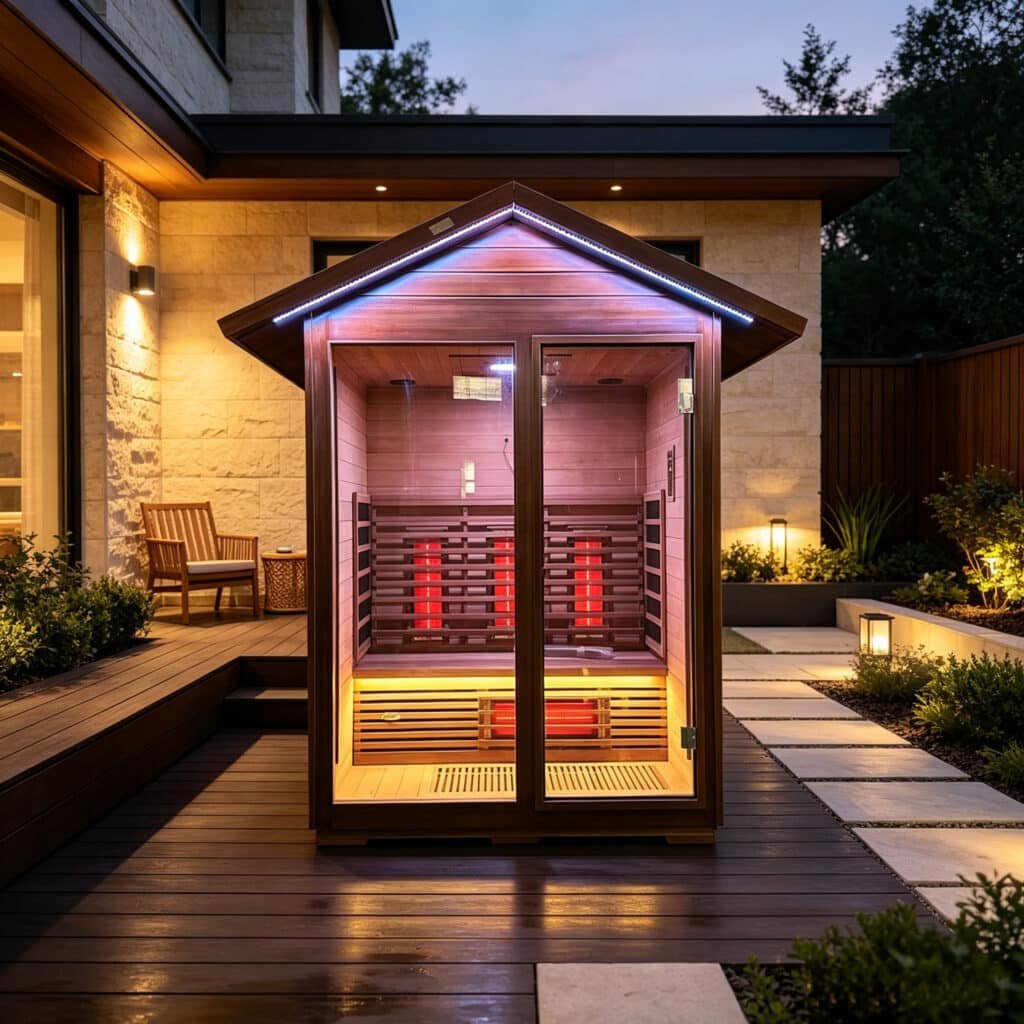
Saunas Require Wood: Traditional and infrared saunas use wood—like the Canadian Hemlock or Red Cedar used in OMNI Ice’s Aura and Sol series. Wood remains comfortable to the touch at 195°F and naturally absorbs excess moisture. Saunas do not strictly require plumbing or floor drains, making them much more flexible to install indoors or outdoors.
Traditional wood saunas keep humidity low and allow high-temperature heating without requiring waterproof tiling.
Infrared vs Steam Sauna: Which is Easier to Install?
If you are deciding between an infrared vs steam sauna for a home or commercial gym, the installation difficulty is drastically different.
Infrared Saunas: These are the easiest to set up. An indoor infrared unit like the OMNI Aura-1 or Aura-C usually arrives as prefabricated panels that latch together in less than an hour. They require no plumbing and run on a dedicated electrical outlet (typically 110V/20A or 220V depending on the wattage).
Steam Rooms: Installing a steam room is a major construction project. It requires hiring a plumber to route water lines to the generator, an electrician to hardwire the 220V generator, and a tile contractor to waterproof the walls and floor.
Maintenance and Cleaning Checklist
Moisture drives maintenance. You should base your decision on how much time you are willing to spend cleaning the unit.
Task
Saunas (Traditional/Infrared)
Steam Rooms
Daily Cleaning
Wipe down sweat from wooden benches using a damp towel.
Squeegee tiles and glass to prevent water spots and mildew.
Ventilation
Leave the door open after use to let the dry heat evaporate moisture.
Run an exhaust fan to pull heavy moisture out of the room.
Deep Cleaning
Lightly sand benches once a year if stained.
Scrub grout lines with anti-mold cleaners monthly.
Wooden saunas require minimal daily maintenance—mostly just wiping down the benches and ensuring good airflow after use.
Conclusion: Which Should You Choose?
If you want deep, targeted muscle relief with an easy installation process, an infrared sauna is the best choice for residential use. If you enjoy the ritual of tossing water on hot rocks for a sudden burst of heat, a traditional wood-burning or electric stove sauna is ideal. However, if you specifically want respiratory relief through 100% humidity and are prepared for a permanent, waterproof construction project, a steam room is what you need.
When preparing your site, always ensure your electrical panel can support the heater or steam generator before making a purchase.
Need products under your own brand? Tell us the product line, target market, quantity and customization requirements. We support chillers, cold plunge tubs, sauna rooms and complete recovery systems.