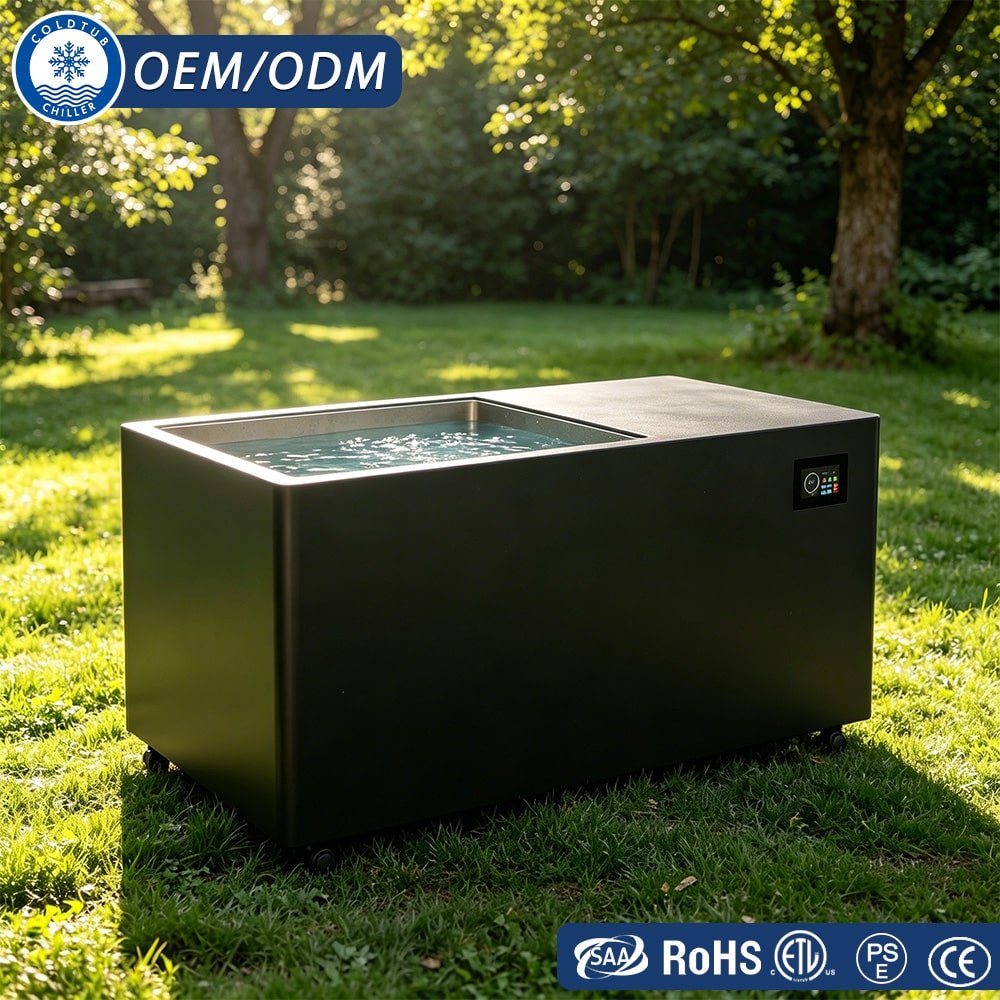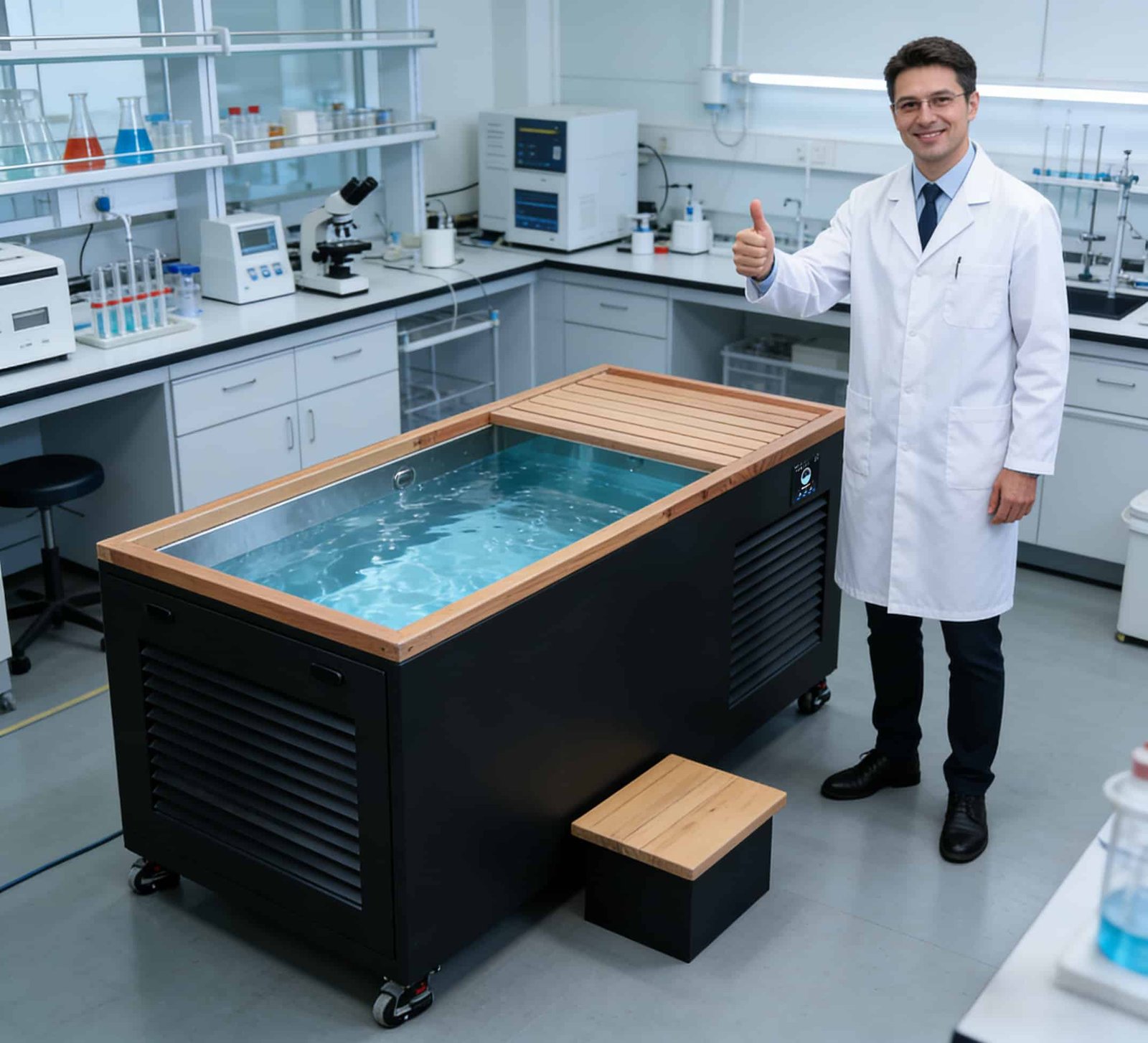
A cold plunge for physical therapy is no longer reserved for elite sports facilities. In the past two years, the equipment has dropped in price, become quieter, and added the sanitation features that make it practical for clinical use. The result: PT clinics across the US, UK, and Australia are adding cold plunge to their treatment menu — not as a wellness add-on, but as a clinical tool.
This guide is for clinic owners, lead physical therapists, and practice managers thinking about adding cold water immersion to their facility. It covers what the equipment actually needs to do in a clinical setting, what the realistic numbers look like, the patient protocols that protect both outcomes and liability, and how to source the right system without paying retail markup.
Quick Answer: Is a Cold Plunge Worth It for a PT Clinic?
For most PT clinics, yes. The clinical case is well-established for post-exercise recovery, post-surgical inflammation management, and acute injury support. The business case works because PT clinics can charge for cold plunge sessions outside the insurance billing model — cash-pay recovery programs, membership packages, and patient self-pay options. Most clinics recover the equipment cost within 8–14 months and gain a service that competitors without it can’t offer.
The right equipment for a clinic is a 1–1.5 HP commercial chiller with built-in ozone sanitation, paired with a stainless steel tub. Anything less is consumer-grade and won’t survive clinical use. Sourcing factory-direct typically saves 30–50% versus buying through a distributor.
The rest of this guide explains why, and what to actually do.
Why Physical Therapy Clinics Are Adding Cold Plunge in 2026
The reason is straightforward: it works clinically, and it generates revenue insurance doesn’t pay for.
On the clinical side, research on cold water immersion recovery consistently shows reduced delayed-onset muscle soreness, faster recovery between sessions, and measurable benefits for inflammation management. For PT clinics treating athletes, post-surgical patients, and chronic-pain cases, that’s a tool worth having.
On the business side, the math is what’s pushing adoption:
- Cash-pay recovery sessions typically run $25–50 per session, billed directly to the patient
- Recovery memberships ($60–150/month) give patients ongoing access between PT visits and create recurring revenue
- Add-on to existing visits — many clinics offer cold plunge as a $15–25 add-on at the end of a covered PT session
- Sports recovery packages for local athletes and weekend warriors who aren’t PT patients at all
This last point matters. A cold plunge expands your customer base beyond the people who need physical therapy — runners, lifters, and CrossFit members will pay for recovery access at a clinic they otherwise wouldn’t visit. Some clinics now generate more revenue from non-PT recovery customers than from billable PT, with cold plunge as the anchor service. The same logic applies to other small healthcare and wellness businesses, covered in our cold plunge for small business guide.
Clinical Applications: Where Cold Plunge Fits in PT Treatment
Cold plunge isn’t a replacement for therapeutic exercise or manual therapy. It’s an adjunct that improves the conditions under which the rest of your treatment works. Common clinical applications:
- Post-exercise recovery for athletic and active patients between training blocks
- Post-surgical inflammation management in the appropriate window (typically after the initial acute phase, on physician clearance)
- Chronic pain support for patients with conditions where inflammation is a contributor
- Athletic rehab for return-to-sport protocols with elite or sub-elite athletes
- General recovery and wellness for non-PT patients using the clinic as a recovery facility
For clinics building out a full sports-recovery program, the configurations on our professional sports recovery ice bath page are engineered for the kind of high-volume, high-intensity use elite training environments need.
The contraindications matter. Cold plunge isn’t appropriate for patients with certain cardiovascular conditions, Raynaud’s, uncontrolled hypertension, or some post-surgical cases. Your protocols (covered below) need to screen for these.
What Type of Cold Plunge Works for a PT Clinic
A clinic isn’t a home, and consumer equipment doesn’t survive clinical use. The requirements that matter:
- 1 HP minimum cooling capacity, 1.5 HP if you’re running multiple patients per hour or want to hold temperatures below 4°C. Anything less can’t keep up with the load.
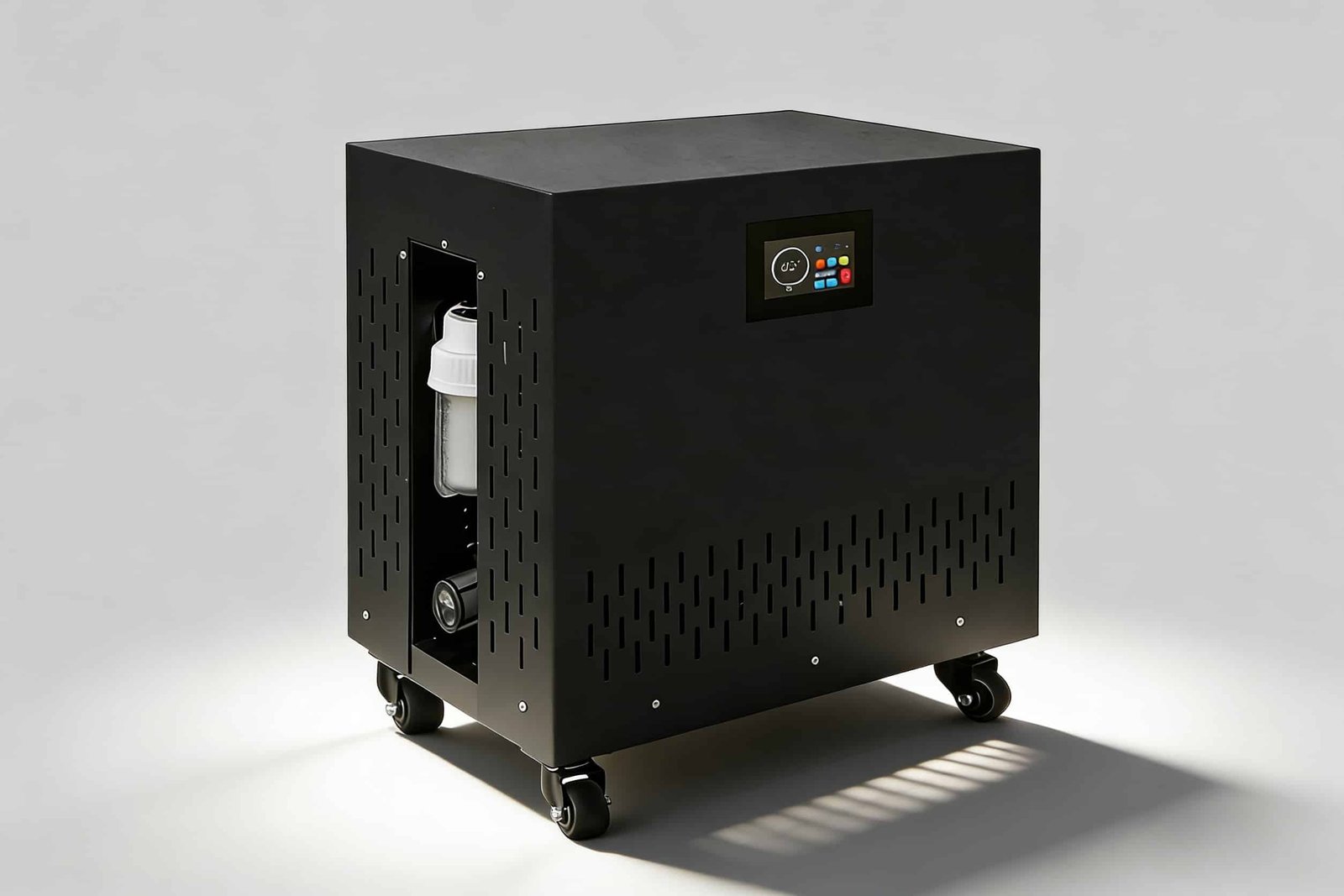
- Built-in ozone sanitation. This is non-negotiable. PT clinics see multiple patients per day, often with open wounds or surgical sites in the recovery phase. Manual chemical treatment between patients isn’t realistic and isn’t safe. Smart controlled chiller systems with integrated ozone are built for exactly this multi-user clinical use.
- Adjustable temperature across the 0–15°C range. Different patients and different protocols need different temperatures. A fixed-temp unit doesn’t give you clinical flexibility.
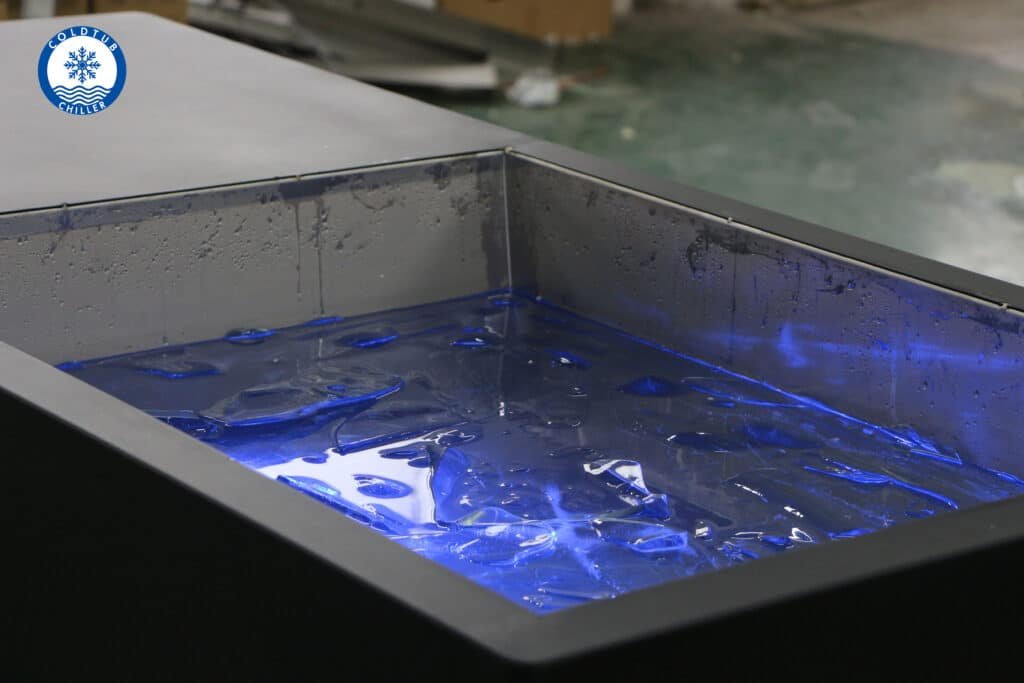
- Easy cleaning and surface sanitation between patients — non-porous stainless steel interior, accessible drain, smooth surfaces.
- Quiet operation. Treatment rooms next door, patient conversations, the general clinical atmosphere — a loud compressor disrupts all of it.
- WiFi monitoring and logs. For clinical documentation and infection-control records, automated temperature and usage logs save real administrative time.
For most PT clinics, a 1HP smart chiller with ozone and adjustable temperature handles the requirements with margin. The CHU-15-RV 0°C smart chiller is a common clinical specification when sub-4°C temperatures are part of the protocol, because it holds those temperatures under repeated patient use without struggling.
PT Clinic Equipment Needs vs Other Recovery Facilities
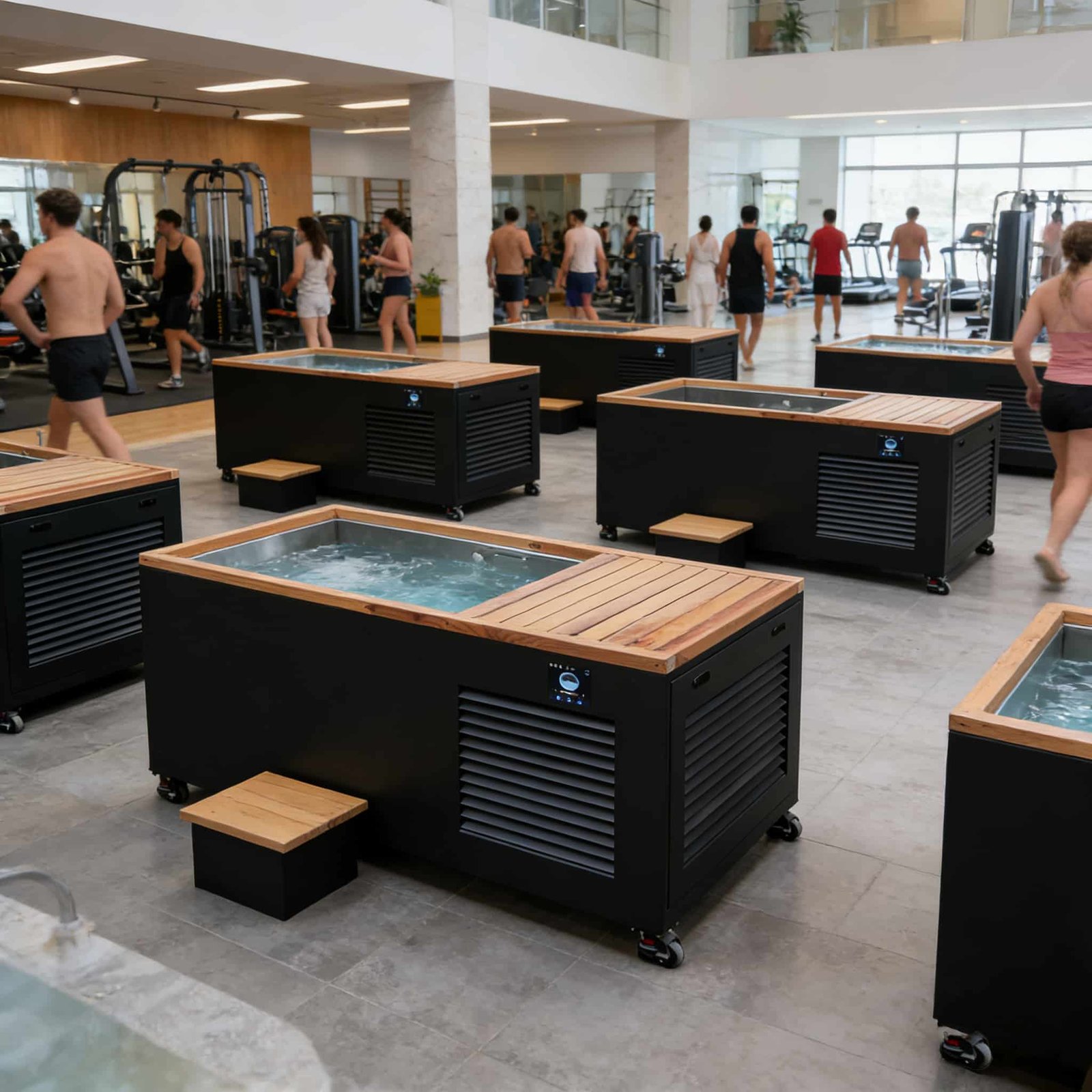
PT clinics have specific requirements that overlap with — but aren’t identical to — gyms, spas, and wellness studios. Where the differences show up:
| Requirement | PT Clinic | Gym | Spa | Sports Center |
|---|---|---|---|---|
| Cooling capacity | 1–1.5 HP | 1–1.5 HP | 1 HP | 1.5–2 HP |
| Adjustable temp range | Critical (0–15°C) | Important | Less critical | Important |
| Ozone sanitation | Required (open wounds, surgical patients) | Required | Required | Required |
| Noise tolerance | Very low | Higher | Low | Higher |
| Patient documentation | Required (clinical records) | Not needed | Not needed | Sometimes |
| Aesthetic | Clinical, clean | Industrial OK | Premium | Functional |
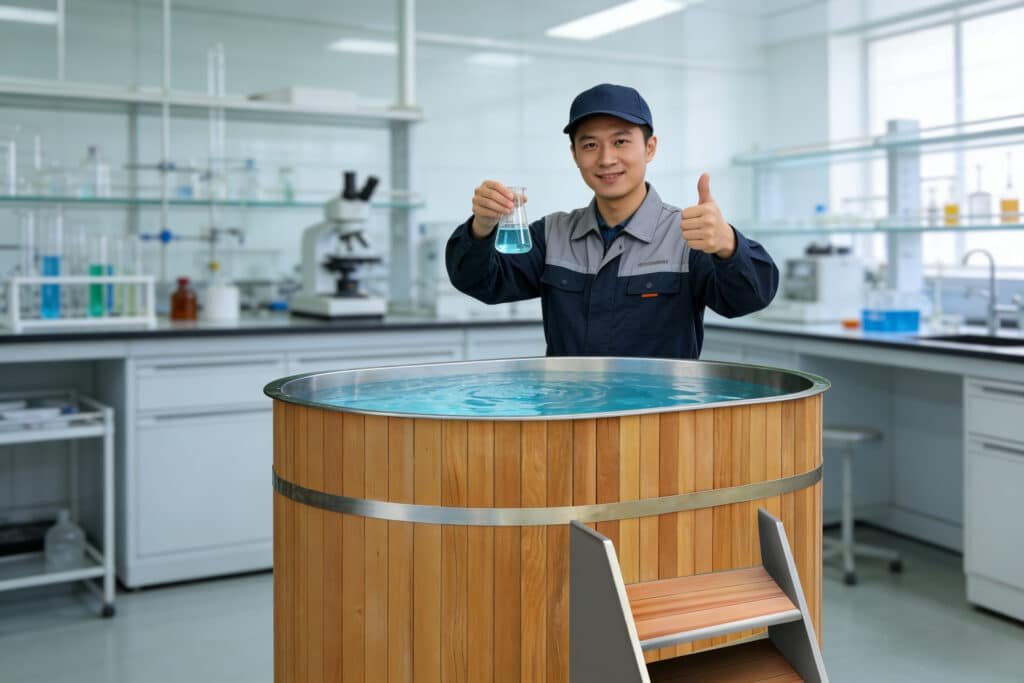
The most clinic-specific factors are the wider temperature range and the documentation needs. Many PT clinics also place a higher premium on aesthetics that signal “clinical” rather than “wellness” — stainless steel rather than wood, clean lines, visible cleanliness. For other commercial recovery installations, see our commercial cold plunge for gyms and cold plunge for wellness studios guides.
Treatment Protocols and Patient Safety
This is where PT clinics get cold plunge right or wrong. The clinical protocols you put in place protect outcomes and protect you.
A baseline protocol looks like this:
- Screening — Every new patient completes a contraindications screening before first use. Cardiovascular history, blood pressure, Raynaud’s, current medications, recent surgery.
- Physician clearance for any patient in the early post-surgical window or with significant cardiovascular history.
- Temperature selection based on protocol — 10–15°C for general recovery, 5–10°C for athletic recovery, sub-5°C only for specific protocols and experienced users.
- Session duration — Start patients at 1–2 minutes, build to 3–5 minutes maximum. Longer isn’t better and increases risk.
- Supervision for first-time users and any patient with cardiovascular risk. After the initial visit, most patients can use independently with staff in the building.
- Documentation — Record temperature, duration, and any patient-reported effects in the clinical notes.
A few practical notes from clinics that have done this for a few years:
- The first session is the most important. Walk the patient through breathing, entry, and what to expect. A bad first experience is hard to recover from.
- Cold shock response (the involuntary gasp on entry) is normal but startles first-timers. Coach breathing before they get in.
- Have warm towels and a recovery space immediately available. Patients don’t want to walk through the waiting room shivering.
- Update consent forms to include cold plunge as a treatment modality. Your malpractice carrier may want this on file.
Cold Plunge ROI for Physical Therapy Clinics
The investment math for a PT clinic is generally stronger than for a gym or studio, because clinics can charge clinical-grade pricing for sessions and have an existing patient base to upsell.
Equipment cost (factory-direct from manufacturer):
| System | Wholesale FOB |
|---|---|
| 1 HP commercial chiller + clinical-grade tub | $2,000–3,500 |
| All-in-one stainless steel system | $3,000–5,500 |
| Premium 0°C ice-making system | $4,500–8,000 |
US distributor retail is typically 30–50% higher. For a clinic budget, that’s $1,500–3,000 of margin you keep by sourcing direct.
Revenue streams a PT clinic can layer:
| Revenue stream | Typical pricing |
|---|---|
| Recovery session (cash pay) | $25–50 |
| Add-on to PT visit | $15–25 |
| Recovery membership | $60–150/month |
| Sports recovery package (10 sessions) | $200–400 |
A worked example for a typical mid-size clinic:
- Equipment cost: $4,000 (factory-direct mid-range system)
- 30 paid recovery sessions/week × $35 average = ~$54,000/year
- 20 add-ons to existing PT visits × $20 = ~$20,000/year
- 15 recovery memberships × $100/month = ~$18,000/year
That’s roughly $90,000 in added annual revenue against a $4,000 equipment cost. Even cutting those numbers in half for a smaller or newer clinic, the equipment pays for itself well inside the first year.
The non-monetary benefits compound. Clinics that offer cold plunge see better patient retention, more referrals from athletic communities, and clearer differentiation from commodity PT practices.
Common Mistakes PT Clinics Make Buying Cold Plunge
Five errors that come up over and over. Each one is avoidable:
- ❌ Buying a consumer-grade unit. It fails inside a year of clinical use. Specify commercial 1–1.5 HP with continuous-duty rating.
- ❌ No ozone sanitation. Manual chemical treatment between patients isn’t realistic in a clinical environment. This is a hard requirement, not an option.
- ❌ Fixed-temperature systems. Clinical use needs adjustable temperature. A fixed-temp chiller locks you into one protocol.
- ❌ Skipping the contraindications screening. This is both a clinical safety issue and a liability one. Build it into intake.
- ❌ Paying retail through a distributor. Factory-direct is 30–50% cheaper. For a clinic budget, the savings buy you a meaningfully better system or a faster ROI.
Sourcing for Single Clinics vs Multi-Location Practices
How you source depends on the scale of your practice.
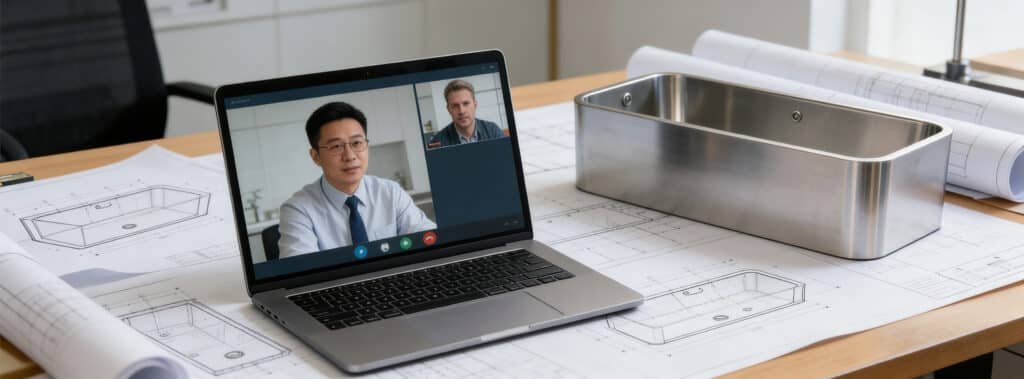
A single clinic can go either way. A domestic distributor delivers faster but costs 30–50% more. Sourcing factory-direct from a cold plunge chiller manufacturer saves real money but adds 4–8 weeks of lead time. Most clinic owners working to a budget find the savings worth the wait.
Multi-location practices and PT chains don’t have the same choice. Outfitting 3, 5, or 10 clinics through a distributor at full markup costs tens of thousands of dollars that buying direct would save. For chains, the only economical model is direct-from-manufacturer with custom-branded systems across all locations — covered by our OEM cold plunge solutions program, which is built for exactly this kind of multi-site rollout.
Whichever path you take, verify the manufacturer’s certifications before ordering — CE, ETL, SAA, PSE for clinical use, plus ISO 9001 production, verifiable through the official ISO 9001 quality management standard registry. For a clinic, uncertified equipment is a liability problem on top of a customs problem.
Reputable suppliers in this category include the manufacturers covered in our cold plunge manufacturers comparison — useful background reading before committing to any factory relationship.
How to Get a Quote for Your PT Clinic
For a serious quote, prepare:
- Clinic type and expected patient/session volume
- Single location or multi-site
- Indoor installation, drainage available, electrical capacity
- Target HP and temperature range
- Required certifications
- Target lead time
- OEM/branding needs (for multi-site)
A capable manufacturer responds within 24–48 hours with configuration options and pricing.
Get a free quote — OMNI Ice typically replies within 24 hours with factory-direct pricing and configuration recommendations for clinical use.
Cold Plunge for Physical Therapy FAQ
Is cold plunge therapy covered by insurance?
Generally no, not as a standalone billing code. Most PT clinics offer cold plunge as a cash-pay service outside the insurance model — recovery sessions, memberships, or add-ons. This is actually part of the business case: it generates revenue insurance doesn’t reach.
What temperature should a PT clinic set the cold plunge at?
Range matters more than a single setting. 10–15°C works for general recovery and first-time patients. 5–10°C is the standard athletic recovery range. Sub-5°C is reserved for specific protocols and experienced patients. A chiller with adjustable temperature is essential for clinical flexibility.
How long should a patient stay in?
Start first-time patients at 1–2 minutes. Build to 3–5 minutes for regular users. Beyond 5–6 minutes there’s no additional clinical benefit and increasing risk.
Who shouldn’t use cold plunge?
Patients with significant cardiovascular disease, uncontrolled hypertension, Raynaud’s, certain post-surgical conditions, or who are pregnant should not use cold plunge without physician clearance. Build a contraindications screening into intake.
How is the water kept clean between patients?
Built-in ozone sanitation runs continuously and handles the multi-patient load that manual chemical treatment can’t. Daily upkeep is under 15 minutes — temperature check, surface wipe, app review. Monthly tasks add a water change and filter inspection.
What size cold plunge does a PT clinic need?
For most clinics, a 1 HP commercial chiller paired with a single-person stainless steel tub is enough. Higher-volume clinics or those running multiple patients per hour should specify 1.5 HP. For elite sports rehab where sub-4°C temperatures are part of the protocol, a 1.5–2 HP system designed for true 0°C performance is appropriate.
Can a PT chain get custom-branded cold plunge systems across locations?
Yes. OEM and private-label manufacturing covers custom branding, custom housing, and spec-consistent systems across all clinic locations. Development runs 6–10 weeks from brief to samples, with MOQ typically starting at 10 units. This is standard for multi-location healthcare practices.
Adding Cold Plunge to Your PT Clinic in 2026
Cold plunge has crossed from elite sports facility into mainstream PT practice because the equipment got better, quieter, and more affordable, and because patients started asking for it. Clinics that add it well — commercial-grade equipment, proper protocols, factory-direct sourcing — get a clinical tool that improves outcomes and a revenue stream that doesn’t depend on insurance.
OMNI Ice manufactures commercial cold plunge systems for physical therapy clinics, sports recovery centers, and multi-location healthcare practices worldwide — factory-direct pricing, OEM and private-label support for PT chains, CE/ETL/SAA/PSE certification, DDP shipping, and a 1-year commercial warranty on every unit.
Get a Free Quote — reply within 24 hours.