For international recovery equipment brands, wellness distributors, and commercial gym franchisors, selecting a dedicated original equipment manufacturer (OEM) for cold immersion machinery is a multi-million-dollar operational decision. The global surge in contrast therapy demand has attracted dozens of consumer intermediaries and trading agents masquerading as direct production facilities. Sourcing cold plunge chillers and insulated tubs directly from a genuine cold plunge manufacturer requires navigating exact engineering capabilities, tooling fee boundaries, batch lead times, and global import compliance. This cold plunge oem procurement guide outlines the real manufacturing realities overseas buyers must audit before transferring capital: from custom sheet metal fabrication and pure titanium heat exchangers to ocean freight container stuffing and target-market electrical safety certifications.
OEM Scope Tiers: White-Label Customization vs. Full Custom Tooling
When establishing an overseas manufacturing partnership, procurement teams should understand that manufacturing customizations fall into three distinct tiers based on design complexity, initial tooling investment, and batch commitment:
- Tier 1: Agile White-Label & Cosmetic Branding (MOQ 5 to 10 Units): Built upon field-proven base chassis such as the compact CH-08-RV-Ⅱ Compact Chiller or commercial CHU/CHM platforms. Customization includes precision laser-etched stainless steel branding plates, custom industrial powder-coated cabinet colors, private-label packaging crates, and custom digital controller firmware startup screens displaying your brand logo. This tier requires zero metal stamping tooling and offers rapid 7-to-10-day sample fulfillment.
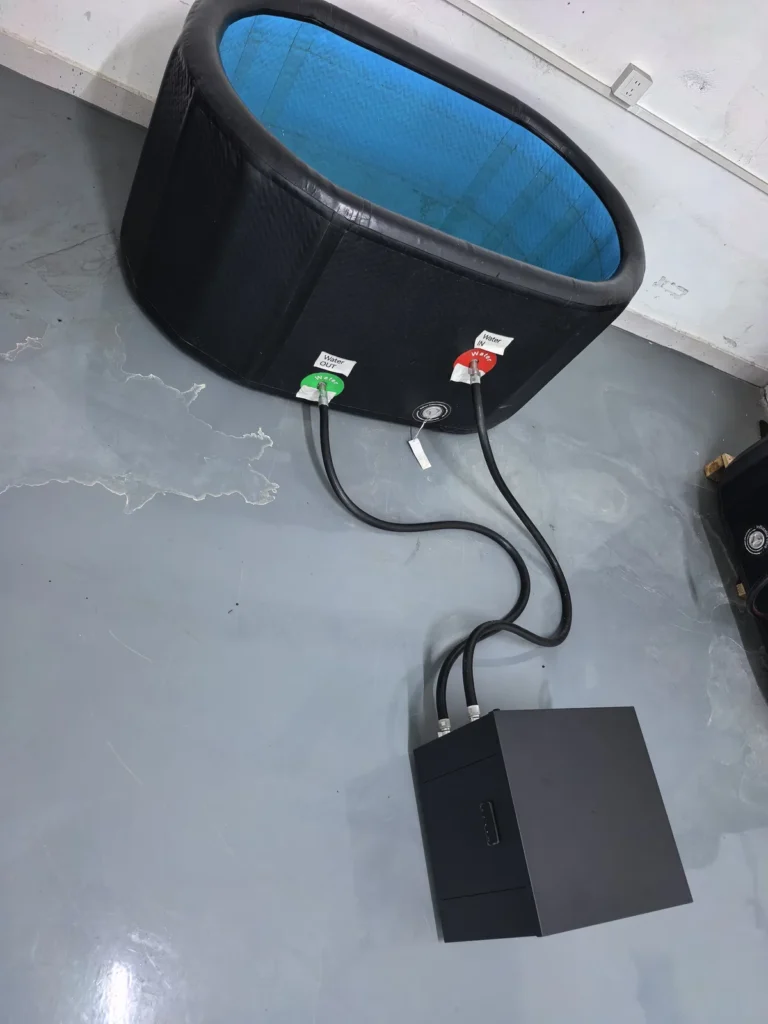
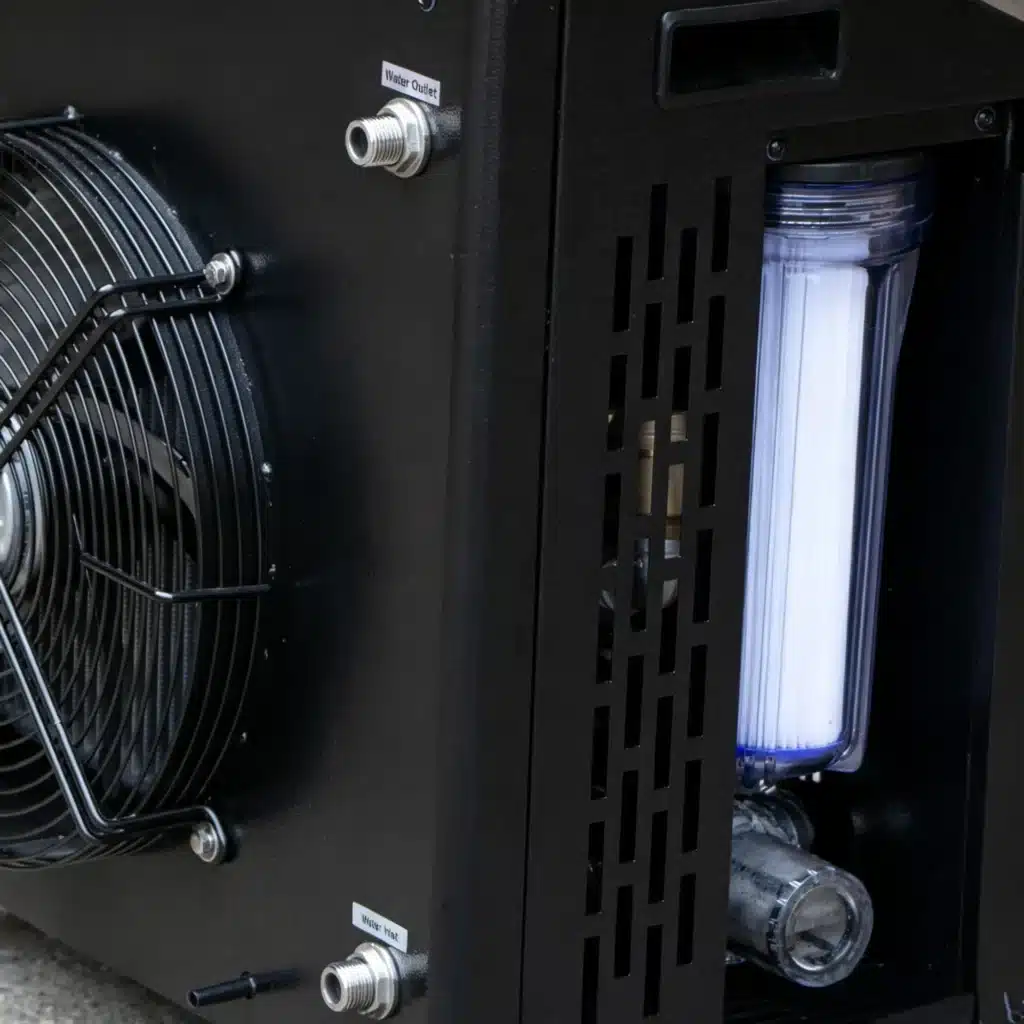
- Tier 2: Semi-Custom Hydraulic & Component Configurations (MOQ 20 to 50 Units): Modifications to water circulation ports, including relocating supply/return bulkheads to match specific tub geometries, upgrading to heavy-duty external 5-inch micron filtration housings, or integrating private Tuya-based IoT smart mobile applications with branded cloud dashboards. Tooling costs are minimal or absorbed into initial volume commitments.
- Tier 3: Bespoke Sheet Metal & Full Structural Tooling (MOQ 100+ Units): Dedicated ground-up industrial engineering involving unique exterior sheet metal stamping dies, custom injection-molded acrylic shells, bespoke composite tub molds, and proprietary internal component layout. Tooling fees are not arbitrary flat rates; they are quoted transparently based on exact engineering CAD complexity, material tonnage, and custom die requirements (typically ranging from a few thousand dollars for custom laser-cut chassis to higher tooling capital for complex progressive metal dies and thermoforming molds).
Production Lead Times: The Real Timeline from Sample Approval to Container Loading
A common friction point between Western procurement teams and overseas factories is realistic manufacturing lead times. Direct factory production is not instant off-the-shelf fulfillment. While an initial evaluation sample requires 7 to 10 days for precision assembly and factory quality testing, commercial mass production follows a structured industrial schedule.
Once the evaluation sample has passed all operational benchmarks and the buyer issues formal sign-off, standard batch mass production requires 30 to 35 days. This timeframe accommodates precision laser cutting of galvanized or stainless steel chassis, powder-coating curing cycles, winding and welding of pure titanium coaxial heat exchangers, automated refrigerant vacuuming and charging, multi-stage wiring harness loom assembly, and mandatory individual testing. Sourcing directors must incorporate this 30-to-35-day manufacturing window—alongside 20 to 35 days of ocean freight transit—into their inventory replenishment cycles to avoid running out of stock during peak sales quarters.
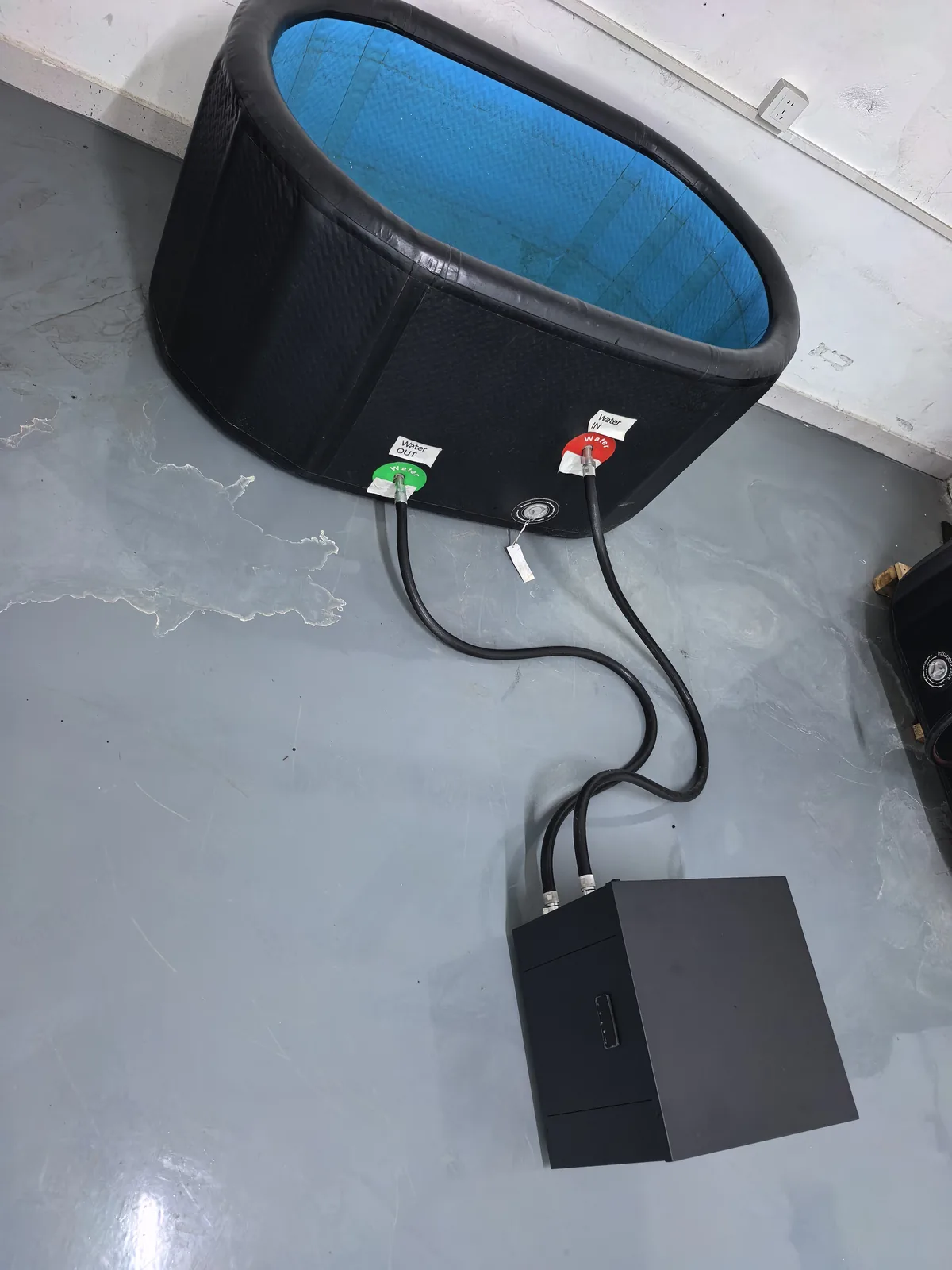
Refrigeration & Hydraulic Engineering: Factory Capabilities That Matter
When vetting a prospective oem cold plunge chiller solutions provider, technical buyers must scrutinize internal mechanical components rather than flashy digital renderings:
- Pure Titanium Coaxial Evaporators: The heart of a commercial chiller is its heat exchanger. Consumer chillers frequently cut costs by utilizing brazed stainless steel plate exchangers, which develop microscopic chloride corrosion pinholes within 12 to 18 months of chemical exposure. Direct OEM manufacturers engineer heavy-wall pure titanium coaxial spiral heat exchangers, guaranteeing 100% resistance to chlorine, bromine, and salt-water plunge sanitizers over a decade of continuous service.
- Continuous-Duty Brushless DC Pumps: Commercial circulation demands high-volume, low-cavitation fluid transfer. Commercial-grade systems integrate 88W brushless DC magnetic-drive pumps delivering 16 to 25 GPM (gallons per minute) of fluid velocity. Magnetic drive isolation prevents mechanical shaft seal failure and protects the pump motor from water intrusion during high-turnover duty cycles.
- Eco-Friendly Low-GWP Refrigerant Circuits: Compliance with international environmental treaties dictates refrigerant selection. Factory production lines must support modern, low Global Warming Potential (GWP) refrigerants—specifically R290 (propane) and R32—featuring hermetically sealed, nitrogen-pressure-tested refrigeration loops with automated electronic leak detection before final packaging.
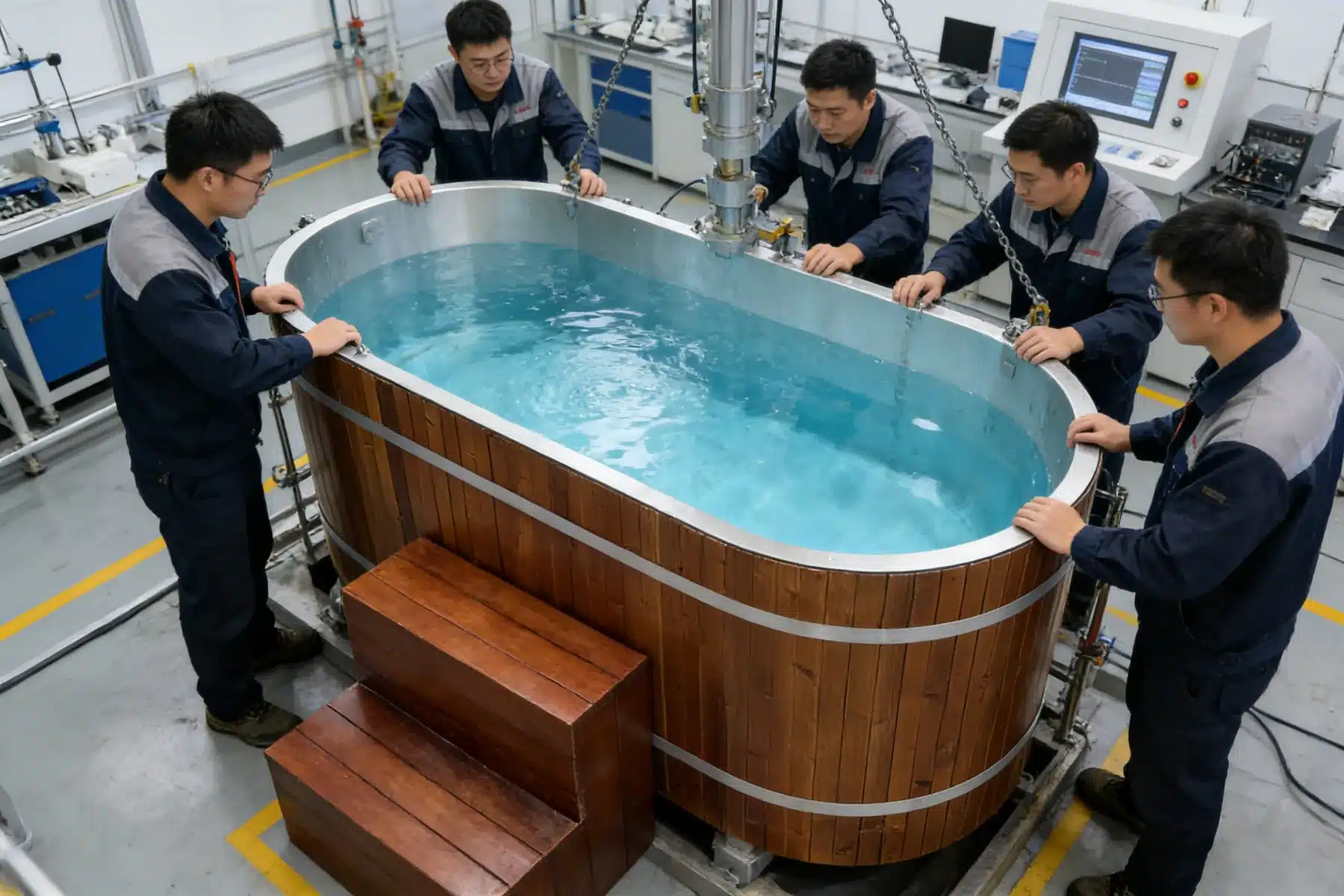
Tub Vessel Architecture: Wood-Plastic Composites, Solid Cedar & Marine Stainless Steel
A complete cold recovery solution pairs the refrigeration machine with a durable, heavily insulated tub vessel engineered to withstand harsh localized environments—from intense 50°C Middle Eastern desert heat to sub-freezing Scandinavian winters.
Established manufacturers offer specialized hull engineering:
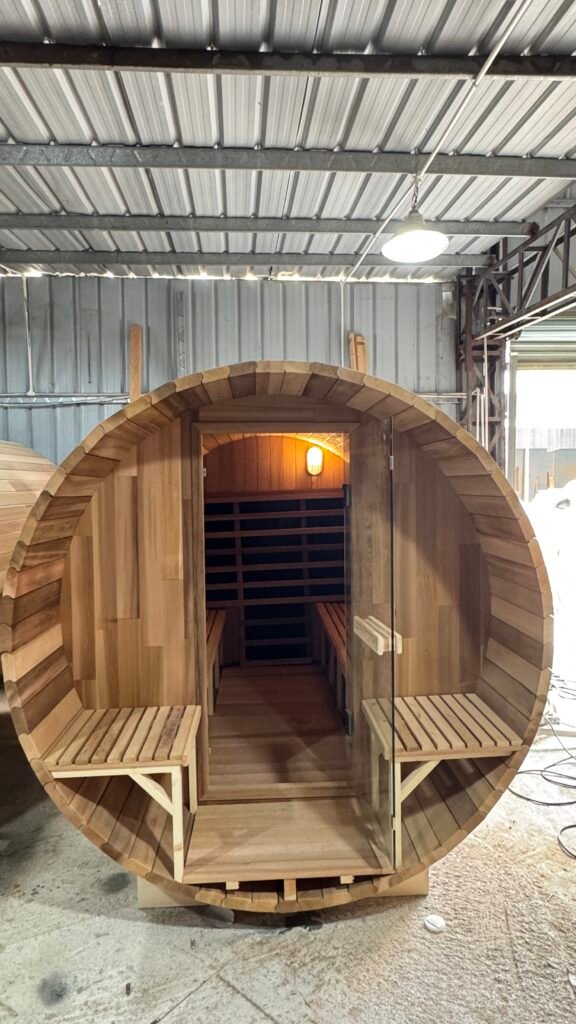
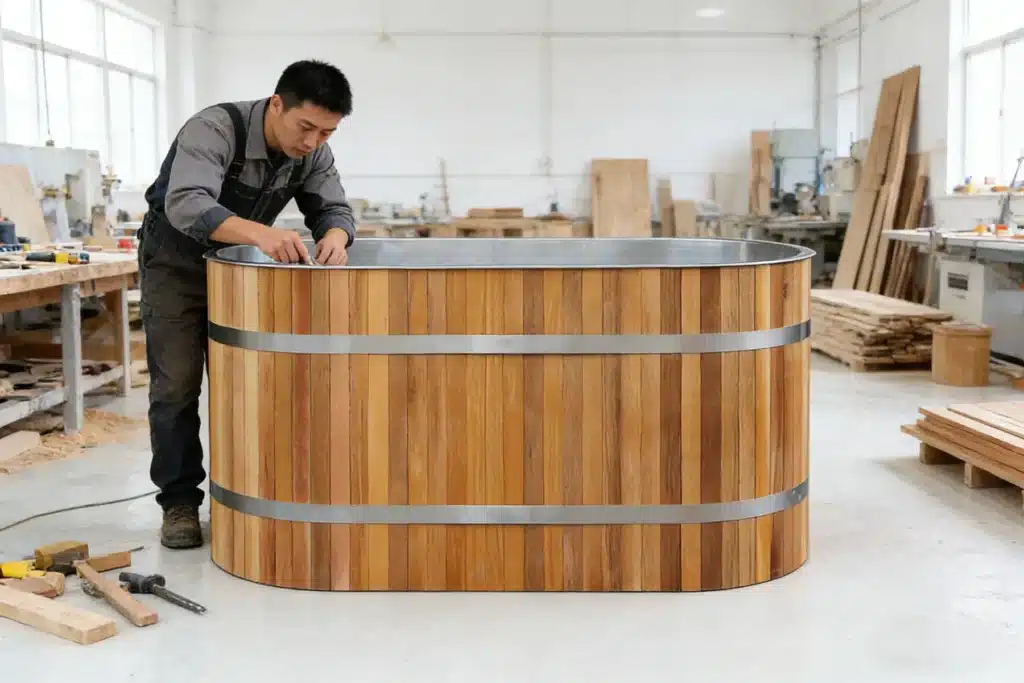
- Hybrid Weatherproof Tubs: Models like the WT-05 Hybrid Cold Plunge Tub combine exterior high-density Wood-Plastic Composite (WPC) or preserved Canadian Red Cedar staves with an interior laser-welded 304/316 marine-grade stainless steel basin. WPC exterior cladding provides complete immunity to UV degradation, wood rot, and termite damage, making it the preferred choice for outdoor commercial installations in coastal or desert resort hubs like Dubai.
- WT-11-2 Ice-Making Cold Plunge: For projects considering the WT-11 ice making plunge tub, the WT-11-2 catalogue lists a 304 stainless steel configuration and a gross weight of 220 kg. Review the current equipment, dimensions and site requirements with the supplier.
Global Export Compliance: Assisting with Electrical Safety & Medical Approvals
Importing electrical appliances into developed consumer markets requires strict adherence to regional safety standards. Sourcing directly from an experienced cold plunge supplier ensures brand owners receive full engineering compliance documentation rather than vague marketing assurances.
A credible OEM partner assists brand owners with comprehensive regulatory certification pathways:
- North American Market Compliance (ETL / UL Standards): Direct assistance in obtaining or extending ETL/UL listings under UL 1082 and UL 1995 standards, covering dielectric withstand (Hi-Pot) safety, ground continuity testing, and integrated Class-A Ground Fault Circuit Interrupter (GFCI) protection.
- European Market Compliance (CE / RoHS / LVD / EMC): Providing full Low Voltage Directive (LVD) test reports, Electromagnetic Compatibility (EMC) testing, and RoHS chemical composition documentation required for legal customs clearance and CE marking throughout the EU.
- Custom Brand Co-Certification: For established private-label clients ordering recurring container volumes, the factory engineering department coordinates directly with accredited testing laboratories (such as Intertek, TÜV, or SGS) to process formal private-label brand certificates and test reports registered directly under the client’s corporate name.
Ocean Freight Logistics & Destination Port Fulfillment
Export logistics for heavy refrigeration machinery involves stringent cargo handling standards. Machinery shipped across thousands of nautical miles faces severe vibration, humidity, and temperature variations.
Direct factory export protocol includes:
- Non-Fumigation Solid Plywood Crating: Full heavy-gauge plywood perimeter framing featuring internal high-density EPE foam corner buffers, desiccant packs to prevent moisture condensation on internal electronics, and reinforced bottom skids engineered for standard forklift entry.
- Dangerous Goods (DG) Refrigerant Documentation: Full provision of manufacturer Material Safety Data Sheets (MSDS), UN transport documentation, and factory air/sea freight inspection declarations for hermetically sealed compressors.
- Comprehensive Shipping Incoterms: Flexible logistics support ranging from standard FOB (Free On Board) and CIF (Cost, Insurance & Freight) to full door-to-door DDP (Delivered Duty Paid) shipping to major global container hubs—including Jebel Ali (Dubai), Long Beach (USA), Rotterdam (Europe), and Sydney (Australia)—handling all export customs declarations, ocean vessel booking, and destination port clearance support.
Factory Acceptance Testing (FAT) Protocol
Before any container doors are locked, reputable OEM factories execute a rigorous Factory Acceptance Testing (FAT) regimen on every individual production unit:
- 48-Hour Continuous Hydro-Thermal Pulldown Run: Units are plumbed to dedicated testing basins, charged, and run continuously for 48 hours to measure water pulldown rate from 25°C to 3°C, verifying consistent compressor operating temperature and stable electrical current draw.
- 45 PSI Hydrostatic Pressure Leak Test: Circulation plumbing circuits, internal titanium coils, and pump housings are pressurized to 45 PSI for 24 continuous hours to ensure absolute zero fluid seepage.
- Acoustic & Vibration Decibel Audit: Verifying that compressor acoustic jackets and anti-vibration rubber damper feet maintain noise levels below 58 to 62 dB(A) at a 1-meter radius.
For international buyers seeking a customized quote, detailed CAD technical data sheets, or a sample evaluation order, reach out directly through our en-cold-plunge-chiller-supplier-contact portal to connect with our senior manufacturing engineering team.
Chassis Fabrication & Anti-Corrosion Finishing: Laser Cutting, Bending & Outdoor Powder Coating
In outdoor coastal installations, commercial spa terraces, and high-humidity gym recovery rooms, chiller cabinets face severe atmospheric attack. Substandard equipment utilizing painted mild steel or low-grade sheet metal develops seam rust, paint blistering, and structural corrosion within eighteen months of deployment. Professional OEM manufacturing employs high-precision CNC fiber laser cutting followed by automated multi-axis press-brake bending of heavy-gauge electro-galvanized (SGCC) steel or optional 304/316 stainless steel chassis panels.
Corrosion resistance is determined by surface pre-treatment and powder chemistry. Authentic commercial chillers undergo an automated multi-stage pre-treatment wash including alkaline degreasing, zinc phosphate conversion coating, and deionized water rinsing to ensure absolute mechanical adhesion of the outer finish. Cabinets are electrostatically coated with architectural-grade AkzoNobel outdoor polyester thermoset powder coat cured at 200°C for twenty minutes. This industrial finishing process achieves a minimum 1,000-hour salt spray corrosion resistance rating (ASTM B117 compliance), ensuring that equipment placed on oceanfront resort patios or exposed rooftop recovery suites maintains pristine aesthetic branding without rust streak degradation.
Internal structural dampening is equally critical for commercial longevity. Precision-cut internal divider bulkheads physically isolate the high-temperature condenser exhaust fan compartment from the cold hydraulic pump and electronics zone. Compressors are seated on heavy molded EPDM vibration-isolation grommets, paired with sound-deadening closed-cell acoustic foam blankets wrapped around the compressor shell. This structural isolation prevents metal fatigue on copper refrigeration joints while dampening harmonic operational hum below 58 dB(A).
Regulatory Certification Dossiers: Navigating Factory Audits and Safety Compliance
Western retailers, commercial fitness chains, and Amazon Brand Registry sellers face severe legal liability and immediate customs seizure if imported electrical cooling equipment lacks valid third-party safety certification. However, many overseas trading intermediaries falsely claim certification by providing generic component-level CE certificates for a cooling fan or power cord, rather than a whole-machine system listing.
A legitimate OEM manufacturing partner provides comprehensive regulatory support across three distinct compliance domains:
- North American Field Labeling & ETL System Listing: Sourcing machinery for the US and Canadian markets requires end-to-end certification under UL 1082 (household and commercial liquid heating/cooling appliances) and CSA C22.2 No. 64. Our engineering department works directly with testing bodies (such as Intertek or TÜV) to manage factory quarterly follow-up audits, maintain the official Factory Inspection Report (FIR), and apply accredited cETLus safety labels to finished export units.
- European Union CE Machinery Directive & Low Voltage Compliance: Complete CE compliance dossiers require verification across the Machinery Directive 2006/42/EC, Low Voltage Directive 2014/35/EU, and Electromagnetic Compatibility (EMC) Directive 2014/30/EU. We provide buyers with complete technical construction files (TCF), risk assessment matrices, and accredited test laboratory reports confirming that electronic motor controllers do not emit electromagnetic interference that could disrupt gym audio systems or commercial WiFi networks.
- RoHS & REACH Environmental Testing: European and UK regulations strictly restrict hazardous substances in electrical equipment. Production batches undergo XRF spectroscopic material screening to verify compliance with RoHS Directive 2011/65/EU, guaranteeing zero restricted heavy metals (lead, cadmium, mercury, hexavalent chromium) or flame retardants in electrical wiring, circuit boards, and plumbing seals.
For high-volume retail brands requiring exclusive private-label certificate numbers registered directly under their corporate business entity, our compliance engineers handle the administrative and technical paperwork, submitting component traceability dossiers directly to the certification authorities to ensure seamless regulatory audits and rapid market entry.
Frequently Asked Questions (OEM Procurement FAQ)
What is the minimum order quantity (MOQ) for custom brand labeling?
Standard white-label branding—including laser-engraved stainless steel logo badges, custom exterior powder-coating, and branded carton packaging—is available starting from a flexible MOQ of just 5 to 10 units. Custom tooling involving new sheet metal stamping dies or proprietary mold tooling is evaluated on project engineering requirements, typically starting at 50 to 100 units.
What is the lead time for sample units versus full container production?
Initial evaluation sample units require approximately 7 to 10 days for assembly, calibration, and 48-hour factory testing. Following formal sample approval by the buyer, standard commercial batch production requires 30 to 35 days prior to container loading at the port.
How are warranty replacements and technical spare parts handled overseas?
OEM contracts include a standard 2% to 3% complimentary consignment of critical wear components (including digital flow sensors, 5-micron filter cartridges, O-ring seals, and ozone check valves) packed directly inside the export container. In the event of an unexpected component failure during the warranty period, replacement modules are dispatched via priority international express air courier within 48 business hours.