The most common mistake facilities make when buying a commercial cold plunge chiller is treating it like a home purchase. They find a chiller with the right HP rating, check the price, and place the order. Six months later the compressor is struggling, the water temperature is inconsistent between sessions, and the maintenance team is dealing with a unit that was simply not built for the workload it is being asked to handle.
A gym running 30 cold plunge sessions per day is not the same environment as a home user doing one session every morning. The HP requirement is different. The duty cycle requirement is different. The water management requirement is different. And the cost of getting it wrong — in downtime, repairs, and member dissatisfaction — is far higher than the price difference between a consumer-grade and commercial-grade unit.
This guide covers what commercial cold plunge chiller buyers actually need to know before making a decision. As a cold plunge chiller manufacturer supplying gyms, hotel spas, and wellness brands across more than 80 countries, OMNI Ice has seen both ends of this — facilities that got it right from day one and ones that learned the hard way.
The Core Difference Between Consumer and Commercial Cold Plunge Chillers
It is not just HP. That is the misunderstanding most buyers start with. A consumer chiller and a commercial chiller at the same HP rating are not equivalent products — they are built for fundamentally different operating conditions.
Duty cycle is the real differentiator. A consumer-grade chiller is designed to run at roughly 50 to 70% duty cycle — meaning the compressor cycles on and off, resting between cooling cycles. In a home cold plunge with one or two sessions per day, this is perfectly adequate. The water temperature holds between sessions, the chiller cycles normally, and the compressor lasts for years.
In a commercial facility running back-to-back sessions, body heat from each user raises the water temperature continuously. The chiller must respond to each heat load immediately, which means the compressor runs at much higher duty cycles — sometimes continuously during peak hours. A consumer-grade compressor running at 90 to 100% duty cycle for hours at a time will fail significantly earlier than its rated lifespan. A commercial-grade compressor is designed for exactly this workload.
According to ASHRAE commercial refrigeration standards, commercial refrigeration equipment must be rated for sustained operation at high ambient temperatures and continuous load conditions. This is the specification standard that separates equipment designed for commercial use from consumer-grade products — and it is not visible in the HP number alone.
What HP Does a Commercial Cold Plunge Chiller Actually Need?
The answer depends on three variables: tub volume, daily session volume, and ambient temperature. Here is the practical breakdown from real commercial deployments.
| Facility Type | Daily Sessions | Tub Volume | Minimum HP | Recommended OMNI Ice Model |
|---|---|---|---|---|
| Boutique studio, light use | 5–15 | 200–300L | 1HP | CHU-10-RV |
| Mid-size gym, moderate use | 15–30 | 300–400L | 1.5HP | CHU-15-RV |
| Large gym or hotel spa, heavy use | 30–60 | 400L+ | 2HP+ | CHU-15-RV or custom |
| High-traffic commercial facility | 60+ | Any | 2HP+ with redundancy | Custom OEM solution |
These figures assume a well-insulated tub in a controlled indoor environment. Outdoor installations or facilities in hot climates need an additional 0.5HP across each tier. For the full technical breakdown of how HP requirements scale with volume and ambient conditions, see our cold plunge chiller HP guide.
The calculation that matters most: how quickly can the chiller recover temperature between sessions? If a user session adds 1.5°C to the water temperature, and your next session starts in 15 minutes, the chiller has 15 minutes to remove that heat load. An undersized commercial chiller cannot keep up with this recovery demand during peak hours — and members notice immediately when the water is not as cold as advertised.
Temperature Recovery Time: The Metric Nobody Talks About
Most buyers focus on how long it takes to cool the water initially. For commercial use, the metric that matters far more is temperature recovery time between sessions — how quickly the chiller can return to target temperature after a user session adds heat to the water.
A typical cold plunge session from a 75kg user adds approximately 0.8 to 1.5°C to a 300-litre tub, depending on session length and initial body temperature. If your facility runs sessions every 20 minutes, your chiller needs to remove that heat load within 20 minutes while maintaining target temperature.
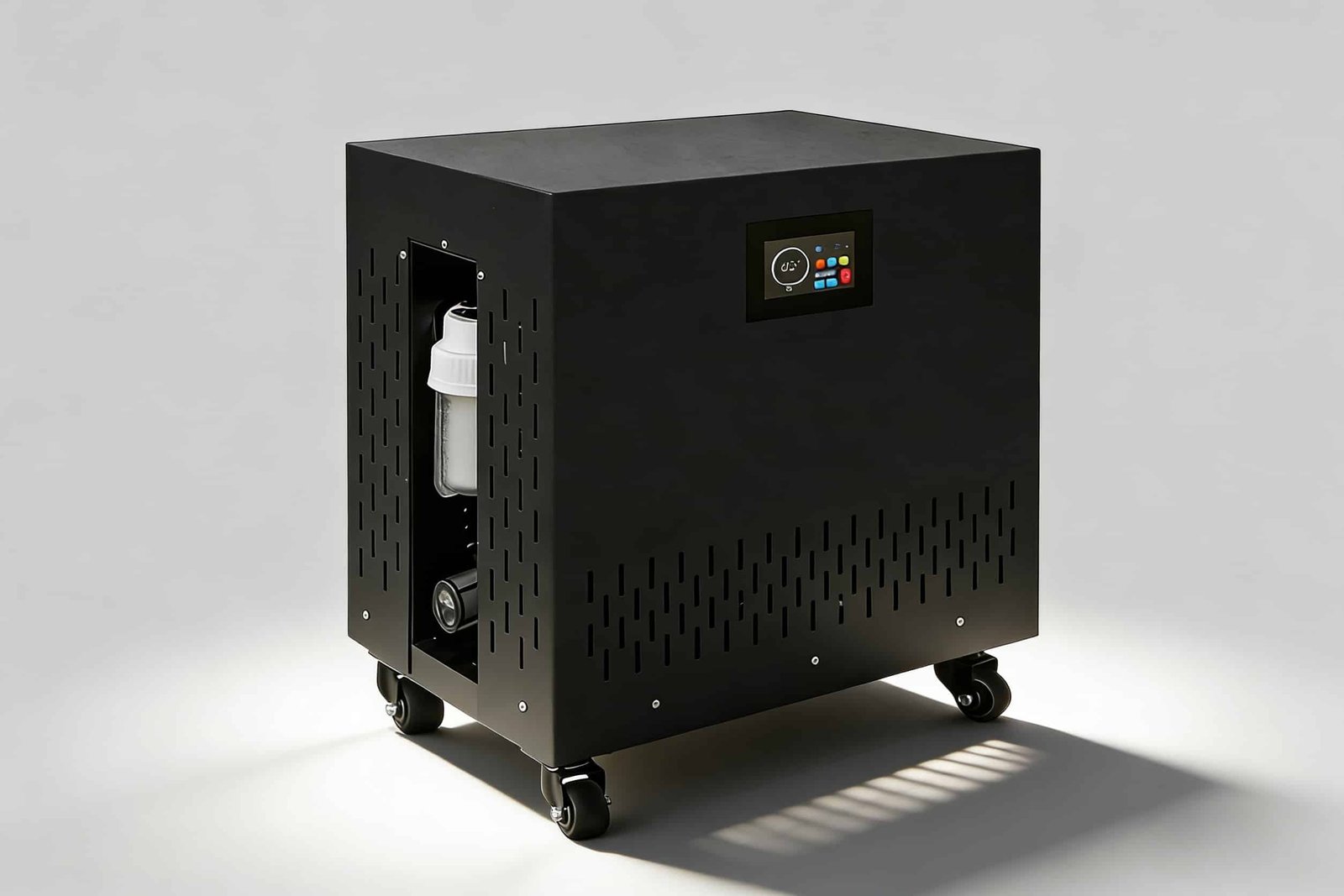
At OMNI Ice, our factory testing shows that our 1.5HP CHU-15-RV recovers 1°C in a 300-litre insulated tub in approximately 8 to 12 minutes at 20°C ambient. This makes it suitable for sessions every 15 to 20 minutes in moderate commercial use. For facilities running sessions every 10 minutes or less, a 2HP specification is the practical minimum.
Water Management in Commercial Settings
This is where most commercial buyers underestimate the operational difference between home and commercial use. A home cold plunge with one user per day needs a water change every 30 to 60 days with proper filtration and sanitation. A commercial facility with 30 daily users needs a completely different approach.
Each user introduces body oils, skin cells, and bacteria to the water. Without adequate filtration and sanitation, water quality degrades within days at commercial use levels — creating both a hygiene risk and a maintenance burden. The filtration and sanitation system is not an optional add-on for commercial installations — it is a core operational requirement.
OMNI Ice commercial cold plunge chillers include ozone disinfection as standard. Ozone is the professional standard for commercial cold plunge water management — it kills bacteria and viruses without chemical residue, does not affect pH, and does not irritate skin. Paired with an external cartridge filter that captures particulates, it handles the water management demands of high-traffic commercial use without requiring daily chemical addition.
For very high-traffic facilities — more than 50 sessions per day — a UV sanitisation system in addition to ozone provides an extra layer of protection. The combination of mechanical filtration, ozone disinfection, and UV sanitisation is the professional standard used in commercial spa installations globally.
The ROI Case for Getting the Chiller Right
A cold plunge installation in a gym or wellness facility is not just an amenity — it is a revenue driver and a member retention tool. Facilities that offer a reliable, consistently cold plunge experience use it to justify premium membership tiers, attract new members, and reduce churn. Facilities where the cold plunge is warm, unreliable, or frequently out of service have the opposite experience.
The economics are straightforward. A mid-size gym charging $30 per month premium for access to cold plunge facilities, with 100 members on that tier, generates $3,000 per month in additional revenue. The cost difference between a correctly specified commercial cold plunge chiller and an undersized consumer unit is typically $500 to $1,500 at purchase. The correct specification pays for itself within the first month of premium memberships — the wrong specification costs that same amount in repairs and member attrition within the first year.
For a detailed breakdown of how commercial cold plunge for gyms installations drive member retention and new revenue streams, our dedicated gym facility guide covers the business case in detail.
What to Look for When Buying a Commercial Cold Plunge Chiller
1. Commercial-rated duty cycle
Ask specifically: what is the maximum continuous operating time this unit is rated for, and at what ambient temperature? Consumer-grade chillers are typically rated for 8 hours maximum continuous operation at 25°C ambient. Commercial-grade units are rated for 24-hour continuous operation at 35°C ambient or higher. This single specification tells you more about real-world commercial suitability than any marketing description.
2. Compressor brand and warranty
The compressor is the heart of any chiller. Commercial installations should use chillers with name-brand compressors — Copeland, Embraco, or Danfoss are the industry standards. A compressor warranty of 2 years minimum is the baseline for commercial-grade equipment. OMNI Ice uses commercial-grade compressors across the entire lineup with a 1-year full unit warranty and extended compressor support.
3. Integrated water management
A commercial cold plunge chiller for high-traffic use should include ozone disinfection and an external replaceable filter as standard, not as optional extras. These are not luxury features — they are operational necessities for commercial water management. Buying a chiller without these and adding them separately costs more and creates integration complexity.
4. Remote monitoring and control
For facility managers overseeing multiple units or multiple locations, WiFi app control is not just a convenience — it is an operational tool. Being able to monitor water temperature, schedule sanitation cycles, and receive fault alerts remotely reduces staff time and allows problems to be identified before they affect member experience. All OMNI Ice commercial chillers include WiFi app control as standard.
5. OEM and customisation support
Wellness brands and gym chains building a branded cold plunge experience often need branded equipment — custom colours, logos, and packaging. As a cold plunge chiller manufacturer with full OEM capability, OMNI Ice supports private labelling for brands looking to build their own cold therapy product line.
The OMNI Ice Commercial Cold Plunge Chiller Lineup
For most commercial installations, two models cover the full range of requirements.
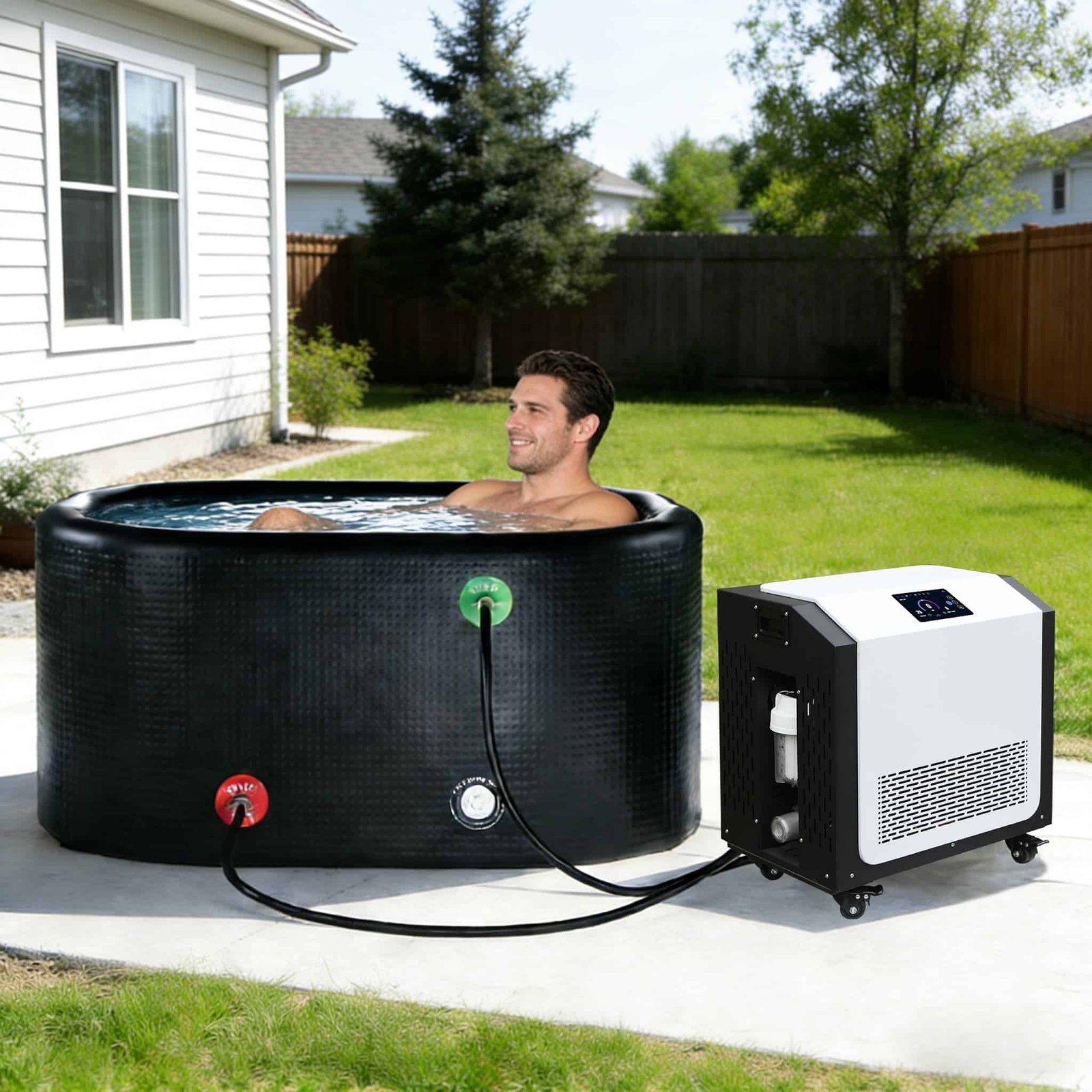
The CHU-10-RV at 1HP with 2.81kW cooling capacity is appropriate for boutique studios and light commercial use — up to 15 sessions per day in a 300-litre insulated tub. It reaches 0°C, includes ozone disinfection and WiFi control, and is the entry point for commercial-grade cold therapy.
The CHU-15-RV at 1.5HP is the standard specification for mid-size commercial facilities. With higher cooling capacity and a commercial-rated duty cycle, it handles 15 to 40 sessions per day in a 300 to 400-litre tub without operating at its limit. The additional headroom means the compressor runs at a lower average duty cycle, extending its operational lifespan.
For facilities requiring 2HP or above, or multi-unit installations for large commercial facilities, OMNI Ice provides custom commercial solutions with specifications matched to specific facility requirements.
Frequently Asked Questions
What is the difference between a commercial and consumer cold plunge chiller?
The key differences are duty cycle rating, compressor specification, and water management integration. Consumer chillers are designed for light daily use with moderate duty cycles. Commercial chillers are rated for sustained high-load operation, use commercial-grade compressors designed for continuous running, and typically include integrated ozone disinfection and filtration for high-traffic water management. The HP rating alone does not distinguish them — a commercial-grade 1HP unit is a fundamentally different product from a consumer-grade 1HP unit.
How many sessions per day can a 1.5HP commercial chiller handle?
Based on OMNI Ice CHU-15-RV performance data: in a 300-litre insulated tub at 20°C ambient, the unit recovers approximately 1°C in 8 to 12 minutes after a standard session. This makes it suitable for 20 to 40 sessions per day with adequate recovery time between sessions. For facilities running sessions more frequently than every 15 minutes at peak hours, a 2HP specification provides the necessary headroom.
How often does water need to be changed in a commercial cold plunge?
With ozone disinfection and cartridge filtration running, a commercial cold plunge handling 20 to 30 daily sessions typically needs a full water change every 7 to 14 days. For very high-traffic facilities with 50+ daily sessions, every 5 to 7 days. Water clarity and odour are the practical indicators — change before your scheduled date if either deteriorates. Commercial facilities should also test water pH and total dissolved solids weekly to ensure water quality standards are maintained.
Can I use one chiller for multiple cold plunge tubs?
What certifications should a commercial cold plunge chiller have?
Ready to Spec Your Commercial Cold Plunge System?
Tell us your facility type, daily session volume, tub volume, and climate, and OMNI Ice will give you a direct specification recommendation. We supply commercial cold plunge chillers factory-direct to gyms, hotel spas, wellness brands, and OEM partners across 80+ countries. CE, ETL, SAA certified.